
All the Questions You Want to Ask About Dental Implants
Missing one or more teeth changes daily life in ways that compound: hidden smiles, careful chewing, and questions you keep meaning to get answered. If you are considering dental implants, you deserve direct answers rather than marketing.
Dr. Gerald Marlin, a specialty-trained prosthodontist serving Washington, DC for more than 40 years, hears the same excellent questions at consultation after consultation. Here are the honest answers, and just as importantly, the questions worth asking any provider you interview.
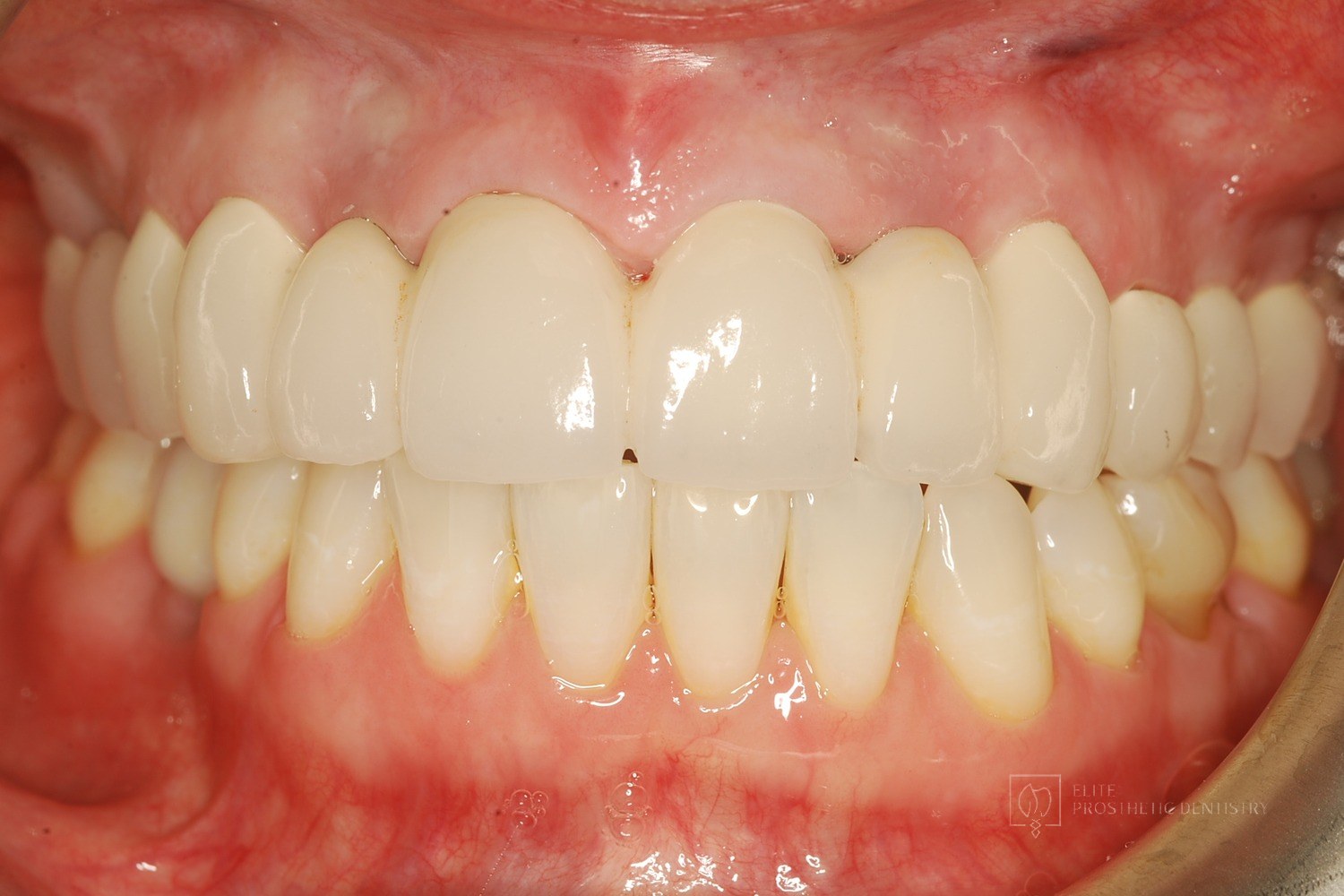
Older implant crowns redesigned for a patient in our practice. See the full case
What Is a Dental Implant, Really?
Strip away the brochure language and an implant is a replacement tooth root: a titanium post anchored in your jawbone. Bone fuses to it through a process called osseointegration, after which it carries a custom abutment and crown. Because the root is replaced and the bone stays stimulated, an implant is the only tooth replacement that prevents the jawbone shrinkage that follows tooth loss. Long-term success rates are high, which makes implants the most predictable option in restorative dentistry when they are planned and placed correctly.
That last clause is where outcomes diverge, which brings us to the question almost nobody asks.
What Actually Determines Whether My Implant Turns Out Well?
Three factors, in order: the precision of the surgical placement, the quality of the laboratory fabricating the custom abutment and crown, and the clinical expertise of the person restoring it. Notice that two of the three happen after the surgery everyone focuses on.
This is why we control all three in-house. Placement is planned three-dimensionally from CT imaging and executed with Precision Implant Placement (PIP), frequently using custom surgical guides. The abutment and crown are fabricated in our own in-house laboratory, whose crowns have lasted 35 years and longer with proper care. And the restorative design is planned together with the surgical placement, from the final restoration backward. One practice, one treatment plan, one standard.
Why Does the In-House Laboratory Matter for Implants?
Because an implant crown is engineering plus artistry, and both need iteration. Our technician custom fabricates abutments and crowns to harmonize with your existing teeth, adjusting fit and shade chairside with you present, rather than sending refinements back and forth to an outside laboratory. It also consolidates your care: planning, surgery, and restoration happen in one practice rather than across a chain of referrals.
Why Do Patients Choose Dr. Marlin for Implants?
Track record and structure. Dr. Marlin has placed more than 3,900 dental implants, holds 9 U.S. patents in dental implant restoration methodology, and has been voted a Top Dentist by his peers in Washingtonian Magazine’s survey, most recently on the 2026 list. The practice is built around problem-solving: single implants done invisibly, aging implant work redesigned, and complex cases other offices refer out. Patients come to us for both comprehensive reconstruction and proactive replacement of aging dentistry, and the same planning discipline applies at every scale, whether that is one tooth or an implant-supported bridge.
What Should I Ask at Any Implant Consultation?
Take this list with you, wherever you go. Who plans the implant position, and from what imaging? Who performs the surgery? Who designs and fabricates the abutment and crown, and where? What happens if the crown needs adjustment? How many implants has the treating clinician placed and restored? What is the plan if my bone is thin? Any practice doing this well will enjoy answering. Evasive answers are also information.
Still Have Questions? Good.
Informed patients make better decisions and get better results. Browse our implant FAQs, read about what implant treatment feels like step by step, or bring everything you have got to a one-on-one consultation. Dr. Marlin will examine your teeth, review your imaging, listen first, and give you honest recommendations, including when an implant is not the right answer.
Call 202-244-2101 or reach us online. Elite Prosthetic Dentistry serves Washington, DC, Bethesda, Chevy Chase, and Arlington from our Friendship Heights office.
See How We Resolve These Problems
Our patient success stories show real cases and real results. Browse outcomes from a specialist prosthodontist with decades of experience and 3,900+ implants placed.
Key Takeaways
- ✓ A dental implant is a replacement tooth root anchored in the jawbone, carrying a custom crown. It is the most dependable tooth replacement available, with high long-term success rates when properly planned, placed, and maintained.
- ✓ The three factors that decide your result: precision of surgical placement, quality of the laboratory making the abutment and crown, and the expertise of the restoring clinician.
- ✓ In our practice all three stay under one roof and one treatment plan, led by a specialty-trained prosthodontist with 3,900+ implants placed.
- ✓ Good questions to bring to any implant consultation: who places the implant, who makes the crown, how placement is planned, and what happens if something needs adjustment.
Frequently Asked Questions
What is a dental implant?
A dental implant is a titanium post inserted into the jawbone to serve as a replacement tooth root. Once integrated with the bone, it carries a custom abutment and crown that look, feel, and function like a natural tooth. Implants also preserve the jawbone, which no bridge or denture can do, and carry high long-term success rates when properly planned, placed, and maintained.
How long does implant treatment take?
Most single-implant treatments run several months from placement to final crown, allowing the implant to fuse with the bone. Timelines extend when bone grafting is needed first and can shorten in select cases. You wear a natural-looking temporary during healing, so you are never left with a visible gap.
Does getting a dental implant hurt?
Far less than most patients expect. With careful presurgical planning, guided placement, and an atraumatic surgical protocol, the majority of our patients manage post-surgical comfort with over-the-counter ibuprofen for a short period. Sedation options are available for the appointment itself.
How long do dental implants last?
Research shows about 86% of implants still functioning at 15 years, and precision-placed implants routinely last decades. Our documented in-practice implant success rate is above 97% for implants placed more than 20 years ago, and crowns from our in-house laboratory have lasted 35 years and longer with proper care.
Who should place my dental implant?
Ask who plans the placement, who performs the surgery, who designs the restoration, and who makes the crown. When those are four different parties, coordination becomes harder. A prosthodontist is trained in both the restorative design and the engineering of implant treatment, which is why many patients choose a prosthodontic practice to plan and coordinate the entire sequence.
What does a dental implant cost?
Cost depends on how many teeth are being replaced, whether grafting is needed, and the quality of the components and laboratory work. Beware of package pricing that answers before examining you. An honest number follows an examination and 3D imaging, itemized so you can compare apples to apples.
Related Patient Success Stories
Explore similar patient success stories demonstrating our expertise in advanced prosthetic dentistry.
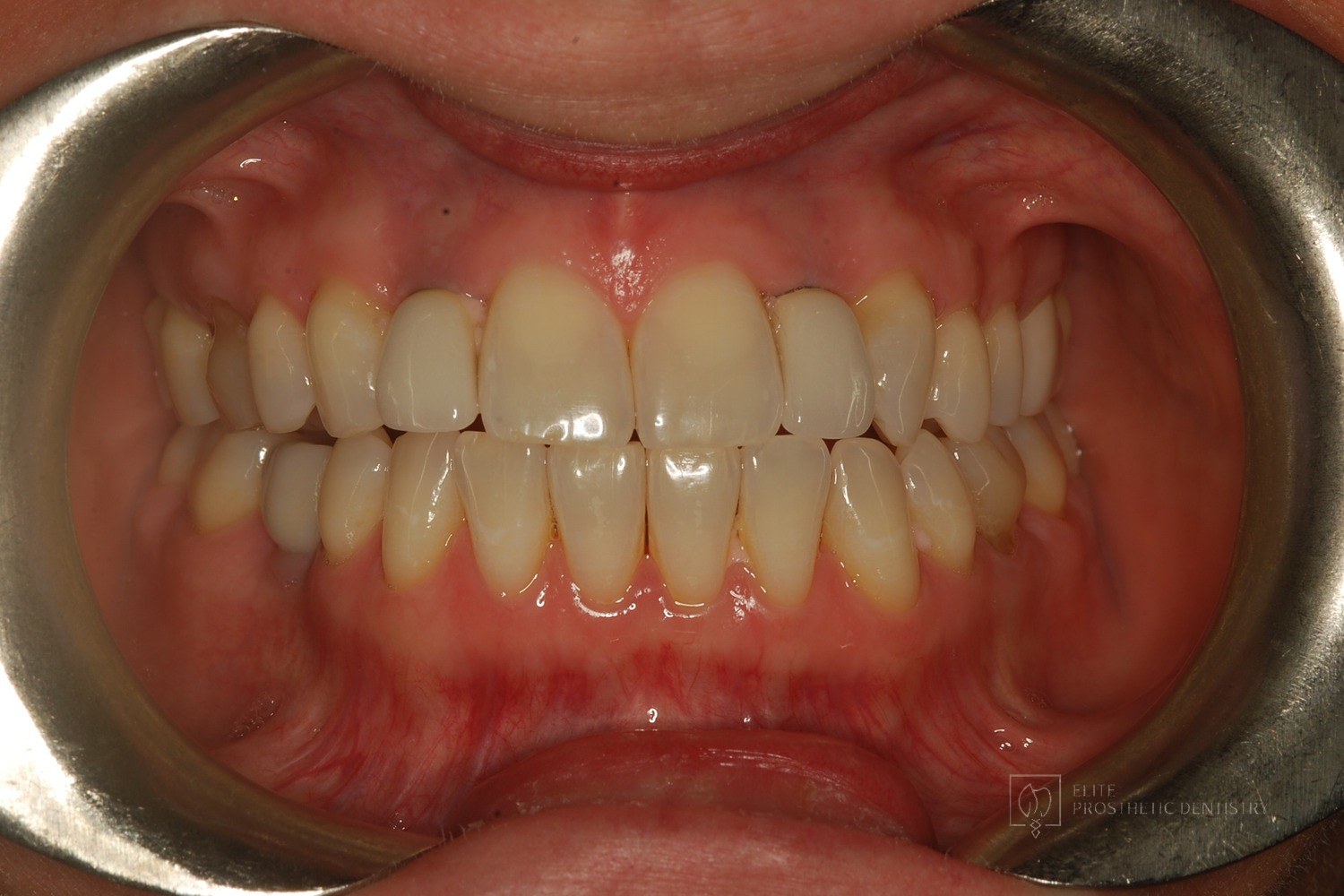 Before After
 How Older Implant Crowns Were Redesigned for a Better Bite and More Natural Appearance
The patient came in after years of living with implant-supported crowns placed more than twenty years earlier that no longer looked or functioned well. CBCT evaluation, reviewed with a radiologist colleague, showed the implants had been placed too far to the buccal in very thin bone and could not support a healthy long-term restoration.
 Before
  After
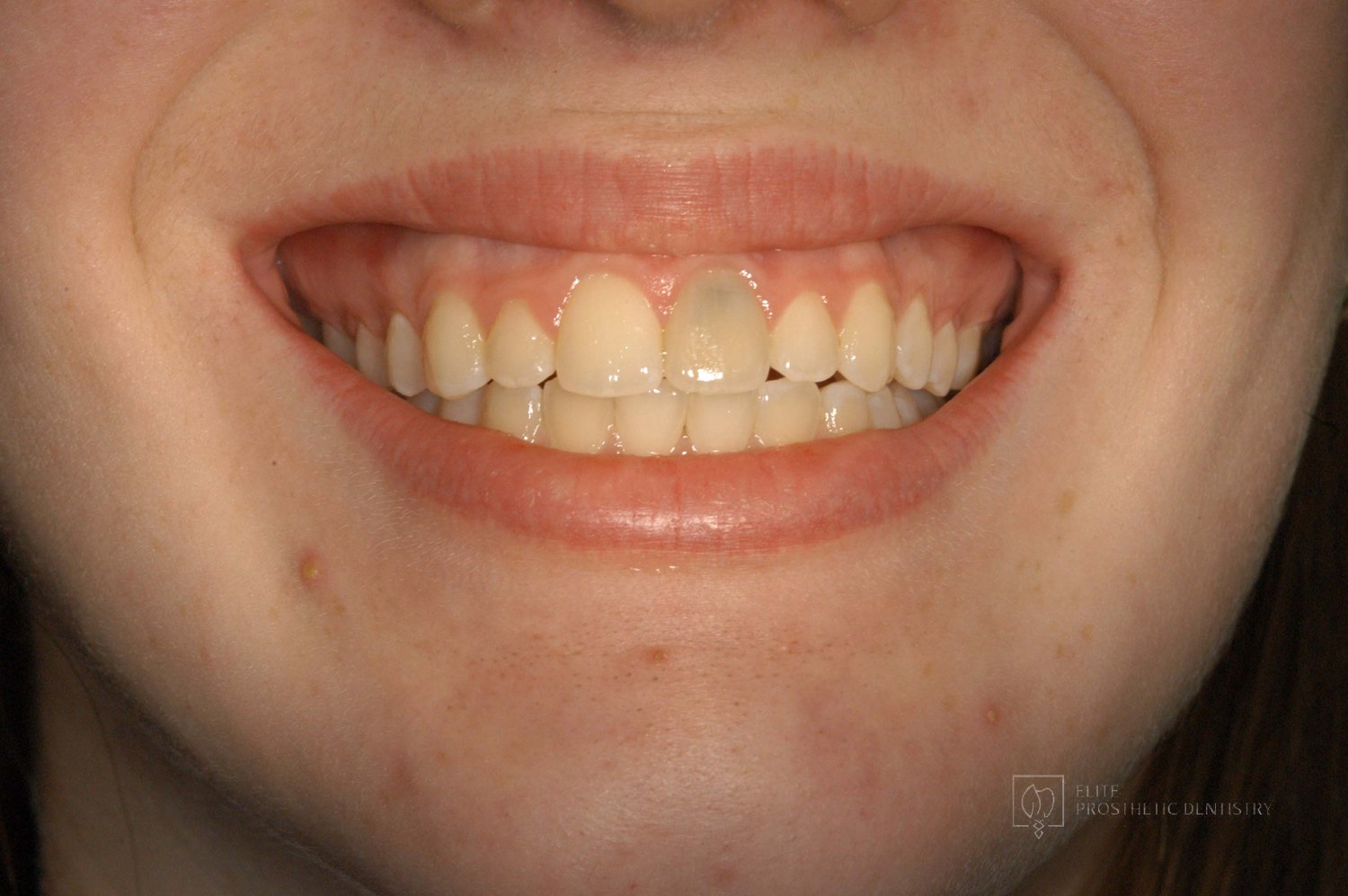
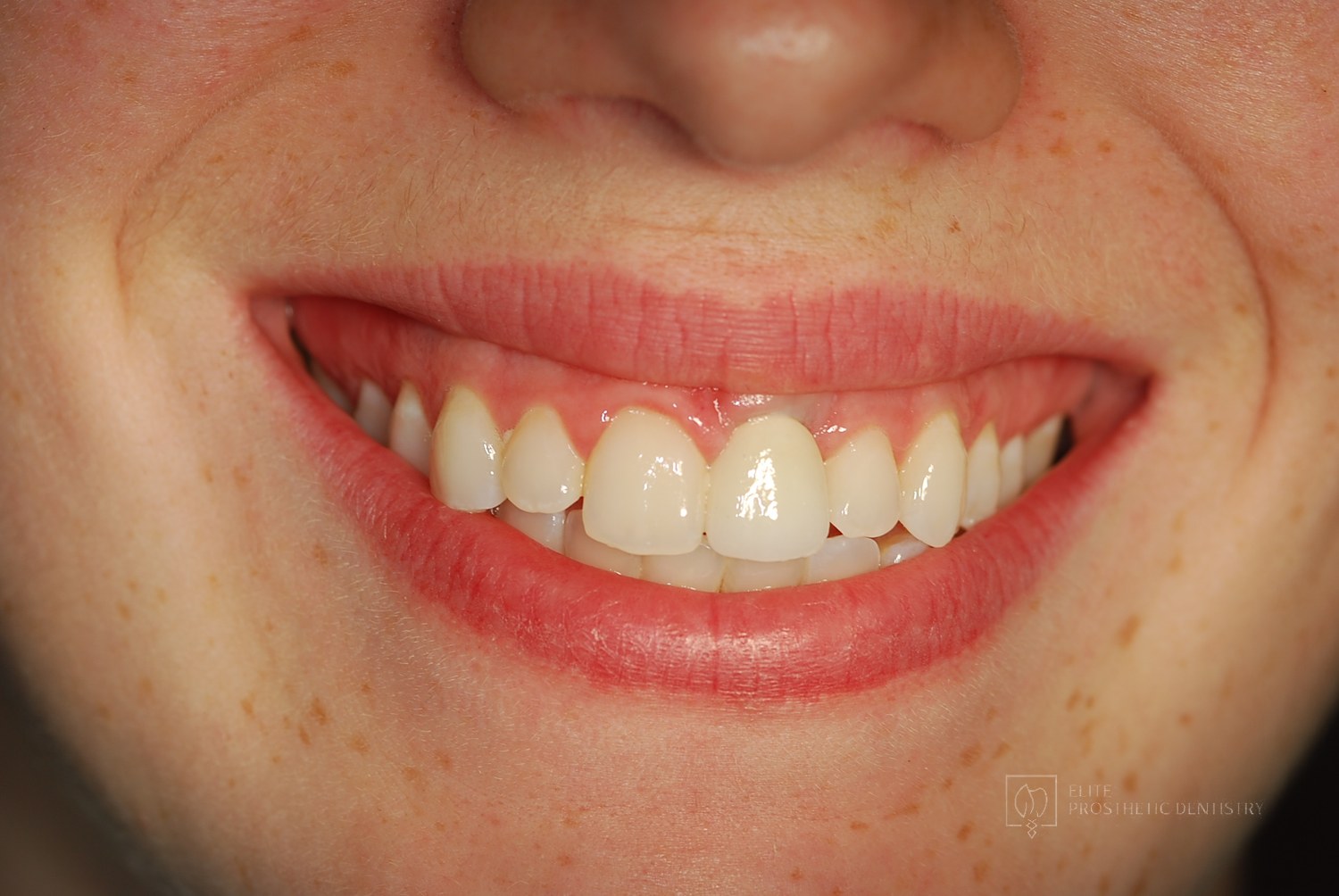
After How a Front Tooth Lost to Childhood Trauma Was Rebuilt with Bone Grafting and a Long-Lasting Implant
A teenager was referred by her father after earlier trauma left her upper left front tooth slowly failing from root resorption. She was still growing, so an immediate implant was the wrong move. The tooth had to be maintained to buy time, then replaced correctly once she reached skeletal maturity.
 Before
  After
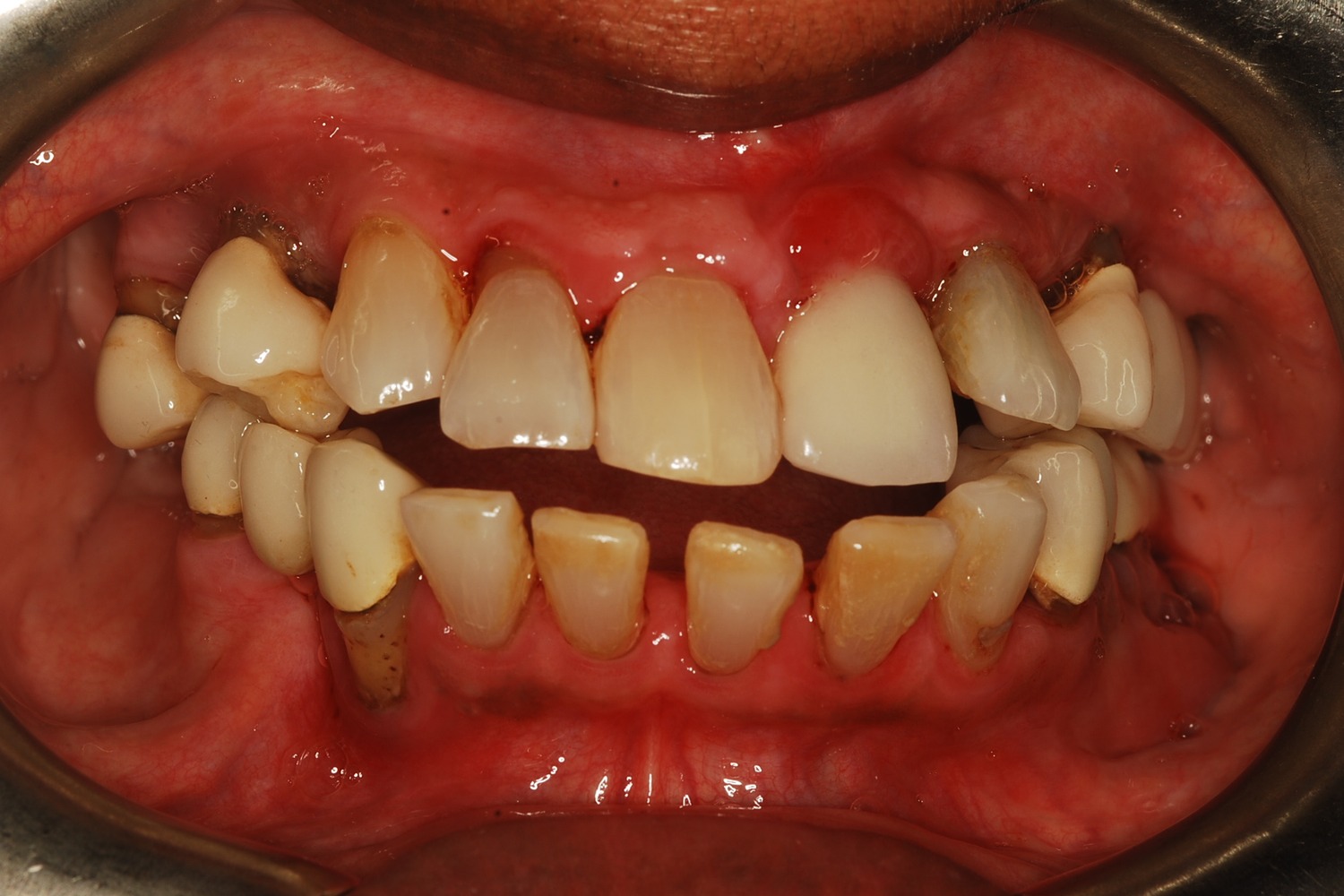
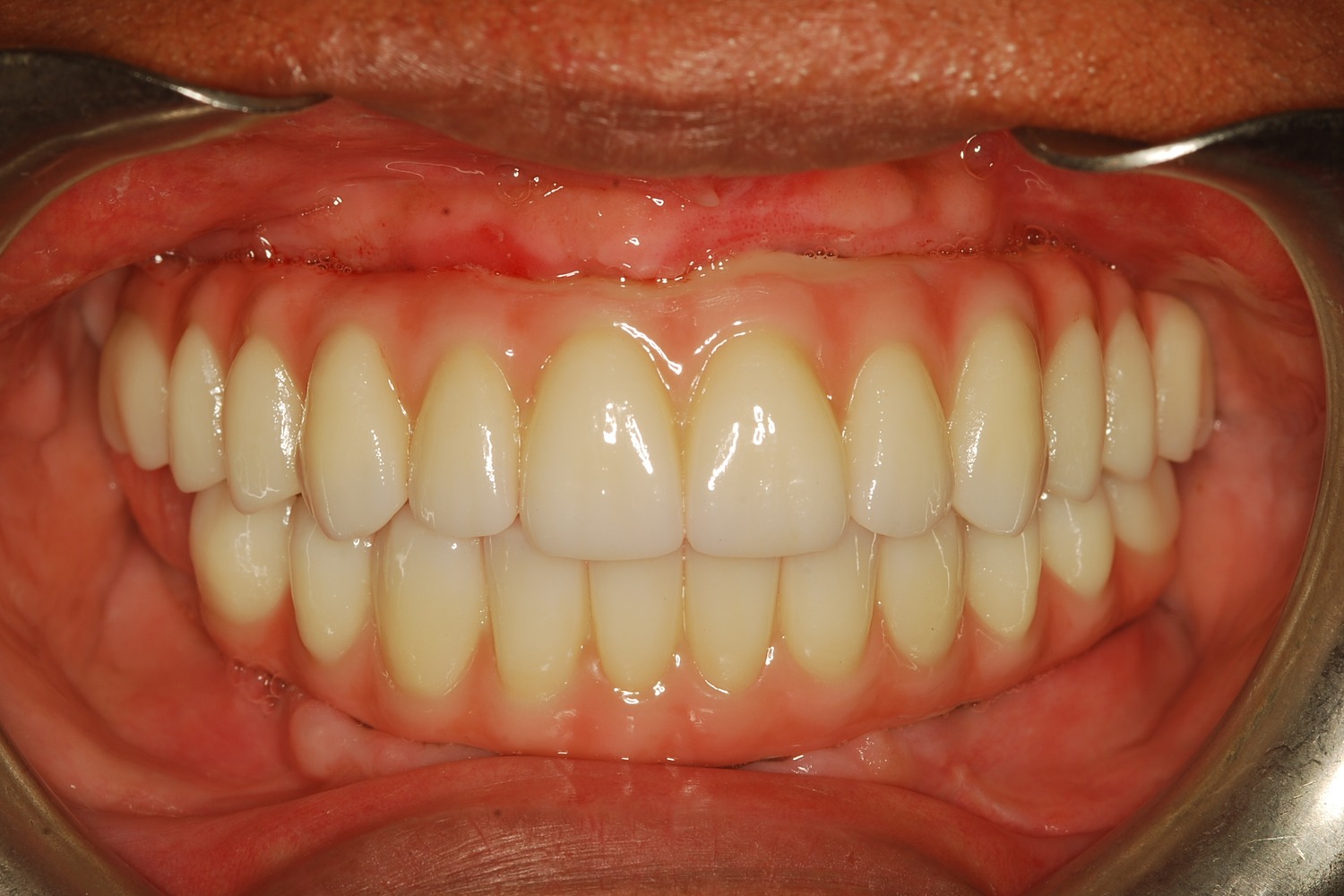
After How Severe Bone Loss and Bite Dysfunction Were Rebuilt with All-on-6 Implants and a Milled Zirconia Hybrid Prosthesis
The patient presented with severe bone loss, advanced periodontal disease, malocclusion, and a dysfunctional bite that required full-arch rebuilding.
Related Articles
Deepen your knowledge with additional insights on this topic.
 Dental Implants
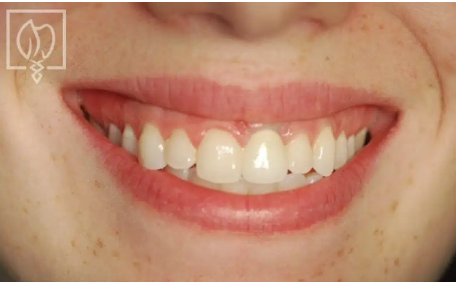
 If a Single Front Tooth Is Replaced with an Implant, Can It Look Natural?
Yes. See the four steps, with real case photos, that make a single front tooth implant indistinguishable from the natural tooth beside it. Washington, DC.
 Dental Implants
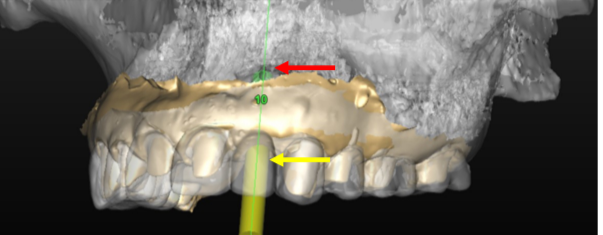
 What Is Precision Implant Placement (PIP)?
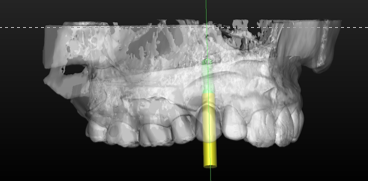
Precision Implant Placement plans each implant virtually on a CBCT scan, then delivers it with a custom surgical guide. See the three steps with real images.
 Dental Implants
 What Is the Ideal Surgical Guide for Precision Implant Placement?
Not all surgical guides are equal. The gold standard is CBCT-based: planned virtually in 3D, 3D printed, and seated on your teeth. A DC prosthodontist explains.