
If a Single Front Tooth Is Replaced with an Implant, Can It Look Natural?
Yes, but only with painstaking preplanning, precision surgical placement, a custom emergence-profile abutment, and a hand-crafted porcelain crown matched to the adjacent central incisor. Every one of those four steps has to be right, because on a front tooth there is nowhere to hide.
Here is what that looks like in a real case.
A Failed Central Incisor, Rebuilt Invisibly
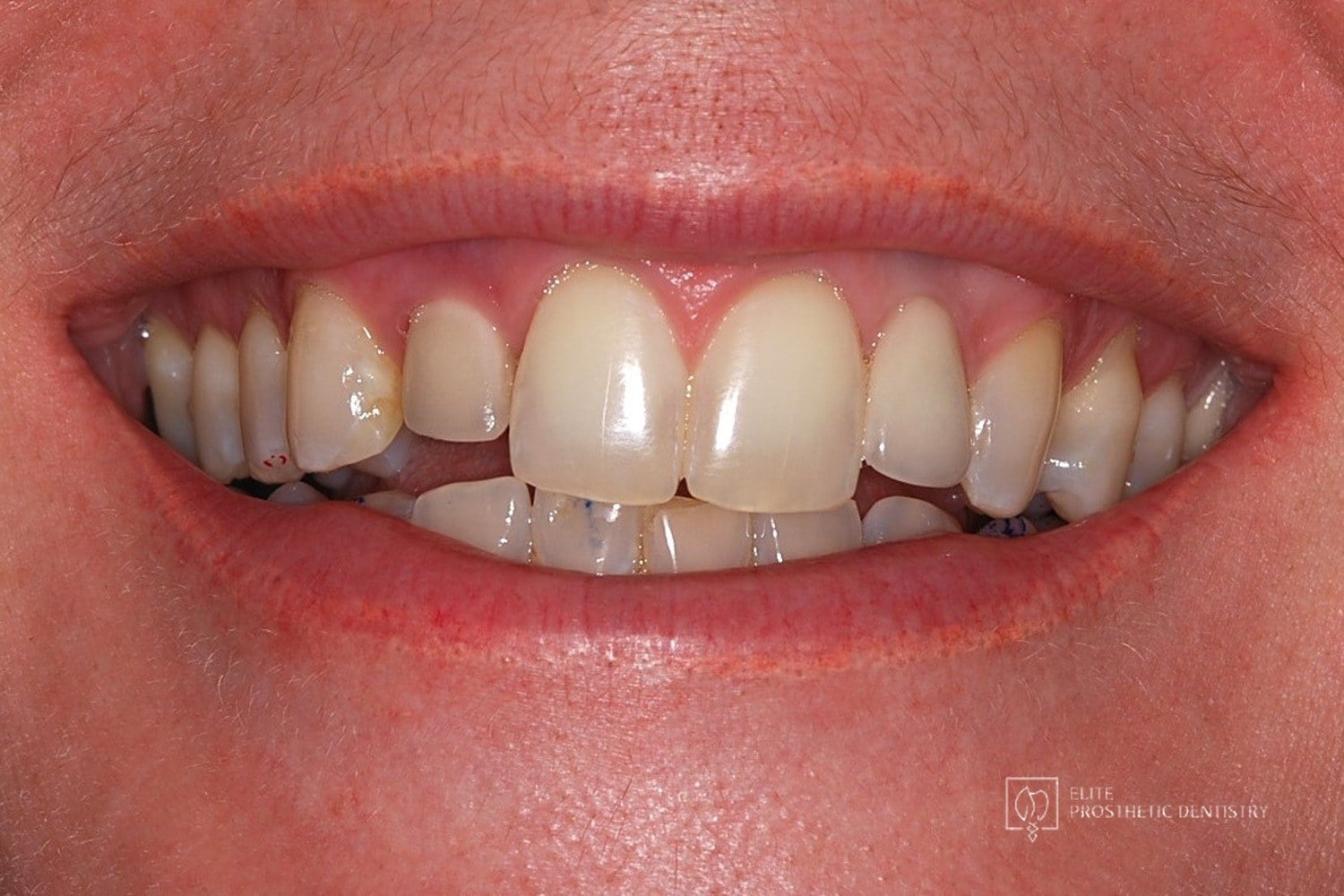
Our patient lost tooth #9, an upper central incisor, to endodontic failure: a root canal that could no longer save the tooth (Fig. 1). To create a lifelike replacement, the sequence ran in strict order.
First, the implant was precisely centered in the space (Fig. 2), planned three-dimensionally so its position and angle serve the crown that will stand on it. Second, a custom abutment was fabricated with the correct emergence profile (Fig. 3), supporting the gum tissue and papilla so the new tooth rises from the gumline exactly as its neighbor does. Third, porcelain was hand-layered in our in-house laboratory to replicate the shape, translucency, and shade of the adjacent incisor (Fig. 4).
Each step protects the next. Precise placement makes a natural abutment possible; the abutment makes healthy, symmetrical gum contours possible; and the gum architecture is what lets the final crown read as grown rather than installed.
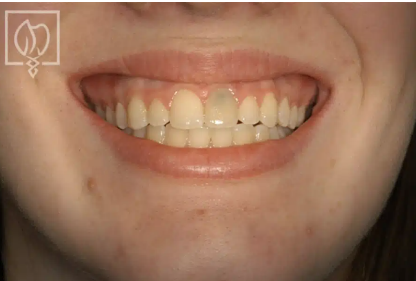
Fig. 1: Before, A Failed Central Incisor Tooth
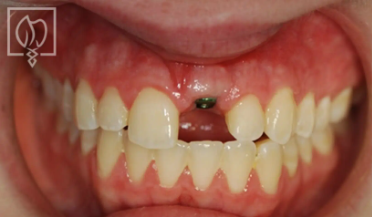
Fig. 2: Implant Precisely Inserted
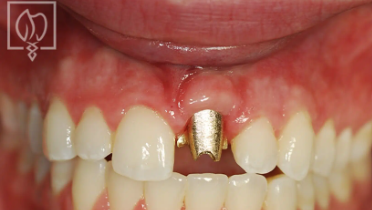
Fig. 3: Emergence Profile Abutment Seated on the Implant
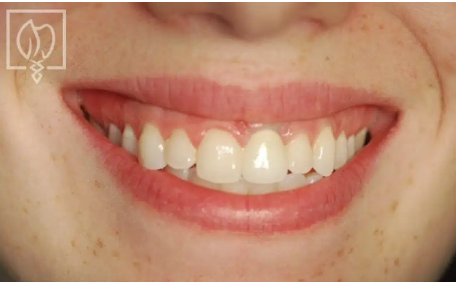
Fig. 4: After, Crown Seated on the Abutment on the Implant
Why This Is the Hardest Restoration in Dentistry
A single central incisor is unforgiving in a way no other restoration matches: its identical twin stands a millimeter away, inviting comparison in every conversation and photograph. Shape, length, surface texture, the gradient of color from gumline to edge, the translucency at the biting edge, and the height of the gum scallop all have to agree with the natural tooth beside it.
That is why this work concentrates in specialist hands. The full process, from crown-first planning through chairside characterization, is described in our companion article on achieving a natural look with a single front tooth implant, and the laboratory standard behind it in what makes a crown look natural.
The Standard to Ask For
If you are facing the loss of a front tooth, ask any provider you interview how they will control the implant position, who will design the abutment, and who will make the crown against your actual smile. Dr. Gerald Marlin has placed more than 3,900 dental implants, with abutments and crowns fabricated in our own laboratory, and front-tooth cases are the standard by which we judge that system.
Book your consultation or call 202-244-2101. Elite Prosthetic Dentistry, Friendship Heights, Washington, DC.
See How We Resolve These Problems
Our patient success stories show real cases and real results. Browse outcomes from a specialist prosthodontist with decades of experience and 3,900+ implants placed.
Key Takeaways
- ✓ Yes, a single front tooth implant can be indistinguishable from the natural tooth beside it, but only when planning, placement, abutment, and crown are each executed precisely.
- ✓ The implant must be centered exactly in the space; the crown can only be as correct as the position beneath it.
- ✓ A custom emergence-profile abutment shapes the gum so the new tooth appears to grow from the tissue naturally.
- ✓ Hand-layered porcelain matched against the adjacent incisor, not a shade tab, is what completes the illusion.
- ✓ The central incisor is the most demanding match in dentistry because its twin stands beside it, inviting comparison.
Frequently Asked Questions
Can a single front tooth implant look natural?
Yes, when every step is executed precisely: digital planning, centered implant placement, a custom abutment that shapes the gum contour, and porcelain hand-layered to match the adjacent tooth's shape, translucency, and shade. Weakness in any one step is what creates the implant teeth people can spot.
Why is the emergence profile so important?
The emergence profile is how the new tooth rises through the gum. A custom abutment supports the soft tissue and the papilla, the small gum points between teeth, so the tissue frames the crown exactly as it frames the natural neighbor. Without it, the gumline gives the restoration away even when the crown itself is beautiful.
Will the implant crown match my other front tooth?
That is the standard to demand. Our in-house technician hand-layers porcelain to replicate the shape, surface texture, translucency, and internal shading of the adjacent incisor, evaluated against your actual tooth chairside rather than a written shade number.
How long does a front tooth implant take?
Typically three to four months from placement to final crown, covering healing and integration, abutment fabrication, and crown creation. You wear a natural-looking temporary the entire time, so you are never without a front tooth.
Related Patient Success Stories
Explore similar patient success stories demonstrating our expertise in advanced prosthetic dentistry.
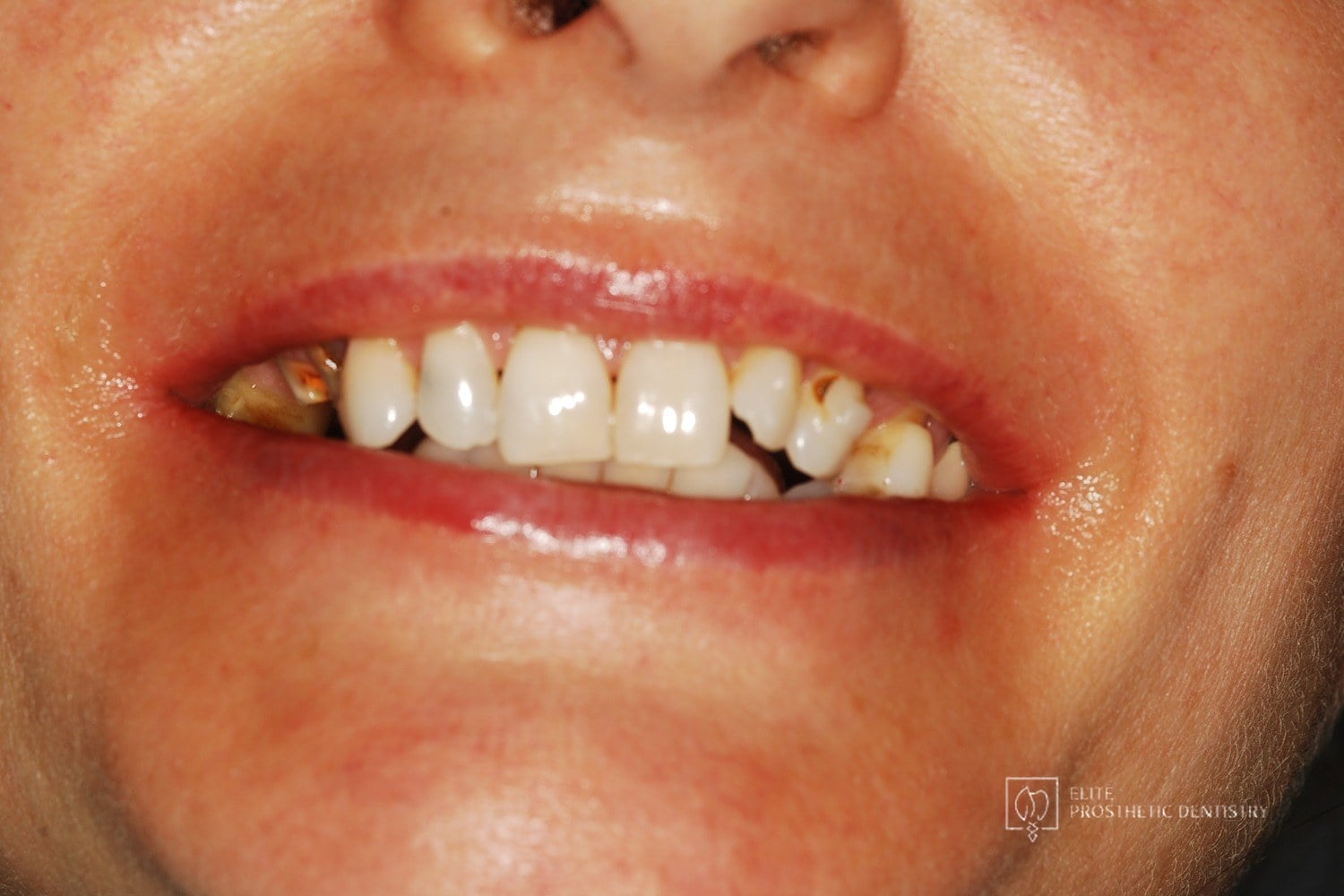 Before
 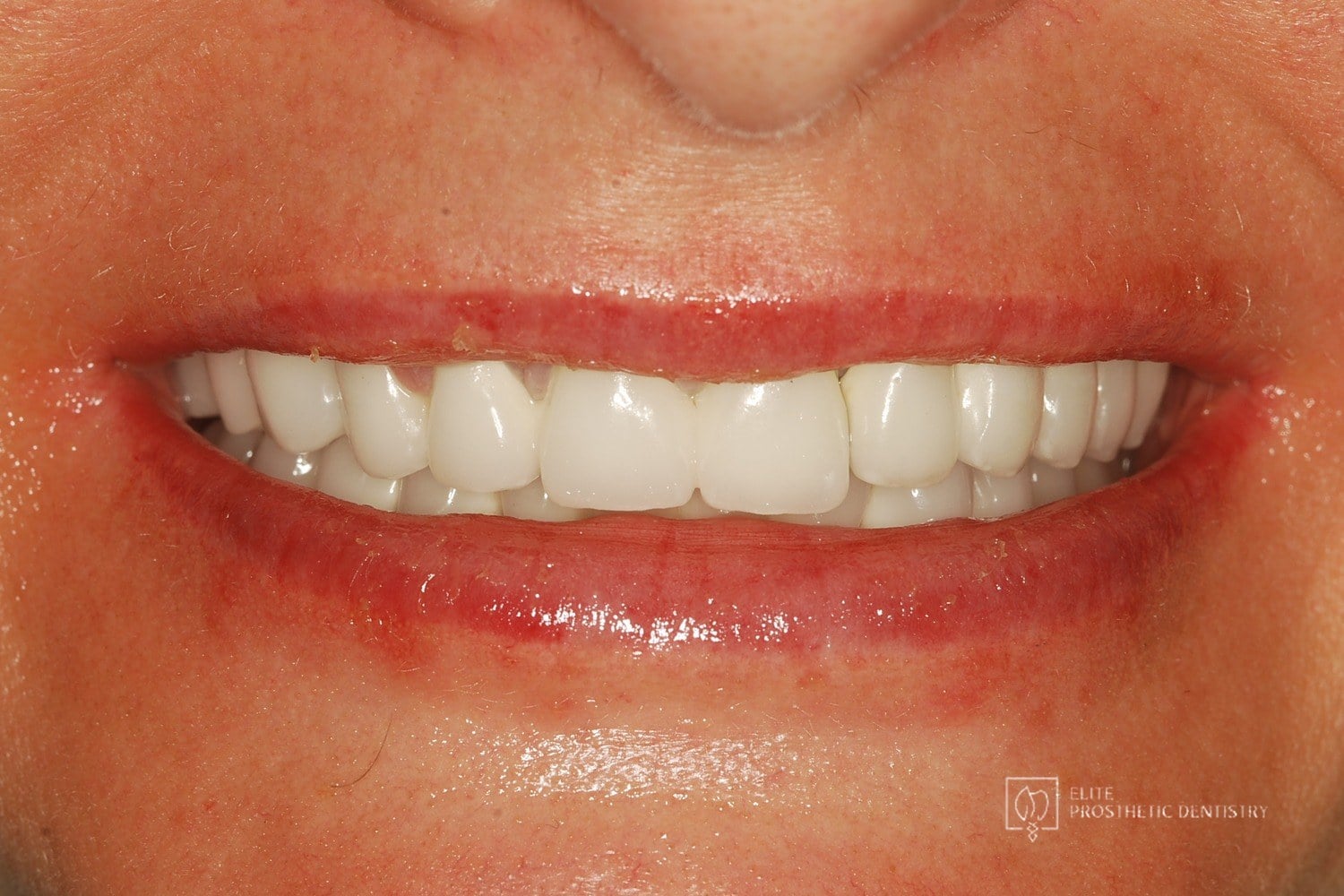 After
After How Aging, Failing Dentistry Was Replaced with a Coordinated Full-Mouth Implant and Crown Reconstruction
The patient presented with throbbing upper-molar pain, long-standing infections, multiple root canals and unfinished prior treatment, generalized sensitivity, and several hopeless teeth.
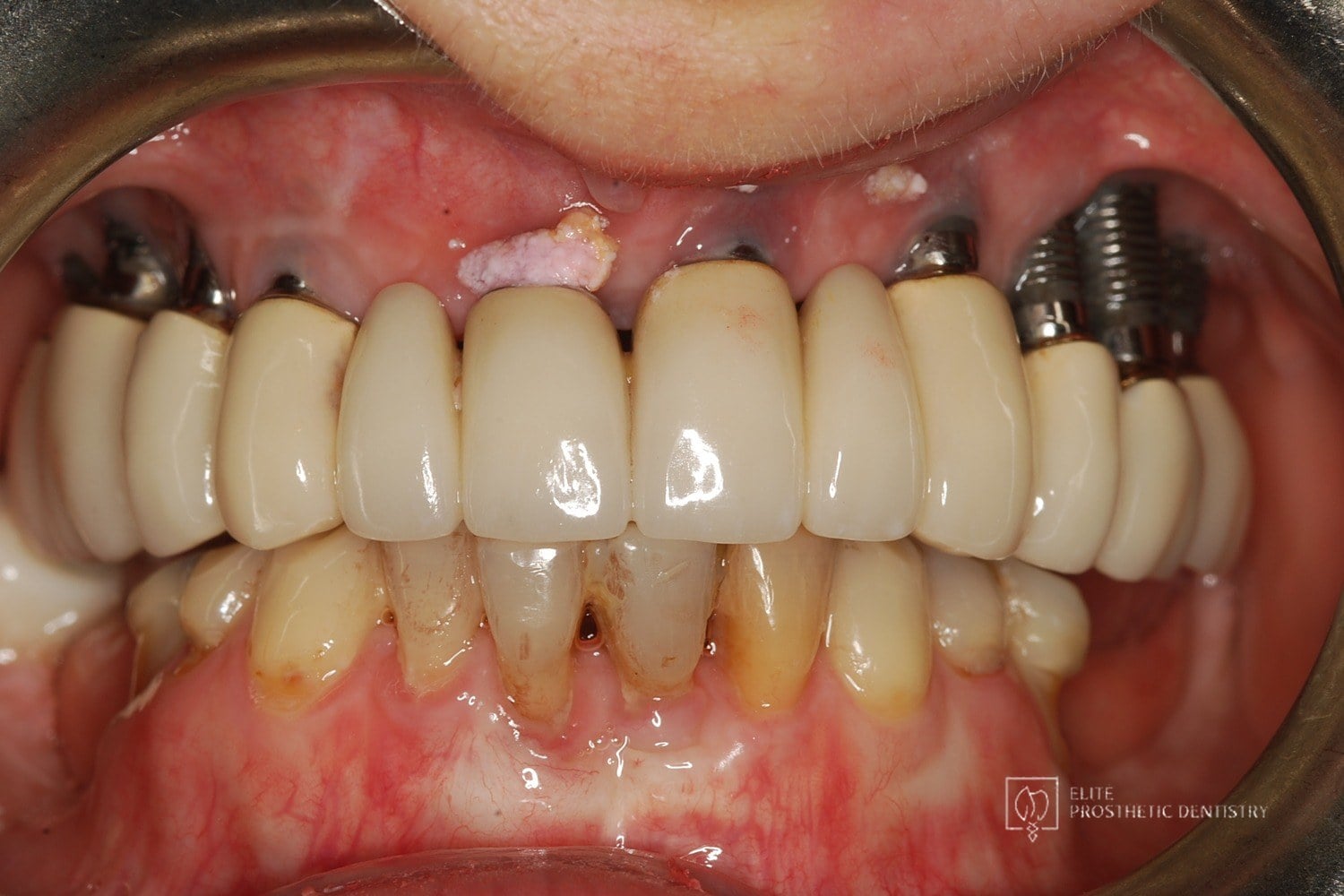 Before
 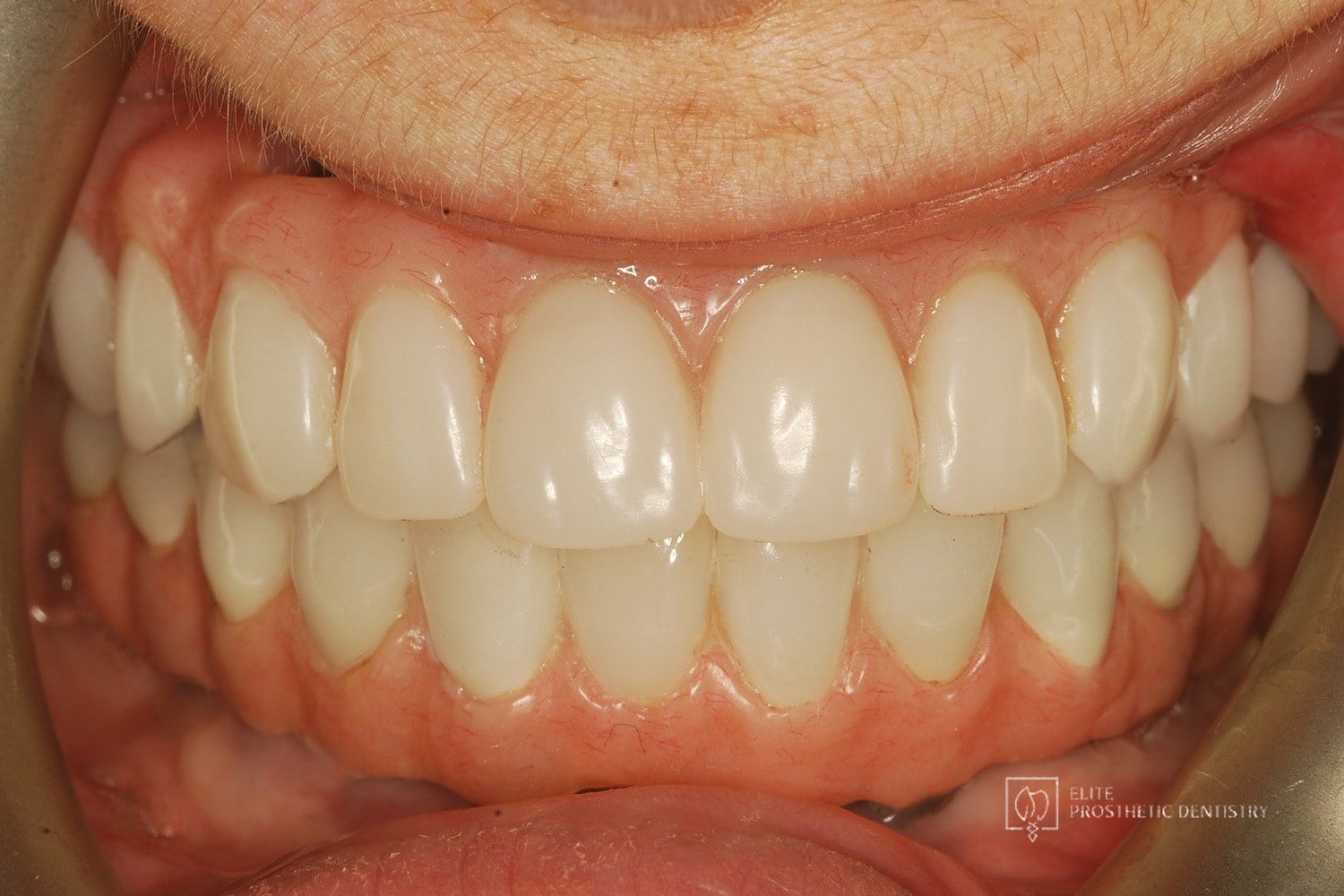 After
After How Failing Implants and Severe Bone Loss Were Rebuilt Into a Stable Full-Arch Implant Reconstruction
The patient presented with significant complications from previously placed implants, severe bone loss, failing posterior implants, and an unesthetic full-arch bridge. Both arches required full reconstruction, with the upper arch showing the most advanced bone loss and instability.
 Before
 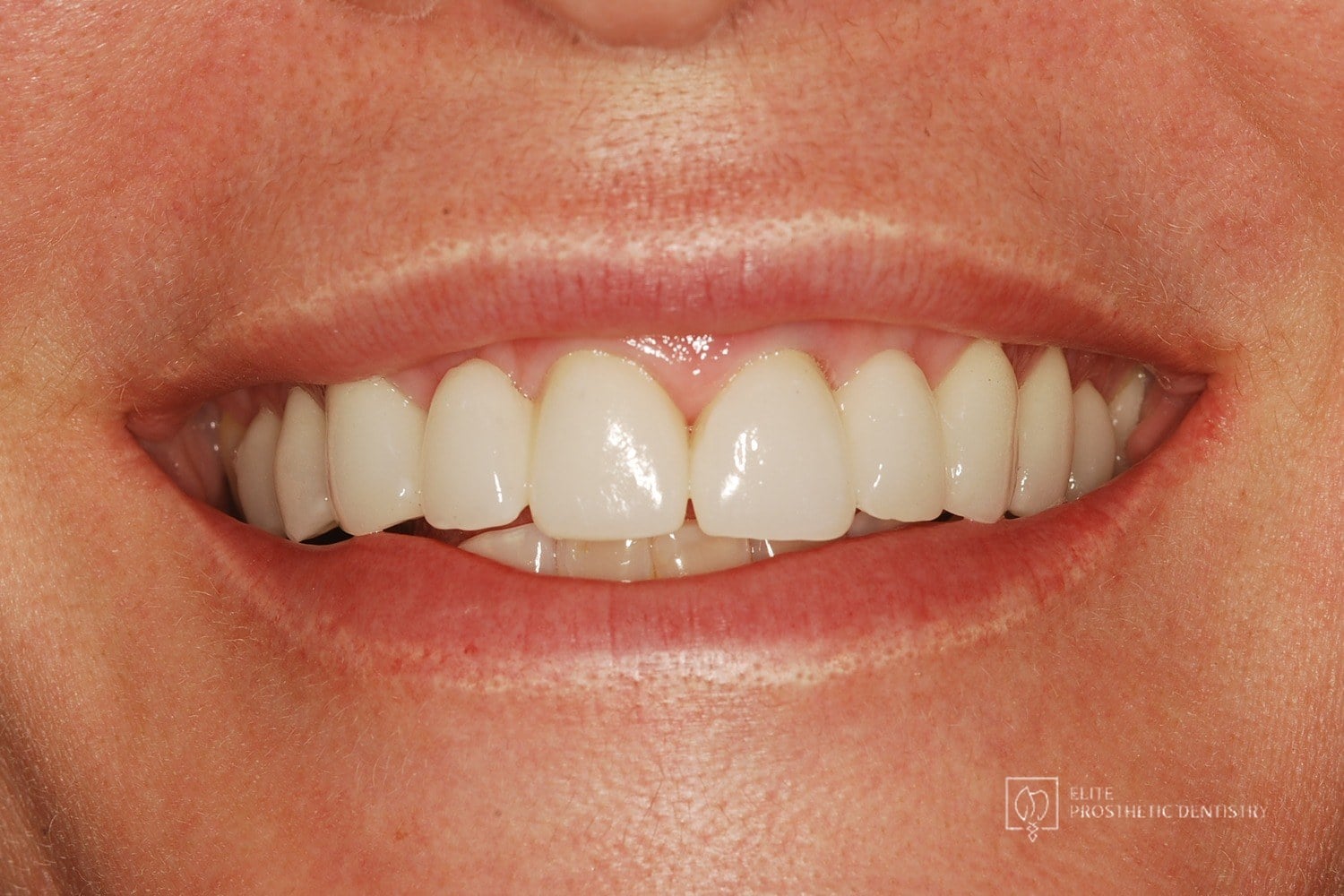 After
After How Failing Lateral Incisor Implants Were Replaced with Custom Zirconia Bridges After Severe Bone Loss Made Replacement Implants Impossible
Comprehensive examination including CBCT imaging revealed significant bone loss surrounding implants that were placed outside the buccal plate, most likely due to placement without a CBCT-generated surgical guide. The implants were determined non-salvageable, and the alveolar ridge was too narrow to support replacement implants without extensive reconstruction.
Related Articles
Deepen your knowledge with additional insights on this topic.
Dental Implants If a Single Front Tooth Is Replaced with an Implant, Can It Look Natural?
Yes. See the four steps, with real case photos, that make a single front tooth implant indistinguishable from the natural tooth beside it. Washington, DC.
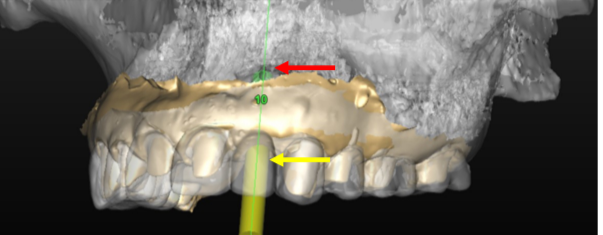 Dental Implants
 What Is Precision Implant Placement (PIP)?
Precision Implant Placement plans each implant virtually on a CBCT scan, then delivers it with a custom surgical guide. See the three steps with real images.
 Dental Implants
 What Is the Ideal Surgical Guide for Precision Implant Placement?
Not all surgical guides are equal. The gold standard is CBCT-based: planned virtually in 3D, 3D printed, and seated on your teeth. A DC prosthodontist explains.