
When Should You Consider Dental Implants? Five Signals It's Time
You already know dental implants are the most effective way to replace missing or failing teeth. The harder question is personal: when does considering them stop being theoretical and start being timely for you?
Five signals answer that. Any one of them means implants belong on your list of options.
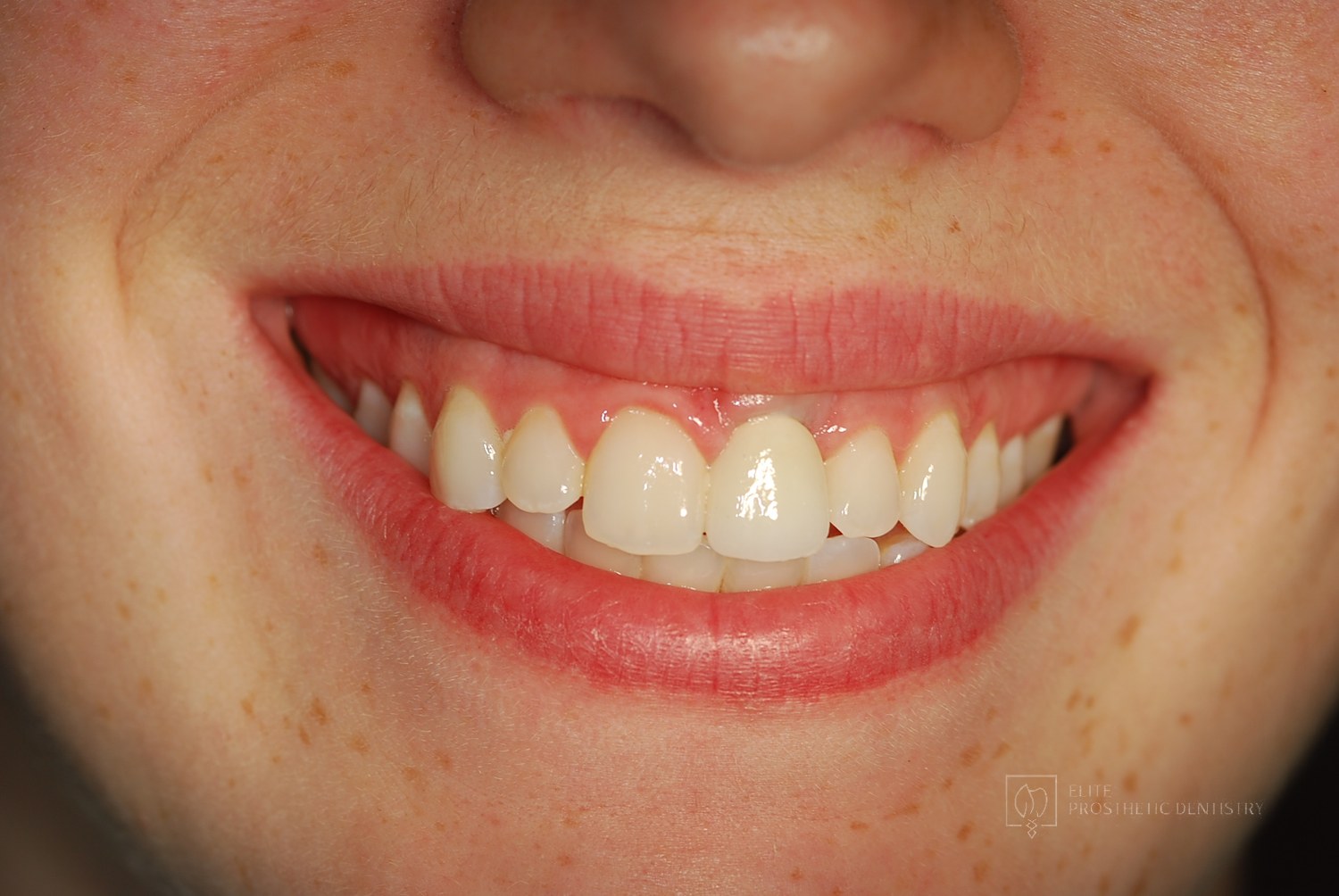
A long-missing front tooth rebuilt with bone grafting and an implant in our practice. See the full case
First, What an Implant Actually Is
Three components: a titanium post inserted into the bone, which takes over the root’s job; an abutment attached to the post; and a custom restoration on top. The post is what separates implants from every alternative, because replacing the root preserves the jawbone, an advantage explained in Osseointegration: Big Word, Simple Concept.
Signal 1: You Are Missing a Tooth, Anywhere
A gap is the obvious trigger, and the consequences of ignoring one, drifting neighbors, super-erupting opponents, shrinking bone, are covered in Missing Teeth: More Than Just a Gap. If a space exists, an implant conversation is warranted, even if the eventual answer is “not yet.”
Signal 2: A Tooth Has Been Declared Unsavable
When a fracture, failed root canal, or deep decay genuinely ends a tooth’s career, replacing it promptly with an implant preserves the bone and the neighbors. The key word is genuinely: verify the verdict first, because some teeth marked for extraction can be saved, and a prosthodontist evaluates both sides of that question.
Signal 3: A Bridge Is Failing
Bridges age: margins leak, anchor teeth decay beneath their crowns, and the span loosens. A failing bridge is a natural strategy point. Rather than rebuilding on the same worn anchors, an implant-supported replacement frees the neighboring teeth entirely and stops the bone loss under the old gap.
Signal 4: Your Dentures Are Running Your Life
Loose lower dentures, adhesive routines, retired foods, careful laughter: this is the most quietly endured signal on the list, and the most solvable. A few implants can stabilize a denture; a few more can support fixed teeth entirely, options compared in our overview of dentures and implant alternatives.
Signal 5: You Can See the Changes Happening
Teeth tilting toward an old gap, a bite that meets differently than it used to, a face that looks shorter or more sunken around the mouth: these are the visible signatures of drift and bone loss already underway, and they argue for evaluation soon rather than eventually, for reasons detailed in why you should not wait.
Considering Is Not Committing
An evaluation with 3D imaging tells you what is actually happening, what your bone supports, and what your options cost in time and money, including the option of monitoring. What it ends is guessing.
Dr. Gerald Marlin, a specialty-trained prosthodontist, has placed more than 3,900 dental implants over a career of more than 40 years, and tells patients honestly when an implant is not the answer. Find out where your situation stands: call 202-244-2101 or check your candidacy and request a consultation. Elite Prosthetic Dentistry, Friendship Heights, Washington, DC.
See How We Resolve These Problems
Our patient success stories show real cases and real results. Browse outcomes from a specialist prosthodontist with decades of experience and 3,900+ implants placed.
Key Takeaways
- ✓ Five signals put implants on your list: a missing tooth, a tooth declared unsavable, a failing bridge, denture frustration, and visible bone or bite changes.
- ✓ An implant has three parts: the post that replaces the root, the abutment, and the custom crown.
- ✓ Implants are the only replacement that preserves jawbone, and waiting erodes the bone an implant needs.
- ✓ A failing bridge is often the natural moment to switch strategies rather than rebuild on the same worn anchors.
- ✓ Considering implants does not commit you to them. It commits you to an informed evaluation.
Frequently Asked Questions
How do I know it is time to consider a dental implant?
The five common triggers: you are missing a tooth, a dentist has told you a tooth cannot be saved, an existing bridge is failing, your dentures are loose or limiting your diet, or you notice teeth drifting and your bite changing around a gap. Any one of them justifies an evaluation.
Are implants better than a bridge for a single missing tooth?
For most patients with adequate bone, yes: an implant stands independently without grinding down neighbors, preserves the jawbone, and typically outlasts a bridge by decades. A bridge retains a role when the adjacent teeth already need crowns.
Can implants help with loose dentures?
Dramatically. A small number of implants can stabilize a denture, and a few more can support fully fixed teeth. Denture frustration, sore gums, slipping, retired foods, is one of the most common and most solvable reasons patients finally pursue implants.
What if I am not sure my situation is bad enough yet?
That is exactly when evaluation is most valuable. Imaging shows what is happening to your bone and neighboring teeth while you wait, and a plan, even one that says monitor for now, turns drift into a managed decision.
Related Patient Success Stories
Explore similar patient success stories demonstrating our expertise in advanced prosthetic dentistry.
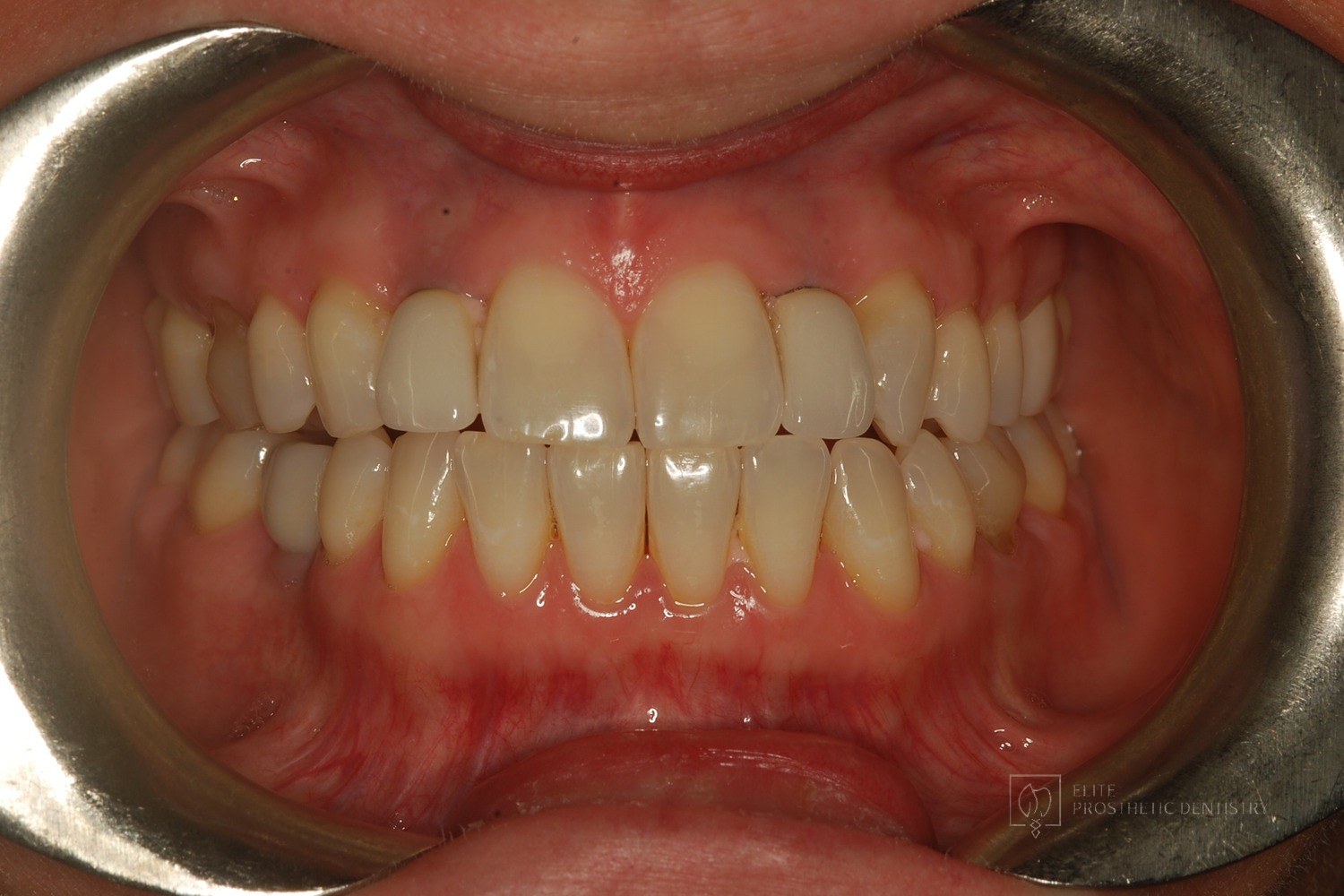 Before
 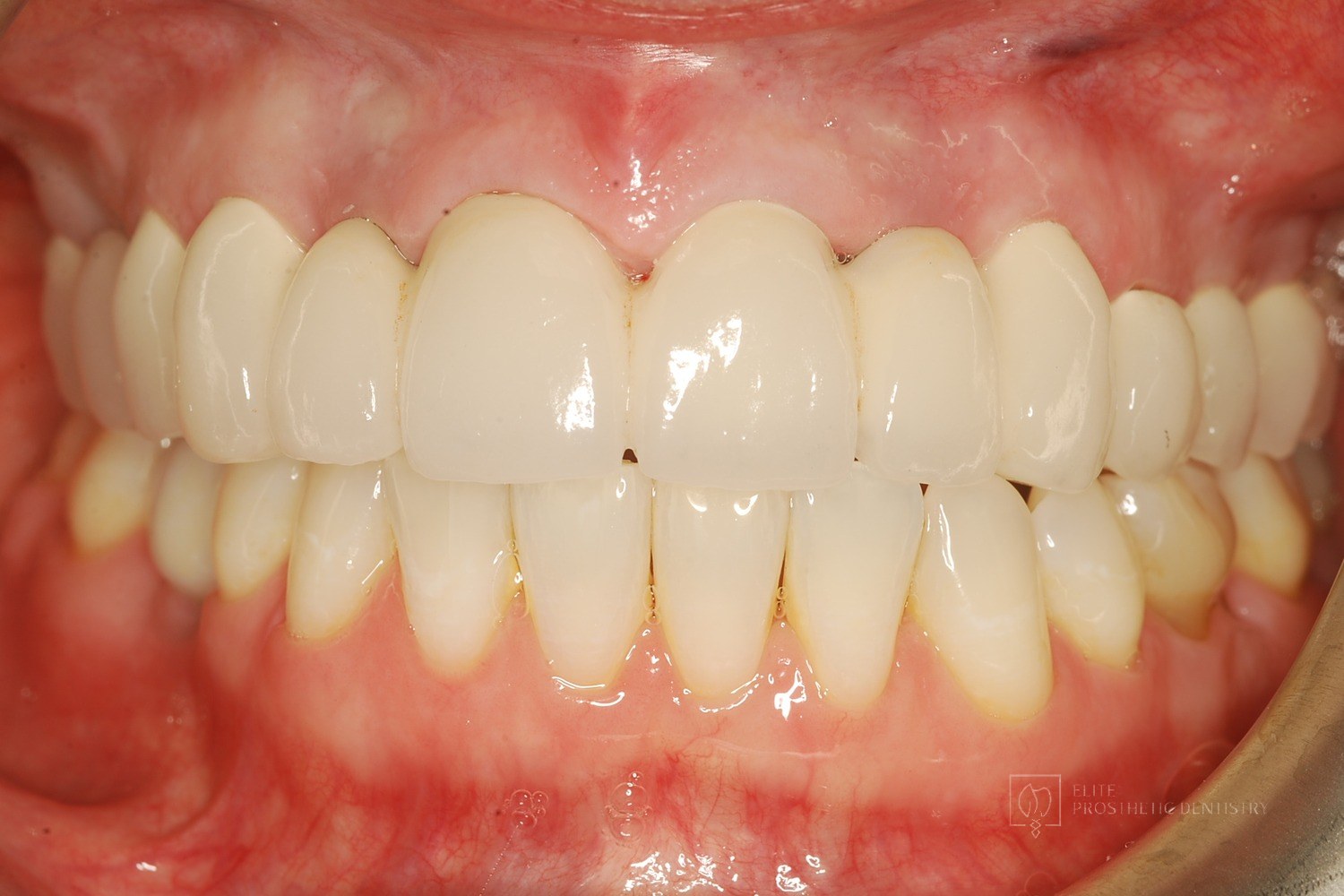 After
After How Older Implant Crowns Were Redesigned for a Better Bite and More Natural Appearance
The patient came in after years of living with implant-supported crowns placed more than twenty years earlier that no longer looked or functioned well. CBCT evaluation, reviewed with a radiologist colleague, showed the implants had been placed too far to the buccal in very thin bone and could not support a healthy long-term restoration.
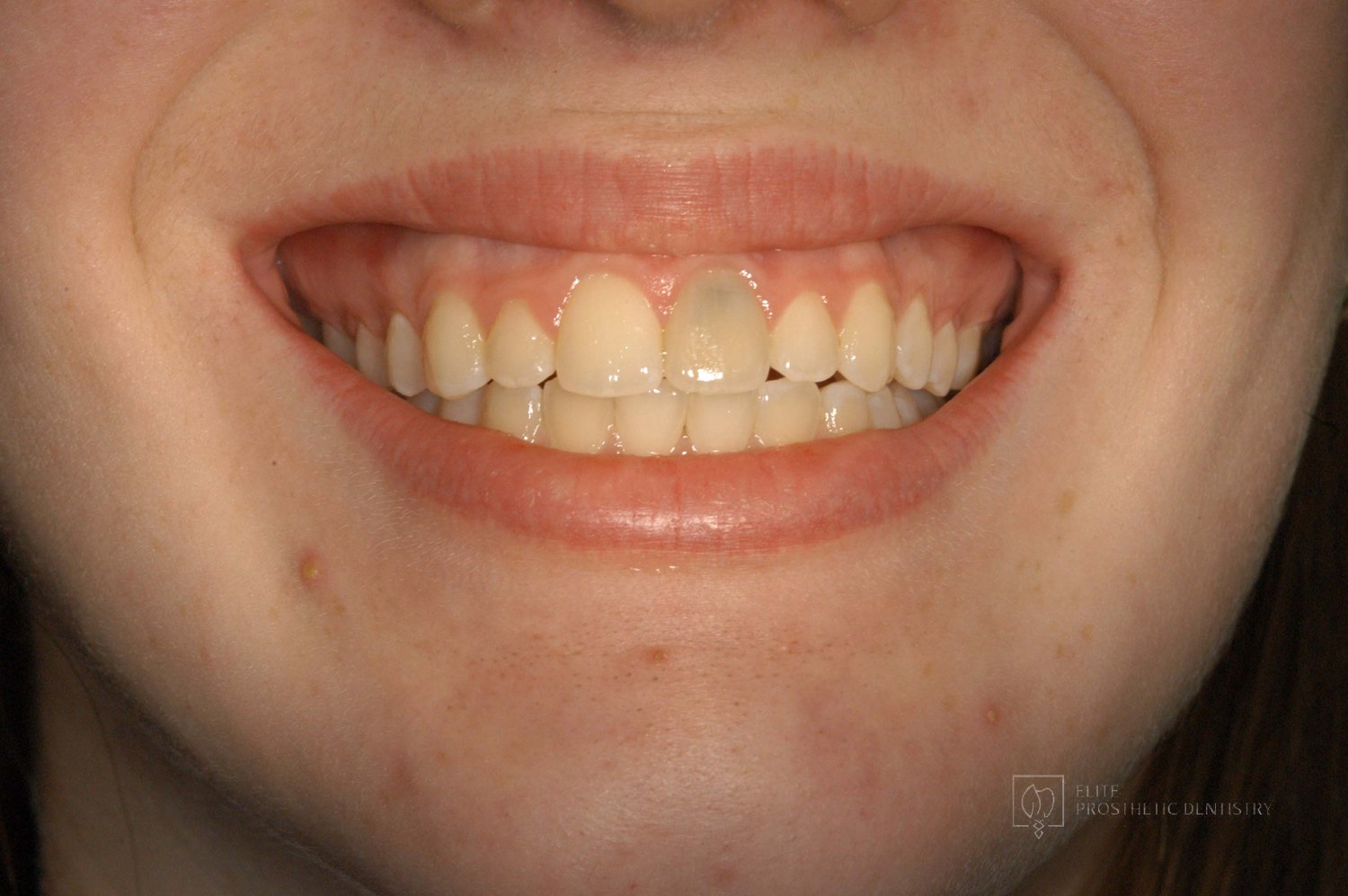 Before After
 How a Front Tooth Lost to Childhood Trauma Was Rebuilt with Bone Grafting and a Long-Lasting Implant
A teenager was referred by her father after earlier trauma left her upper left front tooth slowly failing from root resorption. She was still growing, so an immediate implant was the wrong move. The tooth had to be maintained to buy time, then replaced correctly once she reached skeletal maturity.
 Before
  After
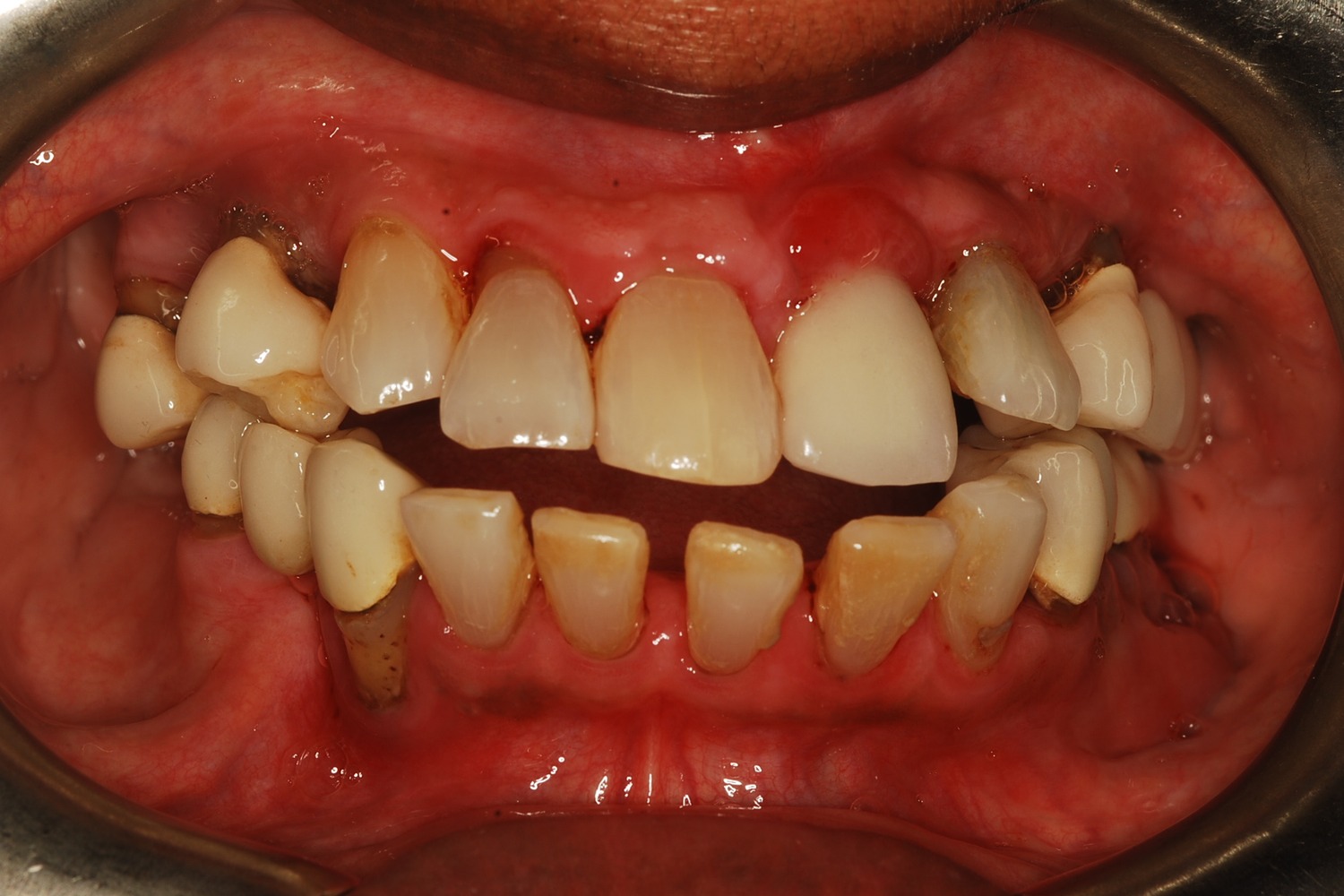
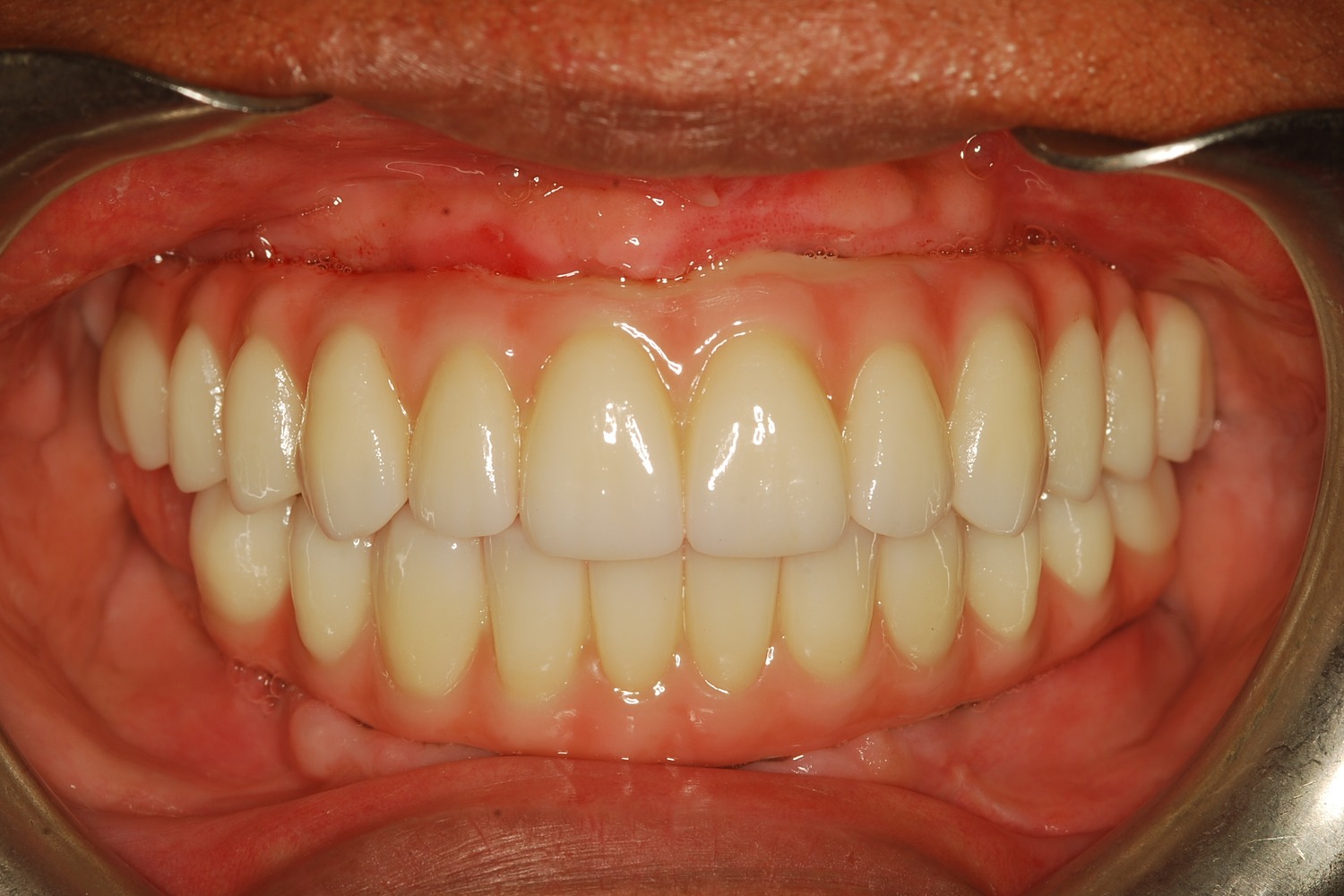
After How Severe Bone Loss and Bite Dysfunction Were Rebuilt with All-on-6 Implants and a Milled Zirconia Hybrid Prosthesis
The patient presented with severe bone loss, advanced periodontal disease, malocclusion, and a dysfunctional bite that required full-arch rebuilding.
Related Articles
Deepen your knowledge with additional insights on this topic.
 Dental Implants
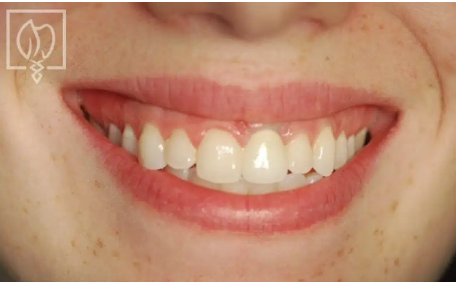
 If a Single Front Tooth Is Replaced with an Implant, Can It Look Natural?
Yes. See the four steps, with real case photos, that make a single front tooth implant indistinguishable from the natural tooth beside it. Washington, DC.
 Dental Implants
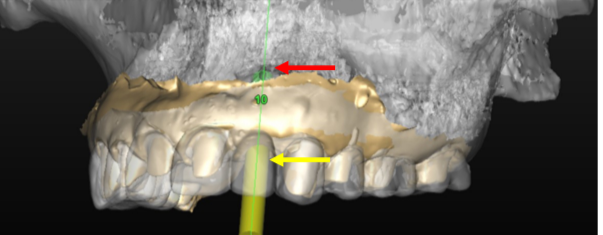
 What Is Precision Implant Placement (PIP)?
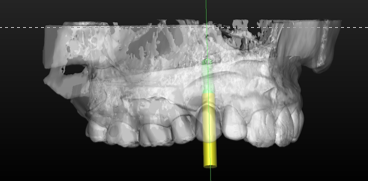
Precision Implant Placement plans each implant virtually on a CBCT scan, then delivers it with a custom surgical guide. See the three steps with real images.
 Dental Implants
 What Is the Ideal Surgical Guide for Precision Implant Placement?
Not all surgical guides are equal. The gold standard is CBCT-based: planned virtually in 3D, 3D printed, and seated on your teeth. A DC prosthodontist explains.