
How to Take Care of Your Dental Implant So It Lasts for Decades
A dental implant is the closest thing dentistry offers to a natural tooth, and caring for one is refreshingly unexotic. No special products, no elaborate rituals. But there is one thing every implant patient should understand clearly, because it is the difference between an implant that serves for decades and one that quietly fails.
The One Threat That Matters
Your implant cannot get a cavity. Titanium does not decay. What an implant absolutely can do is lose the ground it stands on.
Like a natural tooth, an implant relies on healthy gum and bone for support, and like a natural tooth, it accumulates plaque. When plaque matures along the gumline of an implant, the surrounding tissue can become inflamed and infected, a condition called peri-implant disease. Left untreated, that infection progresses from the gum into the bone, and bone loss around an implant can advance until the implant itself is lost. It is the implant world’s version of gum disease, and it is the primary reason implants fail after years of good service. We cover the mechanics in what causes dental implant failure.
The good news: the prevention is ordinary.
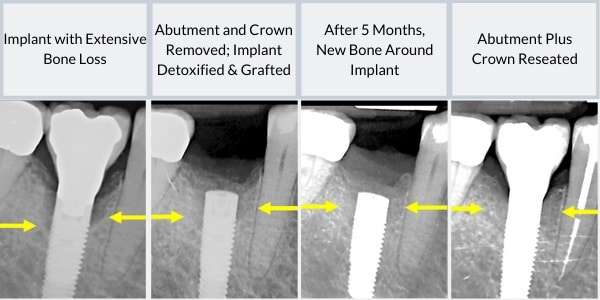
A failing implant saved with bone grafting in our practice. See the full case
The Daily Routine
Brush twice a day, paying honest attention to the gumline around the implant crown, where plaque does its work. Clean between teeth daily; floss, interdental brushes, or a water flosser all work, and we will show you what suits your specific restoration at your visit. That is the entire home program. The discipline is in the consistency, not the complexity.
Two habits deserve special mention. Never use your teeth, and especially your implant, as scissors or tools; opening packages with your teeth is how restorations chip and components loosen. And if you grind or clench at night, say so, because bruxism loads an implant in ways it was not engineered for, and a simple nightguard removes the risk.
The Professional Half of the Bargain
Regular professional cleanings matter for implants just as they do for natural teeth, because a hygienist removes the mature biofilm that home care cannot, and because trained eyes catch tissue changes around an implant early, when they are still easy to address. Keep your regular schedule, and make sure the team cleaning your teeth knows which tooth is the implant.
Between visits, watch for the signals: bleeding when you brush near the implant, redness, swelling, tenderness, or any hint of movement. None of those is normal for a healthy implant. Early evaluation is cheap insurance; our practice also repairs and salvages failing implants, and the cases that end well are overwhelmingly the ones that came in early.
Protecting an Investment That Should Outlast Everything Else
Here is the encouraging context for all this diligence: a precisely placed, well-restored, properly maintained implant is one of the most durable things in all of dentistry. Dr. Marlin has placed more than 3,900 dental implants over a career of more than 40 years, and our documented in-practice implant success rate is above 97% for implants placed more than 20 years ago. You can still enjoy your favorite foods, chew without strategy, and forget which tooth is which.
Maintenance is the inexpensive half of that bargain. The other half, precise placement and a properly engineered restoration, is decided when you choose who does the work, which is why implant care truly begins with how the implant is planned and placed.
Whether you are considering a first implant or want an existing one evaluated, call 202-244-2101 or schedule a consultation with Dr. Gerald Marlin at Elite Prosthetic Dentistry in Friendship Heights, Washington, DC.
See How We Resolve These Problems
Our patient success stories show real cases and real results. Browse outcomes from a specialist prosthodontist with decades of experience and 3,900+ implants placed.
Key Takeaways
- ✓ An implant cannot get a cavity, but the gum and bone around it can become infected. Peri-implant disease is the main threat to a healthy implant.
- ✓ The care routine is unglamorous and effective: brush twice daily, clean between teeth, and keep regular professional cleanings so biofilm never matures.
- ✓ Never use teeth, natural or implant, as tools, and take grinding seriously with a nightguard if you have one.
- ✓ Bleeding, redness, or swelling around an implant is never normal. Early evaluation is the difference between a simple fix and a bone problem.
- ✓ A well-placed, well-maintained implant can serve for decades. Maintenance is the cheap half of that bargain.
Frequently Asked Questions
Do dental implants need special care?
No special products, just consistent ones. Brush twice daily, clean between teeth with floss or interdental brushes, and keep regular hygiene visits. The goal is preventing plaque from maturing around the implant, exactly as with natural teeth.
Can a dental implant get infected?
Yes. While the implant itself cannot decay, the surrounding gum and bone can develop peri-implant disease, an infection driven by plaque accumulation. Untreated, it can destroy the bone anchoring the implant and ultimately cost you the implant. This is the main reason implant maintenance matters.
How often should an implant be professionally checked?
Keep the same regular cleaning and checkup schedule as for natural teeth, and make sure your hygienist knows about the implant. Professional visits remove the biofilm home care misses and allow early detection of tissue changes around the implant while they are still simple to address.
What are warning signs of a problem with my implant?
Bleeding when brushing near the implant, redness or swelling of the gum, tenderness, a bad taste, or any sensation of looseness. None of these is normal. Prompt evaluation protects the bone, and caught early, most problems are very manageable.
Can I chew normally with a dental implant?
Yes, that is the point of the implant. Enjoy your normal diet, including firm foods. The exceptions apply to all teeth: do not crack ice or shells, and never use teeth as scissors or tools.
Related Patient Success Stories
Explore similar patient success stories demonstrating our expertise in advanced prosthetic dentistry.
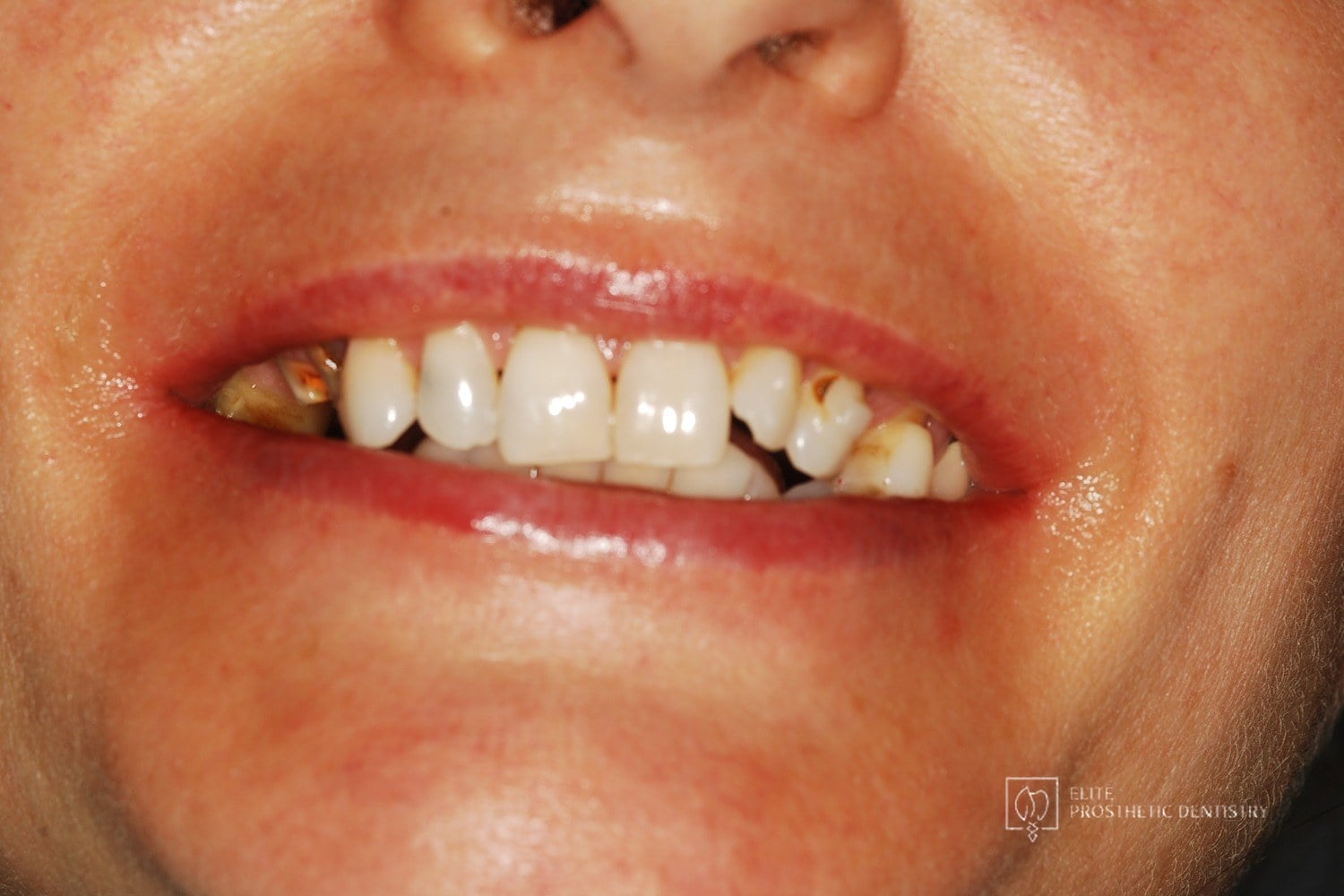 Before
 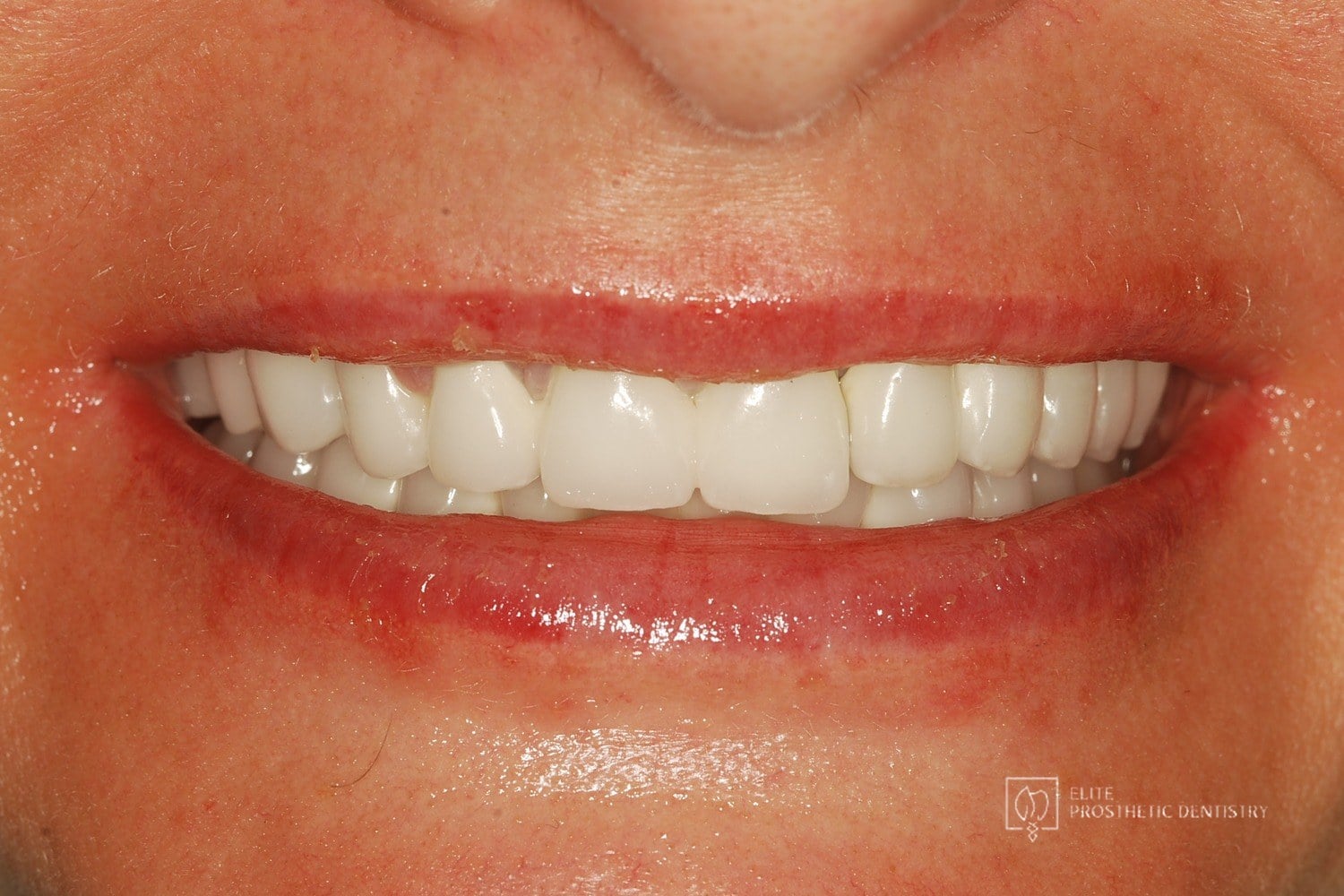 After
After How Aging, Failing Dentistry Was Replaced with a Coordinated Full-Mouth Implant and Crown Reconstruction
The patient presented with throbbing upper-molar pain, long-standing infections, multiple root canals and unfinished prior treatment, generalized sensitivity, and several hopeless teeth.
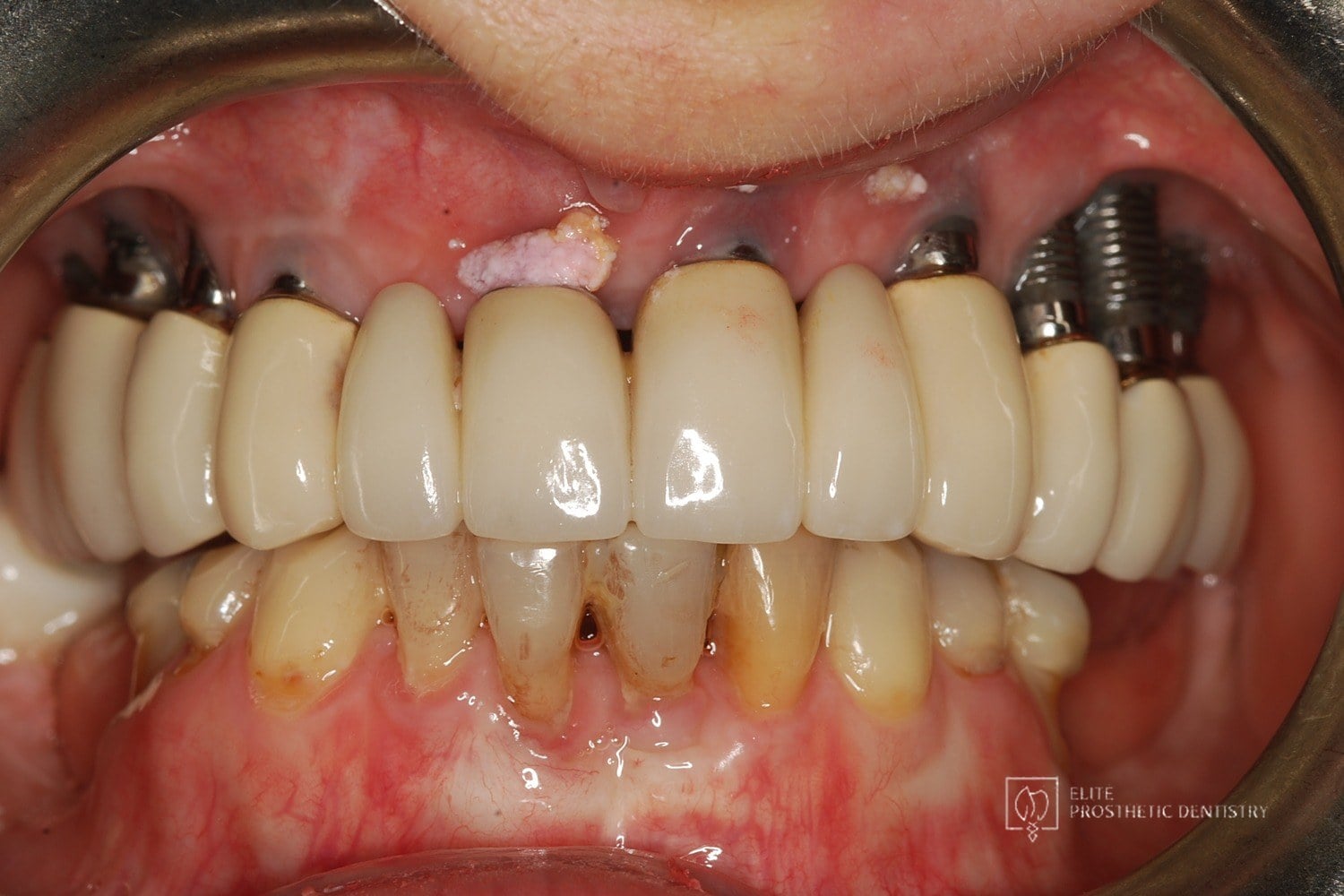 Before
 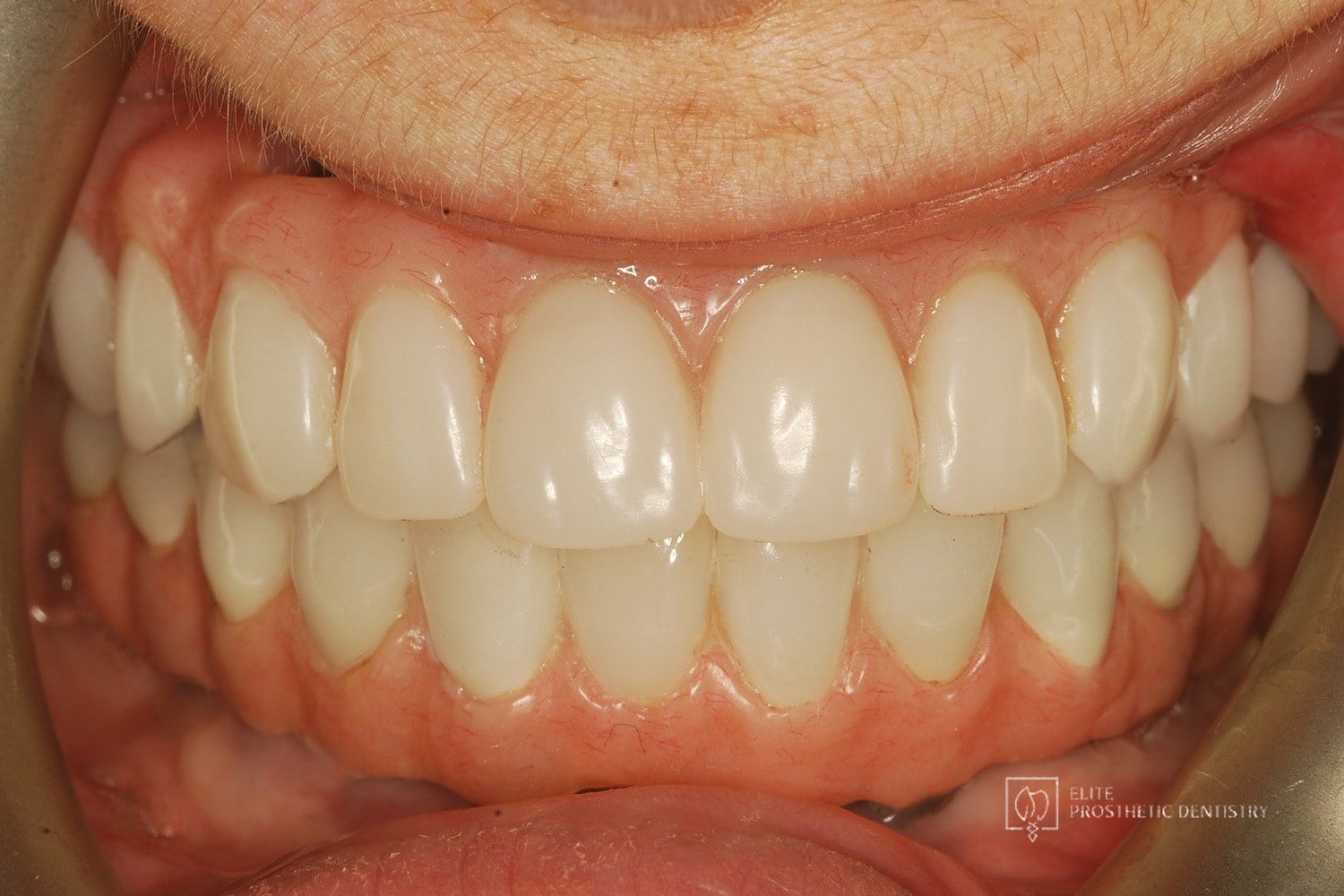 After
After How Failing Implants and Severe Bone Loss Were Rebuilt Into a Stable Full-Arch Implant Reconstruction
The patient presented with significant complications from previously placed implants, severe bone loss, failing posterior implants, and an unesthetic full-arch bridge. Both arches required full reconstruction, with the upper arch showing the most advanced bone loss and instability.
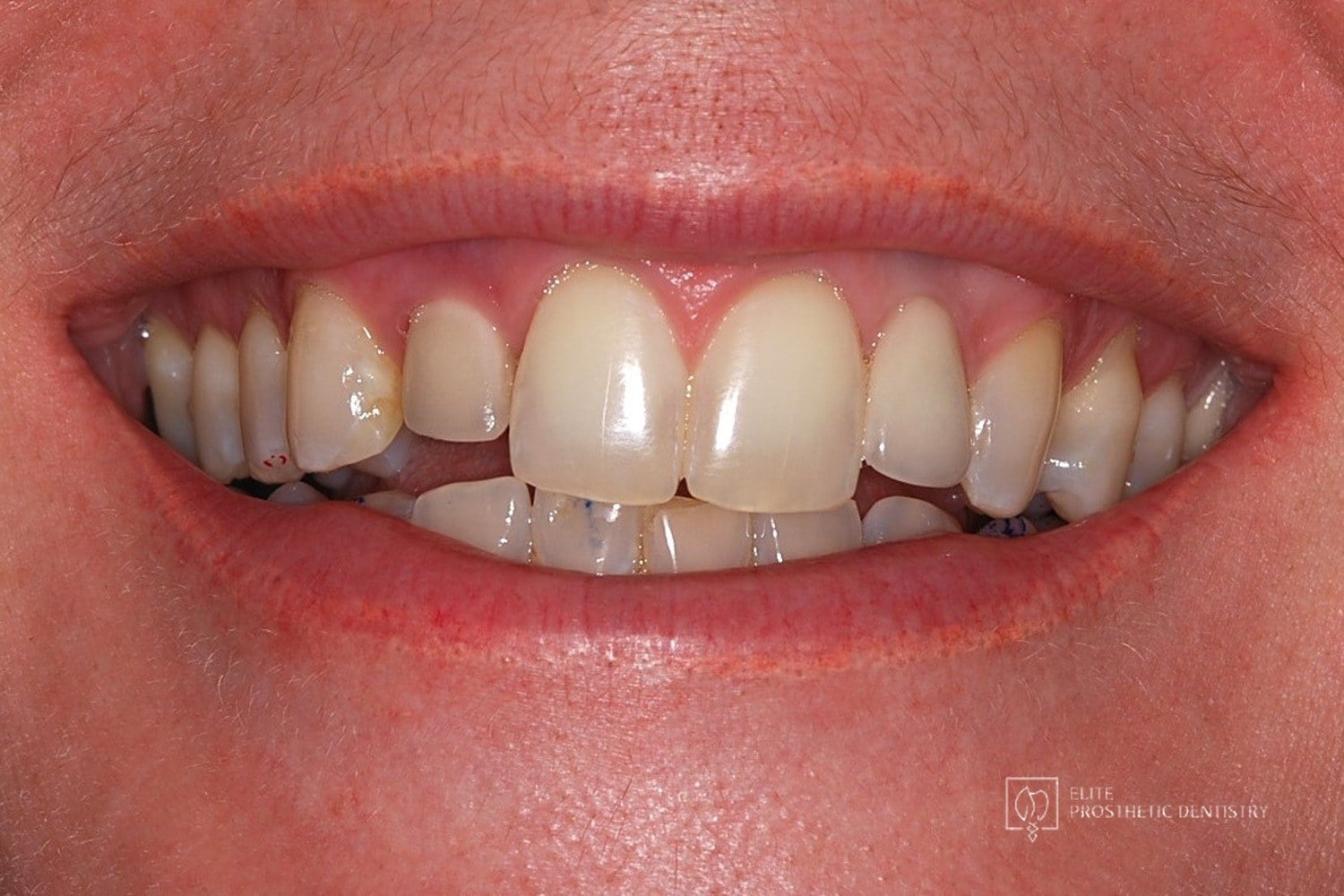 Before
 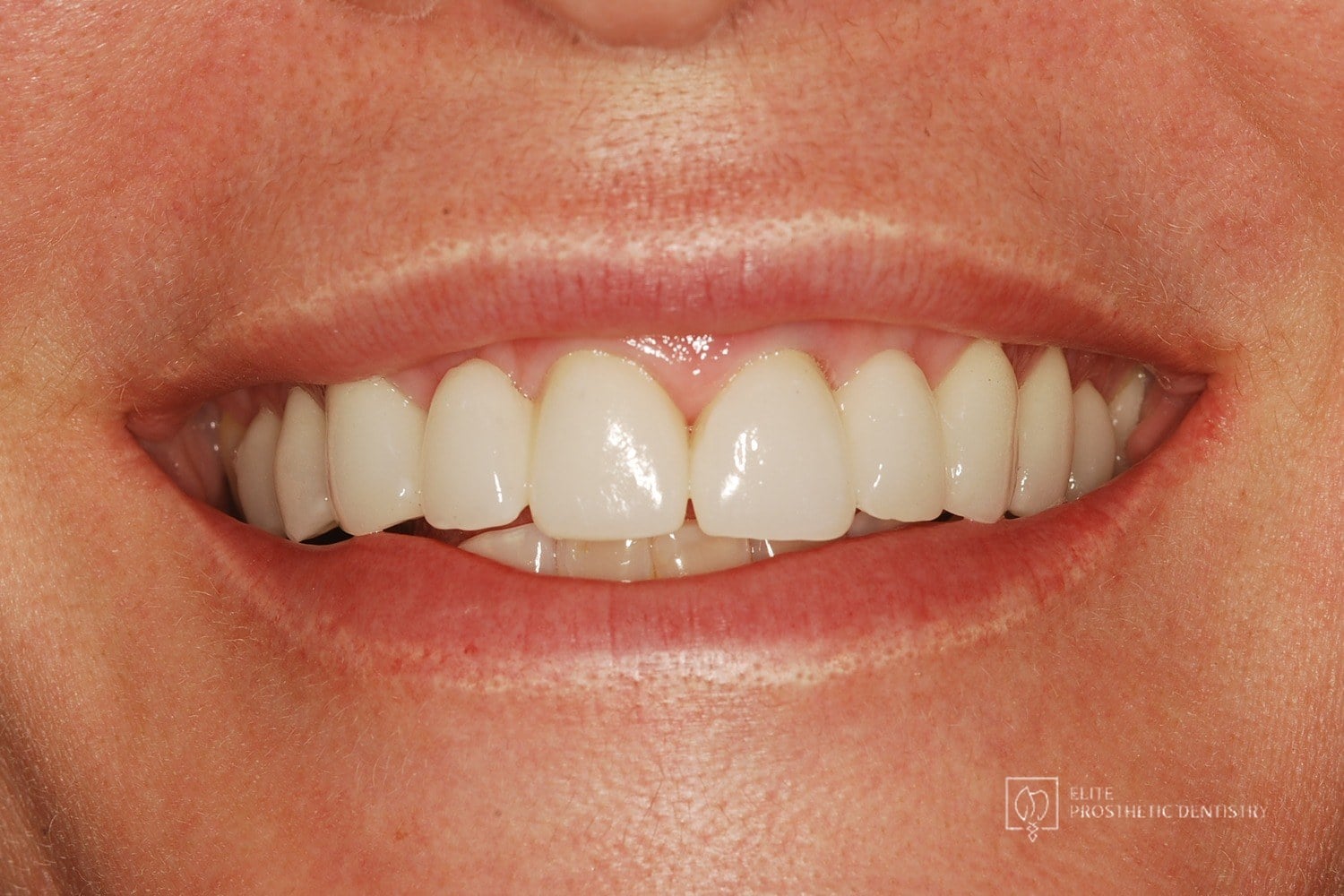 After
After How Failing Lateral Incisor Implants Were Replaced with Custom Zirconia Bridges After Severe Bone Loss Made Replacement Implants Impossible
Comprehensive examination including CBCT imaging revealed significant bone loss surrounding implants that were placed outside the buccal plate, most likely due to placement without a CBCT-generated surgical guide. The implants were determined non-salvageable, and the alveolar ridge was too narrow to support replacement implants without extensive reconstruction.
Related Articles
Deepen your knowledge with additional insights on this topic.
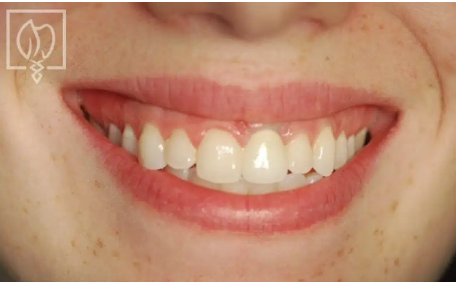 Dental Implants
 If a Single Front Tooth Is Replaced with an Implant, Can It Look Natural?
Yes. See the four steps, with real case photos, that make a single front tooth implant indistinguishable from the natural tooth beside it. Washington, DC.
 Dental Implants
 What Is Precision Implant Placement (PIP)?
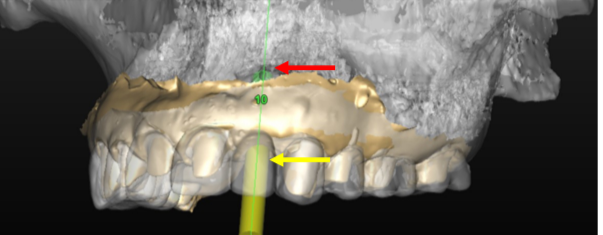
Precision Implant Placement plans each implant virtually on a CBCT scan, then delivers it with a custom surgical guide. See the three steps with real images.
 Dental Implants
 What Is the Ideal Surgical Guide for Precision Implant Placement?
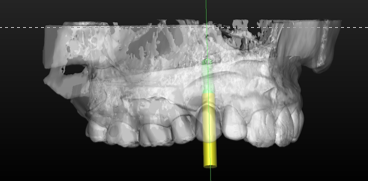
Not all surgical guides are equal. The gold standard is CBCT-based: planned virtually in 3D, 3D printed, and seated on your teeth. A DC prosthodontist explains.