
Treating a Collapsed Bite with a Complete Smile Makeover and New Dentures
Documented before-and-after view

Final documented view
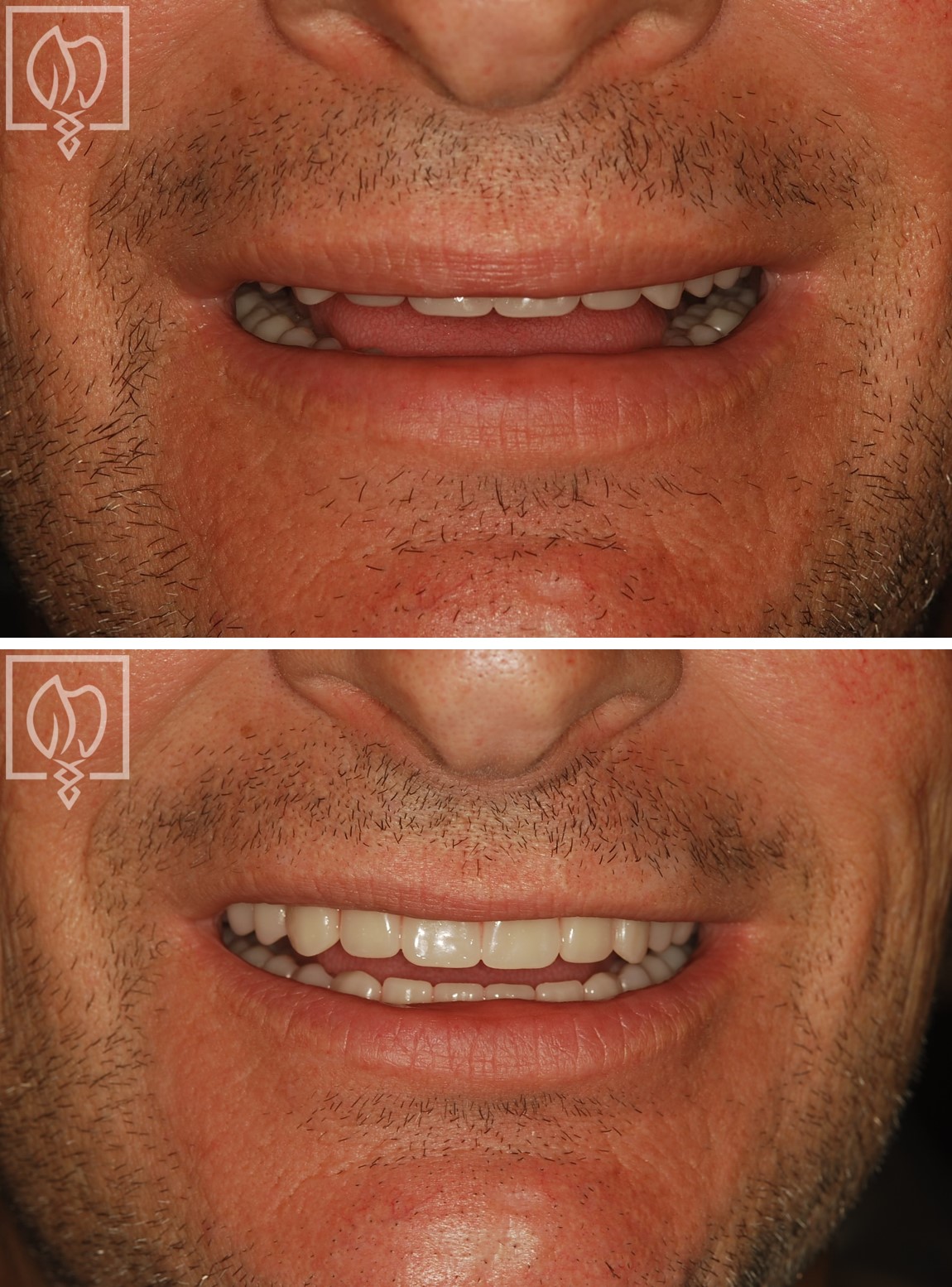
A collapsed bite restored with a complete smile makeover and new dentures
Restoring a collapsed bite with new custom dentures in Washington, DC. This documented case at Elite Prosthetic Dentistry rebuilt the appearance and chewing function of a patient whose bite had collapsed, aging his face and hiding his teeth when he smiled. Treatment was planned and completed by Dr. Gerald Marlin, D.M.D., M.S.D., a prosthodontist focused on complete dentures, removable prosthetics, and complex restorative care.
Case at a Glance
- Treatment
- Complete smile makeover with new custom dentures restoring a collapsed bite
- Approach
- Custom impressions, verified bite height with wax-ups and try-ins, in-house lab fabrication
- Case Type
- Full mouth reconstruction / Bite rehabilitation
- Patient Concern
- His bite had collapsed severely, aging his facial appearance, hiding his teeth when he smiled, and making chewing difficult with dentures that no longer fit well.
- Decision Point
- Copy the old, collapsed bite into new dentures, or rebuild the correct bite height from the ground up before fabricating the final dentures.
- Outcome
- The new dentures restored his facial proportions, made his teeth visible when smiling, and returned stable chewing and clear speech, with an implant phase now under discussion.
- Why It Matters
- Shows that denture success depends on establishing correct bite height before fabrication, since vertical dimension governs facial appearance, speech, and chewing, and that copying a collapsed bite would only reproduce the same problems.
The presenting condition
The patient came to the practice dissatisfied with both the look and the function of his existing dentures. His bite had collapsed severely, and that loss of height had changed his facial proportions enough to make him look much older than his actual age. When he tried to smile, his teeth barely showed, and he had become self-conscious enough about it that he rarely smiled at all.
Function had declined along with appearance. Extensive underlying bone loss had left less ridge for the dentures to rest on, and the appliances he was wearing no longer provided the fit and stability that comfortable chewing requires. Eating had become difficult work, and the combined effect on his nutrition, his social confidence, and his daily quality of life was significant.
Clinical Findings
- →Severely collapsed bite that altered facial proportions and aged his appearance
- →Teeth not visible when smiling, leading to self-consciousness and a reluctance to smile
- →Extensive underlying bone loss
- →Existing dentures no longer providing the stability needed for effective chewing
- →Meaningful impact on nutrition, social confidence, and quality of life
Why this case required prosthodontic-level planning
Complete dentures look simple from the outside. In practice they are among the least forgiving prosthetics in dentistry, because everything depends on decisions made before anything is fabricated. The vertical dimension of the bite determines how the lower third of the face looks, how clearly a person speaks, and whether the jaw can chew efficiently. Set too low, the face collapses and ages, sometimes by what appears to be a full generation. The impression technique determines whether a denture grips the available ridge or floats loose whenever the surrounding muscles move. And dentures that have lost their fit do more than annoy: they can accelerate bone loss over time, shrinking the very foundation they rest on.
When a bite has already collapsed and bone loss is extensive, there is no shortcut. Copying the old dentures would only reproduce the old problems on a new base. While denture relines and repairs can sometimes restore a serviceable fit, a denture that has drifted this far from a healthy scheme calls for complete replacement, planned backward from the endpoint: first establish where the teeth and the bite should sit for this patient’s face, speech, and chewing, then verify it, and only then fabricate. That endpoint-first sequence is prosthodontic planning, and it is the difference between replacing an appliance and restoring a face.
The decision behind the result: rebuilding the bite height before building the dentures
The pivotal judgment in this case was refusing to treat denture fabrication as a copying exercise. The existing appliances had lost the correct vertical dimension, so nothing about them could serve as the blueprint. Dr. Marlin instead re-established the ideal height of bite in deliberate steps, because bite height directly affects how a person looks, chews, and speaks. Too little height ages the face; the wrong height interferes with speech and makes chewing ineffective.
Two techniques carried that decision into the final result. First, special custom impressions were designed to capture the maximum amount of available bone for support while avoiding the interfering muscle attachments that naturally lift dentures and make them feel like they float during chewing. With extensive bone loss, every bit of usable ridge mattered, and retention had to be balanced carefully against comfort. Second, the proposed result was proven before it was made permanent. Diagnostic wax-ups and try-in dentures let the patient see and approve his new appearance while changes were still easy, so the final dentures were fabricated only after the esthetics and the bite had been confirmed in his own mouth.
The treatment plan
-
1
Comprehensive prosthodontic evaluation
Full assessment of the patient's remaining bone structure, the fit of his existing dentures, and his functional and esthetic goals.
-
2
Custom impression technique
Special custom impressions captured the maximum amount of available bone for support while avoiding the interfering muscle attachments that lift dentures and undermine stability during chewing.
-
3
Bite height established and verified
The ideal vertical dimension was established through a sequence of critical steps, then confirmed with diagnostic wax-ups and try-in dentures so the patient could approve his appearance before final fabrication.
-
4
In-house laboratory fabrication
The practice's in-house laboratory team hand-crafted the final dentures using precision techniques, selecting and arranging the teeth to create a natural appearance in harmony with his facial features.
The outcome
The new dentures produced an immediate and visible change. With the bite restored to its correct vertical dimension, the patient’s facial proportions recovered and he looked younger and more vibrant. His teeth now show naturally when he smiles, which was the single change he had been most self-conscious about.
The functional gains were just as meaningful. The new dentures seat with excellent retention and stability, so he can chew effectively and enjoy meals again without the appliances slipping or shifting, and he speaks clearly without worrying about movement or clicking. The final dentures were hand-crafted in the practice’s in-house laboratory in direct coordination with Dr. Marlin, keeping control over fit, contour, function, and esthetics in one place from impression to delivery.
With appearance and function restored, the patient chose to keep planning rather than stop. He is now discussing a next phase of care: the placement and restoration of dental implants to add even greater stability and to help preserve his remaining bone. Well-made conventional dentures do not close that door. They restore function and confidence now, while implant-supported options are considered deliberately rather than under pressure.
Result Highlights
- ✓Bite restored to the ideal vertical dimension, recovering natural facial proportions
- ✓Younger, more vibrant appearance with teeth visible when smiling
- ✓Excellent denture retention and stability for effective, comfortable chewing
- ✓Clear, confident speech without denture movement or clicking
- ✓Dentures hand-crafted by the practice's in-house laboratory
- ✓A planned path toward implant support to further stabilize the result and help preserve bone
Who this case may sound familiar to
This story tends to resonate with patients in a few recognizable situations:
- Your dentures have gradually changed the way your face looks, and people guess you are older than you are.
- Your teeth barely show when you smile, and you have caught yourself smiling less because of it.
- Chewing has become work: your dentures shift, float, or will not hold steady through a meal.
- You have been told you have significant bone loss and wonder whether dentures can still fit well.
- You want dentures made carefully and correctly once, rather than remade every few years.
If any of those describe where you are, a consultation with Dr. Marlin can establish the diagnostic picture and the specific options for your case.
Frequently asked questions
Can new dentures really make you look younger?
Often, yes. When a bite collapses, the lower third of the face loses height, the lips and cheeks lose support, and the face can appear almost a generation older. Dentures built to the correct vertical dimension restore that lost facial height and support, which is why a well-planned denture can visibly reverse an aged appearance.
Why do dentures feel loose or seem to float when chewing?
Two things are usually at work: the ridge under the denture has shrunk over time, and the denture border sits on muscle attachments that lift it whenever the mouth moves. Custom impression techniques that capture the maximum available bone while staying clear of those attachments are the main defense against a floating denture.
What is a denture try-in and why does it matter?
A try-in is a preview version of the denture, typically set in wax, worn briefly so the patient and the prosthodontist can evaluate appearance, bite height, lip support, and speech before anything is finalized. Changes at the try-in stage are simple. Changes after final processing are not, which is why careful practices never skip this step.
Do dentures cause bone loss?
The jaw ridges naturally resorb after teeth are lost, and dentures that no longer fit can accelerate that bone loss over time. Well-fitting dentures distribute forces more favorably, and dental implants can help preserve remaining bone, which is one reason implant support is often discussed as a later phase for denture wearers.
Can a denture wearer move to dental implants later?
Frequently, yes, depending on the amount and quality of remaining bone. Many patients begin with well-made conventional dentures and later add implant support for greater stability and bone preservation. Starting with excellent dentures restores function and appearance now while the implant phase is planned deliberately with a prosthodontist.
Why see a prosthodontist for complete dentures?
Prosthodontics is the dental specialty devoted to restoring and replacing teeth, and complete dentures draw on nearly all of it: facial support, vertical dimension, speech, impression technique, and esthetics have to be solved together. A specialty-trained prosthodontist plans those variables as one connected system rather than one appliance at a time.
More about the work behind this case
This case sits at the intersection of complete dentures, smile makeover planning, and the groundwork that precedes dental implant care. The diagnostic discipline and in-house laboratory control behind it are part of the practice philosophy that supports restorative work built to last.
Elite Prosthetic Dentistry treats patients from across the DMV including Bethesda, Chevy Chase, McLean, Arlington, Potomac, and Great Falls, with a record of out-of-area patients traveling to the practice for complex restorative care.
Related Patient Success Stories
Explore similar patient success stories demonstrating our expertise in advanced prosthetic dentistry.
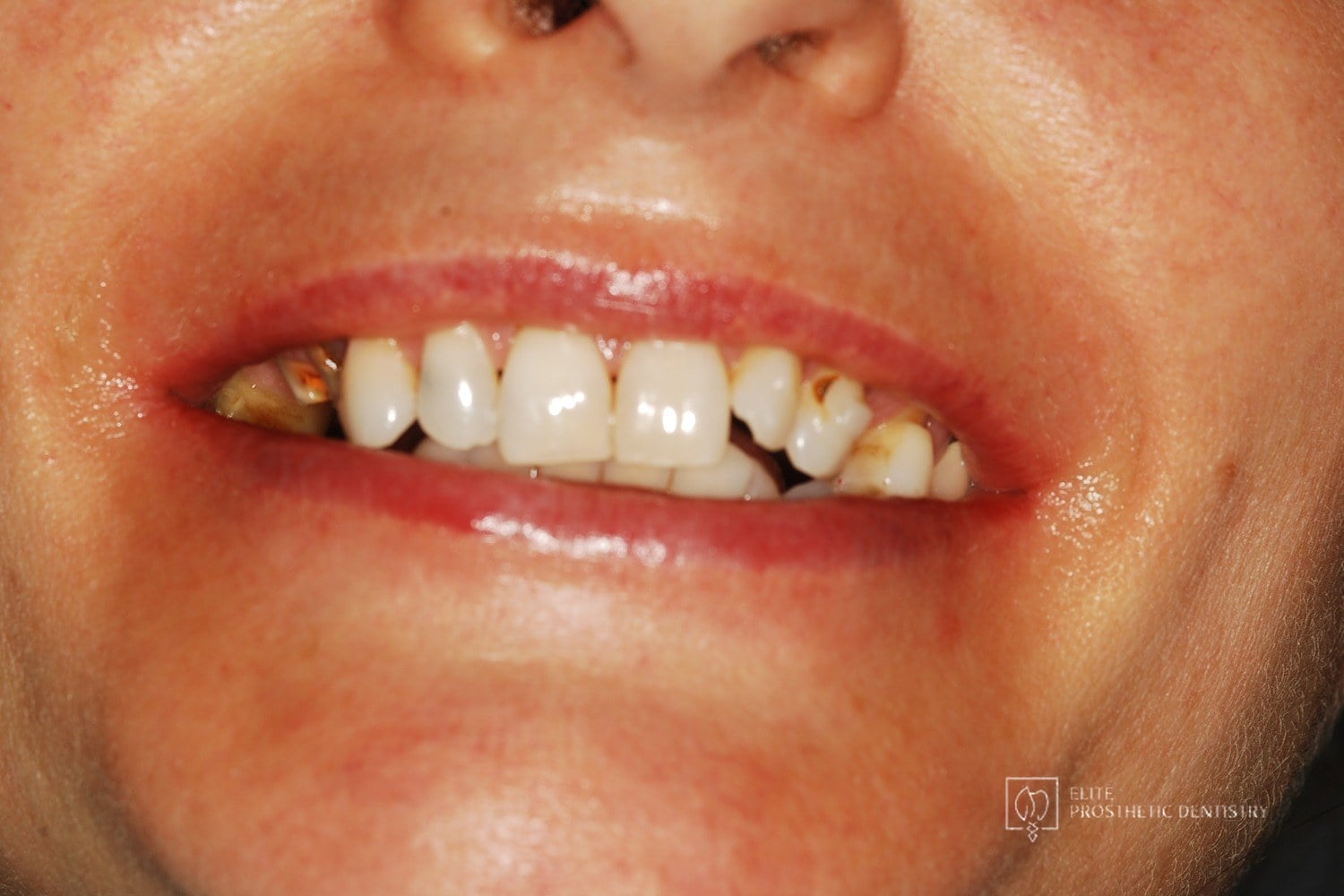 Before
 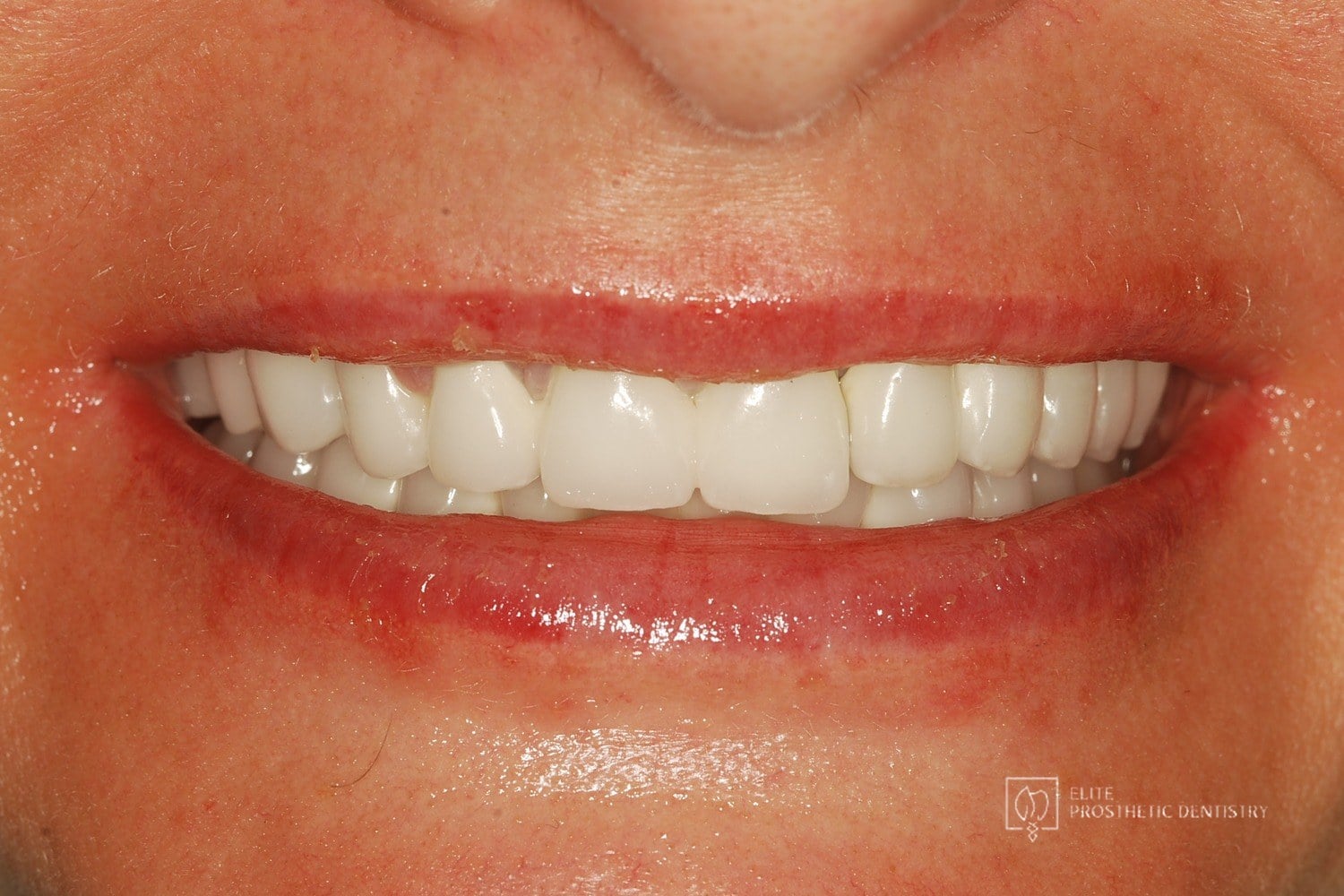 After
After How Aging, Failing Dentistry Was Replaced with a Coordinated Full-Mouth Implant and Crown Reconstruction
The patient presented with throbbing upper-molar pain, long-standing infections, multiple root canals and unfinished prior treatment, generalized sensitivity, and several hopeless teeth.
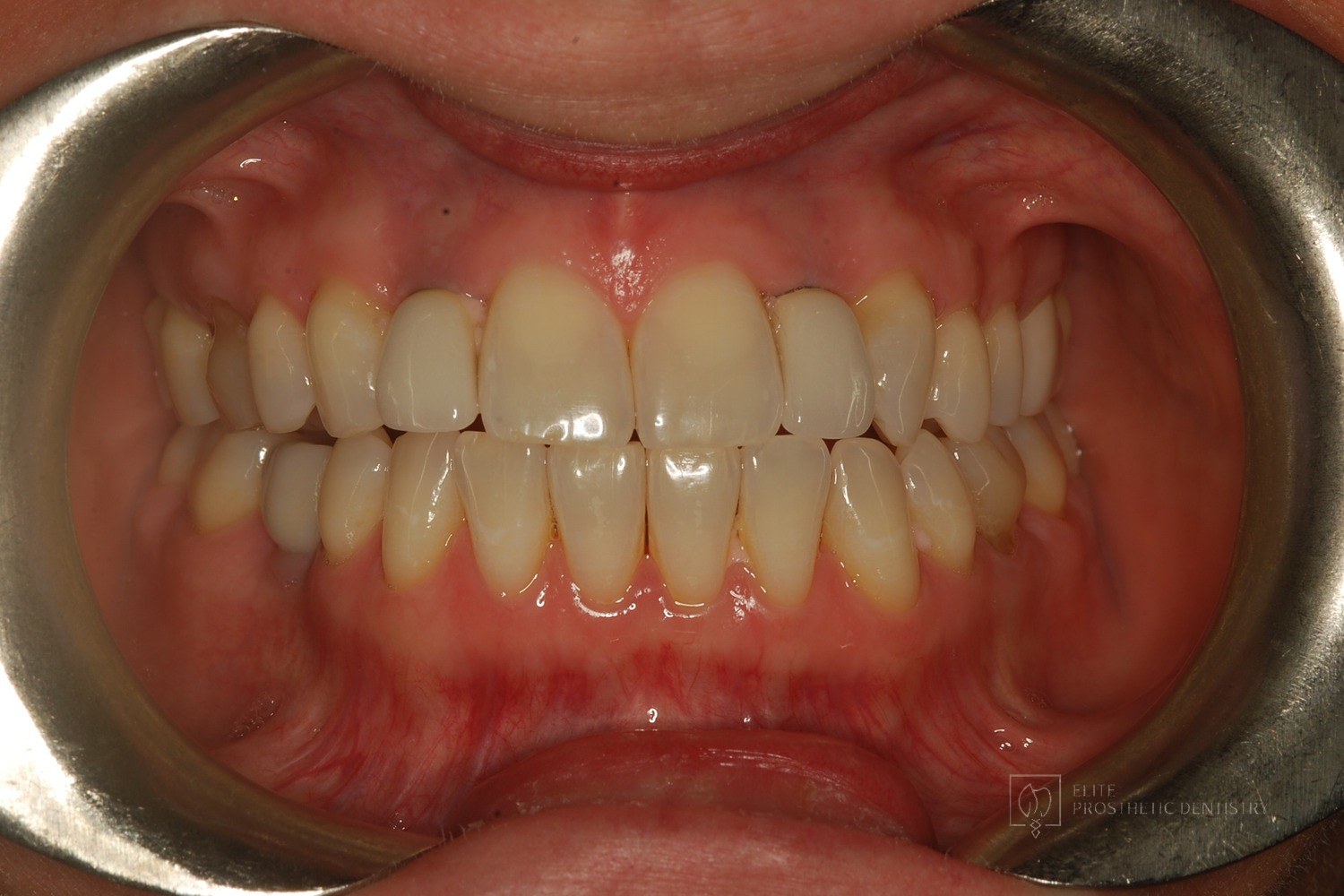 Before
  After
After How Older Implant Crowns Were Redesigned for a Better Bite and More Natural Appearance
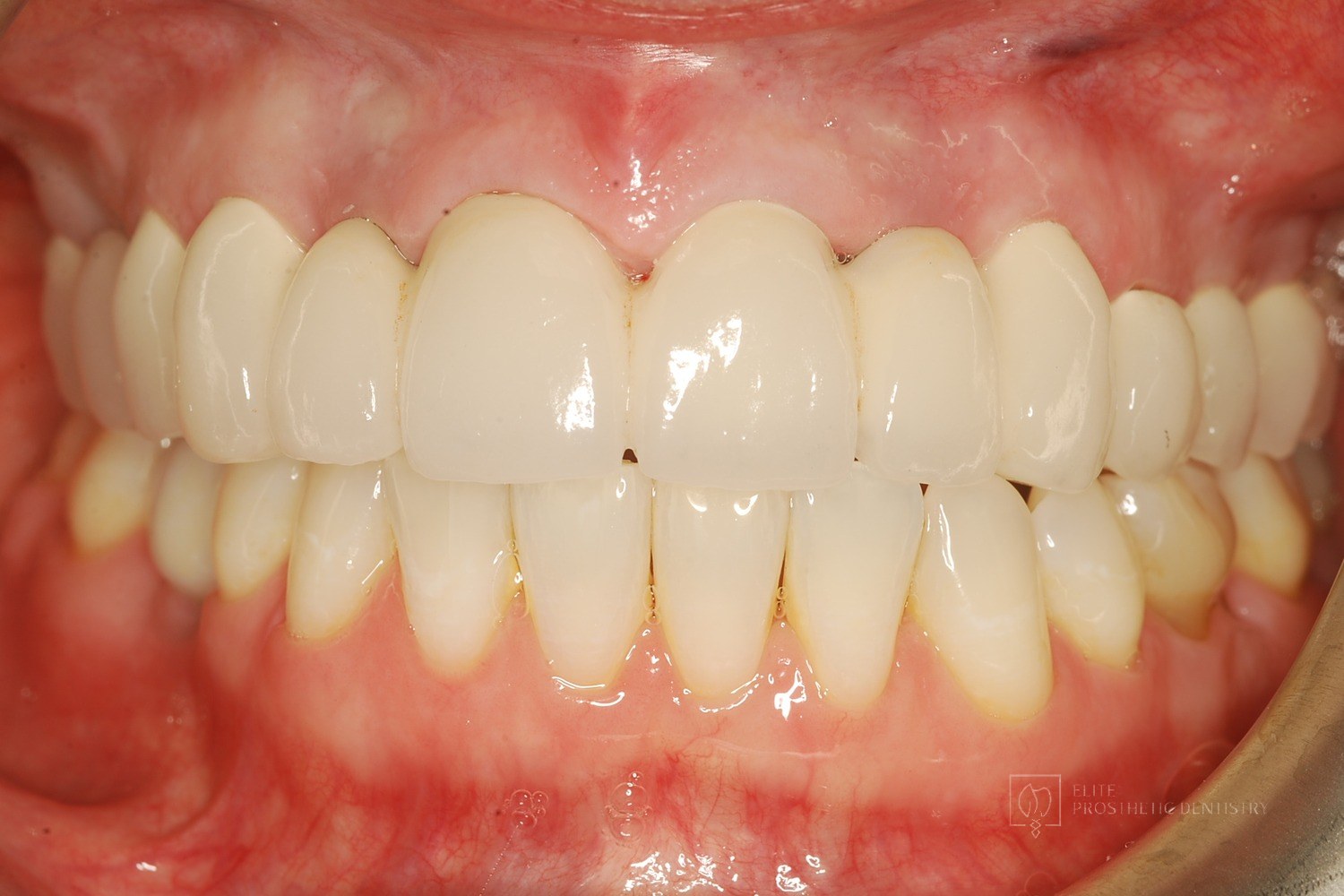
The patient came in after years of living with implant-supported crowns placed more than twenty years earlier that no longer looked or functioned well. CBCT evaluation, reviewed with a radiologist colleague, showed the implants had been placed too far to the buccal in very thin bone and could not support a healthy long-term restoration.
 Before
  After
After How Severe Bone Loss and Bite Dysfunction Were Rebuilt with All-on-6 Implants and a Milled Zirconia Hybrid Prosthesis
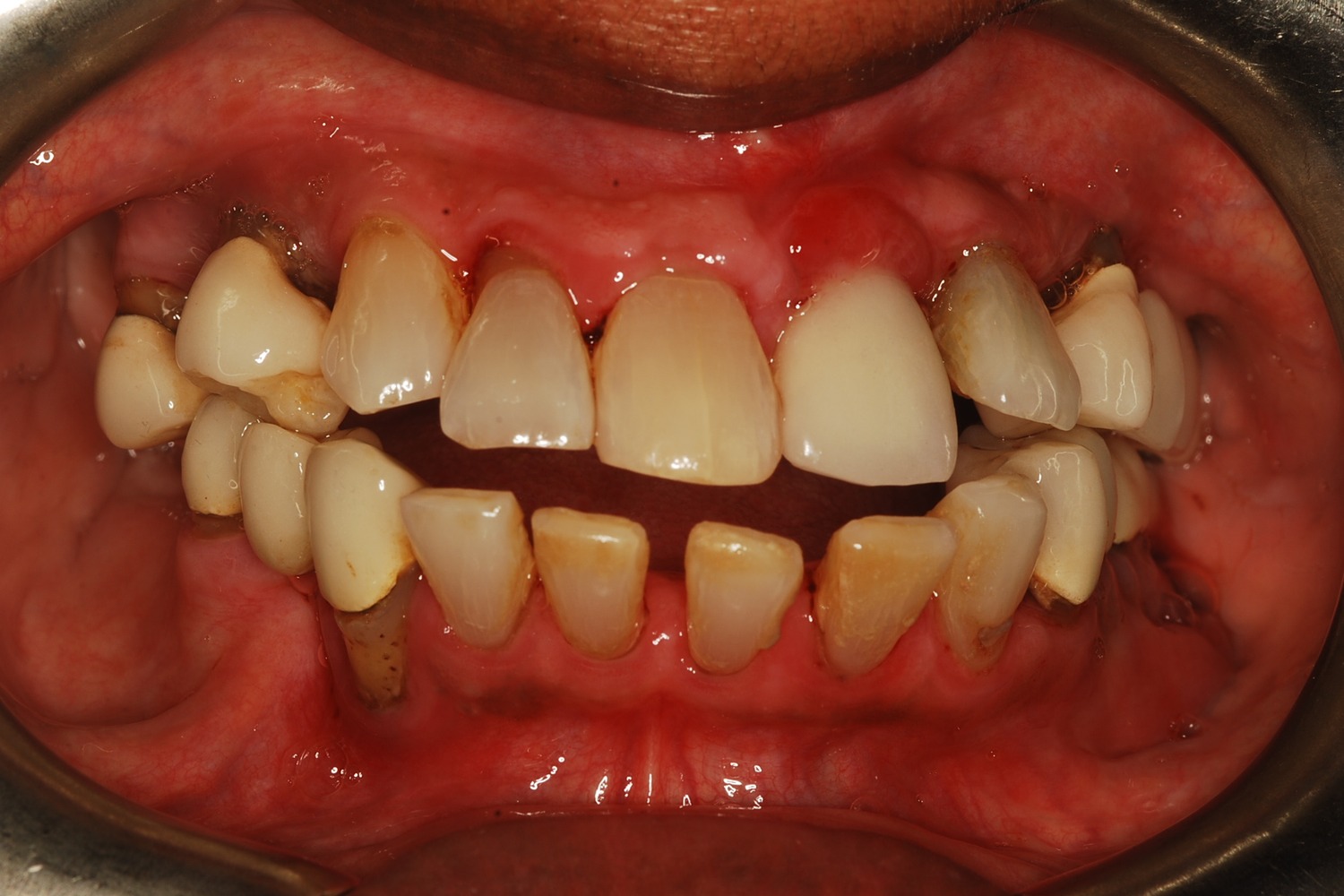
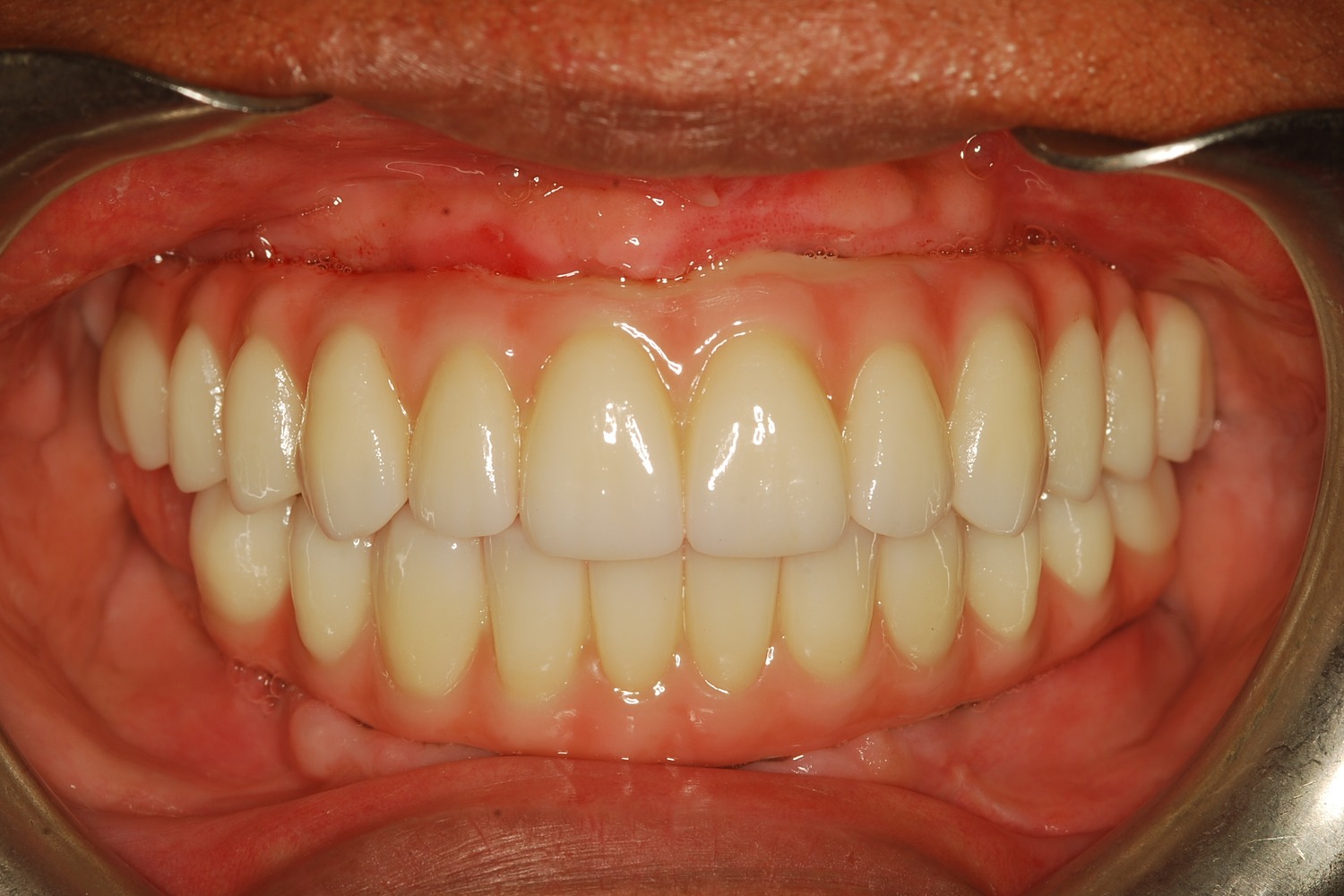
The patient presented with severe bone loss, advanced periodontal disease, malocclusion, and a dysfunctional bite that required full-arch rebuilding.