
Implant Supported Reconstruction: Failing Bridgework and Missing Back Teeth Rebuilt with Coordinated Specialist Care
Full-face view
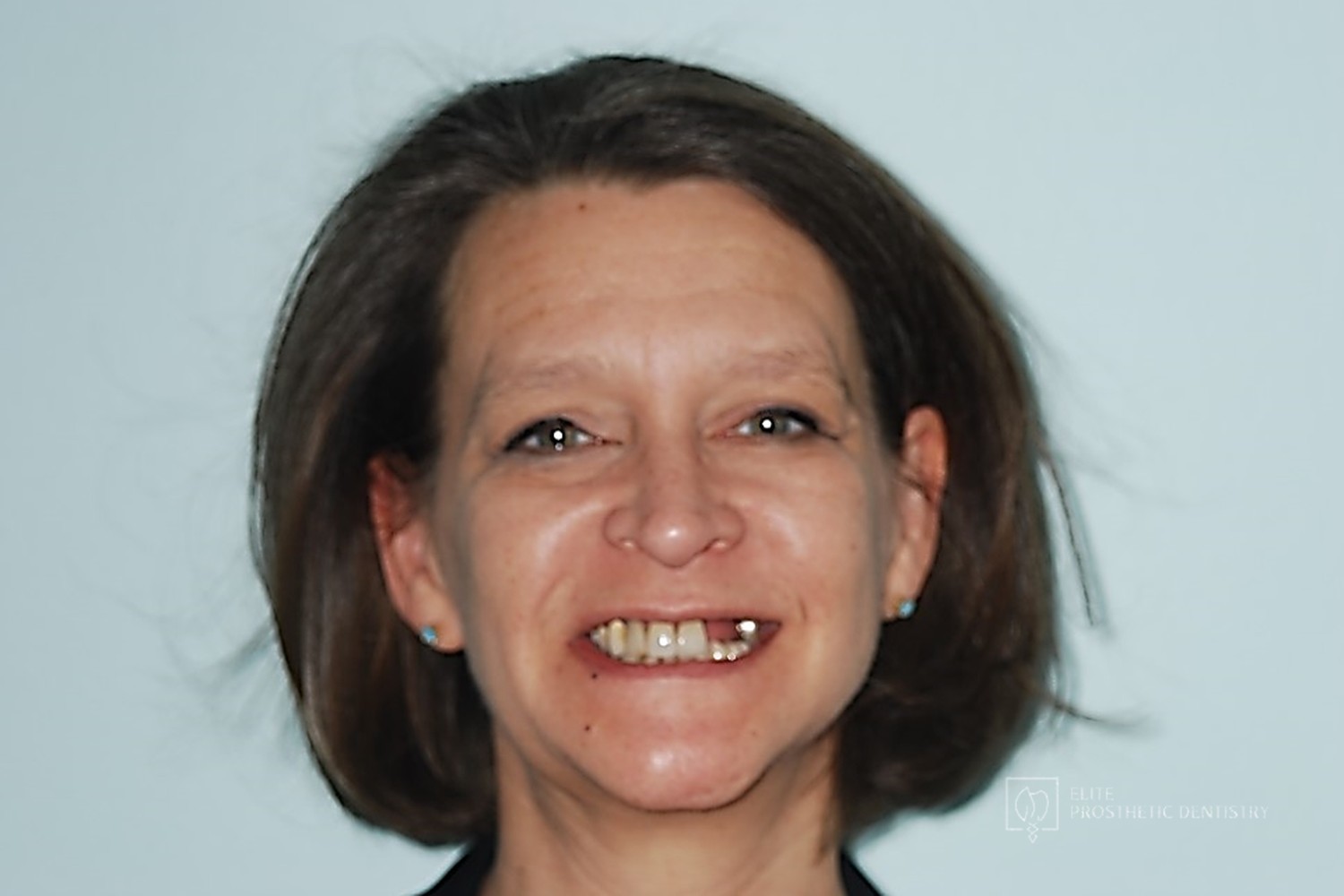 Before
 After
After
Close-up smile view
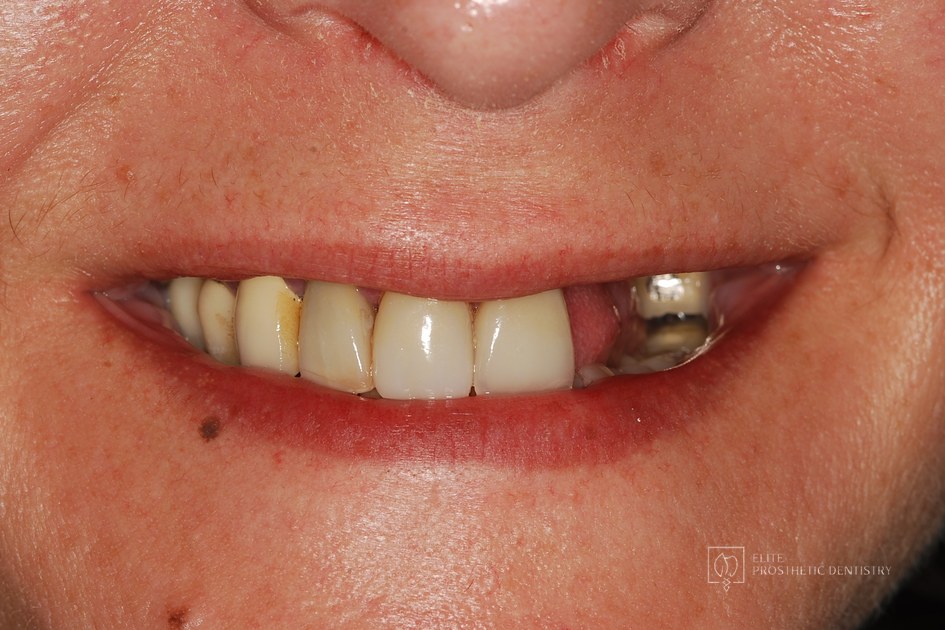 Before
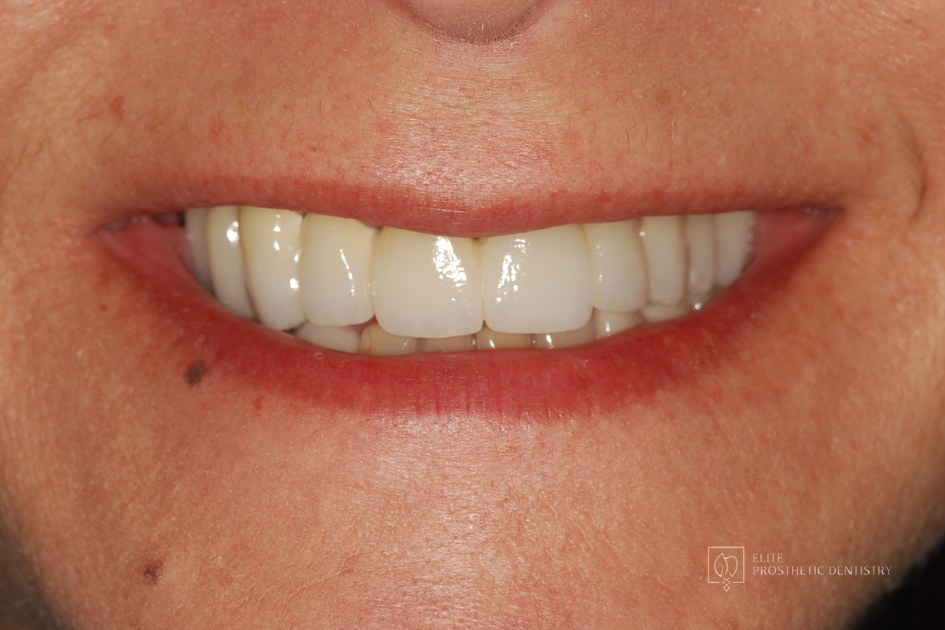 After
After
Intraoral view
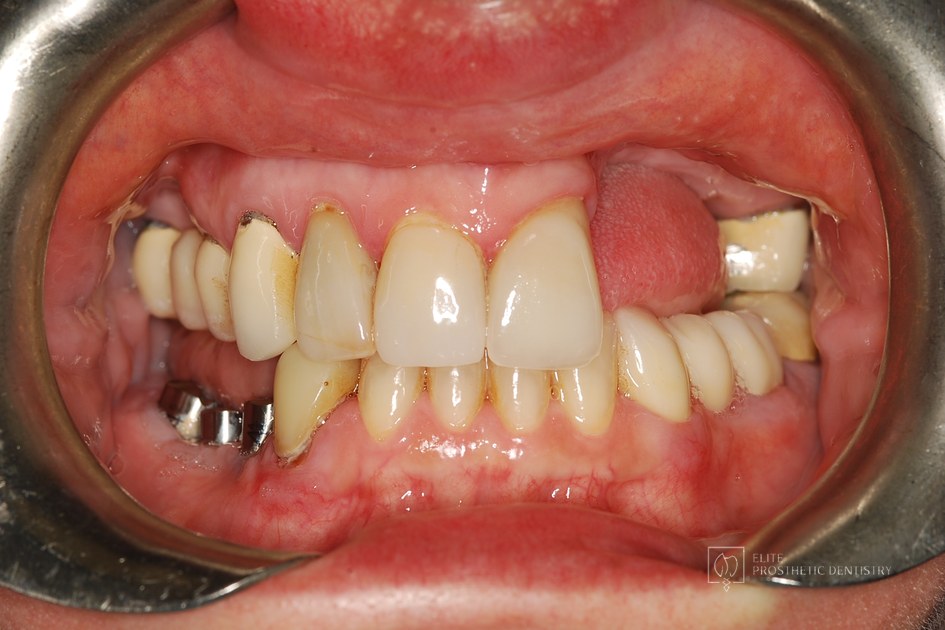 Before
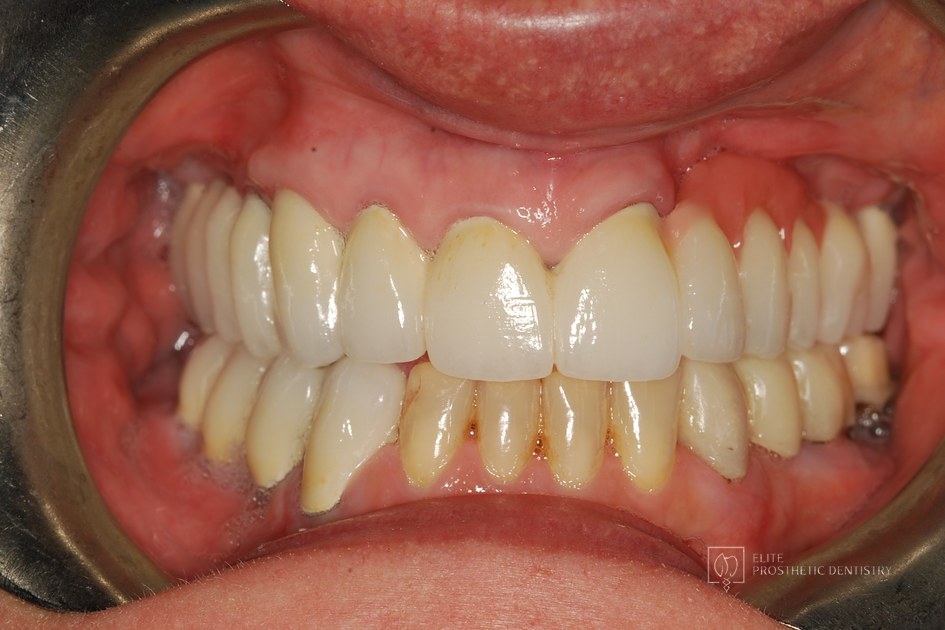 After
After
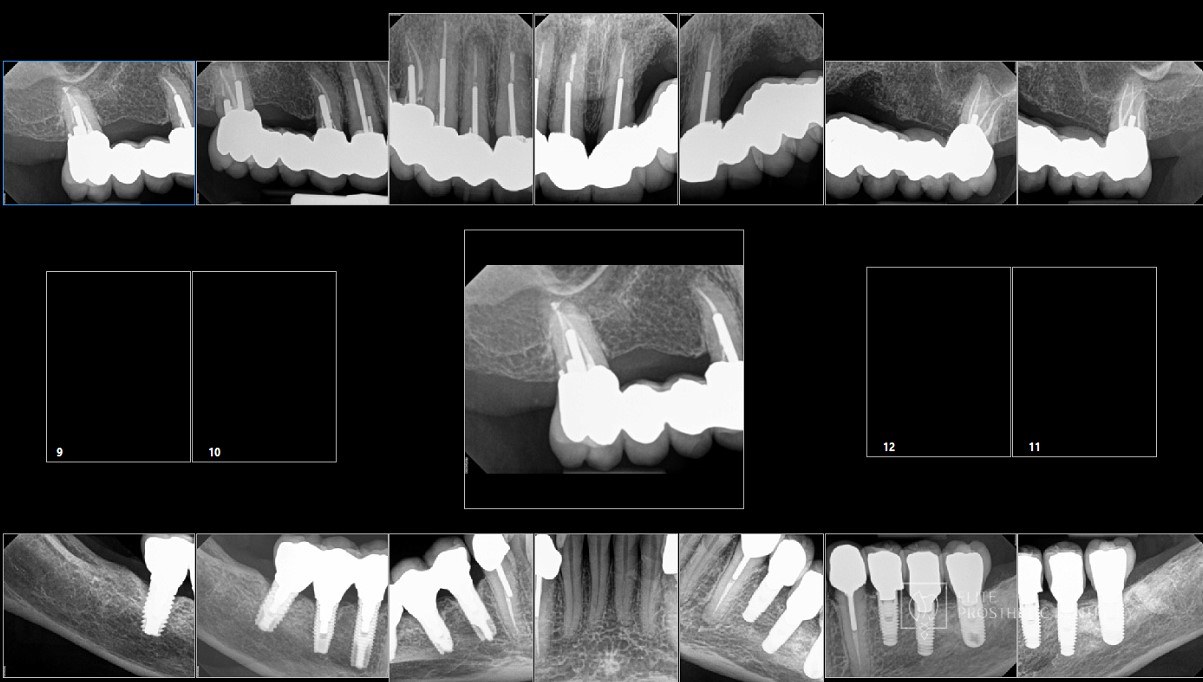
Post-treatment radiographic series
An implant-supported reconstruction for a case other providers could not solve alone
Rebuilding failing bridgework and missing back teeth in Washington, DC. This documented implant-supported reconstruction at Elite Prosthetic Dentistry shows how severe bone loss, broken-down lower teeth, and a collapsing bite were rebuilt through prosthodontist-directed care: extractions and bone grafting performed by Dr. Marlin, root canal therapy completed by an endodontist, a custom long-span upper bridge, and dental implants with crowns restoring the lower arch. Treatment was planned, surgically performed, and restoratively completed by Gerald Marlin, D.M.D., M.S.D., a prosthodontist focused on complex implant reconstruction, full mouth rehabilitation, and long-term crown and bridge care.
Case at a Glance
- Treatment
- Implant-supported reconstruction combining a custom long-span upper bridge with implants and crowns restoring the lower arch
- Approach
- Prosthodontic planning, surgery, and restoration by Dr. Marlin, coordinated with an endodontist: delicate extractions, bone grafting, sequenced implant placement, and post-treatment radiographic verification
- Case Type
- Implant reconstruction
- Patient Concern
- Referred by another dental specialist, the patient had severe bone loss on the upper left, broken-down lower teeth, and failing back teeth that had left the bite without solid support.
- Decision Point
- Treat the bone loss, failing teeth, and collapsing bite as separate problems for different providers, or place the case under one sequenced treatment plan, led by a prosthodontist and spanning surgery, endodontics, and restoration.
- Outcome
- The upper arch now carries a custom long-span bridge, the lower arch has implants and crowns restoring back-tooth support, the bite is fixed in place, and nothing is removable.
- Why It Matters
- This case shows how interconnected problems, bone, extractions, implants, and bite, must be sequenced under one endpoint-focused plan rather than treated separately, since each factor determines whether the next part of the reconstruction survives.
The patient came to Elite Prosthetic Dentistry through a referral from another dental specialist. That detail matters. When dentists and specialists encounter a failing situation that cannot be solved with isolated repairs, they refer to the provider they would trust with the whole problem. What she needed was not one procedure but a plan: form and function rebuilt together, in the right order, by the right people.
The presenting condition
The examination confirmed why isolated repairs had stopped being an option. Severe bone resorption had hollowed out the upper left, undermining the dental work above it. Multiple lower teeth were broken down beyond saving and required extraction. The lower back teeth that remained were failing, which had quietly removed the solid bite support that everything else depends on. When the back teeth stop holding the bite, force transfers forward onto teeth and restorations that were never designed to carry it, and the breakdown accelerates.
Clinical Findings
- →Severe bone resorption on the upper left, undermining the existing dental work
- →Multiple broken-down lower teeth that could not be restored and required extraction
- →Failing lower back teeth that had left the bite without solid posterior support
- →Teeth requiring root canal therapy before they could serve as reliable support for new restorations
- →An esthetic situation the patient could no longer hide, with failing work visible in her smile
Why this case required prosthodontic-level planning
A case like this fails when each problem is handed to a different provider without a unifying plan. The extractions affect the bone. The bone affects where implants can go. The implants determine how the bite is supported. The bite determines whether the upper bridge survives. Someone has to hold the entire endpoint in mind and sequence every contributor toward it. That is the prosthodontist’s role: plan the final restorative result first, then perform the surgical foundation, coordinate the endodontic groundwork, and design the prosthetic result and esthetics as one engineered project rather than a series of disconnected procedures. Our goal is to help patients make thoughtful long-term decisions, whether treatment is limited or comprehensive, and in this case the honest answer was comprehensive.
The treatment plan
-
1
Comprehensive evaluation and reconstruction blueprint
Full records and imaging established which teeth could be saved, where bone had been lost, and what the final bite and smile should look like. The endpoint was designed before any procedure began.
-
2
Surgical foundation: delicate extractions and bone grafting
Working from his own prosthodontic plan, Dr. Marlin performed the extractions and the bone grafting. Several of the failing posterior teeth had molar roots lying very close to the nerve canal, where too little grafted bone height would have made implant placement impossible and left a removable appliance as the only alternative. Those teeth were extracted with deliberate care to preserve the outer plates of bone, so the graft could be built as high as possible. The surgery succeeded, creating the foundation that allowed the implants to be placed and restored where they were needed.
-
3
Endodontic groundwork
An endodontist completed root canal therapy on the teeth selected to remain, so every tooth carrying the new bridgework was biologically sound before it was asked to work for decades.
-
4
Implant placement for the lower arch
Dr. Marlin placed dental implants into the grafted lower sites where the back teeth had been lost, re-establishing the posterior support the bite had been missing and protecting the rest of the reconstruction from overload.
-
5
The custom long-span upper bridge and lower crowns
The upper arch was rebuilt with a custom long-span bridge designed to distribute force across its supports, while implant crowns completed the lower arch. Both arches were designed together so the new bite functions as one system.
-
6
Radiographic verification of the completed work
A post-treatment full-mouth radiographic series documented the seated bridgework, the implants in their supporting bone, and the completed reconstruction as a baseline for long-term follow-up.
The outcome
The case moved from a referred problem that no single procedure could solve to a completed implant-supported reconstruction. The upper arch carries a custom long-span bridge fabricated to natural contours and color. The lower arch chews on implants and crowns where broken-down teeth used to be, the fixed alternative to the removable partial denture that is so often presented as the default answer for missing back teeth. The bite has its posterior support back, which is what protects every other part of the result, and nothing about the finished reconstruction is removable. The final restorations were fabricated with direct coordination between Dr. Marlin and the practice’s in-house laboratory to maintain control over fit, contour, function, and esthetics throughout the reconstruction.
Result Highlights
- ✓Severe bone loss rebuilt through bone grafting performed by Dr. Marlin to the prosthodontic plan
- ✓Surgery by Dr. Marlin with root canal therapy by an endodontist, coordinated under one blueprint
- ✓Upper arch rebuilt with a custom long-span bridge designed for distributed force
- ✓Lower arch restored with implants and crowns, returning solid posterior bite support
- ✓Final restorations fabricated under direct in-house laboratory coordination
- ✓Completed reconstruction documented with a post-treatment radiographic series
Told your situation is too complex, or bouncing between providers without an overall plan? A private consultation can establish the full picture and the sequence that would rebuild it.
Schedule a Private ConsultationWho this case may sound familiar to
This story tends to resonate with patients in a few recognizable situations:
- You have been referred out, or passed between providers, because your situation involves bone loss, failing teeth, and failing dental work all at once.
- Your back teeth are failing or already gone, and you want a fixed answer rather than a removable partial denture.
- You have been told you need extractions, grafting, root canals, and implants, but no one has shown you how it all fits together.
- You want one accountable plan within one specialist practice, rather than a series of disconnected procedures.
- You want the job done correctly once, and you are prepared to invest carefully in a result designed to last.
If any of those describe where you are, a consultation with Dr. Marlin can establish the diagnostic picture and the specific options for your case.
If your dental work is failing in more than one place, the most expensive mistake is treating each failure separately. A comprehensive evaluation can map the bone, the teeth, and the bite together, and show you what one coordinated reconstruction would involve.
Request a Comprehensive EvaluationFrequently asked questions
What is an implant-supported reconstruction?
It is a rebuild of the mouth in which dental implants supply support that missing or failing teeth can no longer provide. Depending on the case, implants may carry individual crowns, anchor bridges, or restore an entire arch. In this case, implants restored the lower back-tooth support while a long-span bridge rebuilt the upper arch, and the two were designed together as one bite.
Can dental implants and a bridge be combined in one treatment plan?
Yes, and in complex cases they often must be. The right tool differs arch by arch and tooth by tooth. A prosthodontist evaluates the bone, the remaining teeth, and the bite, then assigns each problem the solution with the best long-term prognosis. Combining a tooth-supported bridge with implant-supported crowns lets each part of the mouth be rebuilt on its strongest available foundation.
What if I have been told my case is too complex?
Complexity usually means the problems are interconnected, not that they are unsolvable. This patient arrived through a specialist referral precisely because her bone loss, failing teeth, and failing restorations needed one coordinated plan. Cases like this are solved by sequencing: rebuild the foundation, secure the supporting teeth, place the implants, then deliver restorations designed for the corrected bite.
Why was an endodontist involved when Dr. Marlin performed the surgery?
Because the best long-term result uses the right specialist for each step, working from one blueprint. Dr. Marlin performed the surgical foundation himself, including the extractions and bone grafting, and placed the implants. The endodontist completed root canal therapy on the teeth selected to remain. As the prosthodontist, Dr. Marlin designed the endpoint, directed the sequence, and delivered the final restorations, so the patient received specialist-level care at every step without the plan fragmenting.
Is bone grafting always needed before implants?
Not always, but bone volume is always evaluated first. Implants need adequate bone to integrate and to carry decades of chewing force. Where teeth have been failing for years, the bone beneath them has often resorbed, and grafting rebuilds that foundation before placement. Skipping that step to save time is one of the common causes of implant problems we see in second opinions.
How is the completed reconstruction verified?
With documentation, not assumptions. A post-treatment radiographic series records the seated bridgework, the implants in their supporting bone, and the fit of the completed restorations. Combined with photographic records and bite verification, it confirms the result and establishes the baseline against which every future checkup can measure stability.
How long should an implant-supported reconstruction last?
Longevity is determined by the quality of the foundation, the precision of the planning and fit, the balance of the bite, and ongoing maintenance. A reconstruction built on grafted, healed bone, with sound supporting teeth and a properly distributed bite, is designed to function for decades. Crowns from our in-house laboratory have lasted 35 years and longer with proper care.
Why does an in-house dental laboratory matter for a reconstruction like this?
A long-span bridge and implant crowns leave little room for error in fit, contour, and bite integration. When the laboratory is inside the practice, the prosthodontist and ceramist refine those details together with the patient’s records on the bench, rather than exchanging refinements back and forth with an outside facility. Elite Prosthetic Dentistry has operated an in-house dental laboratory continuously since 1985.
More about the work behind this case
This case sits at the intersection of dental implants, full mouth reconstruction, fixed bridgework, bone grafting, and prosthodontist-led implant surgery. The diagnostic depth, sequenced planning, radiographic verification, and in-house laboratory control reflect the practice philosophy that supports cases of this complexity. Related documented cases include an aging bridge and crowns replaced through sequenced implant and crown reconstruction and aging crowns and a failing bridge rebuilt through a coordinated restorative plan. Elite Prosthetic Dentistry treats patients from across Washington, DC and the DMV including Bethesda, Chevy Chase, McLean, Arlington, Potomac, and Great Falls.
Related Services
About the Provider
This case was treated by Gerald M. Marlin, D.M.D., M.S.D., at Elite Prosthetic Dentistry in Washington, DC. Dr. Marlin is a specialty-trained prosthodontist with more than 40 years of clinical practice, more than 3,900 dental implants placed, and 9 U.S. patents in dental implant restoration methodology. Elite Prosthetic Dentistry has operated a continuous in-house dental laboratory since 1985.
4400 Jenifer Street NW, Suite 220, Washington, DC 20015 | (202) 244-2101
Related Patient Success Stories
Explore similar patient success stories demonstrating our expertise in advanced prosthetic dentistry.
 Before
  After
After How Aging, Failing Dentistry Was Replaced with a Coordinated Full-Mouth Implant and Crown Reconstruction
The patient presented with throbbing upper-molar pain, long-standing infections, multiple root canals and unfinished prior treatment, generalized sensitivity, and several hopeless teeth.
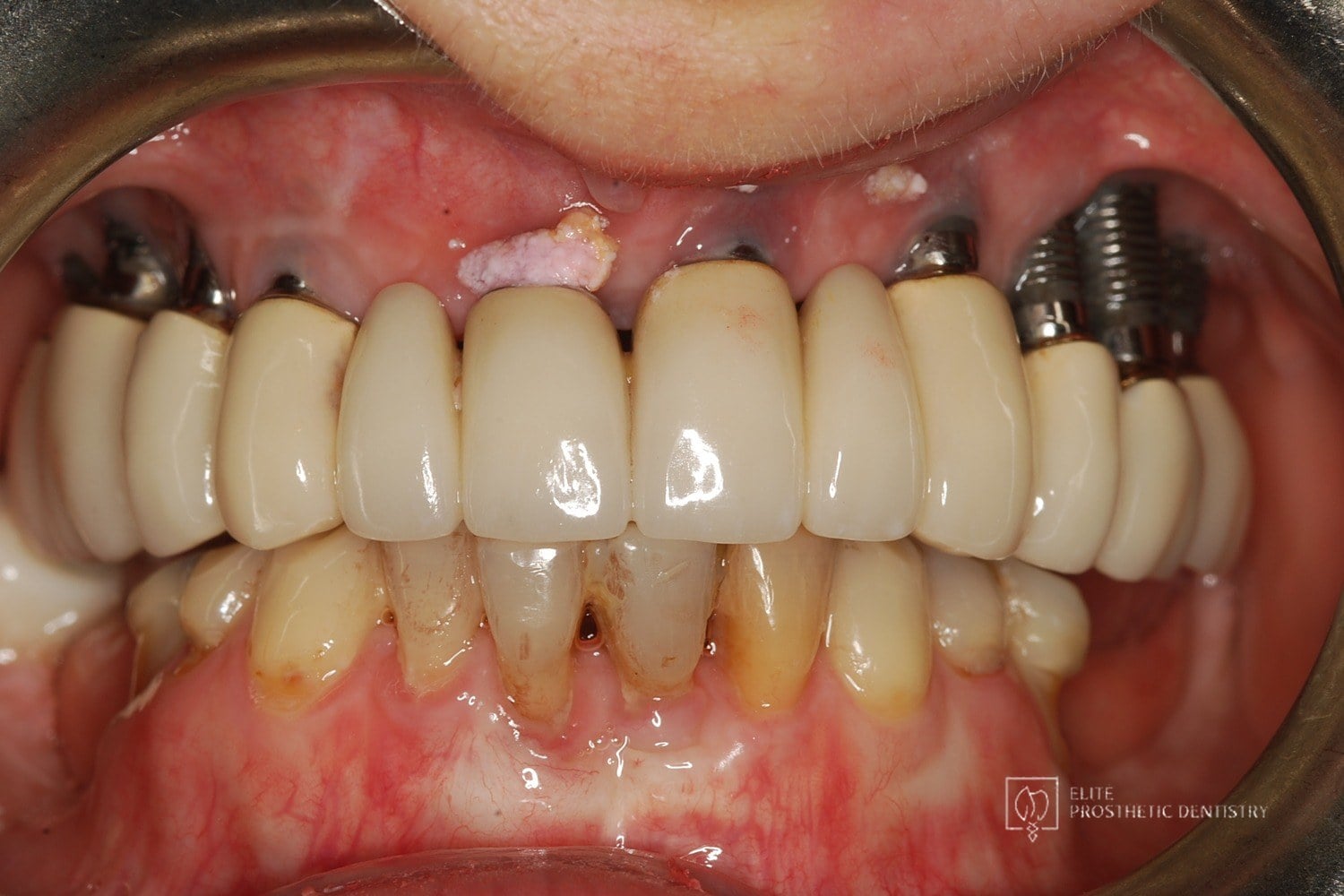 Before
 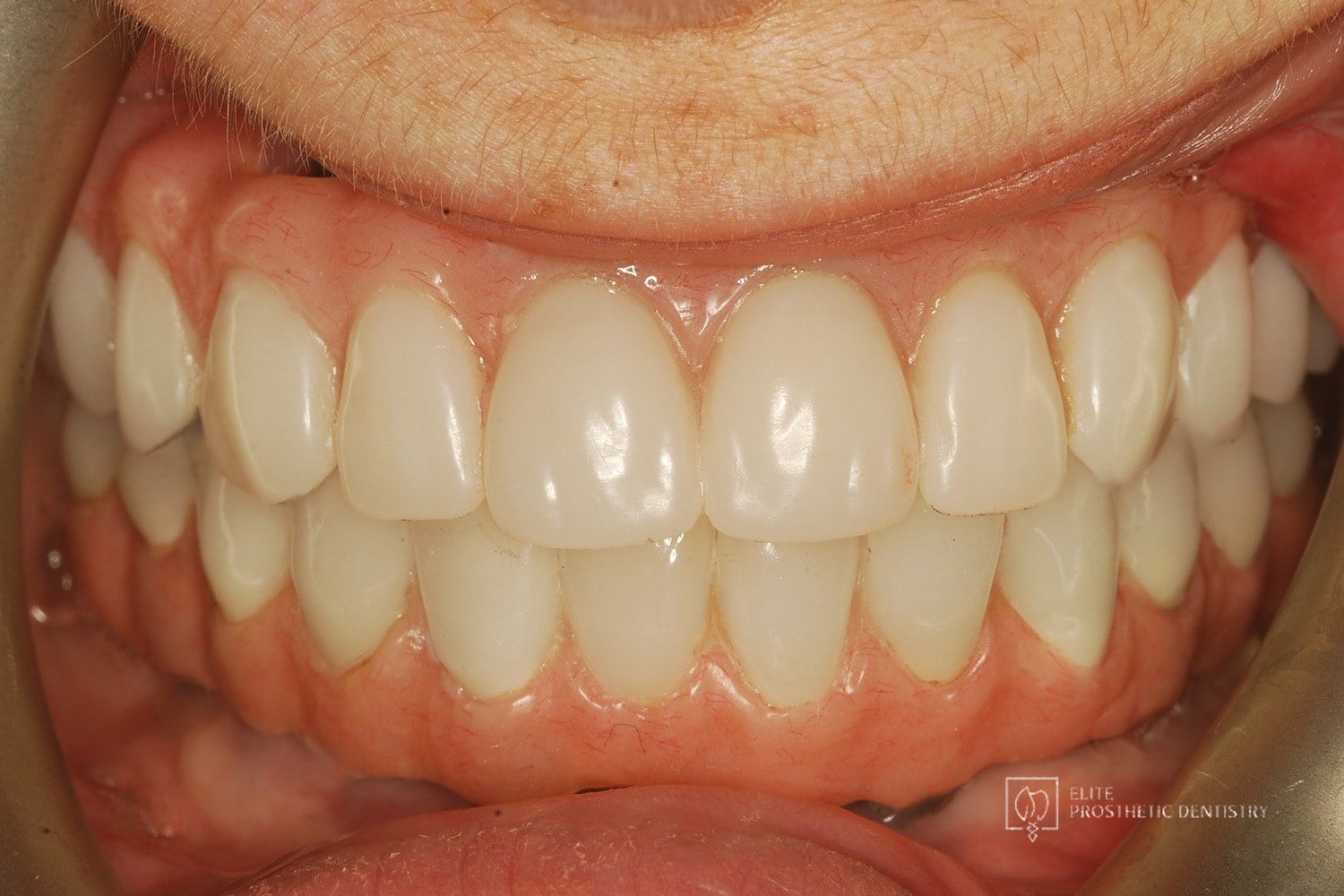 After
After How Failing Implants and Severe Bone Loss Were Rebuilt Into a Stable Full-Arch Implant Reconstruction
The patient presented with significant complications from previously placed implants, severe bone loss, failing posterior implants, and an unesthetic full-arch bridge. Both arches required full reconstruction, with the upper arch showing the most advanced bone loss and instability.
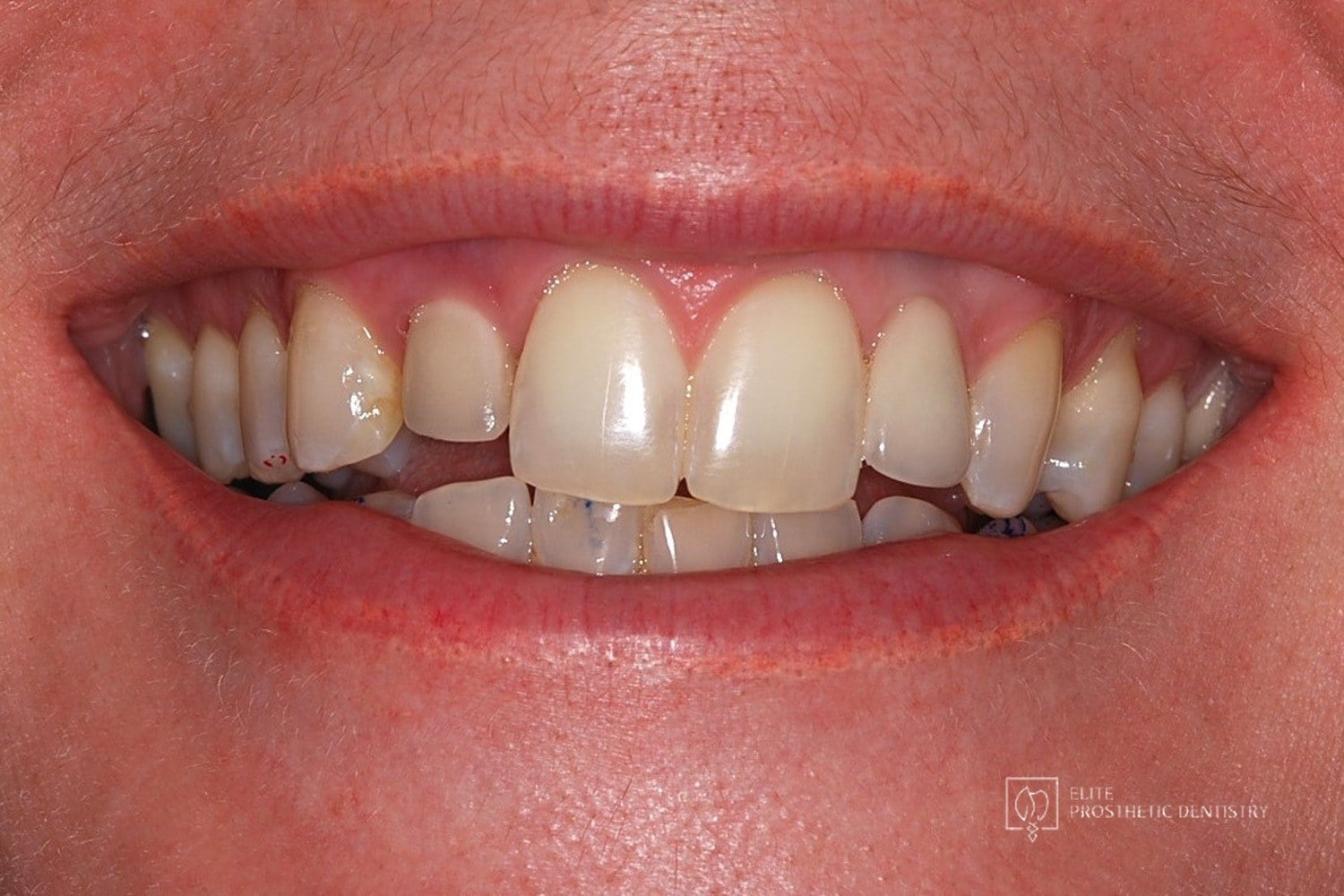 Before
 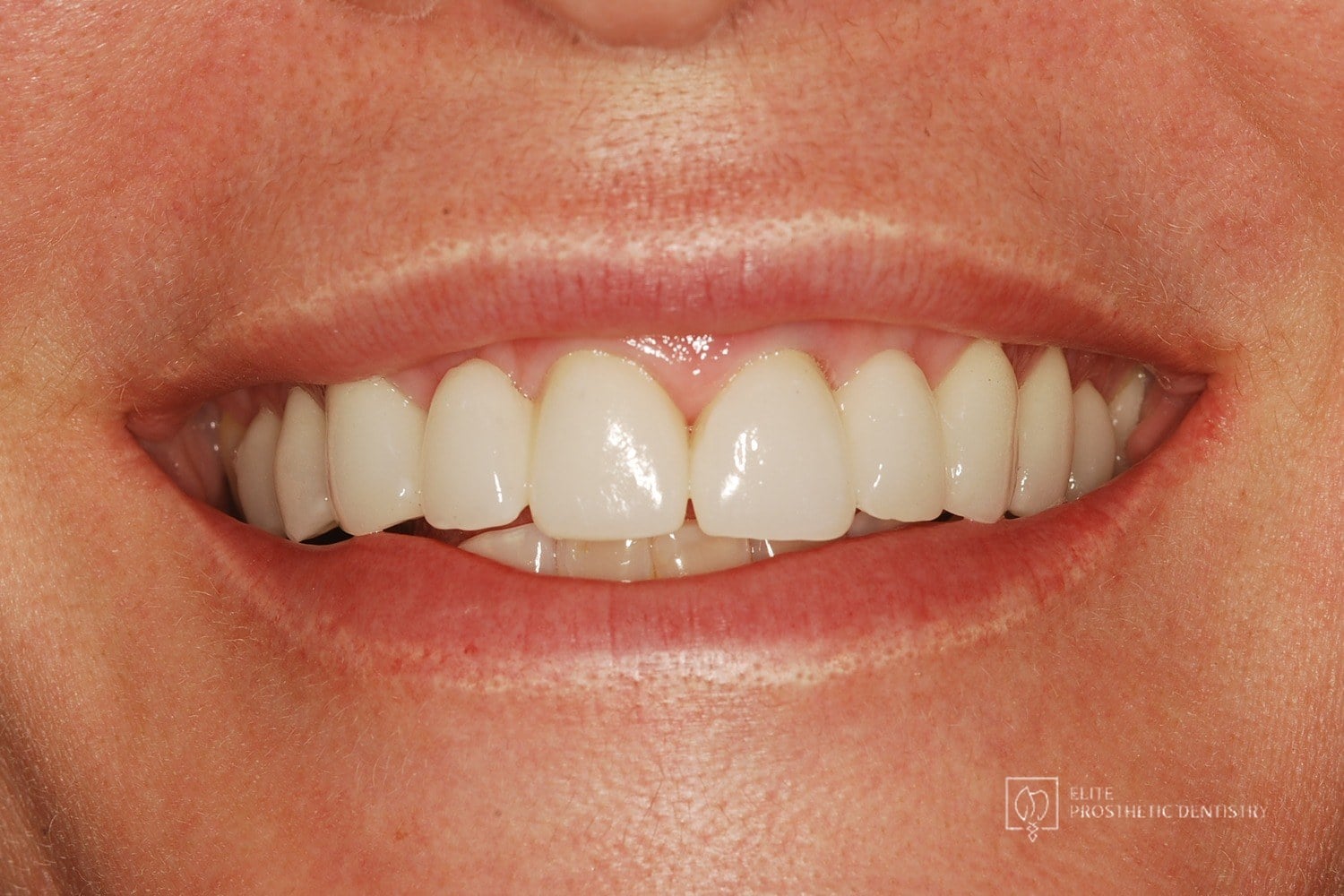 After
After How Failing Lateral Incisor Implants Were Replaced with Custom Zirconia Bridges After Severe Bone Loss Made Replacement Implants Impossible
Comprehensive examination including CBCT imaging revealed significant bone loss surrounding implants that were placed outside the buccal plate, most likely due to placement without a CBCT-generated surgical guide. The implants were determined non-salvageable, and the alveolar ridge was too narrow to support replacement implants without extensive reconstruction.