
For 30 Years, Our Patient Suffered with Teeth That Were Very Dark Due to Tetracycline Staining
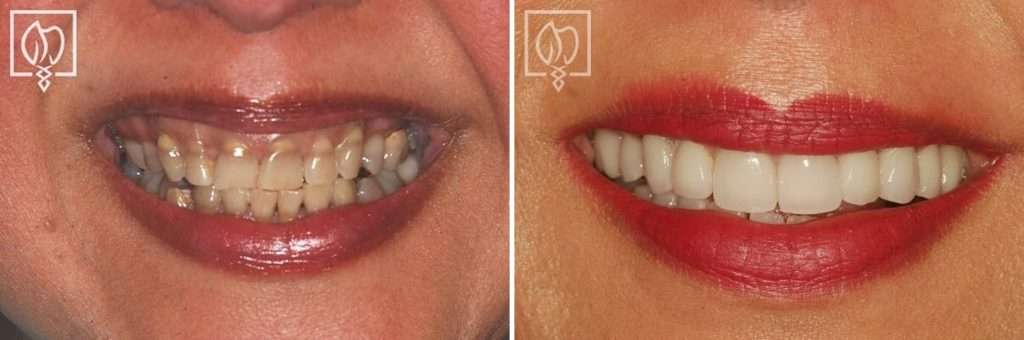
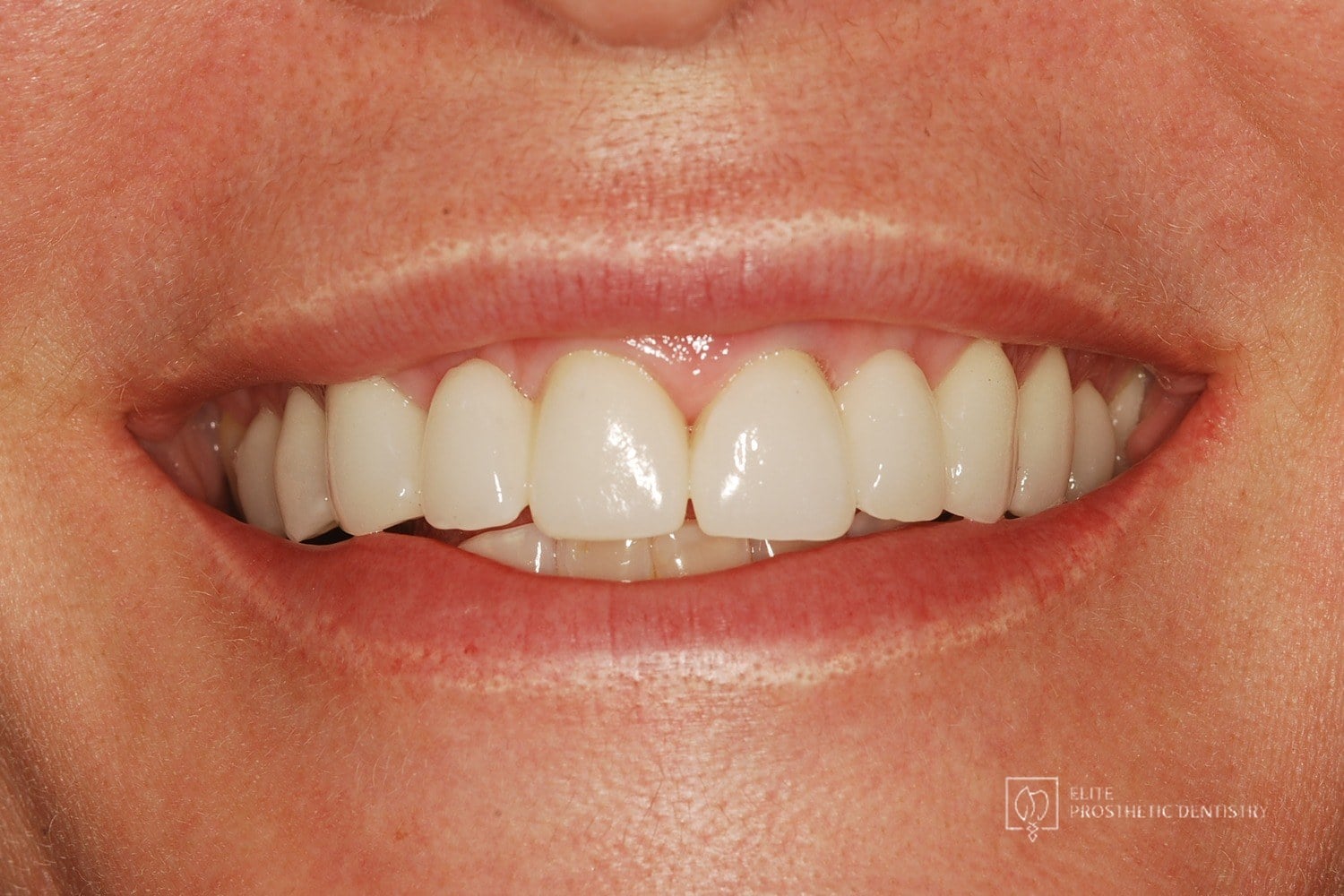
Documented before-and-after view
Additional case documentation

Thirty years of tetracycline staining resolved with custom porcelain crowns
Treating tetracycline-stained teeth in Washington, DC. This documented case at Elite Prosthetic Dentistry restored a smile that had been very dark for three decades because of intrinsic tetracycline staining, a form of discoloration that professional whitening cannot correct. Treatment was planned and completed by Dr. Gerald Marlin, D.M.D., M.S.D., a prosthodontist focused on esthetic restorative dentistry and complex discoloration cases.
Case at a Glance
- Treatment
- Custom-crafted porcelain crowns covering the intrinsically stained teeth
- Approach
- Whitening ruled out for intrinsic staining; chairside shade work with the in-house laboratory technician
The presenting condition
The patient had been coming to Elite Prosthetic Dentistry for years before she decided the time had come to address a lifelong source of self-consciousness. Her teeth had been very dark and stained her entire life because she received the antibiotic tetracycline as a child, before her permanent teeth erupted.
Tetracycline staining is a distinctive problem. When the antibiotic is given during tooth development, typically to children under eight, it binds to calcium in the forming tooth structure and leaves permanent discoloration that can range from yellow to brown to gray. The stain is intrinsic, embedded within the tooth itself rather than sitting on the surface. For a patient who had lived with it for three decades, the effect reached well past the mirror, shaping her confidence and her willingness to smile in social and professional settings.
Clinical Findings
- →Teeth that had been very dark and stained since childhood
- →Cause: tetracycline received before the permanent teeth erupted
- →Intrinsic discoloration embedded within the tooth structure rather than on the surface
- →Professional whitening not a viable option, since bleaching agents cannot reach intrinsic stain
- →Decades of self-consciousness affecting social and professional life
Why this case required prosthodontic-level planning
Whitening is the natural first thought for dark teeth, and for surface stains it works. Tetracycline discoloration defeats it. Because the color lives inside the tooth structure, surface bleaching agents used in professional teeth whitening cannot penetrate deeply enough to change it, and many patients conclude, wrongly, that their only option is to accept the discoloration. The prosthodontic challenge runs deeper than covering a dark tooth. A restoration that simply blocks the underlying color tends to look flat and opaque, while one translucent enough to look natural risks letting the darkness show through. Managing that balance, tooth by tooth, is demanding laboratory work, and it is why severe intrinsic discoloration belongs with a prosthodontist working closely with a skilled technician.
The decision behind the result: restoring the color instead of trying to bleach it
With whitening ruled out by the nature of the stain, the plan was built around custom-crafted porcelain crowns: full-coverage restorations, precisely manufactured, shade-matched, and sculpted to look completely natural while concealing the discoloration beneath. The day temporary crowns were placed on her front teeth, the patient experienced an immediate transformation, an instant preview of the final smile that carried her both esthetically and psychologically through the fabrication of the permanent restorations. That preview is not a side benefit. It confirms the design while the final crowns can still be refined, which is exactly when confirmation matters.
The treatment plan
-
1
Ruling out whitening
Because the discoloration was intrinsic, embedded in the tooth structure, bleaching could not reach it, and planning moved to full-coverage porcelain restorations.
-
2
Temporary crowns with an immediate transformation
Temporaries placed on the front teeth gave the patient an instant preview of the final result and immediate relief from decades of self-consciousness.
-
3
Chairside work with the in-house laboratory technician
The practice's own technician observed the patient directly, studying the natural variations in color, translucency, and light reflection that give real teeth their depth, an advantage of keeping the laboratory inside the practice.
-
4
Permanent custom-crafted porcelain crowns
The final crowns were shade-matched and sculpted for a natural, three-dimensional appearance, then placed to complete the restoration.
The outcome
After her permanent crowns were placed, the patient said she could not stop smiling with her bright new teeth. For the first time in three decades she could smile without reservation or self-consciousness, and the change reached beyond cosmetics into her confidence and her willingness to engage fully in social interactions. Her case makes the larger point plainly: tetracycline staining does not have to be accepted as permanent. With specialty-trained prosthodontic care and high-quality restorative materials, a naturally beautiful smile is achievable even after thirty years.
Result Highlights
- ✓Three decades of intrinsic tetracycline staining resolved with full-coverage porcelain crowns
- ✓An immediate transformation the day the temporary crowns were placed
- ✓Crowns shade-matched and sculpted chairside with the in-house laboratory technician
- ✓A natural, three-dimensional result rather than a flat, uniform white
- ✓Confidence restored in social and professional settings after 30 years
Who this case may sound familiar to
This case tends to resonate with patients in a few recognizable situations:
- Your teeth have been dark since childhood, and whitening has never made a real difference.
- You have been told the discoloration is inside the tooth, not on the surface.
- You hold back from smiling in photos, meetings, or social settings because of tooth color.
- You have thought about addressing it for years and kept putting it off.
- You want a result that looks naturally bright, not flat or artificial.
If any of those describe where you are, a consultation with Dr. Marlin can establish the diagnostic picture and the specific options for your case.
Frequently asked questions
What causes tetracycline staining?
Tetracycline is an antibiotic that can permanently discolor teeth when it is taken during tooth development, typically by children under eight years of age. The medication binds to calcium in the forming tooth structure, producing staining that ranges from yellow to brown to gray and is embedded within the tooth itself.
Can professional teeth whitening remove tetracycline stains?
No. Whitening works on surface and near-surface discoloration, and tetracycline staining is intrinsic, part of the internal tooth structure. Bleaching agents cannot penetrate deeply enough to change it, which is why patients with this staining need a restorative solution rather than a stronger whitening treatment.
How do porcelain crowns correct tetracycline discoloration?
A crown covers the entire visible tooth with precisely manufactured porcelain, concealing the underlying color completely. The porcelain is shade-matched and sculpted so the restored teeth have the translucency and depth of natural teeth rather than a flat, uniform white.
Are veneers an option for tetracycline staining?
Sometimes, in lighter cases. Deeper tetracycline discoloration can show through the thin porcelain of a veneer, and full-coverage crowns give the technician more control over masking the underlying color while keeping a natural appearance. The right choice depends on the depth of the stain and the condition of the teeth, which is what a prosthodontic evaluation establishes.
Why does chairside work with a laboratory technician matter for shade matching?
Because color in natural teeth is three-dimensional. When the technician can observe the patient directly, they see the subtle variations in color, translucency, and light reflection that photographs and written shade prescriptions miss. That direct observation is difficult to arrange when laboratory work is sent out, and it is a key advantage of an in-house laboratory.
More about the work behind this case
This case sits at the intersection of dental crowns, smile makeover treatment, and the chairside shade work of the practice’s in-house laboratory. Controlling every detail that determines how a restoration looks and lasts is central to the practice philosophy behind cases like this one.
Elite Prosthetic Dentistry treats patients from across the DMV including Bethesda, Chevy Chase, McLean, Arlington, Potomac, and Great Falls, with a record of out-of-area patients traveling to the practice for complex restorative care.
Related Services
Related Patient Success Stories
Explore similar patient success stories demonstrating our expertise in advanced prosthetic dentistry.
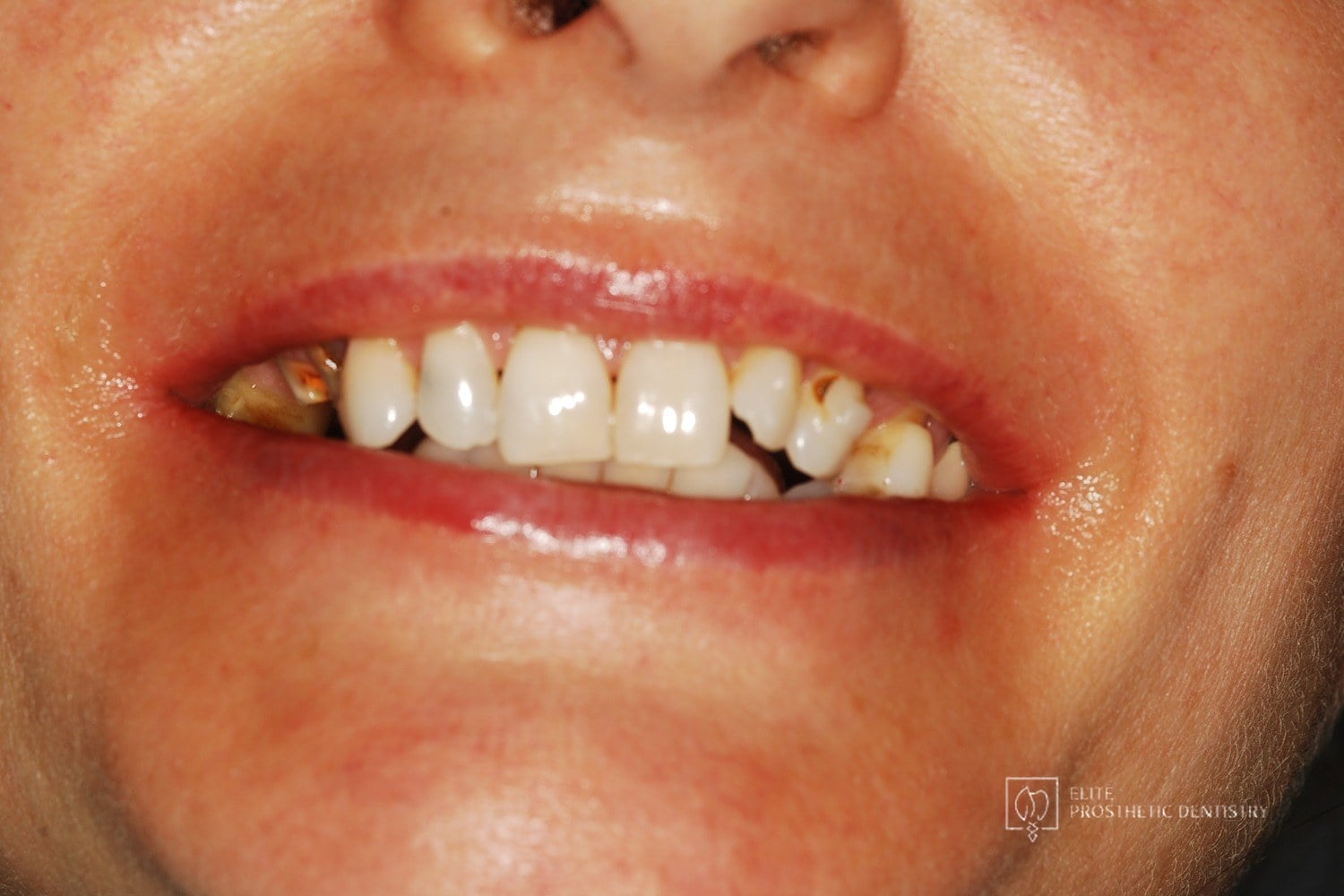 Before
 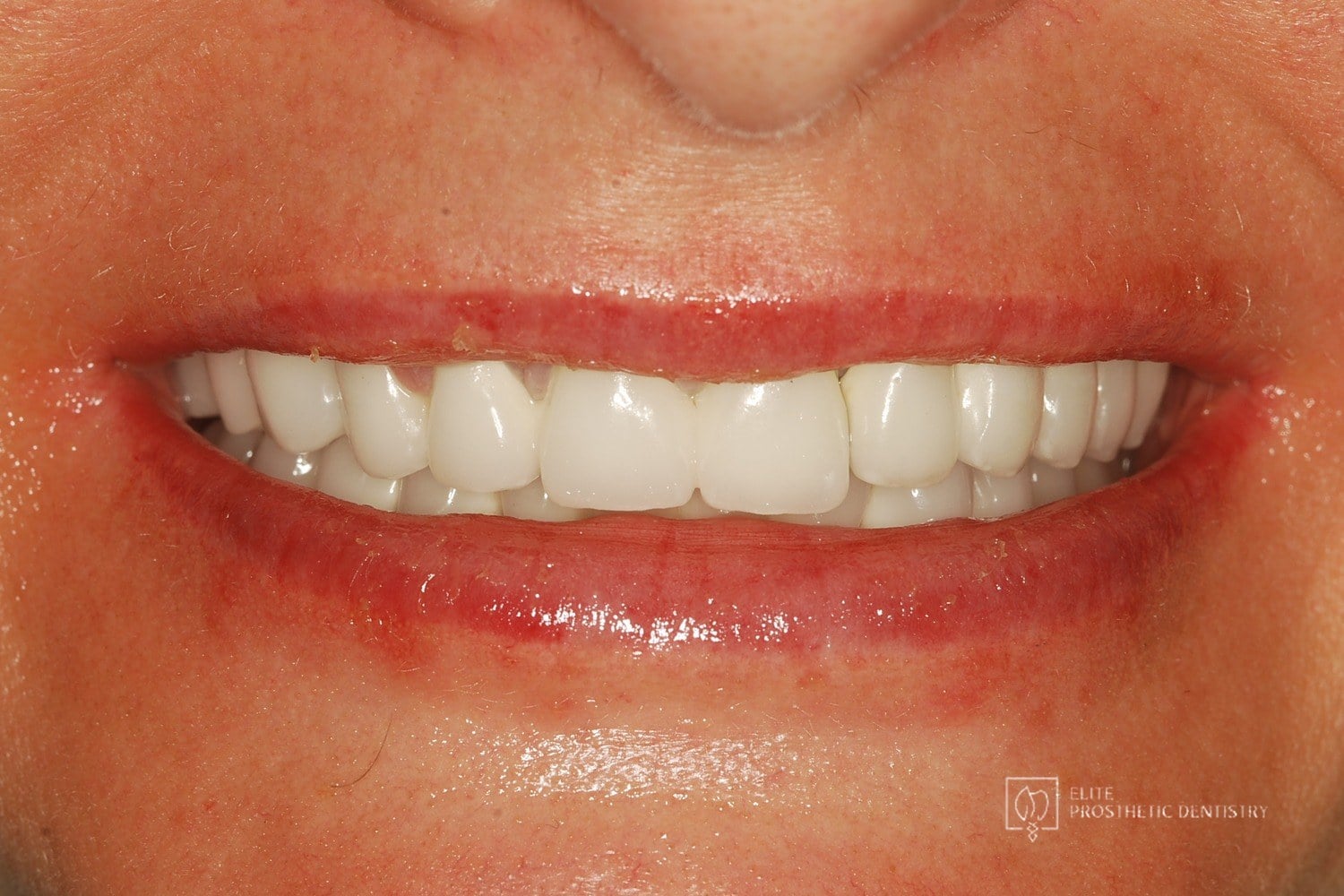 After
After How Aging, Failing Dentistry Was Replaced with a Coordinated Full-Mouth Implant and Crown Reconstruction
The patient presented with throbbing upper-molar pain, long-standing infections, multiple root canals and unfinished prior treatment, generalized sensitivity, and several hopeless teeth.
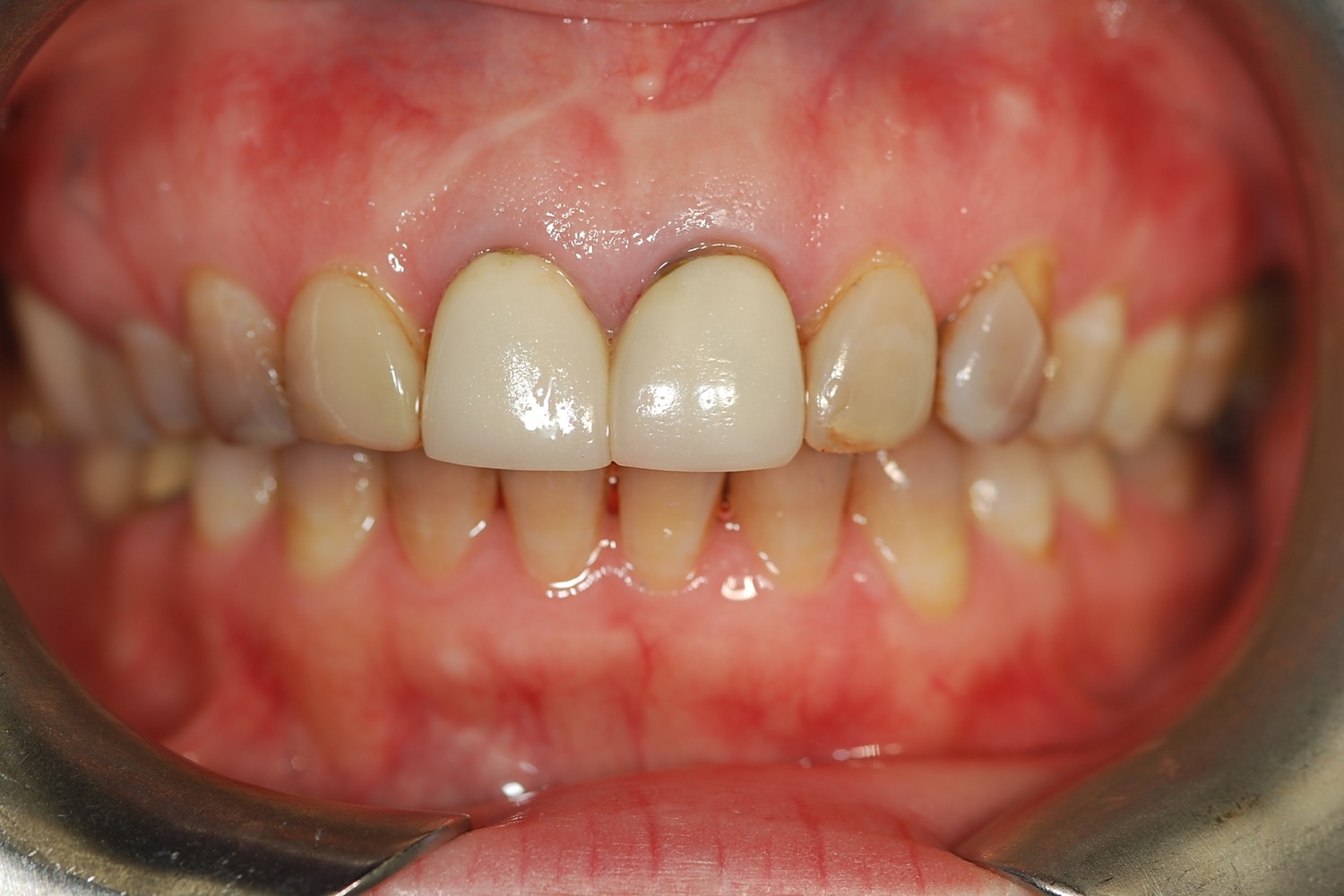
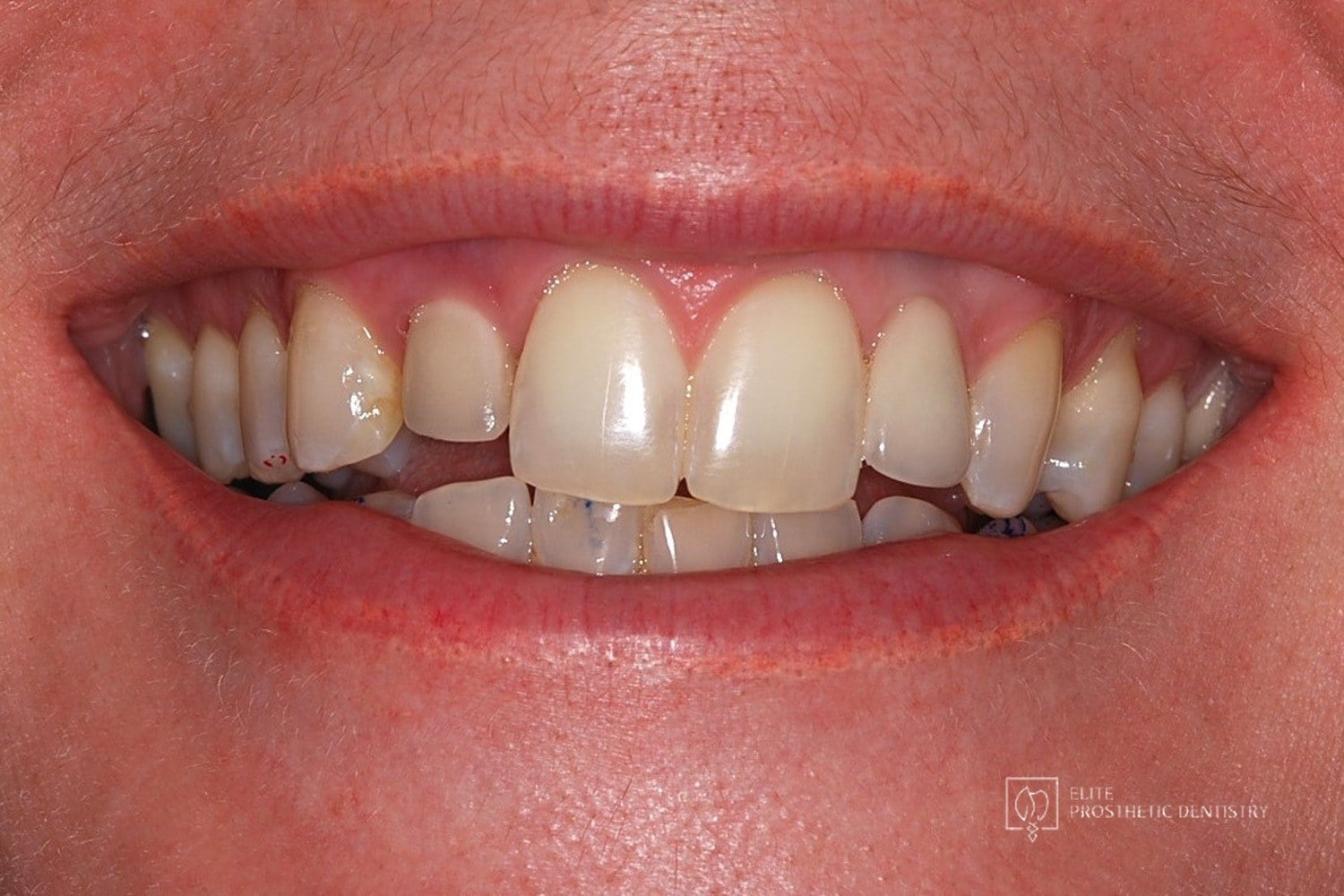 Before
  After
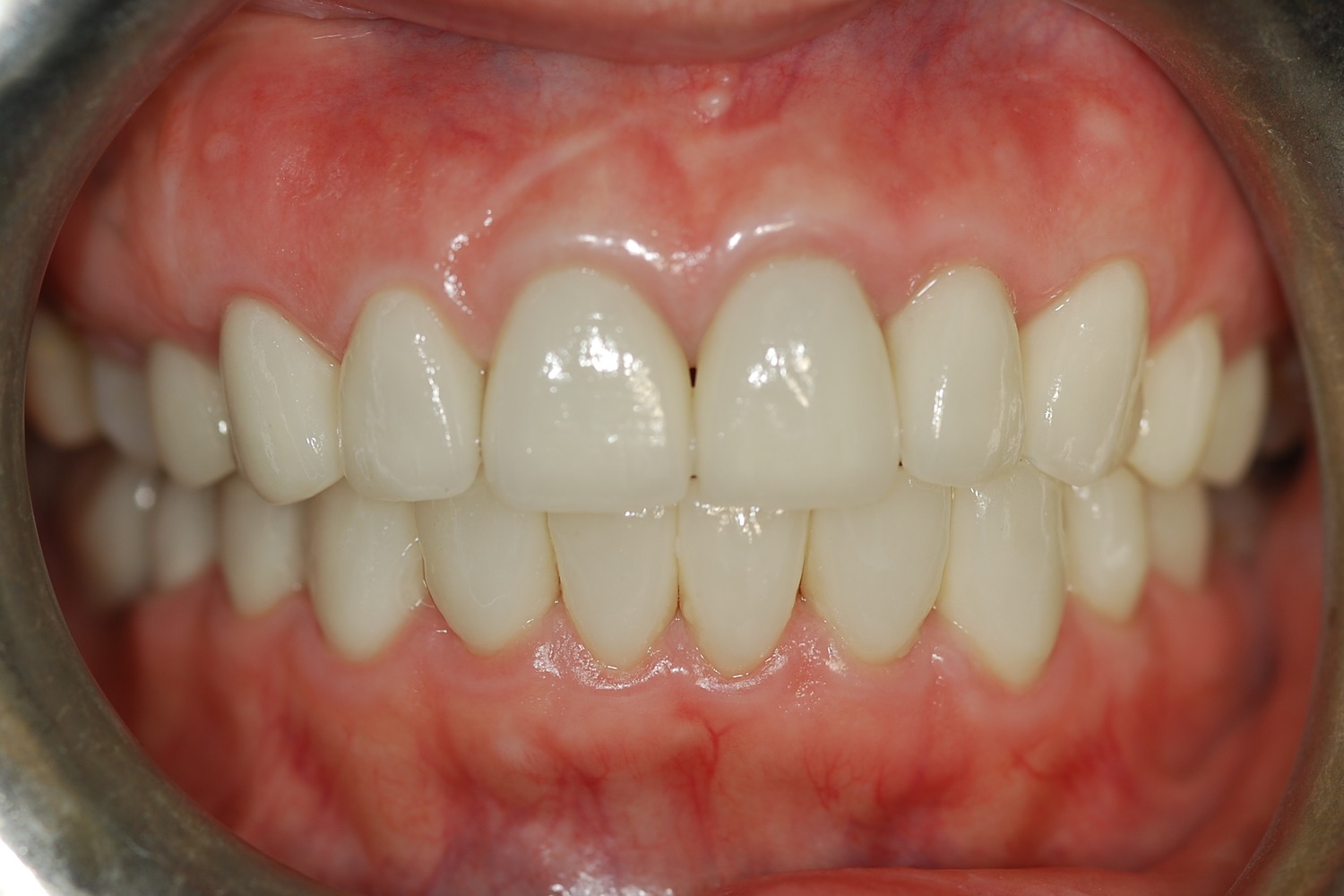
After How Failing Lateral Incisor Implants Were Replaced with Custom Zirconia Bridges After Severe Bone Loss Made Replacement Implants Impossible
Comprehensive examination including CBCT imaging revealed significant bone loss surrounding implants that were placed outside the buccal plate, most likely due to placement without a CBCT-generated surgical guide. The implants were determined non-salvageable, and the alveolar ridge was too narrow to support replacement implants without extensive reconstruction.
 Before
  After
After How Aging, Opaque Restorations Were Replaced with Customized Ceramic Restorations Designed for Long-Term Natural Esthetics
The existing restorations appeared opaque, worn, and unnatural over time, affecting both confidence and overall smile harmony.