
Missing Teeth: More Than Just a Gap in Your Smile
The most obvious consequence of a missing tooth is the one in the mirror. The expensive consequences are the ones you cannot see, because a gap in your smile is not a hole that sits still. It is a process, and it recruits the rest of your mouth over time.
Here is what an untreated missing tooth sets in motion.
Your Other Teeth Go Looking for the Gap
Teeth position themselves against their neighbors. Remove one and the adjacent teeth begin tilting and drifting into the space, while the opposing tooth, with nothing left to bite against, grows longer into the gap through a process called super-eruption.
The drift is slow, painless, and thorough. Years later, the space that once needed a single replacement tooth is bordered by tilted, migrated teeth and an over-erupted opponent, and straightforward treatment has become a multi-stage project. The remaining teeth also absorb the chewing load the missing tooth surrendered, accelerating wear on the survivors, a dynamic that compounds when several teeth are missing.
Your Diet Shrinks, Quietly
Every functioning tooth contributes chewing power, and each loss subtracts from it. Patients adapt without noticing: chewing on one side, avoiding crunchy vegetables, cutting food smaller, skipping the foods that fight back. A narrowed diet is bad for nutrition, digestion, and, not trivially, the pleasure of eating. By the time someone mentions it in a consultation, the workarounds have usually been running for years.
Hygiene Gets Harder, Risk Gets Higher
Shifted, tilted teeth create tight angles and odd contact points that brushes and floss struggle to reach. Plaque wins in the places you cannot clean, which raises the risk of decay and gum disease in exactly the teeth you need to keep. A gap thus endangers its neighbors twice: mechanically, through drift and overload, and biologically, through the hygiene traps it creates.
Your Bite Can Lose Height, and Your Face Shows It
With more than one missing tooth, especially back teeth, the bite can collapse in vertical dimension: the structural height between upper and lower jaws when you close. The visible result is a shortened lower face, with the nose and chin drawing closer together and the lips losing support. Add the jawbone resorption that follows tooth loss, covered in detail in why you should not wait for a dental implant, and the change reads as aging that arrived early. Rebuilding a collapsed bite is very achievable, up to and including full-mouth reconstruction, but preventing the collapse is always the better bargain.
Interrupting the Process
All of these are processes, which means all of them can be interrupted. Replacing a missing tooth restores the chewing partnership, stops the drift, and, when the replacement is a dental implant, preserves the jawbone by replacing the root itself, something no bridge or denture can do.
It is rarely too late to intervene, and it is never too early to understand your specific situation. Dr. Gerald Marlin, a specialty-trained prosthodontist with more than 3,900 dental implants placed, will examine what your gap has set in motion and lay out the options plainly. Call 202-244-2101 or request a consultation at Elite Prosthetic Dentistry in Friendship Heights, Washington, DC.
See How We Resolve These Problems
Our patient success stories show real cases and real results. Browse outcomes from a specialist prosthodontist with decades of experience and 3,900+ implants placed.
Key Takeaways
- ✓ A gap is not a static problem. Neighboring teeth tilt and drift, and the opposing tooth super-erupts into the space.
- ✓ Each lost tooth reduces chewing efficiency, narrowing diet and often affecting digestion and enjoyment of food.
- ✓ Shifted teeth create tight, tilted spaces that are harder to clean, raising decay and gum disease risk.
- ✓ Multiple missing teeth can collapse the bite's vertical dimension, visibly shortening the lower face.
- ✓ Replacing the tooth, ideally with an implant that also preserves the bone, interrupts every one of these processes.
Frequently Asked Questions
What happens if I just leave a missing tooth alone?
The mouth adapts, and not in your favor. Adjacent teeth tip and drift into the gap, the opposing tooth grows longer into the space (super-eruption), chewing forces redistribute onto fewer teeth, and the jawbone under the gap shrinks from disuse. The changes are slow, which is why they get underestimated.
Does one missing back tooth really matter?
Yes, more than most people assume. Back teeth do the heavy chewing, so losing one measurably reduces chewing efficiency and overloads its neighbors. Because the damage is invisible and painless for years, back-tooth gaps are the ones most often ignored until the drift and bone loss complicate treatment.
Can missing teeth change the shape of my face?
With multiple missing teeth, yes. Lost back teeth can collapse the bite's vertical dimension, shortening the distance between nose and chin, while bone resorption removes support from the lips and cheeks. The combination reads as premature aging, and it is largely preventable.
What is the best way to replace a missing tooth?
For most patients, a dental implant, because it is the only option that replaces the root and preserves the jawbone, while standing independent of the neighboring teeth. Bridges and partials have their places, and the right answer follows from an examination of your bone, bite, and goals.
Related Patient Success Stories
Explore similar patient success stories demonstrating our expertise in advanced prosthetic dentistry.
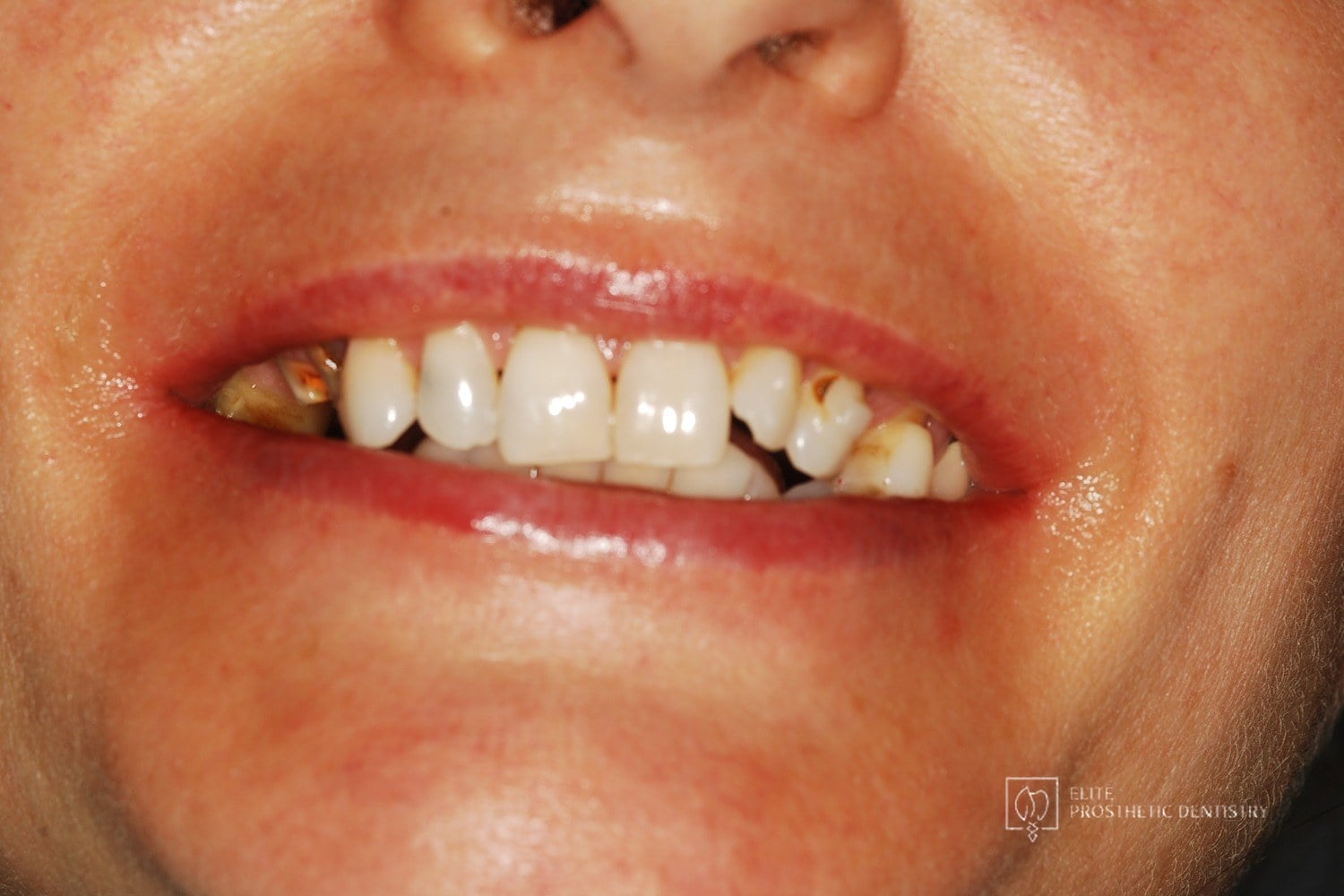 Before
 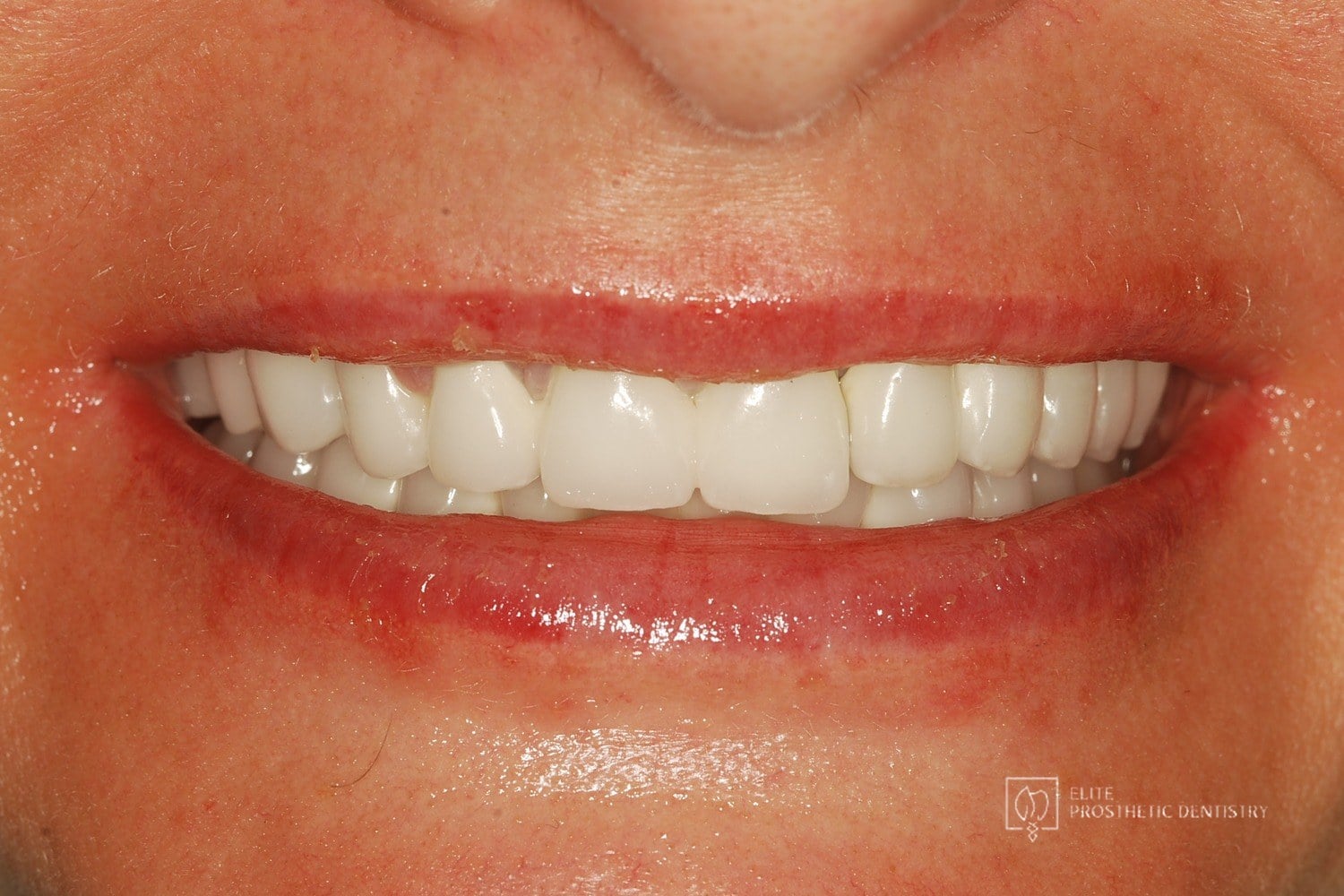 After
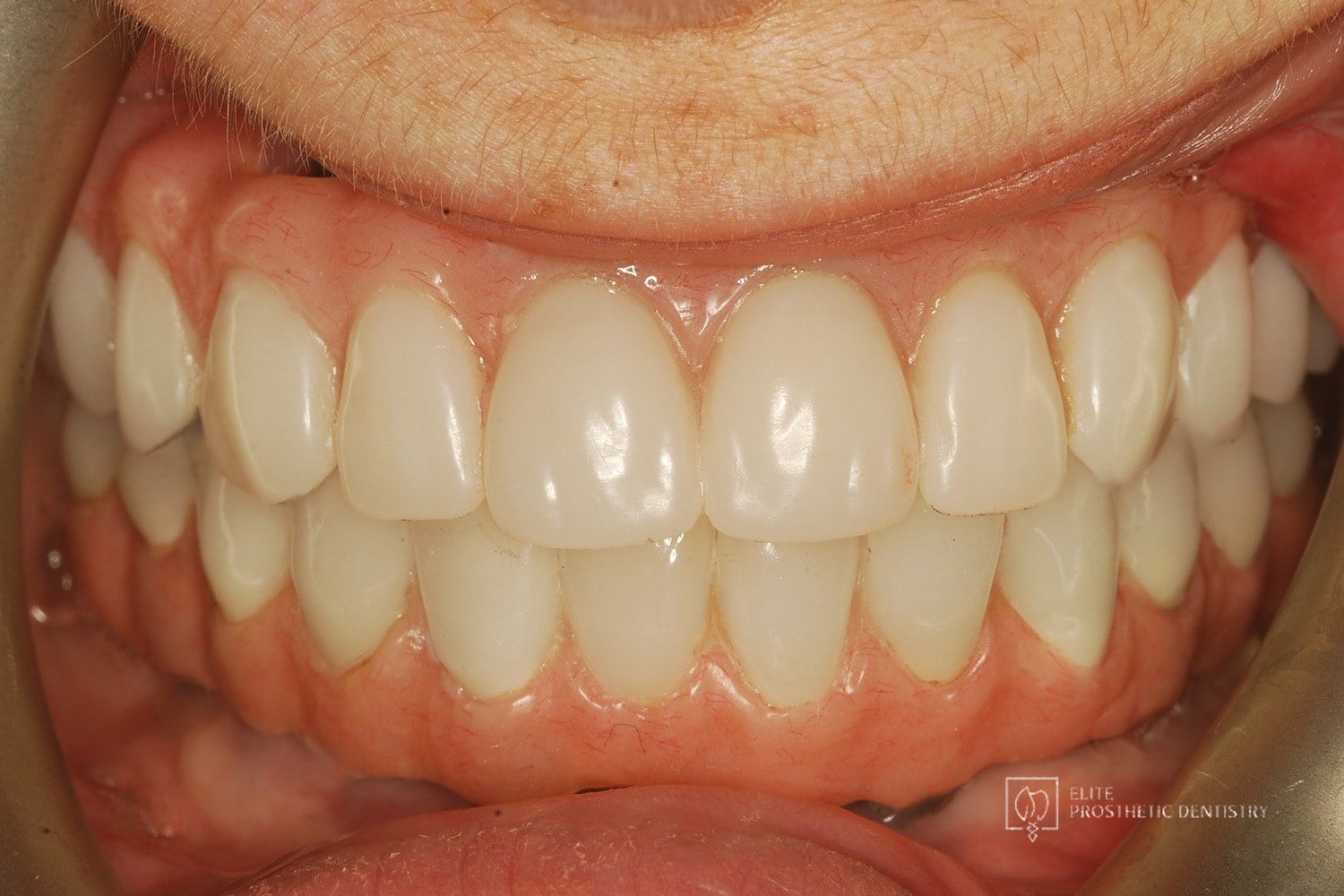
After How Aging, Failing Dentistry Was Replaced with a Coordinated Full-Mouth Implant and Crown Reconstruction
The patient presented with throbbing upper-molar pain, long-standing infections, multiple root canals and unfinished prior treatment, generalized sensitivity, and several hopeless teeth.
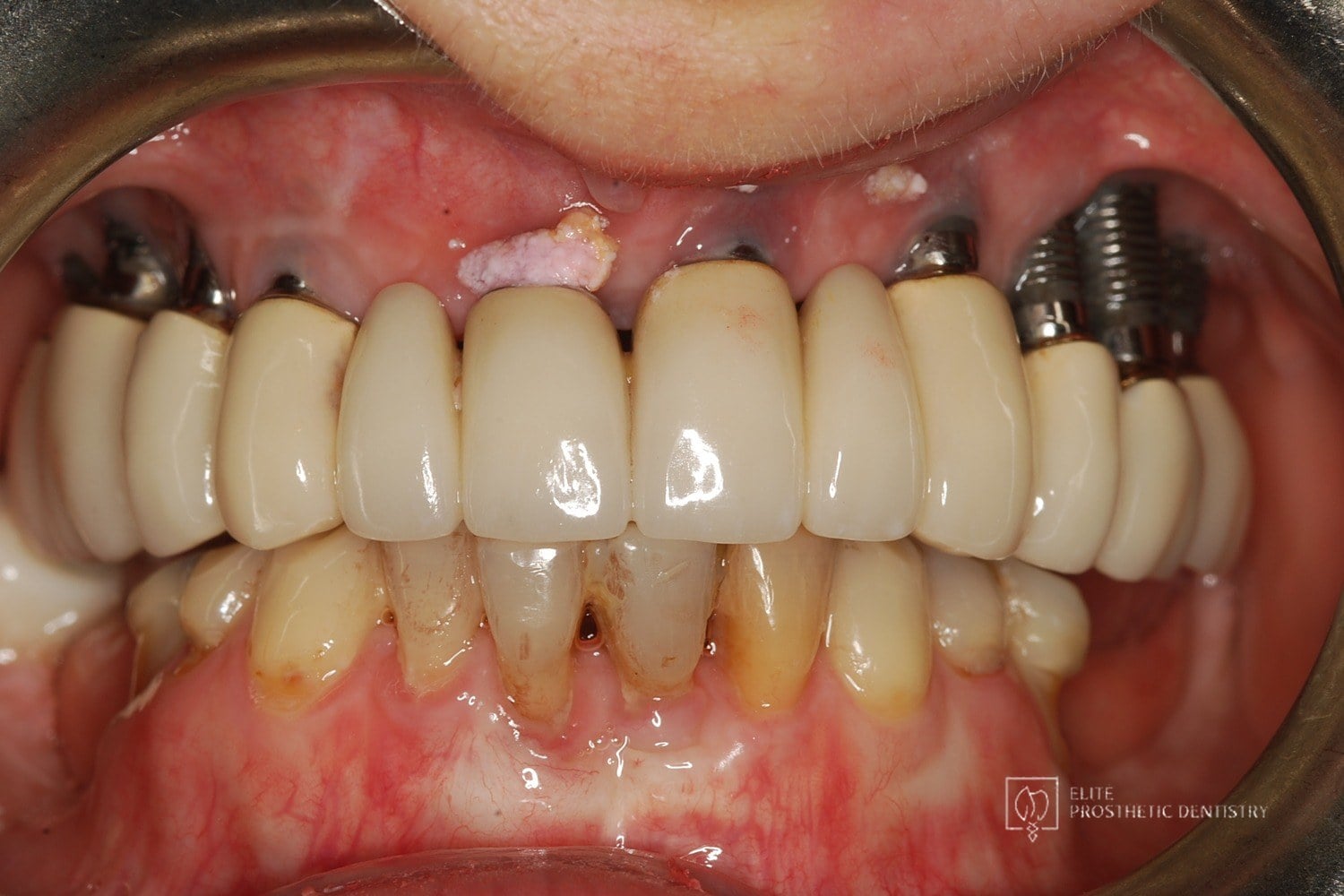 Before
  After
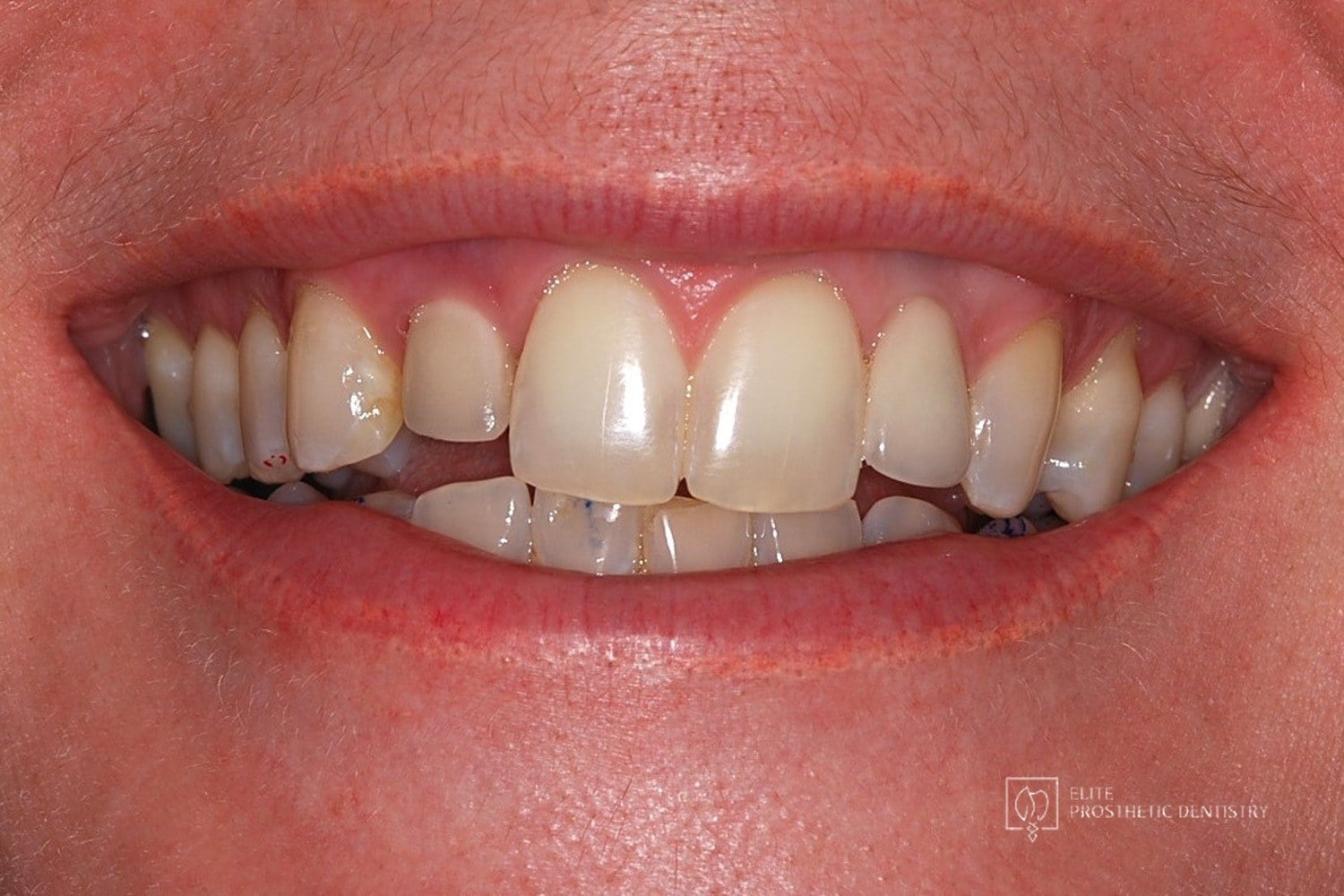
After How Failing Implants and Severe Bone Loss Were Rebuilt Into a Stable Full-Arch Implant Reconstruction
The patient presented with significant complications from previously placed implants, severe bone loss, failing posterior implants, and an unesthetic full-arch bridge. Both arches required full reconstruction, with the upper arch showing the most advanced bone loss and instability.
 Before
  After
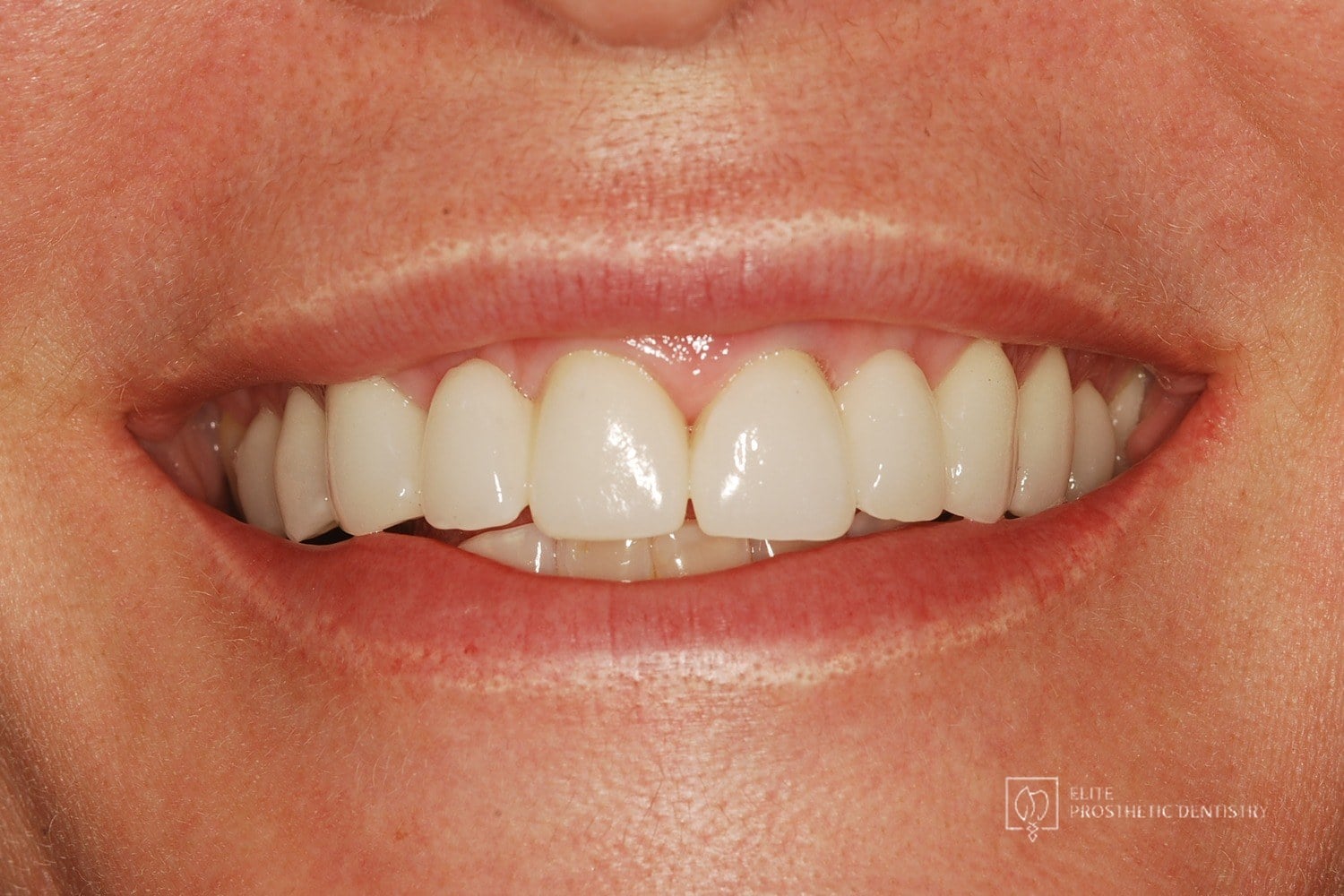
After How Failing Lateral Incisor Implants Were Replaced with Custom Zirconia Bridges After Severe Bone Loss Made Replacement Implants Impossible
Comprehensive examination including CBCT imaging revealed significant bone loss surrounding implants that were placed outside the buccal plate, most likely due to placement without a CBCT-generated surgical guide. The implants were determined non-salvageable, and the alveolar ridge was too narrow to support replacement implants without extensive reconstruction.
Related Articles
Deepen your knowledge with additional insights on this topic.
 Dental Implants
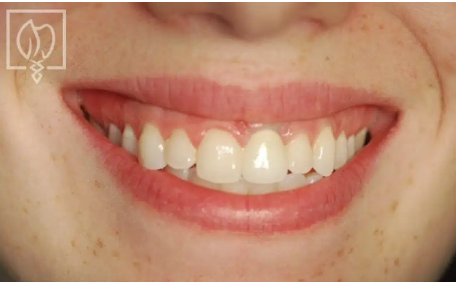
 If a Single Front Tooth Is Replaced with an Implant, Can It Look Natural?
Yes. See the four steps, with real case photos, that make a single front tooth implant indistinguishable from the natural tooth beside it. Washington, DC.
 Dental Implants
 What Is Precision Implant Placement (PIP)?
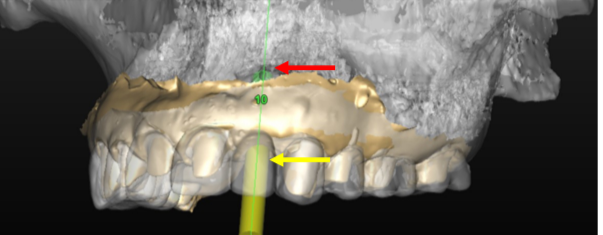
Precision Implant Placement plans each implant virtually on a CBCT scan, then delivers it with a custom surgical guide. See the three steps with real images.
 Dental Implants
 What Is the Ideal Surgical Guide for Precision Implant Placement?
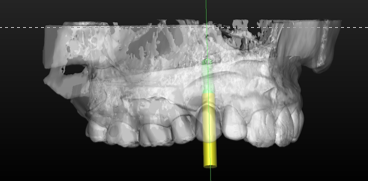
Not all surgical guides are equal. The gold standard is CBCT-based: planned virtually in 3D, 3D printed, and seated on your teeth. A DC prosthodontist explains.