
Facts About Bone Grafting: What Patients Get Wrong (and Right)
Few phrases make dental patients flinch like “you need a bone graft.” The reality is far less dramatic than the name. Modern bone grafting is routine, predictable, and quietly responsible for making dental implants possible for a great many patients who were once told they did not qualify. If a graft is in your future, or you suspect it might be, here are the facts worth knowing.
Fact: Bone Grafting Is a Routine Procedure
Grafting has been performed and refined for decades and is now a standard part of implant dentistry. For most patients it is done right in the office, under local anesthesia, with sedation available for those who want extra calm. There is no hospital stay, and the appointment is often shorter than patients expect. The procedure’s reputation is scarier than its reality, a gap we see close in almost every consultation.
Fact: Several Graft Materials Exist, Each with a Legitimate Role
Graft material can come from your own body, from a rigorously screened tissue bank, or from processed bone-derived sources. Using your own bone eliminates any question of compatibility; bank and processed materials avoid a second surgical site and perform very well in modern practice. Grafts are also commonly combined with biological growth factors and proteins that stimulate your body’s healing response.
The material is a means, not the point. What matters is matching the material and technique to your specific deficit, which is a planning decision made from 3D imaging, not a one-size default.
Fact: The Graft Is a Scaffold. Your Body Does the Building.
This is the fact that reframes everything. A bone graft does not function like cement poured into a gap. It functions as a framework that your body grows through: new blood vessels and bone cells move in, and over a period of months your own regenerative process replaces the graft with living bone. What eventually holds your implant is bone you grew.
That is also why grafting takes time, and why the timeline deserves respect. Bone that is given its months to mature becomes a foundation that can carry an implant for decades. We explain how grafting fits into the larger implant sequence in bone grafting for dental implants.
Fact: Grafting Solves Problems Beyond Implants
Preparing an implant site is the most common reason for a graft, but not the only one. Grafts placed at the time of a tooth extraction preserve the socket so the ridge does not collapse, an approach covered in why bone preservation matters. Grafting also rebuilds bone lost to injury, gum disease, and congenital conditions, and specialized versions such as the sinus lift rebuild specific regions of the jaw.
Healthy bone around your teeth is not cosmetic. It is the structure that keeps teeth stable, supports your facial profile, and keeps future treatment options open.
Fact: Being Told You Lack Bone Is Rarely the Final Word
Patients regularly arrive at our practice believing implants are impossible for them. What they usually lack is not options but a precise measurement. A 3D scan shows exactly where bone is missing and how it can be rebuilt, and grafting converts most “you do not qualify” verdicts into a plan with a timeline.
Dr. Gerald Marlin is a specialty-trained prosthodontist with more than 3,900 dental implants placed, and bone reconstruction is a routine part of how we build results designed to be done correctly once. If you are considering an implant, recovering from an extraction, or simply wondering what shape your jaw is in, call 202-244-2101 or request a consultation at Elite Prosthetic Dentistry in Friendship Heights, Washington, DC.
See How We Resolve These Problems
Our patient success stories show real cases and real results. Browse outcomes from a specialist prosthodontist with decades of experience and 3,900+ implants placed.
Key Takeaways
- ✓ Bone grafting is a routine, office-based procedure, not the hospital-scale surgery many patients picture when they hear the name.
- ✓ Graft material can come from your own body, a carefully screened tissue bank, or processed bone-derived sources; each has legitimate uses.
- ✓ A graft works as a scaffold: your body grows new bone through it and gradually replaces it with living bone of your own.
- ✓ Grafting is what makes implants possible for many patients who were told they lacked the bone.
- ✓ Comfort is managed with local anesthesia, and sedation is available for patients who want it.
Frequently Asked Questions
Is a dental bone graft a major surgery?
No. For most patients it is a routine procedure performed in the dental office under local anesthesia, often taking less time than the extraction that preceded it. Sedation is available if you are anxious. Most people are surprised by how uneventful the recovery is.
Where does dental bone graft material come from?
Several sources are used in modern dentistry: your own bone, donor bone from a rigorously screened tissue bank, or processed bone-derived material. Grafts are frequently combined with biological growth factors that encourage your body to build new bone faster and denser.
Does the graft stay in my jaw forever?
Not in its original form. The graft serves as a framework that your body colonizes with its own bone cells. Over months, your natural regenerative process replaces the graft material with new, living bone, so what ultimately supports your implant is bone your own body built.
Who needs a bone graft?
The most common reason is preparing a site for a dental implant after bone has shrunk from tooth loss or gum disease. Grafts are also used at the time of an extraction to preserve the socket, and to repair defects from injury or congenital conditions. A 3D scan shows whether your site needs one.
Related Patient Success Stories
Explore similar patient success stories demonstrating our expertise in advanced prosthetic dentistry.
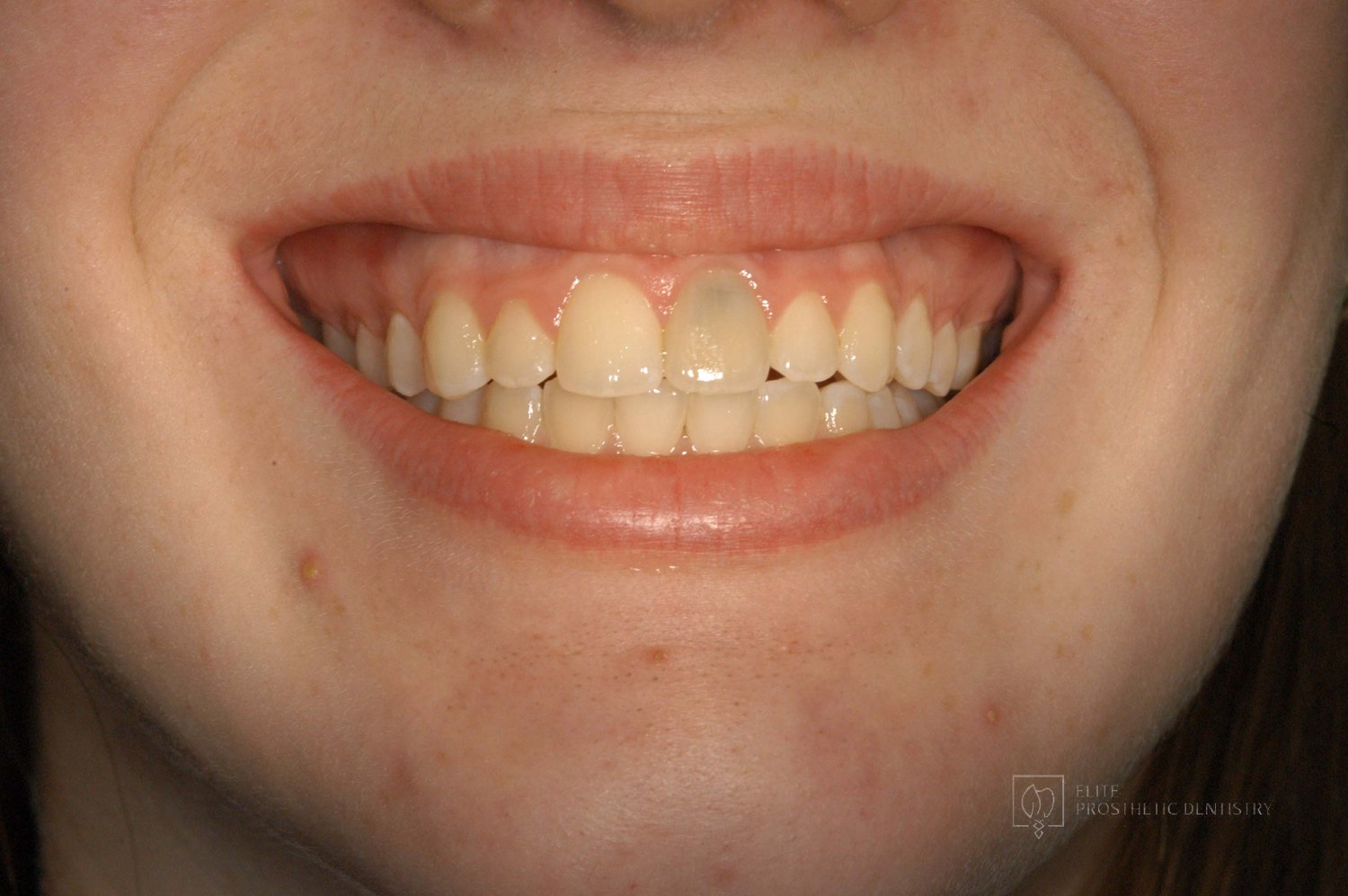 Before
 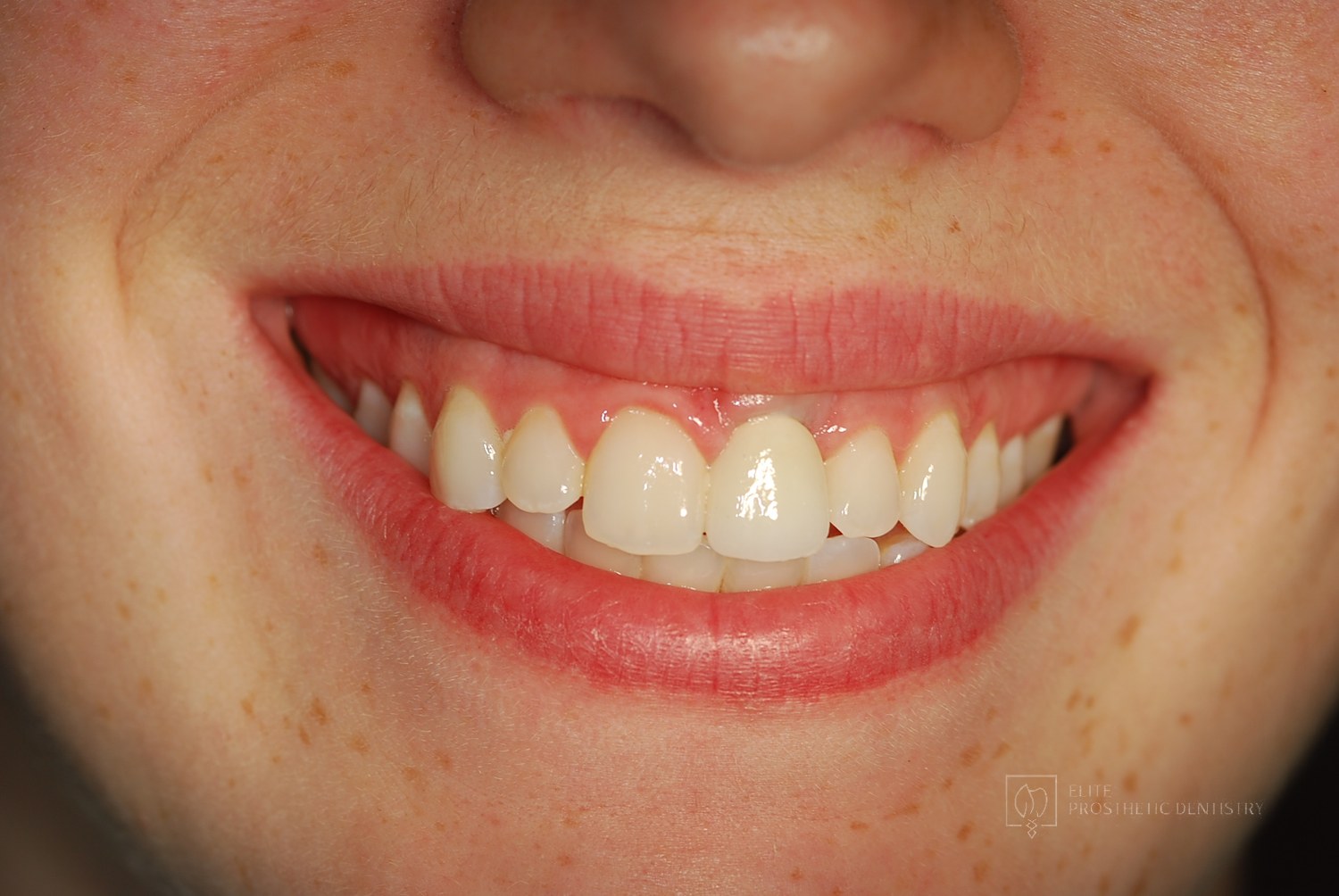 After
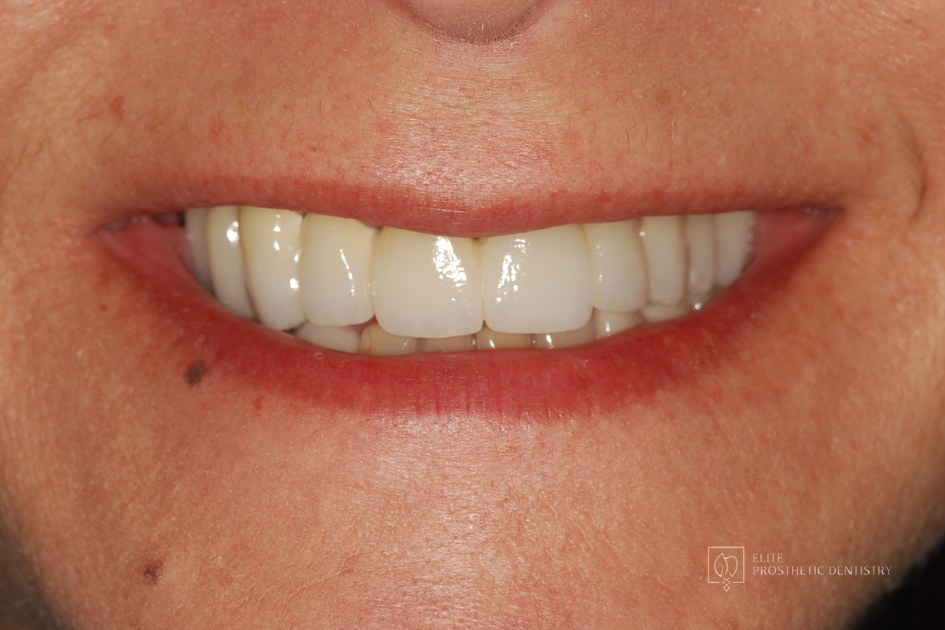
After How a Front Tooth Lost to Childhood Trauma Was Rebuilt with Bone Grafting and a Long-Lasting Implant
A teenager was referred by her father after earlier trauma left her upper left front tooth slowly failing from root resorption. She was still growing, so an immediate implant was the wrong move. The tooth had to be maintained to buy time, then replaced correctly once she reached skeletal maturity.
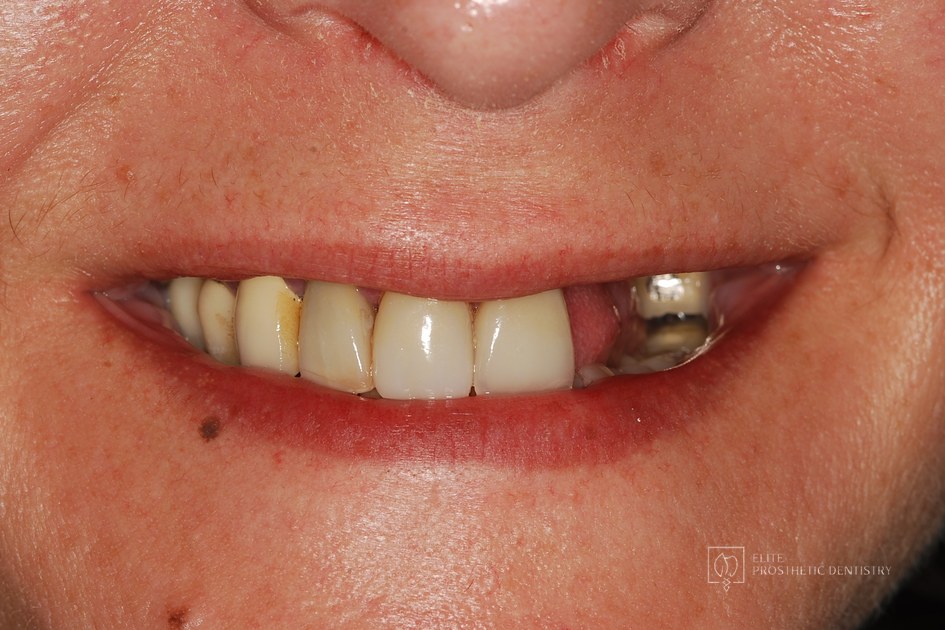 Before
  After
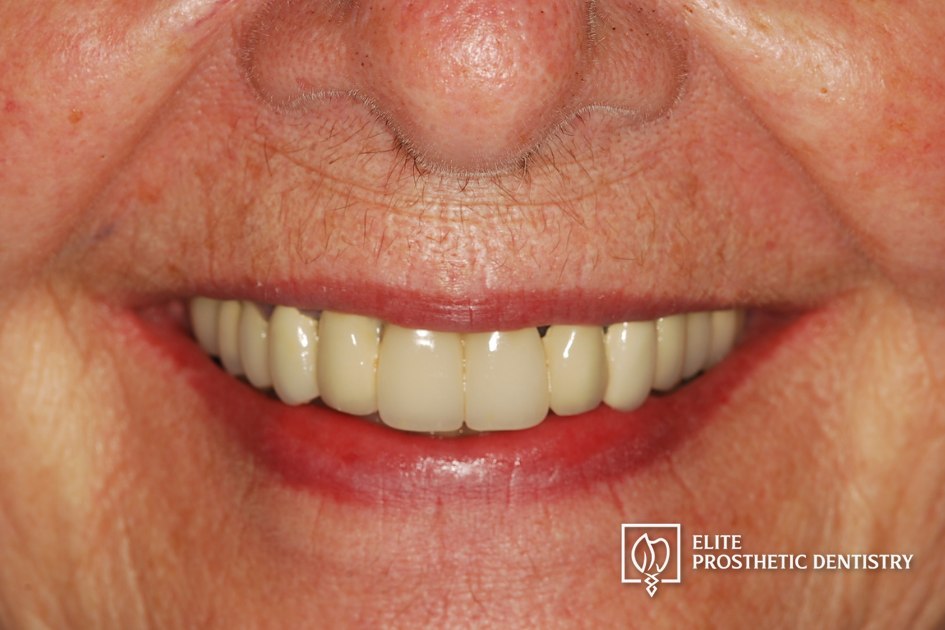
After Implant Supported Reconstruction: Failing Bridgework and Missing Back Teeth Rebuilt with Coordinated Specialist Care
Referred by another dental specialist with severe bone resorption on the upper left, multiple broken-down lower teeth requiring extraction, and failing lower back teeth that had left the bite without solid support. No single procedure, and no provider working in isolation, could rebuild a situation this interconnected.
 Before
  After
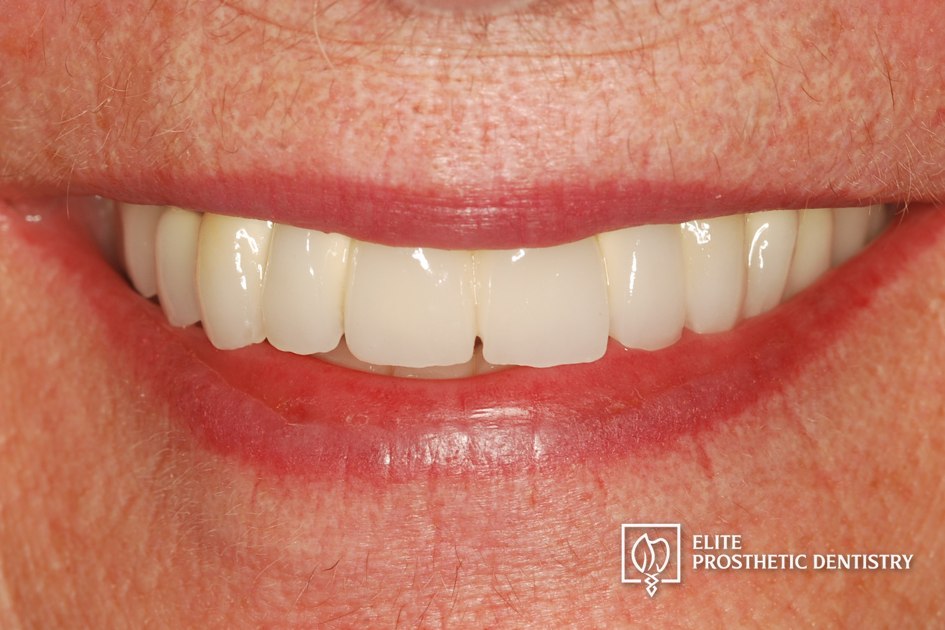
After How a Loose Upper Bridge and Aging Crowns Were Rebuilt with Staged Implant Reconstruction
A patient referred by her general dentist after years of aging dentistry no longer holding up. A loose upper bridge and crowns more than twenty years old, combined with the effects of advanced periodontal disease and severely compromised tooth abutments, required a staged surgical and restorative plan delivered with comfort planning at the same time.
Related Articles
Deepen your knowledge with additional insights on this topic.
 Bone Grafting & Surgical
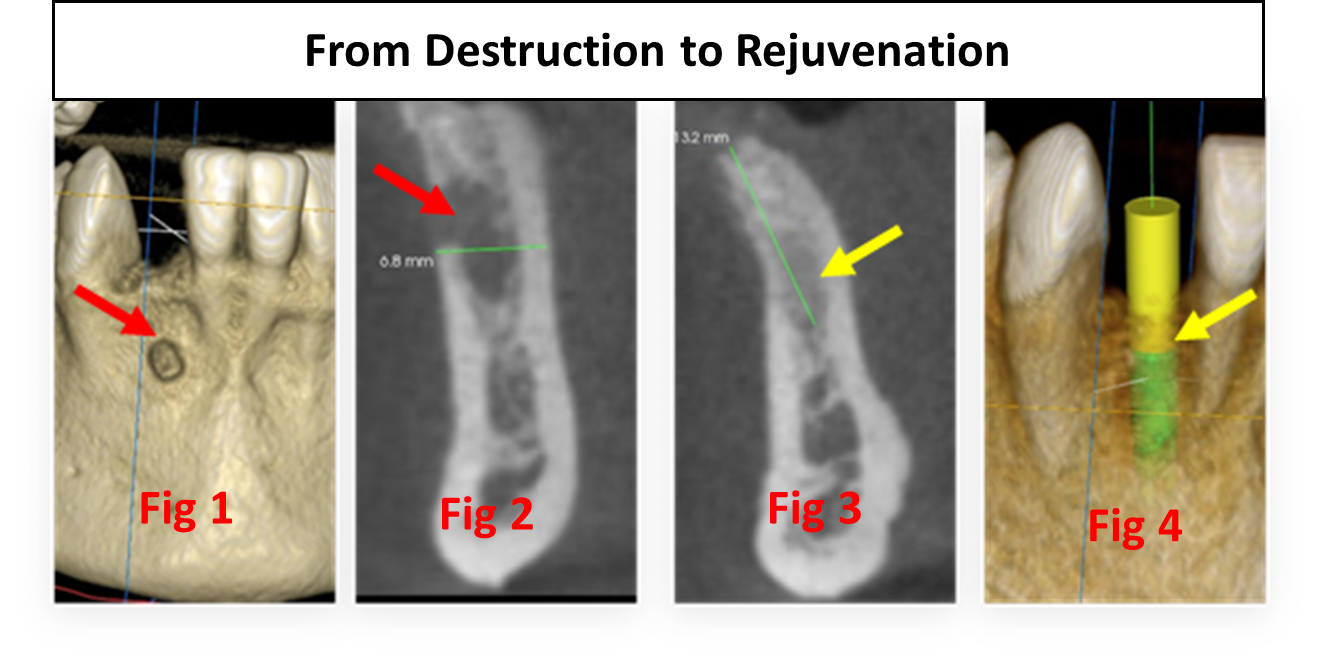
 Rebuilding a Ruined Implant Site with Severely Damaged Bone: The Three-Stage Protocol
Debridement, growth-factor grafting, CBCT-guided planning: the step-by-step protocol that turns a severely damaged implant site into a healthy ridge.
 Bone Grafting & Surgical
 What Is Ridge Augmentation Bone Grafting?
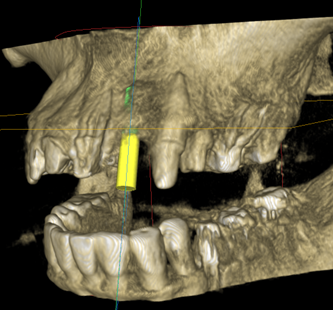
Ridge augmentation rebuilds a jaw ridge too narrow or angled for an implant. See real measurements from planning to precise placement. Washington DC.
 Bone Grafting & Surgical
 What Is a Partial (Internal) Sinus Lift?
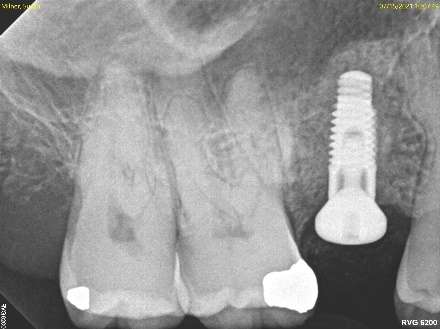
A partial (internal) sinus lift adds bone at a single implant site through the implant preparation itself, often with the implant placed the same visit.