
Can My Failed Implant Be Salvaged? Bone Loss on the Outside of the Implant
Yes: when a dental implant is losing bone on its buccal (outside) surface, it can often be saved, and this particular failure pattern is one of the more favorable ones to treat. The defect sits on one wall of the implant while the remaining surfaces stay anchored in bone, which gives a meticulous repair something solid to build against.
Ignore it, however, and the outcome is predictable. An exposed outer surface keeps collecting bacteria, the defect deepens, support erodes, and the implant eventually loosens. The difference between a repairable defect and a lost implant is usually time, which is why we treat outside-wall bone loss as a now problem rather than a watch-it problem. It is one of three distinct failure patterns we see; this article covers the outside-wall case specifically, and the overview of failing implant repair options maps the full landscape.
How We Rebuild the Outside Wall
The repair follows a strict sequence, because each step only works if the previous one was honest.
First, the implant surface is detoxified: every trace of bacterial biofilm and debris is removed from the exposed titanium (Fig. 1 shows a typical starting point). Bone will not regenerate against a contaminated surface, so this step decides whether everything after it succeeds.
Next, bone graft material enhanced with biological growth factors is placed against the cleaned surface and covered with a protective membrane that holds the graft in place and encourages new bone formation (Fig. 2). In the case shown, 4 mm of new bone was regenerated to shield the implant, converting an exposed, failing surface back into a supported one.
Throughout healing, a custom temporary bridge seats over the site (Fig. 3), so aesthetics and chewing carry on uninterrupted. No removable denture, no visible gap, no waiting room smile.
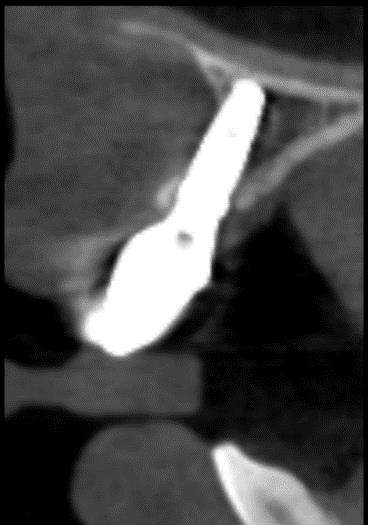
Fig. 1: Implant Missing Bone on Outside Surface
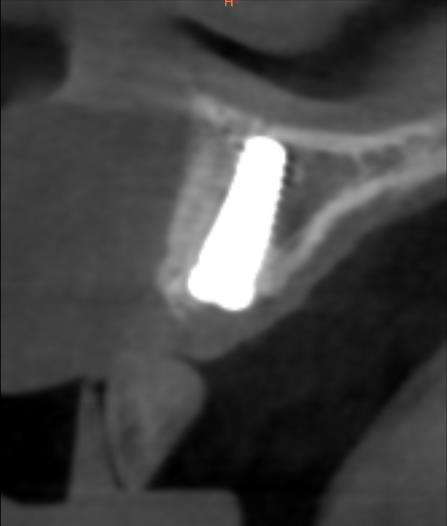
Fig. 2: Bone Graft with 4 mm of New Bone Saved the Implant
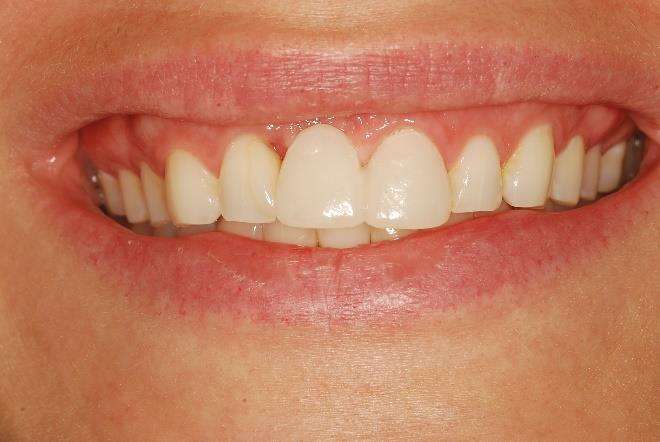
Fig. 3: Temporary Crown Seated Over the Implant
Why This Geometry Favors Repair
Salvage decisions always come down to geometry: where the bone was lost, how much remains, and whether the implant is still rigidly anchored. An outside-wall defect leaves the implant stable and creates a contained space that a graft can predictably fill. Contrast that with bone loss encircling the implant on multiple surfaces, which demands a more involved rebuild, or damage from improperly performed implant surgery, where the site often must be reconstructed before a new implant can be placed at all.
The lesson across all three: the earlier the pattern is diagnosed, the more conservative the fix.
Get the Defect Measured Before It Grows
If your gums around an implant are receding, bleeding, or showing a gray shadow of metal through thinning tissue, those are outside-wall warning signs worth taking seriously. Dr. Gerald Marlin, a specialty-trained prosthodontist with more than 3,900 dental implants placed, evaluates failing implants with 3D imaging and will tell you plainly whether yours can be repaired and what it will take. Call 202-244-2101 or book a consultation at Elite Prosthetic Dentistry in Friendship Heights, Washington, DC.
See How We Resolve These Problems
Our patient success stories show real cases and real results. Browse outcomes from a specialist prosthodontist with decades of experience and 3,900+ implants placed.
Key Takeaways
- ✓ Bone loss confined to the outside (buccal) wall of an implant is one of the more favorable failure patterns, and it can often be reversed.
- ✓ The repair sequence is meticulous: detoxify the implant surface, graft with growth-factor-enhanced bone, and protect the site with a membrane.
- ✓ Several millimeters of new bone (4 mm in the case shown) can often be regenerated to shield the implant.
- ✓ A custom temporary bridge maintains your appearance and chewing throughout healing; no denture is involved.
- ✓ Left untreated, an outside-wall defect keeps growing until the implant loosens, so early evaluation preserves the salvage option.
Frequently Asked Questions
Can an implant losing bone on its outer surface really be saved?
In many cases, yes. Because the defect is confined to one wall, the implant remains anchored on its other surfaces, which gives the repair something to build against. After the implant surface is detoxified, graft material and a protective membrane encourage new bone to regenerate over the exposed side, often restoring several millimeters of coverage.
What does implant detoxification involve?
It means removing the bacterial biofilm and contaminated debris from the exposed implant surface. Bone will not regenerate against a contaminated surface, so decontamination is the non-negotiable first step of any graft-based implant repair.
How long does the repair take before the implant is back in full service?
The graft typically matures for 4 to 6 months. During that time you are not left with a gap: a custom temporary bridge seats over the area, maintaining aesthetics and function while the new bone quietly consolidates underneath.
How long does the regenerated bone last?
With proper hygiene and follow-up, grafted bone around a repaired implant can remain stable for years. Durability depends on eliminating the original cause of the bone loss, which is why the repair includes correcting whatever made the site vulnerable in the first place.
Related Patient Success Stories
Explore similar patient success stories demonstrating our expertise in advanced prosthetic dentistry.
 Before
  After
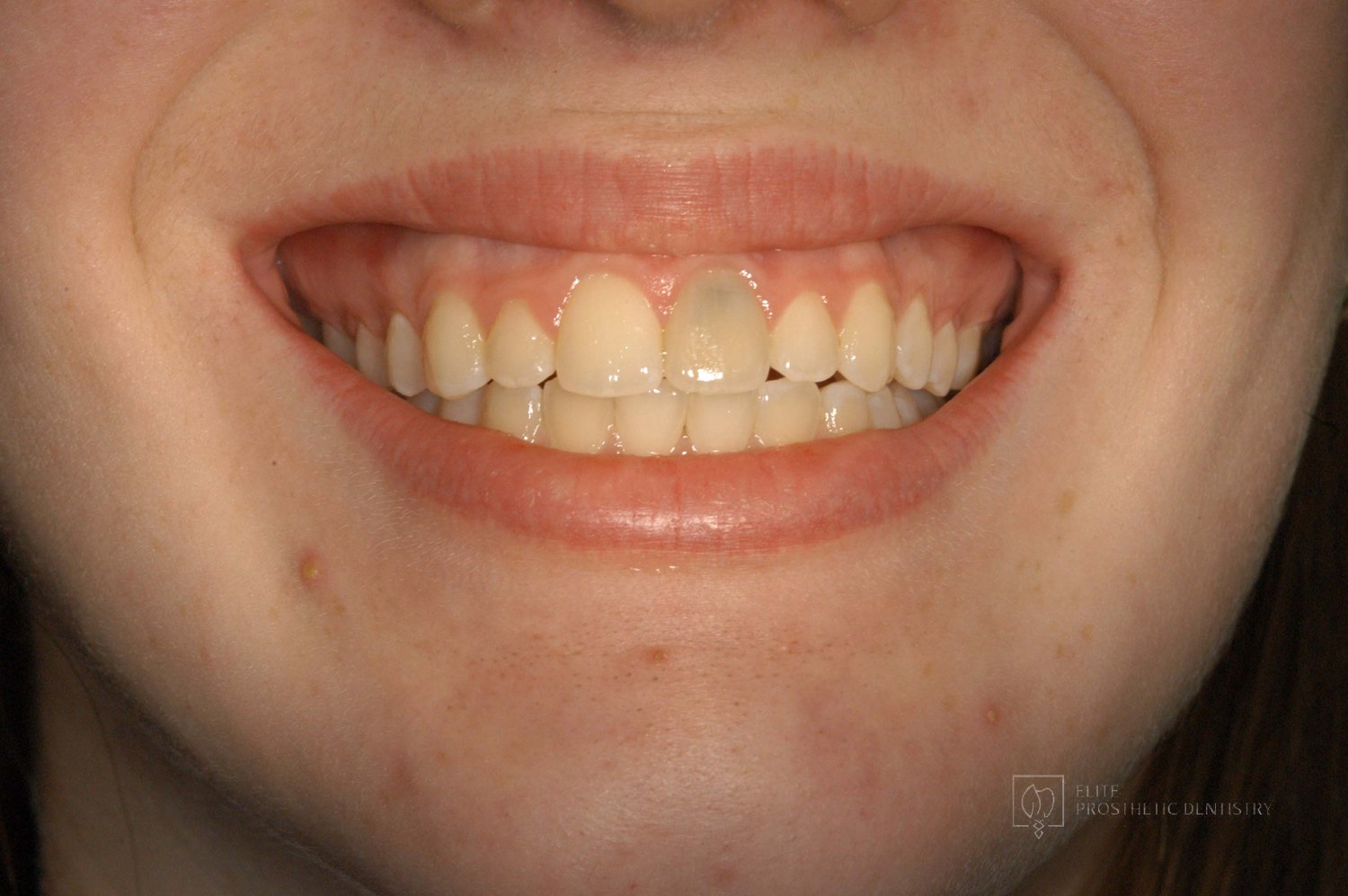
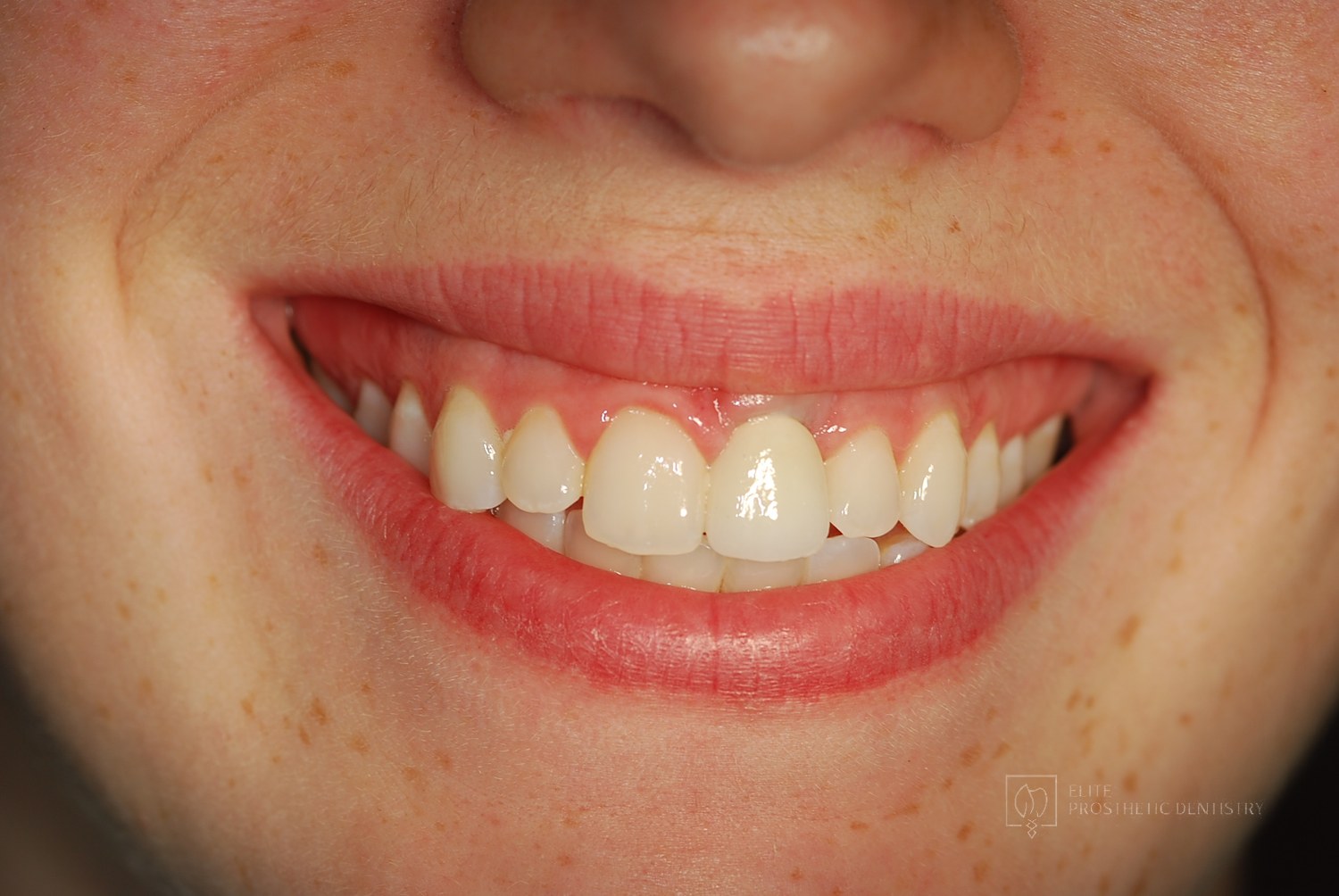
After How a Front Tooth Lost to Childhood Trauma Was Rebuilt with Bone Grafting and a Long-Lasting Implant
A teenager was referred by her father after earlier trauma left her upper left front tooth slowly failing from root resorption. She was still growing, so an immediate implant was the wrong move. The tooth had to be maintained to buy time, then replaced correctly once she reached skeletal maturity.
 Before
  After
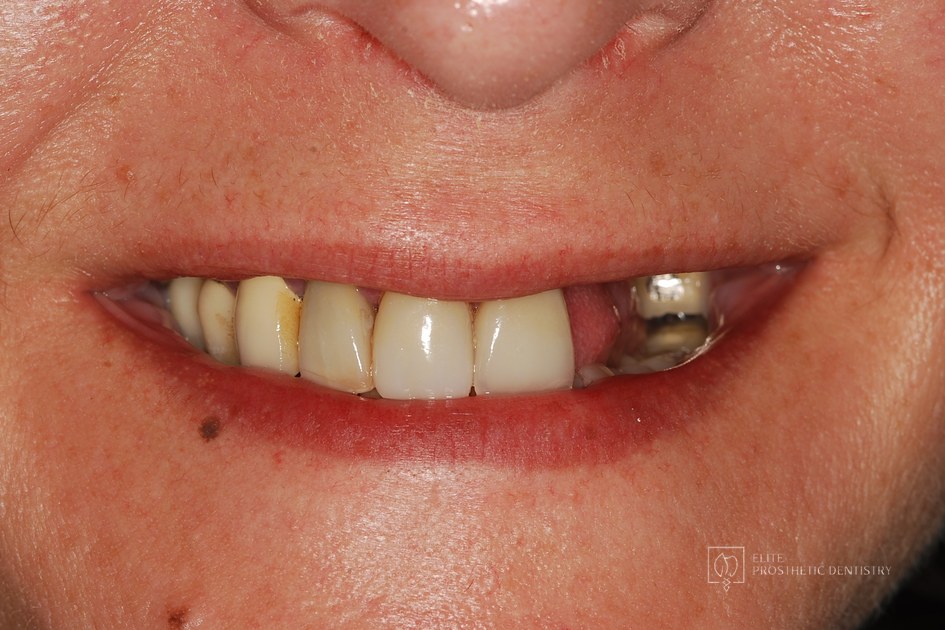
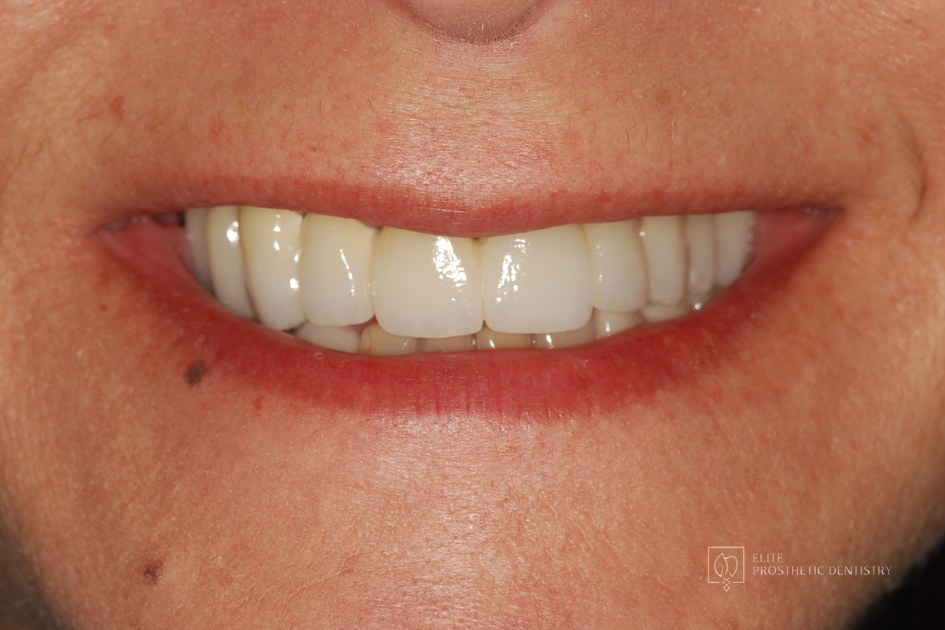
After Implant Supported Reconstruction: Failing Bridgework and Missing Back Teeth Rebuilt with Coordinated Specialist Care
Referred by another dental specialist with severe bone resorption on the upper left, multiple broken-down lower teeth requiring extraction, and failing lower back teeth that had left the bite without solid support. No single procedure, and no provider working in isolation, could rebuild a situation this interconnected.
 Before
 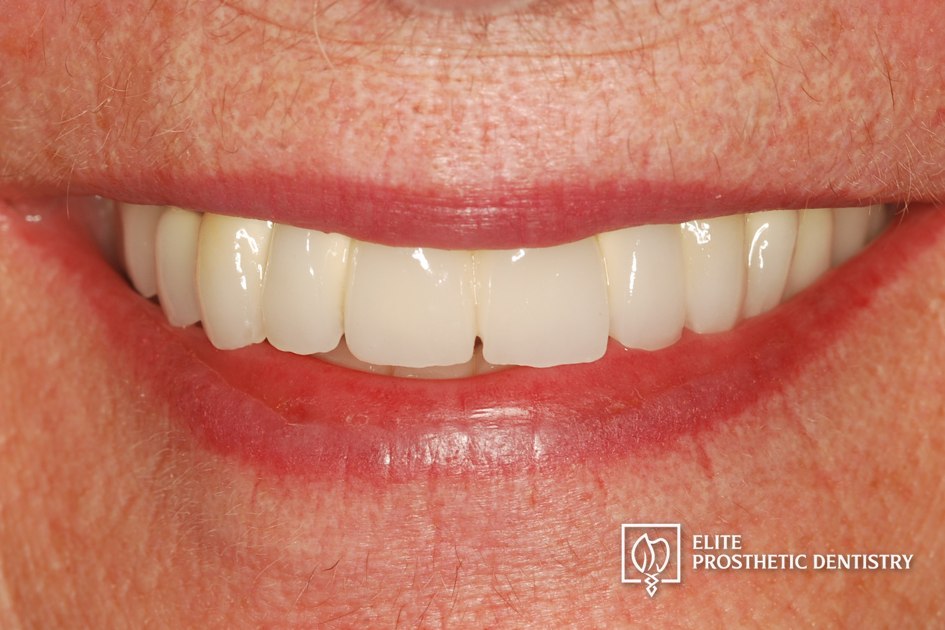 After
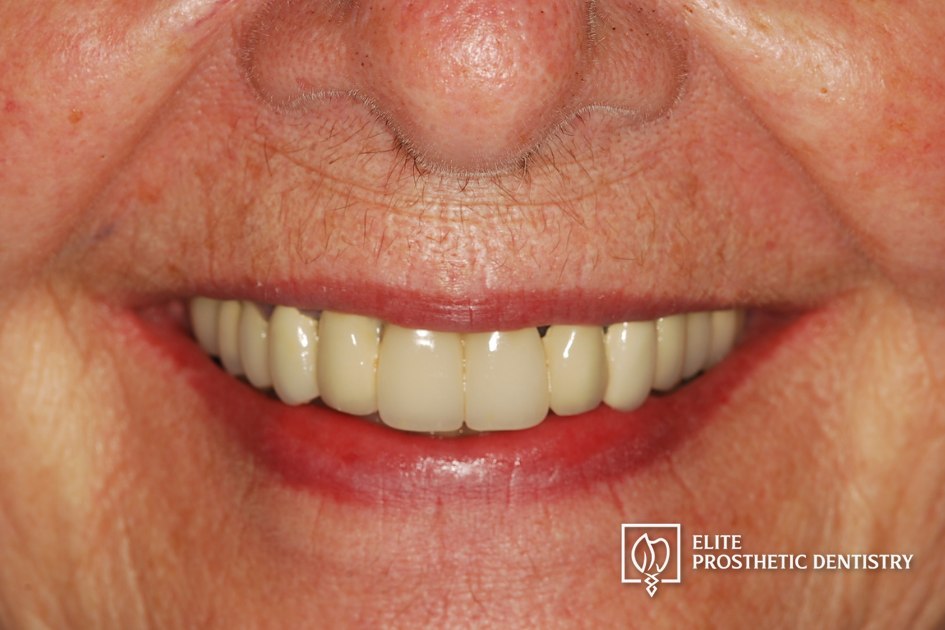
After How a Loose Upper Bridge and Aging Crowns Were Rebuilt with Staged Implant Reconstruction
A patient referred by her general dentist after years of aging dentistry no longer holding up. A loose upper bridge and crowns more than twenty years old, combined with the effects of advanced periodontal disease and severely compromised tooth abutments, required a staged surgical and restorative plan delivered with comfort planning at the same time.
Related Articles
Deepen your knowledge with additional insights on this topic.
 Bone Grafting & Surgical
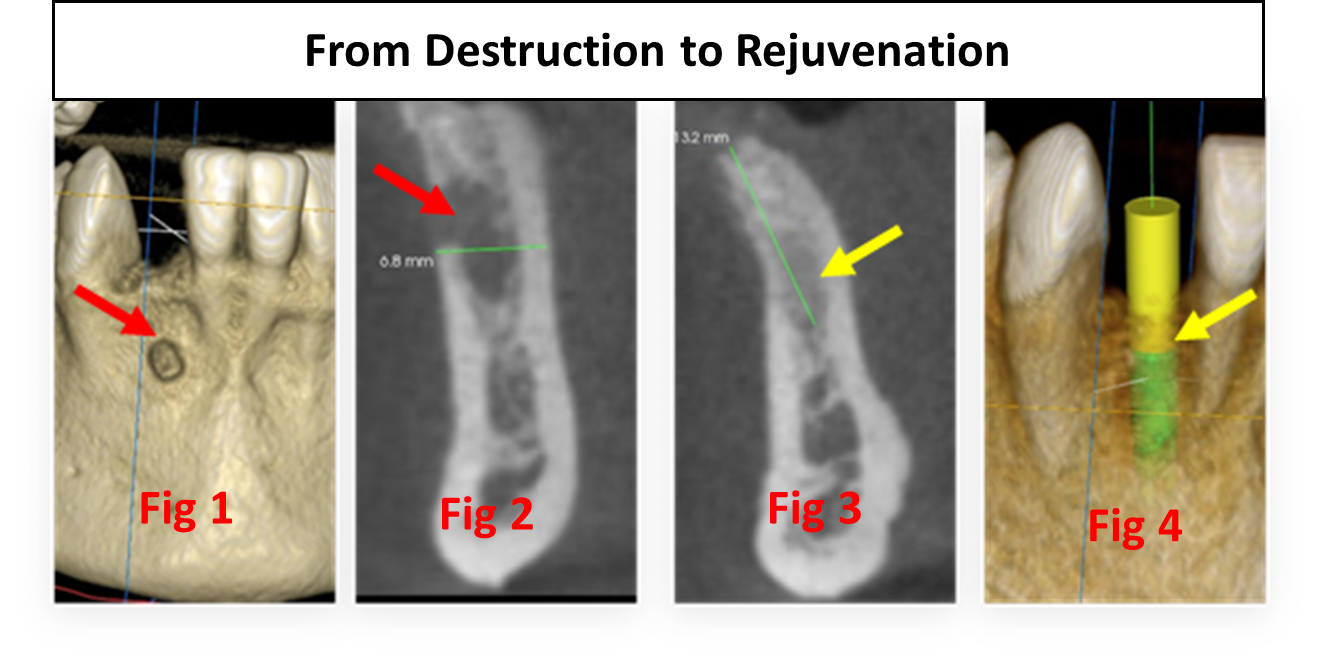
 Rebuilding a Ruined Implant Site with Severely Damaged Bone: The Three-Stage Protocol
Debridement, growth-factor grafting, CBCT-guided planning: the step-by-step protocol that turns a severely damaged implant site into a healthy ridge.
 Bone Grafting & Surgical
 What Is Ridge Augmentation Bone Grafting?
Ridge augmentation rebuilds a jaw ridge too narrow or angled for an implant. See real measurements from planning to precise placement. Washington DC.
 Bone Grafting & Surgical
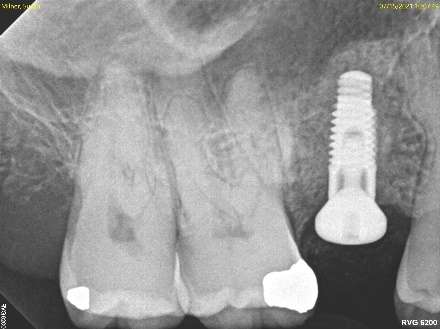
 What Is a Partial (Internal) Sinus Lift?
A partial (internal) sinus lift adds bone at a single implant site through the implant preparation itself, often with the implant placed the same visit.