
What Is a Full (External) Sinus Lift?
A full (external) sinus lift is the bone grafting technique we use when the upper back jaw has little or no bone left beneath the sinus. Working from the cheek side, we gently raise the sinus membrane and pack bone graft material into the space beneath it, rebuilding the height of the ridge so that dental implants can eventually be placed.
It is the more extensive of the two sinus lift techniques, and it exists for a reason: some sites are simply too depleted for anything less. Where the conservative internal lift adds a few millimeters through the implant site itself, the external lift reconstructs the entire sinus floor on that side.
When the External Technique Is the Right One
The deciding factor is how much bone remains between your ridge and the sinus floor. When a usable amount is present, an implant can often be placed with a modest internal sinus lift at the same visit. When the CT scan shows almost nothing to work with (Fig. 1), attempting to shortcut that reality is how implants fail. The honest answer is to rebuild the bone first.
That finding is made during 3D planning, not guessed at chairside. If you are earlier in your research, our overview of when a sinus lift is necessary explains the situations that lead patients here.
How the Procedure Works, Stage by Stage
Through a small opening on the cheek side of the upper jaw, the Schneiderian membrane (the delicate lining of the sinus floor) is carefully elevated, staying intact throughout. Bone graft material is then packed into the space created beneath it (Fig. 2), covering the floor of the sinus on that side.
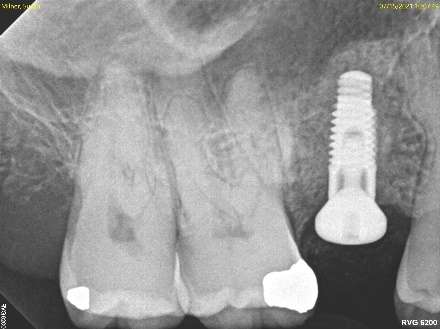
Then biology takes over. Across roughly 6 to 9 months, the graft consolidates into dense, living bone. Once it has matured, implants are placed into the new bone (Fig. 3). About four months later, after the implants have integrated, they are restored with abutments and crowns fabricated in our in-house laboratory (Fig. 4).
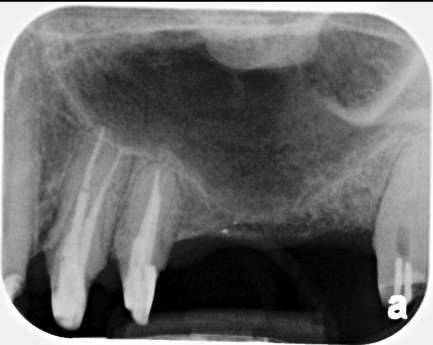
Fig. 1: No Bone Available to Receive Any Implant
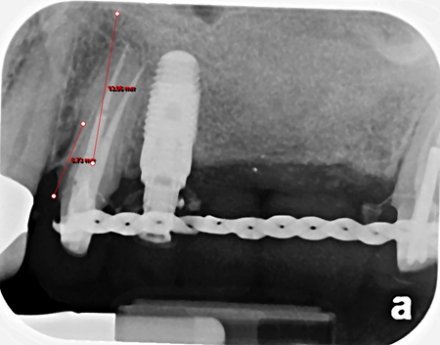
Fig. 2: Bone Filled-In Below Sinus Membrane Using a Full (External) Sinus Lift Process
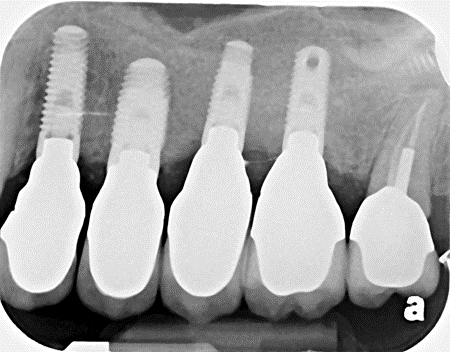
Fig. 3: Implants with Final Abutments and Crowns in New Bone
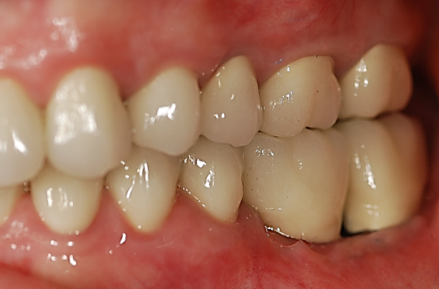
Fig. 4: Final Abutments and Crowns Seated on Implants
Why the Waiting Is the Point
Patients sometimes ask whether the months of graft maturation can be compressed. The honest answer: the timeline is the treatment. An implant placed into immature graft is an implant asked to fail. Staging the reconstruction, letting each phase prove itself before the next begins, is the same philosophy behind staged implant therapy, and it is why sites rebuilt this way can carry teeth for decades rather than years.
This matters whether you arrived here through a long history of missing teeth or you are proactively replacing dentistry that is reaching the end of its life. Done correctly once, an external sinus lift is not a detour from your implant treatment. It is the part of the treatment that makes everything above it possible.
Comfort, Recovery, and What to Expect
The procedure is performed under local anesthesia, with sedation available if you would like it, and most patients report far less discomfort than the name suggests. Expect soft foods for the first week and some precautions to protect the healing membrane, such as avoiding forceful nose blowing. Normal routines resume quickly while the graft quietly matures underneath.
Find Out What Your Upper Jaw Needs
If you have been told there is not enough bone for upper implants, the next step is a measurement, not a guess. Dr. Gerald Marlin, a specialty-trained prosthodontist with more than 3,900 dental implants placed, will review your 3D scan and lay out exactly what your site requires. Call 202-244-2101 or request a consultation at Elite Prosthetic Dentistry in Friendship Heights, Washington, DC.
See How We Resolve These Problems
Our patient success stories show real cases and real results. Browse outcomes from a specialist prosthodontist with decades of experience and 3,900+ implants placed.
Key Takeaways
- ✓ A full (external) sinus lift is the technique for the hardest starting point: little or no bone remaining beneath the sinus in the upper back jaw.
- ✓ The sinus membrane is raised from the cheek side and bone graft material is packed beneath it, rebuilding the entire sinus floor on that side.
- ✓ The graft matures into solid bone over roughly 6 to 9 months before implants are placed; crowns typically follow about 4 months after that.
- ✓ It is a staged procedure by design. Letting the bone mature before it carries load is what makes the final result stable.
- ✓ Local anesthesia is standard, sedation is available, and most patients report less discomfort than they expected.
Frequently Asked Questions
How long does an external sinus lift take to heal?
The graft typically matures for 6 to 9 months before implants can be placed into it. After placement, the implants integrate for several more months before the final crowns are seated. The timeline is set by bone biology, and respecting it is what produces a foundation that lasts.
Is external sinus lift surgery painful?
Less than most patients expect. The procedure is done under local anesthesia, with sedation available if you prefer, and most patients report only minimal discomfort afterward. Swelling and tenderness for a few days are typical and manageable.
Can implants be placed at the same time as an external sinus lift?
Sometimes. If enough native bone remains to hold the implants firmly (what surgeons call primary stability), placement can be combined with the graft. When bone is truly scarce, we stage the treatment and place implants after the graft has matured. The CT scan makes that call, not preference.
Are there eating restrictions after a sinus lift?
Soft foods are recommended for about the first week, after which you can gradually return to a normal diet. You will also be asked to avoid forceful nose blowing and similar pressure changes early in healing to protect the membrane.
Related Patient Success Stories
Explore similar patient success stories demonstrating our expertise in advanced prosthetic dentistry.
 Before
  After
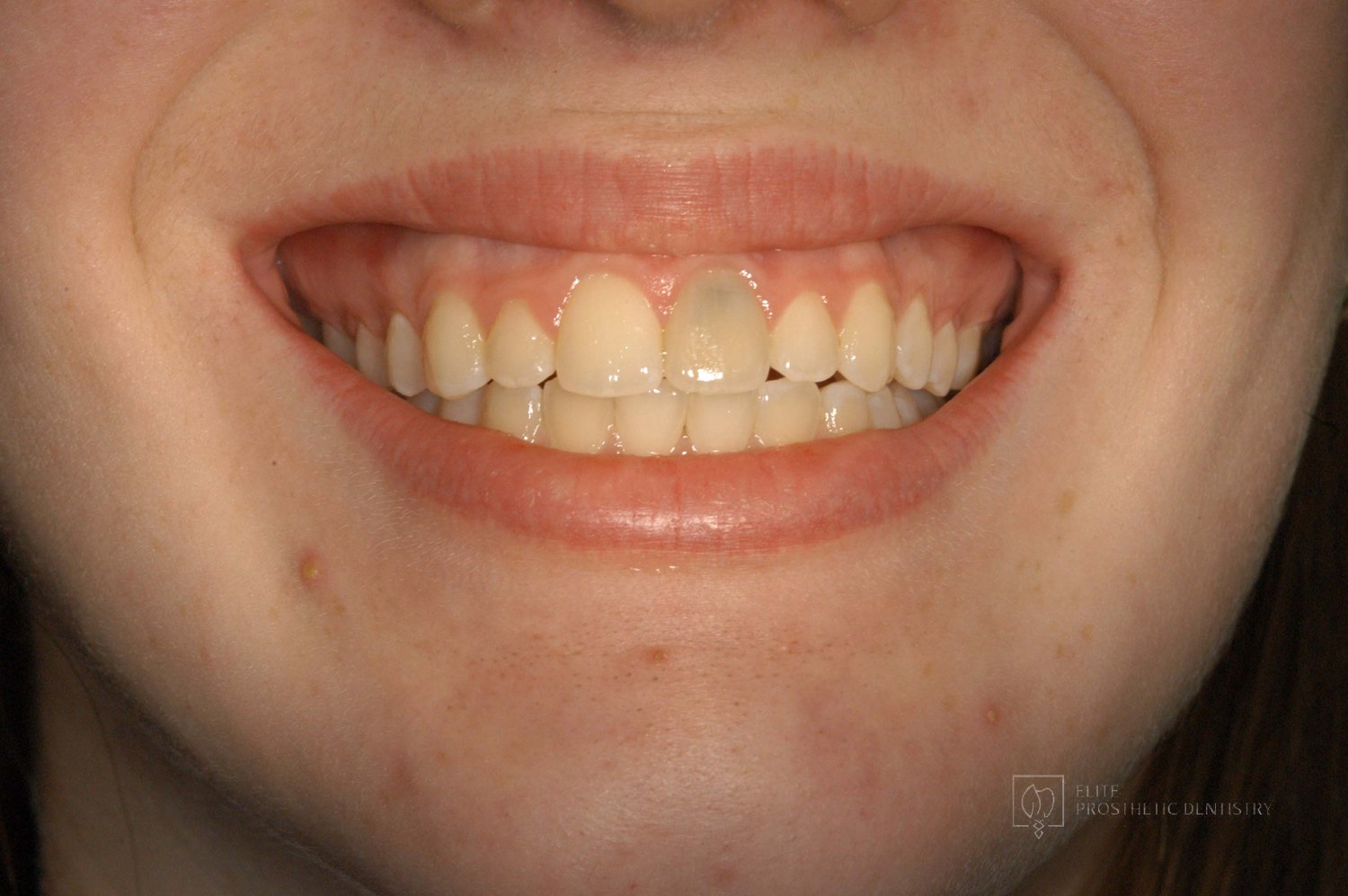
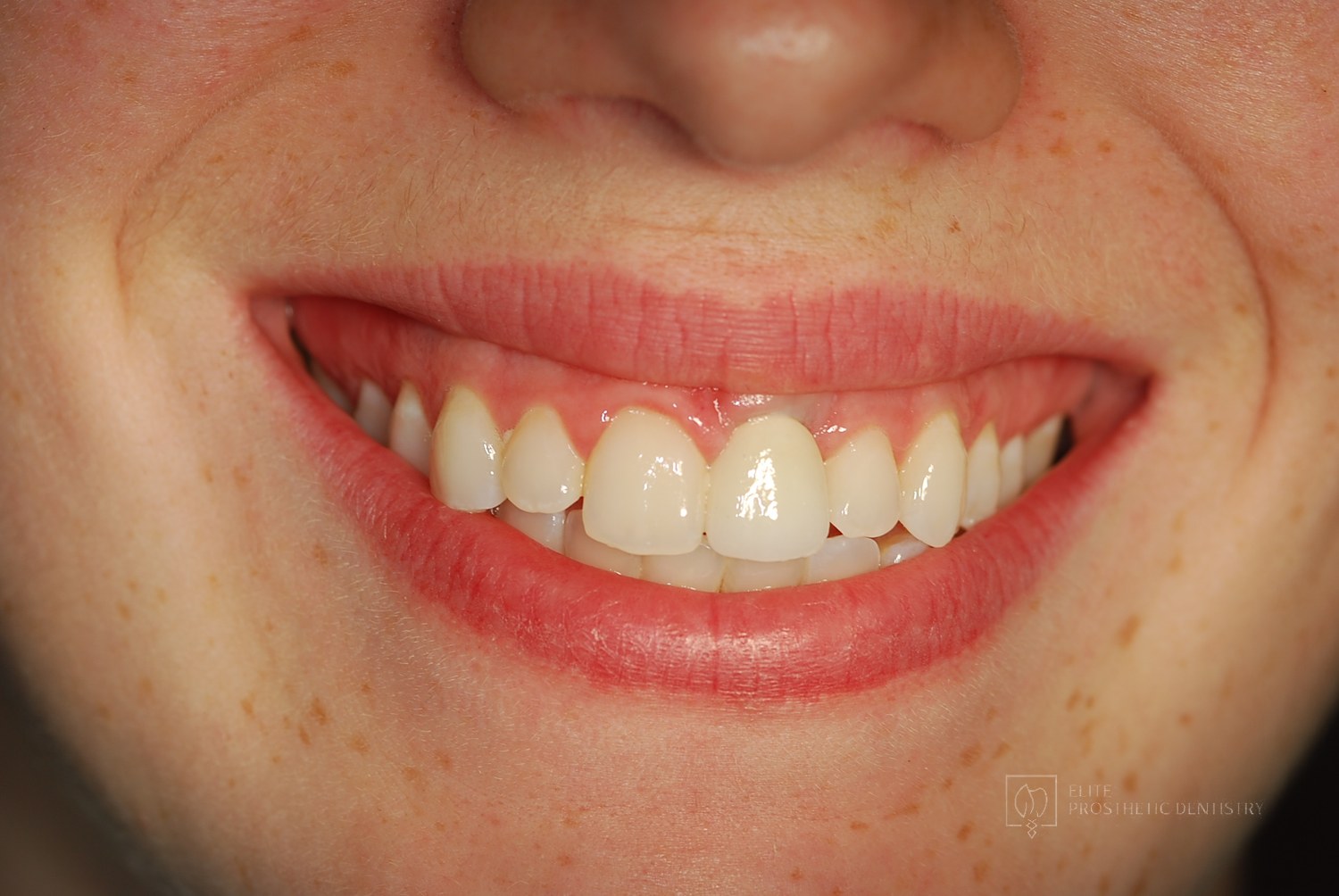
After How a Front Tooth Lost to Childhood Trauma Was Rebuilt with Bone Grafting and a Long-Lasting Implant
A teenager was referred by her father after earlier trauma left her upper left front tooth slowly failing from root resorption. She was still growing, so an immediate implant was the wrong move. The tooth had to be maintained to buy time, then replaced correctly once she reached skeletal maturity.
 Before
  After
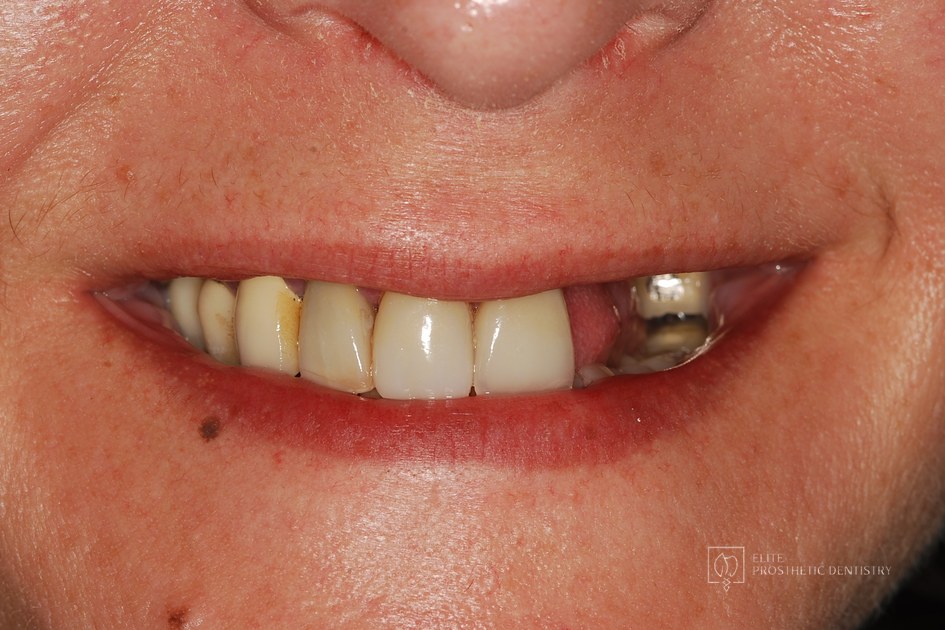
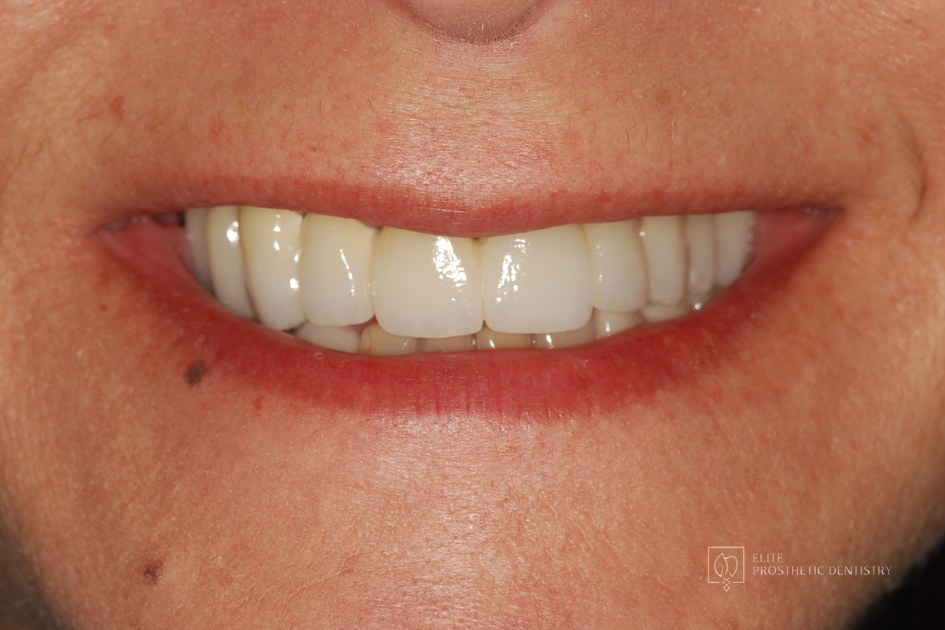
After Implant Supported Reconstruction: Failing Bridgework and Missing Back Teeth Rebuilt with Coordinated Specialist Care
Referred by another dental specialist with severe bone resorption on the upper left, multiple broken-down lower teeth requiring extraction, and failing lower back teeth that had left the bite without solid support. No single procedure, and no provider working in isolation, could rebuild a situation this interconnected.
 Before
  After
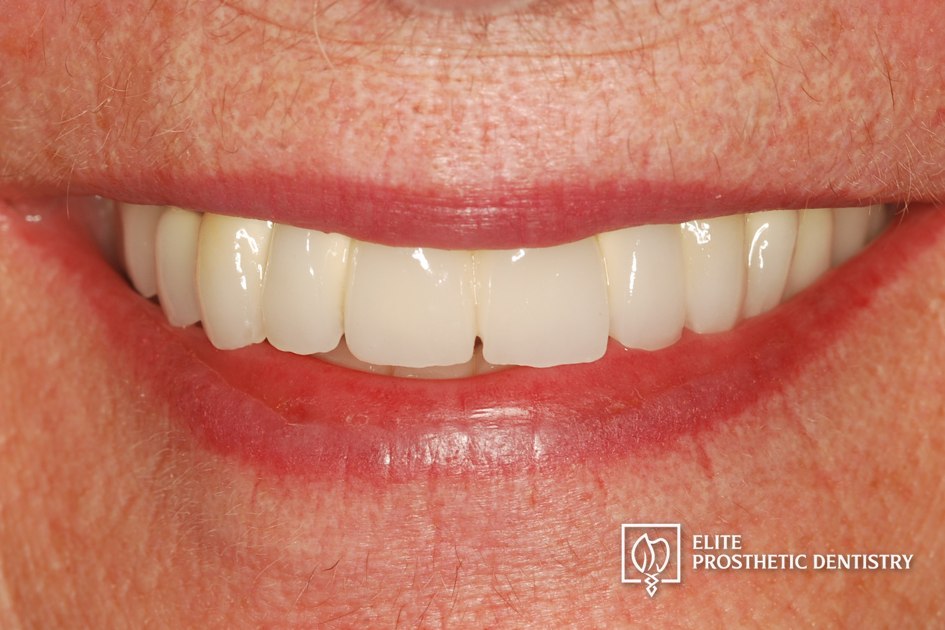
After How a Loose Upper Bridge and Aging Crowns Were Rebuilt with Staged Implant Reconstruction
A patient referred by her general dentist after years of aging dentistry no longer holding up. A loose upper bridge and crowns more than twenty years old, combined with the effects of advanced periodontal disease and severely compromised tooth abutments, required a staged surgical and restorative plan delivered with comfort planning at the same time.
Related Articles
Deepen your knowledge with additional insights on this topic.
 Bone Grafting & Surgical
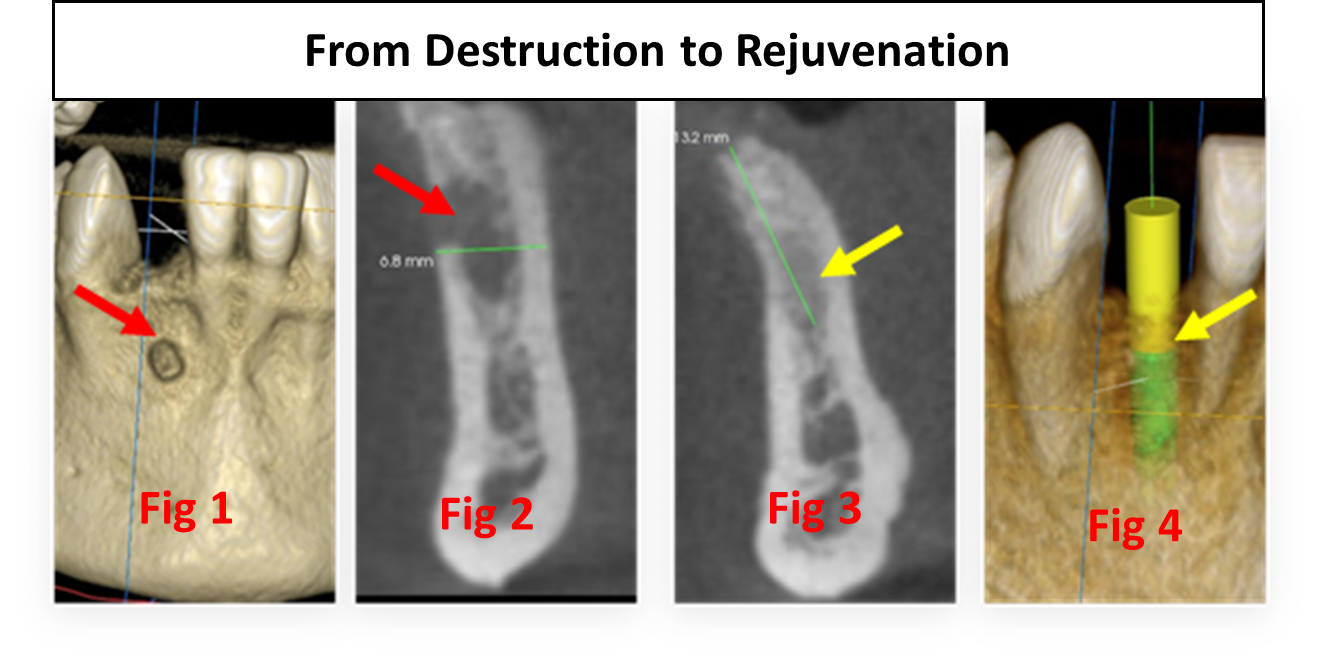
 Rebuilding a Ruined Implant Site with Severely Damaged Bone: The Three-Stage Protocol
Debridement, growth-factor grafting, CBCT-guided planning: the step-by-step protocol that turns a severely damaged implant site into a healthy ridge.
 Bone Grafting & Surgical
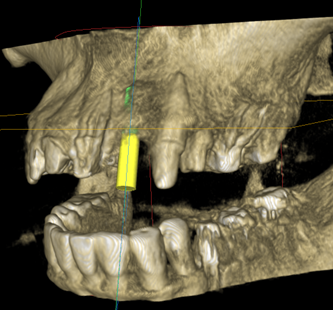
 What Is Ridge Augmentation Bone Grafting?
Ridge augmentation rebuilds a jaw ridge too narrow or angled for an implant. See real measurements from planning to precise placement. Washington DC.
 Bone Grafting & Surgical
 What Is a Partial (Internal) Sinus Lift?
A partial (internal) sinus lift adds bone at a single implant site through the implant preparation itself, often with the implant placed the same visit.