
Bone Grafting for Dental Implants: How Rebuilt Bone Makes Implants Possible
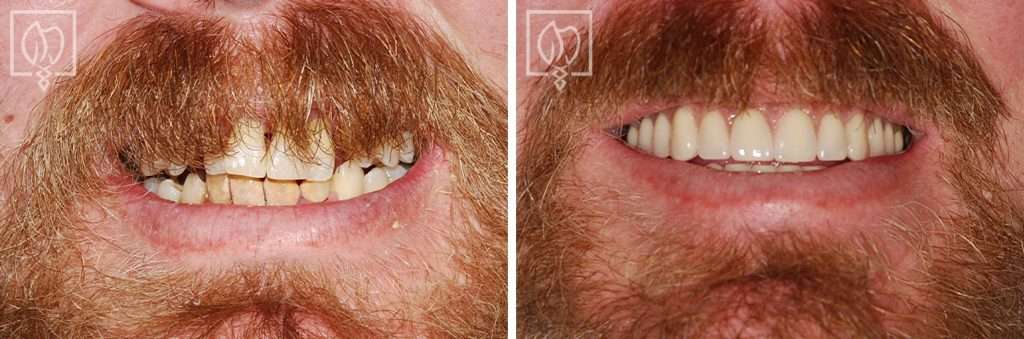
Extensive bone grafting and implants from a completed case in our practice. See the full case
Bone grafting and dental implants go hand in hand for a simple biological reason: the moment a tooth is lost, the bone that held it begins to shrink. An implant, meanwhile, needs solid bone to anchor into. When the site has thinned too much, grafting rebuilds it, converting a jaw that cannot hold an implant into one that can.
If a dentist has told you that you lack the bone for implants, that is usually the start of a plan, not the end of one. Here is how the process works.
Why the Bone Disappears
Jawbone stays strong because tooth roots stimulate it every time you chew. Remove the root and the stimulation stops, so the body starts reclaiming the bone. The loss is fastest in the first months after an extraction and continues quietly for years. This is why sites that lost teeth long ago so often need rebuilding, and why we place so much emphasis on preserving bone at the time of extraction whenever possible.
How a Bone Graft Works
In a grafting procedure, bone material is placed into the deficient area of the jaw. Depending on the case, that material may be your own bone, carefully screened donor bone from a tissue bank, or processed bone-derived material; in our practice we typically combine bone-bank material with biological growth factors that stimulate healing.
What happens next is the remarkable part. The graft does not simply sit there like a filling. It acts as a scaffold that your body colonizes with its own bone cells, gradually replacing the graft with new, living bone. Over several months the site consolidates into a stable foundation, and the implant is then placed into bone that is genuinely yours. The same principle that lets an implant fuse to your jaw, explained in our piece on osseointegration, is at work here.
When the Graft Happens: Timing Depends on the Deficit
Bone grafts can be placed at several points in the implant process, and the size of the deficit decides the schedule.
When only a minor graft is needed, we can often place it at the same visit as the implant itself, packing graft material around the implant to protect and reinforce it as everything heals together. When the loss is more significant, the graft comes first and matures for several months before the implant is placed. Specific situations have their own named procedures: a sinus lift rebuilds height in the upper back jaw, and ridge augmentation rebuilds a ridge that has become too narrow.
Neither path is better in the abstract. The right sequence is the one your anatomy supports, which is why planning starts with a 3D scan rather than a sales pitch.
Why This Step Rewards Patience
Bone grafting is the most frequently underestimated part of implant treatment, and occasionally the most tempting to skip. It should not be. Implants placed in inadequate bone are implants set up to struggle. Implants placed in properly rebuilt bone, positioned with precision placement and restored well, look and feel like natural teeth and, treated properly, can last the rest of your life.
That standard matters whether you are replacing one failing tooth or rebuilding a mouth where problems have accumulated for years. Many of our patients also come to us proactively, replacing aging dentistry before it fails, and the principle is the same: build the foundation correctly once, and everything placed on it lasts longer.
Find Out What Your Jaw Needs
Dr. Gerald Marlin, a specialty-trained prosthodontist with more than 3,900 dental implants placed over a career of more than 40 years, leads a practice where every graft and implant is planned from 3D imaging and restored with crowns from our in-house laboratory. Call 202-244-2101 or request a consultation at Elite Prosthetic Dentistry in Friendship Heights, Washington, DC, and we will talk through your bone grafting options honestly.
See How We Resolve These Problems
Our patient success stories show real cases and real results. Browse outcomes from a specialist prosthodontist with decades of experience and 3,900+ implants placed.
Key Takeaways
- ✓ Bone loss begins as soon as a tooth is lost, which is why grafting and implants so often go together: the graft rebuilds the foundation the implant needs.
- ✓ A graft acts as a scaffold that your own body replaces with new, living bone over a period of months.
- ✓ Timing varies with the deficit: minor grafts can be placed at the same visit as the implant, while larger reconstructions mature for months first.
- ✓ Grafting is a routine, well-documented procedure, and being told you lack bone rarely means implants are off the table.
- ✓ The goal is a foundation solid enough that the implant and its crown can serve for decades, not just years.
Frequently Asked Questions
Why would I need a bone graft before a dental implant?
Because an implant needs enough healthy bone to anchor into, and bone shrinks after a tooth is lost. If you have been missing the tooth for months or years, or the extraction was done without a graft in the socket, the site may be too thin or too short to hold an implant safely. The graft rebuilds that volume.
How does a bone graft actually become my bone?
The graft material works as a scaffold. Your body grows new bone cells into it and gradually replaces the graft with living bone of your own. That is why grafts need months to mature: the result is not the graft material itself holding your implant, but the new bone your body built through it.
Can the bone graft and the implant be done at the same time?
When the deficit is small, yes. A minor graft can often be placed at the same visit as the implant, protecting it as it heals. Larger deficits need the graft to mature first, typically for several months, before the implant is placed into the new bone. A 3D scan determines which path your site requires.
How long does bone graft healing take before an implant?
Most grafts mature over roughly four to six months, with larger reconstructions sometimes taking longer. The waiting is productive: the graft is becoming dense, living bone. Placing an implant before the foundation is ready is one of the avoidable causes of implant failure.
Related Patient Success Stories
Explore similar patient success stories demonstrating our expertise in advanced prosthetic dentistry.
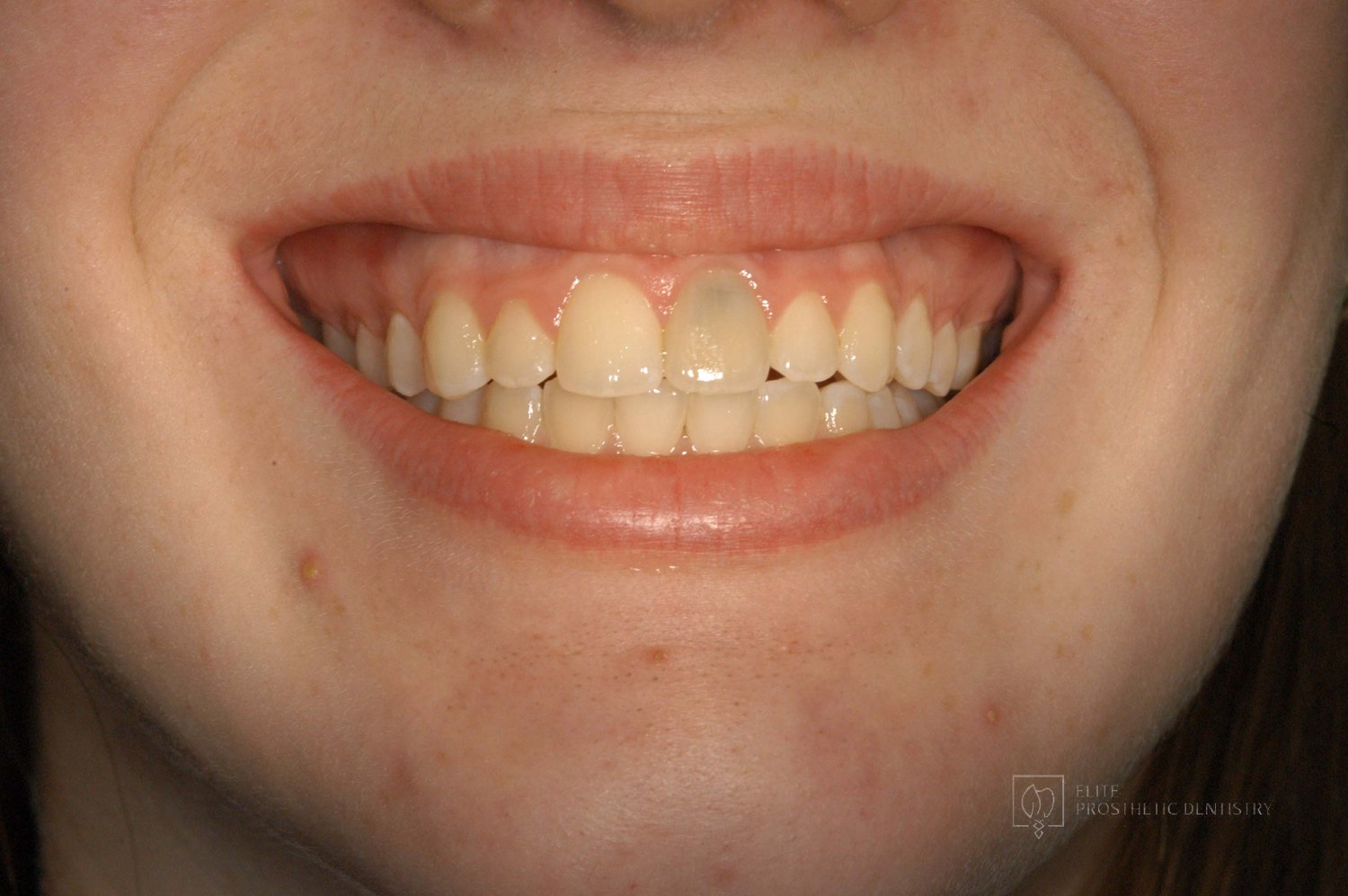 Before
 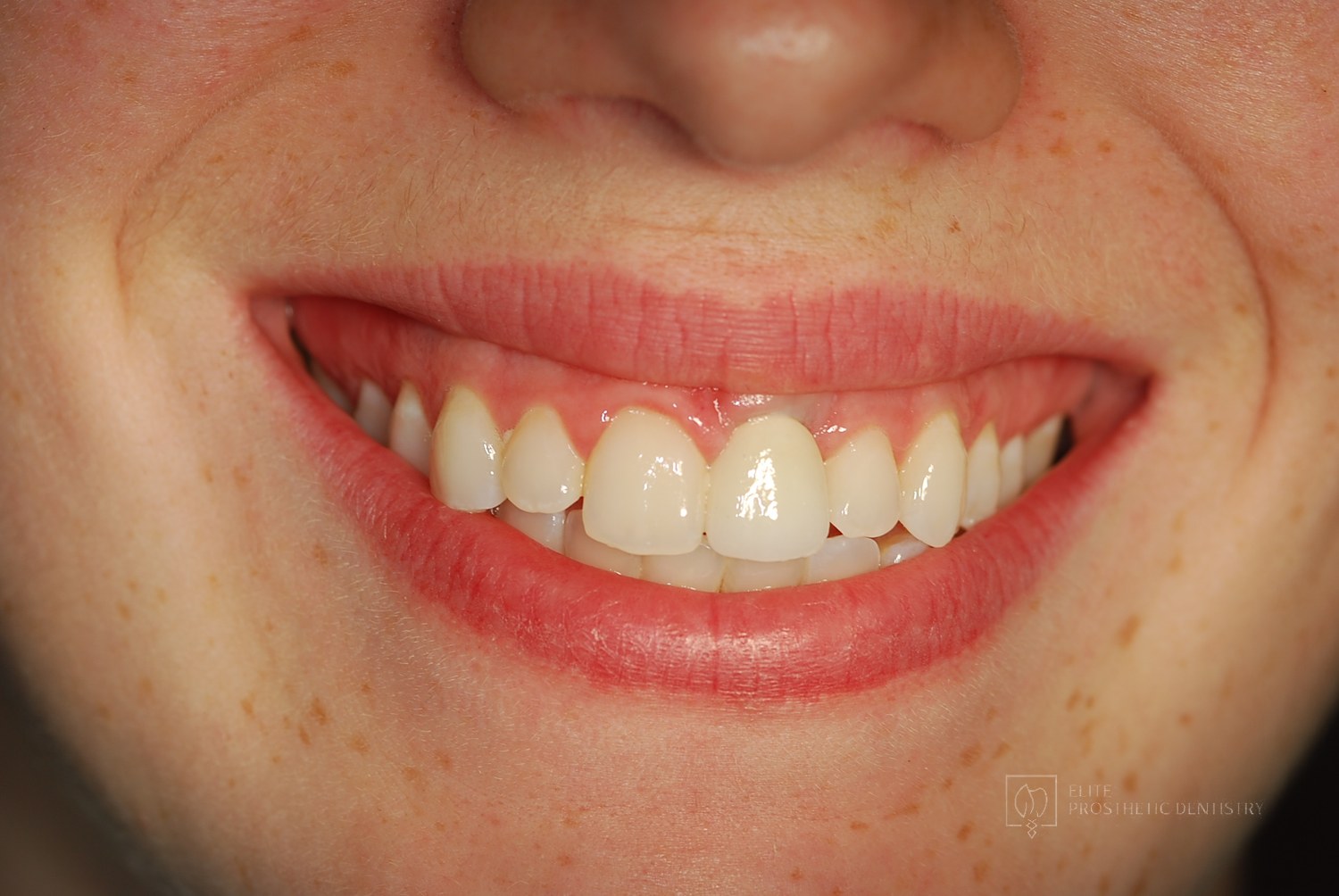 After
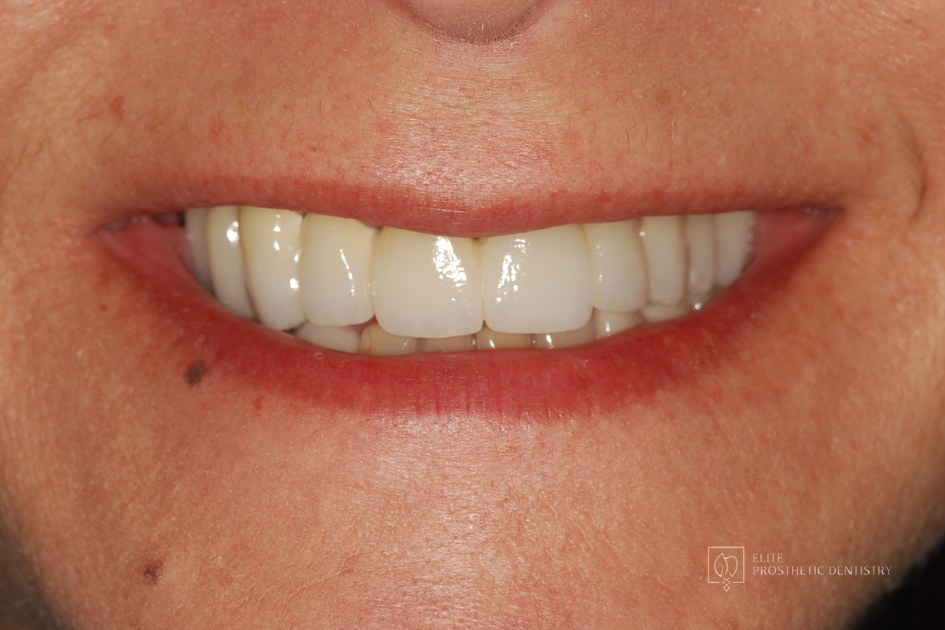
After How a Front Tooth Lost to Childhood Trauma Was Rebuilt with Bone Grafting and a Long-Lasting Implant
A teenager was referred by her father after earlier trauma left her upper left front tooth slowly failing from root resorption. She was still growing, so an immediate implant was the wrong move. The tooth had to be maintained to buy time, then replaced correctly once she reached skeletal maturity.
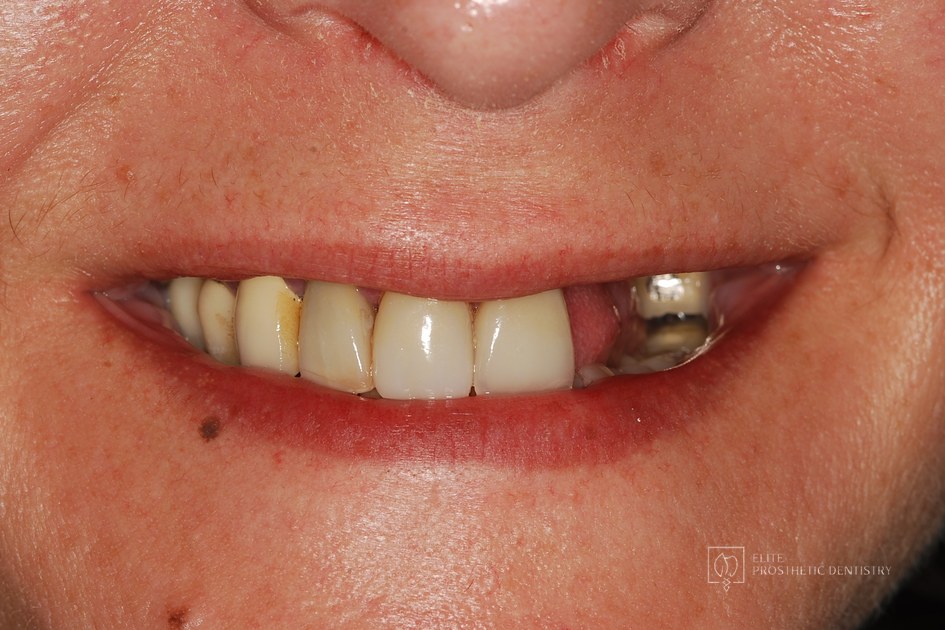 Before
  After
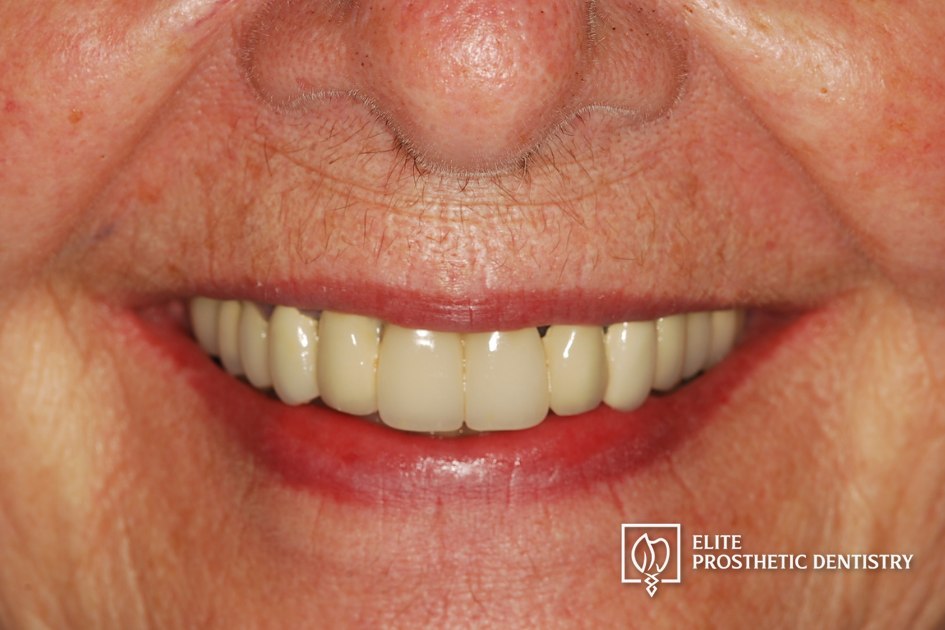
After Implant Supported Reconstruction: Failing Bridgework and Missing Back Teeth Rebuilt with Coordinated Specialist Care
Referred by another dental specialist with severe bone resorption on the upper left, multiple broken-down lower teeth requiring extraction, and failing lower back teeth that had left the bite without solid support. No single procedure, and no provider working in isolation, could rebuild a situation this interconnected.
 Before
  After
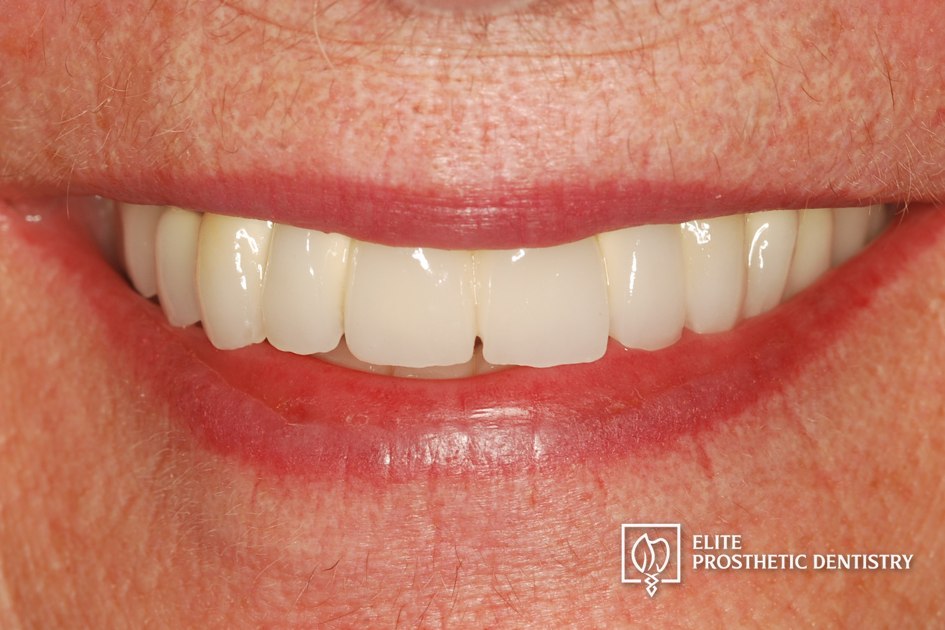
After How a Loose Upper Bridge and Aging Crowns Were Rebuilt with Staged Implant Reconstruction
A patient referred by her general dentist after years of aging dentistry no longer holding up. A loose upper bridge and crowns more than twenty years old, combined with the effects of advanced periodontal disease and severely compromised tooth abutments, required a staged surgical and restorative plan delivered with comfort planning at the same time.
Related Articles
Deepen your knowledge with additional insights on this topic.
 Bone Grafting & Surgical
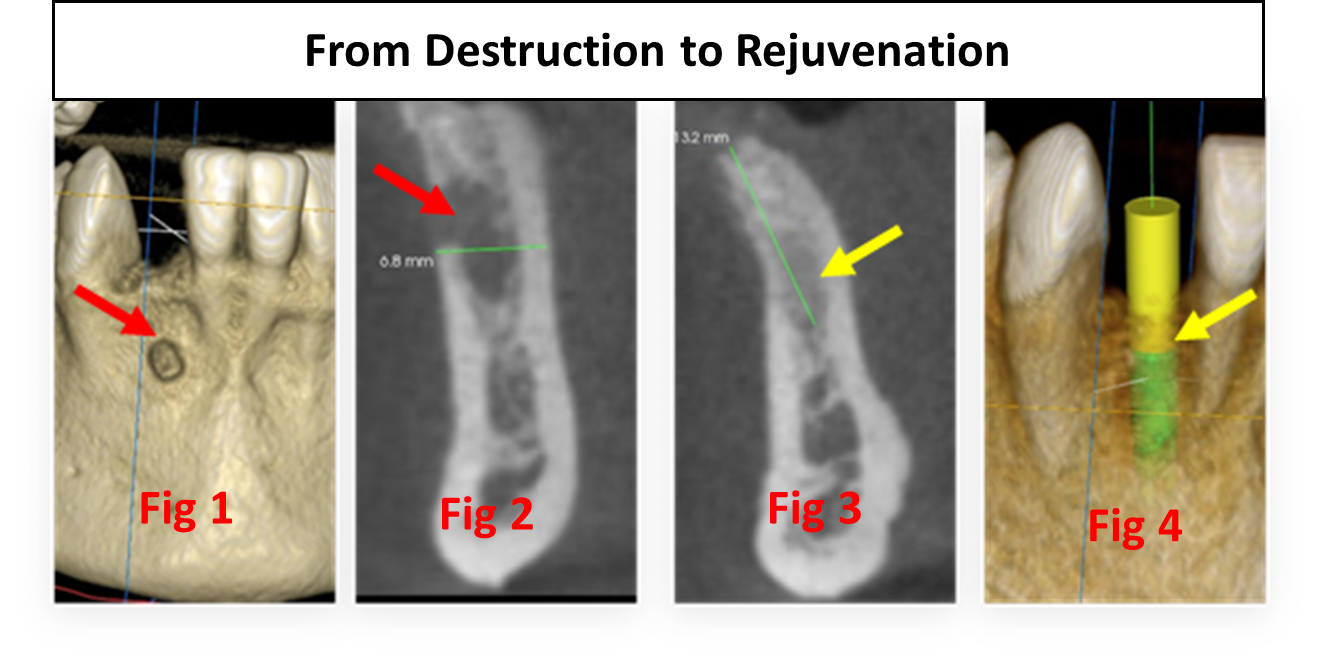
 Rebuilding a Ruined Implant Site with Severely Damaged Bone: The Three-Stage Protocol
Debridement, growth-factor grafting, CBCT-guided planning: the step-by-step protocol that turns a severely damaged implant site into a healthy ridge.
 Bone Grafting & Surgical
 What Is Ridge Augmentation Bone Grafting?
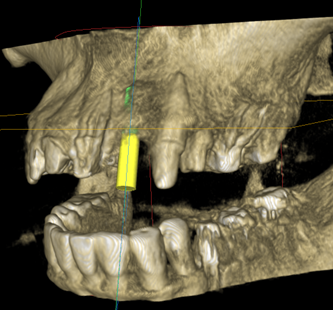
Ridge augmentation rebuilds a jaw ridge too narrow or angled for an implant. See real measurements from planning to precise placement. Washington DC.
 Bone Grafting & Surgical
 What Is a Partial (Internal) Sinus Lift?
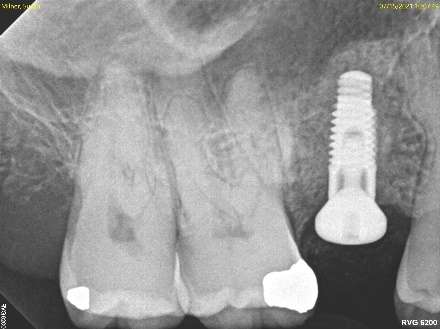
A partial (internal) sinus lift adds bone at a single implant site through the implant preparation itself, often with the implant placed the same visit.