
What Is a Partial (Internal) Sinus Lift?
A partial (internal) sinus lift is the conservative way to build bone at a single implant site in the upper back jaw. When the CT scan shows some bone beneath the sinus, just not quite enough to hold a dental implant safely, we gently raise the sinus membrane at that one spot, working through the implant preparation itself, and place bone graft material beneath it. In most cases the implant is placed at the same visit.
No separate surgical site. No months of waiting before the implant can go in. It is the smallest procedure that honestly solves the problem, which is exactly why it is used only when the anatomy supports it.
How the Internal Technique Works
Every implant begins with a precisely prepared channel in the bone, called an osteotomy. When the bone under the sinus is a few millimeters short, we use a specialized instrument called an osteotome to gently elevate the sinus membrane upward through that channel (Fig. 1 shows a typical starting point: a broken tooth destined for extraction).
Bone graft material is then introduced beneath the lifted membrane, creating a stable pocket of future bone above the implant site (Fig. 2). The implant is placed immediately into the newly created space (Fig. 3), often at the very appointment the failing tooth is removed, provided the implant can be seated with firm initial stability.
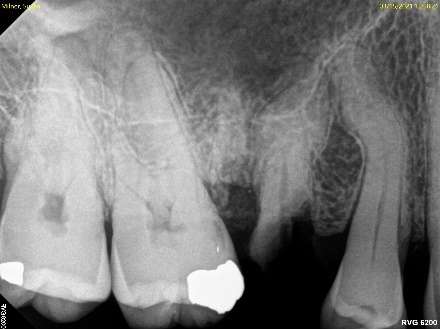
Fig. 1: Broken Tooth
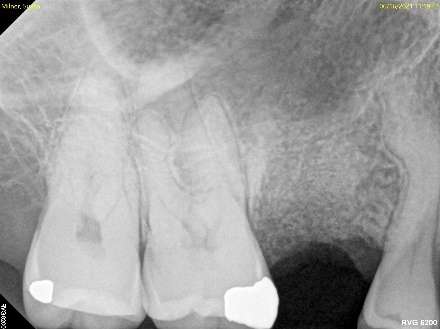
Fig. 2: Tooth Extracted, Bone Graft Placed
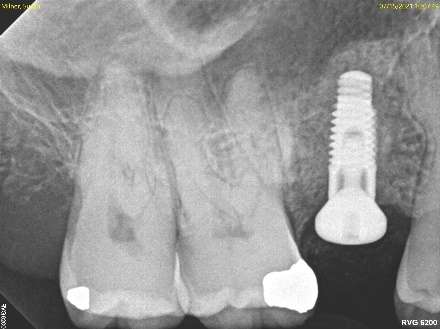
Fig. 3: Sinus Lifted with Bone Graft, Implant Inserted
The Stability Rule That Governs Everything
Combining the graft and the implant in one visit is appealing, and often appropriate. But it is governed by a firm rule: the implant must achieve at least half its threads in stable native bone. That anchorage is what holds the implant motionless while the graft above it matures. Without it, the implant would move during healing, and movement is the enemy of osseointegration.
When that stability cannot be achieved, the correct answer is to stage the treatment rather than force a same-day result. This is the same judgment that runs through all of our surgical planning: the sequence serves the outcome, never the other way around.
Internal or External: The Scan Decides
The internal lift has a natural limit. It adds a modest amount of height at a single site, which is ideal for one or two implants with reasonable existing bone. When the sinus floor has dropped dramatically and little or no bone remains, the site needs a full (external) sinus lift, a separate rebuilding procedure done months before implants.
Neither technique is better in the abstract; each is better for a specific anatomy. Our overview of when a sinus lift becomes necessary walks through the situations that lead to each, and the choice for your site is made from 3D measurements during planning, the same discipline behind precision implant placement.
Healing and What Comes Next
Expect 4 to 6 months of quiet integration, depending on bone quality, while the graft matures and the implant fuses with your bone. Discomfort is typically minimal because there is no second surgical site. Once integration is confirmed, the implant is restored with an abutment and crown from our in-house laboratory, designed to serve for the long term.
If an upper back tooth is failing, or you have been told bone is borderline at an implant site, get the measurement before assuming the worst. Call 202-244-2101 or request a consultation with Dr. Gerald Marlin, a specialty-trained prosthodontist, at Elite Prosthetic Dentistry in Friendship Heights, Washington, DC.
See How We Resolve These Problems
Our patient success stories show real cases and real results. Browse outcomes from a specialist prosthodontist with decades of experience and 3,900+ implants placed.
Key Takeaways
- ✓ A partial (internal) sinus lift is the conservative technique for a single upper back site that has some bone, just not quite enough for an implant.
- ✓ The sinus membrane is gently elevated through the implant preparation itself using an instrument called an osteotome, with no separate surgical site.
- ✓ Bone graft material is placed beneath the lifted membrane, and the implant usually goes in at the same visit.
- ✓ When the implant can seat with at least half its threads in stable native bone, grafting and placement can be combined in one procedure.
- ✓ Healing typically runs 4 to 6 months, after which the implant is ready to be restored.
Frequently Asked Questions
When is an internal sinus lift the right choice instead of a full sinus lift?
When one implant site under the sinus has usable bone, just a few millimeters short of what the implant needs. The internal lift adds that height through the implant preparation itself. When little or no bone remains, the site needs the more extensive external technique instead, performed months before implant placement.
Can the bone graft and the implant really be done in the same visit?
Often, yes. The requirement is stability: if the implant can seat with at least half its threads held firmly in your native bone, we graft beneath the lifted membrane and place the implant in the same procedure. If that stability is not achievable, forcing it would compromise the result, so we stage the treatment.
How long does healing take after an internal sinus lift?
Typically 4 to 6 months, depending on your bone quality and how the graft integrates. During that time the graft and the implant surface fuse with your natural bone. The final crown is placed once integration is confirmed, not before.
Does an internal sinus lift hurt?
The procedure is done under local anesthesia, and because everything happens through the small implant preparation, there is no second surgical site. Most patients report minimal discomfort and a quick recovery, often milder than a routine extraction.
Related Patient Success Stories
Explore similar patient success stories demonstrating our expertise in advanced prosthetic dentistry.
 Before
  After
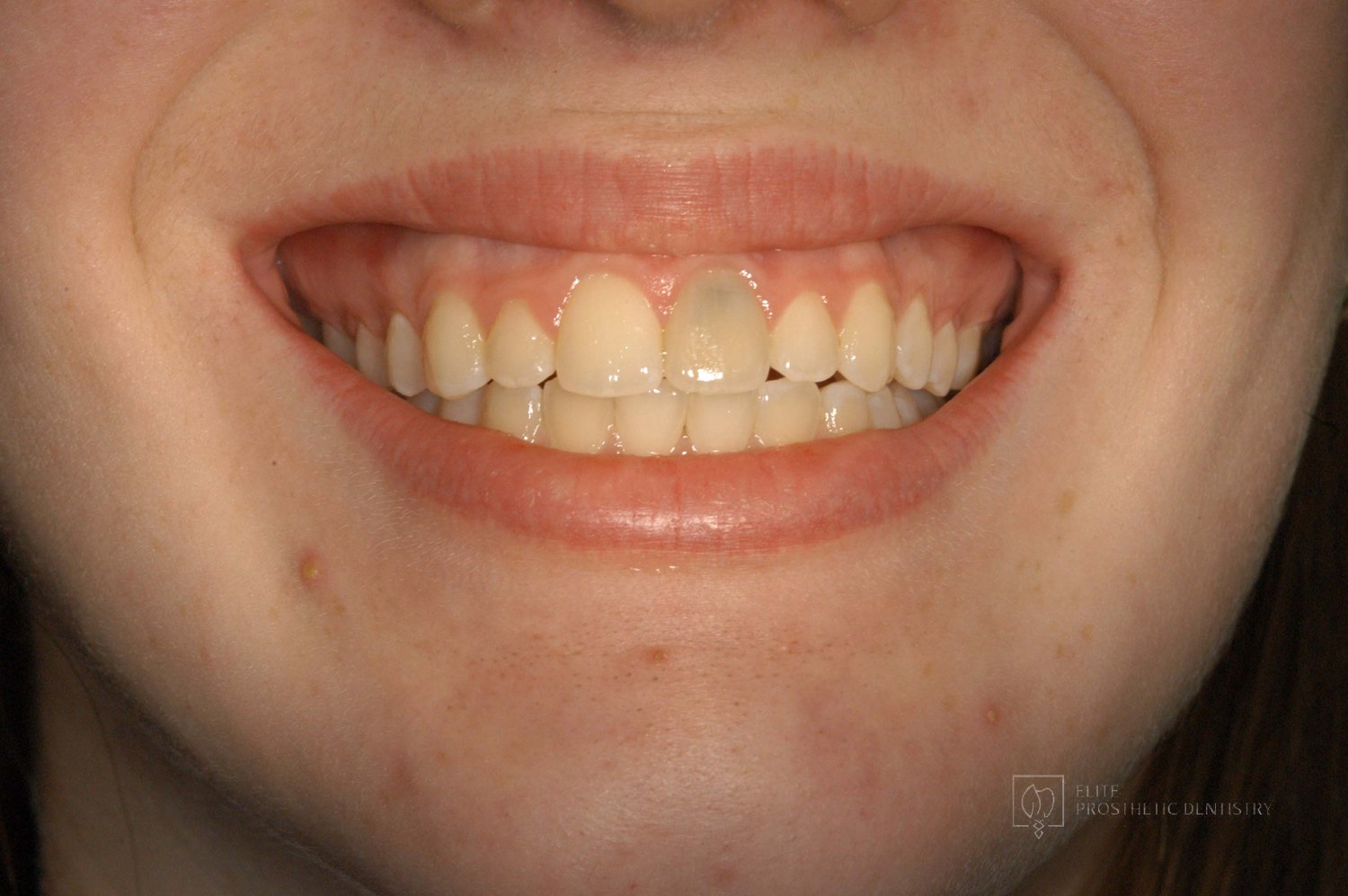
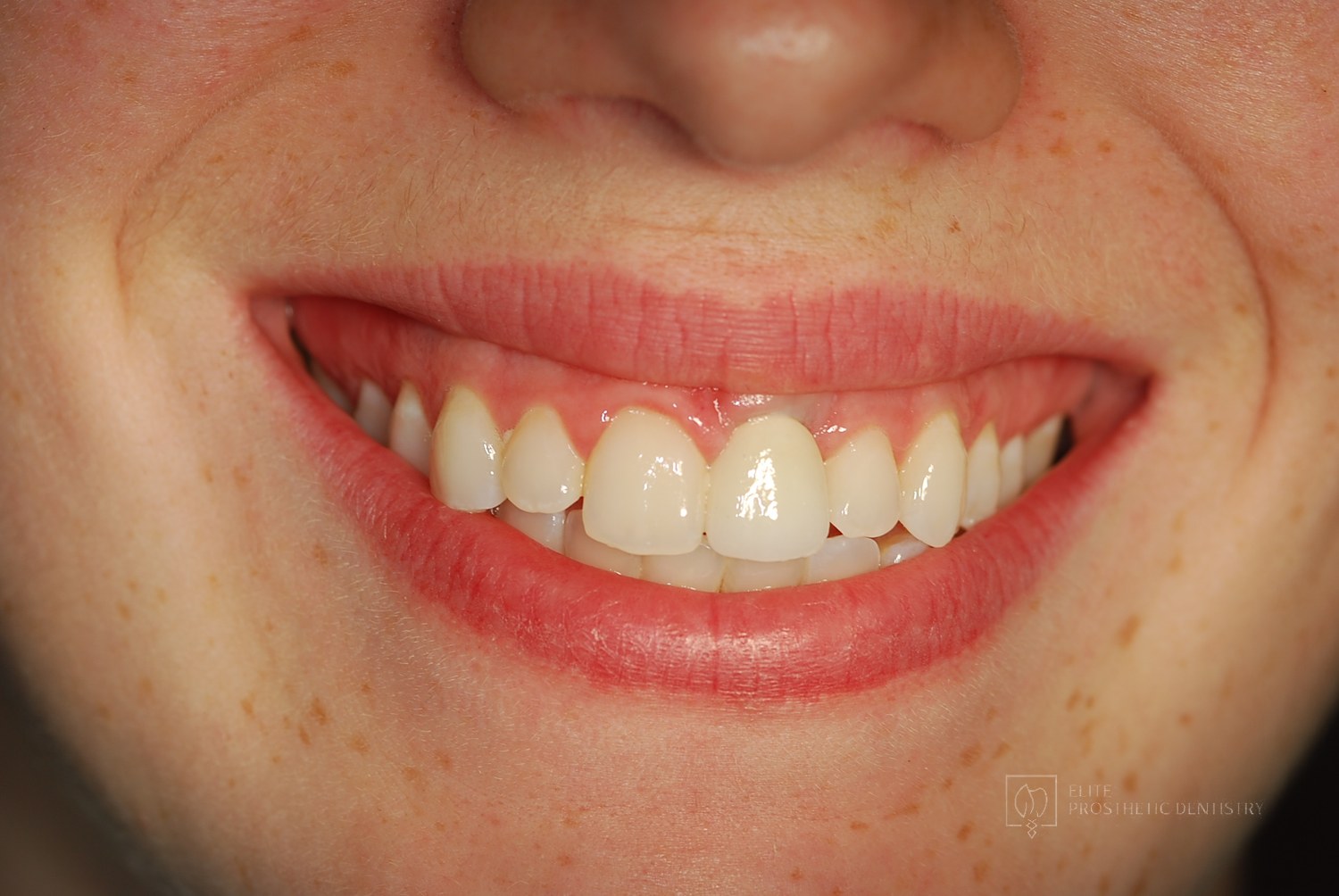
After How a Front Tooth Lost to Childhood Trauma Was Rebuilt with Bone Grafting and a Long-Lasting Implant
A teenager was referred by her father after earlier trauma left her upper left front tooth slowly failing from root resorption. She was still growing, so an immediate implant was the wrong move. The tooth had to be maintained to buy time, then replaced correctly once she reached skeletal maturity.
 Before
  After
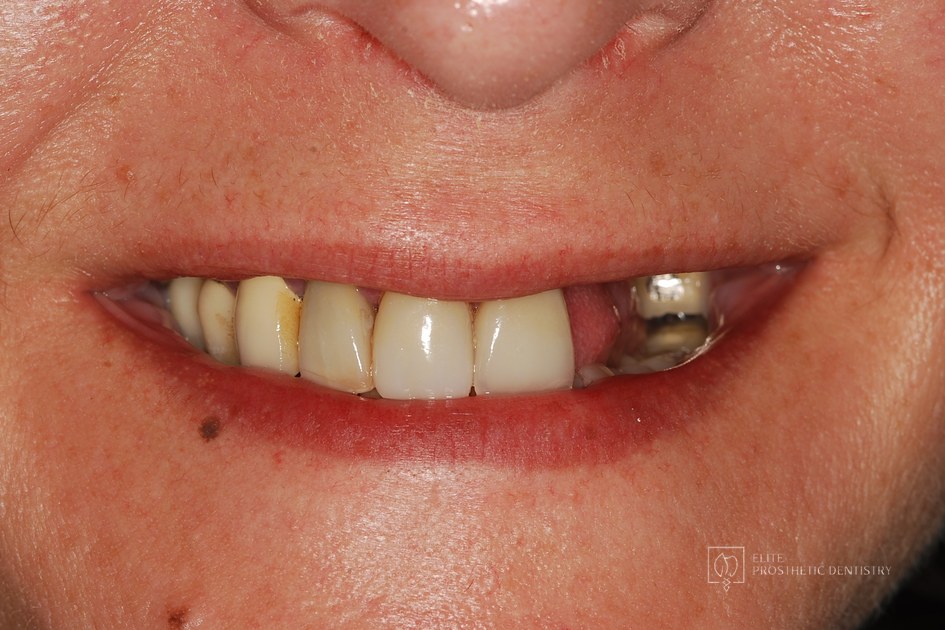
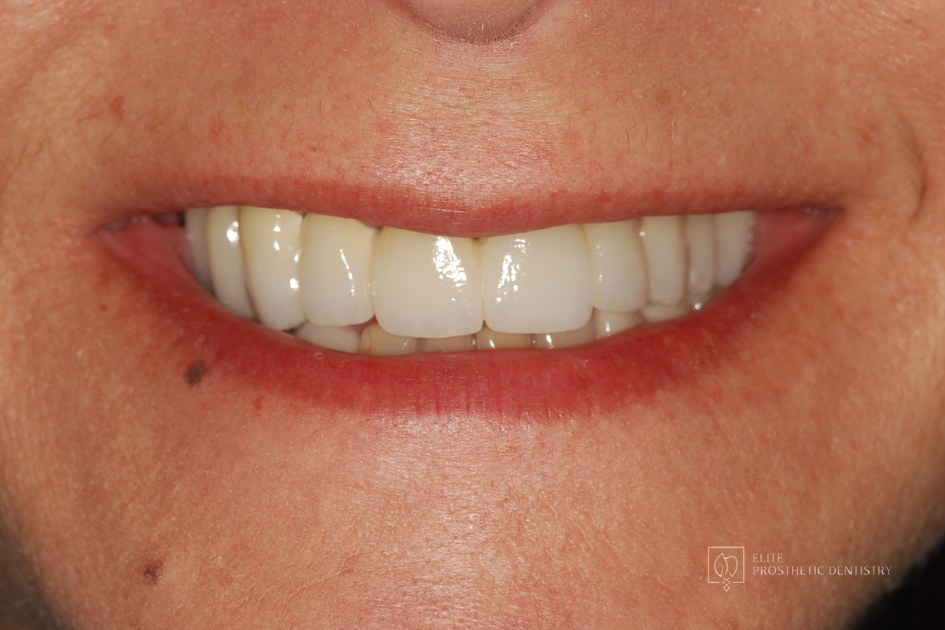
After Implant Supported Reconstruction: Failing Bridgework and Missing Back Teeth Rebuilt with Coordinated Specialist Care
Referred by another dental specialist with severe bone resorption on the upper left, multiple broken-down lower teeth requiring extraction, and failing lower back teeth that had left the bite without solid support. No single procedure, and no provider working in isolation, could rebuild a situation this interconnected.
 Before
  After
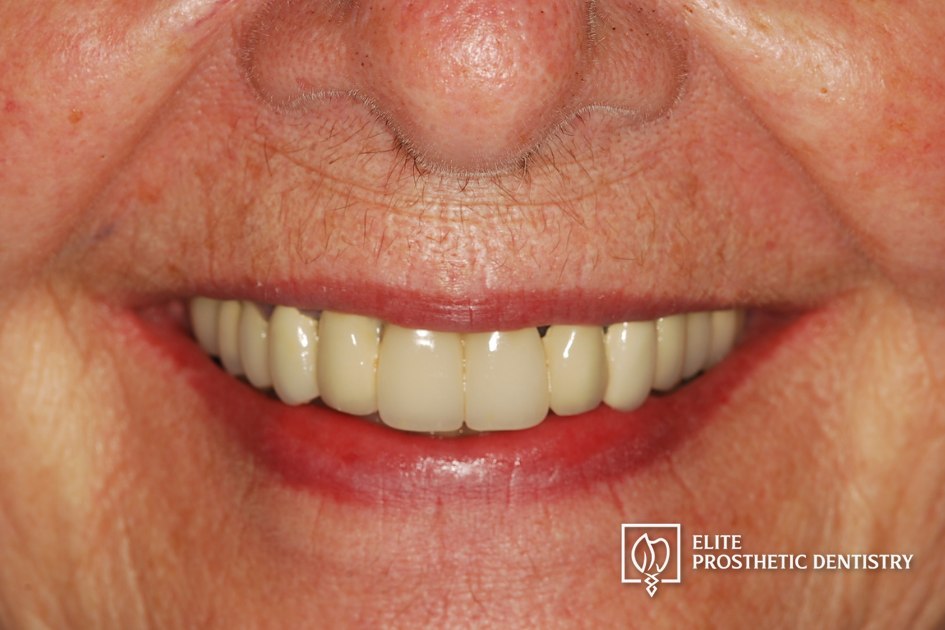
After How a Loose Upper Bridge and Aging Crowns Were Rebuilt with Staged Implant Reconstruction
A patient referred by her general dentist after years of aging dentistry no longer holding up. A loose upper bridge and crowns more than twenty years old, combined with the effects of advanced periodontal disease and severely compromised tooth abutments, required a staged surgical and restorative plan delivered with comfort planning at the same time.
Related Articles
Deepen your knowledge with additional insights on this topic.
 Bone Grafting & Surgical
 Rebuilding a Ruined Implant Site with Severely Damaged Bone: The Three-Stage Protocol
Debridement, growth-factor grafting, CBCT-guided planning: the step-by-step protocol that turns a severely damaged implant site into a healthy ridge.
 Bone Grafting & Surgical
 What Is Ridge Augmentation Bone Grafting?
Ridge augmentation rebuilds a jaw ridge too narrow or angled for an implant. See real measurements from planning to precise placement. Washington DC.
Bone Grafting & Surgical What Is a Partial (Internal) Sinus Lift?
A partial (internal) sinus lift adds bone at a single implant site through the implant preparation itself, often with the implant placed the same visit.