
Can My Failed Implant Be Salvaged? Bone Loss from Improperly Performed Implant Surgery
When a dental implant fails because of how it was placed, the implant is only half the problem. An implant positioned at the wrong angle, or partly outside the envelope of bone, can severely damage the bone around it as it fails, leaving behind a defect that cannot simply be reused. The good news: with careful grafting, digital planning, and guided surgery, these sites can be rescued and restored for the long term.
This is the third of the three failure patterns we treat, and the one where the site itself, not just the implant, needs rehabilitation. For the broader picture of salvage options, see our overview of whether a failing implant can be saved or repaired.
The Trap: Replacing an Implant Without Repairing the Site
One of our patients came to us after an implant had failed. The plan he had been given was to place a new implant directly into the same damaged site, without rebuilding it first. Placed that way, the replacement would have faced the very conditions that doomed the original: deficient bone, poor geometry, and no margin for error. It, too, would likely have failed.
This is worth stating plainly, because it is the most common trap in implant re-treatment. A failed site is not neutral ground. It is a defect, and any implant asked to live in it inherits its problems. The honest sequence costs a few months and repays them for decades.
The Rescue Sequence: Rebuild, Then Place with Precision
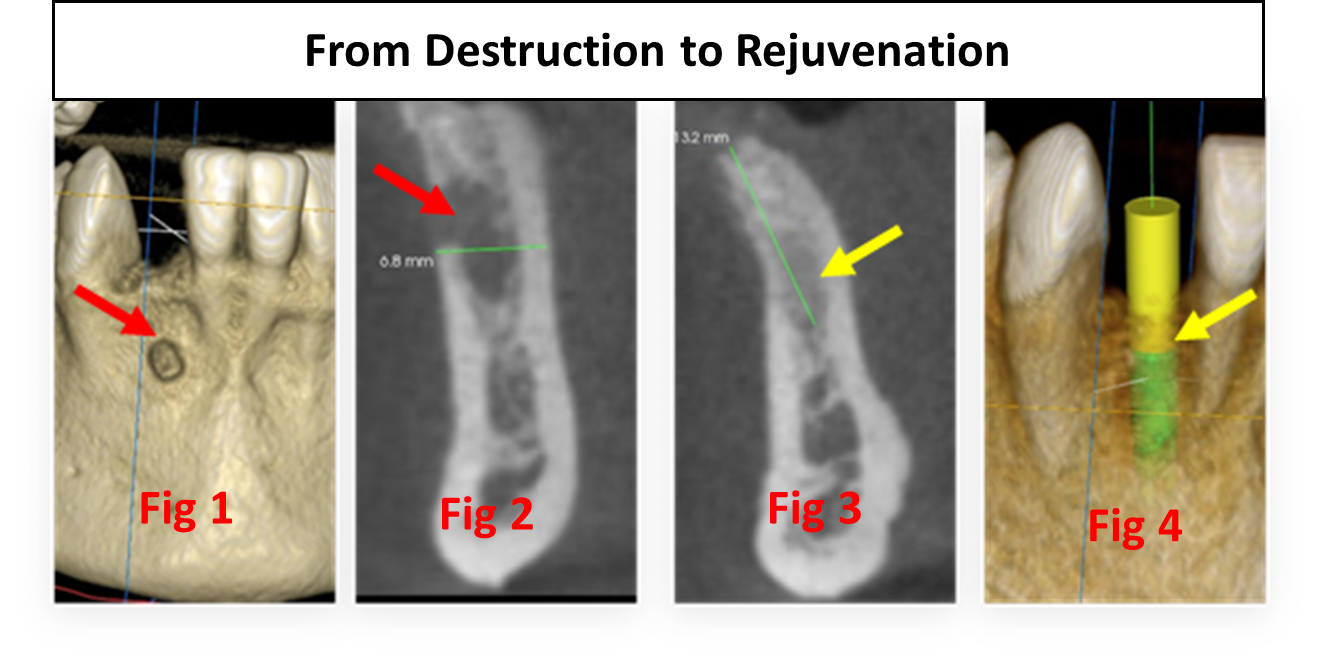
We began by placing a bone graft enhanced with biological growth factors to rebuild the defect (Fig. 1), then allowed the site to heal until the graft had matured into solid bone.
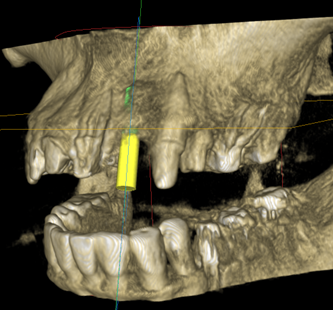
Only then came the new implant, and not freehand. Using virtual planning software, the implant was positioned in three dimensions on the CBCT scan, and a custom surgical guide was fabricated from that plan. During surgery, the guide directed the implant into the planned position with pinpoint accuracy: correct angle, correct depth, fully housed in the new bone.
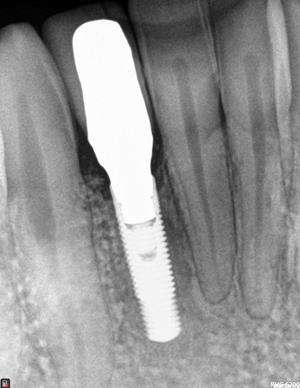
Fig. 1: Bone Graft Placed at Failed Implant Site
The combination matters. Grafting without guided placement rebuilds the bone and then gambles it on freehand surgery. Guided placement without grafting aims precisely at a foundation that is not there. Together, they convert a twice-risky site into a predictable one; the reasoning behind that discipline is laid out in our piece on why precision implant placement with guided surgery matters.
How This Differs from Other Salvage Cases
Not every failing implant needs this full site rehabilitation. When the implant is well positioned and the problem is disease, the implant itself can often be kept: bone loss on the outside surface can be grafted with the implant in place, and even bone loss encircling the implant is frequently repairable with detoxification and grafting. Placement-related damage is different because the implant’s position is itself the disease; no cleaning protocol fixes geometry.
A 3D scan tells us which category your implant belongs to before anything is decided.
A Failed Implant Deserves a Precise Second Opinion
If an implant has failed, or a replacement has been proposed and something about the plan feels rushed, get the site evaluated before committing. Dr. Gerald Marlin, a specialty-trained prosthodontist with more than 3,900 dental implants placed over a career of more than 40 years, rebuilds failed sites and places their replacements with guided precision. Call 202-244-2101 or book a consultation at Elite Prosthetic Dentistry in Friendship Heights, Washington, DC.
See How We Resolve These Problems
Our patient success stories show real cases and real results. Browse outcomes from a specialist prosthodontist with decades of experience and 3,900+ implants placed.
Key Takeaways
- ✓ When an implant is placed at the wrong angle or partly outside the bone, the bone at that site can be severely damaged as the implant fails.
- ✓ Placing a replacement implant into the same damaged site without rebuilding it first sets the new implant up to fail the same way.
- ✓ The reliable rescue sequence: graft the defect with growth-factor-enhanced bone, let it heal, then place the new implant with digital planning and a custom surgical guide.
- ✓ Guided placement exists precisely to prevent this failure pattern from happening twice.
- ✓ A failed site is not a lost site. Rebuilt correctly, it can support an implant for the long term.
Frequently Asked Questions
Can a site where an implant failed be used for a new implant?
Yes, but almost never immediately. The failed implant leaves behind a bone defect, and a new implant placed into that damaged bone inherits the same compromised foundation. The site is first rebuilt with a bone graft, allowed to mature for several months, and only then does the replacement implant go in, into solid bone this time.
How long after grafting can the new implant be placed?
Typically 4 to 6 months, the time the graft needs to mature into dense, living bone. The exact timing is confirmed with imaging. Rushing this stage is how sites end up failing twice, so the schedule follows the biology.
What is virtual implant planning?
Specialized software combines your 3D CBCT scan with the design of your future tooth, letting the implant be positioned digitally, in three dimensions, before surgery ever begins. The plan accounts for bone volume, angulation, nerve position, and where the crown needs to emerge.
Do surgical guides really improve accuracy?
Yes. A custom guide, fabricated from the digital plan, physically directs the implant to the planned position, angle, and depth during surgery. It converts the virtual plan into millimeter-level reality, which is exactly the safeguard that prevents placement-related failures.
Related Patient Success Stories
Explore similar patient success stories demonstrating our expertise in advanced prosthetic dentistry.
 Before
  After
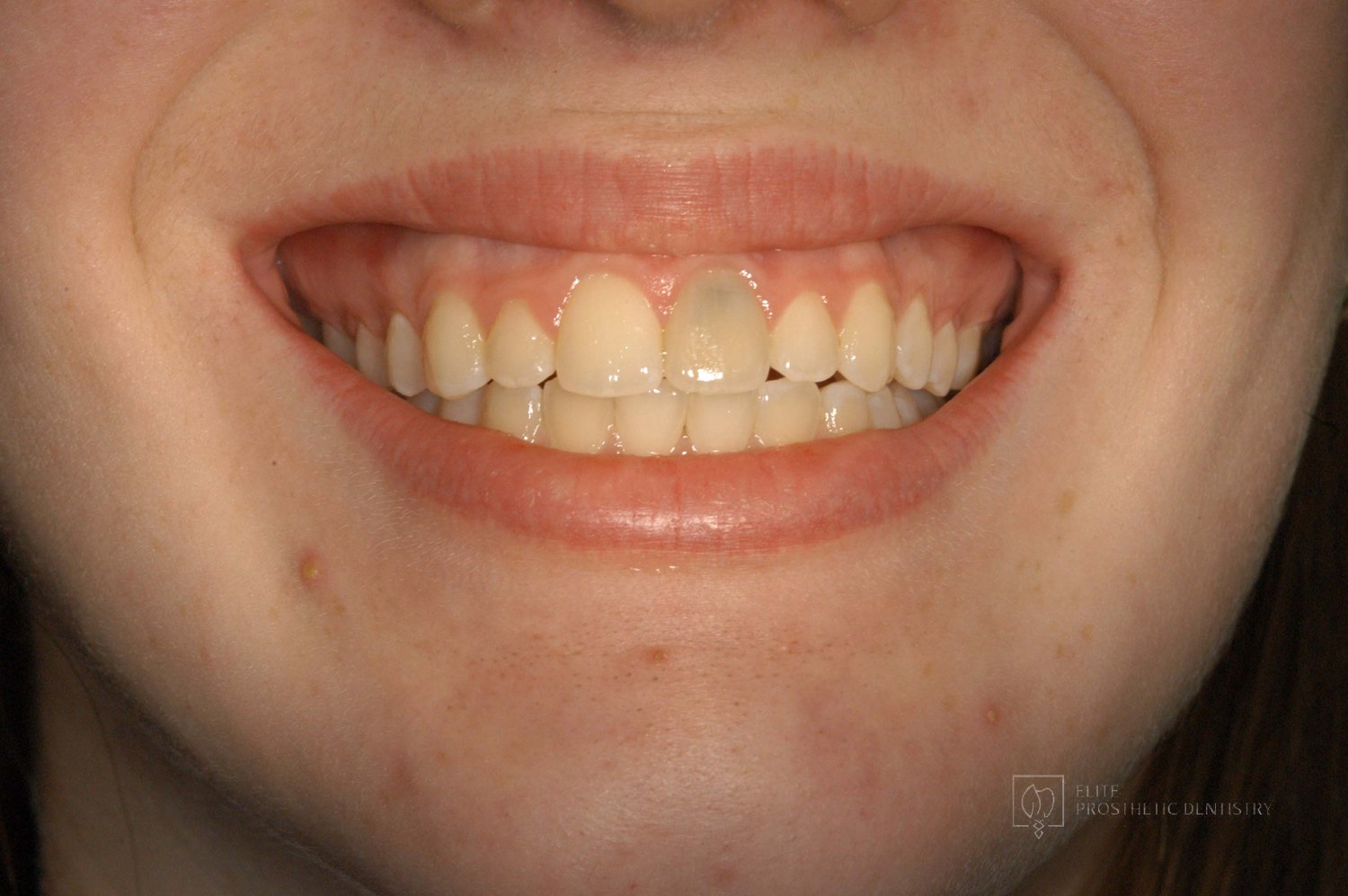
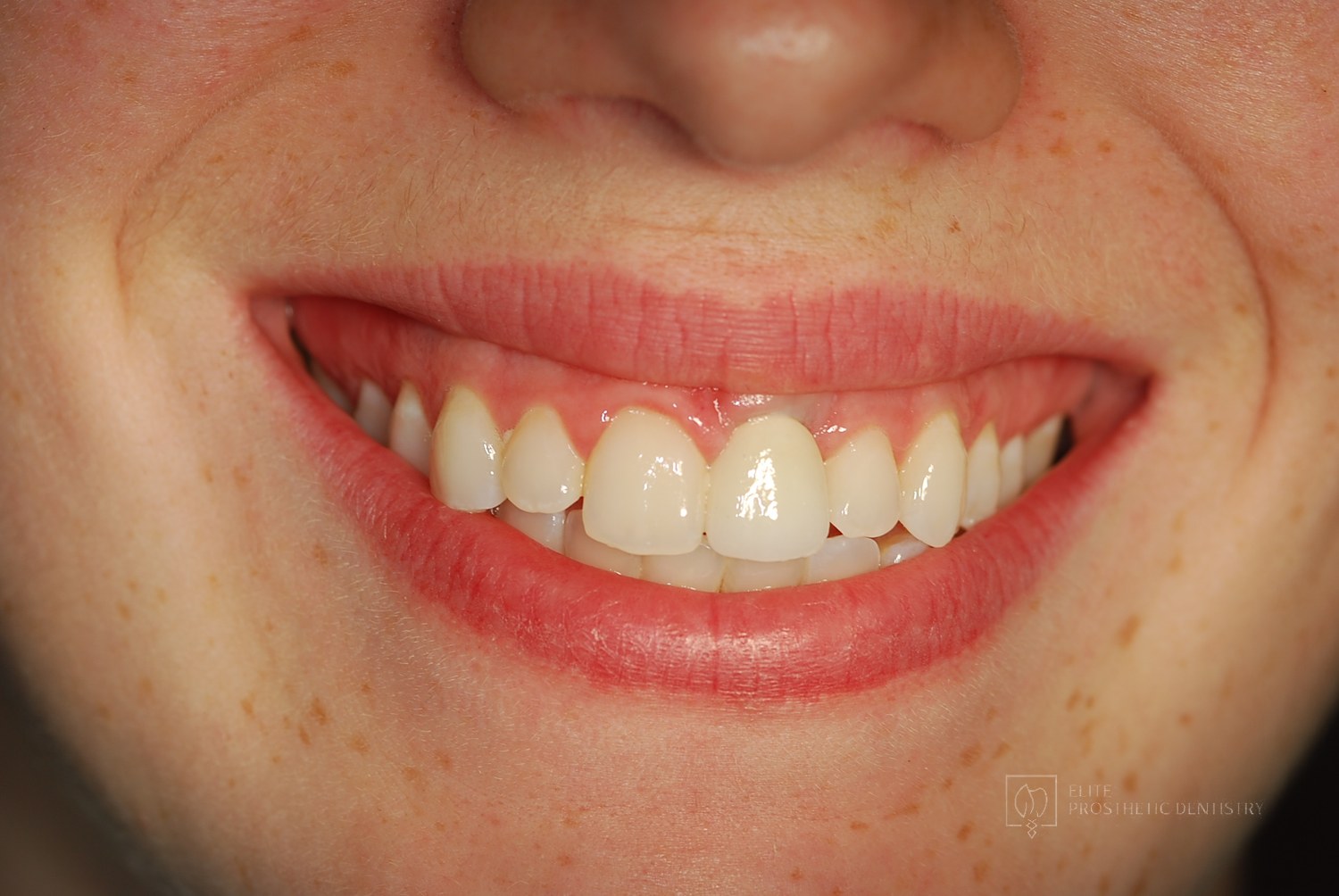
After How a Front Tooth Lost to Childhood Trauma Was Rebuilt with Bone Grafting and a Long-Lasting Implant
A teenager was referred by her father after earlier trauma left her upper left front tooth slowly failing from root resorption. She was still growing, so an immediate implant was the wrong move. The tooth had to be maintained to buy time, then replaced correctly once she reached skeletal maturity.
 Before
 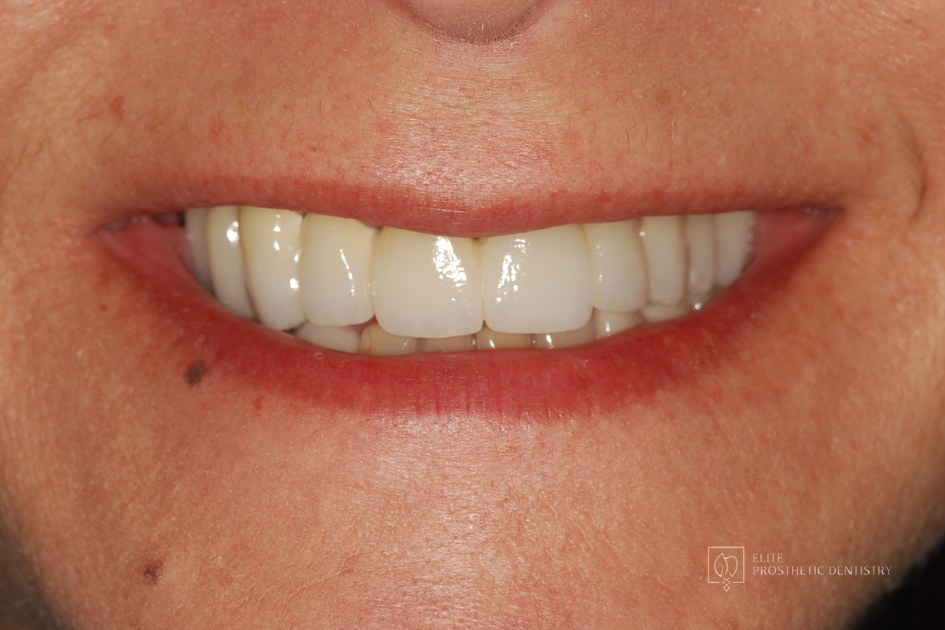 After
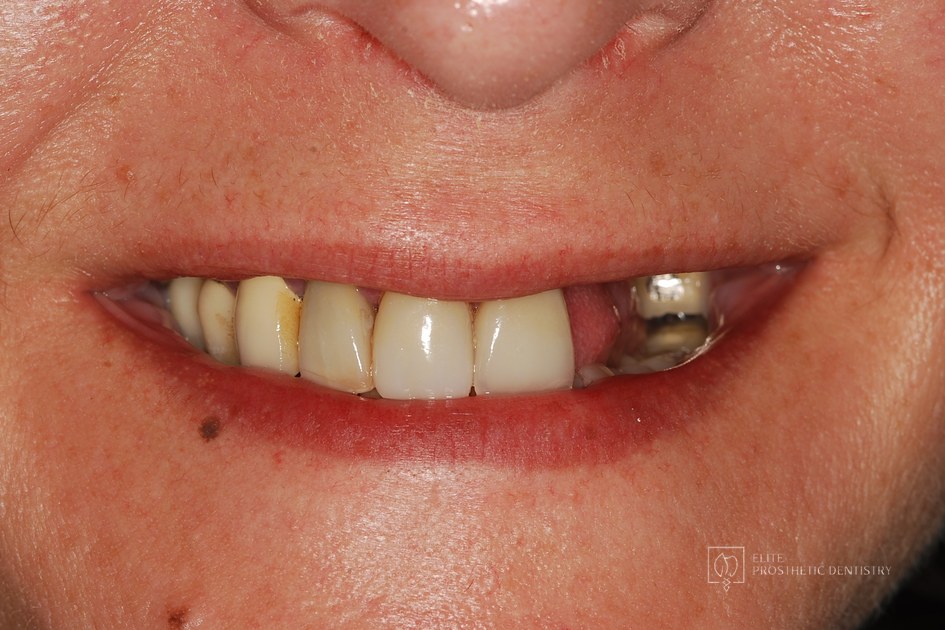
After Implant Supported Reconstruction: Failing Bridgework and Missing Back Teeth Rebuilt with Coordinated Specialist Care
Referred by another dental specialist with severe bone resorption on the upper left, multiple broken-down lower teeth requiring extraction, and failing lower back teeth that had left the bite without solid support. No single procedure, and no provider working in isolation, could rebuild a situation this interconnected.
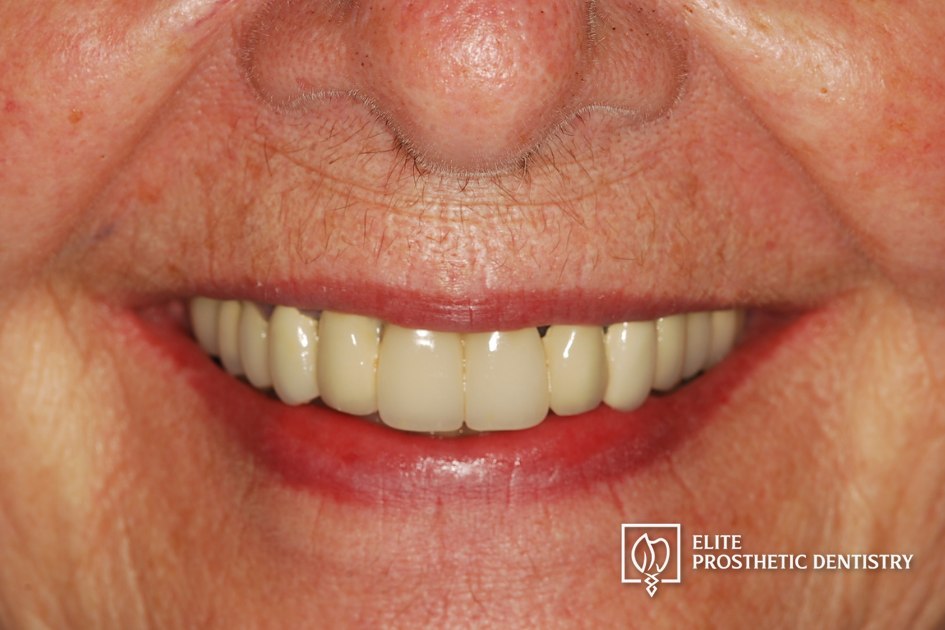 Before
 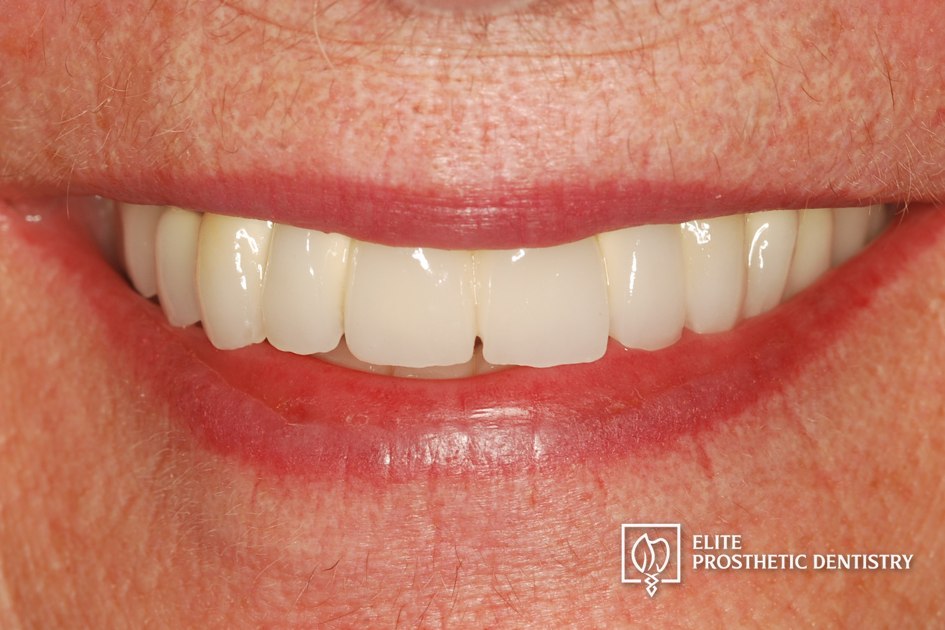 After
After How a Loose Upper Bridge and Aging Crowns Were Rebuilt with Staged Implant Reconstruction
A patient referred by her general dentist after years of aging dentistry no longer holding up. A loose upper bridge and crowns more than twenty years old, combined with the effects of advanced periodontal disease and severely compromised tooth abutments, required a staged surgical and restorative plan delivered with comfort planning at the same time.
Related Articles
Deepen your knowledge with additional insights on this topic.
 Bone Grafting & Surgical
 Rebuilding a Ruined Implant Site with Severely Damaged Bone: The Three-Stage Protocol
Debridement, growth-factor grafting, CBCT-guided planning: the step-by-step protocol that turns a severely damaged implant site into a healthy ridge.
 Bone Grafting & Surgical
 What Is Ridge Augmentation Bone Grafting?
Ridge augmentation rebuilds a jaw ridge too narrow or angled for an implant. See real measurements from planning to precise placement. Washington DC.
 Bone Grafting & Surgical
 What Is a Partial (Internal) Sinus Lift?
A partial (internal) sinus lift adds bone at a single implant site through the implant preparation itself, often with the implant placed the same visit.