
Can a Failing Dental Implant Be Saved or Repaired?
Yes, a failing dental implant can often be saved, and the sooner it is evaluated, the more likely repair becomes. Dental implants are an excellent investment that can mimic the appearance, function, and durability of natural teeth for decades. But not every implant enjoys an uneventful life. When one begins to struggle, the practical questions are what caused it, how far it has progressed, and which route (repair or replacement) genuinely serves you for the long term.
A failing implant may announce itself with pain, gum recession, swelling, or difficulty chewing, or it may be silent and show up only on an X-ray. Either way, here is how we think about saving it.
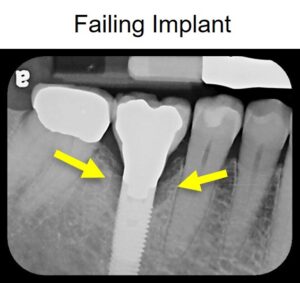
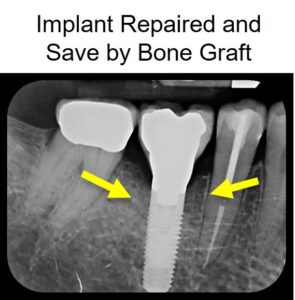
When the Bone Around the Implant Can Be Rebuilt
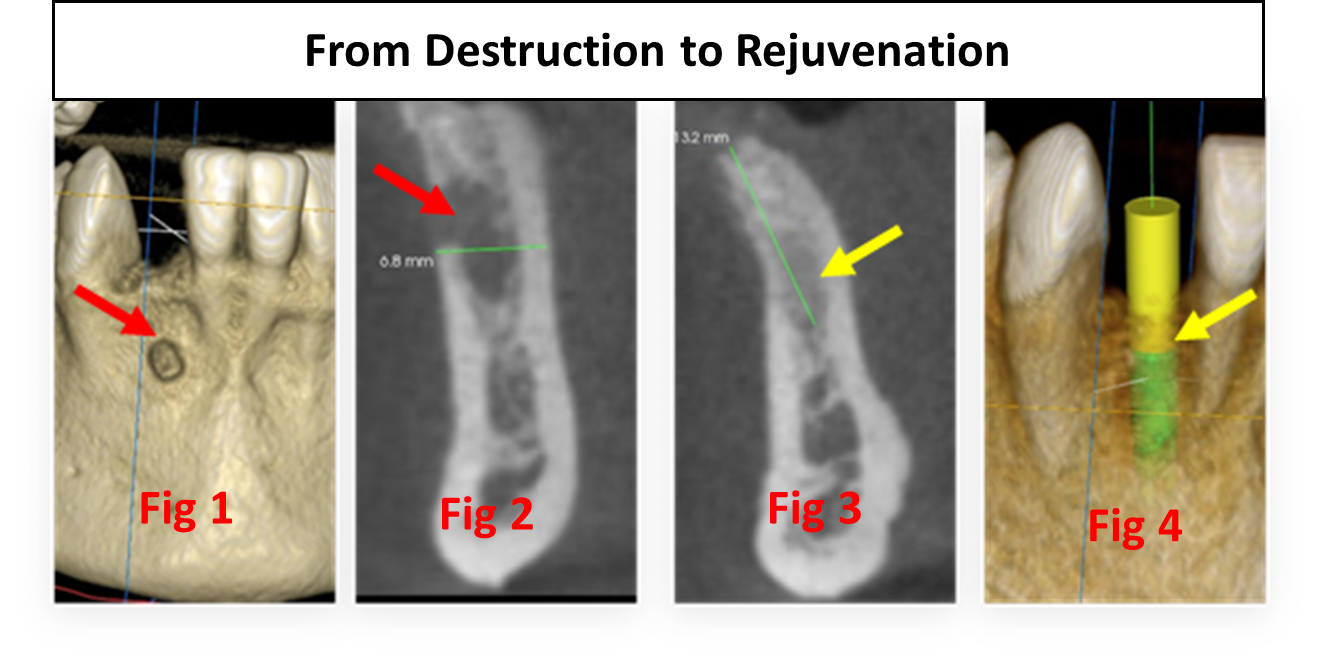
Bone loss is the most common thread in implant failure, and it is frequently repairable. Grafting procedures can restore the supportive foundation around a troubled implant [1], in many cases without removing the implant at all. When the loss is too advanced, the implant may need to be removed, the site bone grafted, and a new implant placed into the rebuilt foundation.
Which path applies depends heavily on where and how the bone was lost. The three common failure geometries behave differently, and we cover each in its own guide: bone loss immediately around the implant, bone loss from improperly performed implant surgery, and bone loss on the outside of the ridge.
When Gum Disease Is Driving the Failure
Periodontal disease does not spare implants. It causes inflammation and infection around the implant (peri-implant mucositis) and, if untreated, progresses to the bone loss called peri-implantitis [2].
Caught early, mild to moderate cases may need only minimal intervention to restore health. In more established cases, the reliable salvage sequence in our practice is methodical: remove the abutment and crown, decontaminate the implant surface, treat the infection, and repair the defect with a bone graft. Professional cleanings every six months and disciplined home care then protect the repair, exactly as they protect a natural tooth.
When the Problem Is Where the Implant Was Placed
Some implants struggle because of positioning issues that trace back to their original placement. Poor positioning creates aesthetic and functional complications that no crown can fully disguise, and in some cases it makes a healthy outcome impossible until the position itself is corrected [3].
These situations require the most honest conversation. Some are correctable around the existing implant; others are better served by removing it and placing a new implant precisely, planned on a CBCT scan and executed with Precision Implant Placement using a surgical guide. That is the discipline that prevents positioning failures in the first place, and it is a large part of why our documented in-practice implant success rate is above 97% for implants placed more than 20 years ago.
When Healing Never Completed Properly
Occasionally an implant fails early because it never integrated: too little bone at placement, premature loading, or heavy grinding forces during the healing window can all prevent the bone from fusing to the implant [4]. These cases usually resolve by addressing the underlying cause, rebuilding the site, and restarting with the biology respected. If you are weighing your risk factors, our overview of what limits implant success is a practical place to start.
Is Your Dental Implant Failing?
Whether your implant was placed last year or twenty years ago, warning signs deserve a specialist’s eyes, not a wait-and-see approach. Dr. Gerald Marlin is a specialty-trained prosthodontist with more than 3,900 dental implants placed, and salvaging troubled implants is one of the defining parts of his work. Call 202-244-2101 or request a consultation at Elite Prosthetic Dentistry in Friendship Heights, Washington, DC, and get a clear, honest map of your options.
Sources:
See How We Resolve These Problems
Our patient success stories show real cases and real results. Browse outcomes from a specialist prosthodontist with decades of experience and 3,900+ implants placed.
Key Takeaways
- ✓ Many failing implants can be saved. The answer depends on the cause, how far the damage has progressed, and the geometry of the bone loss.
- ✓ The core salvage sequence: remove the crown and abutment, decontaminate the implant surface, treat the infection, and graft bone back around the implant.
- ✓ Gum disease caught early may need only minimal intervention; advanced cases can still often be rebuilt rather than removed.
- ✓ Implants compromised by positioning problems require honest evaluation: some are correctable, while some are better replaced with a precisely planned new implant.
- ✓ The earlier a failing implant is evaluated, the more options remain, so warning signs should never be watched and waited on.
Frequently Asked Questions
Can a failing dental implant actually be saved?
Very often, yes. When bone loss or infection around an implant is caught early enough, the implant surface can be decontaminated and the lost bone regrafted, restoring the implant to health. The realistic answer for your implant depends on the cause of failure and how far it has progressed, which is what a CBCT-based evaluation determines.
How does implant salvage treatment work?
In most instances the crown and abutment are removed, the implant surface is thoroughly decontaminated, any gum infection is treated, and the defect around the implant is bone grafted. Once the graft matures and the tissues are healthy, the implant is restored again. When positioning problems caused the failure, the plan may instead involve replacing the implant in a corrected position.
When is it better to remove a failing implant and start over?
When the implant was placed in a position that makes a healthy, cleanable restoration impossible, or when bone loss has advanced too far to rebuild reliably around the existing implant. In those cases, removal, grafting, and precision placement of a new implant is usually the more durable investment than repeatedly patching a compromised one.
What are the warning signs of a failing implant?
Bleeding, swelling, or receding gums around the implant, discomfort or pressure when chewing, a bad taste or odor, and any looseness of the implant or its crown. Bone loss itself is often silent, visible only on X-rays, which is why persistent gum symptoms around an implant always deserve prompt evaluation.
Related Patient Success Stories
Explore similar patient success stories demonstrating our expertise in advanced prosthetic dentistry.
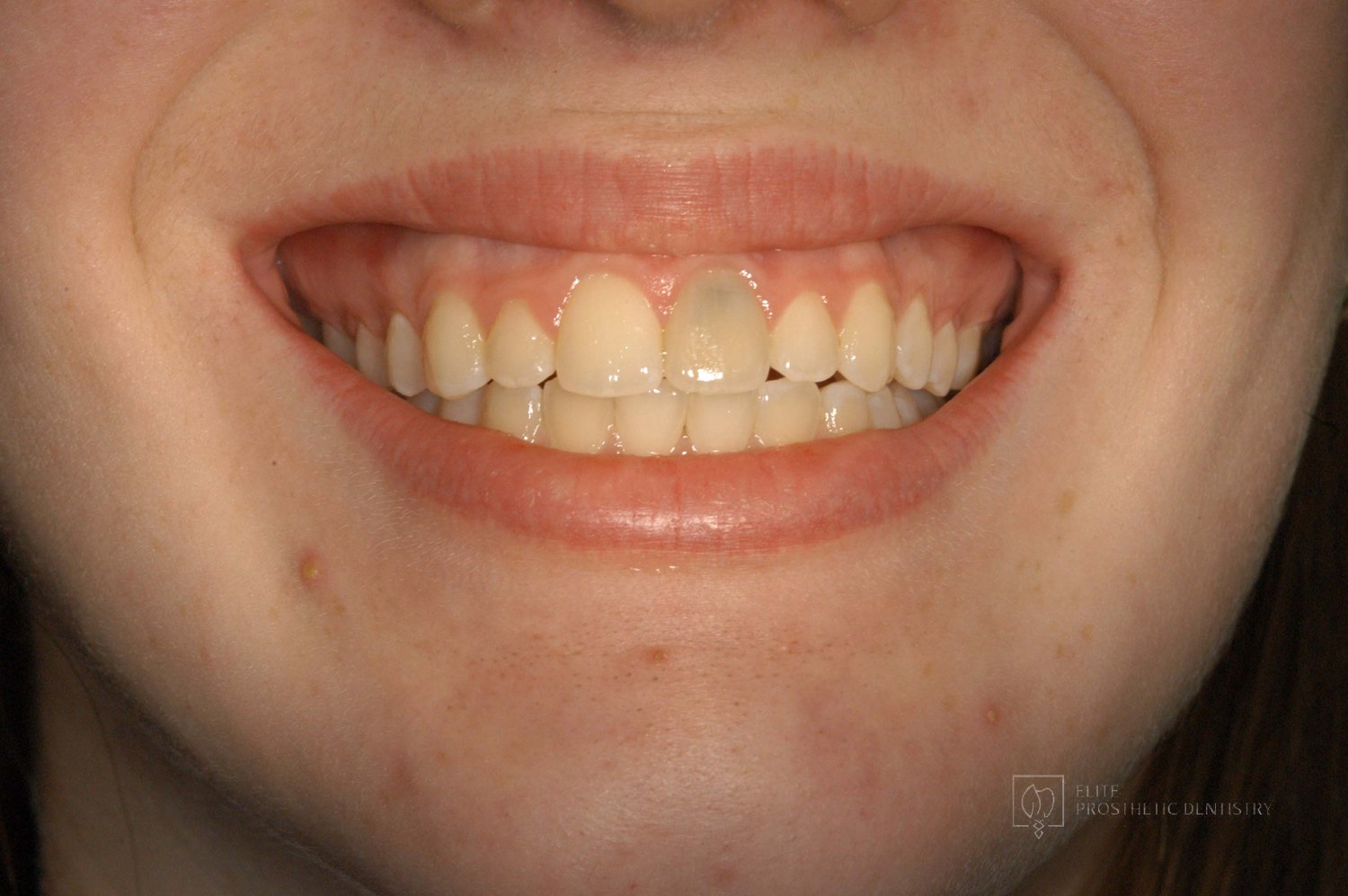 Before
 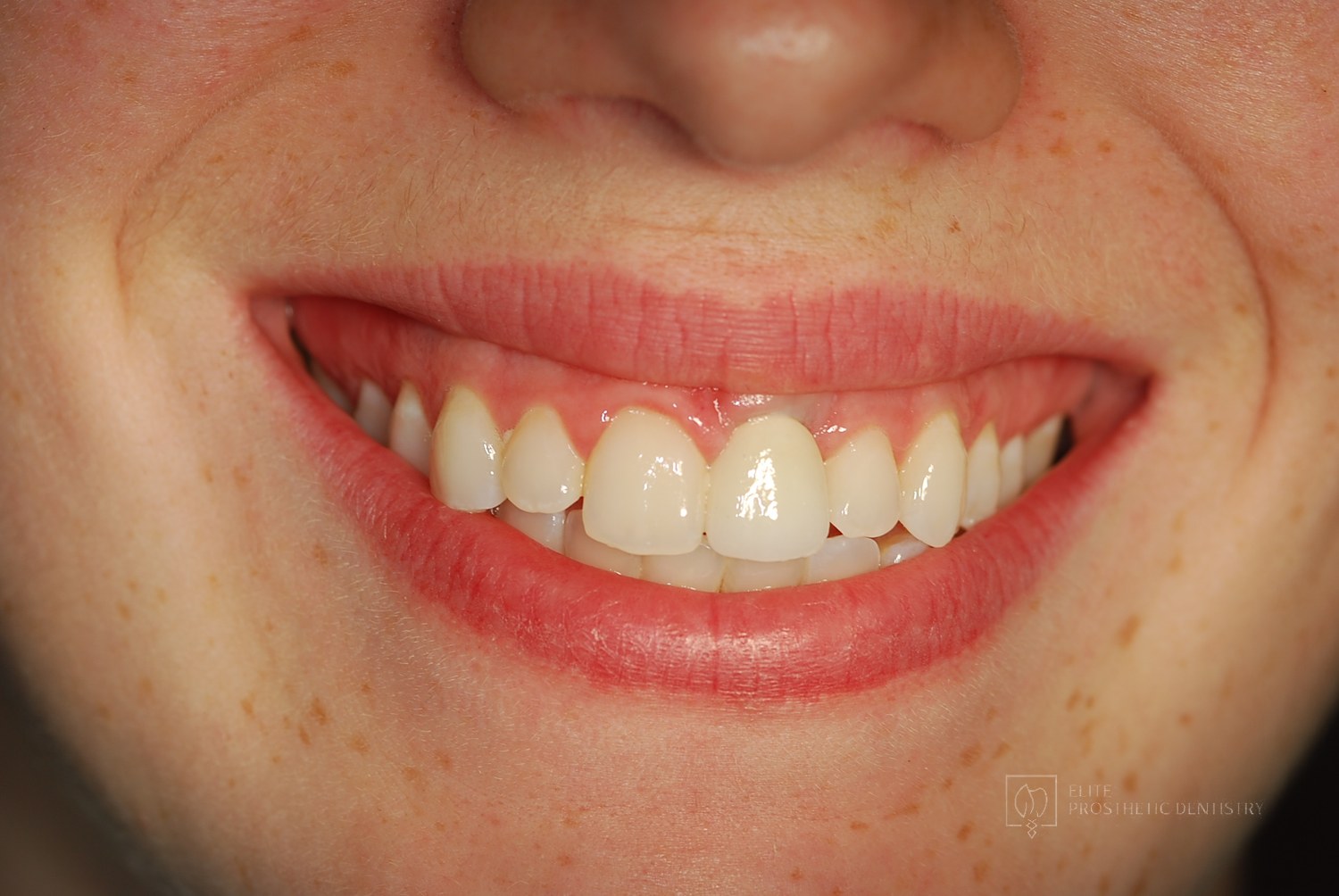 After
After How a Front Tooth Lost to Childhood Trauma Was Rebuilt with Bone Grafting and a Long-Lasting Implant
A teenager was referred by her father after earlier trauma left her upper left front tooth slowly failing from root resorption. She was still growing, so an immediate implant was the wrong move. The tooth had to be maintained to buy time, then replaced correctly once she reached skeletal maturity.
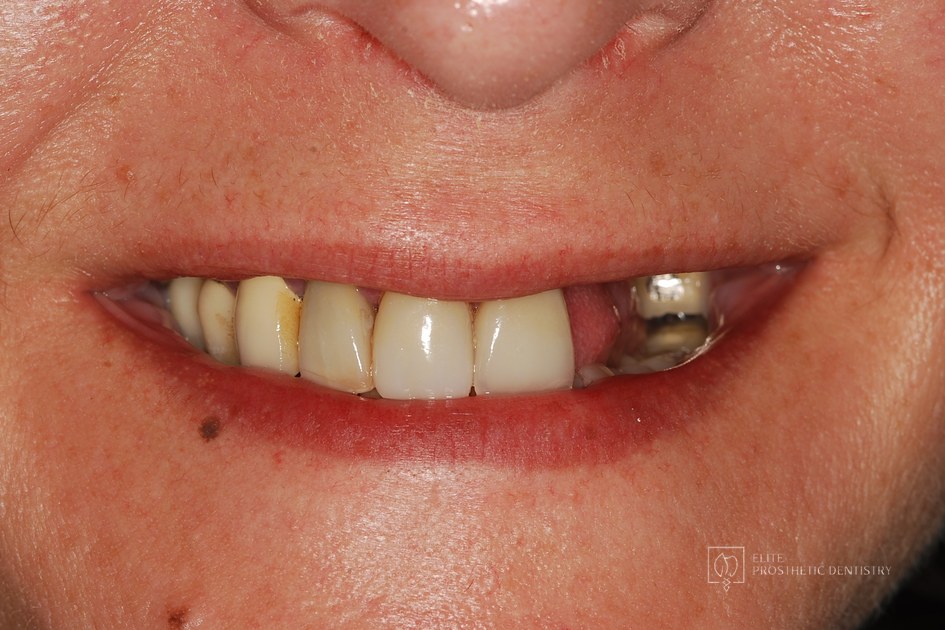 Before
 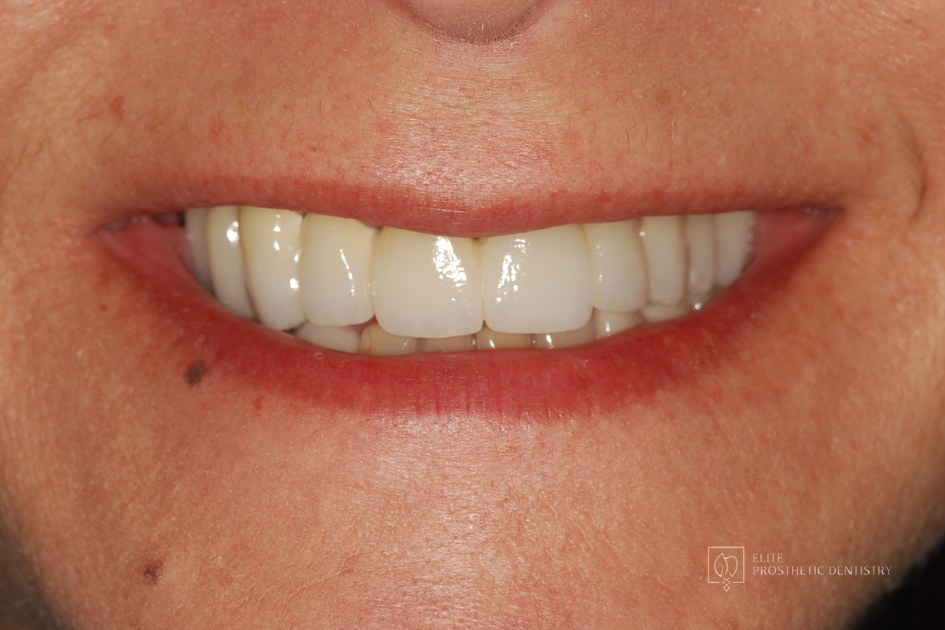 After
After Implant Supported Reconstruction: Failing Bridgework and Missing Back Teeth Rebuilt with Coordinated Specialist Care
Referred by another dental specialist with severe bone resorption on the upper left, multiple broken-down lower teeth requiring extraction, and failing lower back teeth that had left the bite without solid support. No single procedure, and no provider working in isolation, could rebuild a situation this interconnected.
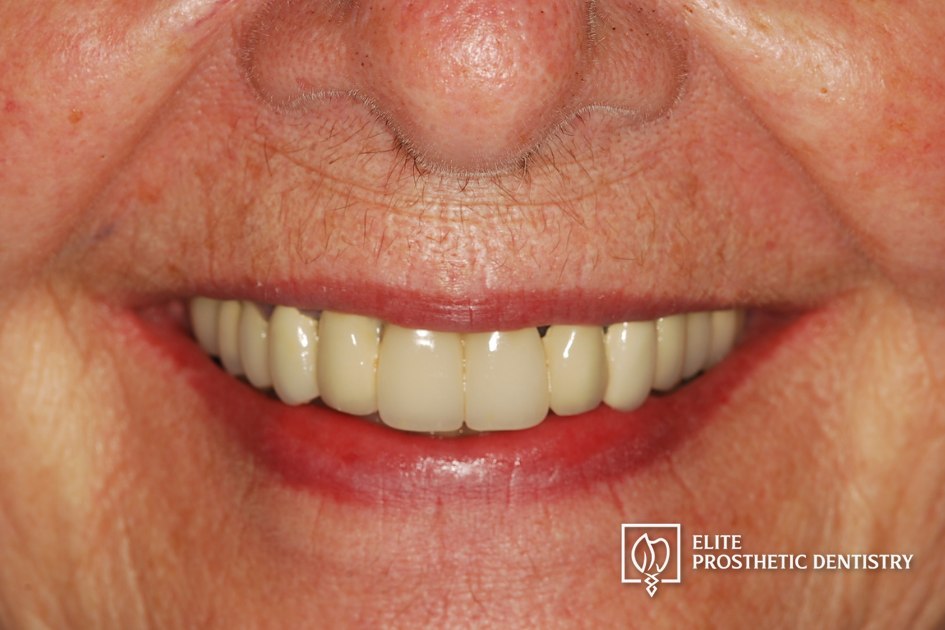 Before
 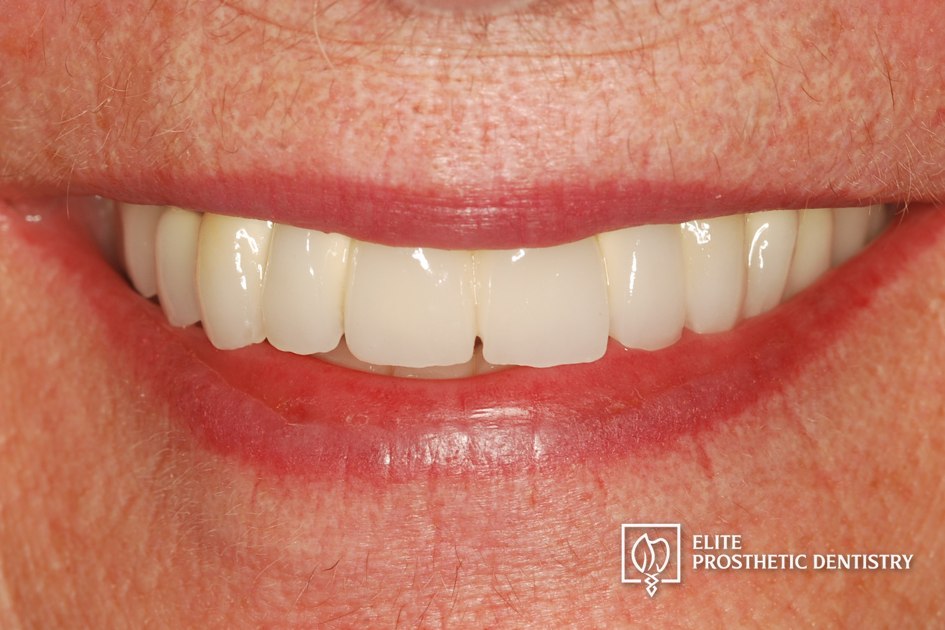 After
After How a Loose Upper Bridge and Aging Crowns Were Rebuilt with Staged Implant Reconstruction
A patient referred by her general dentist after years of aging dentistry no longer holding up. A loose upper bridge and crowns more than twenty years old, combined with the effects of advanced periodontal disease and severely compromised tooth abutments, required a staged surgical and restorative plan delivered with comfort planning at the same time.
Related Articles
Deepen your knowledge with additional insights on this topic.
 Bone Grafting & Surgical
 Rebuilding a Ruined Implant Site with Severely Damaged Bone: The Three-Stage Protocol
Debridement, growth-factor grafting, CBCT-guided planning: the step-by-step protocol that turns a severely damaged implant site into a healthy ridge.
 Bone Grafting & Surgical
 What Is Ridge Augmentation Bone Grafting?
Ridge augmentation rebuilds a jaw ridge too narrow or angled for an implant. See real measurements from planning to precise placement. Washington DC.
 Bone Grafting & Surgical
 What Is a Partial (Internal) Sinus Lift?
A partial (internal) sinus lift adds bone at a single implant site through the implant preparation itself, often with the implant placed the same visit.