
Achieving a Natural Look with a Single Front Tooth Implant
Restoring a missing front tooth is one of the most delicate assignments in modern dentistry. The technical challenge is not making a tooth. It is making a tooth nobody can find, standing next to its natural twin, in the most visible position in your smile.
At Elite Prosthetic Dentistry, that result is engineered in three acts: placement, emergence, and crown. Weakness in any one of them shows. Here is how each is done correctly, illustrated by a real case.
Act One: Placing the Implant Exactly Where the Crown Needs It
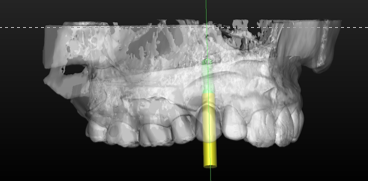
A natural-looking front tooth implant begins before surgery, with the end result designed first. Dr. Marlin uses 3D imaging and diagnostic planning to position the implant for the crown it will carry: centered in the gap, at the correct depth, at the angle that lets the future tooth align with its neighbors. This crown-first discipline is the core of precision implant placement.
One of our patients lost her central incisor to endodontic failure, a failed root canal that could not be salvaged. The first step was centering the implant precisely within the gap to replicate the symmetry of her natural smile. Fractions of a millimeter decide the outcome here: even slight deviations in position or angulation force the final crown into compensations that the eye catches immediately.
Act Two: The Abutment and the Emergence Profile
Between implant and crown sits the abutment, and this connector does the quiet aesthetic work. A natural tooth rises out of the gum with a specific contour shaped by its root. An implant has no root form, so the custom abutment must recreate that transition, supporting the gum tissue so it drapes at the same height and curve as the tissue around the neighboring teeth.
For our patient, the abutment was custom fabricated to match the natural contours of her gum tissue. Get this wrong and the tissue sits flat, red, or asymmetric, and the crown reads as installed rather than grown. Get it right and the gumline becomes the strongest part of the illusion.
Act Three: A Crown Matched to Its Twin
The final custom crown is where science hands off to artistry. Matching a single central incisor is the hardest shade assignment in dentistry, because its identical twin stands a millimeter away inviting comparison. The crown must reproduce the neighbor’s shape, surface texture, translucency, and internal color gradients, the way light enters and returns from a natural tooth.
This is why the crown for a case like this is fabricated in our in-house laboratory, where the technician sees the patient in person, evaluates the natural teeth at multiple depths of color, and characterizes the crown chairside until the two teeth are indistinguishable. The deeper craft behind that standard is covered in what makes a crown look natural, and you can see it applied in our single anterior crown case study.
Why One Roof Matters
Most implant patients travel between offices: a surgeon places the implant, a general dentist restores it, and a commercial laboratory neither has met makes the crown. Each handoff is a place for the plan to drift.
In our practice the sequence stays under one roof and one standard. Dr. Gerald Marlin, a specialty-trained prosthodontist with more than 3,900 dental implants placed, plans the placement, designs the abutment, and directs the in-house fabrication of the crown. The benefits compound: seamless aesthetics, preserved bone and facial support, full chewing function, and a restoration engineered to last decades rather than until the next handoff.
If you are facing the loss of a front tooth, or living with an implant crown that never looked right, call 202-244-2101 or request a consultation at our Friendship Heights office in Washington, DC.
See How We Resolve These Problems
Our patient success stories show real cases and real results. Browse outcomes from a specialist prosthodontist with decades of experience and 3,900+ implants placed.
Key Takeaways
- ✓ A natural front tooth implant is built in three acts: precise implant placement, a custom abutment that shapes the gumline, and an artist-crafted crown.
- ✓ Placement accuracy within fractions of a millimeter determines whether the final crown can ever look natural. No crown can rescue a poorly positioned implant.
- ✓ The abutment creates the emergence profile, the way the new tooth rises from the gum tissue, which is what makes an implant read as grown rather than installed.
- ✓ The final crown must match adjacent teeth in shape, translucency, and internal color, which is where an in-house laboratory earns its keep.
- ✓ Every step of this sequence happens under one roof, within one specialist practice accountable for the final result.
Frequently Asked Questions
Can a single front tooth implant really look natural?
Yes, when three things are executed precisely: the implant is placed in the ideal three-dimensional position, the custom abutment shapes a natural gumline transition, and the crown is fabricated with the translucency and internal color of the neighboring teeth. Weakness in any one step shows in the mirror.
What is an emergence profile on an implant crown?
It is the contour with which the new tooth emerges through the gum tissue. On a natural tooth, the root shapes that transition. On an implant, the custom abutment must recreate it so the tissue drapes naturally and the crown appears to grow from the gum rather than sit on top of it.
Why does implant position matter so much for front teeth?
Because the crown can only be as correct as the foundation beneath it. If the implant is angled or positioned even slightly wrong, the crown must compensate with unnatural contours, and the gumline usually betrays the compromise. Planning the implant position from the desired crown, using 3D imaging, is how the aesthetic result is protected.
How long does a front tooth implant take from start to finish?
Typically several months, allowing the implant to integrate with the bone before the final abutment and crown are placed. You wear a natural-looking temporary throughout, so you are never without a front tooth.
Related Patient Success Stories
Explore similar patient success stories demonstrating our expertise in advanced prosthetic dentistry.
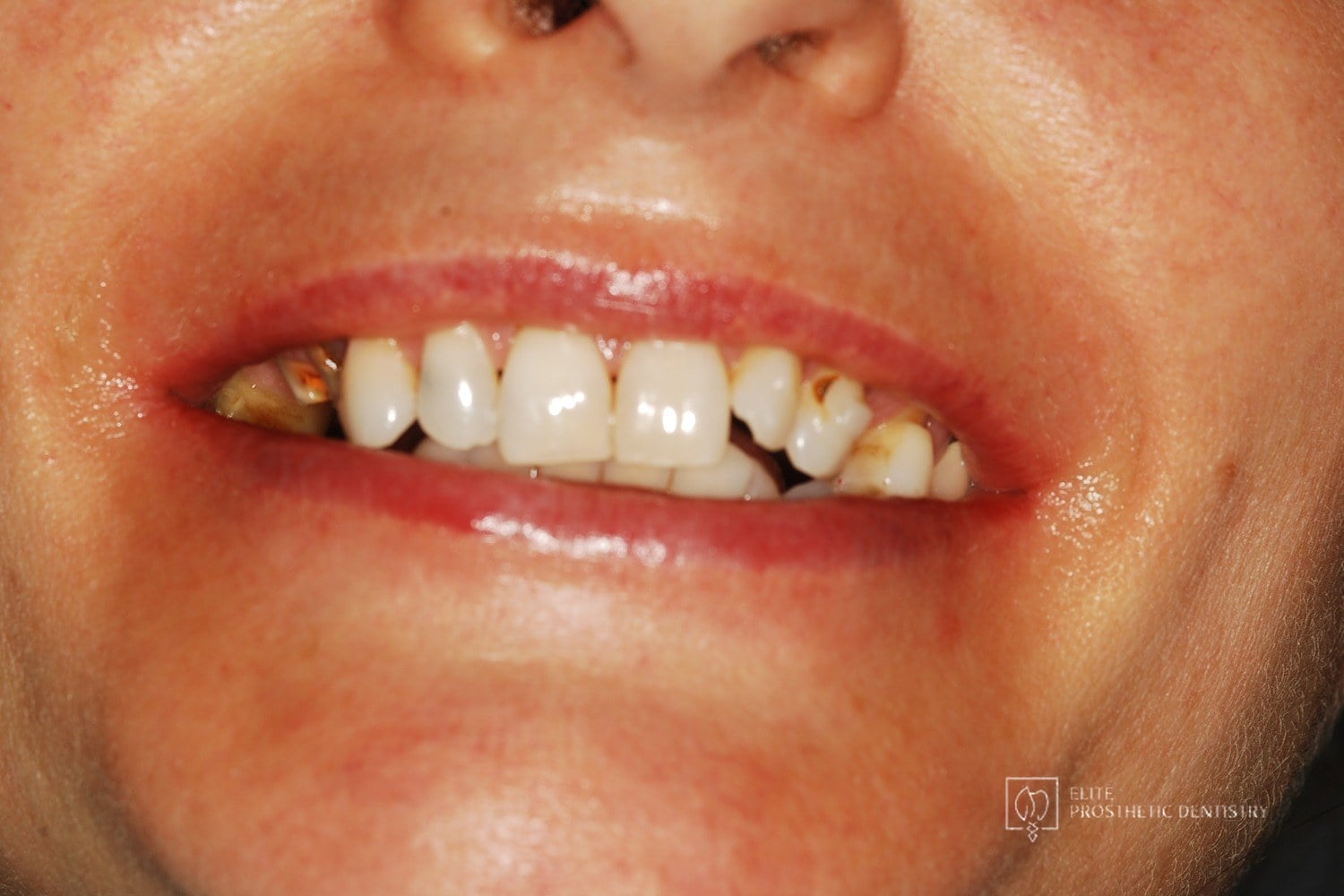 Before
 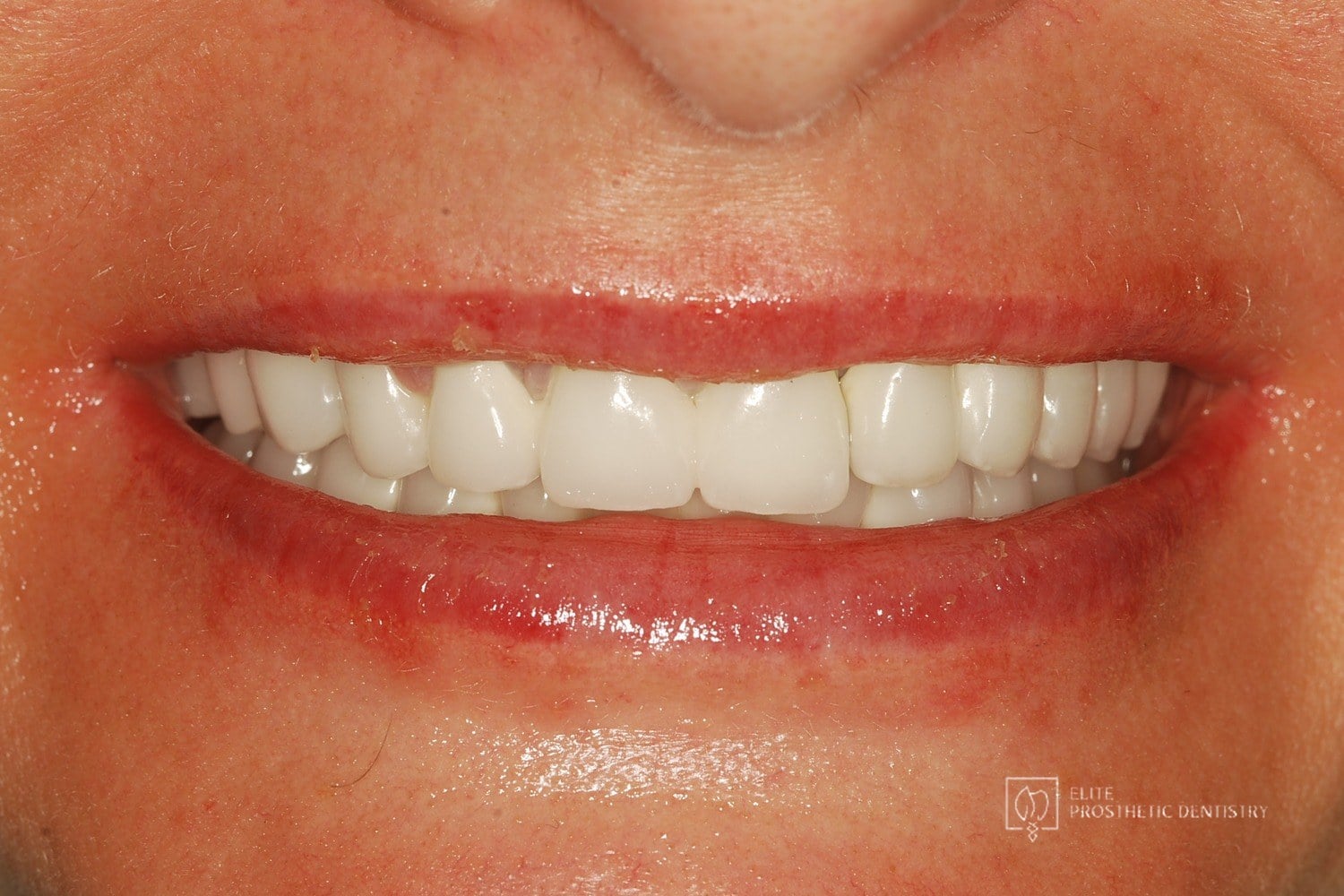 After
After How Aging, Failing Dentistry Was Replaced with a Coordinated Full-Mouth Implant and Crown Reconstruction
The patient presented with throbbing upper-molar pain, long-standing infections, multiple root canals and unfinished prior treatment, generalized sensitivity, and several hopeless teeth.
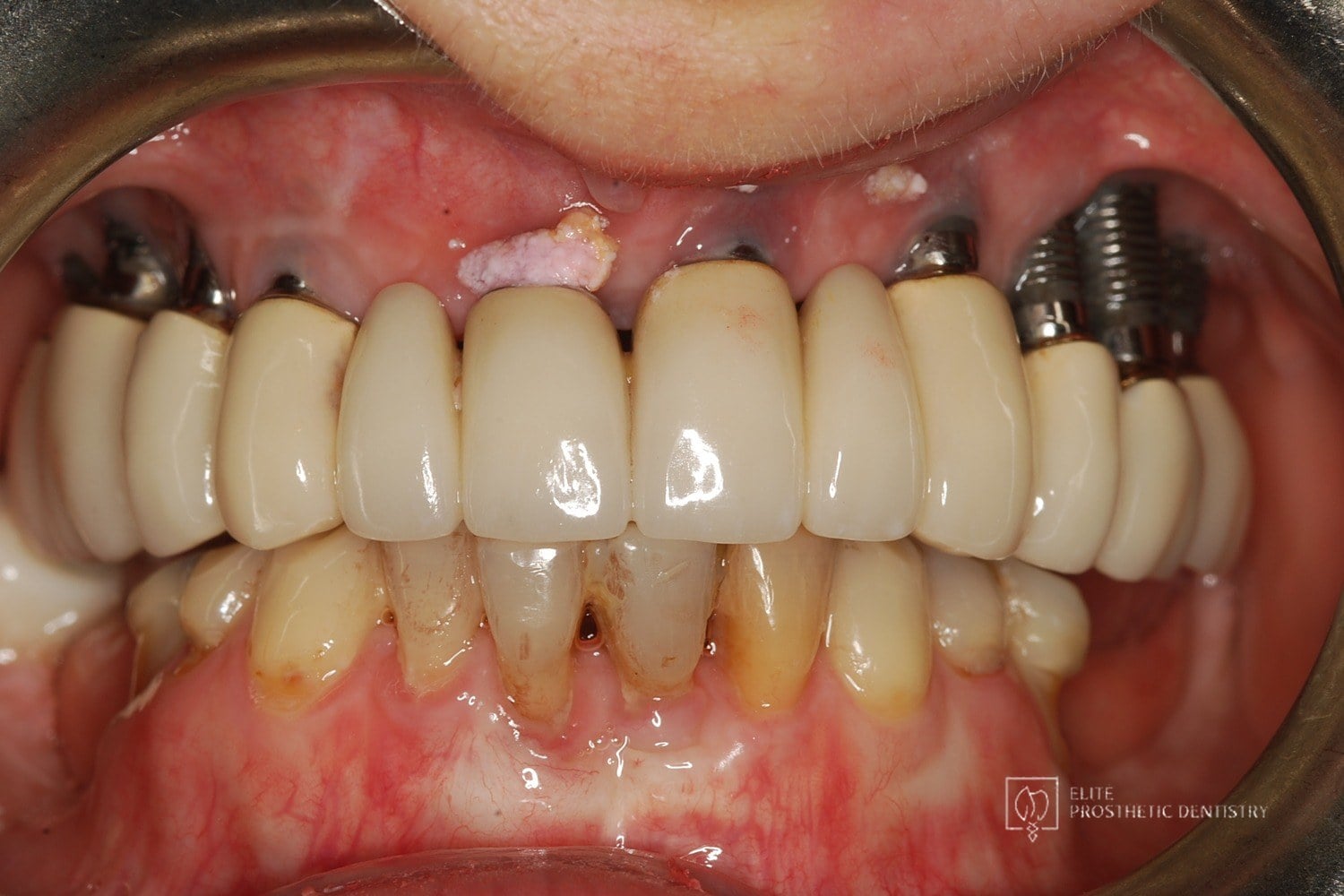 Before
 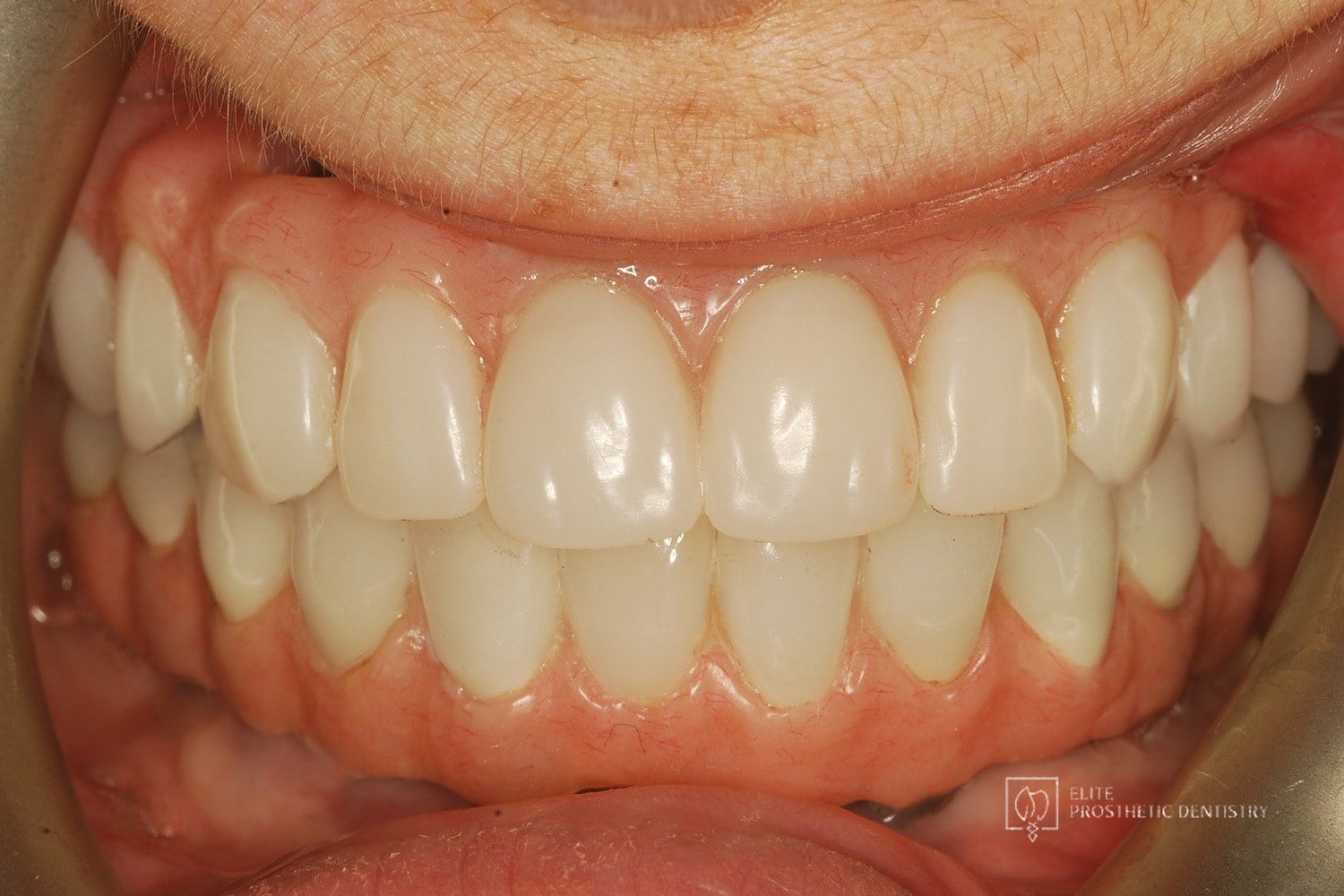 After
After How Failing Implants and Severe Bone Loss Were Rebuilt Into a Stable Full-Arch Implant Reconstruction
The patient presented with significant complications from previously placed implants, severe bone loss, failing posterior implants, and an unesthetic full-arch bridge. Both arches required full reconstruction, with the upper arch showing the most advanced bone loss and instability.
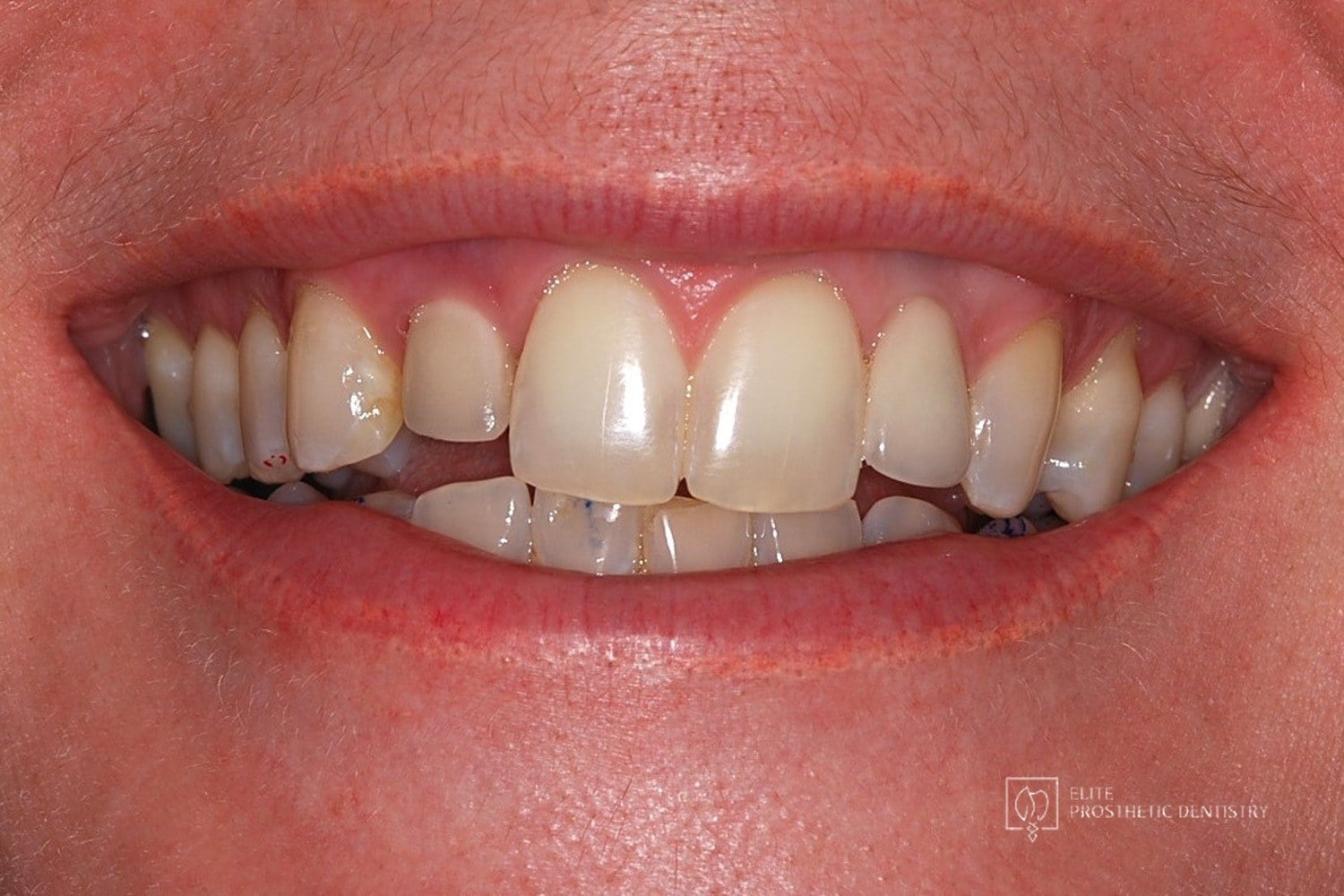 Before
 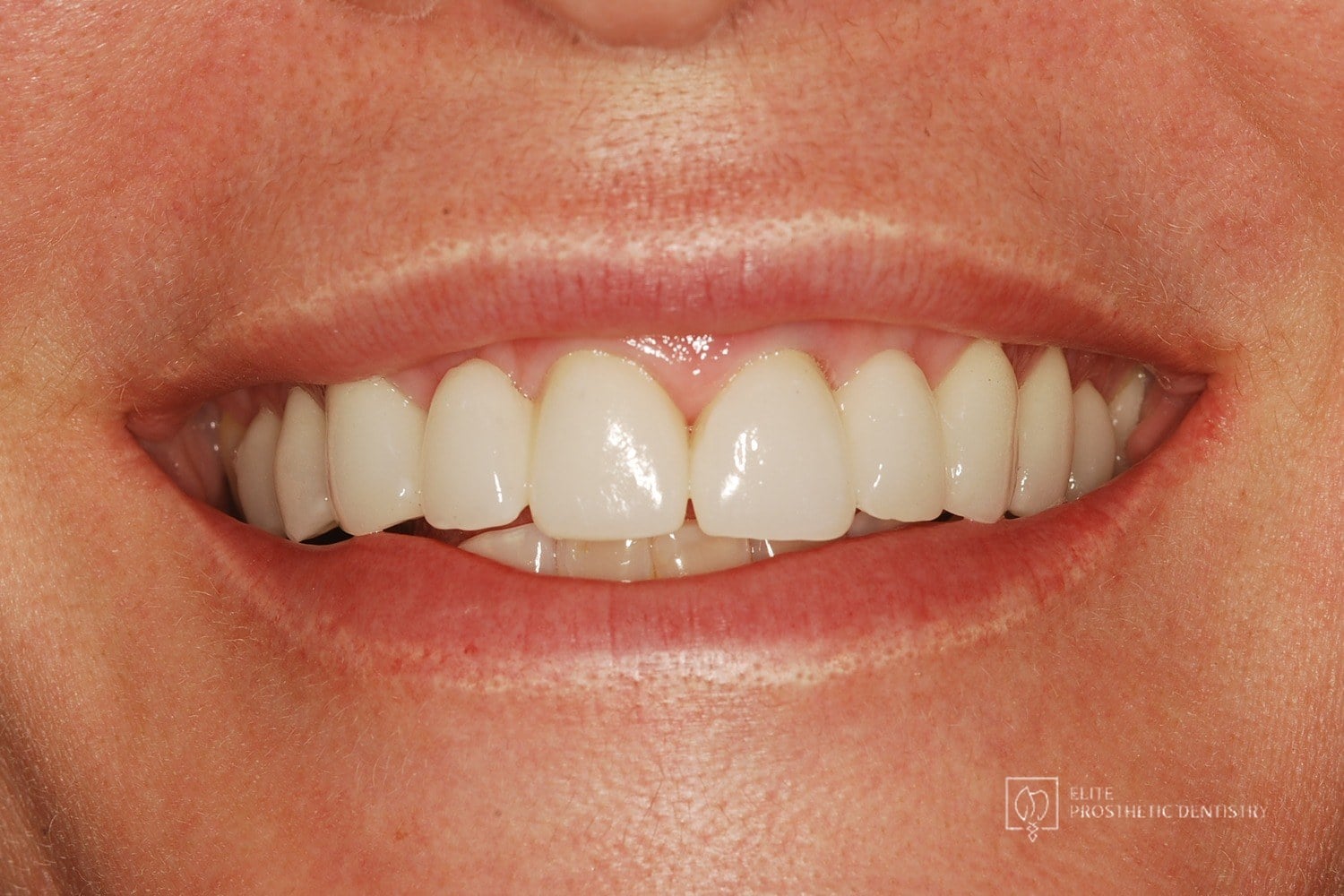 After
After How Failing Lateral Incisor Implants Were Replaced with Custom Zirconia Bridges After Severe Bone Loss Made Replacement Implants Impossible
Comprehensive examination including CBCT imaging revealed significant bone loss surrounding implants that were placed outside the buccal plate, most likely due to placement without a CBCT-generated surgical guide. The implants were determined non-salvageable, and the alveolar ridge was too narrow to support replacement implants without extensive reconstruction.
Related Articles
Deepen your knowledge with additional insights on this topic.
 Dental Implants
 If a Single Front Tooth Is Replaced with an Implant, Can It Look Natural?
Yes. See the four steps, with real case photos, that make a single front tooth implant indistinguishable from the natural tooth beside it. Washington, DC.
 Dental Implants
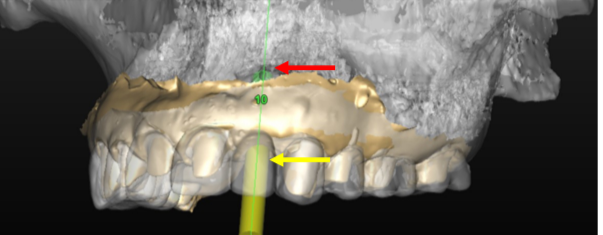
 What Is Precision Implant Placement (PIP)?
Precision Implant Placement plans each implant virtually on a CBCT scan, then delivers it with a custom surgical guide. See the three steps with real images.
 Dental Implants
 What Is the Ideal Surgical Guide for Precision Implant Placement?
Not all surgical guides are equal. The gold standard is CBCT-based: planned virtually in 3D, 3D printed, and seated on your teeth. A DC prosthodontist explains.