
Loose, Failing Crowns and Hidden Decay: Saving the Strategic Teeth and Rebuilding Both Arches With Custom Bridges
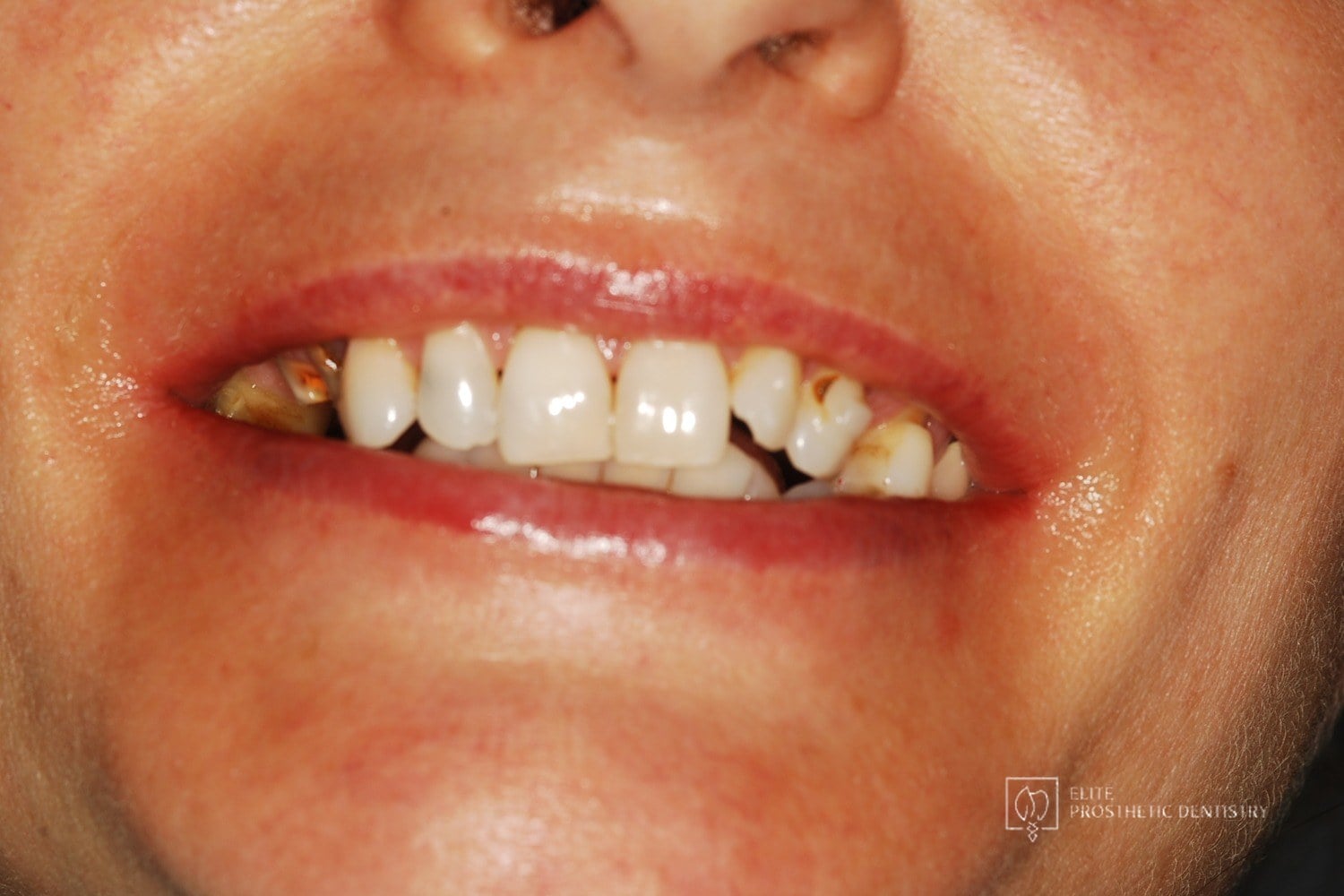
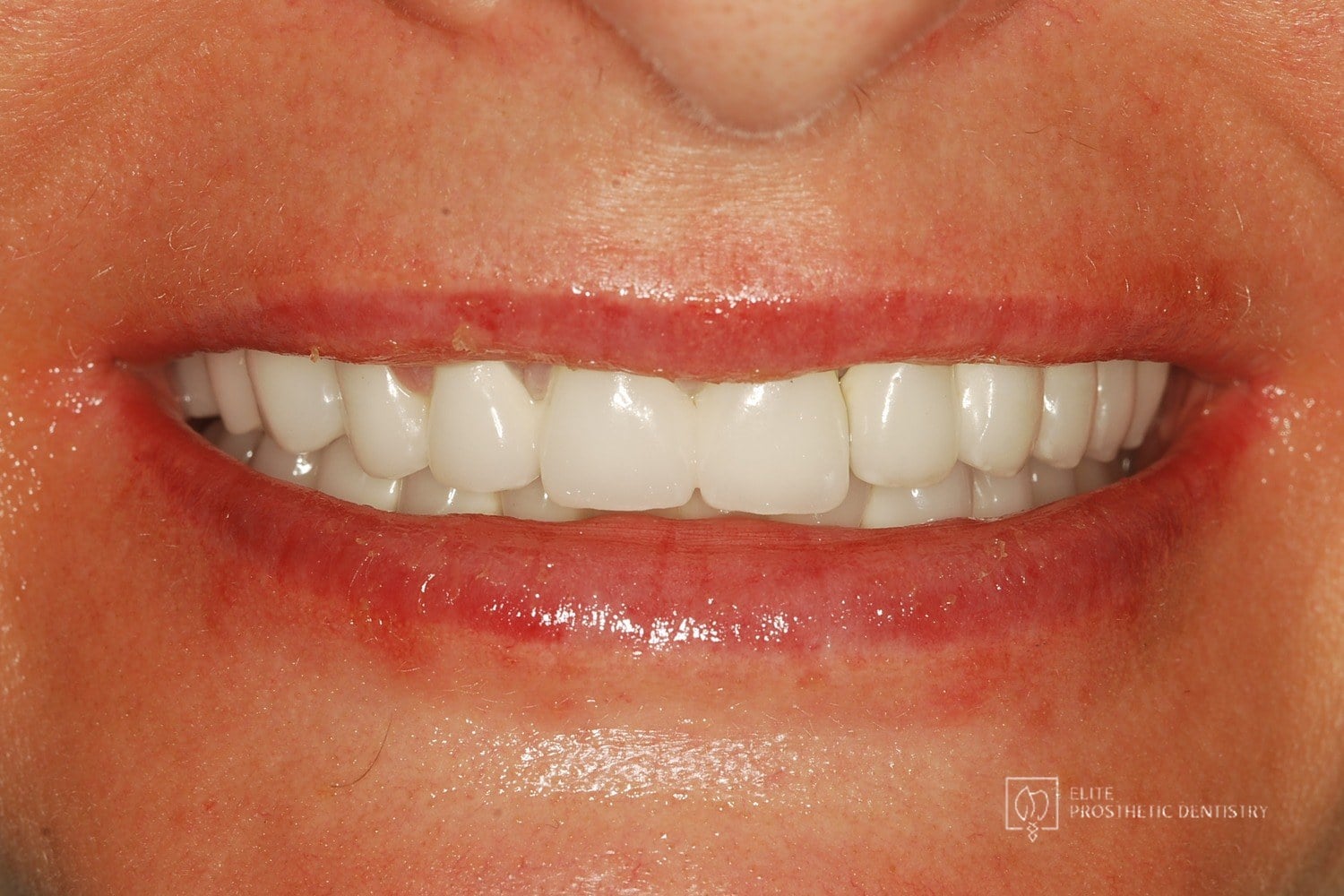
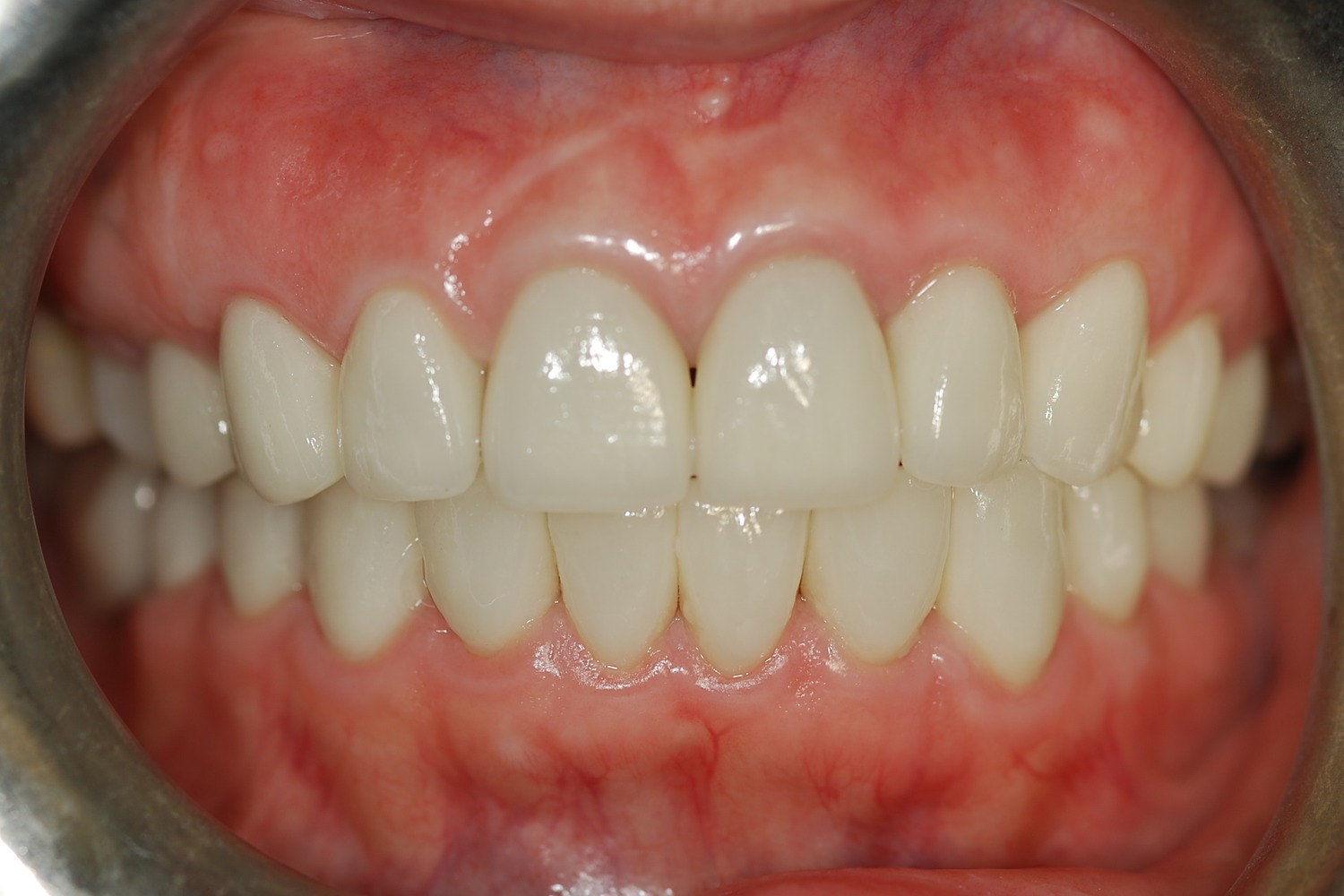
Close-up smile view
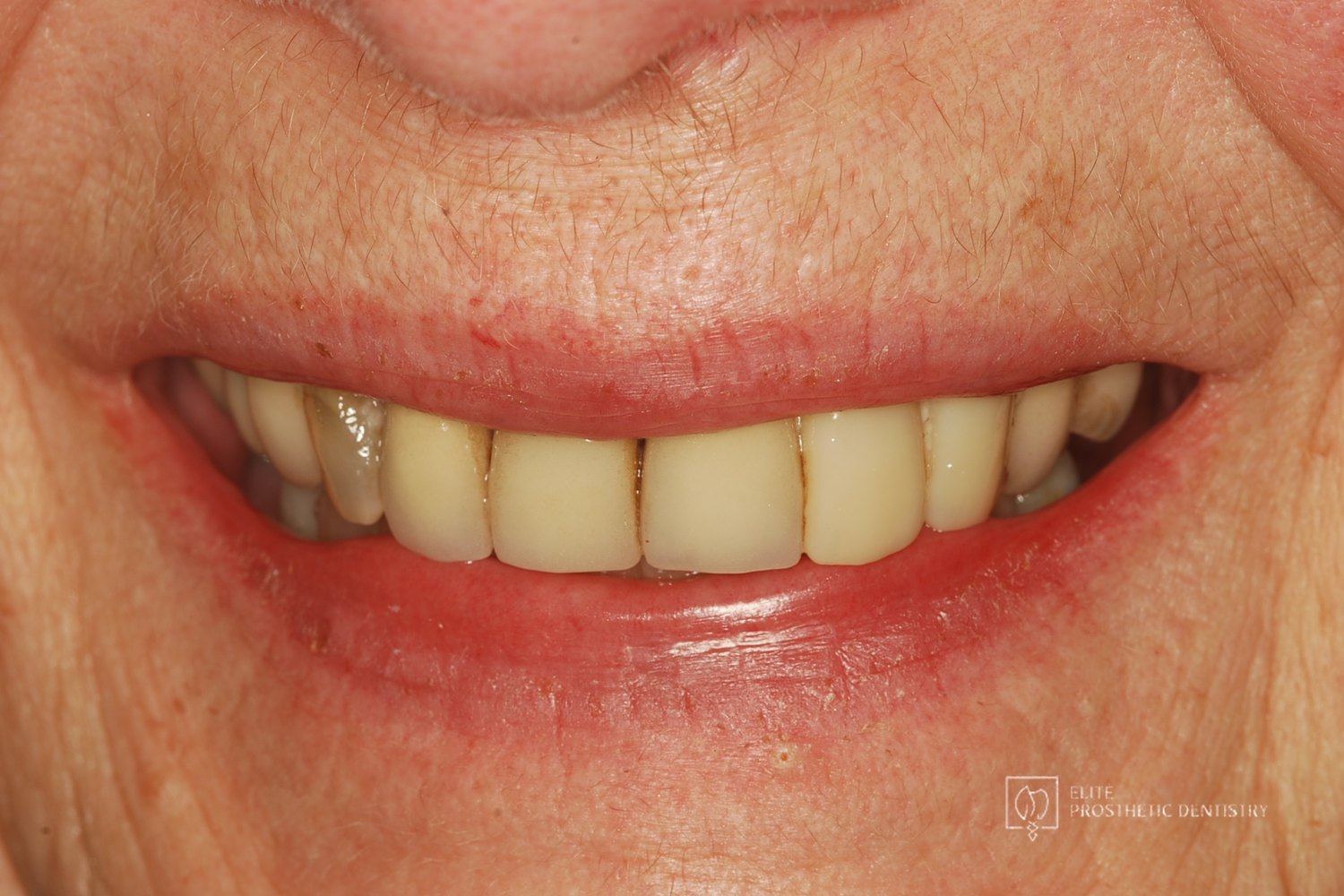 Before
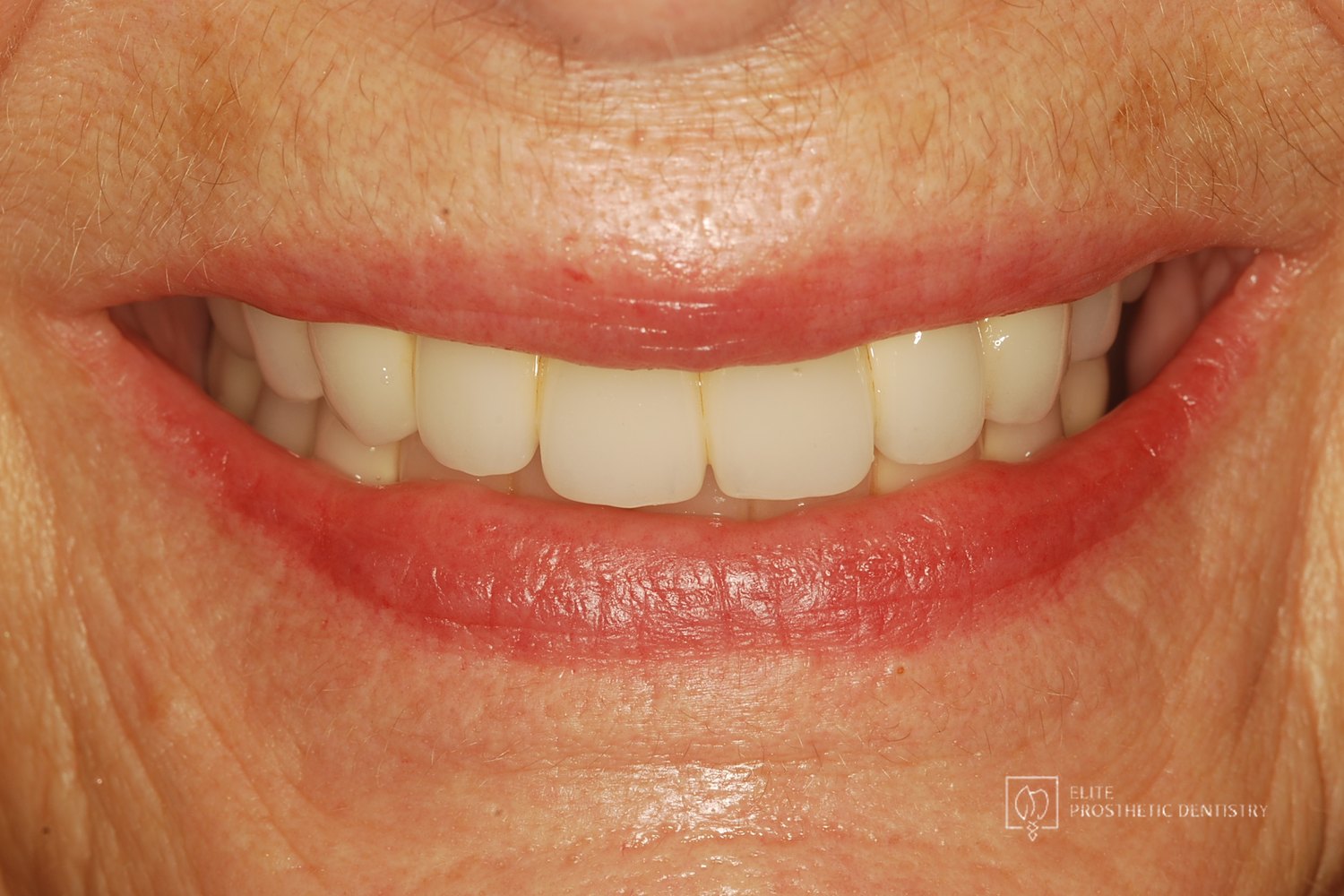 After
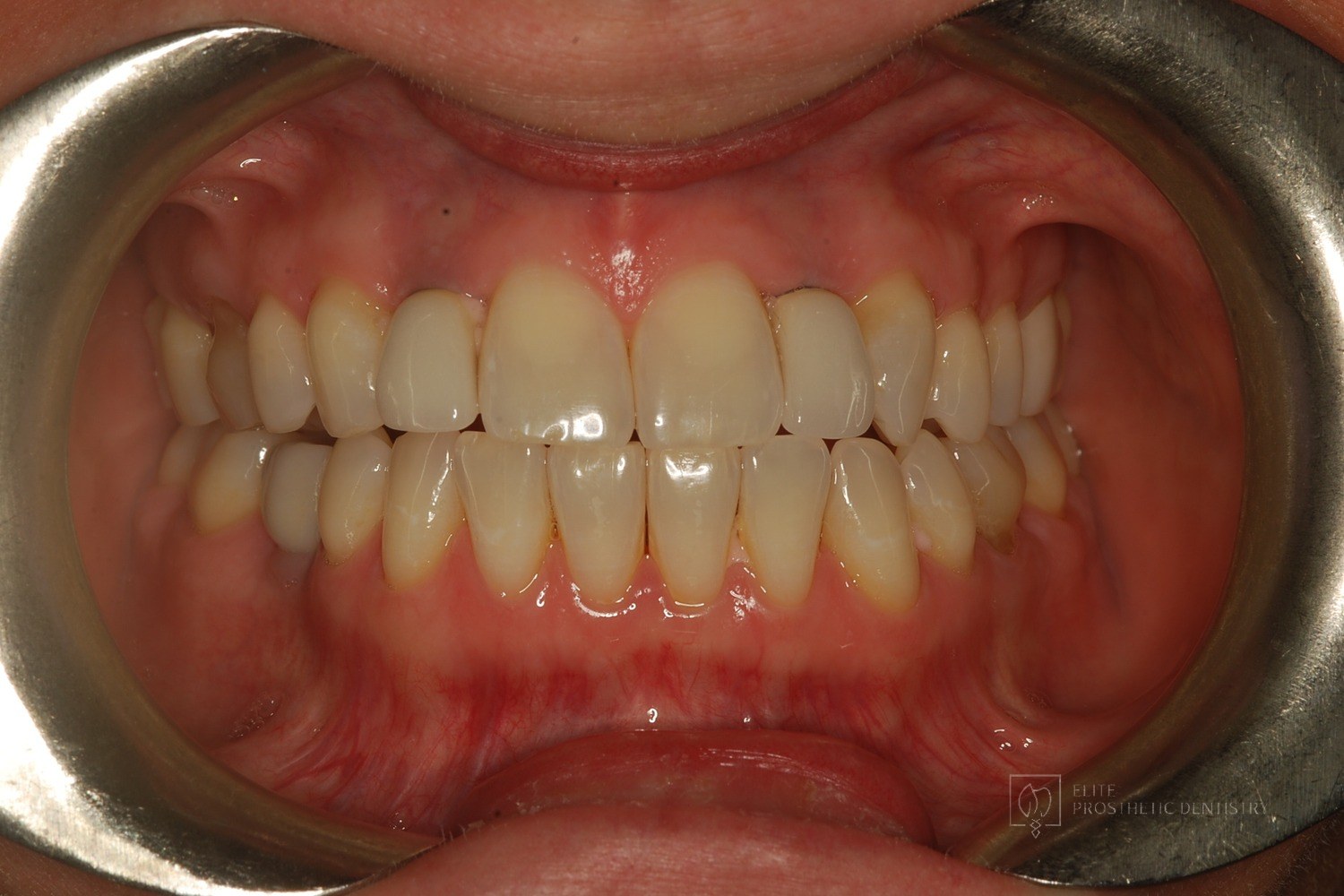
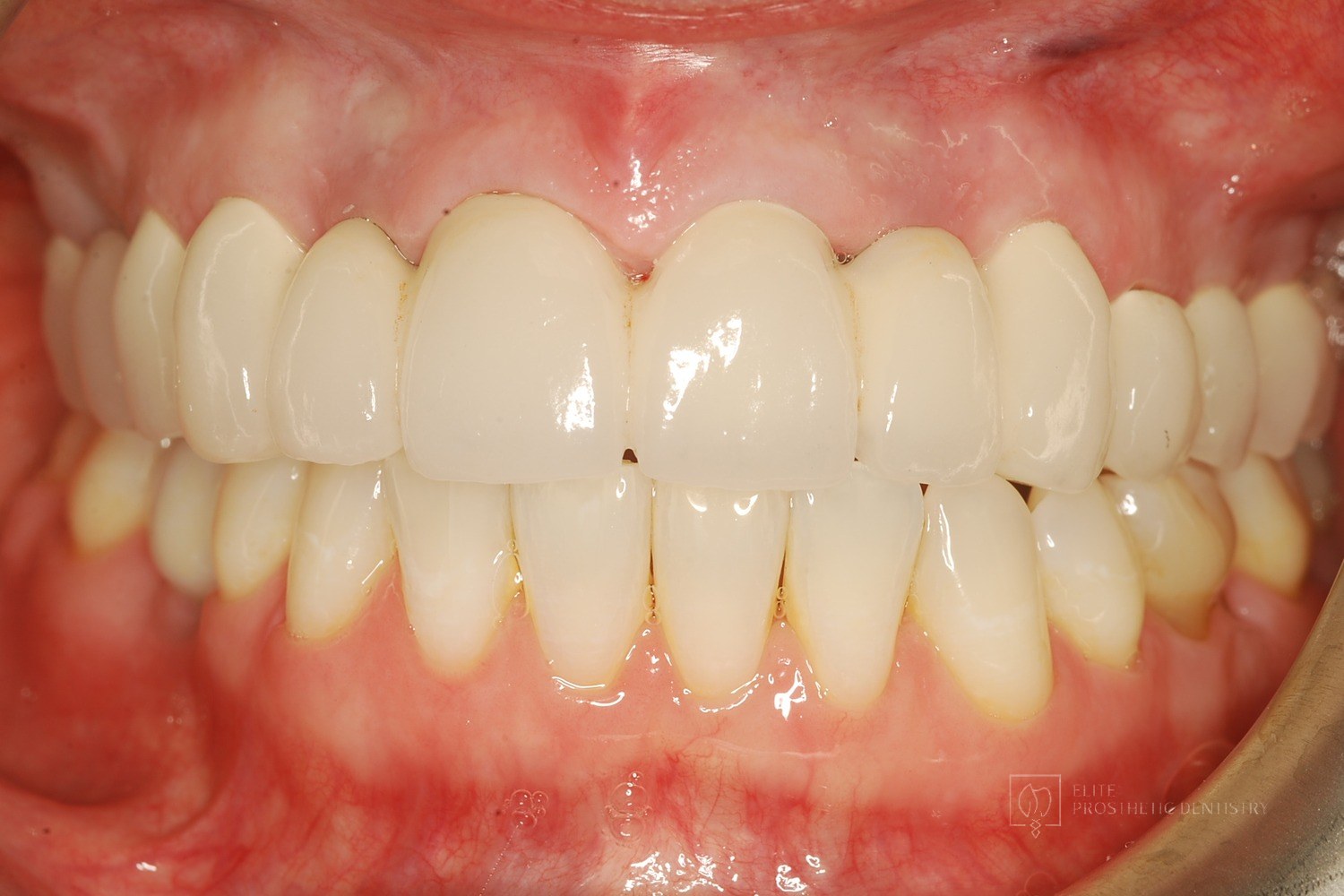
Intraoral view
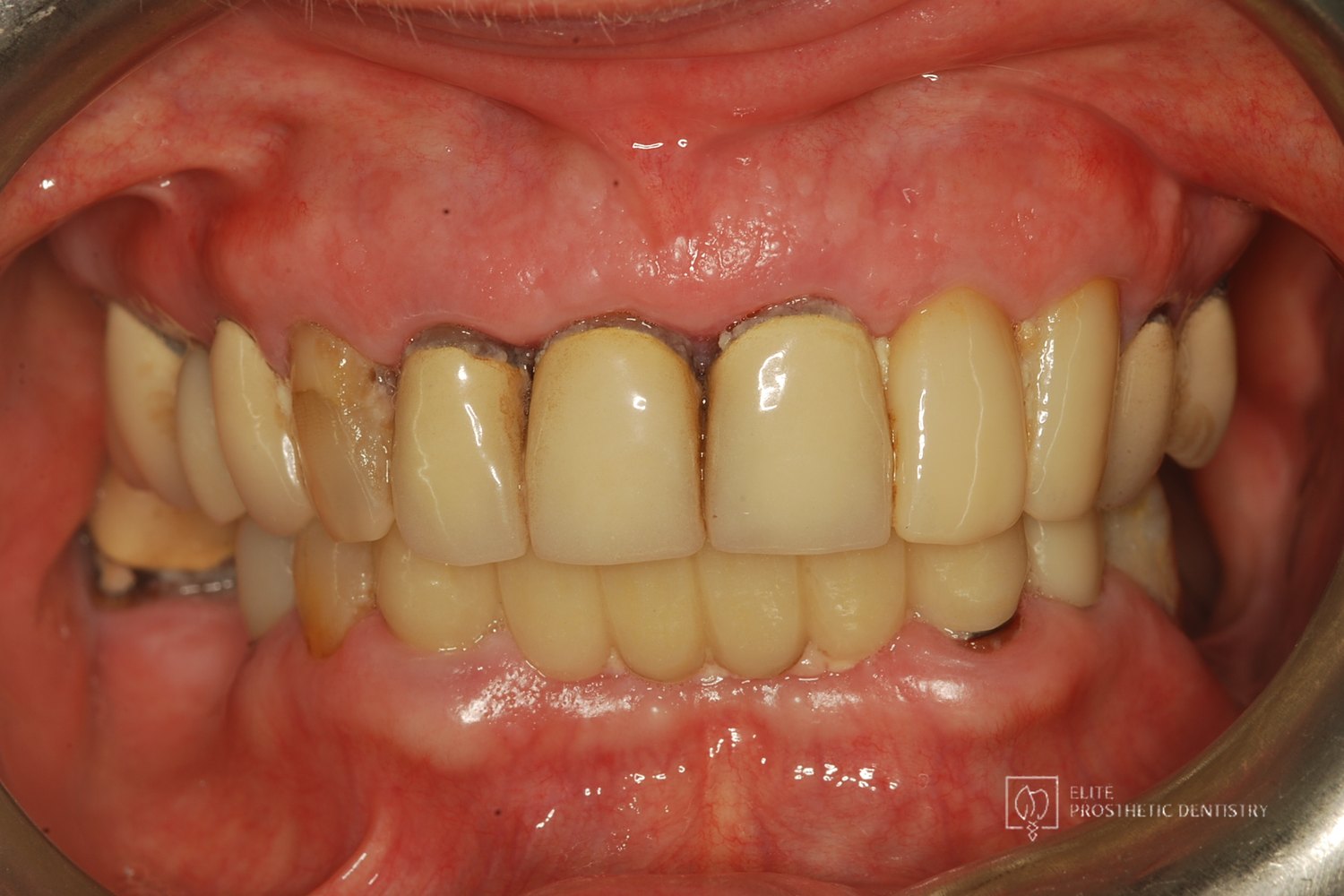 Before
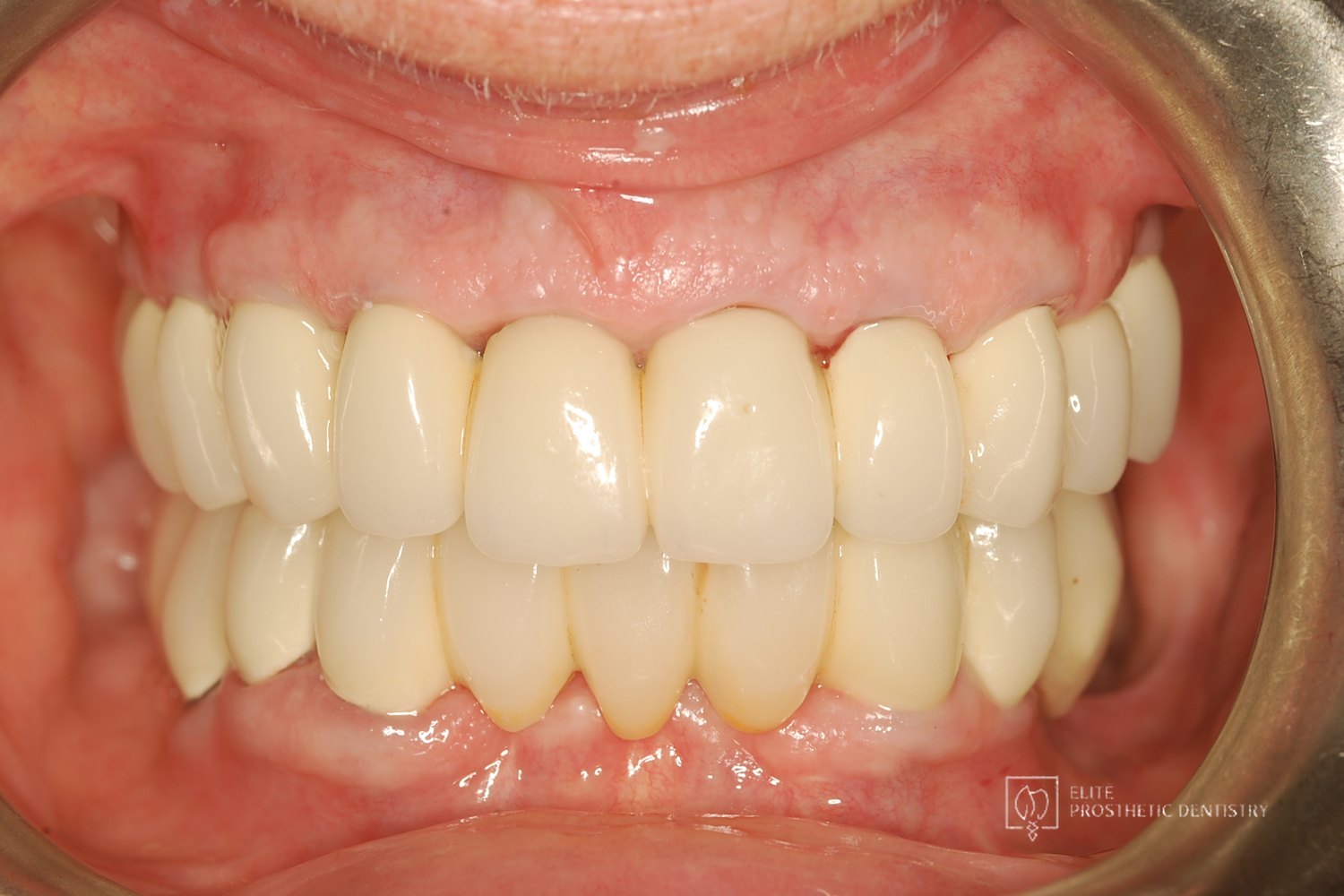 After
Completed result

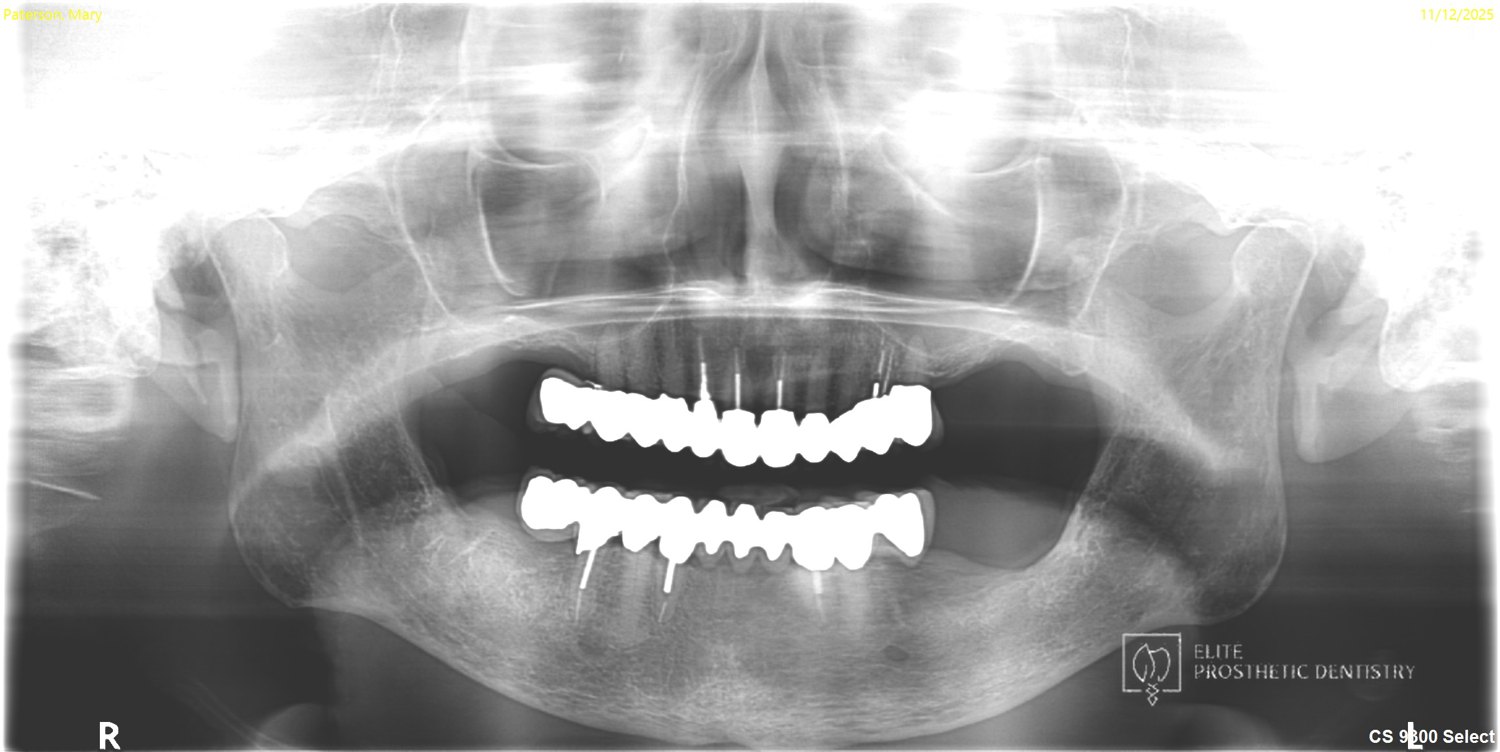
Imaging after treatment
Failing crowns and hidden decay rebuilt into a coordinated full-mouth reconstruction
Full-mouth rehabilitation in Washington, DC for a patient who arrived with numerous loose crowns, spaces between her teeth, and a long history of significant dry mouth that had driven recurrent decay. This documented case at Elite Prosthetic Dentistry looked beneath every existing restoration, coordinated endodontic and periodontal care, preserved the teeth that could predictably anchor a reconstruction, and rebuilt both arches with customized upper and lower bridges. Treatment was planned and completed by Gerald Marlin, D.M.D., M.S.D., a prosthodontist focused on complex full-mouth cases.
Case at a Glance
- Treatment
- Full-mouth rehabilitation with customized upper and lower PFM bridges, endodontic and periodontal coordination, and extraction of a non-restorable tooth
- Approach
- Comprehensive diagnosis, evaluation beneath every existing restoration, identification of salvageable versus non-salvageable teeth, preservation of strategic teeth, management of limited mouth opening, customized restorative reconstruction with redesigned tooth proportions
- Case Type
- Replacing aging dentistry / Full-mouth reconstruction with upper and lower bridges
- Patient Concern
- Numerous loose crowns, spaces between the teeth, and an appearance she was unhappy with, on top of a dry-mouth history that had driven years of recurrent decay.
- Decision Point
- Replace the loose crowns as they stood, or look underneath every restoration first, decide tooth by tooth what could be predictably saved, and rebuild both arches on the teeth that could carry them.
- Outcome
- A full-mouth reconstruction with functional occlusion and posterior chewing restored, more natural tooth proportions, and a patient who reports at each hygiene visit that she is smiling more.
- Why It Matters
- Shows that loose crowns are often the visible edge of a larger problem, and why the first question in a reconstruction is which teeth can be saved, not which crowns to replace.
The presenting condition
This patient came to the practice with numerous loose crowns, spaces between her teeth, and concerns about the appearance of her smile. She also had a history of significant dry mouth following earlier medical therapy, which had contributed to a high rate of recurrent decay over the years. The comprehensive evaluation found that several existing restorations had open margins and overhangs, with decay developing underneath and around the crowns. Some teeth had developed infections and abscesses; others had very little healthy tooth structure left. Dark areas near the crown margins that had been understood to be the metal of the restorations turned out, on radiographic review, to be decay and compromised tooth structure in several places. That distinction decided which teeth could be restored and which could not.
Clinical Findings
- →Multiple loose and failing crowns with open margins and overhangs
- →Significant recurrent decay around and underneath existing restorations, with periapical abscesses on compromised teeth
- →High decay risk from significant dry mouth following earlier medical therapy, with slow healing to be planned around
- →An upper first molar determined to be non-restorable and requiring extraction
- →A lower second molar needing endodontic evaluation so it could be preserved as a strategic posterior anchor, with very few remaining lower teeth to support a reconstruction
- →An existing lower bridge compromised by severe decay and disconnected near a lower canine
- →Very limited remaining tooth structure on some front teeth, with customized posts discussed before the old crowns were removed
- →Limited mouth opening that initially made endodontic treatment difficult
- →Tooth proportions that appeared overly square and required esthetic redesign
Why the first question was which teeth could be saved
A crown can look intact from the outside while decay advances underneath it, and with multiple older restorations the full condition of the teeth cannot be known until the crowns come off. Replacing the loose crowns as they stood would have rebuilt the smile on an unknown foundation. The plan instead started with diagnosis: every tooth evaluated individually, endodontic and periodontal consultations brought in, and a decision made tooth by tooth about what could be predictably preserved. Two teeth carried unusual weight. The lower second molar mattered because so few lower teeth remained to support the reconstruction; saving it provided a posterior anchor and first-molar chewing function. A lower canine mattered because the planned lower bridge depended on it. The upper first molar, by contrast, was hopeless and came out. With a dry-mouth history and slow healing in the background, the sequence was built to control disease first and reconstruct second, so the final bridges would sit on teeth with a future.
The treatment plan
Disease control and tooth preservation came first; the reconstruction was designed around the teeth that could carry it.
-
1
Comprehensive diagnostic evaluation
A detailed clinical examination, photographs, and radiographs documented the existing restorations, remaining tooth structure, periodontal condition, infections, and overall bite. The findings were reviewed with the patient so she understood the condition of her teeth and the reasons behind the plan.
-
2
Endodontic and periodontal coordination
Endodontic and periodontal consultations determined which compromised teeth could be predictably treated and preserved. Saving strategically important teeth was central to the plan because of the limited number available to support the final reconstruction.
-
3
Preservation of strategic teeth and removal of the hopeless one
The lower second molar was evaluated endodontically with the goal of keeping it as an anchor and restoring posterior chewing function. The non-restorable upper first molar was extracted. The prognosis of the lower canine supporting the planned bridge was established before definitive work began.
-
4
Management of limited tooth structure
Because several front teeth had very little natural structure remaining, customized posts were planned before the existing crowns were removed, so the restorative design reflected each tooth's actual condition rather than assuming every crowned tooth could simply be re-crowned.
-
5
Management of limited mouth opening
The patient's initial opening was insufficient for predictable endodontic treatment. Trigger-point injections in the muscles of mastication followed by stretching techniques improved her opening significantly, allowing treatment to proceed more comfortably. Oral anti-anxiety medication was also used for her comfort during treatment. See comfort and sedation options.
-
6
Full-mouth reconstruction with customized bridges
After disease control and tooth preservation, both arches were restored with customized upper and lower PFM bridges designed to replace missing structure, restore chewing function, establish an appropriate functional occlusion, and improve the smile. The overly square tooth shapes of the previous restorations were redesigned into more harmonious, natural proportions. The bridges were fabricated in direct coordination between Dr. Marlin and the practice's in-house laboratory to control fit, contour, function, and esthetics. See dental bridges.
The outcome
The completed rehabilitation restored the upper and lower arches with customized bridges, re-established functional occlusion and posterior chewing, and improved the overall appearance of the smile. The before and after views at the top of this page show the change from loose, mismatched crowns to a unified result with natural proportions, and the panoramic radiograph documents the completed reconstruction. The goal was never simply to replace old crowns: the treatment addressed the underlying disease, preserved teeth that could still serve an important role, removed the one that could not, and rebuilt the dentition around function and esthetics together. The patient continues to return for regular hygiene visits, which matter for a dry-mouth patient, and at each recall she reports that she is smiling more and feeling increasingly confident.
Result Highlights
- ✓Every existing restoration evaluated for the decay and compromised structure beneath it
- ✓Treatment planned around a significant dry-mouth decay risk and slow healing
- ✓Strategic lower molar preserved as a posterior anchor; non-restorable upper molar removed
- ✓Endodontic and periodontal specialists coordinated within one plan
- ✓Limited mouth opening resolved with trigger-point therapy and stretching before endodontic care
- ✓Both arches rebuilt with customized bridges restoring occlusion and posterior chewing
- ✓Overly square tooth proportions redesigned for a more natural smile
Who this case may sound familiar to
This story tends to resonate with patients in a few recognizable situations:
- You have several crowns that feel loose or have dark lines at the gum and you suspect the problem goes deeper.
- You have dry mouth from medication or medical treatment and your dental work keeps failing because of decay.
- You have very few back teeth left and want to know whether the remaining ones can anchor a reconstruction.
- You want one specialist practice to coordinate the root canal, gum, and restorative work rather than managing it yourself.
- You want the result to look natural rather than square or artificial, and to be built to last.
If any of those describe where you are, a consultation with Dr. Marlin can give you the diagnostic picture and the specific plan for your case.
Frequently asked questions
Why do crowns become loose or fail?
Crowns most often fail because decay develops at or under the margin where the crown meets the tooth, because the cement seal breaks down, or because the remaining tooth structure under the crown is too small to hold it. Open margins and overhangs trap plaque and make decay more likely. The condition of the tooth underneath can only be fully assessed once the crown is removed.
How does dry mouth affect crowns and bridges?
Saliva protects teeth by neutralizing acid and washing away plaque. When it is reduced after medical therapy or medication, decay develops faster, especially at crown margins. A reconstruction for a dry-mouth patient is planned around that risk: disease is controlled first, margins are designed for cleanability, and close hygiene maintenance afterward is part of the plan.
Why save one molar when the rest of the arch is being rebuilt?
When few teeth remain in an arch, each one that can be kept changes what the reconstruction can support. A preserved back molar can anchor a bridge and restore chewing on that side. Deciding to treat and keep a tooth like that, rather than extract it, is a prosthodontic decision made with the whole arch in view.
What is done when a patient cannot open wide enough for treatment?
Limited opening from tight jaw muscles can be improved with trigger-point injections in the muscles of mastication followed by stretching exercises. In this case the patient’s opening increased enough for endodontic treatment to proceed comfortably. Comfort medication can also be arranged for longer appointments.
More about the work behind this case
This case combines full mouth reconstruction with customized dental bridges after years of crown and bridge problems. The diagnose-first approach reflects the practice’s philosophy on complex multi-tooth cases, and the bridges were fabricated with the in-house laboratory.
Elite Prosthetic Dentistry treats patients from across the DMV including Bethesda, Chevy Chase, McLean, Arlington, Potomac, and Great Falls, and from much further out for cases that warrant the trip.
Related Services
Related Patient Success Stories
Explore similar patient success stories demonstrating our expertise in advanced prosthetic dentistry.
 Before
 After
How Aging, Failing Dentistry Was Replaced with a Coordinated Full-Mouth Implant and Crown Reconstruction
The patient presented with throbbing upper-molar pain, long-standing infections, multiple root canals and unfinished prior treatment, generalized sensitivity, and several hopeless teeth.
 Before
 After
How Aging, Opaque Restorations Were Replaced with Customized Ceramic Restorations Designed for Long-Term Natural Esthetics
The existing restorations appeared opaque, worn, and unnatural over time, affecting both confidence and overall smile harmony.
 Before
 After
How Older Implant Crowns Were Redesigned for a Better Bite and More Natural Appearance
The patient came in after years of living with implant-supported crowns placed more than twenty years earlier that no longer looked or functioned well. CBCT evaluation, reviewed with a radiologist colleague, showed the implants had been placed too far to the buccal in very thin bone and could not support a healthy long-term restoration.