
When a Veneer Fails: Your Options for Repair and Replacement
A veneer is a thin covering bonded over the front of a tooth, and when it fails, it fails visibly, usually on a front tooth in the middle of your smile. The good news is that a failed veneer, handled correctly, is an opportunity: the replacement can be better than the original ever was. The critical decision is whether the tooth should receive another veneer or step up to a full-coverage crown.
Why Veneers Fail
A porcelain veneer depends on two things the patient never sees: a sound bond to enamel and stable color in the tooth beneath it. Failures trace back to a short list of causes. The bond can degrade at the margin, letting the veneer debond or letting decay creep beneath the edge. The porcelain can chip or fracture under bite forces it was never designed to carry. The gumline can recede, exposing a margin that was invisible when placed. Our overview of common reasons a dental veneer fails covers these mechanics in more detail.
And then there is the failure mode most patients never anticipate: the tooth itself changes color. After root canal treatment, internal bleeding, or deep staining, the tooth beneath the veneer darkens. Because a veneer is thin and translucent by design, it cannot mask the darkness rising through it. No repair fixes this, because the veneer was never the problem.
When the Answer Is a Crown
Once the underlying color has darkened, or the gum architecture has shifted so the restoration margin would sit on root surface, a new veneer is set up to fail the same way. The correct restoration is usually a full-coverage crown, which blocks the dark base completely and gives the ceramist total control to rebuild the right translucency and internal color to match the adjacent teeth. The decision framework is the same one we apply in smile makeovers, covered in when veneers are not as good as crowns.
This is delicate work at the exact center of your appearance. A maxillary central incisor sits on the midline of the jaw and face, where symmetry makes every subtle detail count. Matching a single restoration to its natural neighbor, in shape, color, translucency, and the way it meets the gum, is the most demanding assignment in aesthetic dentistry.
A Case in Point
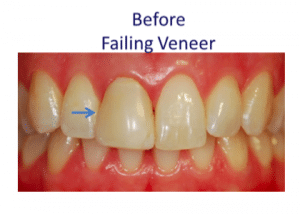
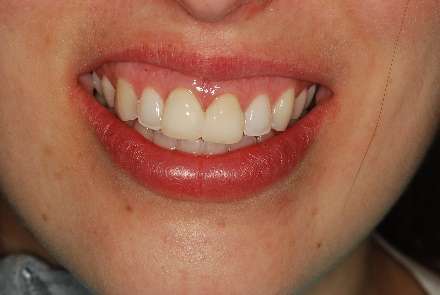
The patient above came to us with a failing veneer that could no longer mask the darkened tooth beneath it. The replacement crown was fabricated on a tooth-colored zirconia coping, with the crown anatomy custom built by our in-house technician rather than milled from a stock digital shape. The natural-colored substructure let the final crown blend with the adjacent central incisor, with translucency and internal color layered to match.
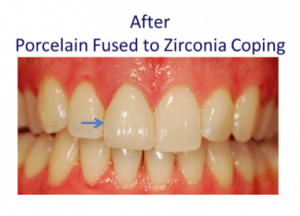
Rather than swapping one veneer for another, the case called for a restoration with full coverage and complete color control. That judgment, veneer or crown, made tooth by tooth, is what separates a repair from a lasting result. It is the same standard behind our single anterior crown work.
Failed Cosmetic Work Deserves Better the Second Time
Patients who arrive with a failed veneer share one worry almost universally: they do not want to pay for the same dentistry twice, and then a third time. That concern is well founded, and the answer is diagnosis before fabrication. Why did the original fail? Is the enamel sound? Has the tooth darkened? Where will the margin sit? Only after those questions are answered should anyone make you a new restoration.
At Elite Prosthetic Dentistry, replacements are designed by Dr. Gerald Marlin, a specialty-trained prosthodontist, and fabricated in our in-house laboratory, where restorations have been built to last for decades since 1985. If you have a failing veneer, or existing veneers you are quietly unhappy with, call 202-244-2101 or request a consultation at our Friendship Heights office in Washington, DC.
See How We Resolve These Problems
Our patient success stories show real cases and real results. Browse outcomes from a specialist prosthodontist with decades of experience and 3,900+ implants placed.
Key Takeaways
- ✓ Veneers fail for predictable reasons: darkening of the underlying tooth, bonding problems at the margin, chips and fractures, or changes in the gumline.
- ✓ A veneer bonds to enamel. When the tooth beneath darkens after root canal treatment or internal staining, a thin shell can no longer mask the color.
- ✓ In those cases, the correct replacement is usually a full-coverage crown, which controls color and translucency completely.
- ✓ Replacing a failed veneer on a front tooth, especially a central incisor, is among the most demanding aesthetic assignments in dentistry.
- ✓ A failed veneer replaced correctly should be an upgrade, not just a repair.
Frequently Asked Questions
Why do veneers fail?
The common causes are darkening of the underlying tooth after root canal treatment or internal staining, loss of bond at the margin, chipping or fracture from bite forces or trauma, decay at the edge of the veneer, and gum recession that exposes the margin. Some failures are cosmetic, others structural, and the remedy differs accordingly.
Can a failed veneer be replaced with another veneer?
Sometimes. If the enamel is sound, the underlying color is good, and the gumline is stable, a new veneer can be appropriate. When the tooth has darkened, the margin sits on root surface, or significant shape correction is needed, a full-coverage crown is the more reliable restoration.
Why is a crown better for a dark tooth?
A veneer is thin by design and translucent by necessity, so dark color bleeds through it or forces an opaque, lifeless result. A crown covers the entire tooth, blocking the discoloration and letting the ceramist rebuild natural color and translucency from a controlled base.
How hard is it to match one front tooth?
It is the most demanding match in aesthetic dentistry, particularly a central incisor at the midline of the smile, where symmetry makes every detail visible. It requires layered internal color and chairside characterization against the neighboring tooth, work that benefits enormously from an in-house laboratory.
What should I do if my veneer just chipped or came off?
Save any fragments, avoid biting on the tooth, and arrange prompt evaluation. A debonded veneer can sometimes be rebonded if intact. More importantly, the failure is information: something about the original bond, the bite, or the tooth deserves diagnosis before the replacement is made.
Related Patient Success Stories
Explore similar patient success stories demonstrating our expertise in advanced prosthetic dentistry.
 Before
  After
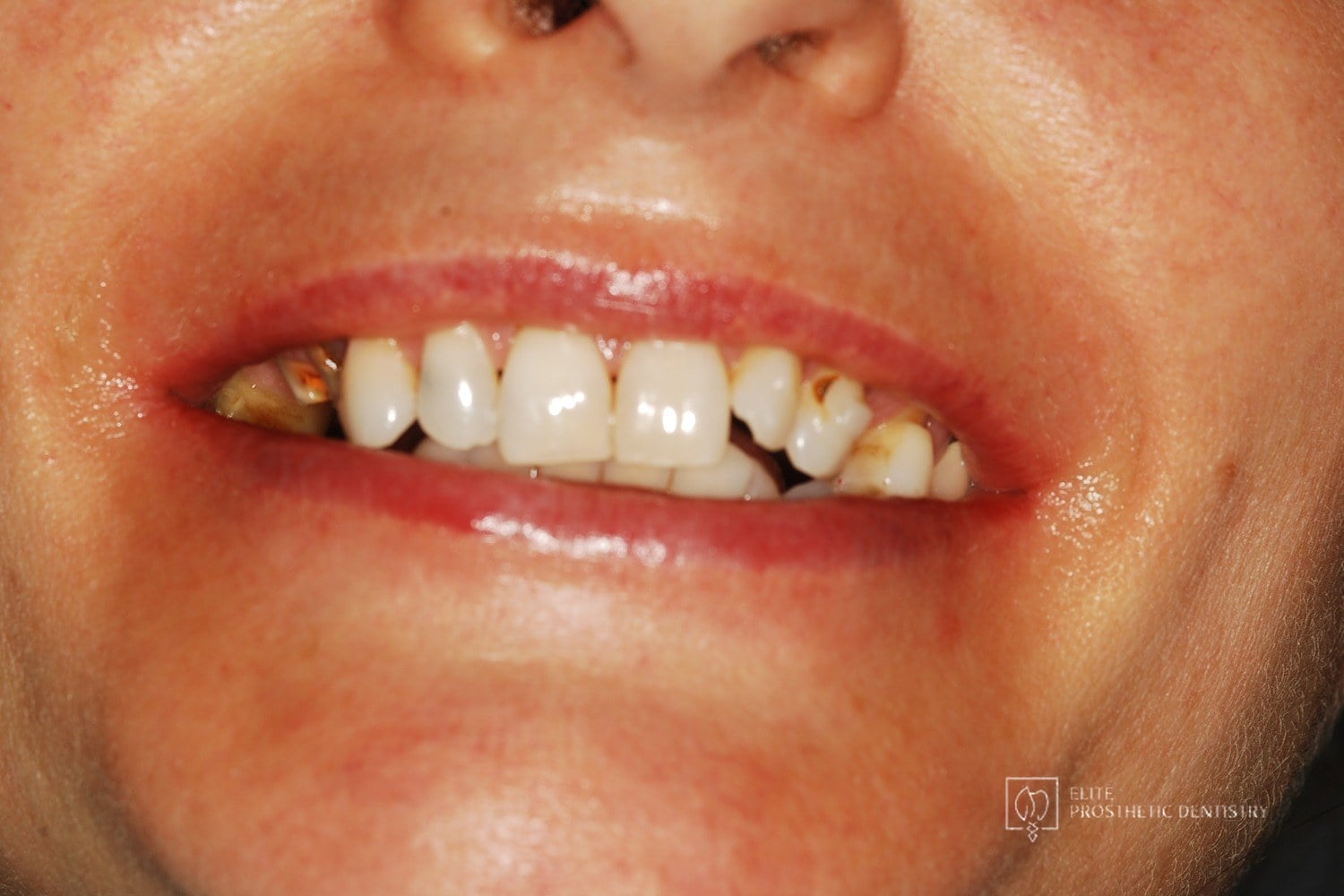
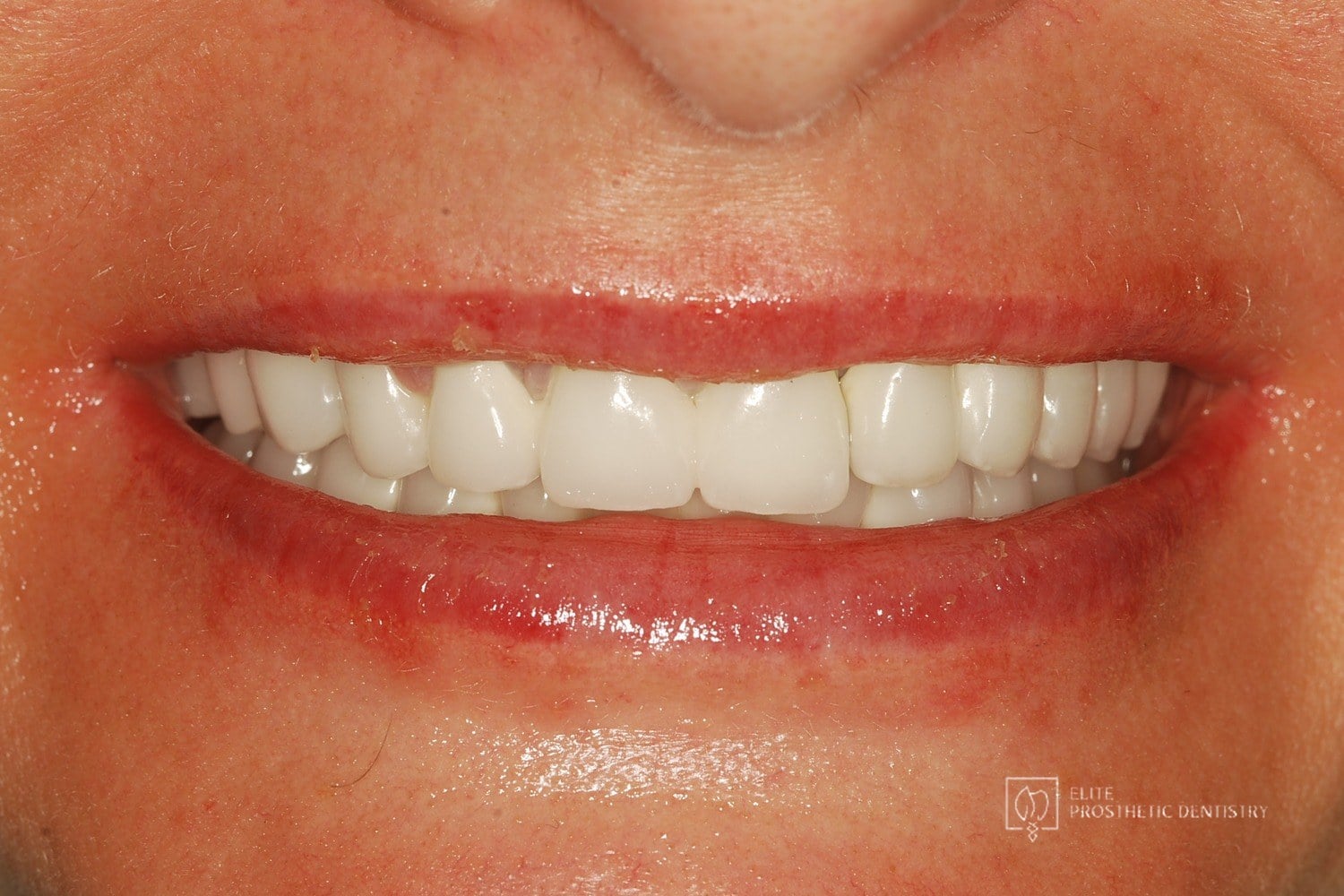
After How Aging, Failing Dentistry Was Replaced with a Coordinated Full-Mouth Implant and Crown Reconstruction
The patient presented with throbbing upper-molar pain, long-standing infections, multiple root canals and unfinished prior treatment, generalized sensitivity, and several hopeless teeth.
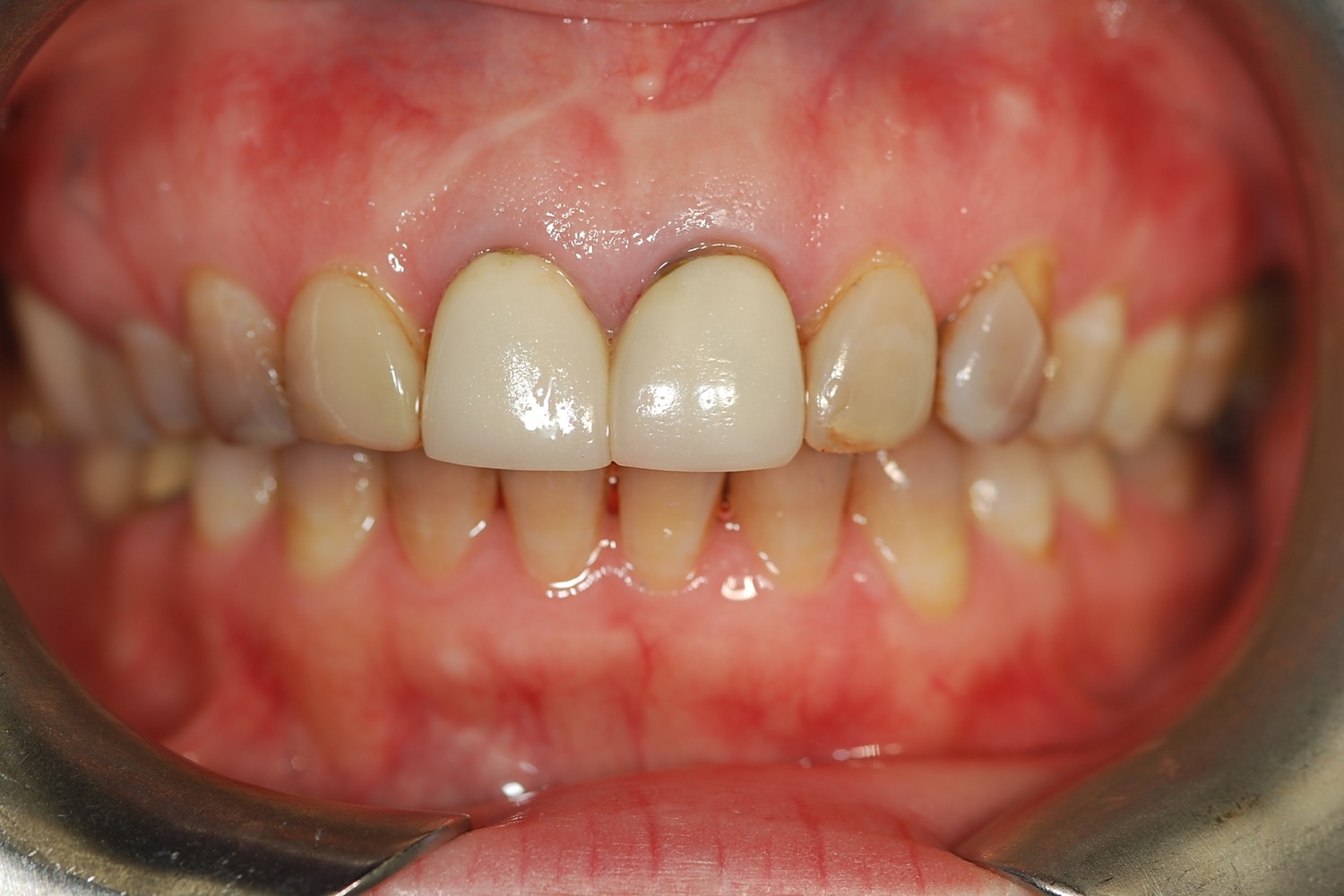 Before
 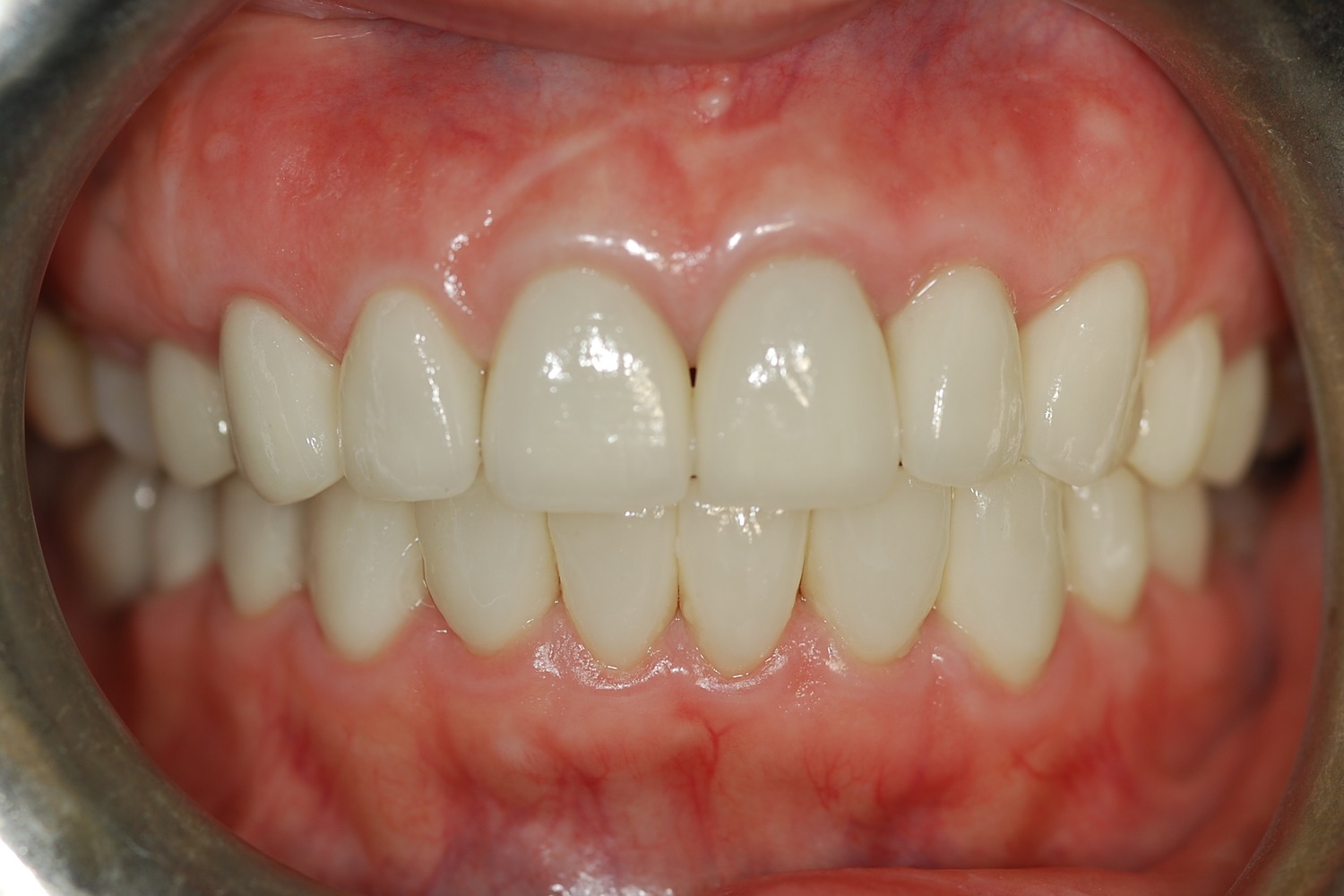 After
After How Aging, Opaque Restorations Were Replaced with Customized Ceramic Restorations Designed for Long-Term Natural Esthetics
The existing restorations appeared opaque, worn, and unnatural over time, affecting both confidence and overall smile harmony.
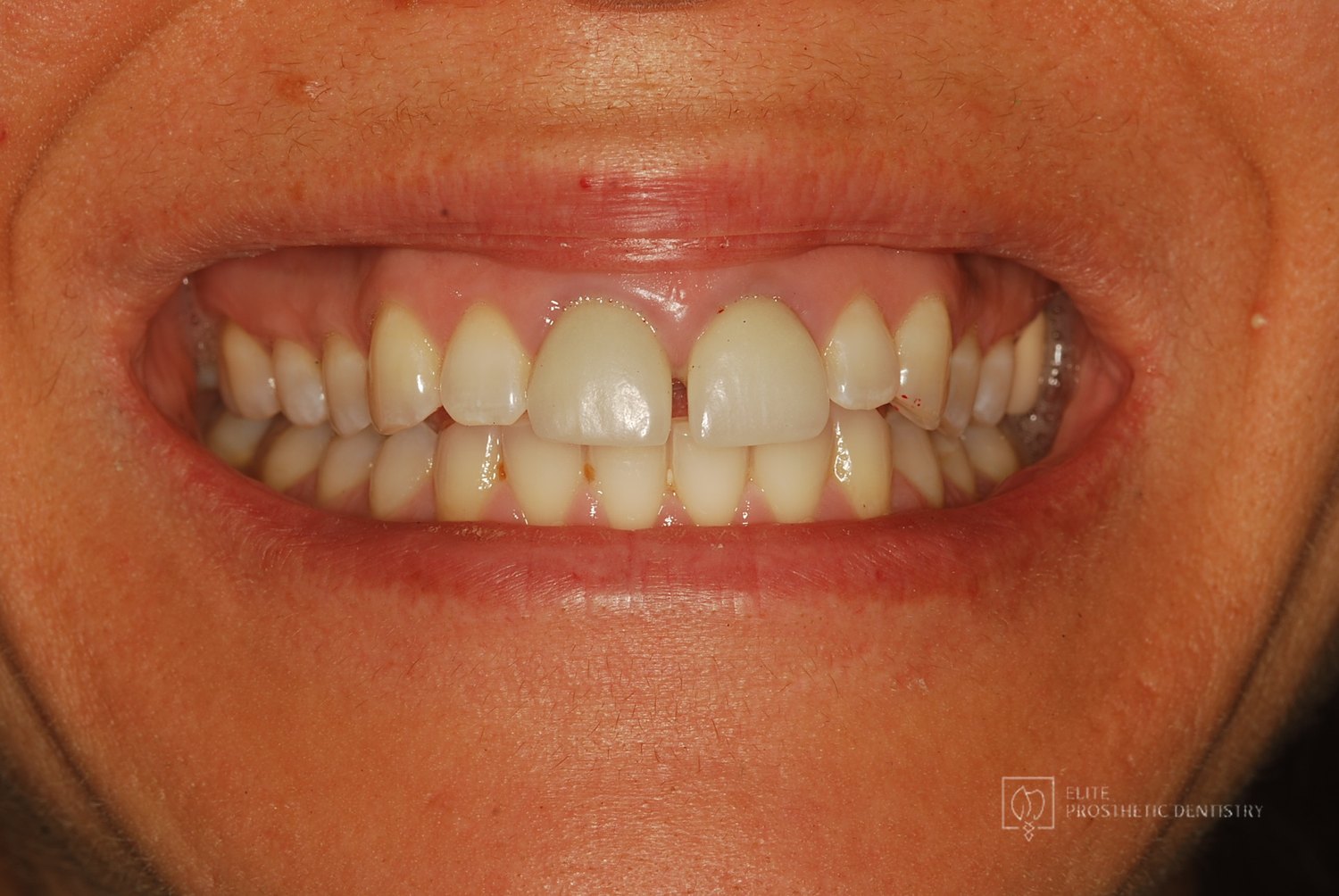 Before
 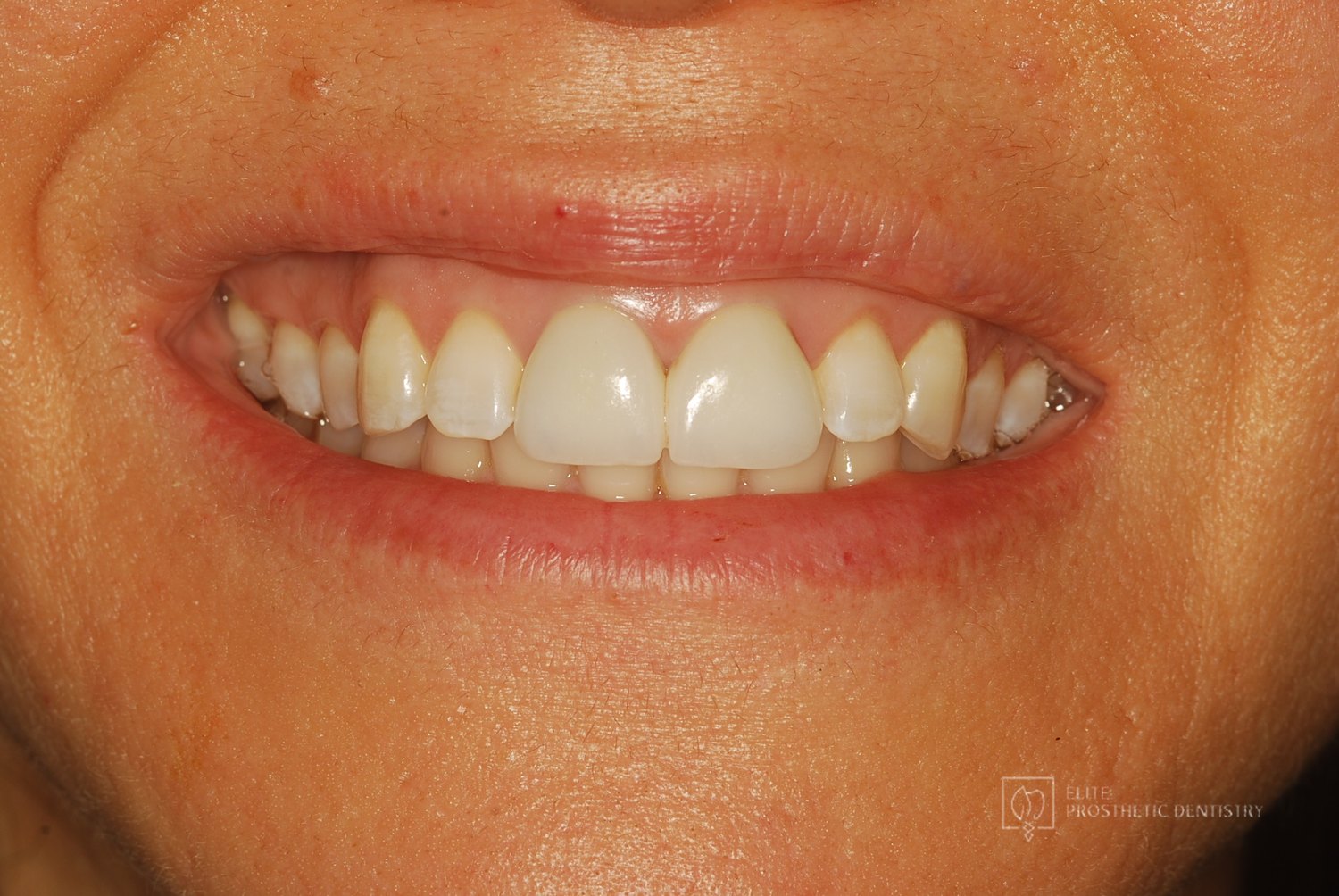 After
After Two Front Teeth Saved From Extraction: A Second Opinion, Custom Gold Posts, and Crowns Made to Last
Two upper central incisors with failed root canal treatment and recurrent decay had been recommended for extraction and implant replacement. A CBCT evaluation showed that removing the roots from their thin facial bone housing could create a visible esthetic defect in the gum and bone contour, made worse by the patient's high lip line.
Related Articles
Deepen your knowledge with additional insights on this topic.
 Dental Crowns
 Why Are Some Temporary Crowns More Natural Than Others?
Temporary crowns do not have to look temporary. A DC prosthodontist explains how lab-made provisionals protect your smile and preview your final crowns.
 Dental Crowns
 What Makes a Natural-Looking Crown?
Emergence profile, translucency, internal color, and healthy gum response: a DC prosthodontist explains the anatomy of a crown no one can detect.
 Dental Crowns
 How Is an Immediate Smile Makeover Performed?
An immediate smile makeover transforms your smile in one visit using hand-crafted temporary crowns as a living preview. A DC prosthodontist explains how.