
When Are Fixed Implant Bridges the Best Treatment Option?
A fixed implant bridge combines the stability of dental implants with the aesthetics of a bridge, replacing several missing teeth in a row with a restoration that never comes out.
The engineering difference from a traditional bridge matters more than most patients realize. A conventional bridge borrows: it grinds down the natural teeth on either side of the gap, crowns them, and hangs replacement teeth between. A fixed implant bridge borrows nothing. It stands on implants, and your remaining natural teeth stay exactly as they are.
So when is the implant-supported version the better instrument? Four situations come up again and again.
When There Are No Teeth Left to Anchor a Bridge
A traditional bridge requires solid teeth on both sides of the gap. When those anchors are missing, the conventional option means crowning even more teeth to reach stable ground, spending healthy tooth structure to solve a missing-tooth problem.
Two implants placed at either end of the gap solve it directly. They support the bridge, and because titanium implants function like tooth roots, they stimulate and preserve the jawbone in an area that would otherwise shrink from disuse. That bone preservation protects both the fit of the restoration and the facial support behind it for decades.
When Several Teeth in a Row Are Missing
The longer the span, the worse the mechanics for a tooth-supported bridge: more load on the anchor teeth and more flexure across the span. An implant-supported bridge distributes those forces onto implants engineered for the job [1]. Patients with larger gaps gain security, chewing power, and a restoration that does not overload its foundations.
When the Adjacent Teeth Should Not Carry the Load
Sometimes the neighboring teeth are too compromised to anchor anything: heavily filled, cracked, or already crowned. Asking weak teeth to carry a bridge shortens the life of both.
And sometimes the opposite is true: the adjacent teeth are perfectly healthy, and cutting them down for bridge anchors would be the destruction of sound enamel [2]. Either way, the logic converges on implants. Compromised neighbors are spared load they cannot bear, and healthy neighbors are spared preparation they never needed. This philosophy, solving the problem without creating the next one, is central to how a prosthodontist plans.
When an Entire Arch Is Missing
For patients missing all upper or lower teeth, several implants can support a fixed full-arch restoration, an approach often described as All-on-X treatment. The patient keeps the benefits of implants, a secure fixed smile and preserved bone, without an implant for every missing tooth [3]. Implant number and configuration are engineering decisions based on bone volume, bite forces, and prosthetic material, made from three-dimensional planning rather than a package formula. You can compare the main configurations in our guide to All-on-4 versus All-on-6.
The Longevity Question
Traditional bridges last about a decade with proper care [4]. An implant-supported bridge, precisely placed and properly restored, has the potential to last much longer, which changes the lifetime arithmetic for anyone in their forties, fifties, or sixties weighing options.
At Elite Prosthetic Dentistry, implant bridges are planned with Precision Implant Placement using three-dimensional imaging, and the bridge itself is custom fabricated in our in-house laboratory, the same laboratory whose crowns have lasted 35 years and longer with proper care. Dr. Marlin has placed more than 3,900 dental implants, and the implant, abutments, and bridge are engineered together as one system rather than assembled from parts made in separate offices. See the approach in a completed case: implant-supported reconstruction after a failing bridge.
Fixed Teeth, Decided Deliberately
Some patients come to us missing teeth after an extraction they postponed. Others arrive ahead of the problem: a failing bridge, loosening anchor teeth, and a preference for solving it once, correctly, rather than in stages of failure. Treatment ranges from a single implant bridge to full-arch reconstruction, depending on each patient’s needs, and the first step is the same evaluation either way.
To find out whether a fixed implant bridge is the right instrument for your smile, call 202-244-2101 or request a consultation with Dr. Gerald Marlin at our Friendship Heights office in Washington, DC.
Sources
See How We Resolve These Problems
Our patient success stories show real cases and real results. Browse outcomes from a specialist prosthodontist with decades of experience and 3,900+ implants placed.
Key Takeaways
- ✓ A fixed implant bridge replaces multiple missing teeth on dental implants, leaving your remaining natural teeth completely untouched.
- ✓ It is usually the best option when adjacent teeth are missing, unhealthy, or, importantly, perfectly healthy and better left undrilled.
- ✓ Implants preserve jawbone in the gap, something no traditional bridge or partial denture can do.
- ✓ Traditional bridges average about a decade of service. Implant-supported bridges, precisely placed and restored, can last far longer.
- ✓ For patients missing an entire arch, several implants can support a full-arch fixed restoration, planned case by case.
Frequently Asked Questions
What is a fixed implant bridge?
It is a row of replacement teeth anchored on two or more dental implants rather than on your natural teeth. Unlike a traditional bridge, no neighboring teeth are ground down for crowns, and unlike a partial denture, it does not come out. It functions and feels like a fixed row of your own teeth.
When is an implant bridge better than a traditional bridge?
Four common situations: when there are no adjacent teeth to anchor a traditional bridge, when several teeth in a row are missing, when the neighboring teeth are too weak or heavily restored to serve as anchors, and when the neighboring teeth are healthy and deserve to stay untouched. In each, implants carry the load instead of your teeth.
How long does a fixed implant bridge last?
Traditional tooth-supported bridges last about a decade on average. Implant-supported bridges, when implants are precisely placed and the restoration is custom fabricated and properly maintained, can last far longer. Longevity depends on planning, fabrication quality, and your home care and checkups.
Does an implant bridge stop bone loss?
It addresses it in a way nothing else can. When teeth are lost, the jawbone in that area shrinks from disuse. Implants function like tooth roots, stimulating and preserving the bone around them, which also protects the facial support and the appearance of the restoration over time.
What if I am missing all my upper or lower teeth?
Several implants can support a fixed full-arch restoration, an approach often described as All-on-X treatment. The right implant number and design depend on your bone, bite forces, and the prosthetic material, which is why full-arch cases begin with three-dimensional planning.
Related Patient Success Stories
Explore similar patient success stories demonstrating our expertise in advanced prosthetic dentistry.
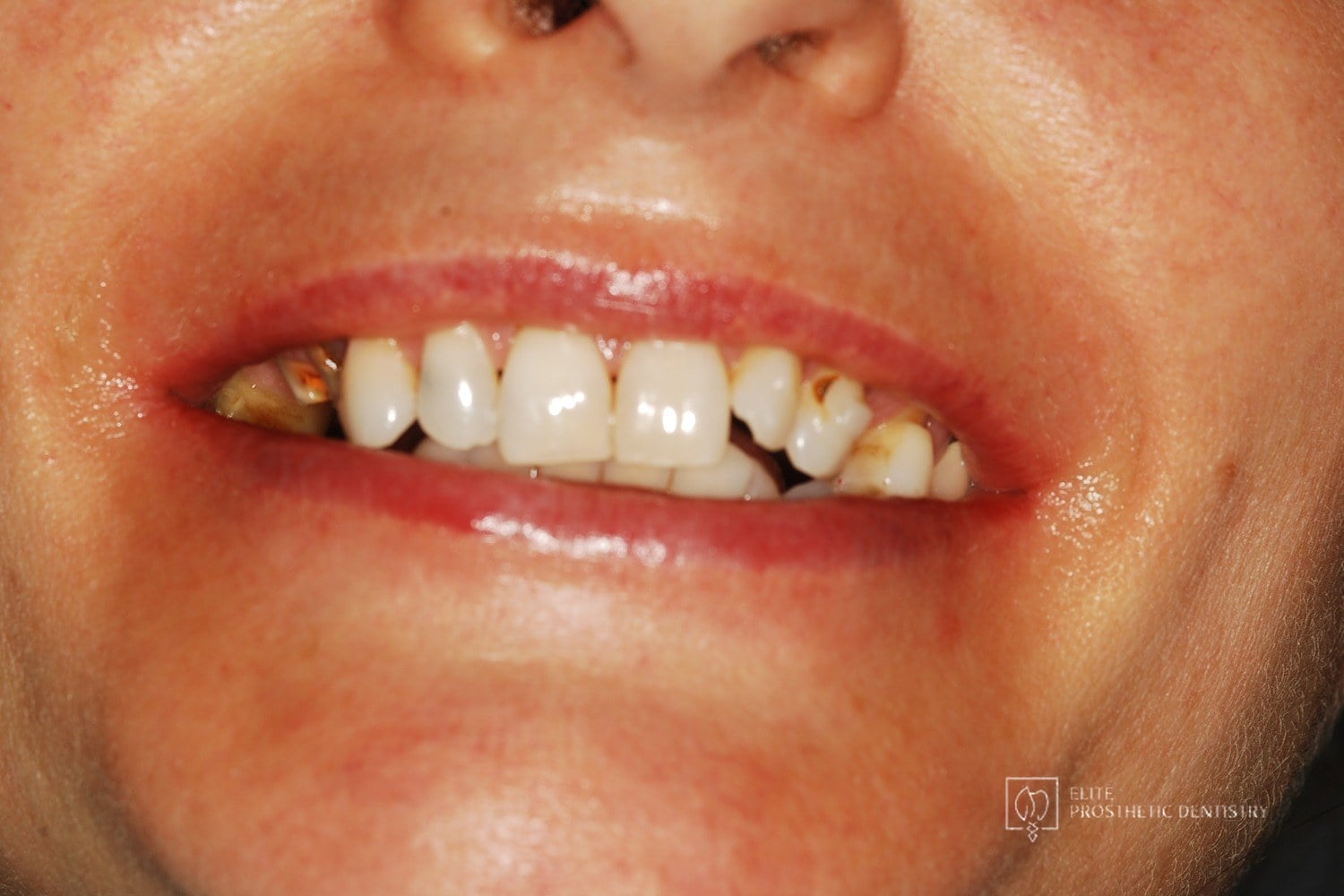 Before
 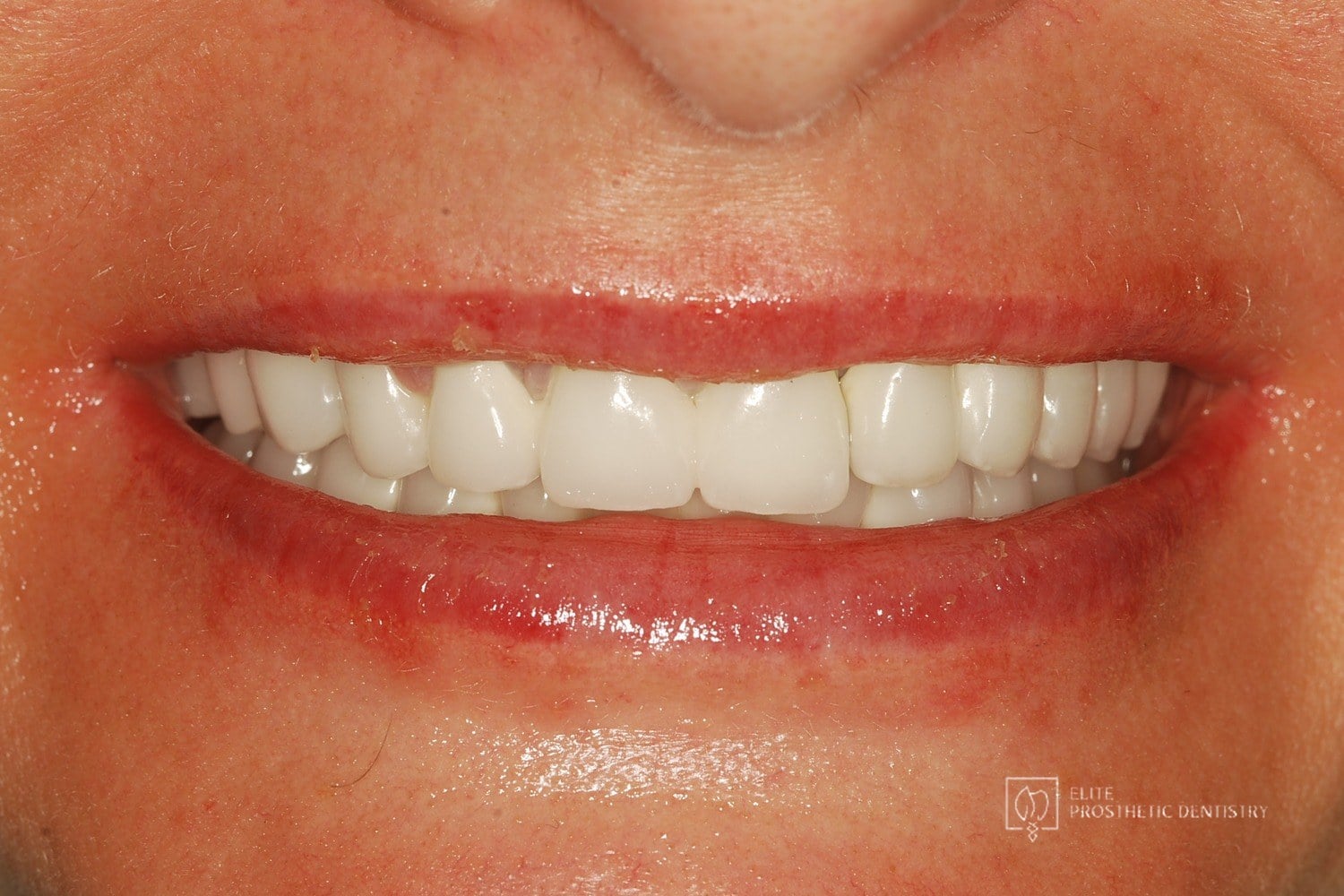 After
After How Aging, Failing Dentistry Was Replaced with a Coordinated Full-Mouth Implant and Crown Reconstruction
The patient presented with throbbing upper-molar pain, long-standing infections, multiple root canals and unfinished prior treatment, generalized sensitivity, and several hopeless teeth.
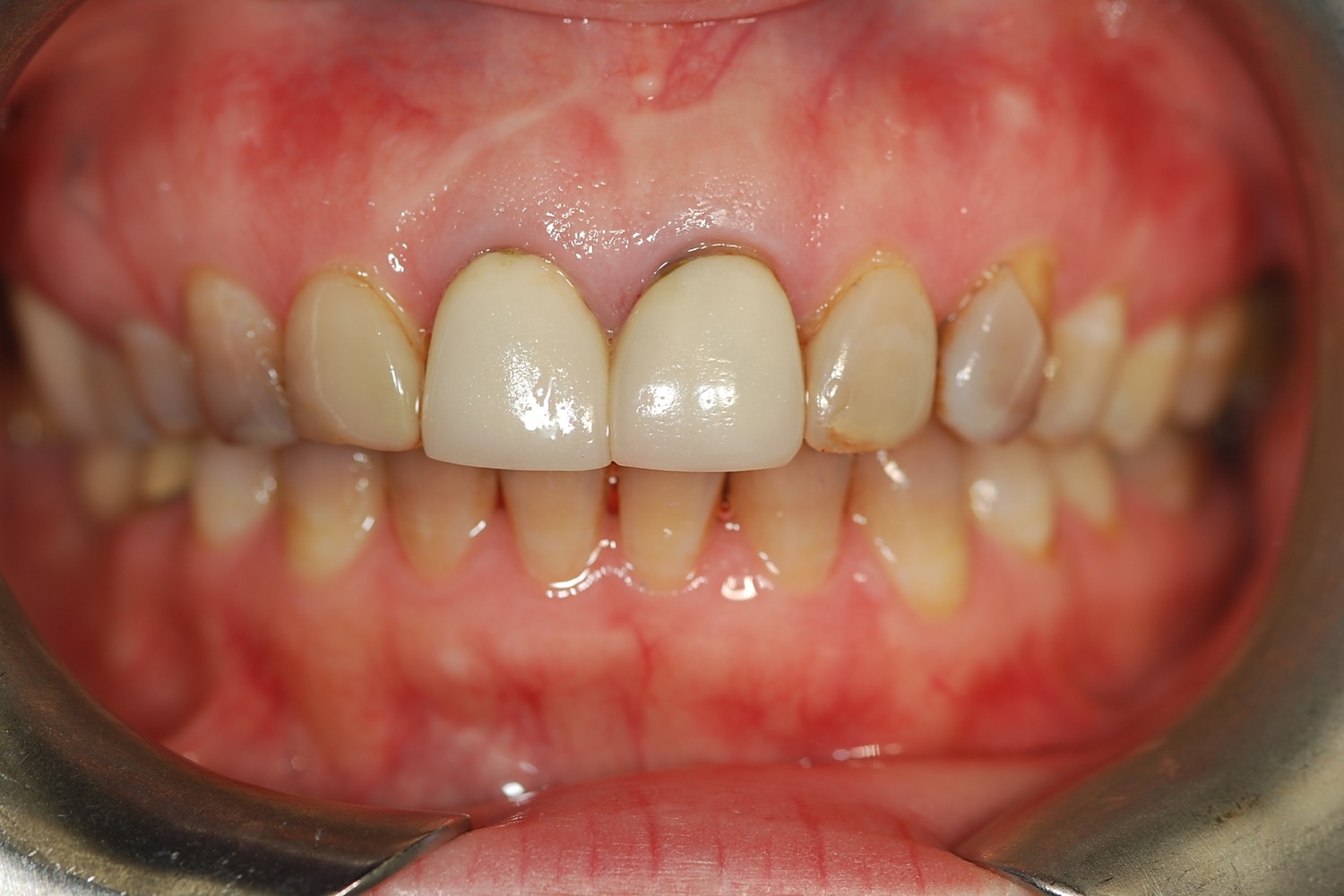 Before
 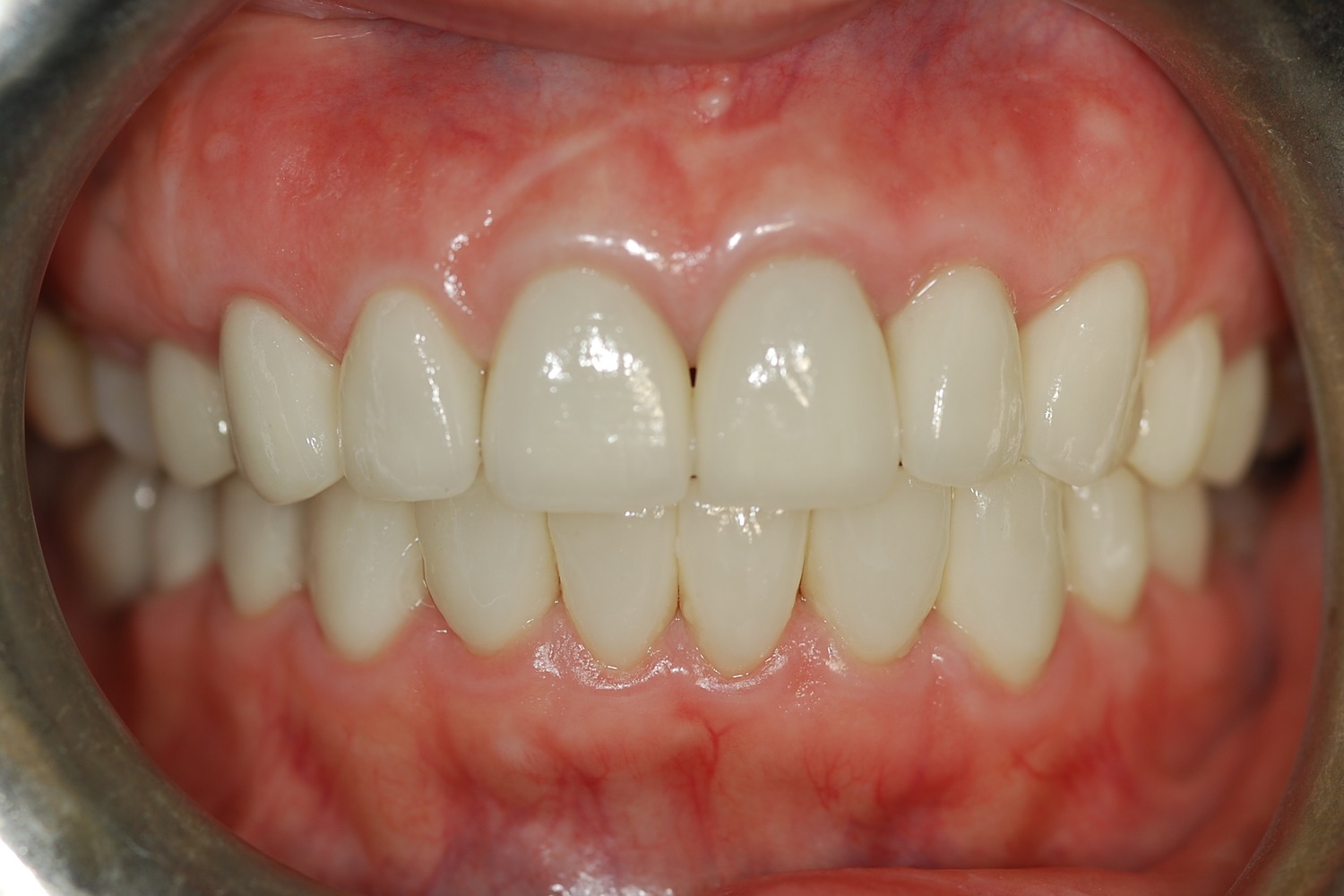 After
After How Aging, Opaque Restorations Were Replaced with Customized Ceramic Restorations Designed for Long-Term Natural Esthetics
The existing restorations appeared opaque, worn, and unnatural over time, affecting both confidence and overall smile harmony.
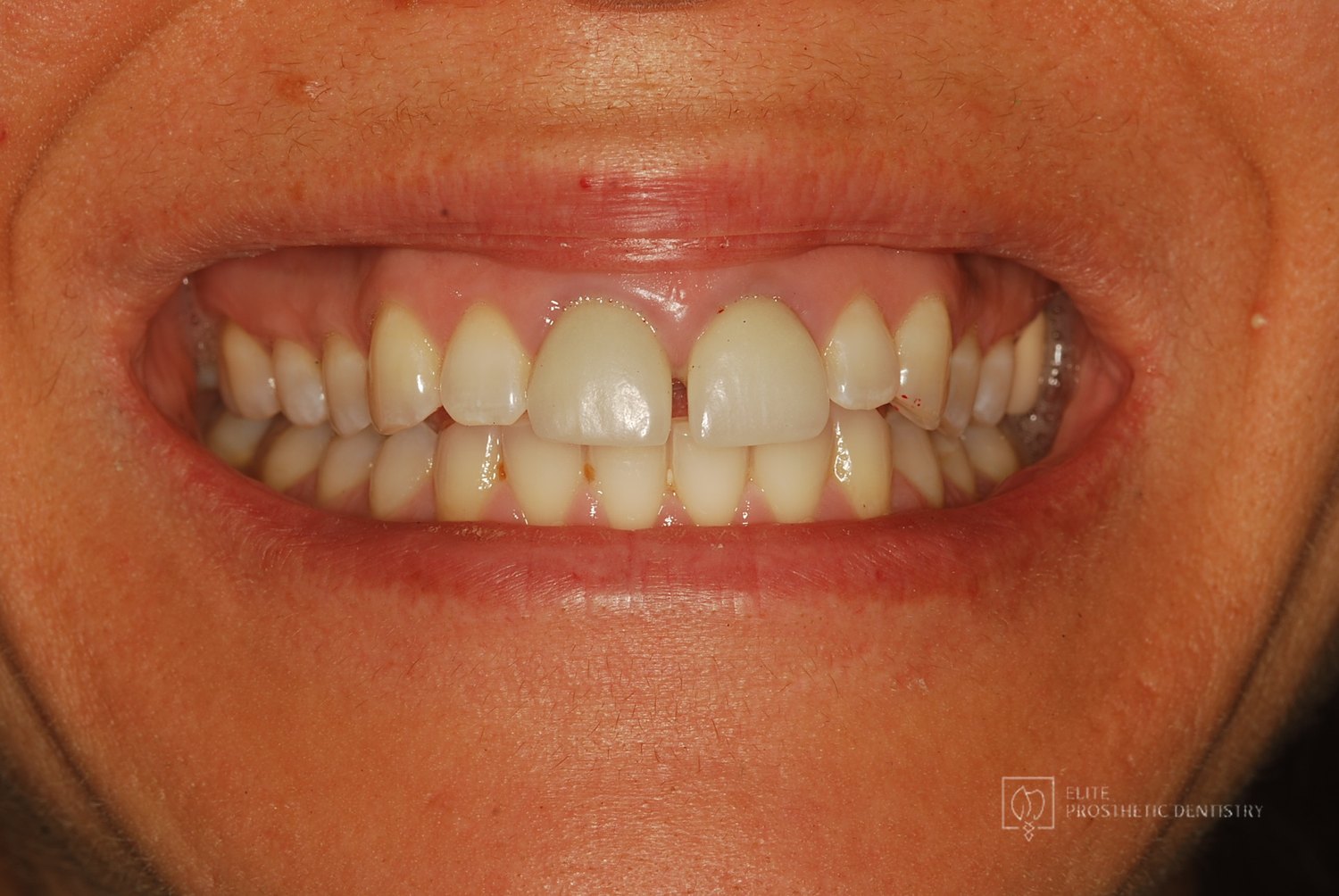 Before
 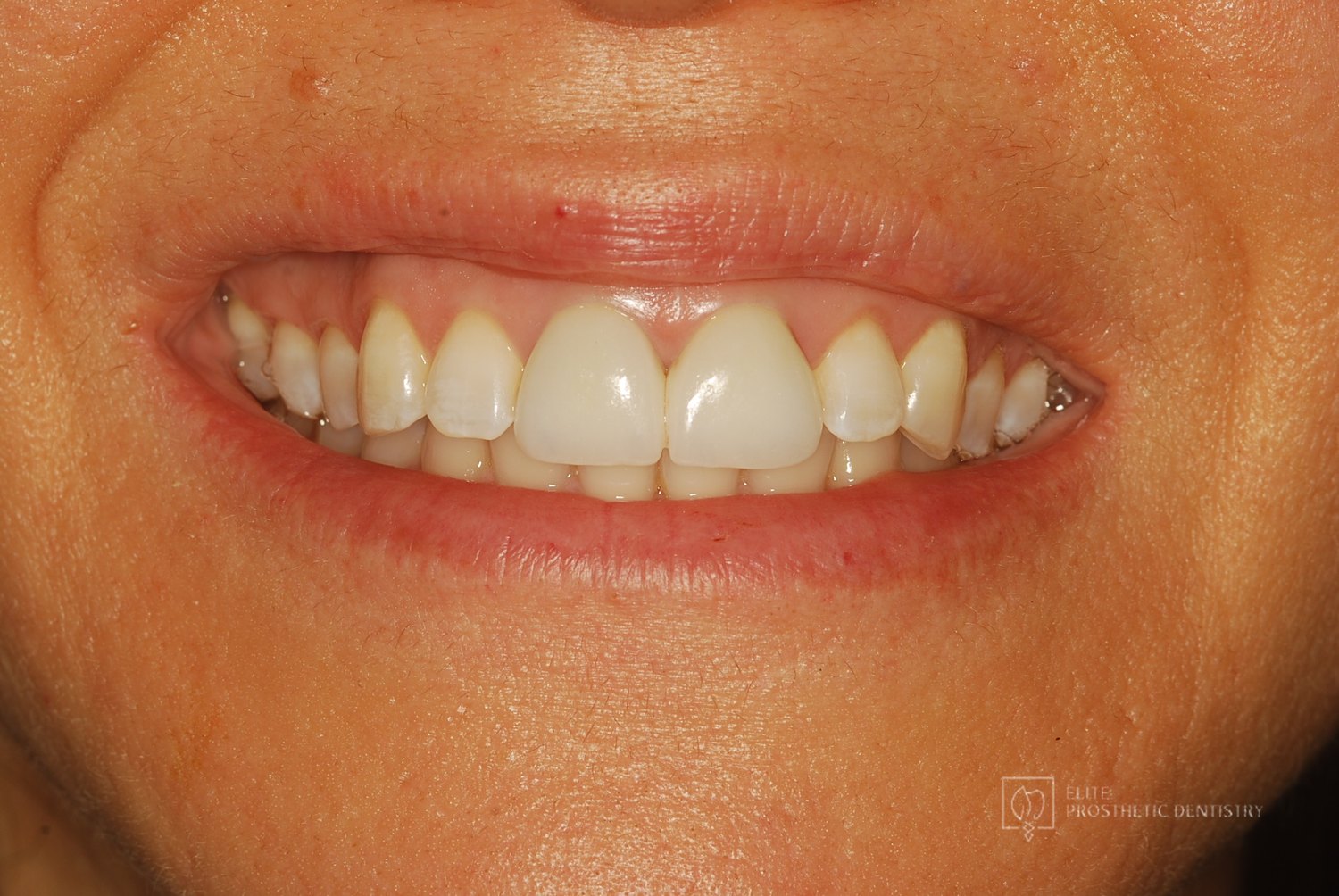 After
After Two Front Teeth Saved From Extraction: A Second Opinion, Custom Gold Posts, and Crowns Made to Last
Two upper central incisors with failed root canal treatment and recurrent decay had been recommended for extraction and implant replacement. A CBCT evaluation showed that removing the roots from their thin facial bone housing could create a visible esthetic defect in the gum and bone contour, made worse by the patient's high lip line.
Related Articles
Deepen your knowledge with additional insights on this topic.
 Dental Crowns
 Why Are Some Temporary Crowns More Natural Than Others?
Temporary crowns do not have to look temporary. A DC prosthodontist explains how lab-made provisionals protect your smile and preview your final crowns.
 Dental Crowns
 What Makes a Natural-Looking Crown?
Emergence profile, translucency, internal color, and healthy gum response: a DC prosthodontist explains the anatomy of a crown no one can detect.
 Dental Crowns
 How Is an Immediate Smile Makeover Performed?
An immediate smile makeover transforms your smile in one visit using hand-crafted temporary crowns as a living preview. A DC prosthodontist explains how.