
How Long Do Dental Restorations Usually Last?
Dental restorations, implants, crowns, and veneers, restore missing, damaged, and severely discolored teeth. When you invest in them, you deserve a straight answer to a fair question: how long will this last?
The honest answer has two parts. Published research gives the averages. Fabrication and placement quality decide how long your restorations actually last. Here are both numbers, category by category.
Dental Implants
Research shows that after 15 years, about 86% of dental implants remain in place [1]. That is a strong baseline.
Implant longevity is decided at the start: three-dimensional planning, precise placement in adequate bone, and a properly engineered restoration on top. At Elite Prosthetic Dentistry, our documented in-practice implant success rate is above 97% for implants placed more than 20 years ago. Dr. Marlin has placed more than 3,900 dental implants across a career spanning more than 40 years, and pairs each with a custom restoration from our in-house laboratory so the implant and its crown work as one engineered system.
Dental Crowns
Mainstream patient guidance puts typical crown life at 5 to 15 years with proper care (Cleveland Clinic), and insurers will pay to replace one after just 5. The failure mode is rarely the ceramic itself. It is the fit: margins that do not seal invite decay beneath the crown, and bites that were never balanced overload the restoration and the tooth.
Our crowns are custom fabricated on-site by experienced technicians who work directly with you and with Dr. Marlin, then verified for marginal fit and X-rayed at seating. The result of that discipline: crowns from our in-house laboratory have lasted 35 years and longer with proper care. The full process is documented in how we create a dental crown that lasts 35 years, and typical lifespans in how long a dental crown should last.
Porcelain Veneers
Veneers, correctly selected and bonded, are impressively durable: research shows a survival rate of 91% after 20 years [2]. The qualifiers matter. Veneers depend on sound enamel bonding and sensible case selection, and they fail early when asked to mask very dark teeth or bond to exposed root surface, situations where a crown is the better instrument. Like everything we place, our veneers are fabricated in-house and matched to your smile individually.
How to Make Your Restorations Last
Three decisions, made once, control most of the outcome.
Choose a specialist. A prosthodontist completes years of additional training beyond dental school specifically in restoring and replacing teeth, from single crowns through full-mouth reconstruction. Position, fit, and bite engineering are exactly the variables that separate 8-year dentistry from 30-year dentistry.
Choose custom, in-house fabrication. When the technician who builds your restoration can see you, verify fit with the dentist, and remake anything imperfect the same week, quality control happens in the room, with the clinician and technician together. That is the standard our laboratory has kept since 1985.
Maintain the investment. Brush and floss daily, wear a nightguard if you grind, and keep regular checkups and professional cleanings so decay, gum disease, and bite changes are caught early. Restorations do not get cavities, but the teeth and gums holding them do.
Thinking About the Whole Mouth, Not One Tooth
Restorations age together. Patients often come to us with a mix: a crown from 2005, a bridge from 2012, a veneer that never quite matched. Treatment ranges from replacing a single older crown to coordinated reconstruction, depending on what evaluation shows and what you want. Many patients simply want dentistry that looks natural, functions properly, and lasts, and choose to replace aging work thoughtfully, on their own schedule, rather than reactively. A real example: aging crowns and a failing bridge rebuilt with coordinated reconstruction.
For restorations planned and built for longevity, work with our team at Elite Prosthetic Dentistry. Call 202-244-2101 or request a consultation at our Friendship Heights office in Washington, DC.
Sources
See How We Resolve These Problems
Our patient success stories show real cases and real results. Browse outcomes from a specialist prosthodontist with decades of experience and 3,900+ implants placed.
Key Takeaways
- ✓ Published research gives honest baselines for implants and veneers, and mainstream patient guidance puts typical crown life at 5 to 15 years with proper care.
- ✓ Averages describe average dentistry. Precision placement, custom fabrication, and disciplined maintenance are what extend the life of every category.
- ✓ Our documented in-practice implant success rate is above 97% for implants placed more than 20 years ago, and crowns from our in-house laboratory have lasted 35 years and longer with proper care.
- ✓ The three levers of longevity you control: choose a specialist, choose custom in-house fabrication, and maintain the result with real home care and checkups.
- ✓ Restorations age together. An honest longevity assessment looks at the whole mouth, not one tooth at a time.
Frequently Asked Questions
How long do dental implants last?
Peer-reviewed research reports about 86% of implants still functioning at 15 years, and well-placed implants can last decades. Our documented in-practice implant success rate is above 97% for implants placed more than 20 years ago. Placement precision, restoration quality, and maintenance drive long-term results.
How long do dental crowns last?
Mainstream patient guidance puts typical crown life at 5 to 15 years with proper care, and fabrication quality and fit largely decide how long a given crown lasts. Insurance plans assume replacement after 5 years. Crowns from our in-house laboratory, with verified margins and adjusted bites, have lasted 35 years and longer with proper care.
How long do porcelain veneers last?
Research shows a veneer survival rate of approximately 91% at 20 years. Longevity depends on sound bonding to enamel, correct case selection, bite protection, and the quality of fabrication.
What shortens the life of dental restorations?
The usual suspects are imprecise fit that lets decay start at the margins, unbalanced bite forces, untreated grinding or clenching, gum disease, and skipped maintenance visits. Most of these are controllable, which is why identical restorations can last 8 years in one mouth and 30 in another.
Should aging restorations be replaced before they fail?
Often, yes. Restorations placed 15 or 20 years ago can be monitored while sound, but staining margins, recurring sensitivity, or visible wear are signals worth evaluating. Replacing aging dentistry on your schedule is calmer, cheaper, and more predictable than replacing it as an emergency.
Related Patient Success Stories
Explore similar patient success stories demonstrating our expertise in advanced prosthetic dentistry.
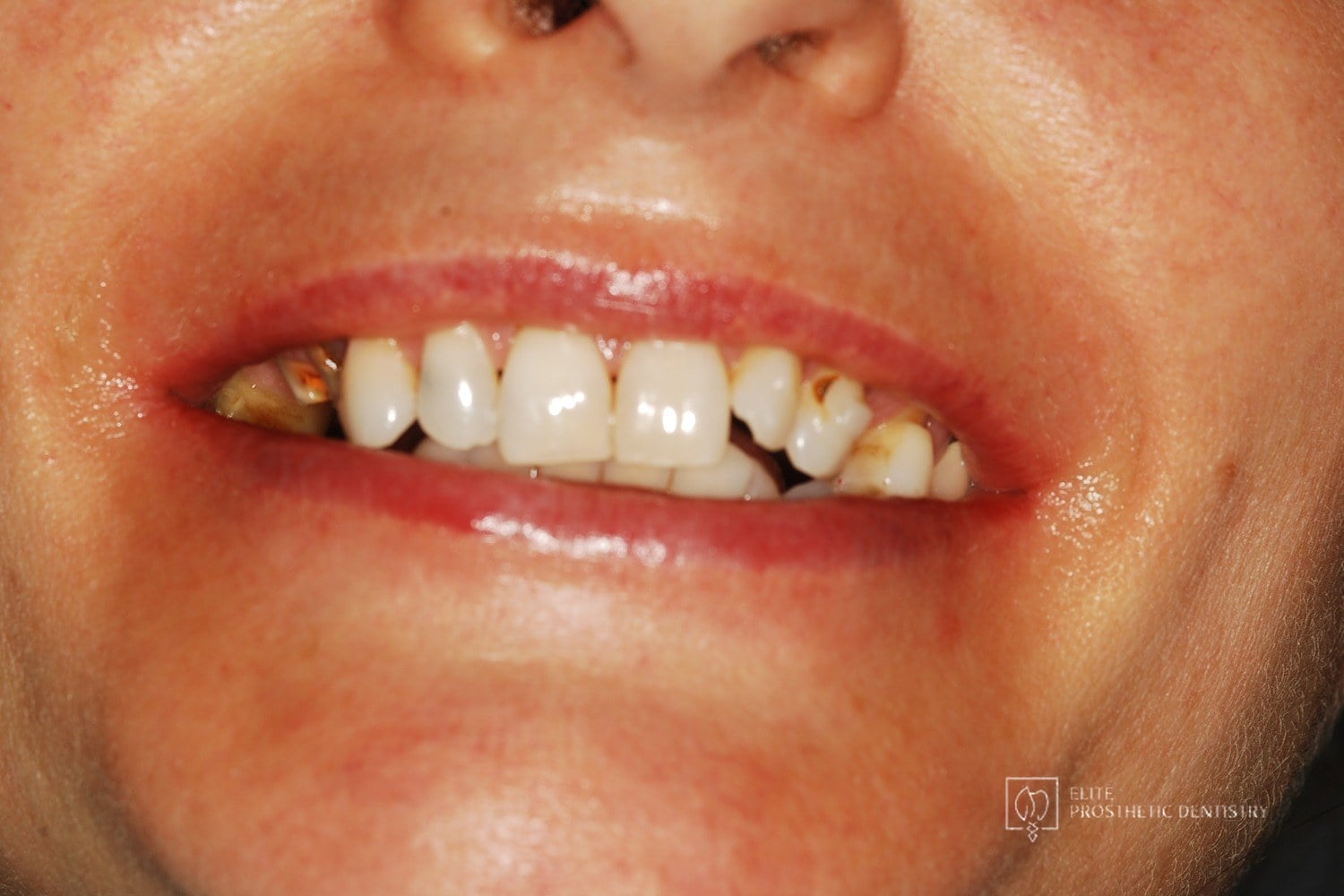 Before
 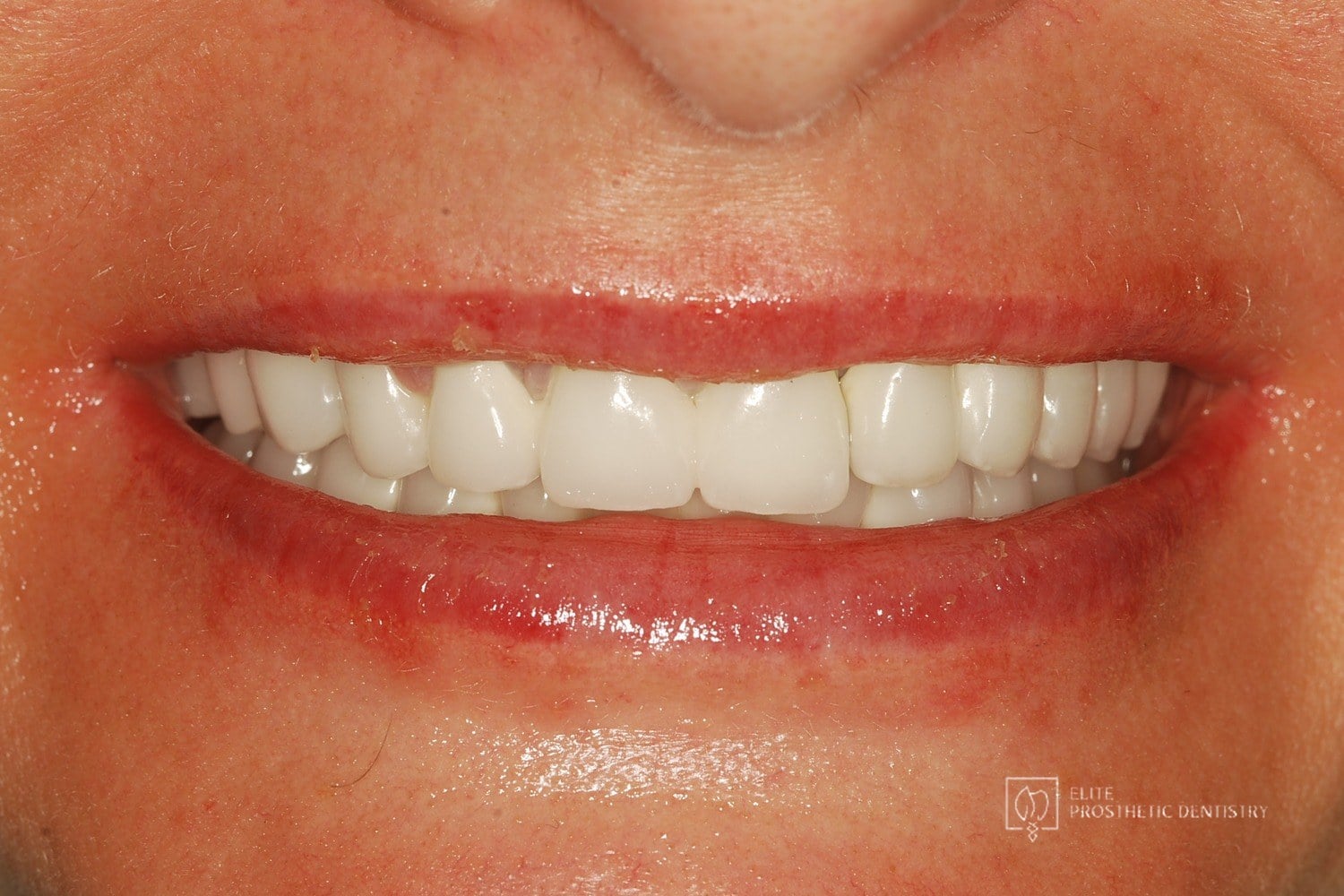 After
After How Aging, Failing Dentistry Was Replaced with a Coordinated Full-Mouth Implant and Crown Reconstruction
The patient presented with throbbing upper-molar pain, long-standing infections, multiple root canals and unfinished prior treatment, generalized sensitivity, and several hopeless teeth.
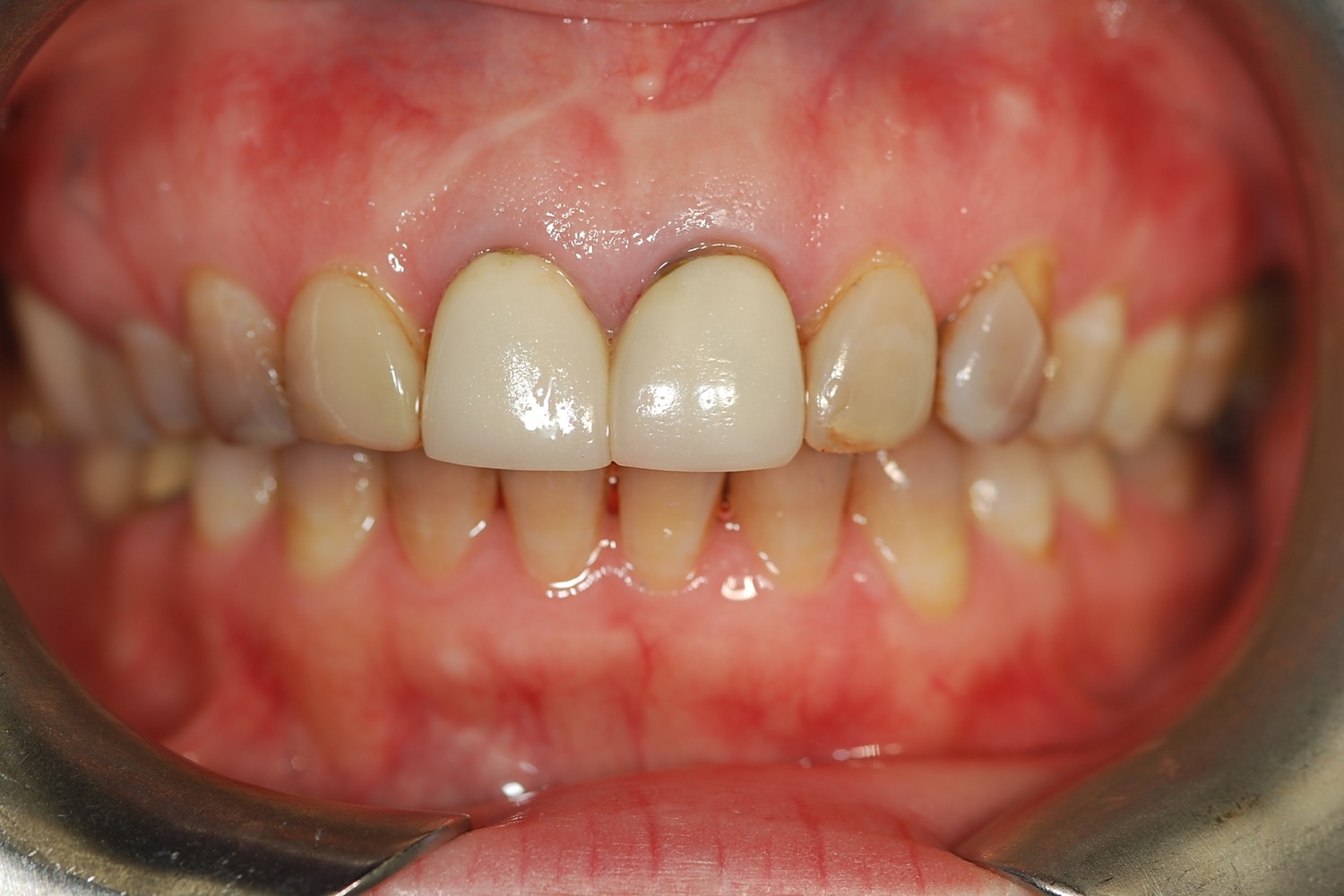 Before
 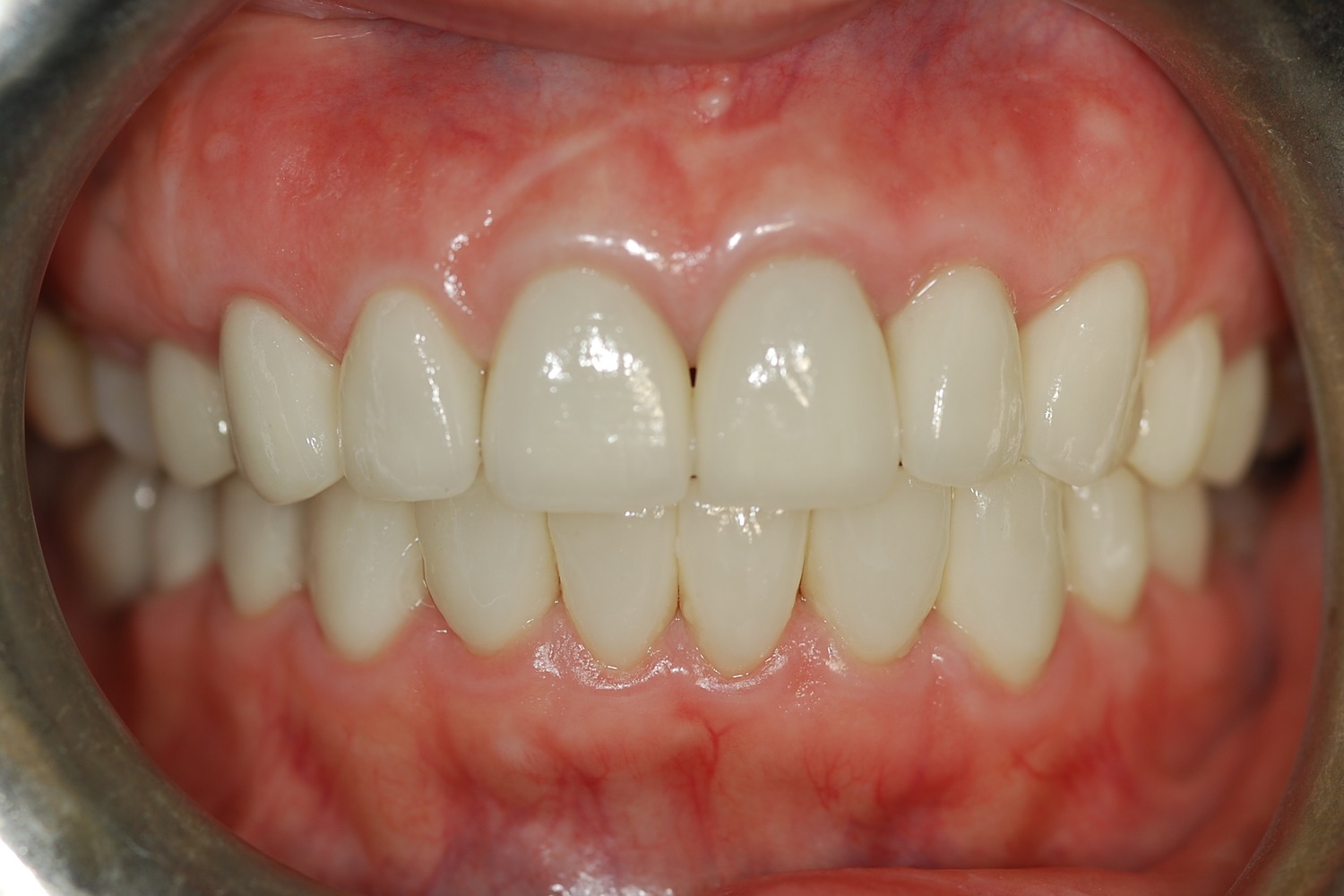 After
After How Aging, Opaque Restorations Were Replaced with Customized Ceramic Restorations Designed for Long-Term Natural Esthetics
The existing restorations appeared opaque, worn, and unnatural over time, affecting both confidence and overall smile harmony.
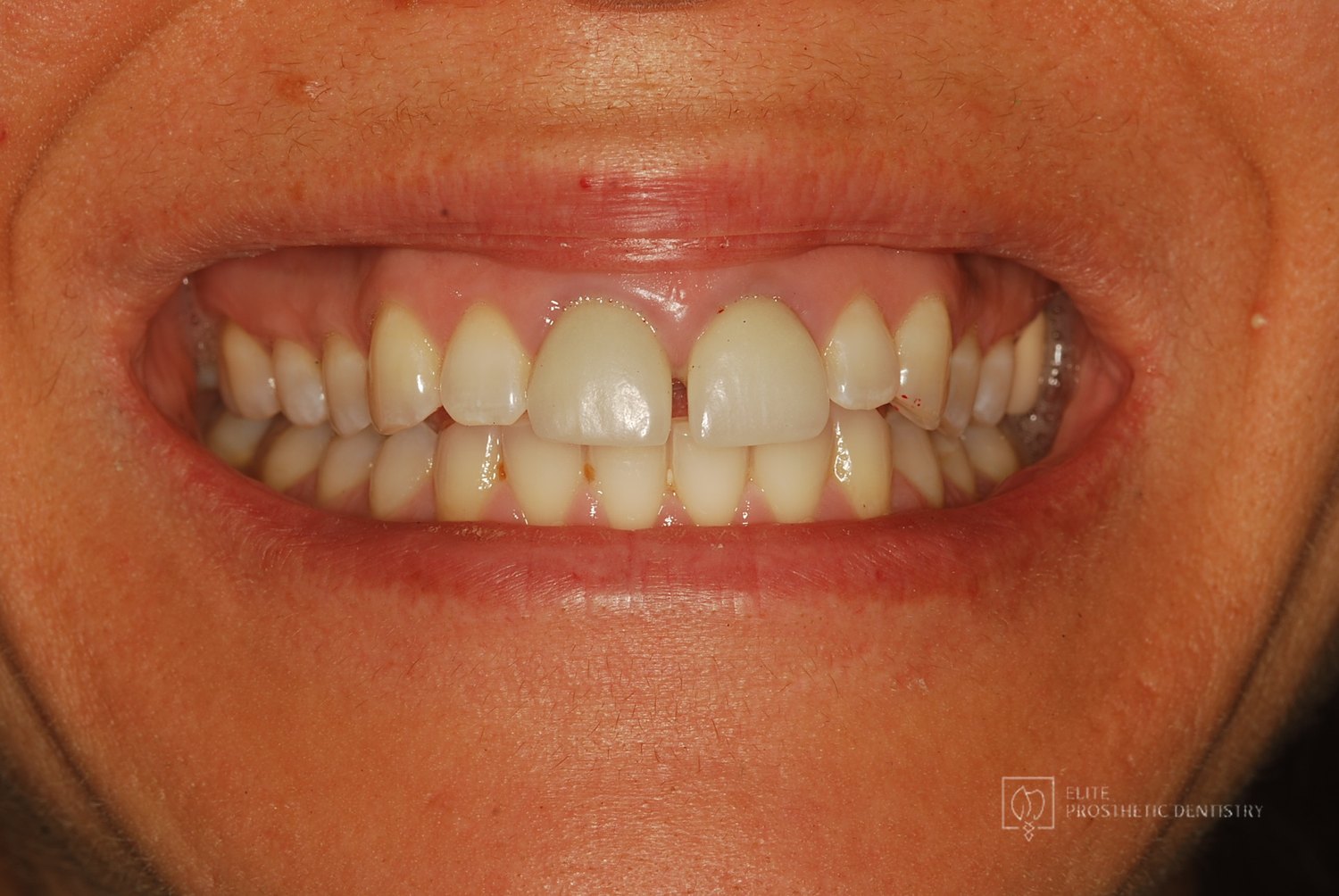 Before
 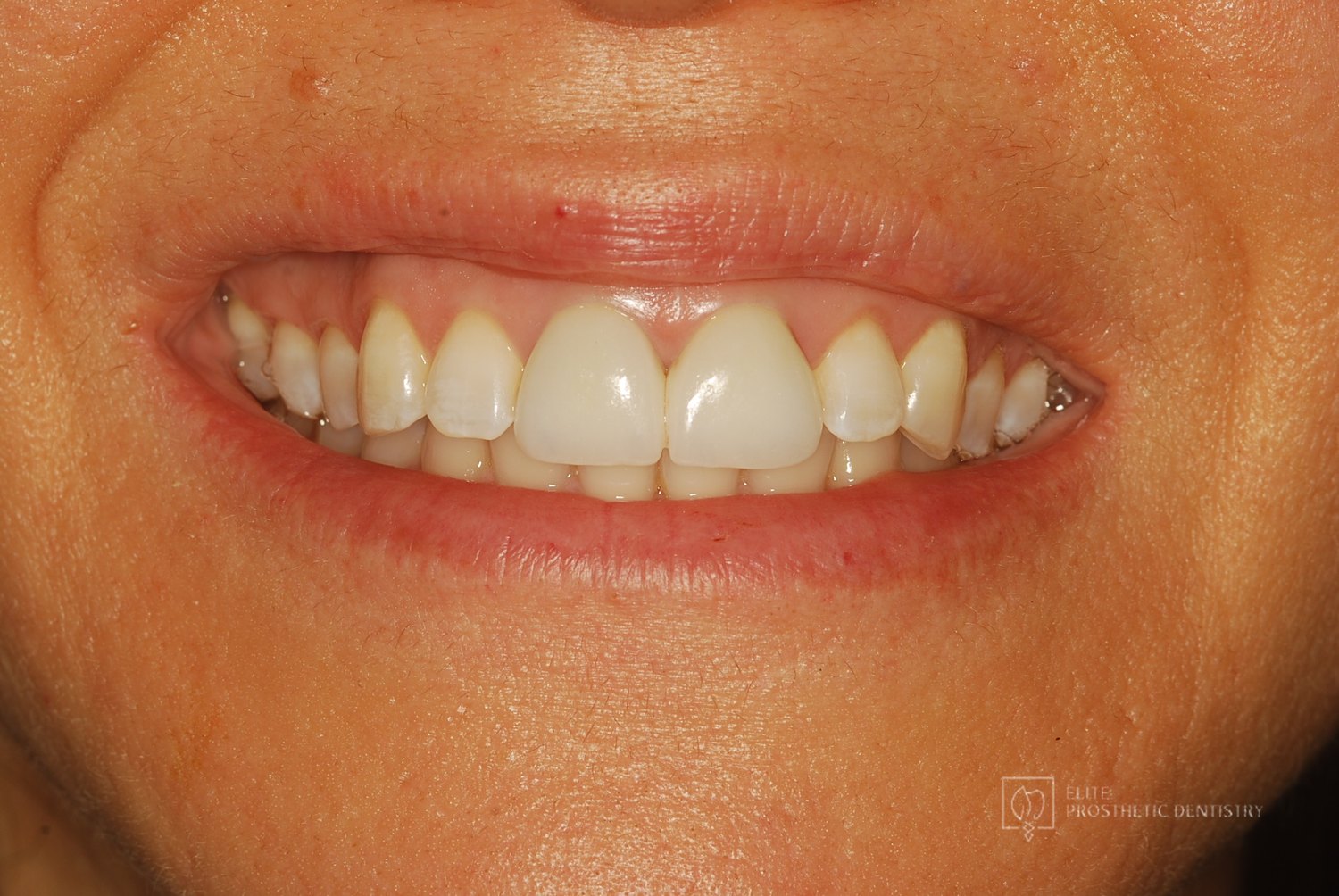 After
After Two Front Teeth Saved From Extraction: A Second Opinion, Custom Gold Posts, and Crowns Made to Last
Two upper central incisors with failed root canal treatment and recurrent decay had been recommended for extraction and implant replacement. A CBCT evaluation showed that removing the roots from their thin facial bone housing could create a visible esthetic defect in the gum and bone contour, made worse by the patient's high lip line.
Related Articles
Deepen your knowledge with additional insights on this topic.
 Dental Crowns
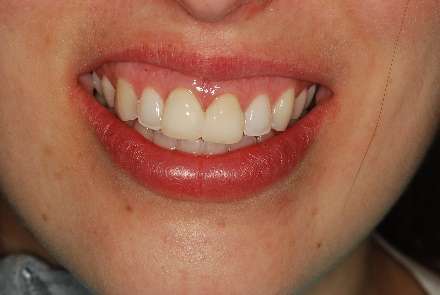
 Why Are Some Temporary Crowns More Natural Than Others?
Temporary crowns do not have to look temporary. A DC prosthodontist explains how lab-made provisionals protect your smile and preview your final crowns.
 Dental Crowns
 What Makes a Natural-Looking Crown?
Emergence profile, translucency, internal color, and healthy gum response: a DC prosthodontist explains the anatomy of a crown no one can detect.
 Dental Crowns
 How Is an Immediate Smile Makeover Performed?
An immediate smile makeover transforms your smile in one visit using hand-crafted temporary crowns as a living preview. A DC prosthodontist explains how.