
Replacing Your Failing Front Tooth with an Implant: Options and Timeline
When a Front Tooth Starts to Fail
Few dental problems concentrate the mind like a failing front tooth. Beyond the emotional weight, a compromised front tooth affects how you speak, how you smile, and how you plan every photograph. The reassuring news: modern treatment can replace a failing front tooth with a dental implant, abutment, and crown so natural that it disappears into your smile. The path there involves real decisions, and this article maps them.
Front teeth fail through a few familiar routes: trauma and fracture, root resorption (where the root structure dissolves from within or without), failed root canal treatment, and bone loss from periodontal disease. Each cause shapes the plan differently, which is why the journey starts with diagnosis rather than a product.
Your Three Options, Honestly Weighed
Save the tooth. When a front tooth can be predictably rescued, through endodontic retreatment, a post and core, or crown work, that is often the first-choice answer. We never extract what deserves saving; some of our most satisfying cases are natural front teeth preserved rather than replaced.
Replace with an implant. When the tooth is truly failing, an implant is usually the strongest long-term investment. It replaces the root itself, which preserves the jawbone under your smile, and it stands independent of the neighboring teeth, sparing them the grinding that a bridge requires.
Bridge the gap. A fixed bridge remains legitimate when an implant is not feasible or not wanted. It trades speed for the long-term cost of involving two healthy neighbors, a trade worth understanding before choosing it.
What the Implant Journey Looks Like
For the replacement tooth to be genuinely natural, the implant must be placed at exactly the right angle and depth, the abutment custom fabricated, and the crown built with internal coloration and translucency matched to its neighbors. In the smile zone there is no room for error: the new tooth must match the color, texture, and contour of your teeth, and even the way light passes through them. That is where specialist planning and our in-house laboratory become invaluable; the full technical workflow is detailed in our companion article on precision front tooth replacement.
The timeline typically runs: gentle extraction with a bone graft to preserve the socket, a healing period while the implant integrates, then the custom abutment and final crown. Throughout, a natural-looking temporary tooth carries your smile. You are never left with a visible gap.
A Case That Shows the Journey
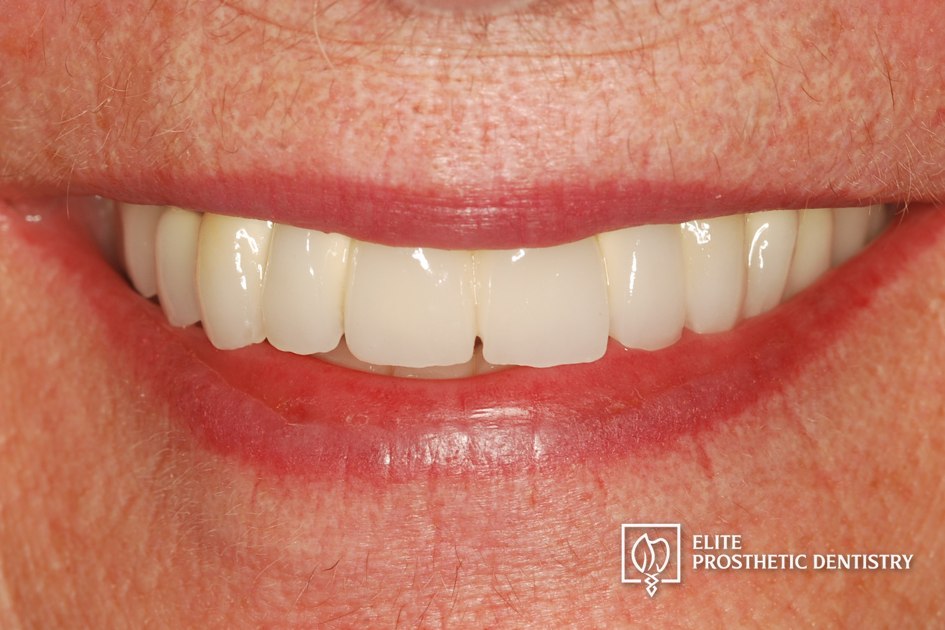
One of our patients first came to us as a teenager with a failing maxillary central incisor. Because implants must wait until growth is complete, the tooth was replaced with a bone graft and a removable appliance that served as her temporary tooth through her teenage years. Once she had stopped growing, we placed the implant using a CT-scan-generated surgical guide to achieve the exact planned depth and angulation, then restored it. At twenty-three, her smile is fully rejuvenated; she speaks, eats, and smiles with complete confidence.
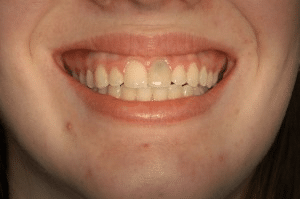
Before: Failing maxillary central incisor
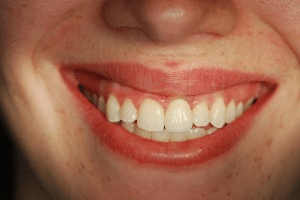
CT scan surgical guide for precision implant placement
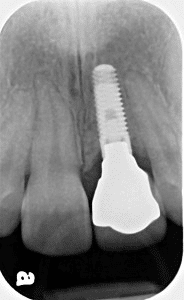
After: Rejuvenated dentition with natural-looking implant crown
Facing a Failing Front Tooth? Start with a Real Evaluation
The right decision depends on why the tooth is failing, what your bone offers, and what you want for the next several decades, and those answers come from an examination, not an advertisement. Dr. Gerald Marlin, a specialty-trained prosthodontist with more than 3,900 implants placed and restored, will lay out your options plainly, including saving the tooth when it can be saved. Call 202-244-2101 or request a consultation at Elite Prosthetic Dentistry in Friendship Heights, Washington, DC.
See How We Resolve These Problems
Our patient success stories show real cases and real results. Browse outcomes from a specialist prosthodontist with decades of experience and 3,900+ implants placed.
Key Takeaways
- ✓ Front teeth fail through a few familiar routes: fracture, root resorption, failed root canal treatment, and bone loss from gum disease.
- ✓ The decision is rarely just implant versus nothing; saving the tooth, bridging the gap, and implant replacement each have a proper place.
- ✓ An implant is the only option that replaces the root and preserves the bone, which matters most in the visible smile zone.
- ✓ The timeline runs from extraction and grafting through healing to the final crown, with a natural-looking temporary covering the site throughout.
- ✓ In young patients, implant placement waits until growth is complete, with an interim tooth carrying the smile in the meantime.
Frequently Asked Questions
How do I know if my front tooth is failing?
Common signals include darkening of the tooth, looseness, recurring gum swelling or a pimple-like drainage spot, pain when biting, or an X-ray showing root resorption or a failed root canal. Some failing front teeth cause no symptoms at all and are discovered on imaging, which is why a proper evaluation matters before anything is decided.
Is an implant always the best replacement for a failing front tooth?
Not automatically. If the tooth can be predictably saved, saving it is often the first choice. When it cannot, an implant is usually the strongest long-term answer because it replaces the root, preserves the bone, and leaves neighboring teeth untouched. A bridge remains a legitimate alternative when an implant is not feasible or wanted.
Will I have a gap while my front tooth implant heals?
No. A natural-looking temporary tooth covers the site through every phase of treatment, whether that is a bonded interim tooth, a removable appliance, or in favorable cases a provisional attached the day of surgery. You should never have to appear in public missing a front tooth.
How long does the whole process take?
Typically several months from extraction to final crown: the socket is grafted and heals, the implant integrates into the bone, and then the custom abutment and crown are made. If bone grafting needs its own healing phase or a young patient is still growing, the timeline extends accordingly. The pace is set by biology, and shortcuts show up later as problems.
Related Patient Success Stories
Explore similar patient success stories demonstrating our expertise in advanced prosthetic dentistry.
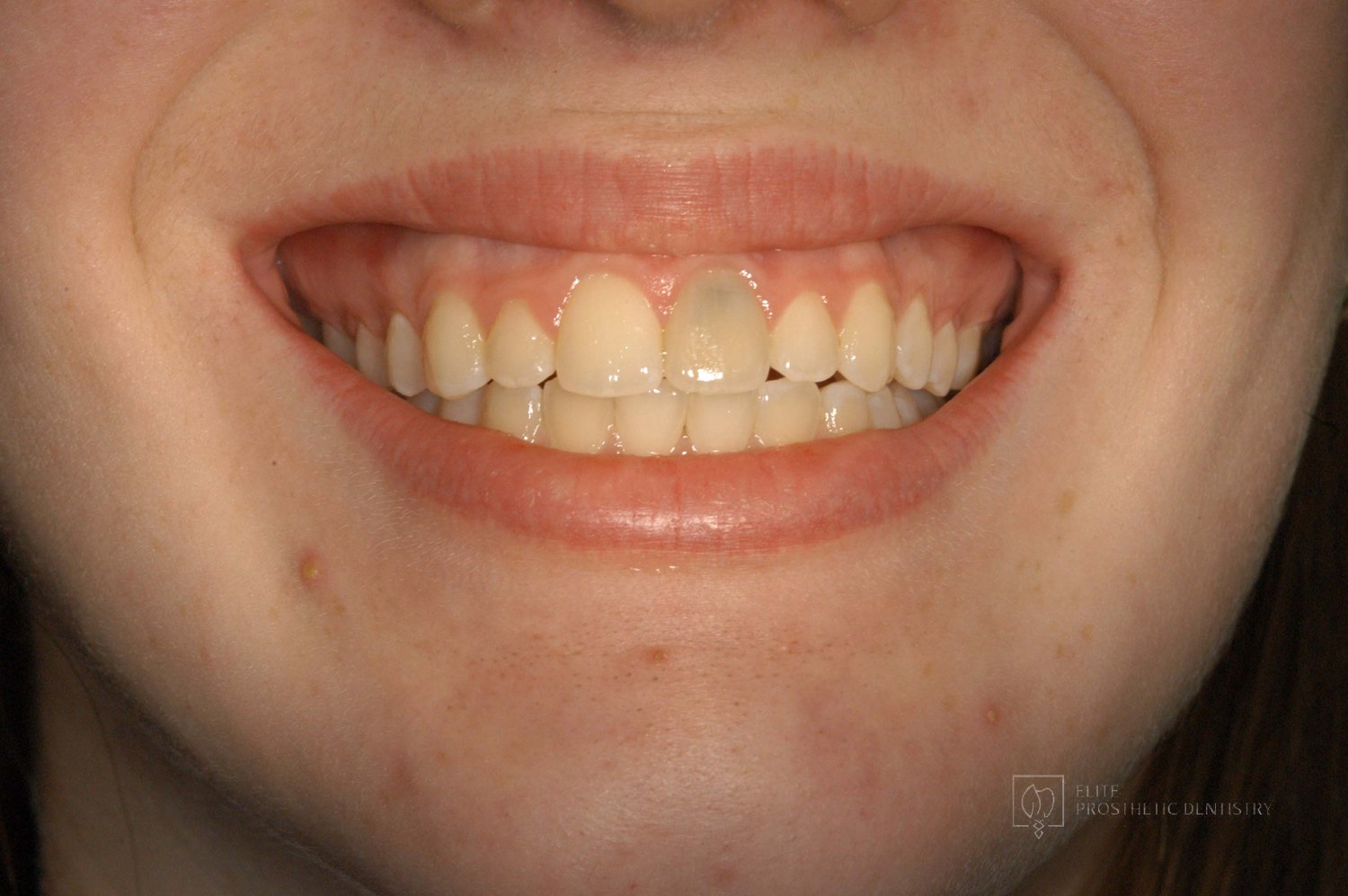 Before
 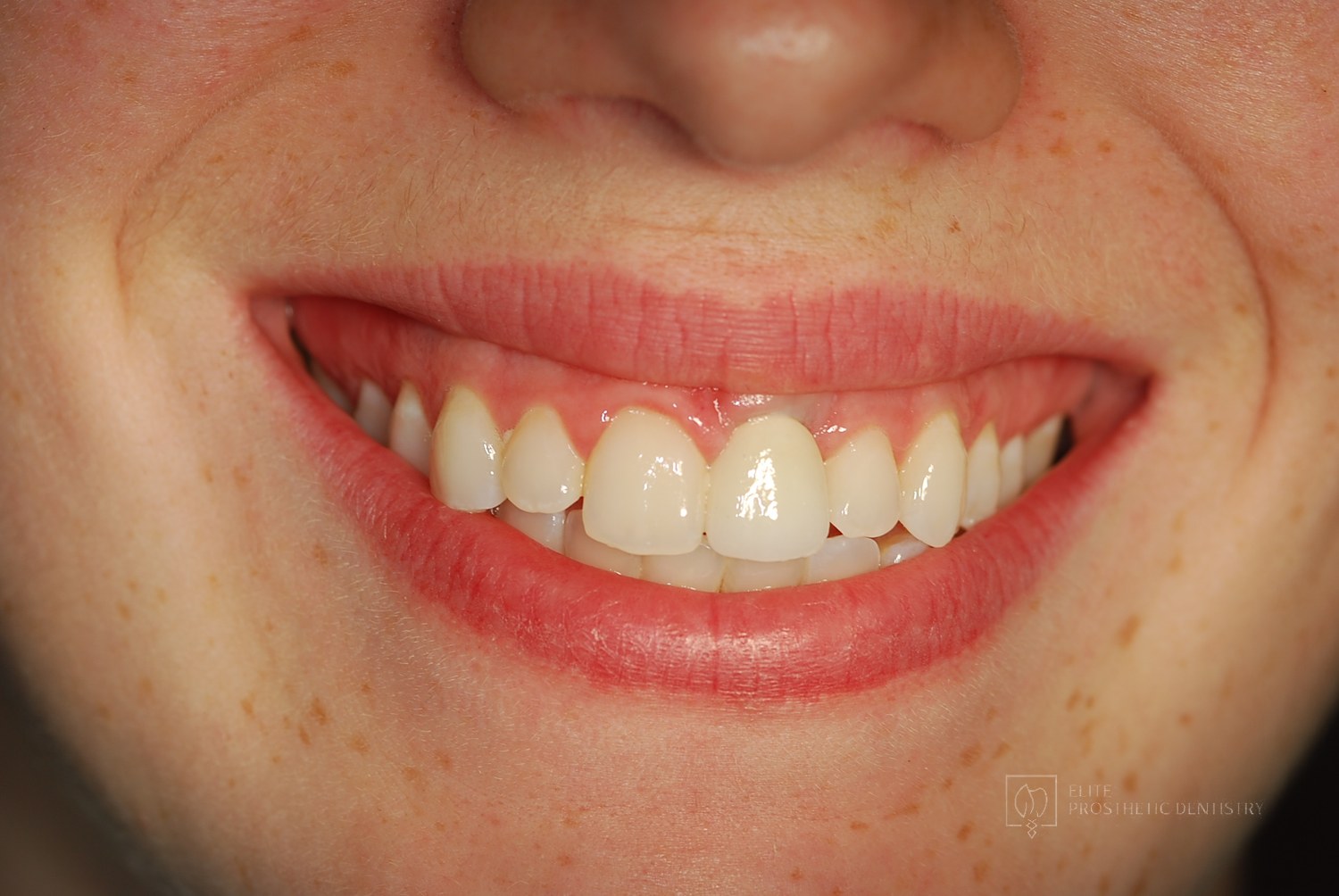 After
After How a Front Tooth Lost to Childhood Trauma Was Rebuilt with Bone Grafting and a Long-Lasting Implant
A teenager was referred by her father after earlier trauma left her upper left front tooth slowly failing from root resorption. She was still growing, so an immediate implant was the wrong move. The tooth had to be maintained to buy time, then replaced correctly once she reached skeletal maturity.
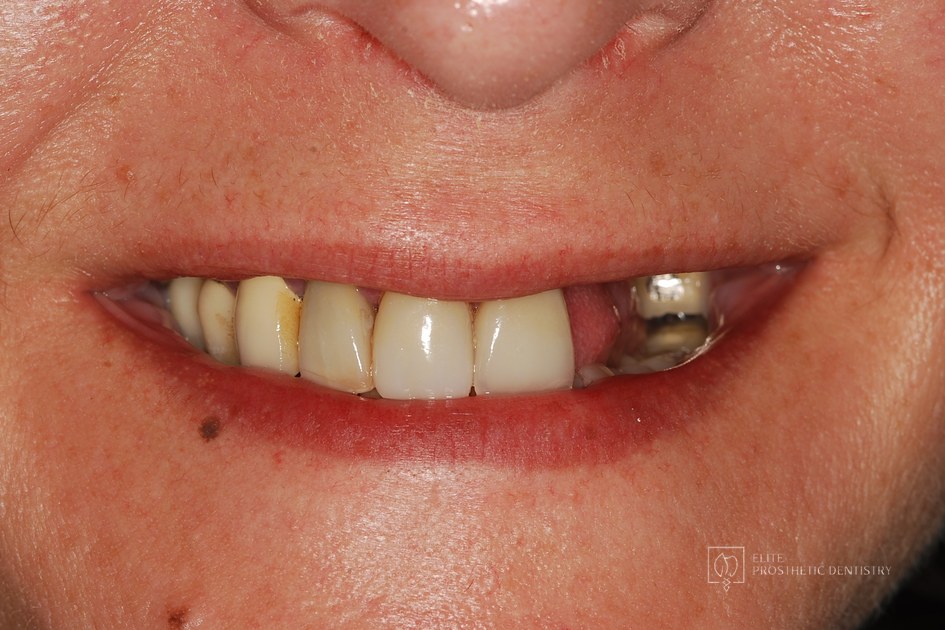 Before
 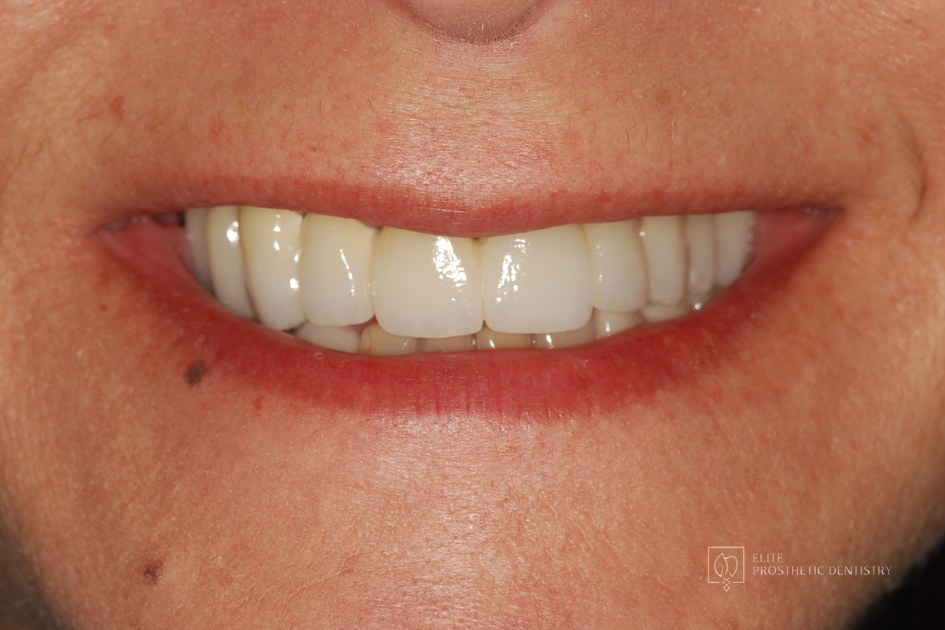 After
After Implant Supported Reconstruction: Failing Bridgework and Missing Back Teeth Rebuilt with Coordinated Specialist Care
Referred by another dental specialist with severe bone resorption on the upper left, multiple broken-down lower teeth requiring extraction, and failing lower back teeth that had left the bite without solid support. No single procedure, and no single provider working alone, could rebuild a situation this interconnected.
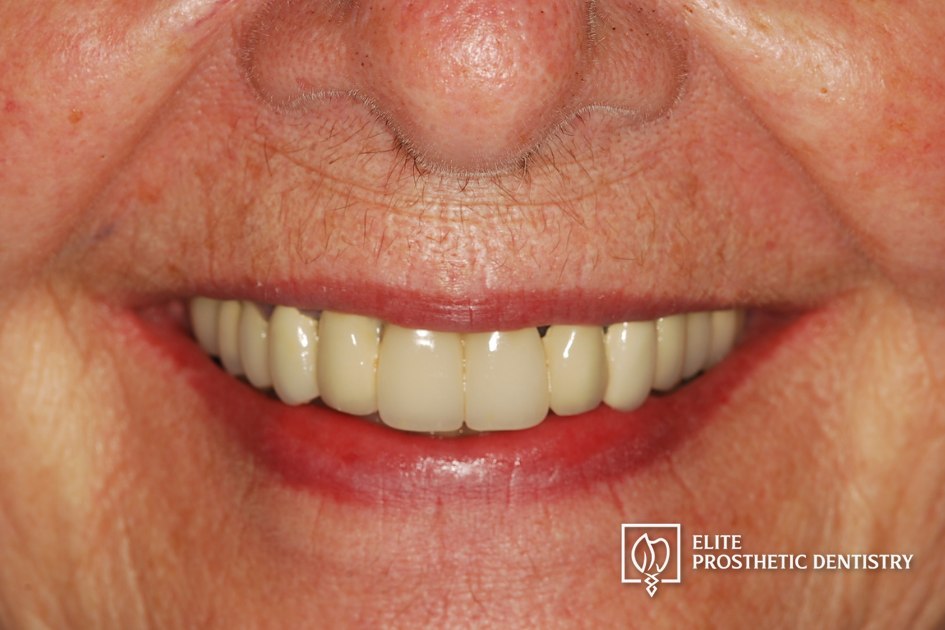 Before
  After
After How a Loose Upper Bridge and Aging Crowns Were Rebuilt with Staged Implant Reconstruction
A patient referred by her general dentist after years of aging dentistry no longer holding up. A loose upper bridge and crowns more than twenty years old, combined with the effects of advanced periodontal disease and severely compromised tooth abutments, required a staged surgical and restorative plan delivered with comfort planning at the same time.
Related Articles
Deepen your knowledge with additional insights on this topic.
Bone Grafting & Surgical Rebuilding a Ruined Implant Site with Severely Damaged Bone: The Three-Stage Protocol
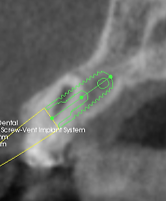
Debridement, growth-factor grafting, CBCT-guided planning: the step-by-step protocol that turns a severely damaged implant site into a healthy ridge.
 Bone Grafting & Surgical
 What Is Ridge Augmentation Bone Grafting?
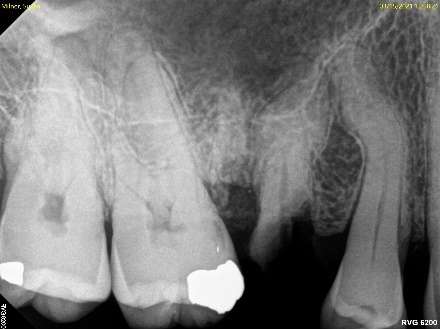
Ridge augmentation rebuilds a jaw ridge too narrow or angled for an implant. See real measurements from planning to precise placement. Washington DC.
 Bone Grafting & Surgical
 What Is a Partial (Internal) Sinus Lift?
A partial (internal) sinus lift adds bone at a single implant site through the implant preparation itself, often with the implant placed the same visit.