
How We Create a Dental Crown That Lasts 35 Years
At Elite Prosthetic Dentistry in Washington, DC, dental crowns from our in-house laboratory have lasted 35 years and longer with proper care. Mainstream patient guidance puts typical crown life at 5 to 15 years (Cleveland Clinic). Insurance companies will pay to replace a crown after just 5 years, which tells you what the industry expects of typical work.
A 35-year crown is not a materials story or a marketing line. It is a process story. Here is the process.
Why Average Crowns Fail Early
Most crown failures begin at the margin, the seam where the crown meets the prepared tooth. If that seam is open even slightly, bacteria colonize it, decay starts beneath the crown, and the failure stays invisible until it is expensive. When crowns fail this way, the consequences cascade: root canal treatment if decay reaches the nerve, and in the worst cases extraction and replacement with an implant.
Widespread reliance on rapid milling workflows has not improved the average. A crown milled from stock digital shapes is only as good as the scan, the machine, and the operator refining the design, and in high-volume settings that refinement is exactly what gets skipped. We examined this problem in detail in Part I of Are All Crowns the Same.
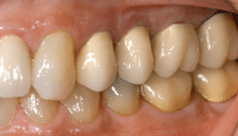
Fig. 1: Hand-Crafted Dental Crown Demonstrating Precision Fabrication
Step 1: Preparation and Temporization Done Deliberately
Longevity starts before any laboratory work. The tooth must be prepared with correct convergence angles, adequate room for the restorative material, and clean, well-defined margins. The temporary crown then does more than fill time: it protects the preparation, holds tissue position, and serves as a functional rehearsal for the final crown’s shape and bite.
Step 2: An Impression Worthy of the Crown
Whether clinical or digital, the impression is the blueprint. Any distortion at this stage is baked into everything that follows. We take impressions with the same exactness we demand of the final restoration, and we redo them if they are less than exact.
Step 3: Custom Fabrication in Our In-House Laboratory
Our in-house laboratory, operating since 1985, is where the decisive work happens. Our technician hand-crafts each crown to the individual tooth, evaluates the precision of fit on the model, and works with Dr. Marlin directly, bench to chair and back, until the crown meets specification. There is no shipping, no telephone interpretation of a shade tab, and no acceptance of “close enough.”
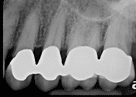
Fig. 2: Precision Fit Verification of Custom-Crafted Crown
Step 4: Verification at Seating, Then Proof
At insertion, Dr. Marlin evaluates marginal seal, adjusts the contact points, and balances the bite. Then every crown is X-rayed to confirm the anticipated fit was achieved. If it was not, we do not adjust our standard. We remake the crown. It must be perfect, because the X-ray taken that day predicts what the tooth will look like in twenty years.
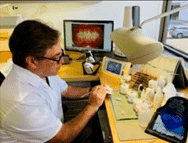
Fig. 3: In-House Laboratory Technician Examining Completed Crown
What Three Decades of Service Actually Means
The mathematics favor the patient who does it once. A crown that needs periodic replacement means the same tooth is drilled, prepared, and paid for again and again across adulthood, with each cycle removing more natural tooth structure and adding new risk. A crown engineered to our standard is placed once and, with proper care and normal maintenance visits, simply keeps working. Patients often ask how long a dental crown should last; our answer is built into how we make them.
That standard is also why patients with aging dentistry seek us out before anything breaks. Replacing a tired crown on your schedule, with a restoration built for long-term service, is a very different experience from replacing it in an emergency. See what that looks like across a complete case in our patient’s coordinated rebuild of aging crowns and a failing bridge.
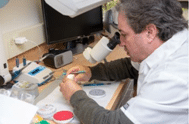
Fig. 4: Final Long-Lasting Crown Ready for Placement
Built for Decades, Verified on Day One
When you partner with Dr. Marlin, you are investing in craftsmanship backed by more than 40 years of prosthodontic experience and an on-site laboratory that answers to no production quota. Each crown is created with the understanding that it will be part of your smile for decades, not until the next insurance cycle.
Call 202-244-2101 or request a consultation at our Friendship Heights office in Washington, DC to have your crown, or your aging crowns, evaluated and done correctly.
See How We Resolve These Problems
Our patient success stories show real cases and real results. Browse outcomes from a specialist prosthodontist with decades of experience and 3,900+ implants placed.
Key Takeaways
- ✓ Mainstream patient guidance puts typical crown life at 5 to 15 years, and insurers plan for replacement at 5. Crowns from our in-house laboratory have lasted 35 years and longer with proper care.
- ✓ Longevity is engineered in sequence: meticulous tooth preparation, precise impressions, custom fabrication, and verified fit at seating.
- ✓ Every crown is hand-crafted in our in-house laboratory, evaluated for precision, and X-rayed at insertion. If it is not perfect, it is remade.
- ✓ When crowns fail early, the consequences cascade: decay under the crown, root canals, and sometimes extraction and implant replacement.
- ✓ A crown made correctly once costs less over a lifetime than a crown that has to be remade again and again.
Frequently Asked Questions
How can a dental crown last 35 years?
By controlling every variable that causes early failure: conservative and precise tooth preparation, accurate impressions, custom fabrication by a trained technician, verified marginal seal, and a correctly adjusted bite. None of these steps is exotic. What is uncommon is executing all of them, on every crown, with verification at each stage.
Why do most crowns fail so much sooner?
The usual culprits are imprecise fit at the margin, which lets decay start beneath the crown, and bite forces that were never properly balanced. Both trace back to fabrication and seating. The material rarely fails first; the interface between crown and tooth does.
What happens when a crown fails early?
Decay under a failed crown often reaches deep into the tooth before it is noticed. The tooth may then need a root canal, a new crown, or extraction followed by an implant. Preventing that cascade is the strongest argument for doing the crown correctly the first time.
Do you replace old or failing crowns from other offices?
Regularly. Many of our patients come to us to replace aging crowns proactively, before decay or fracture forces an emergency. An evaluation with X-rays shows whether existing crowns still seal properly and lets you plan replacement on your terms.
Related Patient Success Stories
Explore similar patient success stories demonstrating our expertise in advanced prosthetic dentistry.
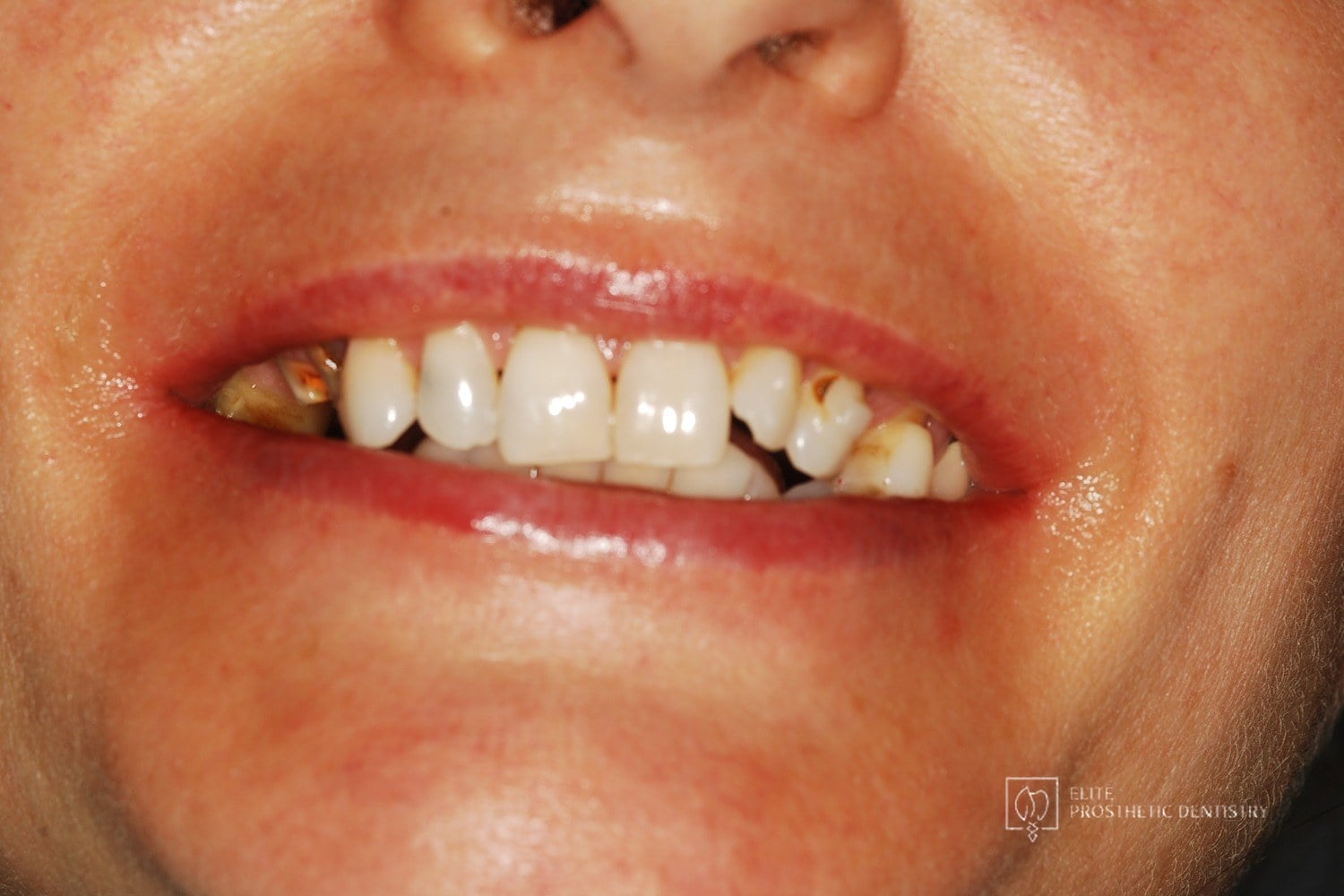 Before
 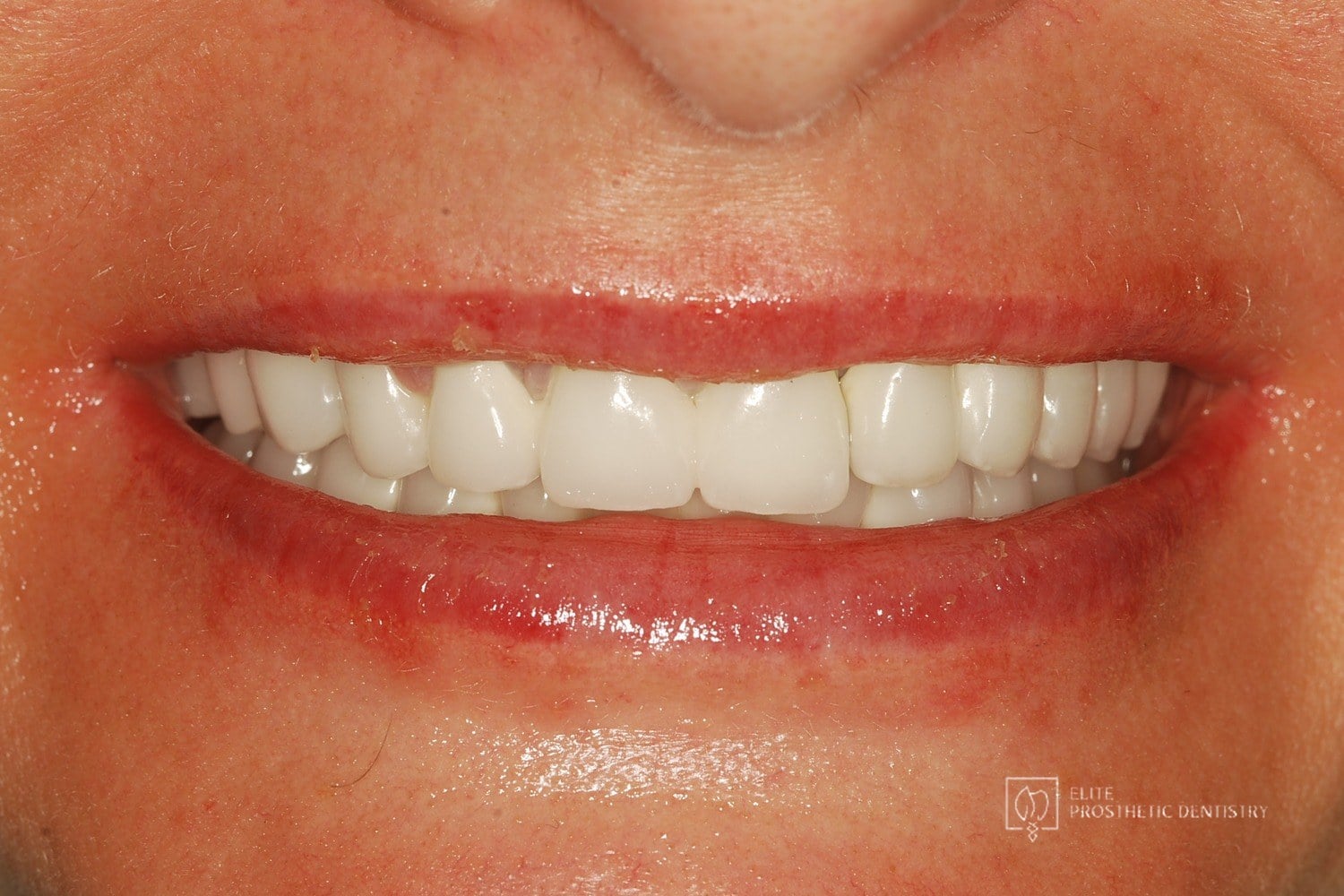 After
After How Aging, Failing Dentistry Was Replaced with a Coordinated Full-Mouth Implant and Crown Reconstruction
The patient presented with throbbing upper-molar pain, long-standing infections, multiple root canals and unfinished prior treatment, generalized sensitivity, and several hopeless teeth.
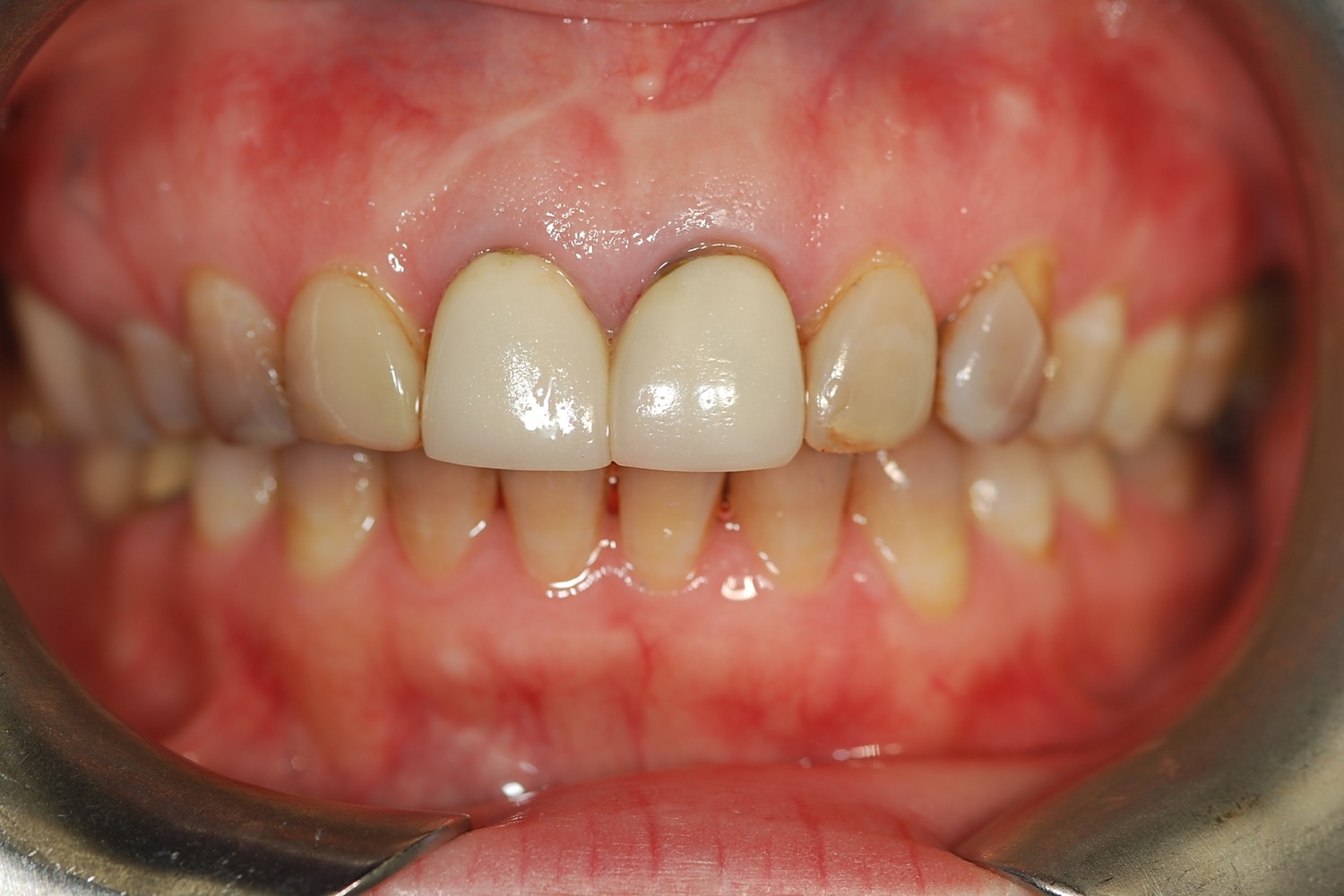 Before
 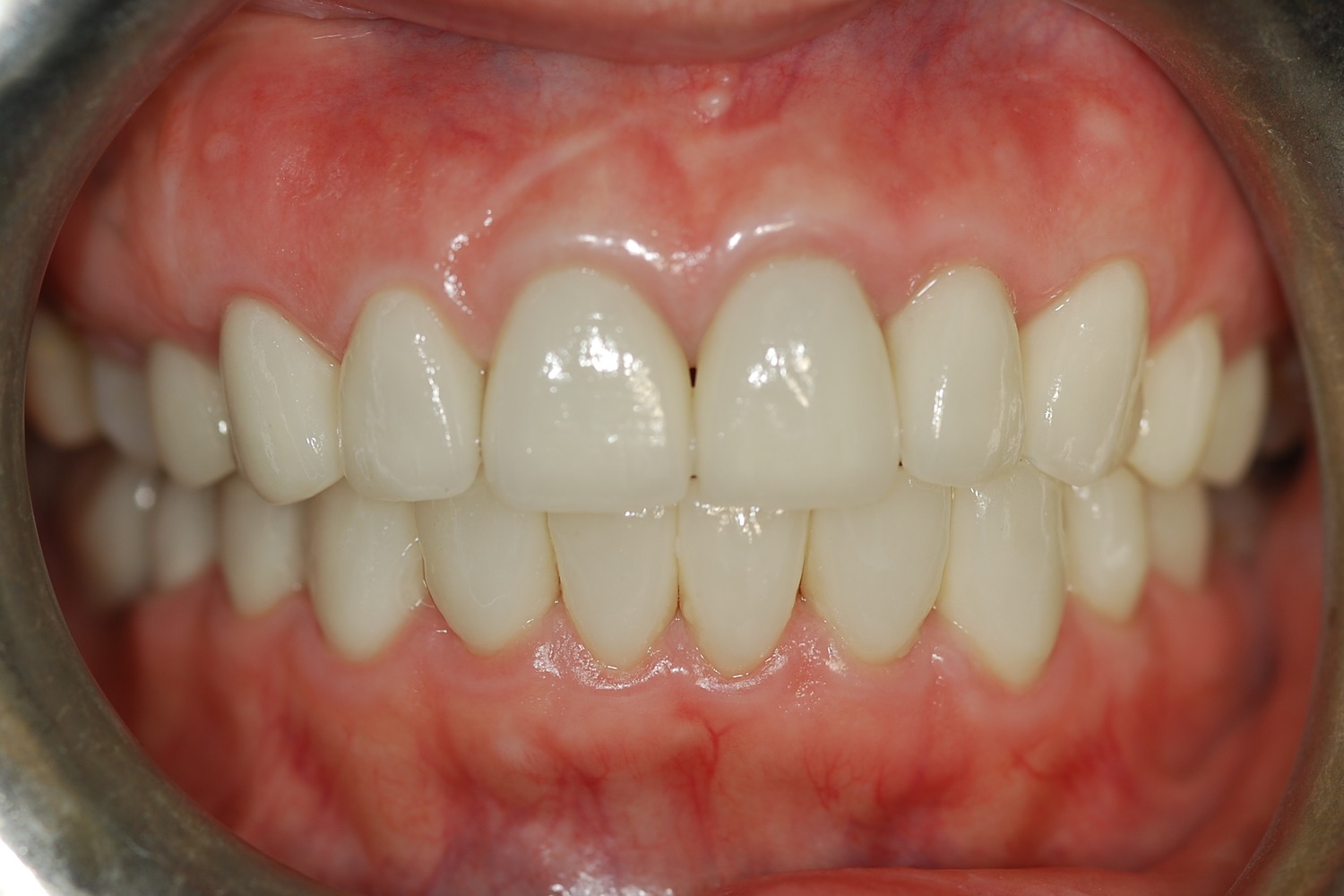 After
After How Aging, Opaque Restorations Were Replaced with Customized Ceramic Restorations Designed for Long-Term Natural Esthetics
The existing restorations appeared opaque, worn, and unnatural over time, affecting both confidence and overall smile harmony.
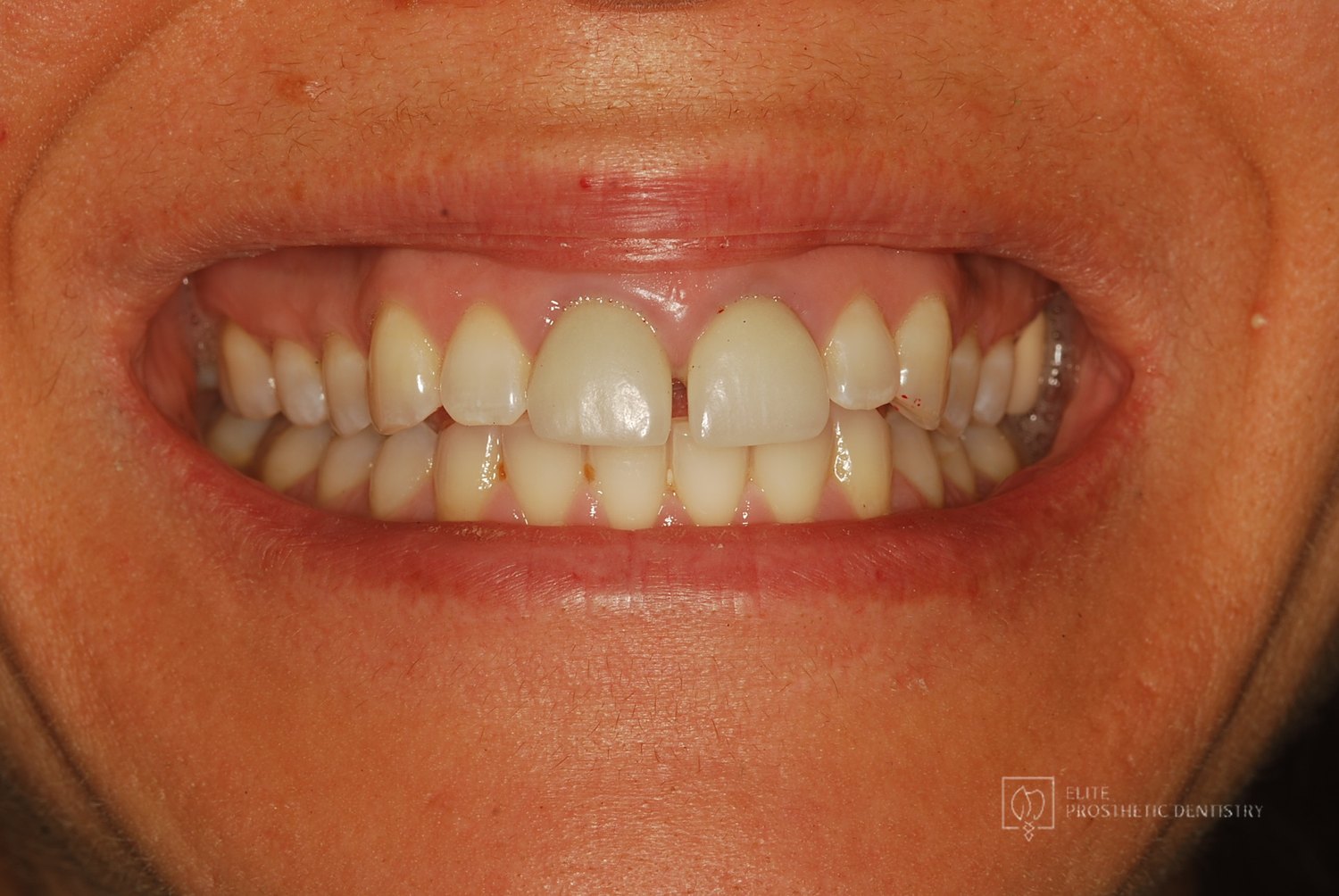 Before
 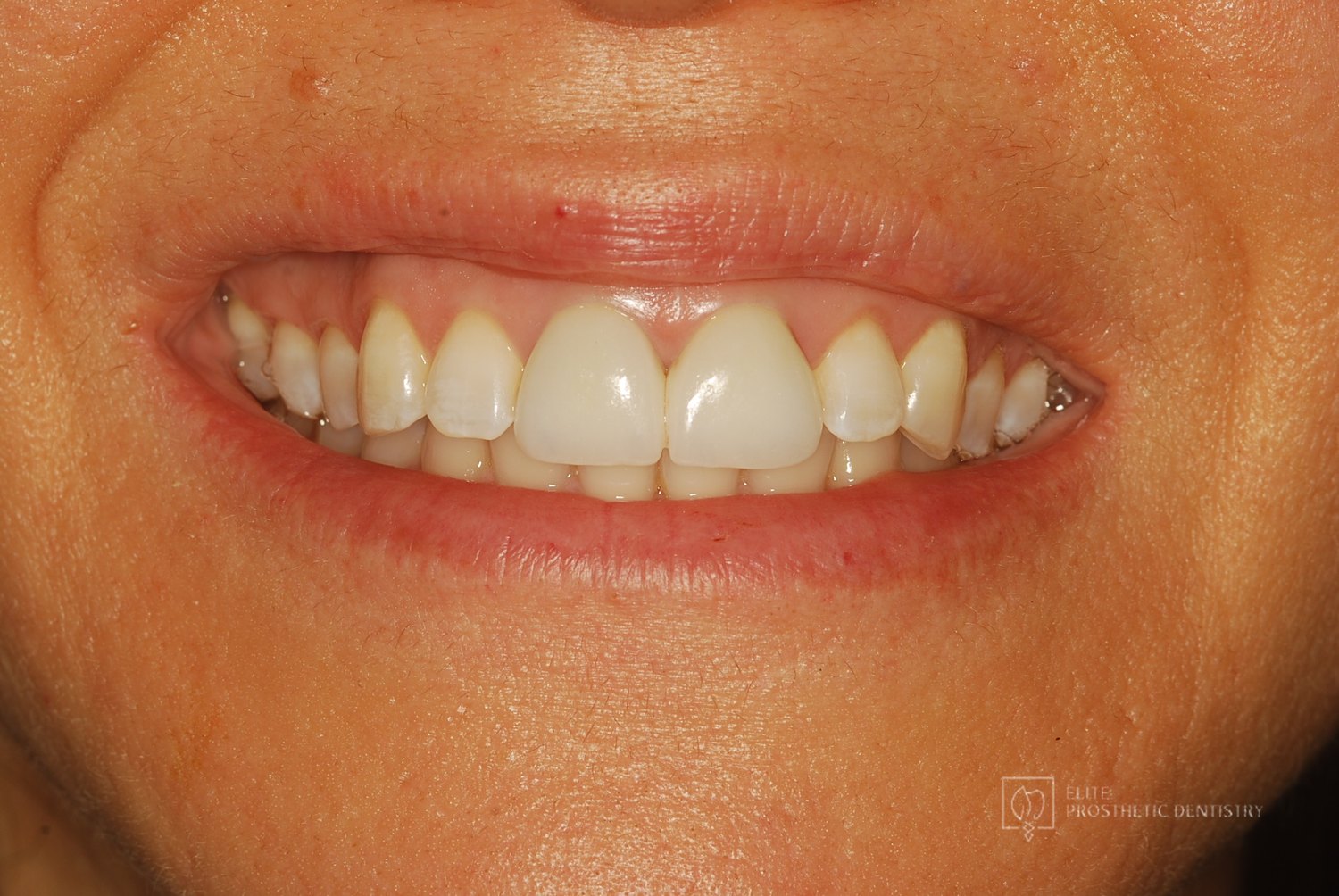 After
After Two Front Teeth Saved From Extraction: A Second Opinion, Custom Gold Posts, and Crowns Made to Last
Two upper central incisors with failed root canal treatment and recurrent decay had been recommended for extraction and implant replacement. A CBCT evaluation showed that removing the roots from their thin facial bone housing could create a visible esthetic defect in the gum and bone contour, made worse by the patient's high lip line.
Related Articles
Deepen your knowledge with additional insights on this topic.
 Dental Crowns
 Why Are Some Temporary Crowns More Natural Than Others?
Temporary crowns do not have to look temporary. A DC prosthodontist explains how lab-made provisionals protect your smile and preview your final crowns.
 Dental Crowns
 What Makes a Natural-Looking Crown?
Emergence profile, translucency, internal color, and healthy gum response: a DC prosthodontist explains the anatomy of a crown no one can detect.
 Dental Crowns
 How Is an Immediate Smile Makeover Performed?
An immediate smile makeover transforms your smile in one visit using hand-crafted temporary crowns as a living preview. A DC prosthodontist explains how.