
Loose Front Teeth After Orthodontics: A Fixed Splint and Customized Restorations to Protect the Result
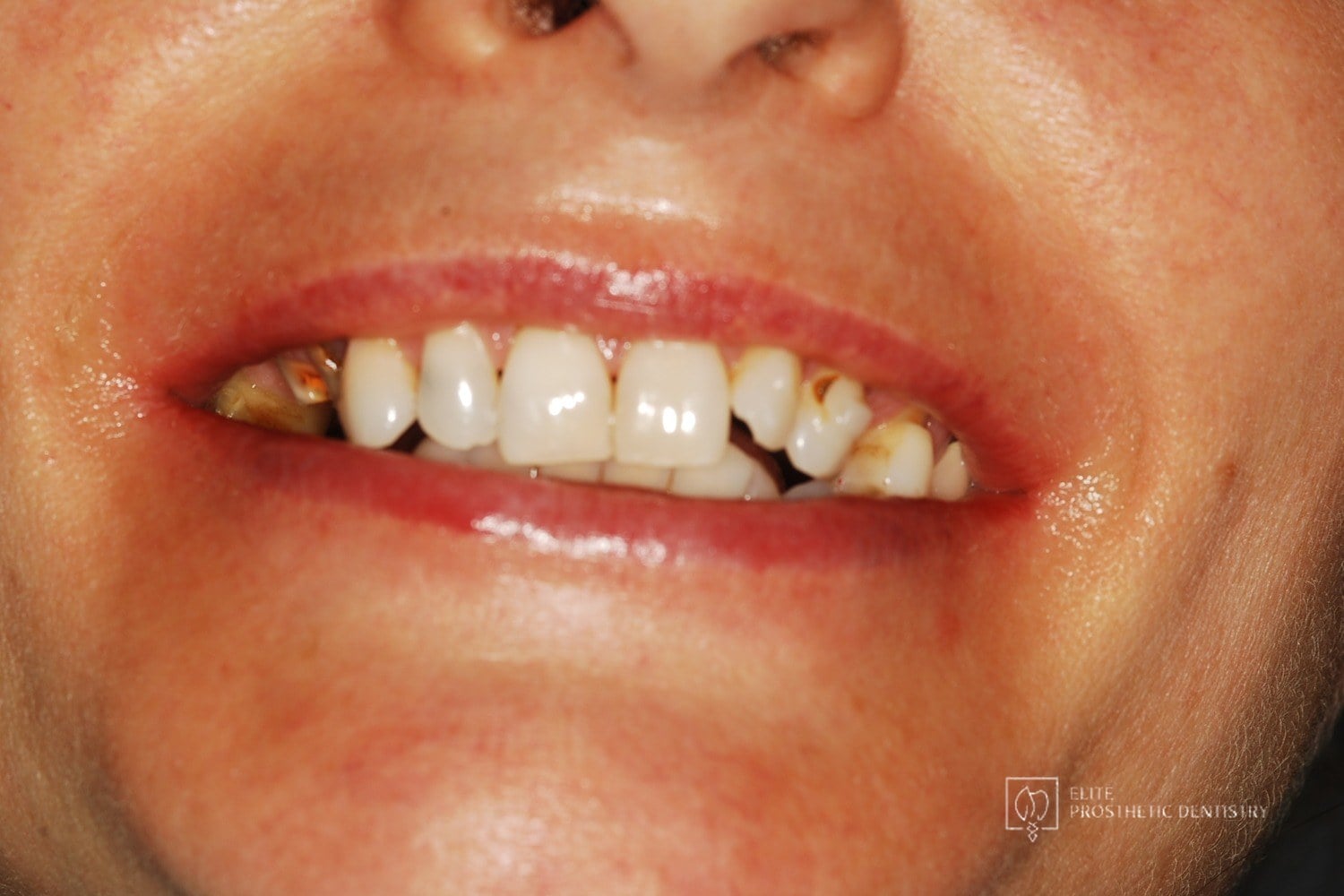
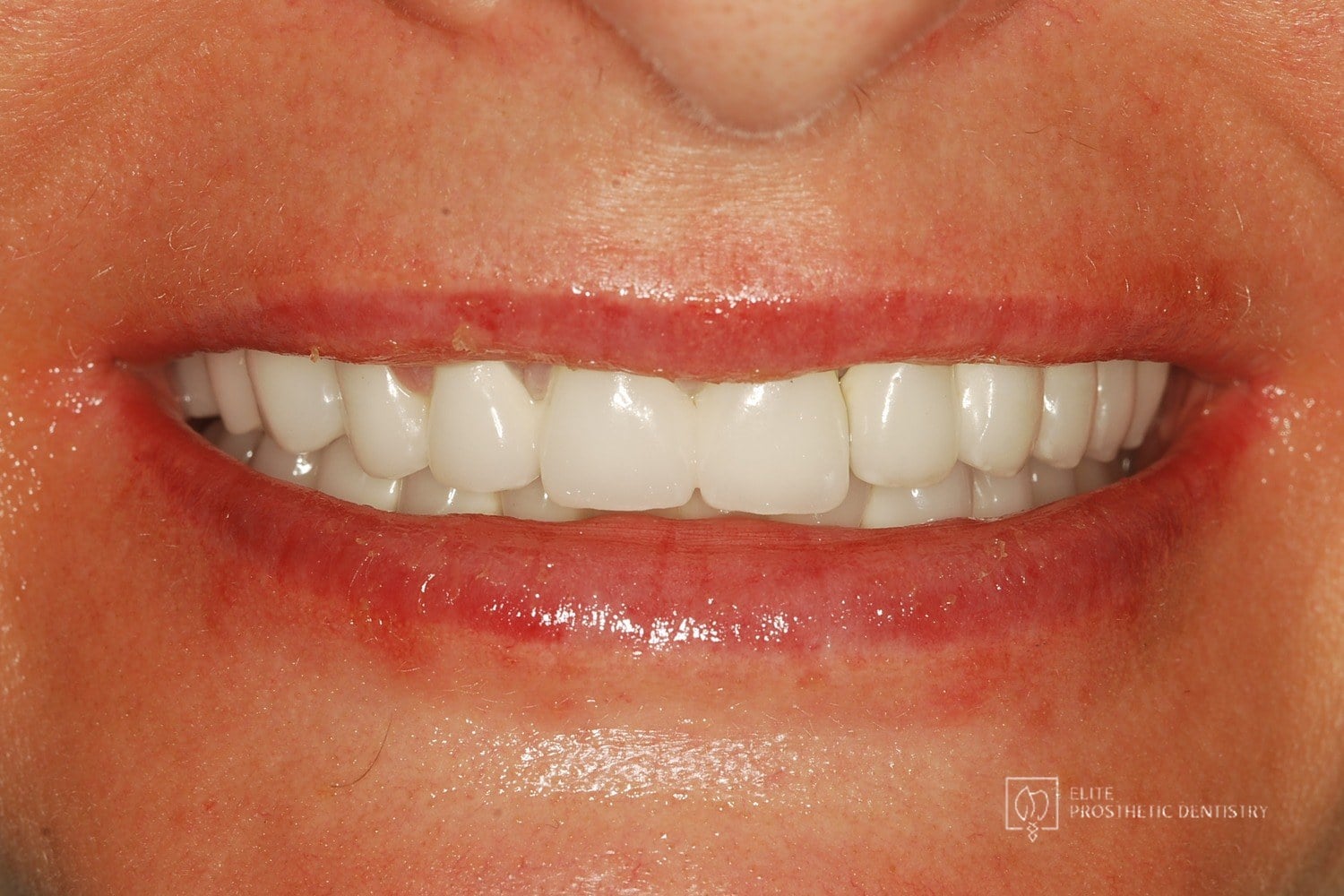
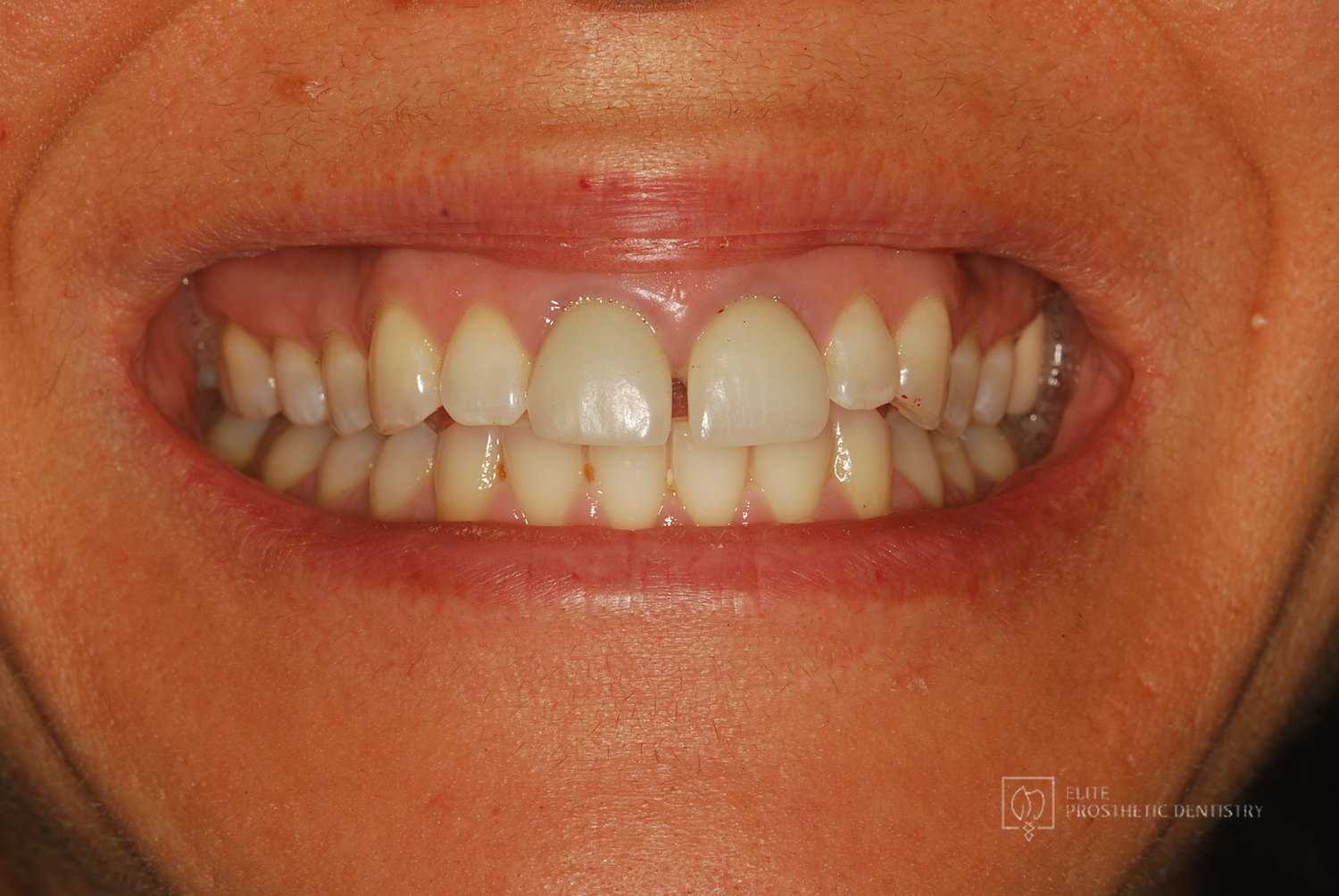
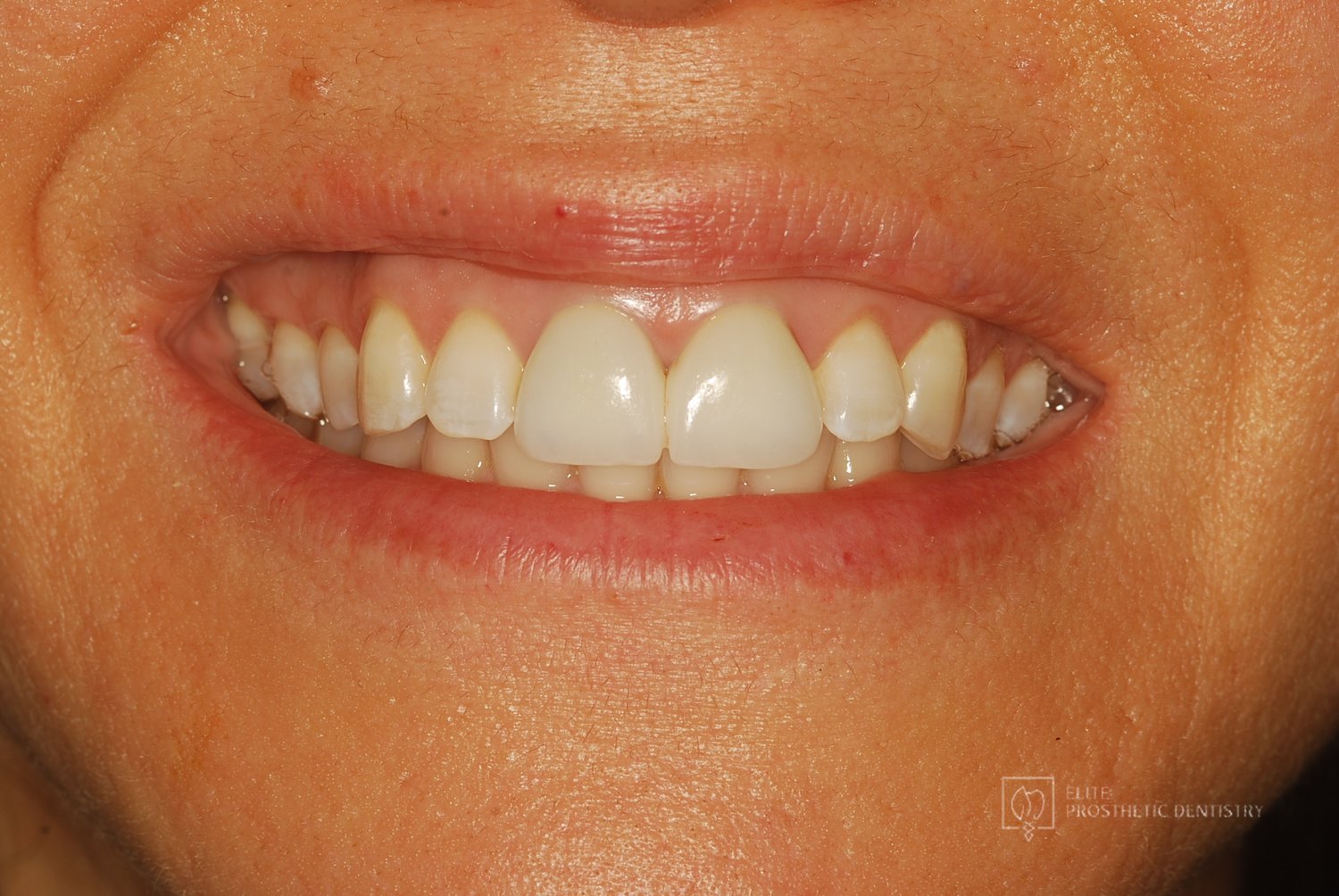
Close-up smile view
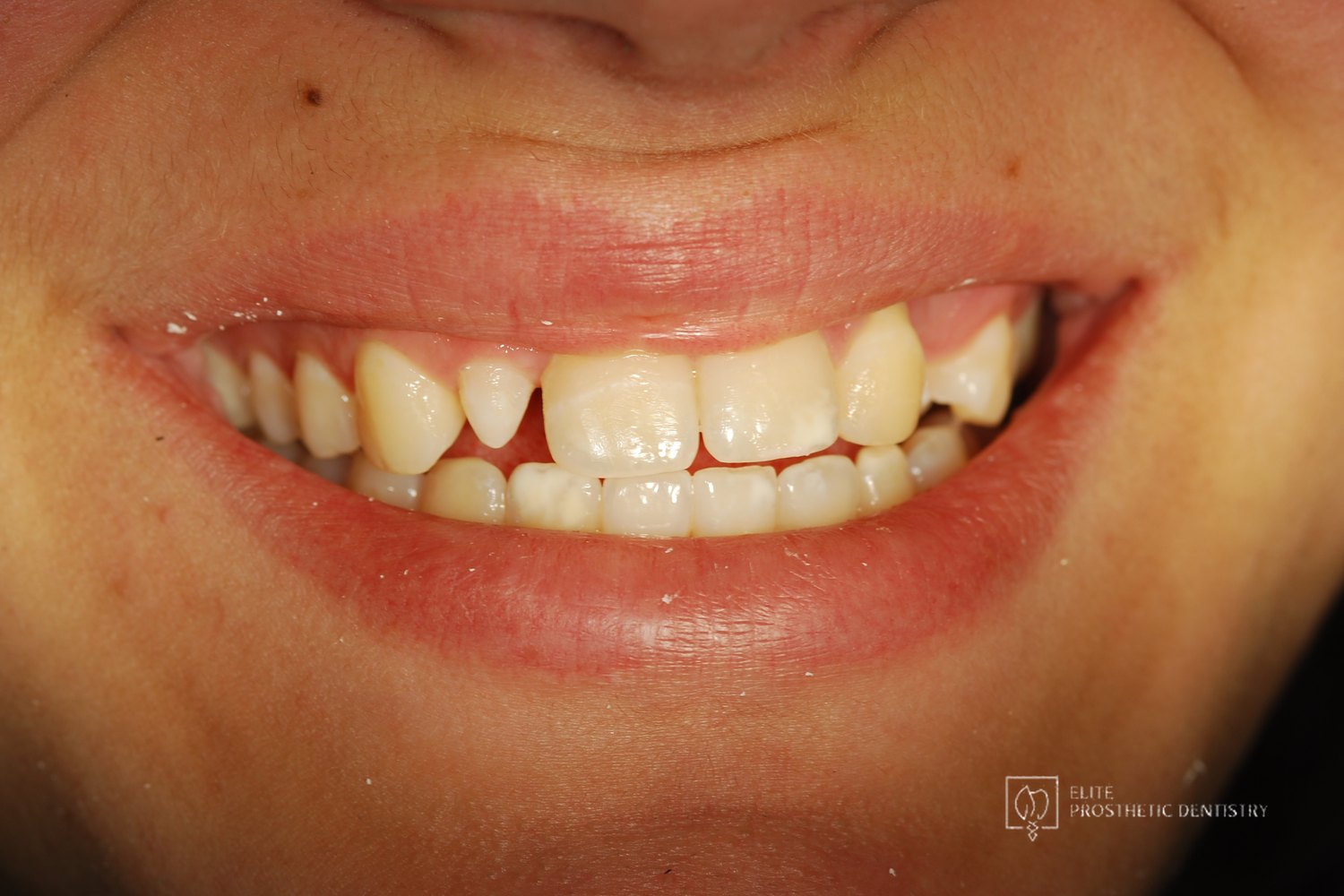 Before
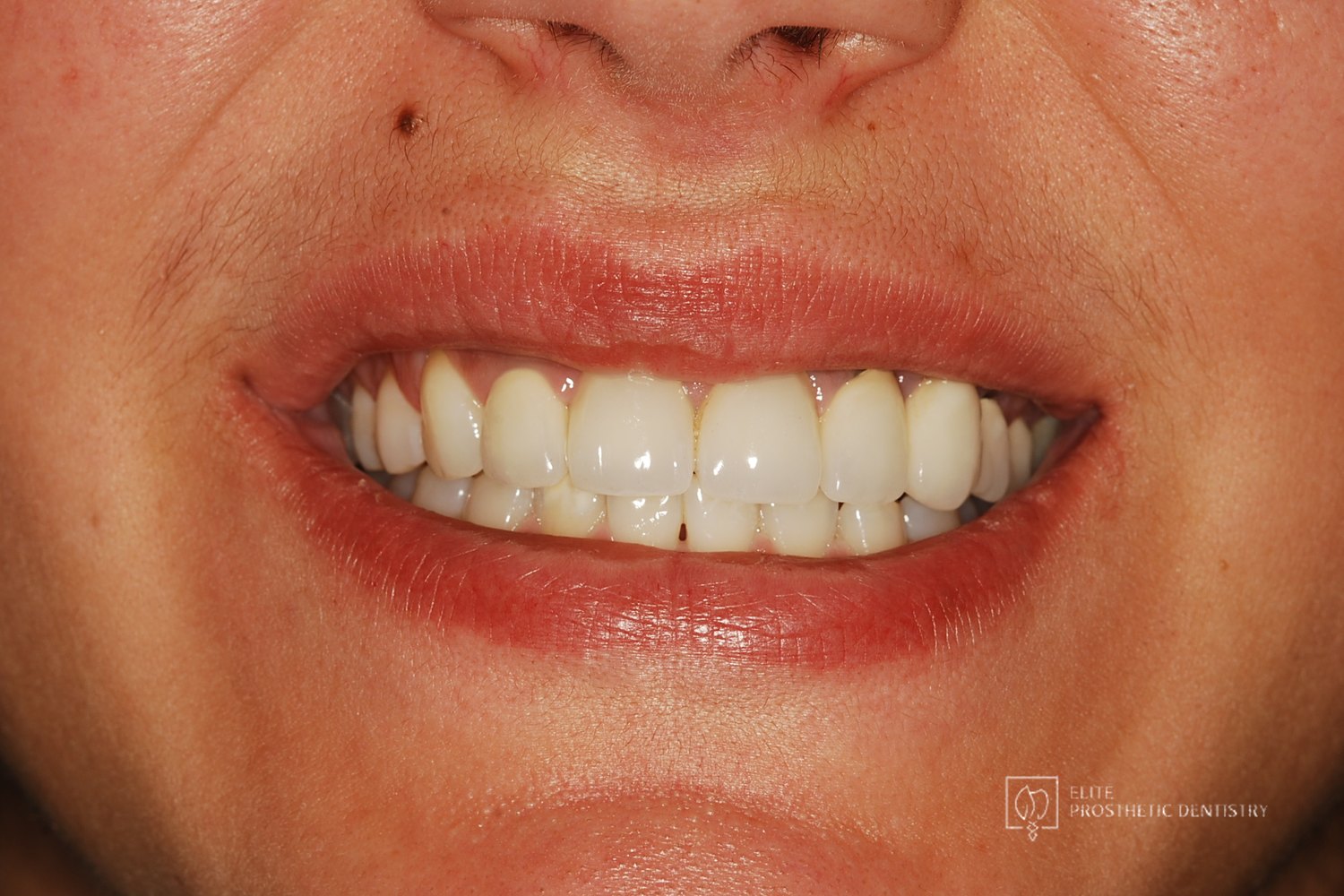 After
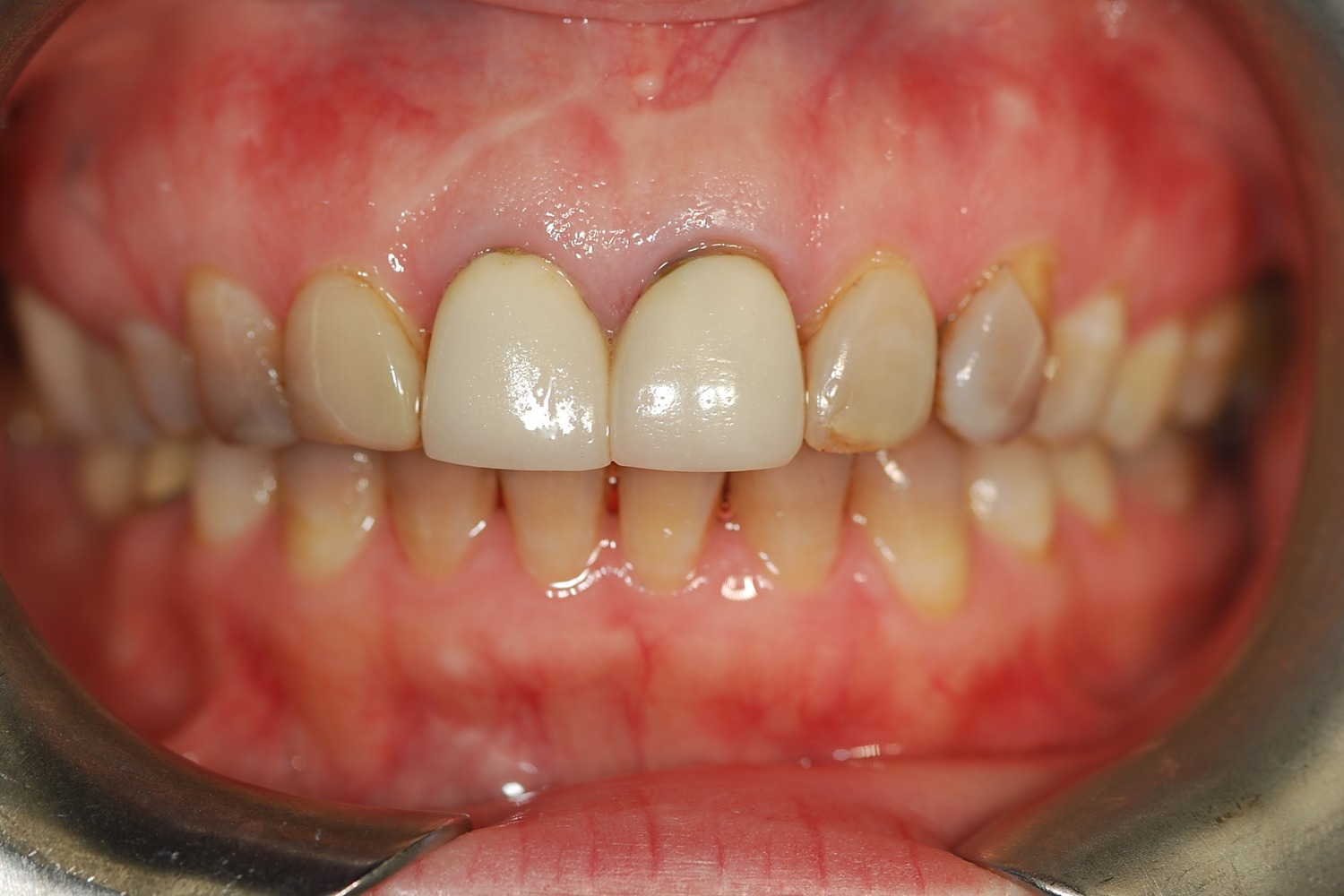
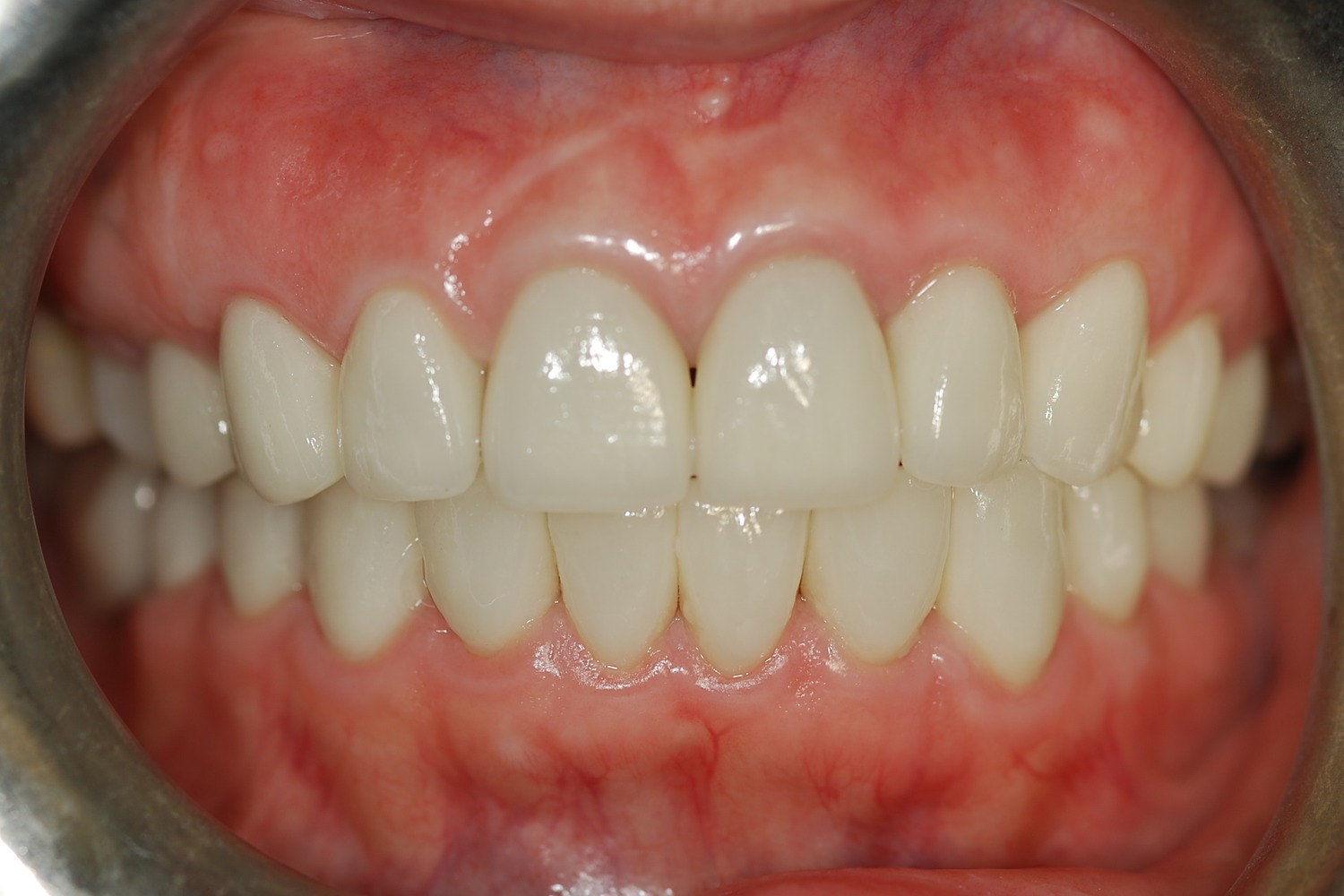
Intraoral view
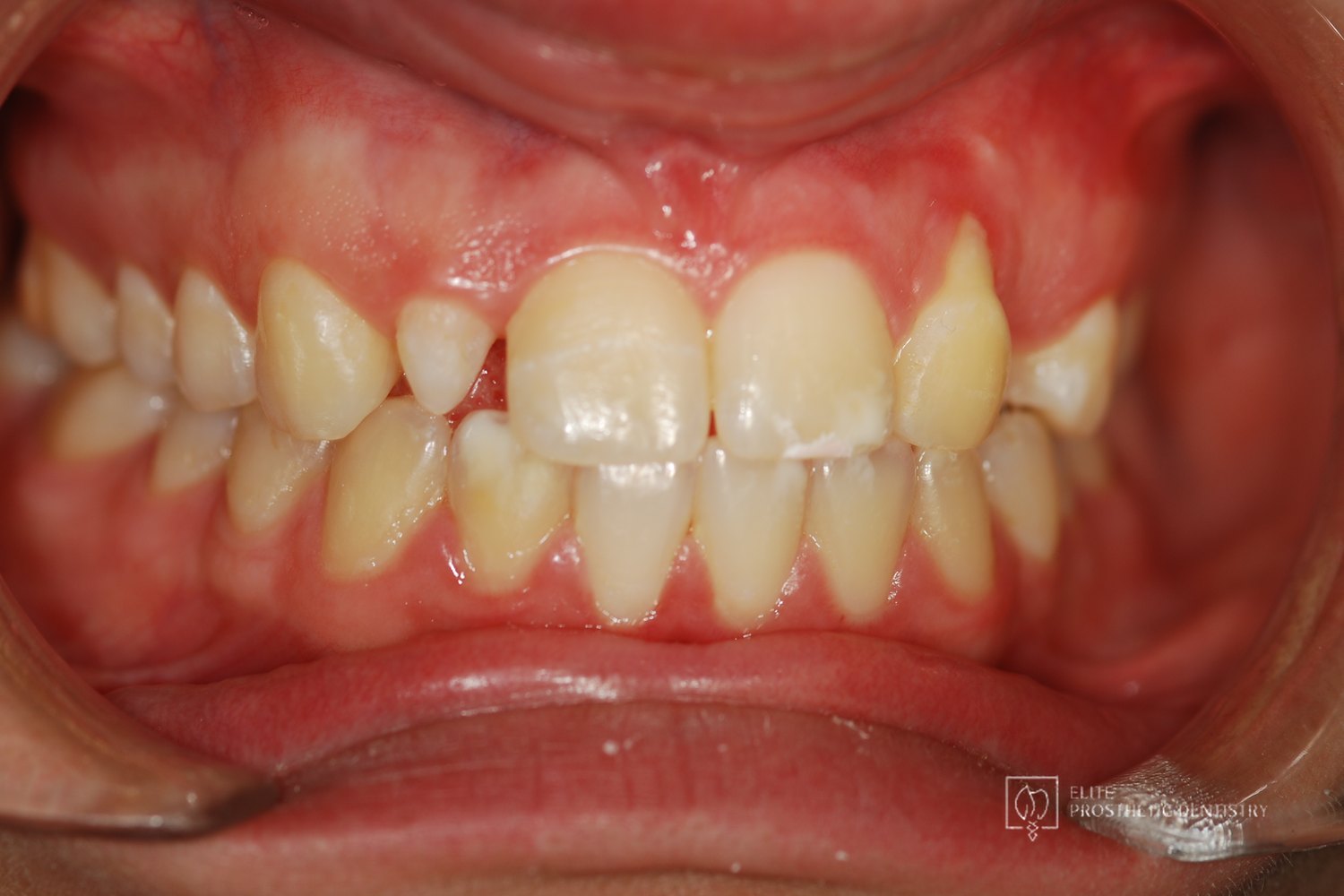 Before
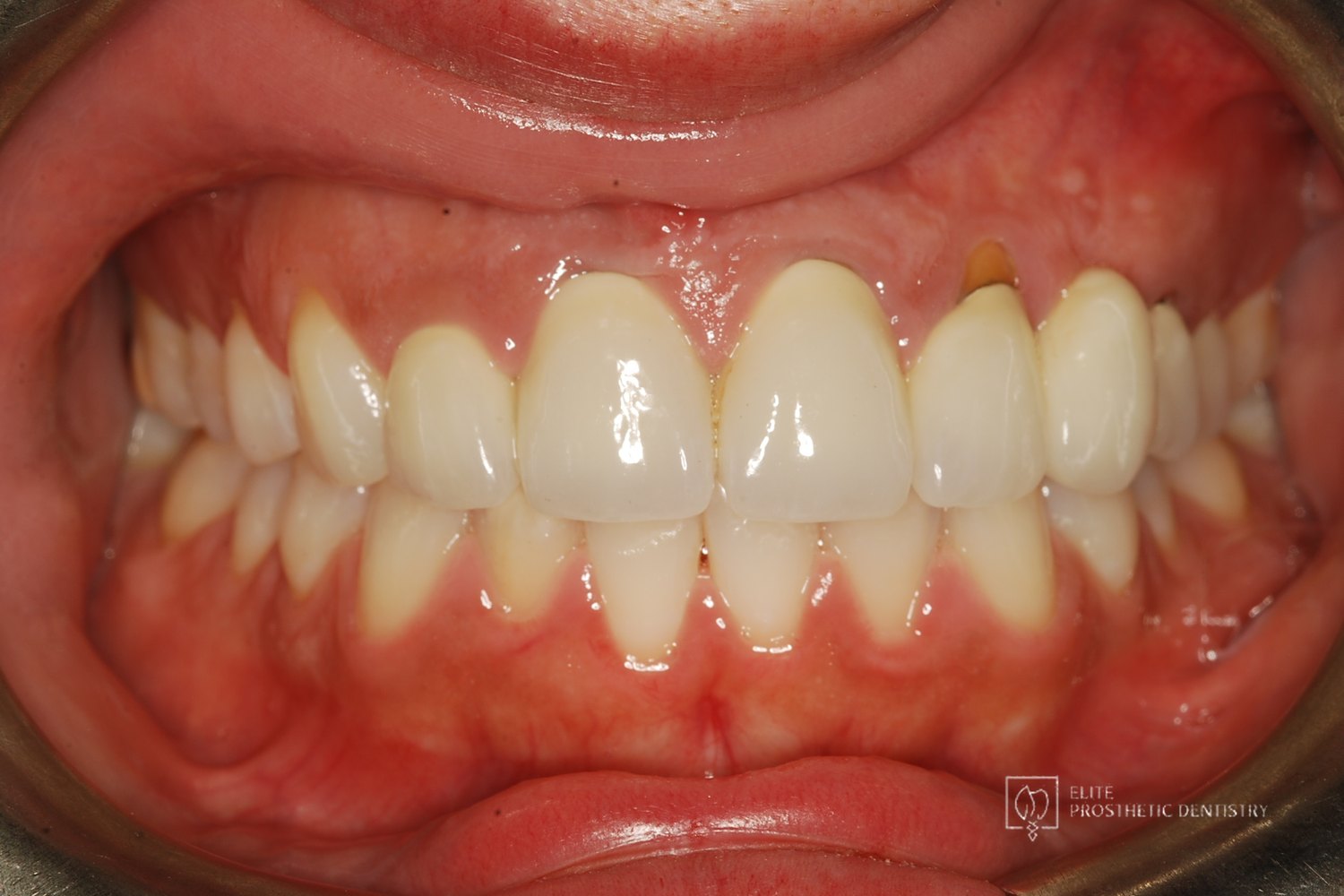 After
Front teeth stabilized and reshaped after orthodontic treatment
Stabilizing mobile upper front teeth after orthodontic treatment in Washington, DC for a young patient whose smile was not finished when the braces came off. This documented case at Elite Prosthetic Dentistry addressed a peg-shaped lateral incisor, bone resorption around a canine, and marked mobility in several front teeth with a fixed splint from the upper right lateral incisor to the upper left second premolar, designed as natural-looking individual teeth. Treatment was planned and completed by Gerald Marlin, D.M.D., M.S.D., a prosthodontist who plans stability and esthetics together.
Case at a Glance
- Treatment
- Fixed splint from the upper right lateral incisor to the upper left second premolar with customized restorations
- Approach
- Comprehensive evaluation, endodontic assessment for possible nerve involvement, stabilization of mobile teeth, correction of the peg lateral, preservation of the orthodontic result
- Case Type
- Post-orthodontic stabilization / Esthetic and functional restoration of the upper front teeth
- Patient Concern
- Front teeth that had become loose after braces, a small peg-shaped lateral incisor, and spacing that did not match the result she had worked for.
- Decision Point
- Leave mobile teeth to drift and risk losing them, or stabilize them with a fixed splint while correcting the esthetic problems at the same time.
- Outcome
- Stable, even upper front teeth that preserve the orthodontic result and look like natural individual teeth.
- Why It Matters
- Shows that the end of orthodontics is sometimes the beginning of the prosthodontic work needed to keep the result, and that stability and esthetics can be solved in one plan.
The presenting condition
This young patient had just completed orthodontic treatment and expected to be done. Instead, the evaluation found several problems that braces alone could not solve. One lateral incisor was small and peg-shaped. There was bone resorption around a canine. Several upper front teeth were noticeably mobile, and one had grade 3 mobility and had shifted out of its intended position. Radiographs also showed enlarged nerve canals in some teeth, raising the possibility that root canal treatment would be needed. Without stabilization, the teeth she had just spent years aligning were at risk of drifting or being lost.
Clinical Findings
- →Orthodontic treatment just completed, with the result at risk
- →A peg-shaped lateral incisor affecting the symmetry of the smile
- →Bone resorption around a canine
- →Marked mobility in several upper front teeth, including grade 3 mobility in one tooth that had shifted out of position
- →Enlarged nerve canals on radiographs suggesting possible need for endodontic treatment
Why a fixed splint rather than individual crowns or a retainer
Mobile teeth cannot be stabilized by a removable retainer, and crowning them one at a time leaves each tooth to carry its own load with the same compromised support. A fixed splint joins the teeth into a single unit so that biting forces are shared across the group and the weakest teeth are carried by the stronger ones. Splinting also lets the restorations do double duty: the peg lateral is reshaped to full size, the drifted tooth is brought back into the smile line, and the edges are leveled, all within the same restorations that provide the stability. The endodontic assessment came first so that any tooth with nerve involvement could be treated before it was built into the splint. Post-orthodontic care is as important as the orthodontics itself; the goal was a smile that not only looked finished but would stay that way.
The treatment plan
After a thorough evaluation, the plan addressed stability, nerve health, and esthetics in one coordinated sequence.
-
1
Comprehensive evaluation and endodontic assessment
Clinical examination and radiographs documented the mobility, the bone loss around the canine, and the enlarged nerve canals. Teeth with possible nerve involvement were assessed so that any endodontic treatment could be completed before the final restorations.
-
2
Design of the splinted restorations
The restorations from the upper right lateral incisor to the upper left second premolar were planned as a fixed splint, with each unit shaped as an individual natural tooth so the splint would not read as a bridge.
-
3
Correction of the peg lateral and the drifted tooth
Within the splint design, the small lateral incisor was restored to full, symmetrical proportions and the tooth that had shifted was brought back into alignment with the smile line.
-
4
Fabrication and delivery
The splinted restorations were fabricated in direct coordination between Dr. Marlin and the practice's in-house laboratory to control fit, contour, and esthetics, then delivered to stabilize the teeth and preserve the orthodontic result. See dental crowns for how these restorations are made.
The outcome
The completed restorations stabilized teeth that had been at risk and finished the smile the orthodontic treatment had started. The before and after views at the top of this page show the peg lateral and uneven edges replaced by even, natural-looking front teeth, and the retracted view shows the splinted restorations in place. The patient kept the alignment she had worked for and gained a stable, long-term result designed to last.
Result Highlights
- ✓Mobile upper front teeth stabilized with a fixed splint from the lateral incisor to the second premolar
- ✓Endodontic assessment completed before the teeth were built into the final restorations
- ✓Peg-shaped lateral incisor restored to full, symmetrical proportions
- ✓Drifted tooth brought back into the smile line within the restorations
- ✓Orthodontic result preserved with a stable, natural-looking outcome
Who this case may sound familiar to
This story tends to resonate with patients in a few recognizable situations:
- You finished braces or aligners and your teeth still feel loose or look unfinished.
- You have a small or peg-shaped front tooth and want it to match its neighbor.
- You have been told you have bone loss or mobility around front teeth and want to keep them rather than lose them.
- You want restorations that stabilize the teeth but still look like individual natural teeth.
- You want the work planned to last rather than redone in a few years.
If any of those describe where you are, a consultation with Dr. Marlin can give you the diagnostic picture and the specific plan for your case.
Frequently asked questions
Why would teeth be loose after orthodontic treatment?
Teeth can be mobile after orthodontics when the supporting bone is reduced, when a tooth has a short or resorbed root, or when the bite loads certain teeth unevenly in their new positions. The cause is identified from clinical examination and radiographs, and the stabilization is planned around it.
What is a fixed splint and how is it different from a bridge?
A fixed splint joins several natural teeth together with connected restorations so they function as one unit and share biting forces. A bridge replaces a missing tooth by spanning a gap. A splint can be designed so each unit looks like an individual tooth, which is how the esthetic result in this case was achieved.
Can a peg-shaped lateral incisor be fixed at the same time as stabilizing the teeth?
Yes. When restorations are being made for the front teeth anyway, the peg lateral can be restored to full proportions within the same design. Solving the stability and the esthetics in one plan avoids a second round of treatment and gives a more consistent result.
Why does a prosthodontist get involved after orthodontics?
Orthodontics moves teeth; it does not change their size, repair worn edges, or restore lost bone support. When the aligned teeth need reshaping, stabilization, or restoration to complete the result, a prosthodontist plans those restorations so they hold the orthodontic correction in place for the long term.
More about the work behind this case
This case uses custom restorations to stabilize and reshape the front teeth after orthodontics, with cosmetic and functional goals solved in one plan. The approach reflects the practice’s philosophy on long-term planning, and the restorations were fabricated with the in-house laboratory.
Elite Prosthetic Dentistry treats patients from across the DMV including Bethesda, Chevy Chase, McLean, Arlington, Potomac, and Great Falls, and from much further out for cases that warrant the trip.
Related Services
Related Patient Success Stories
Explore similar patient success stories demonstrating our expertise in advanced prosthetic dentistry.
 Before
 After
How Aging, Failing Dentistry Was Replaced with a Coordinated Full-Mouth Implant and Crown Reconstruction
The patient presented with throbbing upper-molar pain, long-standing infections, multiple root canals and unfinished prior treatment, generalized sensitivity, and several hopeless teeth.
 Before
 After
How Aging, Opaque Restorations Were Replaced with Customized Ceramic Restorations Designed for Long-Term Natural Esthetics
The existing restorations appeared opaque, worn, and unnatural over time, affecting both confidence and overall smile harmony.
 Before
 After
Two Front Teeth Saved From Extraction: A Second Opinion, Custom Gold Posts, and Crowns Made to Last
Two upper central incisors with failed root canal treatment and recurrent decay had been recommended for extraction and implant replacement. A CBCT evaluation showed that removing the roots from their thin facial bone housing could create a visible esthetic defect in the gum and bone contour, made worse by the patient's high lip line.