
Our Patient Fell and Broke His Front Teeth. Temporary Restorations Were Ready the Next Day
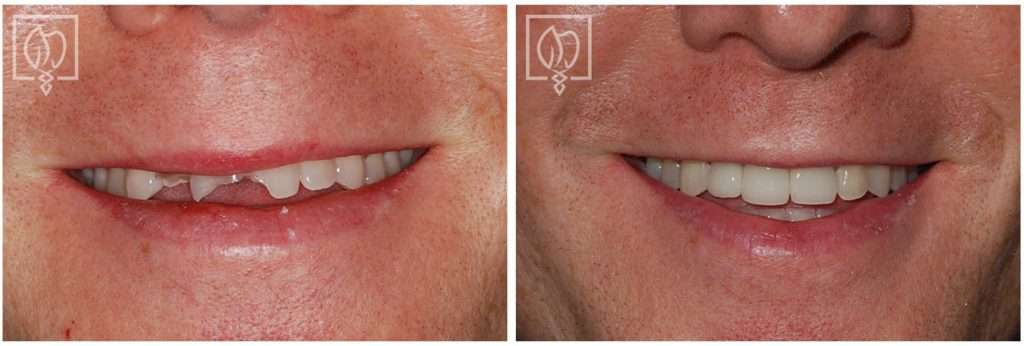
Documented before-and-after view
Additional case documentation
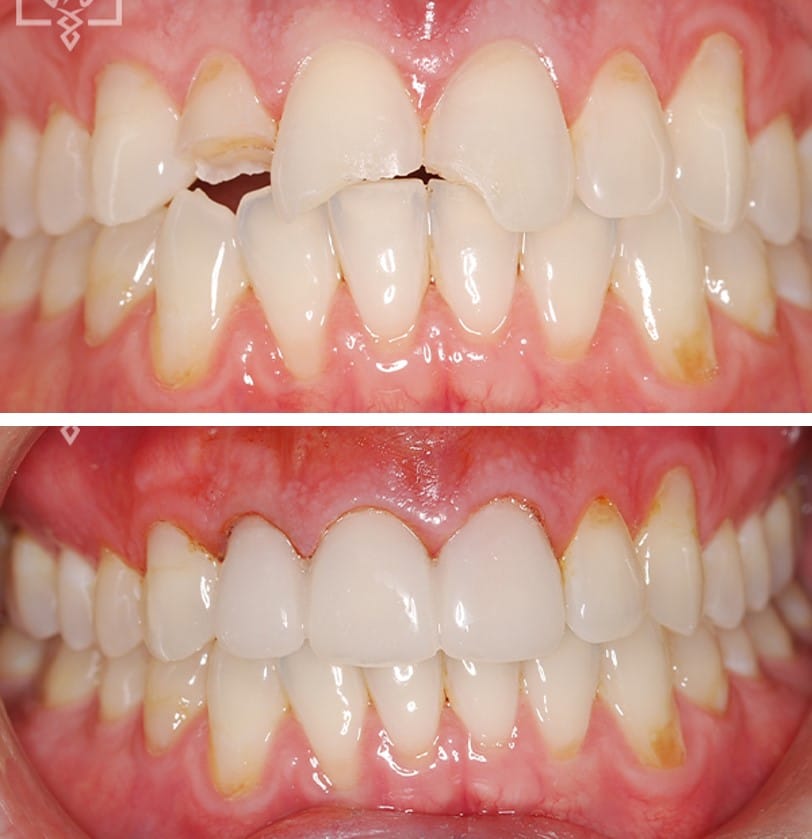
Broken front teeth restored the next day, then rebuilt to last
Emergency front-tooth repair in Washington, DC. This documented case at Elite Prosthetic Dentistry restored a patient’s smile within a day of his emergency visit after a fall broke his two front teeth, then rebuilt it permanently with custom porcelain crowns once healing was complete. Treatment was planned and completed by Dr. Gerald Marlin, D.M.D., M.S.D., a prosthodontist focused on restorative care and the esthetics of the front of the smile.
Case at a Glance
- Treatment
- Immediate temporary crowns followed by permanent custom porcelain crowns on two broken front teeth
- Approach
- Overnight in-house laboratory fabrication, four months of monitored healing, deliberate final restoration
The presenting condition
Accidents happen. A fall, a sports injury, or an unexpected collision can break or fracture front teeth, and the damage is never only functional. Most patients with broken front teeth feel an urgent need to restore their appearance and are understandably distressed about being seen in public.
That was exactly the situation here. The patient fell and broke his two front teeth over a weekend, when most dental practices were closed, and faced the prospect of waiting until the following week just to be seen, let alone restored. Beyond the functional damage, he was deeply concerned about his appearance and his ability to face people through his daily life and work. He came to Elite Prosthetic Dentistry seeking urgent help, and the first step was comprehensive records and radiographs to assess the extent of the damage and plan the right approach.
Clinical Findings
- →Two front teeth broken in a fall over a weekend, outside normal practice hours
- →Compromised function combined with immediate concern about appearance at work and in daily life
- →Comprehensive records and radiographs taken to assess the full extent of the damage
- →Tooth structure and supporting tissues that would need time to stabilize and heal before final restoration
Why this case required prosthodontic-level planning
Dental emergencies invite two opposite mistakes. The first is doing nothing quickly, leaving the patient to hide a broken smile for a week or more while waiting for an appointment. The second is doing everything quickly, cementing permanent restorations onto traumatized teeth before the tooth structure and supporting tissues have shown how they will heal. Front-tooth trauma needs both speed and patience, in that order. The prosthodontic answer is to separate the two problems: solve the emergency immediately with well-made temporary restorations, then design the permanent crowns deliberately once healing is confirmed. Delivering the immediate part on a next-day timeline is only realistic when the practice controls its own laboratory.
The decision behind the result: immediate temporaries, unhurried finals
The defining judgment in this case was to treat the emergency and the restoration as two different jobs. Because the practice operates an in-house laboratory, custom temporary crowns were fabricated overnight, and the patient had his smile back the day after his emergency visit. Those temporaries did three things at once: they restored his appearance and confidence, they let him return to normal daily activities and work without self-consciousness, and they protected the teeth while the tooth structure stabilized and healed.
That immediate solution removed all pressure from the permanent restoration. Over the next four months, healing was monitored carefully, and only once it was confirmed complete were the final crowns fabricated and placed. The permanent result was built on healed, stable foundations rather than rushed onto injured teeth.
The treatment plan
-
1
Urgent evaluation
Comprehensive records and radiographs on presentation to assess the extent of the damage and plan the optimal treatment approach.
-
2
Overnight temporary crowns from the in-house laboratory
Custom temporaries fabricated overnight and placed the next day, restoring appearance and function immediately while the teeth began to heal.
-
3
Four months of monitored healing
The tooth structure and supporting tissues were given time to stabilize, with progress checked carefully before any permanent work began.
-
4
Permanent custom porcelain crowns
Final crowns fabricated in the in-house laboratory with attention to tooth anatomy, contours that support gum health, proper emergence angles, and porcelain translucency chosen for a three-dimensional, natural appearance that complements his smile line.
The outcome
After four months of healing and restoration, the patient received his permanent porcelain crowns and a completely rejuvenated smile. The natural appearance, proper translucency, and subtle color characteristics of the custom-crafted crowns produced a result virtually indistinguishable from natural teeth, and the esthetic improvement went beyond repair. The final crowns were designed to complement his smile line and enhance his facial features, and he found the result more attractive than his original teeth.
Just as important, he regained his confidence and social comfort. The case illustrates a principle that runs through prosthodontic emergency care: immediate response combined with deliberate planning produces the best outcomes. Dr. Marlin discusses the clinical approach to broken front teeth and smile restoration in a detailed case presentation on the practice’s YouTube channel.
Result Highlights
- ✓Custom temporary crowns fabricated overnight in the in-house laboratory
- ✓Smile, function, and confidence restored the day after the emergency visit
- ✓Four months of monitored healing before any permanent restoration
- ✓Permanent porcelain crowns matched for anatomy, translucency, and smile-line harmony
- ✓A final result the patient found more attractive than his original teeth
- ✓Emergency care and definitive restoration completed by one practice, on one plan
Who this case may sound familiar to
This case tends to resonate with patients in a few recognizable situations:
- You broke a front tooth and the idea of being seen at work before it is fixed is hard to face.
- The injury happened on a weekend or evening, and every practice you called was closed.
- You want the emergency handled now, but you do not want a rushed repair to become the permanent result.
- You worry that a rebuilt front tooth will never look like it belongs with the others.
- You would rather have one practice manage everything, from the urgent visit through the final crowns.
If any of those describe where you are, a consultation with Dr. Marlin can establish the diagnostic picture and the specific options for your case.
Frequently asked questions
How quickly can broken front teeth be restored?
When a practice has its own laboratory, custom temporary crowns can often be fabricated overnight and placed within about a day of the emergency visit. In this case the patient had his smile restored the day after he was seen. The permanent crowns then follow once healing is complete.
Why not place permanent crowns immediately after dental trauma?
Because traumatized teeth and their supporting tissues need time to stabilize and heal, and restorations placed too early are built on foundations that are still changing. Temporary crowns protect the teeth and restore appearance while healing is monitored. In this case the final crowns were placed after four months, once healing was confirmed complete.
What difference does an in-house dental laboratory make in an emergency?
It removes the wait for an outside laboratory. Temporaries can be fabricated overnight, and the final crowns are made with direct coordination between the prosthodontist and the technician, with control over anatomy, contours, emergence angles, and porcelain translucency.
Will crowns on broken front teeth look natural?
They can, when they are designed for more than coverage. Porcelain selection, translucency, and subtle color characteristics give a crown the three-dimensional quality of a natural tooth, and proper contours and emergence angles keep the gum line healthy around it. In some cases the final result can even improve on the original smile.
Is sedation available for longer restorative appointments?
Yes. For anxious patients, sedation dentistry is available to make lengthy restoration procedures comfortable.
More about the work behind this case
This case sits at the intersection of emergency dental care, dental crowns, and the practice’s in-house laboratory, which made the overnight temporaries possible. The emergency-first, restoration-second sequencing reflects the practice philosophy applied to every urgent case.
Elite Prosthetic Dentistry treats patients from across the DMV including Bethesda, Chevy Chase, McLean, Arlington, Potomac, and Great Falls, with a record of out-of-area patients traveling to the practice for complex restorative care.
Related Patient Success Stories
Explore similar patient success stories demonstrating our expertise in advanced prosthetic dentistry.
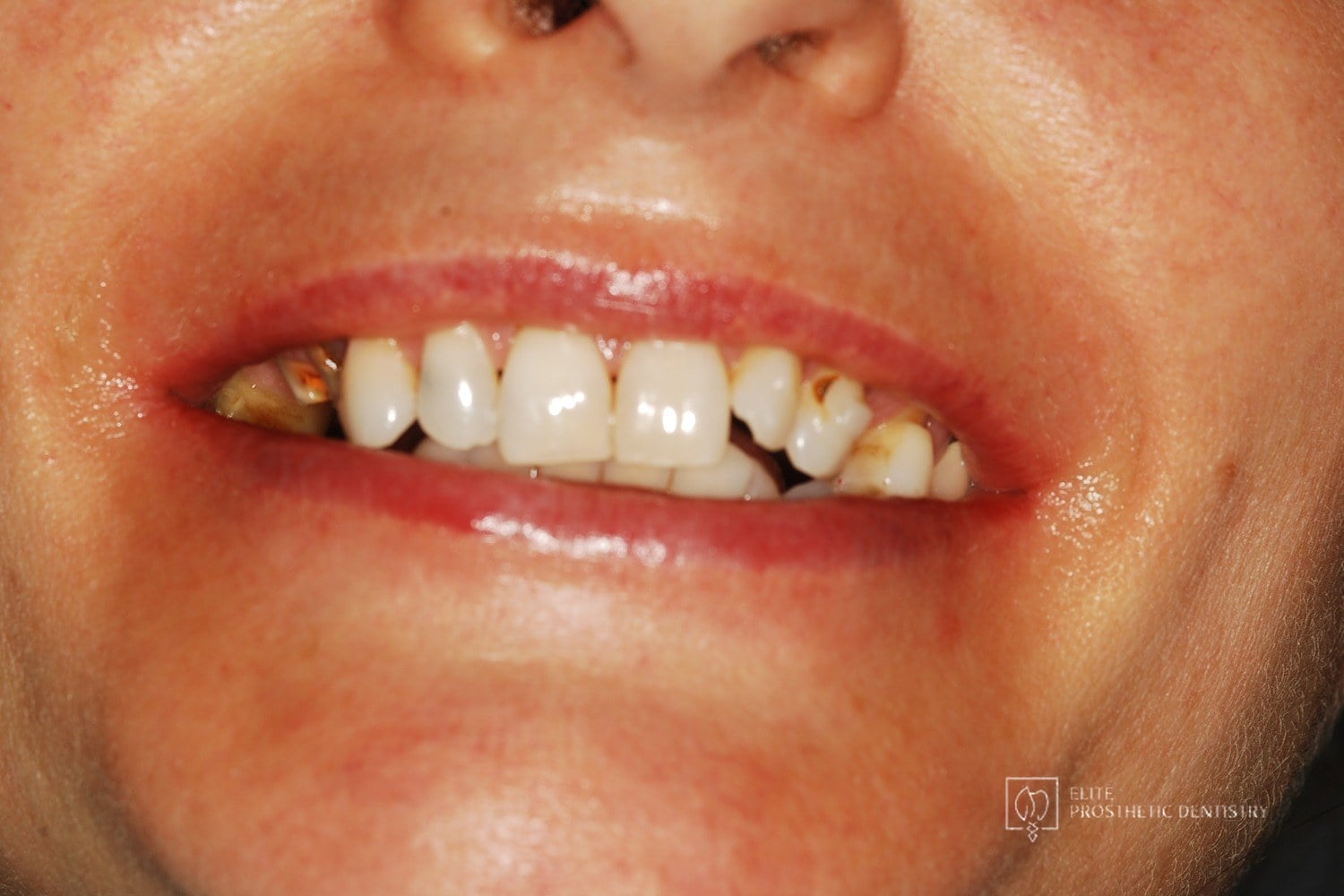 Before
 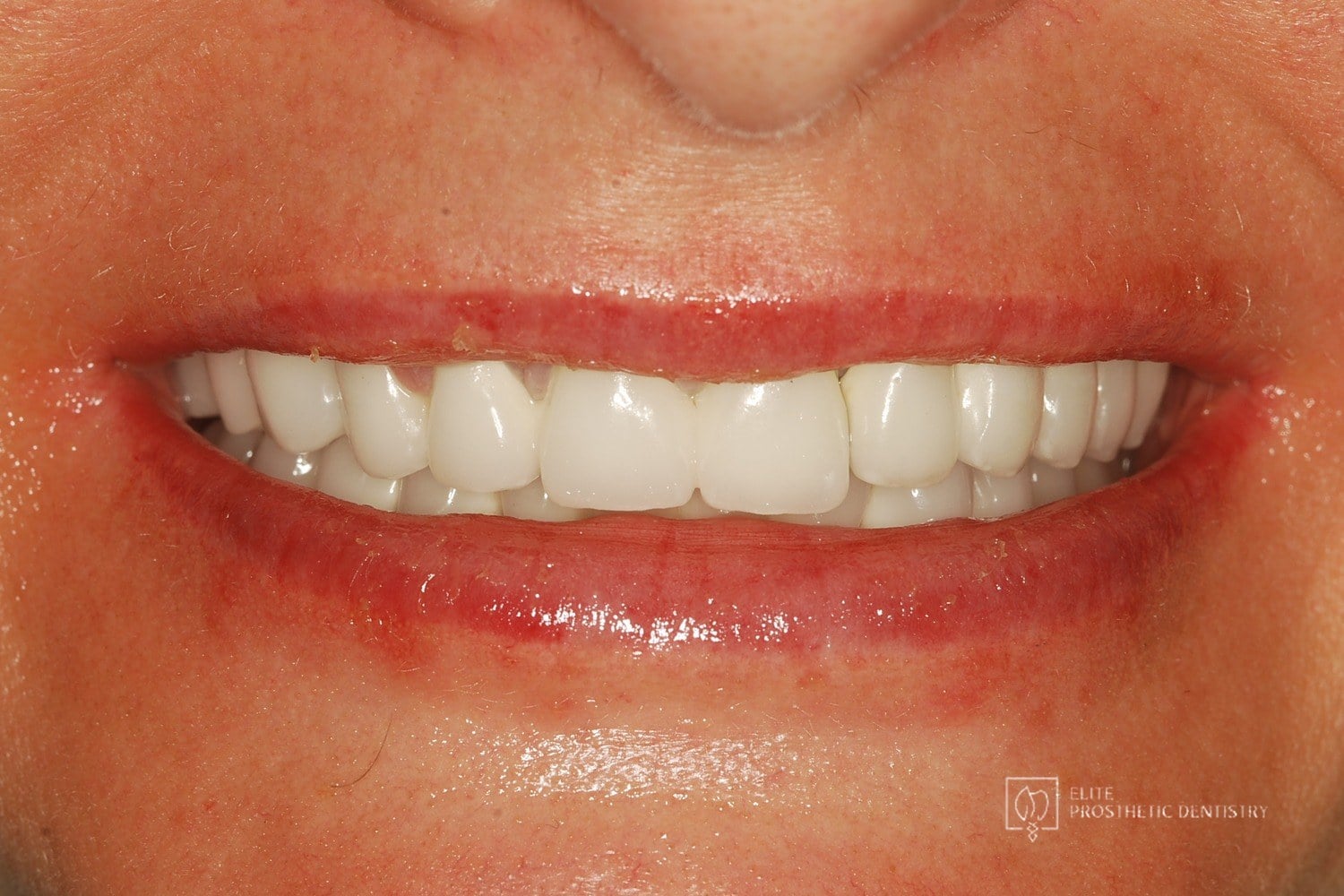 After
After How Aging, Failing Dentistry Was Replaced with a Coordinated Full-Mouth Implant and Crown Reconstruction
The patient presented with throbbing upper-molar pain, long-standing infections, multiple root canals and unfinished prior treatment, generalized sensitivity, and several hopeless teeth.
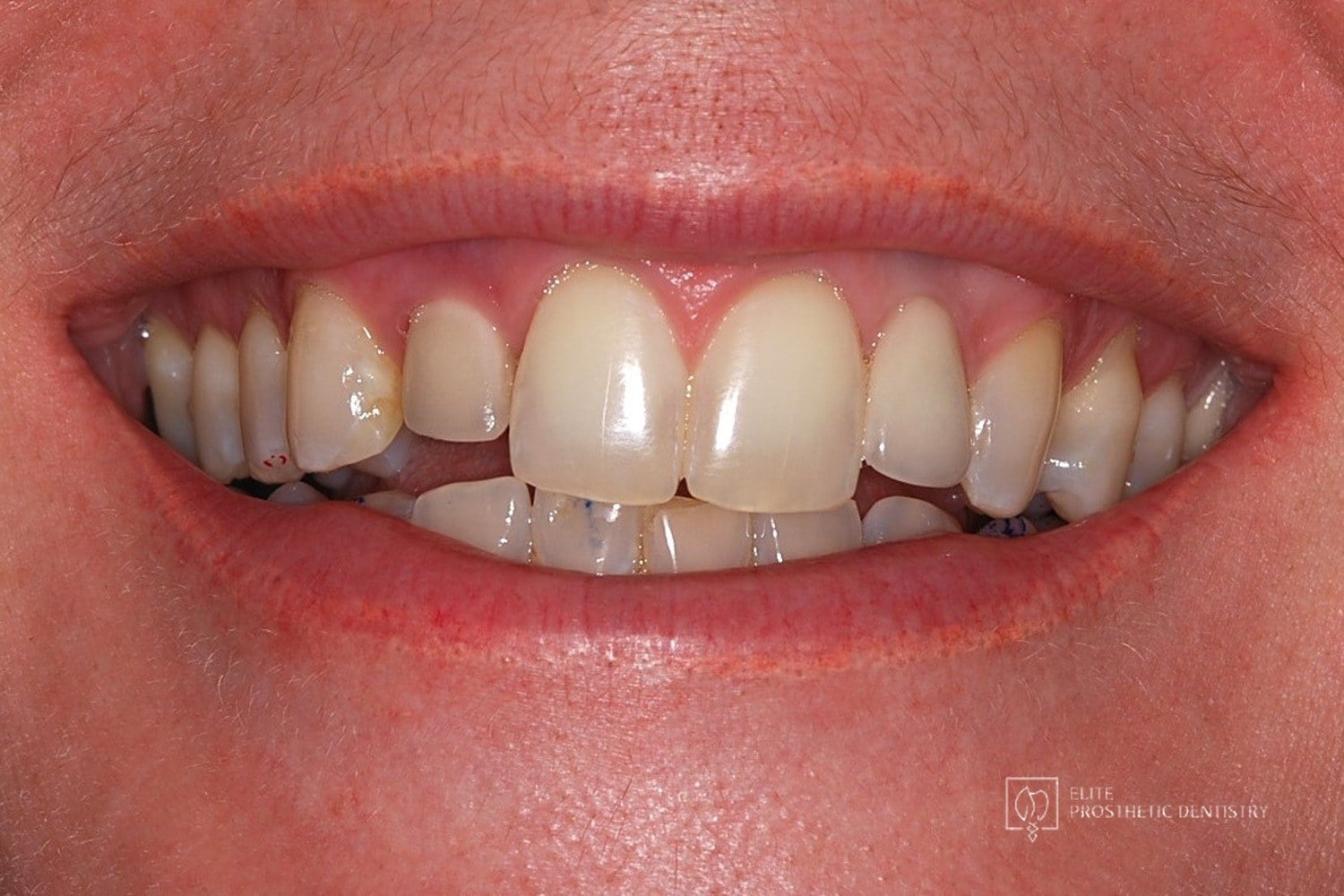 Before
 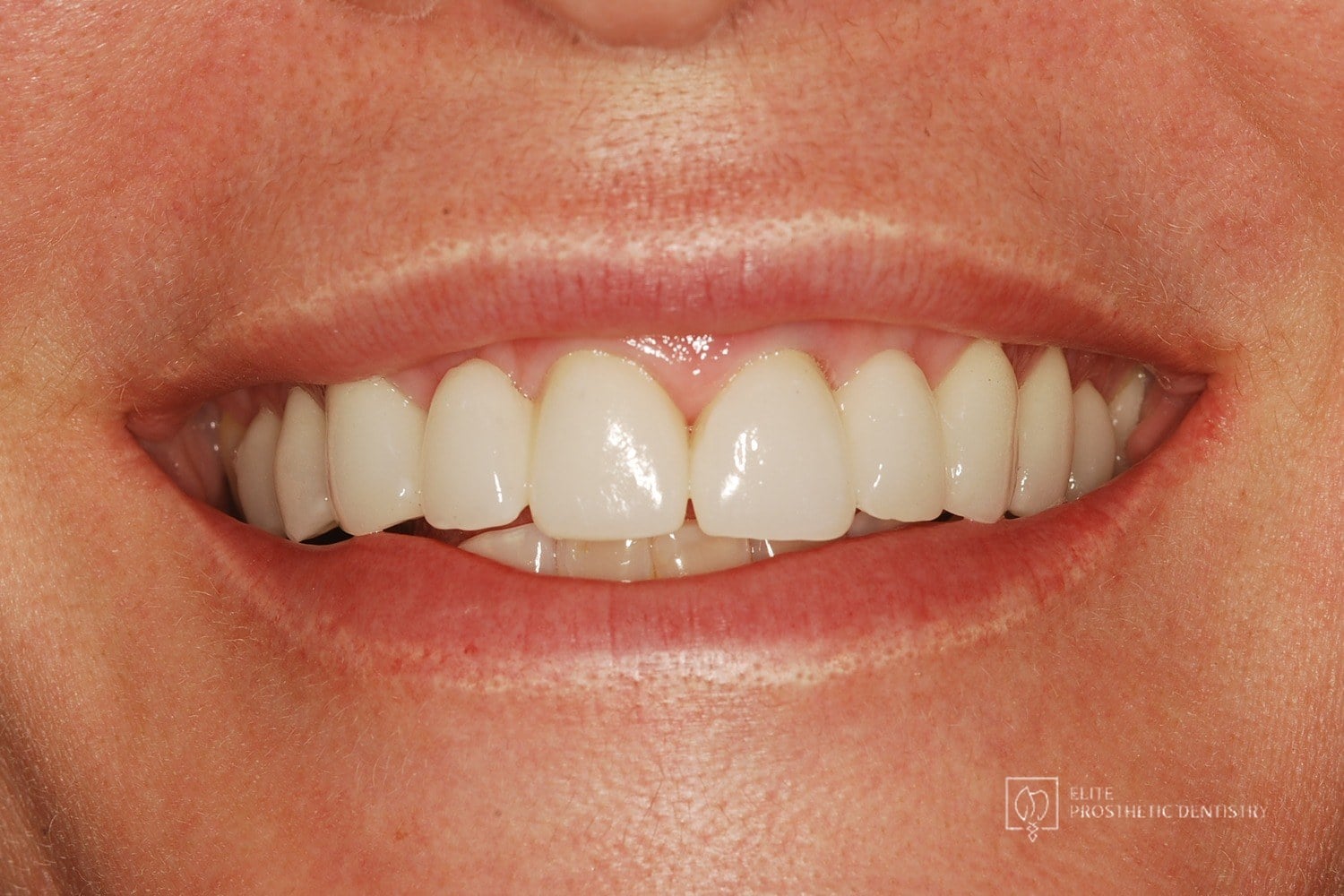 After
After How Failing Lateral Incisor Implants Were Replaced with Custom Zirconia Bridges After Severe Bone Loss Made Replacement Implants Impossible
Comprehensive examination including CBCT imaging revealed significant bone loss surrounding implants that were placed outside the buccal plate, most likely due to placement without a CBCT-generated surgical guide. The implants were determined non-salvageable, and the alveolar ridge was too narrow to support replacement implants without extensive reconstruction.
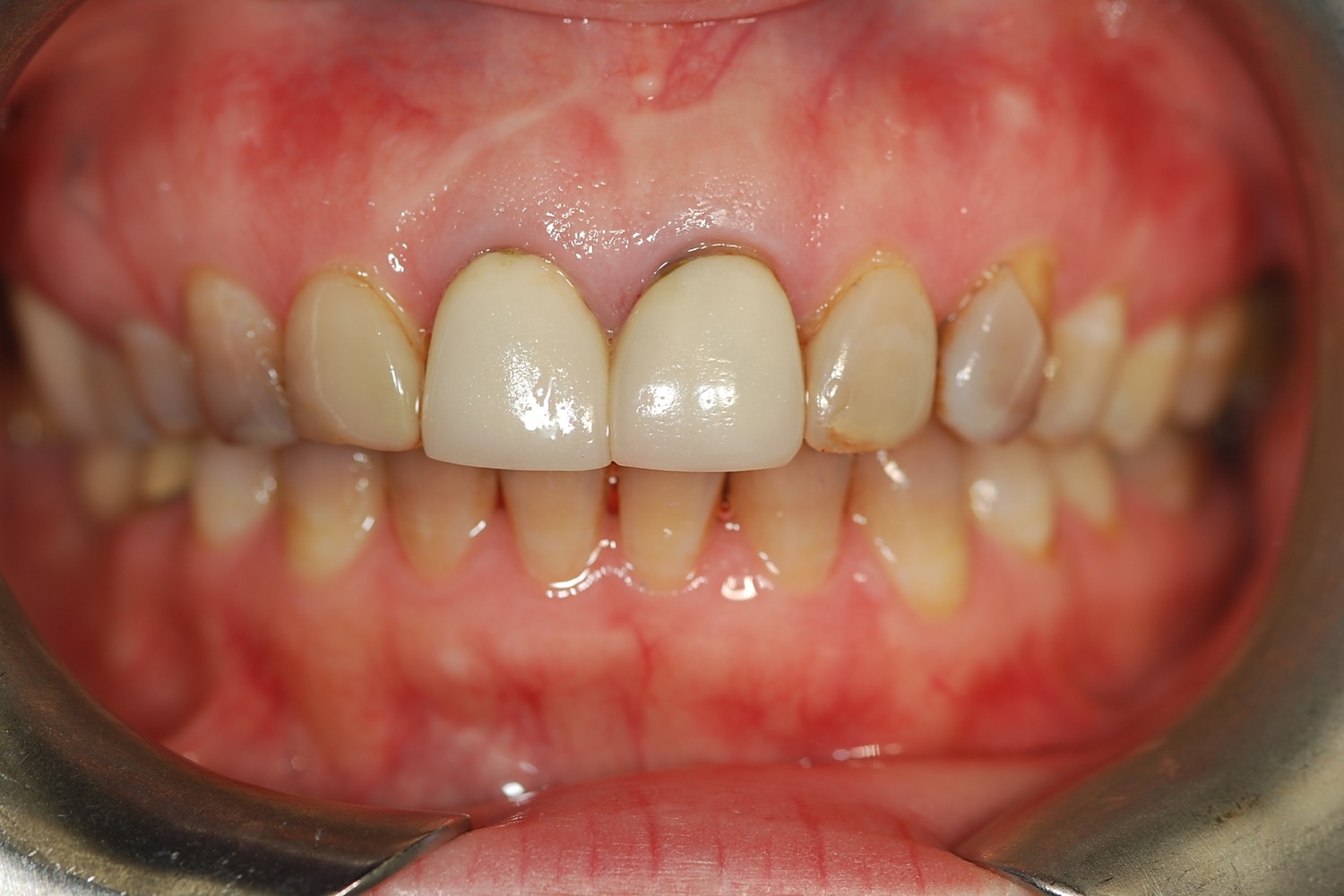 Before
 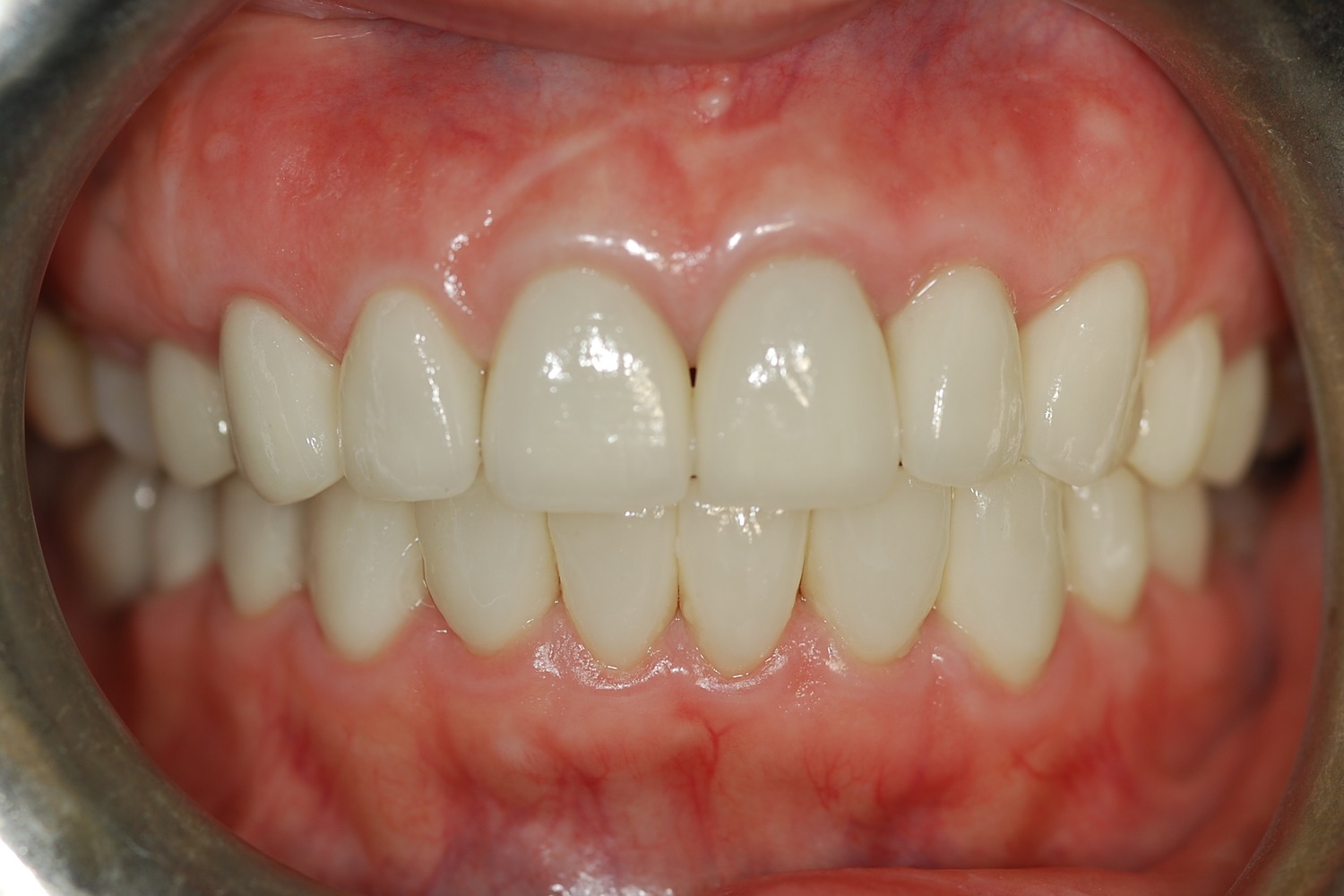 After
After How Aging, Opaque Restorations Were Replaced with Customized Ceramic Restorations Designed for Long-Term Natural Esthetics
The existing restorations appeared opaque, worn, and unnatural over time, affecting both confidence and overall smile harmony.