
What Is a Milled Crown? A Prosthodontist's Honest Assessment
There are three ways to fabricate a dental crown: machine milling, commercial laboratory fabrication, and hand fabrication by an in-house technician. This article looks closely at the first, because milled crowns have become the default in much of American dentistry, and patients deserve to understand exactly what they are getting.
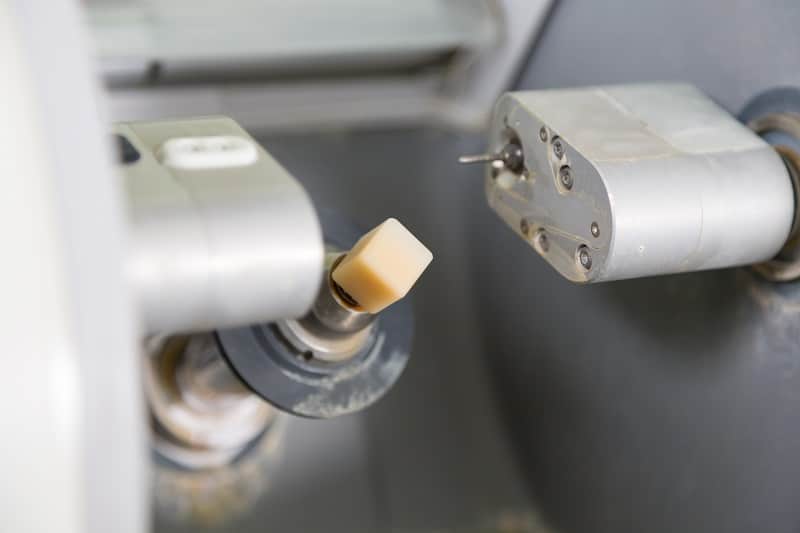
A milled crown is carved by a computerized milling machine from a solid block of ceramic, following a digital design created in CAD/CAM software. The process is fast, repeatable, and economical, which explains its popularity. Speed, however, is not the quality that matters most to the person wearing the crown for the next twenty years.
How a Milled Crown Is Designed
The design software begins with a library of stock tooth forms, statistical averages of human anatomy, and adapts one to the digital scan of your prepared tooth. A skilled operator can refine the proposal considerably. An inexperienced one accepts what the software suggests.
That distinction matters more than the machine itself. In many offices and production facilities, the person at the keyboard is a computer technician rather than a trained dental laboratory technician with a command of tooth anatomy, occlusion, and color theory. The milling machine then reproduces whatever it is given, along with any imprecision in the scan, the design, or its own aging cutting tools.
The Aesthetic Limitations
Natural teeth are not one color. They carry saturated warmth near the gumline, graduated body shades through the middle, and translucent enamel at the edge, with subtle internal characteristics unique to each person. A crown carved from a single monochromatic block cannot reproduce any of that from within. Color must be painted on the surface, and surface stain is exactly what it sounds like: a coating, subject to wear, sitting on a uniform base.
This is why milled crowns so often read as flat, opaque, or slightly gray next to natural teeth, especially in the smile zone where light passes through the edges of the front teeth. It is also why we never place fully milled crowns in the anterior aesthetic zone.
The Fit Question
Fit is the engineering side of crown quality, and it decides longevity. A crown margin that does not seal precisely against the tooth invites leakage, decay beneath the crown, and early failure. Milled crowns can fit well when every variable is controlled, and they can fit poorly when any link in the digital chain is weak. The patient has no way to see the difference at cementation. The consequences surface years later.
How We Approach Crowns Instead
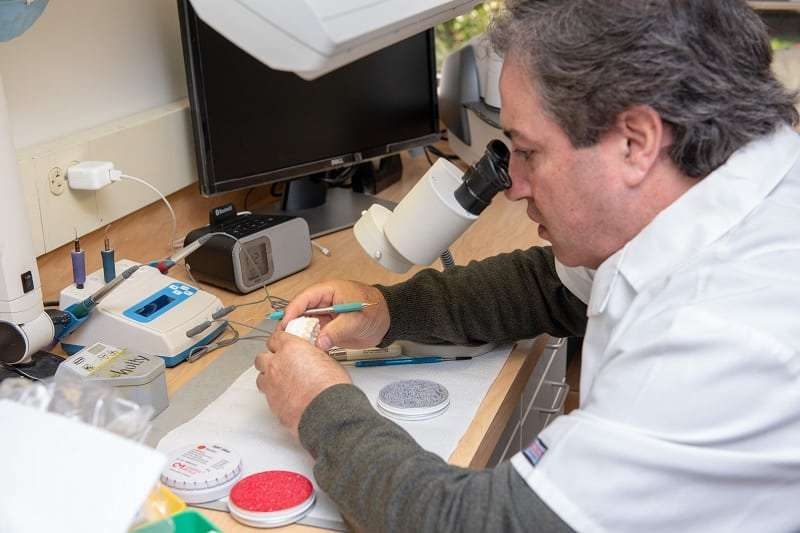
At Elite Prosthetic Dentistry, crafting crowns is an art and a science practiced in the same building. Our in-house laboratory, operating continuously since 1985, builds crowns with a three-dimensional shade process that replicates the internal colors of your teeth, layering enamel porcelains and finishing with chairside characterization so the result matches your smile, not a library average.
Dr. Marlin verifies each crown against his specifications, the fit is examined under magnification, and every crown is X-rayed at seating to confirm the margins are exact. When strength on a back tooth justifies a CAD/CAM design, we use it deliberately, finished and quality-controlled by our own team rather than outsourced to a workflow.
Patients tell us their closest friends and family cannot pick out the crown. With proper care, crowns from our laboratory have lasted 35 years and more. Compare that against the reality that a crown is often remade several times in a lifetime, and the value of doing it correctly once becomes plain. Our guides to where crowns are made and what makes a crown look natural go deeper on both fronts.
A Specialist’s Bottom Line
Milled crowns are a manufacturing method, not a standard of care. They have legitimate uses, and we use the technology where it serves the patient. But if your smile is visible when you talk, laugh, or present to a room, or if you are replacing older crowns and want the new ones to be the last ones, the difference between a library shape and a handcrafted restoration is the difference you will see in the mirror every day.
Dr. Gerald Marlin is a specialty-trained prosthodontist voted a Top Dentist by his peers in Washingtonian Magazine’s survey, most recently on the 2026 list, and one of the few in the region maintaining a full in-house laboratory. Call 202-244-2101 or schedule a consultation to discuss the right crown for your tooth. We serve Washington, DC, Bethesda, Chevy Chase, Arlington, and nearby Maryland and Virginia from our Friendship Heights office, and regularly welcome patients who travel from out of state.
See How We Resolve These Problems
Our patient success stories show real cases and real results. Browse outcomes from a specialist prosthodontist with decades of experience and 3,900+ implants placed.
Key Takeaways
- ✓ A milled crown is designed in software and cut by a machine from a solid block of ceramic, usually starting from a library of stock tooth shapes.
- ✓ Milling produces crowns quickly and consistently, but a single monochromatic block cannot reproduce the internal color layers and translucency of a natural tooth.
- ✓ Fit depends on how precisely the design is dialed in. In many settings that work is done by a software operator rather than a trained dental laboratory technician.
- ✓ Milled crowns can be reasonable for back teeth. For visible front teeth, hand fabrication with layered internal color remains the standard for a natural result.
- ✓ Elite Prosthetic Dentistry uses CAD/CAM selectively, under specialist control, with every crown verified for fit before insertion.
Frequently Asked Questions
What does 'milled crown' mean?
A milled crown is fabricated by a computer-controlled milling machine that carves the restoration out of a solid block of ceramic or composite, following a digital design. The design typically starts from a software library of standard tooth shapes adapted to a scan of your prepared tooth.
Is a milled crown the same as a same-day or CEREC crown?
Same-day crowns, including those made on CEREC-type systems, are milled crowns produced in the dental office during a single visit. The technology is the same; the tradeoff is that design, milling, and finishing are compressed into one appointment, which leaves little room for custom characterization.
What are the disadvantages of milled crowns?
The main limitations are aesthetic and fit related. Cut from one uniform block, milled crowns lack the graded internal coloration of natural enamel, so they can look flat or opaque, and surface stain wears with time. Fit accuracy depends on the scan, the machine, the condition of its cutting tools, and the operator's skill.
When is a milled crown a reasonable choice?
On back teeth, where chewing strength matters more than subtle translucency, a well-executed milled crown under strict quality control can serve well. We use CAD/CAM designs selectively in those positions, finished and verified by our in-house team, and never in the front aesthetic zone.
What is the alternative to a milled crown?
A custom fabricated crown, built by a trained laboratory technician who layers ceramic with internal color to match your natural teeth. In our practice, that happens in an on-site laboratory, with fit checked under magnification and confirmed by X-ray before the crown is cemented.
Related Patient Success Stories
Explore similar patient success stories demonstrating our expertise in advanced prosthetic dentistry.
 Before
  After
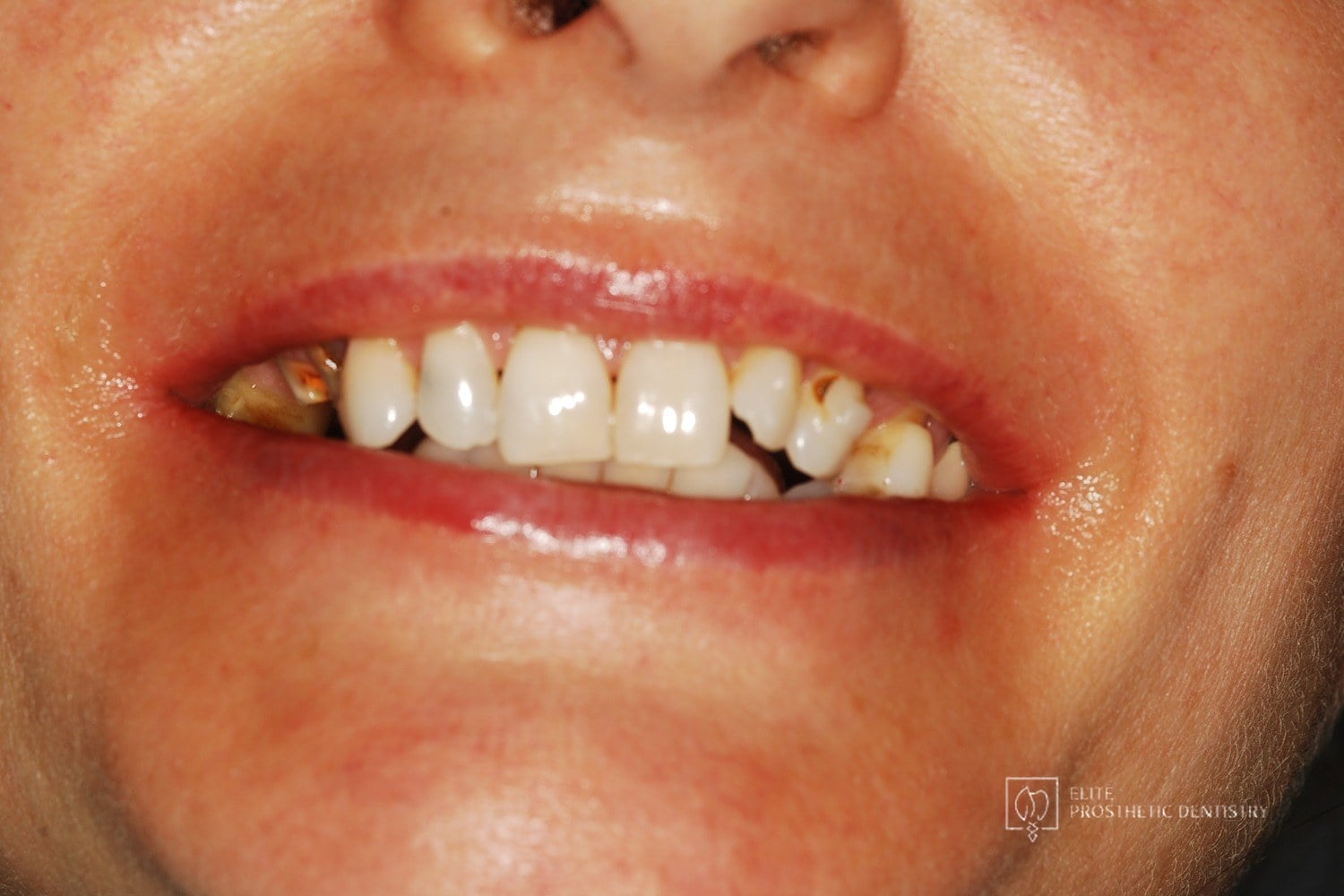
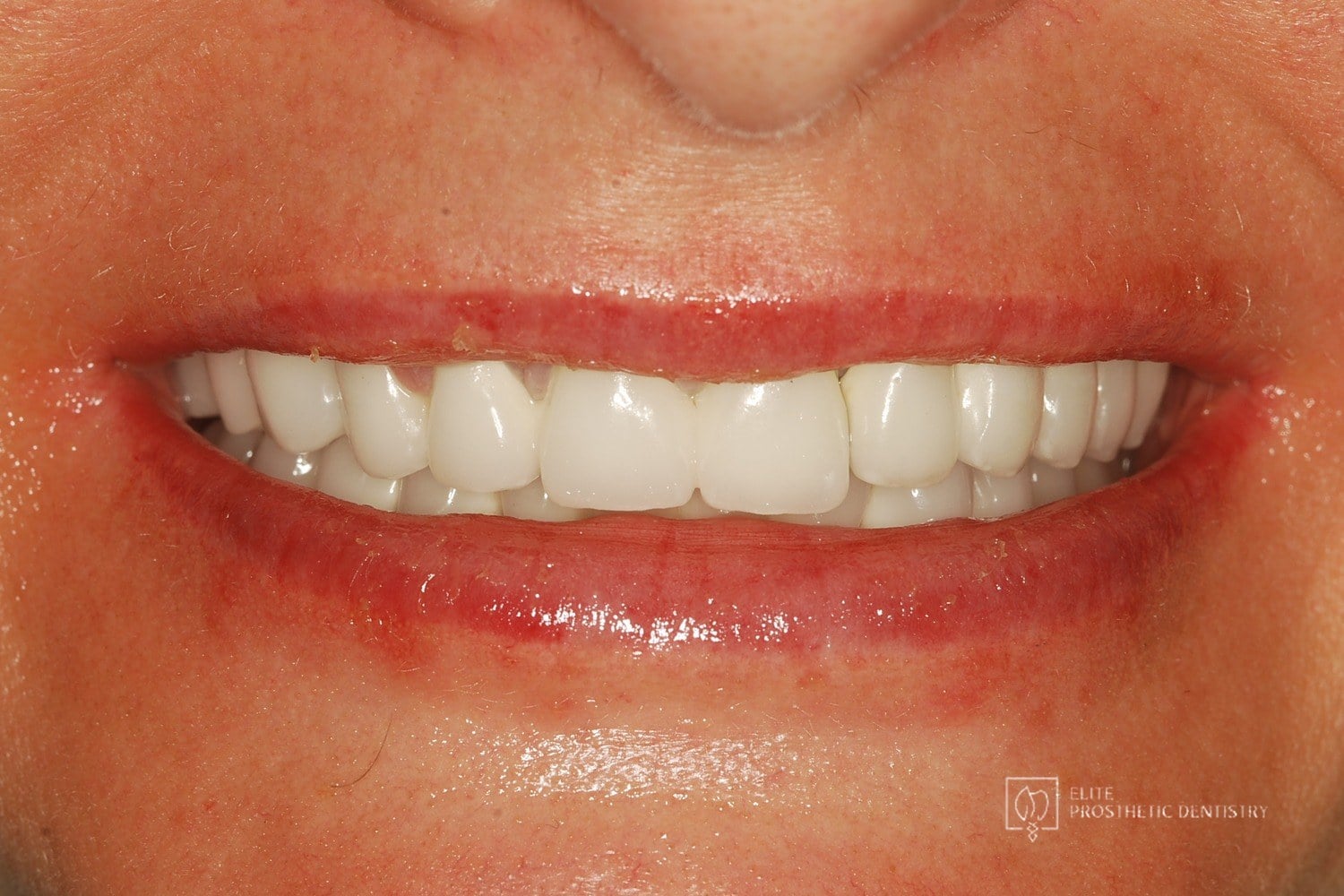
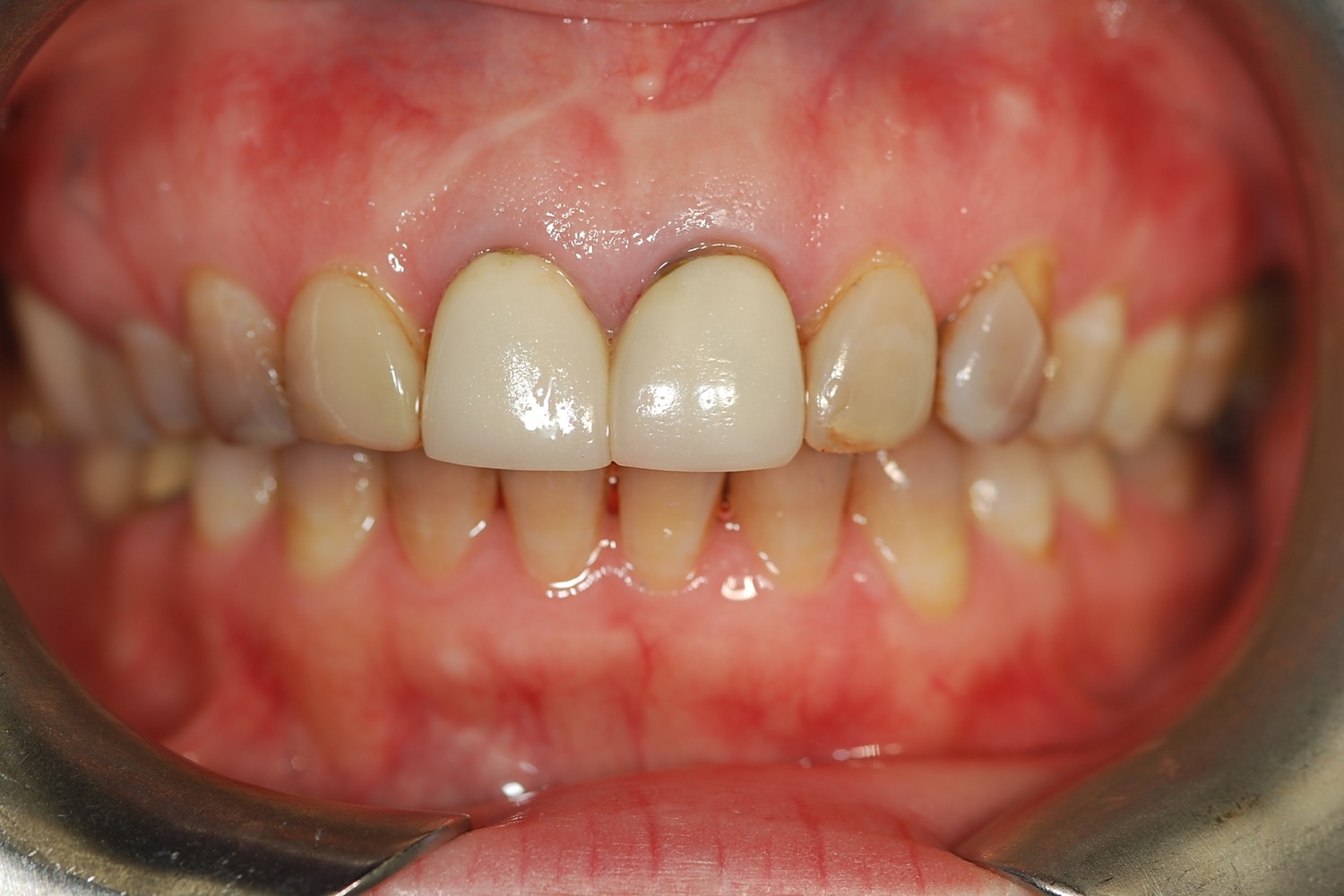
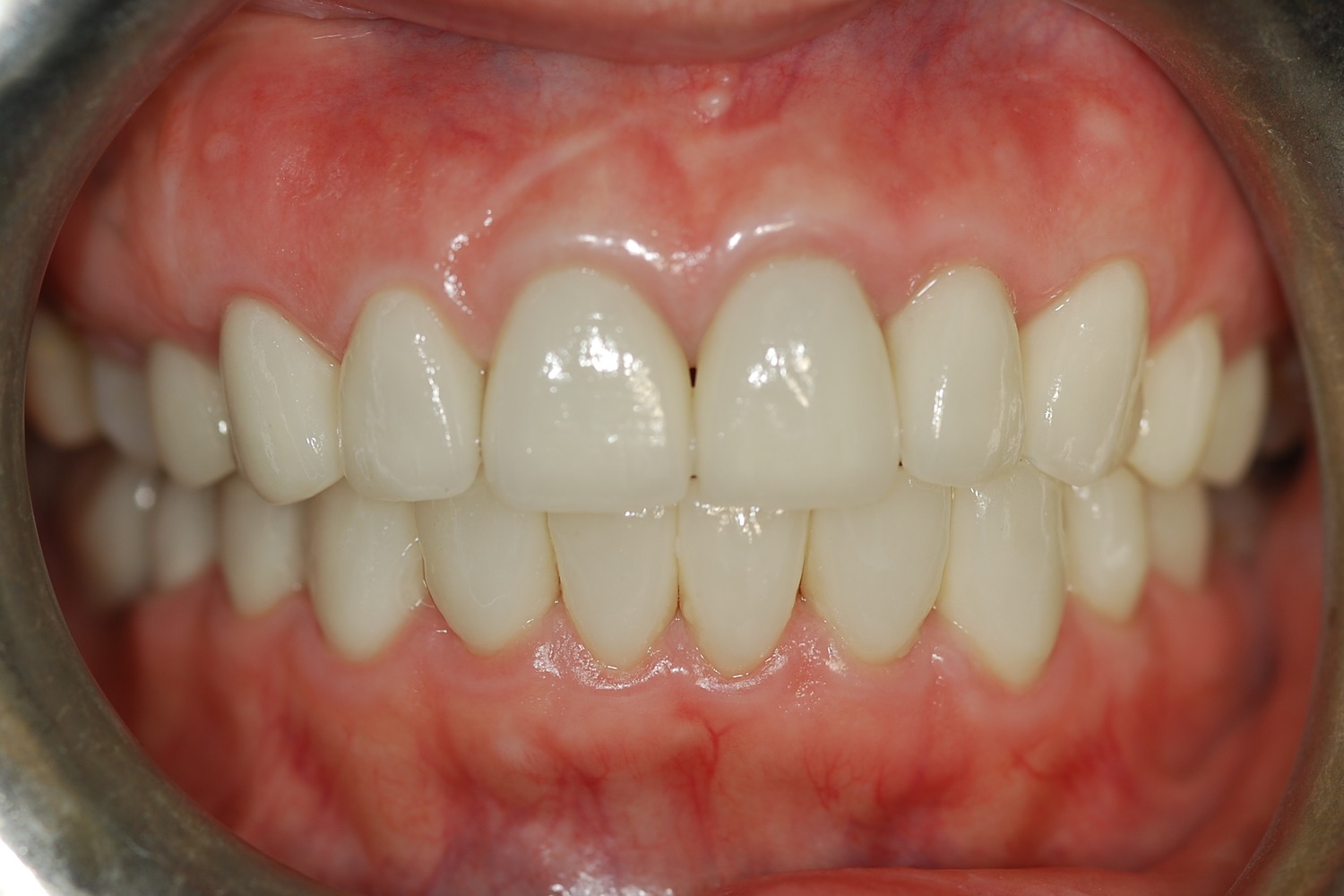
After How Aging, Failing Dentistry Was Replaced with a Coordinated Full-Mouth Implant and Crown Reconstruction
The patient presented with throbbing upper-molar pain, long-standing infections, multiple root canals and unfinished prior treatment, generalized sensitivity, and several hopeless teeth.
 Before
  After
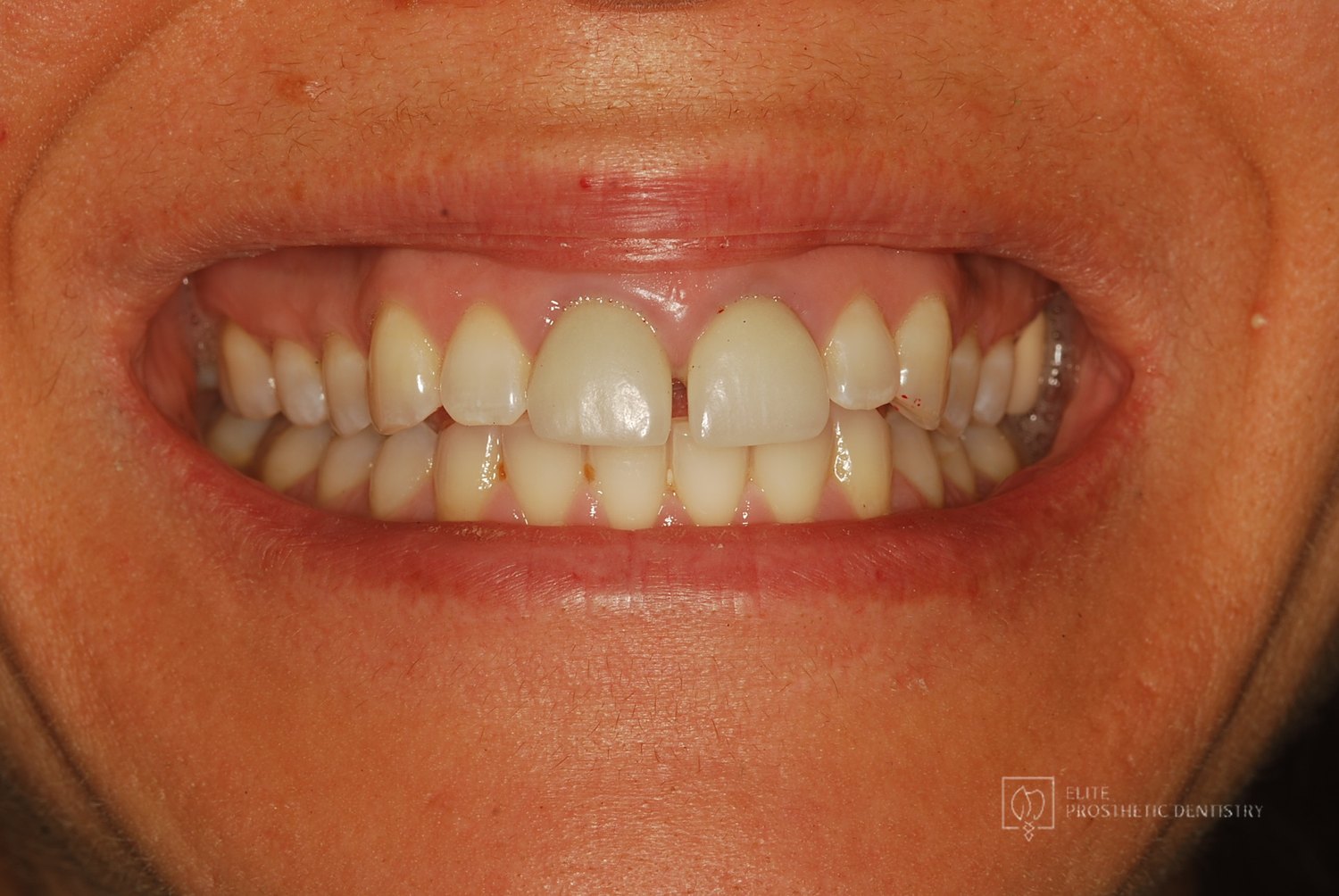
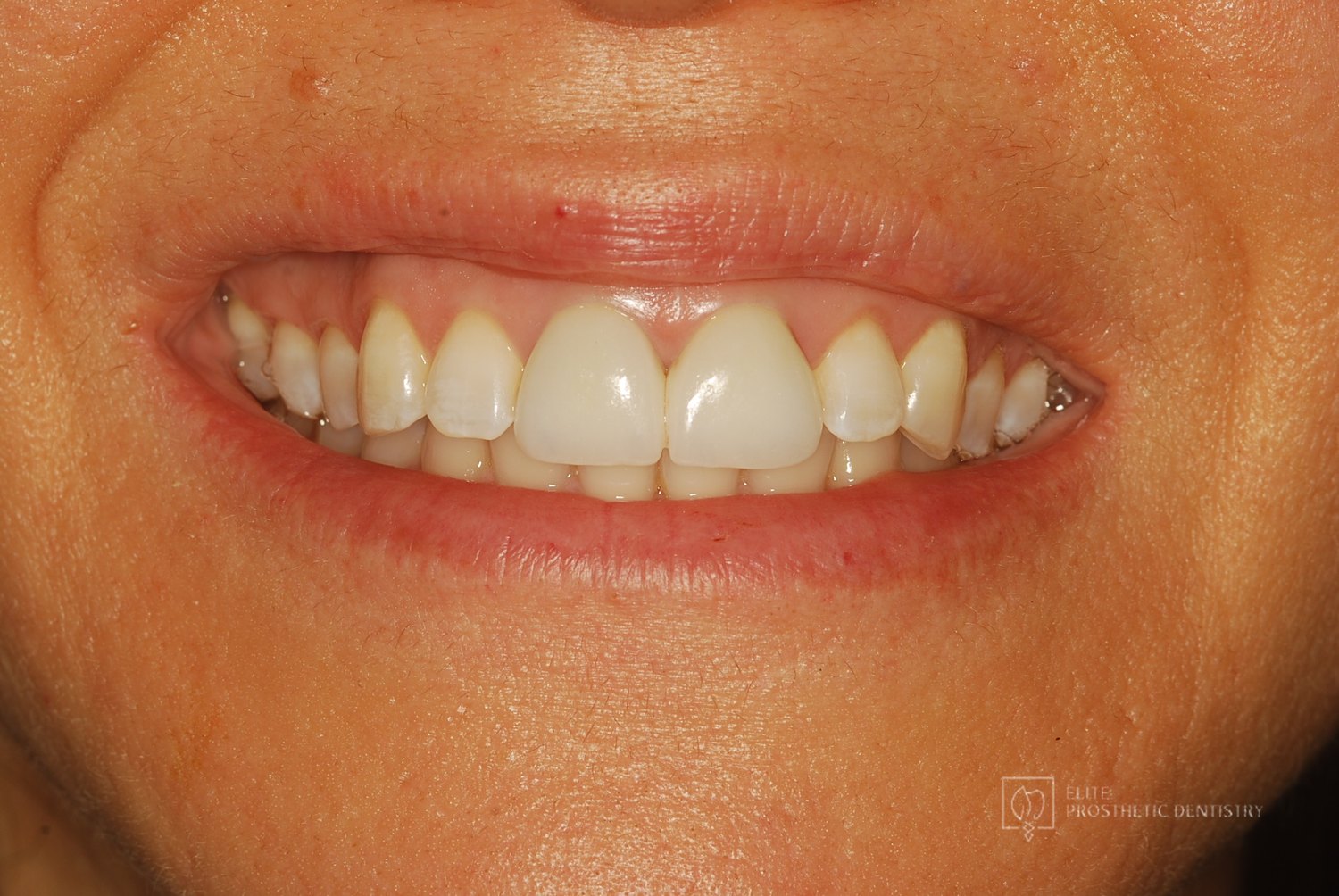
After How Aging, Opaque Restorations Were Replaced with Customized Ceramic Restorations Designed for Long-Term Natural Esthetics
The existing restorations appeared opaque, worn, and unnatural over time, affecting both confidence and overall smile harmony.
 Before
  After
After Two Front Teeth Saved From Extraction: A Second Opinion, Custom Gold Posts, and Crowns Made to Last
Two upper central incisors with failed root canal treatment and recurrent decay had been recommended for extraction and implant replacement. A CBCT evaluation showed that removing the roots from their thin facial bone housing could create a visible esthetic defect in the gum and bone contour, made worse by the patient's high lip line.
Related Articles
Deepen your knowledge with additional insights on this topic.
 Dental Crowns
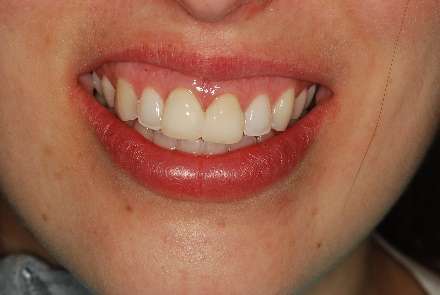
 Why Are Some Temporary Crowns More Natural Than Others?
Temporary crowns do not have to look temporary. A DC prosthodontist explains how lab-made provisionals protect your smile and preview your final crowns.
 Dental Crowns
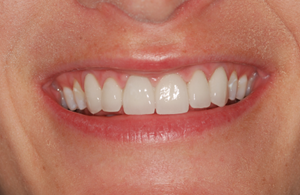
 What Makes a Natural-Looking Crown?
Emergence profile, translucency, internal color, and healthy gum response: a DC prosthodontist explains the anatomy of a crown no one can detect.
 Dental Crowns
 How Is an Immediate Smile Makeover Performed?
An immediate smile makeover transforms your smile in one visit using hand-crafted temporary crowns as a living preview. A DC prosthodontist explains how.