
Where Your Dental Crown Is Made Matters: Milled, Commercial Lab, or In-House
Dental crowns restore teeth that are broken, worn, discolored, or heavily filled, and they complete dental implant treatment. Most patients compare crowns by material, porcelain versus zirconia versus metal. Very few think to ask a more consequential question: where will my crown actually be made, and by whom?
Every crown in America comes from one of three places. It is milled by a machine, fabricated in a commercial laboratory the patient will never see, or custom made in an in-house laboratory inside the practice. The three routes are not equal, and knowing the difference will make you a far better judge of the dentistry you are buying, whether you need one crown or a complete rebuild of older work.
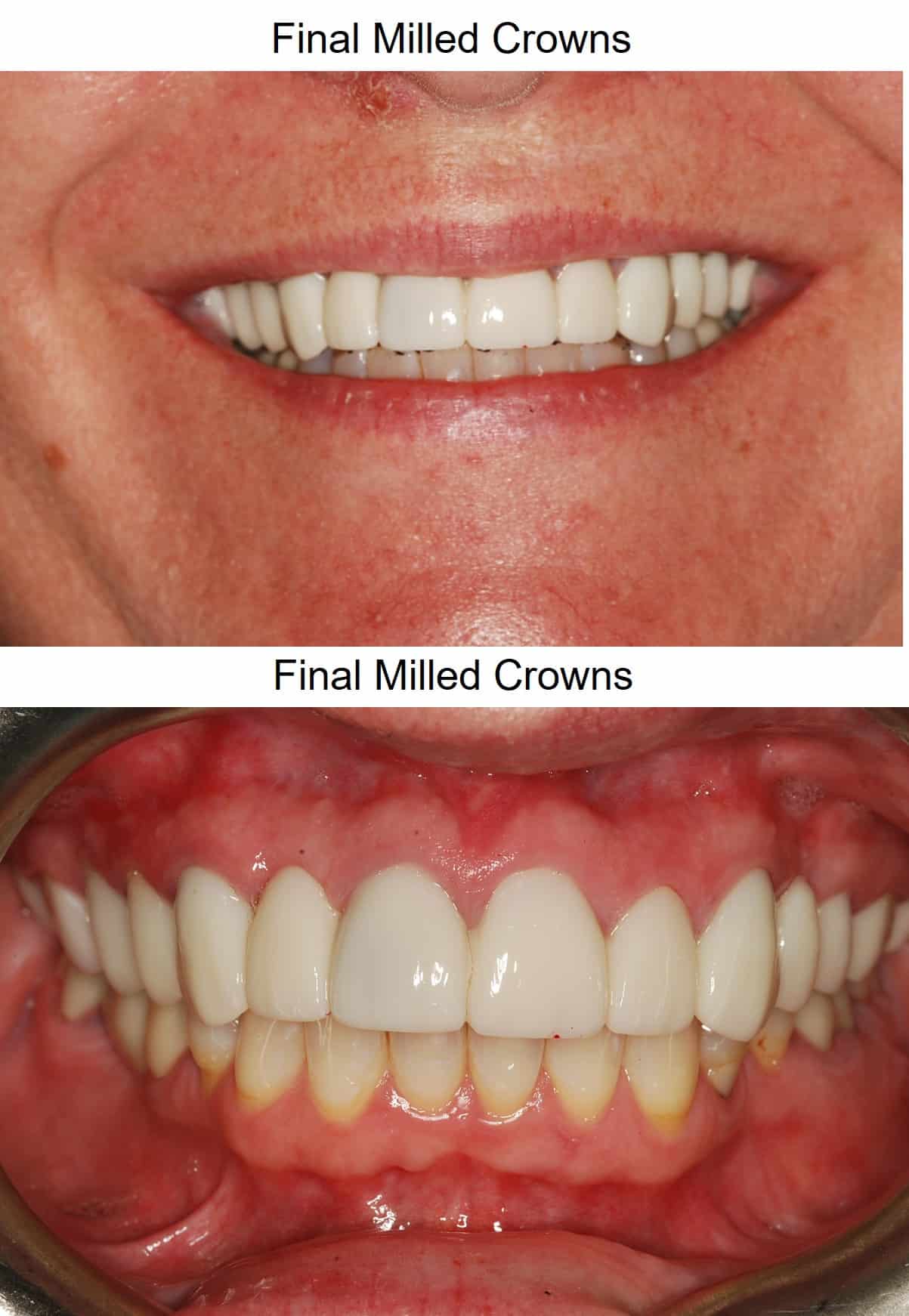
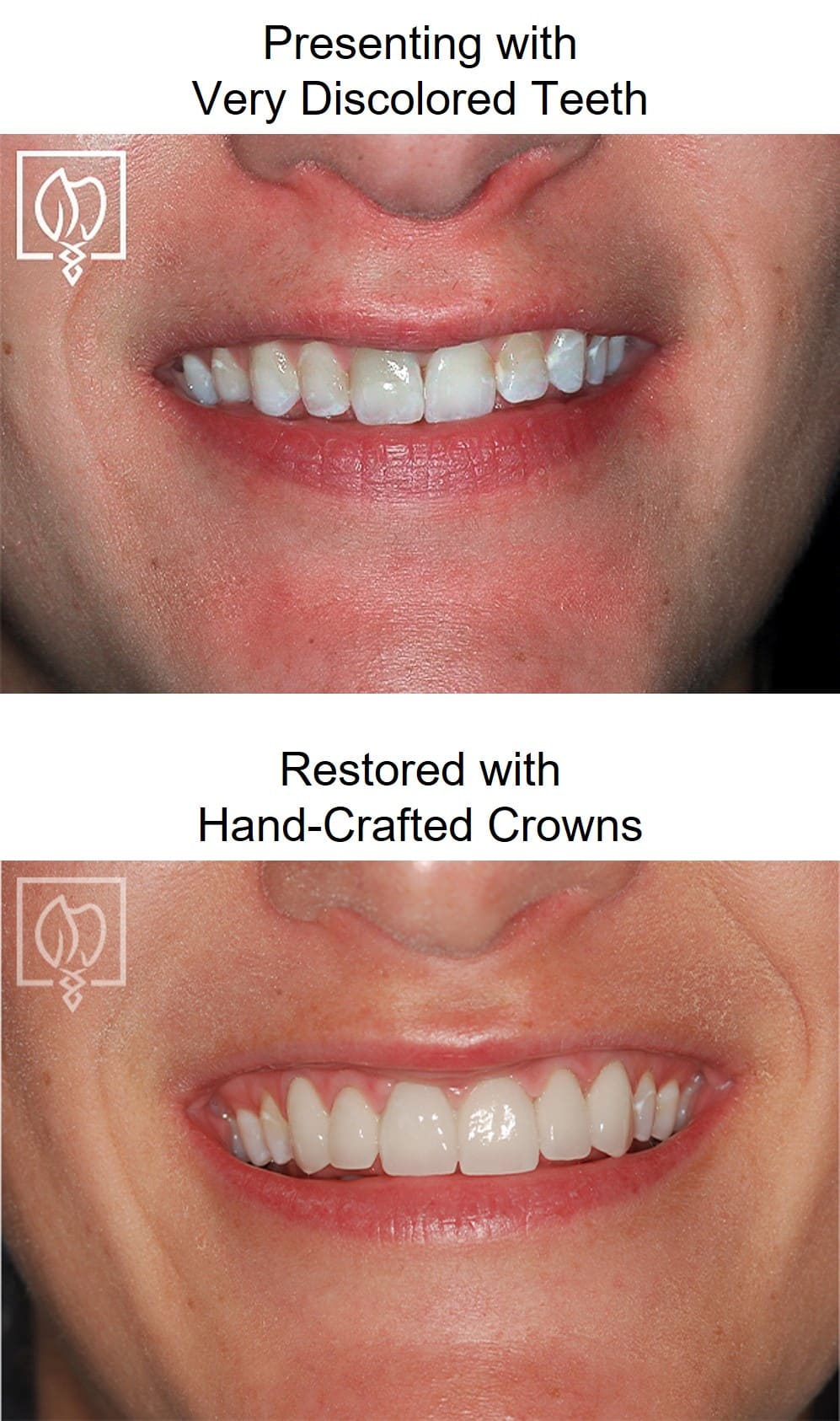
Option 1: Milled by a Machine (CAD/CAM)
Computer-aided design and manufacturing, or CAD/CAM, designs the crown in software and cuts it from a solid block of material on a milling machine. The starting point is a digital library of stock tooth shapes, which the software adapts to the scan of your prepared tooth.
Milled crowns are fast and relatively inexpensive to produce, and that is their appeal. Their limitations are documented in the prosthodontic literature [1]. Because the anatomy comes from a library rather than your mouth, the shape is an approximation of your tooth rather than a reproduction. Cut from a single monochromatic block, a milled crown lacks the internal color gradients of natural enamel, so it tends to read flat or opaque next to your own teeth. And the precision of the fit depends entirely on how carefully the design and milling parameters are controlled.
There is also a personnel question few patients hear about. In many settings, the person operating the design software is a computer technician, not a trained dental laboratory technician with a command of tooth anatomy and color theory. In our practice, when a CAD/CAM design is appropriate, it is created and finished under the direct control of Dr. Marlin and our in-house technician. We do not use fully milled crowns in the visible aesthetic zone, though we sometimes select them for back teeth where strength is the priority. For a deeper look at this fabrication route, see What Is a Milled Crown?
Option 2: Fabricated Off-Site in a Commercial Laboratory
The second route is the most common in American dentistry: the dentist takes an impression and ships it to a commercial laboratory, which fabricates the crown and ships it back.
Good commercial laboratories exist, and skilled technicians work in them. The structural problems are consistency and distance. Dental laboratory technicians and laboratories are typically not licensed, even though the American Dental Association encourages it [2], so quality varies widely from lab to lab and even bench to bench. More fundamentally, the technician making your crown has never seen you. They work from an impression and a written shade tab, without your smile line, your skin tone, or your adjacent teeth in front of them. If the crown comes back slightly wrong, it goes back in the mail, and your treatment stretches out by weeks.
Option 3: Handcrafted in an In-House Laboratory
The third route is the rarest, because it requires the practice to invest in a laboratory and employ a master technician: the crown is custom fabricated inside the practice, in direct collaboration between the dentist and the technician who makes it.
This is how we have worked at Elite Prosthetic Dentistry since 1985. Our technician meets you, studies your natural teeth, and builds the crown with internal coloration layered through the ceramic for a three-dimensional, translucent result rather than a painted-on one. Dr. Marlin checks the fit of each crown before insertion, and every crown is X-rayed at seating to confirm the margins are exact. If anything is off, we remake it. Because the laboratory is down the hall, chairside customization happens in real time, at the same visit.
The results justify the investment. Crowns from our in-house laboratory have lasted 35 years and longer with proper care. That longevity is the quiet reason many of our patients come to us to replace older crowns done elsewhere: they want the next set to be the last set. You can read about the craftsmanship standard in Benefits of Custom Dental Crowns, or see a finished result in our case study of a single front-tooth crown, the hardest restoration in dentistry to make invisible.
Which Option Is Best for Your Smile?
For a restoration you will live with every day for decades, custom in-house fabrication is the standard we believe patients should seek out. It is the most direct route for the person crafting your crown to see you, and for fit and aesthetics to be refined with the clinician before the crown is cemented.
If you are considering a new crown, or evaluating whether crowns placed years ago still serve you well, we invite you to see the difference an in-house laboratory makes. Call 202-244-2101 or request a consultation with Dr. Gerald Marlin at our Friendship Heights office in Washington, DC.
Sources
See How We Resolve These Problems
Our patient success stories show real cases and real results. Browse outcomes from a specialist prosthodontist with decades of experience and 3,900+ implants placed.
Key Takeaways
- ✓ Every dental crown comes from one of three places: a milling machine, a commercial laboratory, or an in-house laboratory inside the practice. Most patients are never told which.
- ✓ Machine-milled crowns are fast and inexpensive but start from stock digital tooth shapes, which limits fit precision and natural translucency.
- ✓ Commercial labs can do good work, but the technician never meets you, and dental laboratories are not uniformly licensed or regulated.
- ✓ In-house fabrication lets the dentist and technician verify fit, shade, and contour together, chairside, before the crown is cemented.
- ✓ Crowns from our in-house laboratory have lasted 35 years and longer with proper care.
Frequently Asked Questions
What are the three ways dental crowns are made?
Crowns are either milled by a CAD/CAM machine from a digital library of stock tooth shapes, fabricated by an off-site commercial laboratory, or custom fabricated in an in-house laboratory within the dental practice. Each route produces a different level of fit precision and aesthetic customization.
Are milled or same-day crowns bad?
Not inherently. Milled crowns can be appropriate on back teeth where strength matters more than subtle aesthetics, and we sometimes use CAD/CAM designs there under strict quality control. The concern is when milling is the only option a practice offers, so every tooth gets the workflow rather than the restoration it needs.
Why does it matter where my crown is made?
Because fit and appearance are decided during fabrication. A crown with imprecise margins invites leakage, decay, and early failure. A crown made from a stock shape with surface stain rarely matches neighboring teeth. Fabrication quality, more than material brand, determines how long a crown lasts and how natural it looks.
How can I find out how my dentist's crowns are made?
Ask directly: is the crown milled in the office, sent to a commercial laboratory, or made by an in-house technician? Ask who verifies the fit before cementation and how. A practice that controls fabrication will be glad to explain its process.
Does an in-house lab make treatment faster?
Usually, yes. Adjustments that would take a commercial lab days or weeks of shipping back and forth can be made on-site, sometimes while you wait. It also means emergencies and repairs can be handled far more quickly.
Related Patient Success Stories
Explore similar patient success stories demonstrating our expertise in advanced prosthetic dentistry.
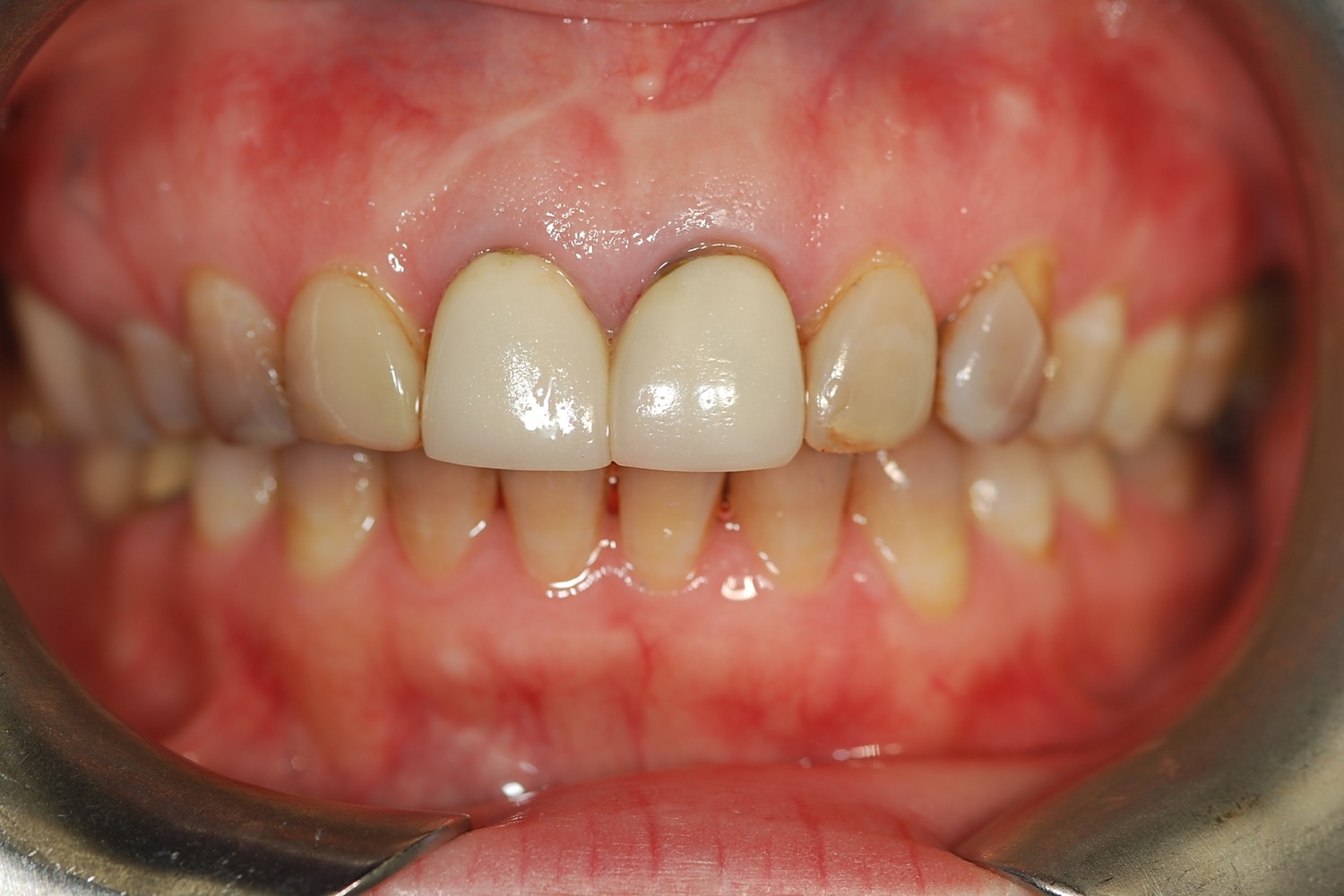 Before
 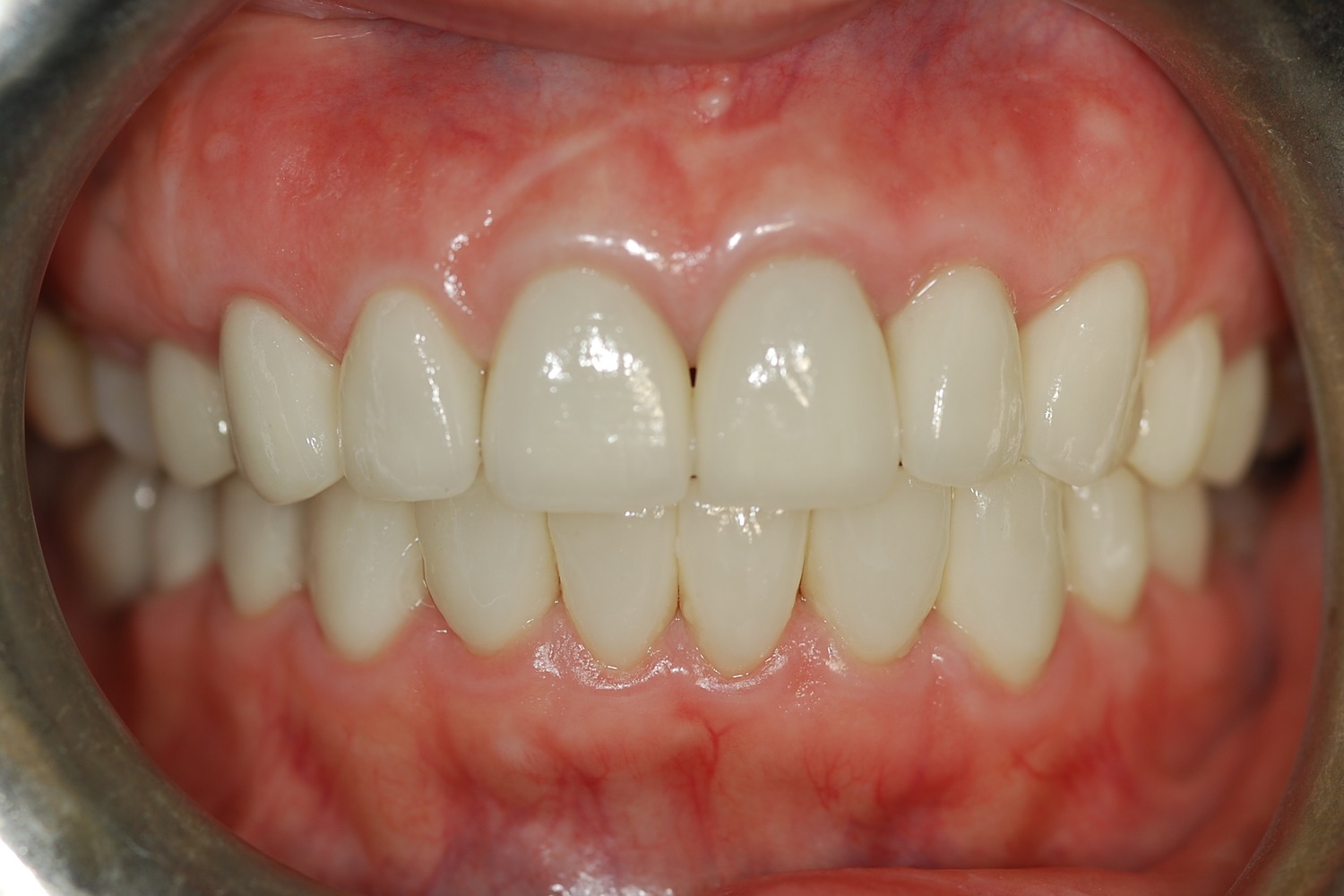 After
After How Aging, Opaque Restorations Were Replaced with Customized Ceramic Restorations Designed for Long-Term Natural Esthetics
The existing restorations appeared opaque, worn, and unnatural over time, affecting both confidence and overall smile harmony.
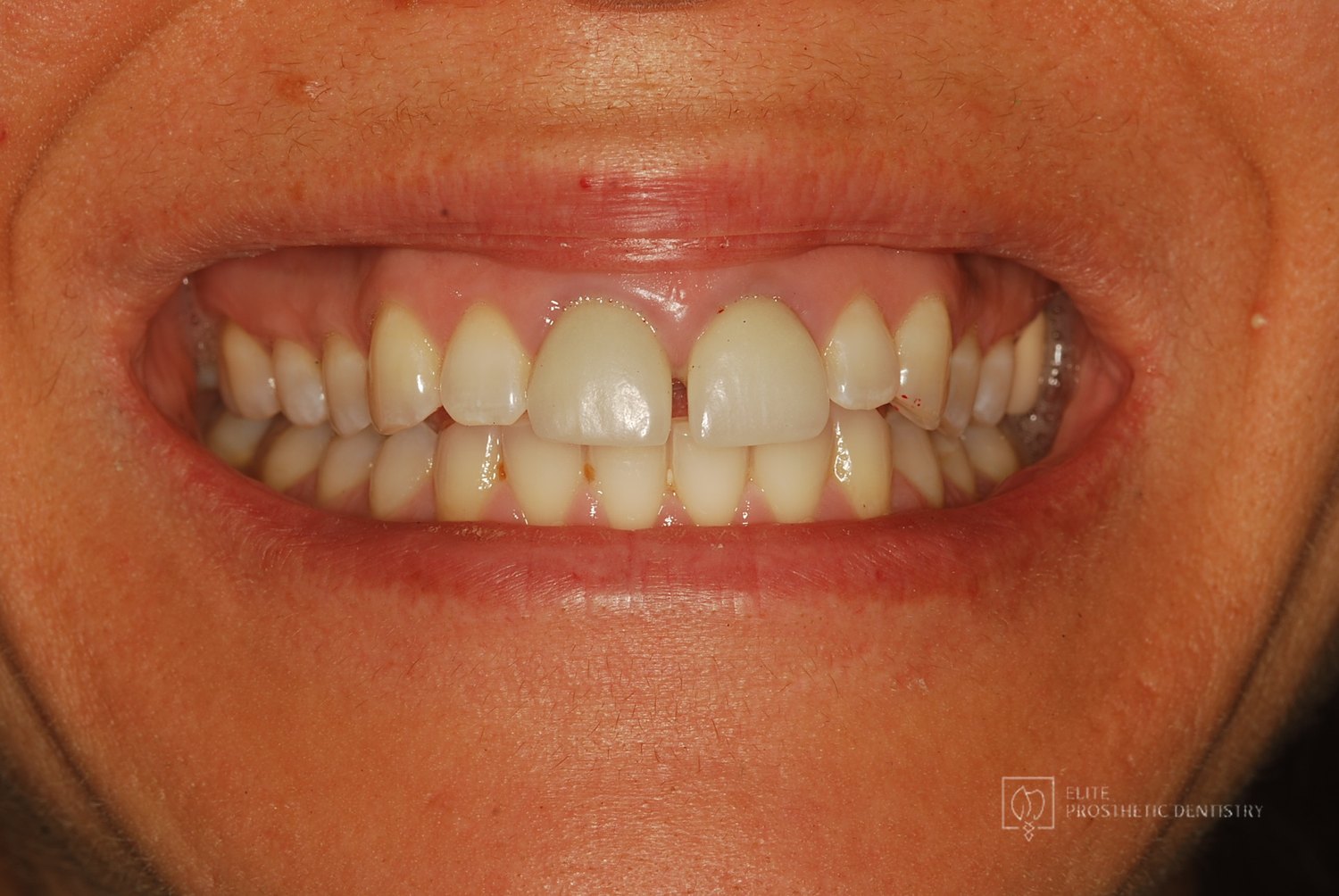 Before
 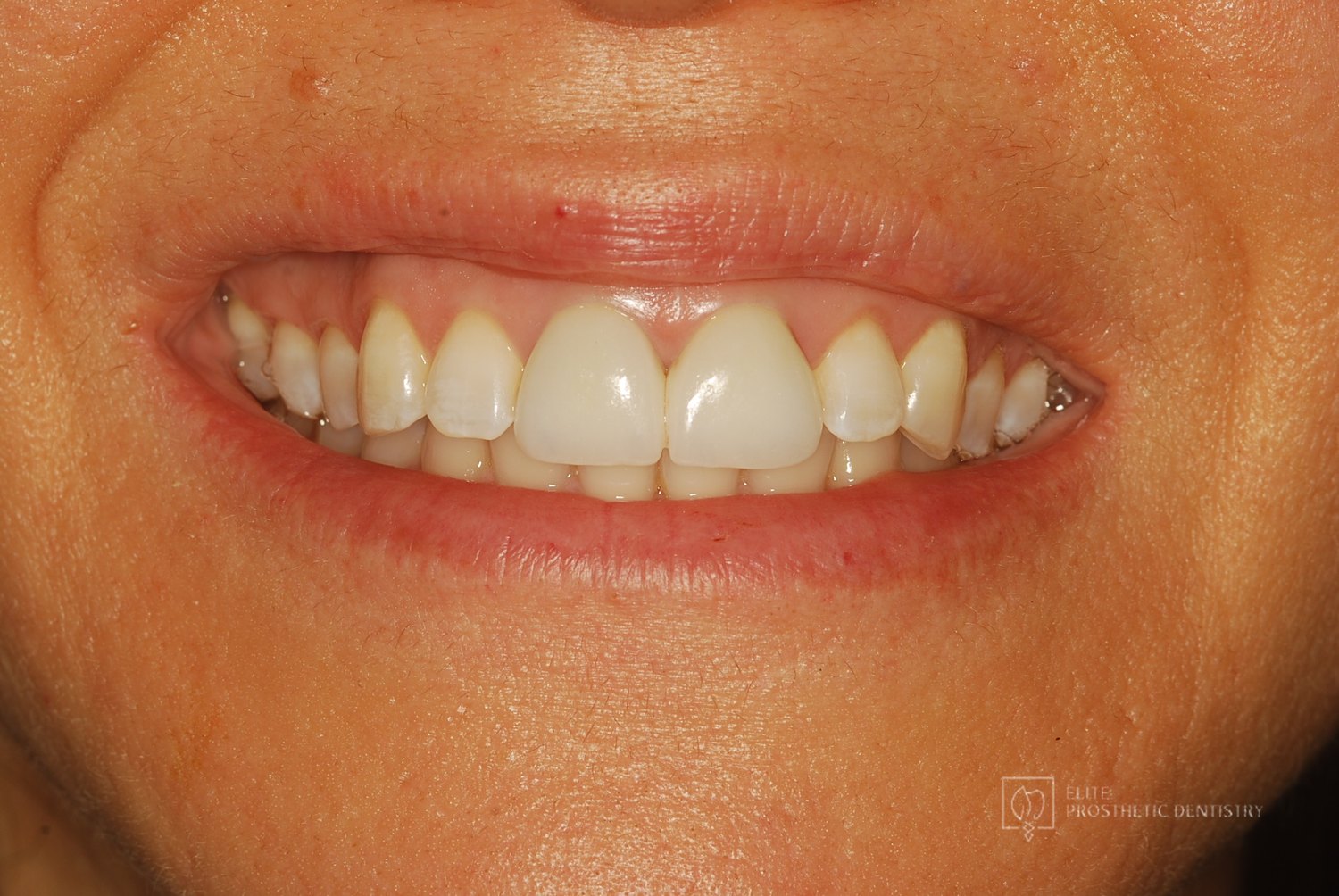 After
After Two Front Teeth Saved From Extraction: A Second Opinion, Custom Gold Posts, and Crowns Made to Last
Two upper central incisors with failed root canal treatment and recurrent decay had been recommended for extraction and implant replacement. A CBCT evaluation showed that removing the roots from their thin facial bone housing could create a visible esthetic defect in the gum and bone contour, made worse by the patient's high lip line.
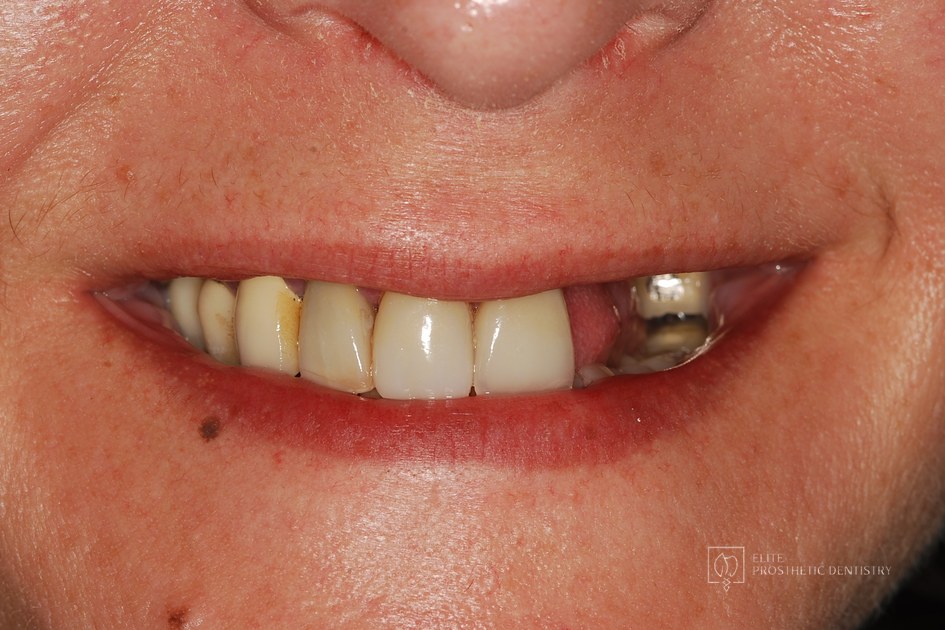 Before
 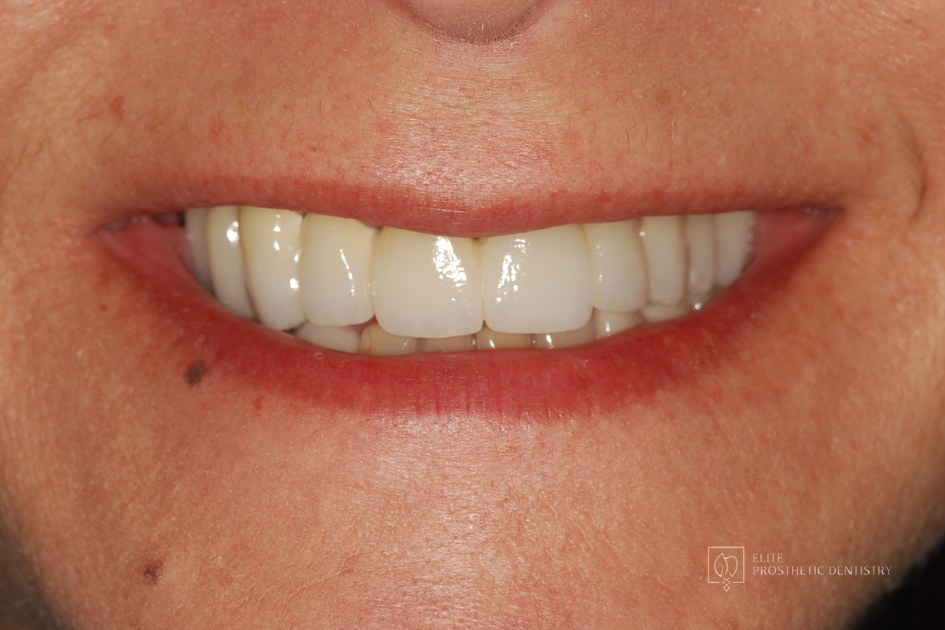 After
After Implant Supported Reconstruction: Failing Bridgework and Missing Back Teeth Rebuilt with Coordinated Specialist Care
Referred by another dental specialist with severe bone resorption on the upper left, multiple broken-down lower teeth requiring extraction, and failing lower back teeth that had left the bite without solid support. No single procedure, and no provider working in isolation, could rebuild a situation this interconnected.
Related Articles
Deepen your knowledge with additional insights on this topic.
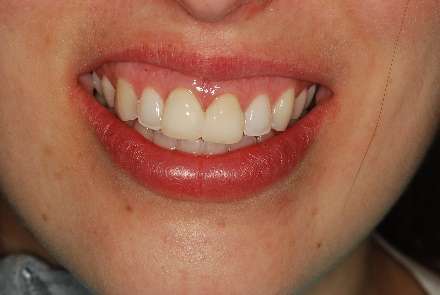 Dental Crowns
 Why Are Some Temporary Crowns More Natural Than Others?
Temporary crowns do not have to look temporary. A DC prosthodontist explains how lab-made provisionals protect your smile and preview your final crowns.
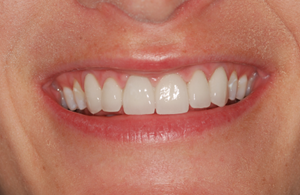 Dental Crowns
 What Makes a Natural-Looking Crown?
Emergence profile, translucency, internal color, and healthy gum response: a DC prosthodontist explains the anatomy of a crown no one can detect.
 Dental Crowns
 How Is an Immediate Smile Makeover Performed?
An immediate smile makeover transforms your smile in one visit using hand-crafted temporary crowns as a living preview. A DC prosthodontist explains how.