
The Most Common Misconceptions About Veneers
Porcelain veneers have become one of the most sought-after treatments in cosmetic dentistry, and with popularity comes noise. These thin porcelain shells can mask chips, fractures, gaps, mild misalignment, and problems of tooth shape or size, but much of what circulates about them online is outdated or simply wrong, in both the too-good and too-scary directions.
Here are the five misconceptions we correct most often, plus a bonus one, and the actual facts behind each.
Misconception 1: Veneers Look Too Noticeable
This is the central worry for most people considering treatment, and it gets the cause wrong. Veneers do not look fake; poorly fabricated veneers look fake. Porcelain closely mimics the natural shade, transparency, and texture of enamel, and when the translucency is built correctly for the individual patient, nobody can tell the teeth are restored. Friends and family will notice the transformation without being able to name it.
The variable, then, is who makes your veneers. Ours are fabricated in our in-house laboratory, where the technician sees you at the chair and tailors color and translucency to your surrounding teeth, the same craftsmanship standard we apply to making any restoration look natural.
Misconception 2: The Procedure Damages Your Teeth
The fear of “shaved down stumps” comes from confusing veneers with something else. Veneer preparation removes a thin layer of enamel from the front surface only, a minimal amount that classifies the treatment as minimally invasive. The tooth beneath remains alive and structurally sound. The procedure is comfortable and typically completed in two or three clinical visits.
One honest caveat belongs here: because enamel is removed, the decision is permanent, and the tooth will always need a restoration going forward. That is a reason to decide carefully, not a reason to fear the procedure; our pre-consultation guide to veneers helps you do exactly that.
Misconception 3: Veneers Stain Easily
Porcelain is highly stain-resistant, and that fact separates veneers from tooth bonding, the more affordable alternative. Bonding uses composite resin, the same material as tooth-colored fillings, which absorbs pigments from coffee, wine, and other foods over time. Porcelain does not, which is precisely why we use it. The stain-vulnerable part of a veneered smile is your remaining natural teeth, a maintenance nuance covered in our veneer care guide.
Misconception 4: Veneers Do Not Last Long Enough
No dental treatment lasts forever, but veneers are far from temporary. Properly made and properly cared for, porcelain veneers can last up to 20 years, similar to the longevity of quality custom crowns. Fractures are possible but rare, and patients who are sensible about biting very hard foods rarely have trouble. When early failures do happen, they trace to identifiable causes, bonding, bite forces, decay, which we break down in why veneers fail.
Misconception 5: Veneers Are Too Expensive
Veneers cost more upfront than alternatives like bonding, and less than most people assume once you divide by years of service. A restoration that resists staining and serves for up to two decades against one that darkens and needs replacement every few years is not a close contest in long-term value. The wise comparison is lifetime cost per year of a smile you actually like.
A Bonus Misconception: Veneers Demand Special Maintenance
Some people imagine veneers as high-maintenance additions requiring special products and constant professional attention. In reality, care is close to what healthy natural teeth already need: gentle brushing with non-abrasive toothpaste, daily flossing, regular checkups, and common sense about biting very hard objects. Patients who grind their teeth add a night guard. That is the whole regimen, detailed in our veneer care guide, and it is less demanding than the daily camouflage habits many people practice to hide the smile they have.
Get Facts Specific to Your Smile
General facts only go so far; whether veneers are right for your teeth is a clinical question, answered by examination rather than by anything you can read online, including this. Dr. Gerald Marlin, a specialty-trained prosthodontist serving Washington, DC, Chevy Chase, and Bethesda, will examine your smile, correct any remaining misconceptions, and tell you plainly whether veneers or an alternative will serve you better. Call 202-244-2101 or schedule a consultation at Elite Prosthetic Dentistry in Friendship Heights, Washington, DC.
See How We Resolve These Problems
Our patient success stories show real cases and real results. Browse outcomes from a specialist prosthodontist with decades of experience and 3,900+ implants placed.
Key Takeaways
- ✓ Well-fabricated veneers with proper translucency are indistinguishable from natural teeth; the fake look comes from poor fabrication, not from veneers.
- ✓ Preparation removes only a thin layer of enamel, making veneers a minimally invasive procedure completed comfortably in two or three visits.
- ✓ Porcelain is highly stain-resistant, unlike the composite resin used in bonding.
- ✓ Properly cared for, veneers can last up to 20 years, comparable to quality crowns.
- ✓ Judged over their lifespan, veneers are a sounder investment than cheaper alternatives that stain and need frequent replacement.
Frequently Asked Questions
Do veneers look fake?
Only badly made ones. Porcelain closely mimics enamel's natural shade, translucency, and texture, so veneers fabricated with the right translucency read as natural teeth even at close range. Friends will notice your smile improved; they will not be able to say why. Fabrication quality, not the treatment itself, decides which outcome you get.
Do veneers ruin your natural teeth?
No. Preparation removes a thin layer of enamel from the front surface, a minimal amount that classifies veneers as a minimally invasive procedure. The change is permanent, meaning the tooth will always need a restoration, but the tooth underneath remains alive, functional, and structurally sound.
How long do porcelain veneers really last?
Properly made and cared for, up to 20 years, similar to the longevity of quality custom crowns. Fractures are possible but uncommon, and sensible habits around very hard foods remove most of that risk. No dental treatment lasts forever, but veneers are far from a short-term fix.
Are veneers worth the cost?
Judged over their lifespan, usually yes. Veneers cost more upfront than alternatives like composite bonding, but bonding stains, darkens, and needs replacement on a much shorter cycle. A stain-resistant restoration that serves for up to two decades typically wins the long-term arithmetic.
Related Patient Success Stories
Explore similar patient success stories demonstrating our expertise in advanced prosthetic dentistry.
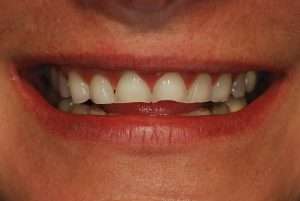 Before
 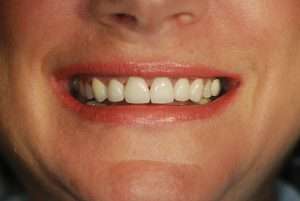 After
After Can Worn-Down Teeth Be Fixed or Do They Have to Be Replaced?
The patient presented with a severely worn dentition that was marring an otherwise great smile line.
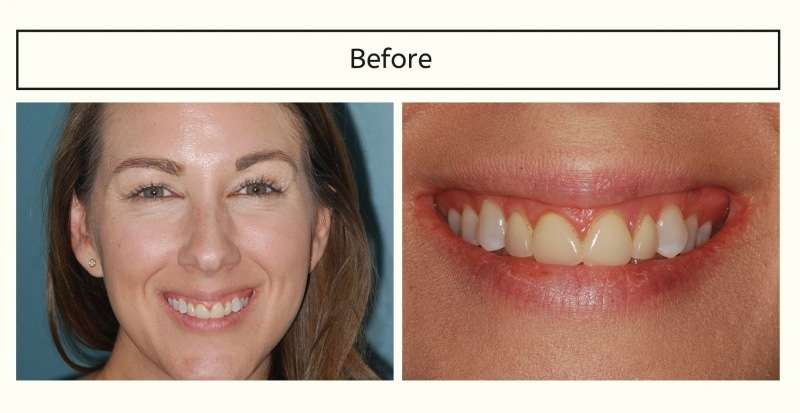 Before
 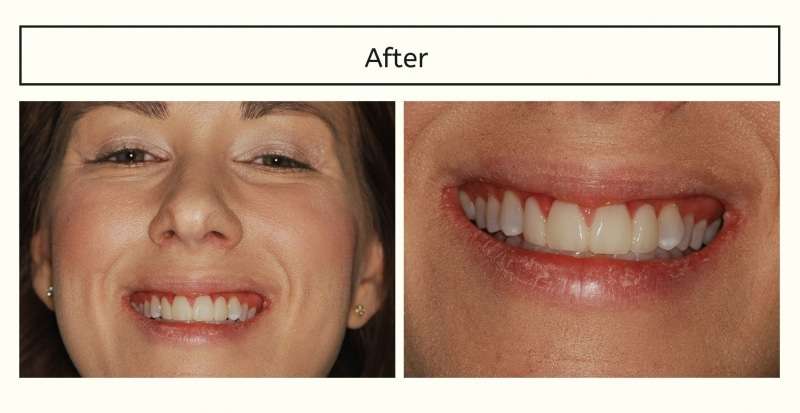 After
After The Immediate Gummy Smile Makeover
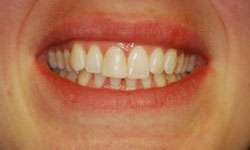
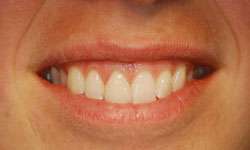
Self-conscious about her gummy smile line and wearing veneers that were not the optimal size or shape for her smile, the patient needed a natural-looking result on a tight timeline before her wedding.
 Before
  After
After The Single Anterior Crown
A veneer on one upper front tooth no longer matched its natural neighbor in shape, color, or translucency, and its contours were irritating the gum tissue around it.
Related Articles
Deepen your knowledge with additional insights on this topic.
 Porcelain Veneers
 Revealing the Process: An In-Depth Look at Veneer Teeth Prep
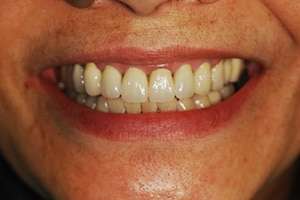
About half a millimeter of enamel, one careful appointment: a DC prosthodontist walks through veneer tooth preparation and why precision decides the result.
 Porcelain Veneers
 Why Do Some Dental Veneers Chip?
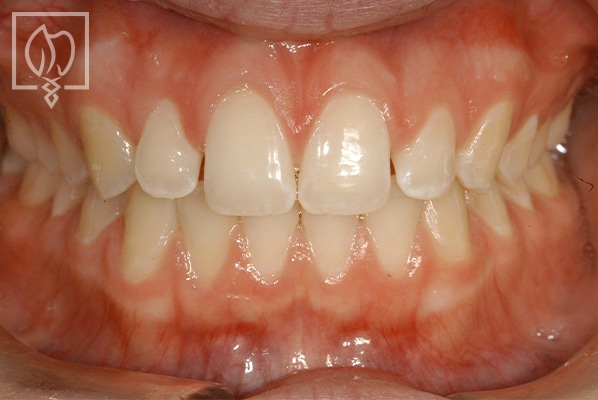
Grinding, bite problems, hard foods, and bonding errors are the usual causes of chipped veneers. A DC prosthodontist explains prevention and repair.
Porcelain Veneers The Most Common Misconceptions About Veneers
Too fake, too fragile, too damaging, too expensive? A DC prosthodontist corrects the five most common misconceptions about porcelain veneers.