
4 Ways Porcelain Veneers Can Improve Your Smile Aesthetically
We would all love a naturally perfect smile, but few of us are born with one. Gaps, chips, worn edges, and slightly crooked teeth are the ordinary inheritance of ordinary mouths, and they are also the exact problems porcelain veneers were designed to solve.
Veneers are among the most versatile cosmetic dentistry procedures we perform at Elite Prosthetic Dentistry: thin porcelain shells, custom made for you, that conceal an array of smile flaws while looking completely natural. Most people know veneers can mask discoloration from age, medications, smoking, or years of coffee. Here are four other improvements they deliver, each a little different in what it fixes.
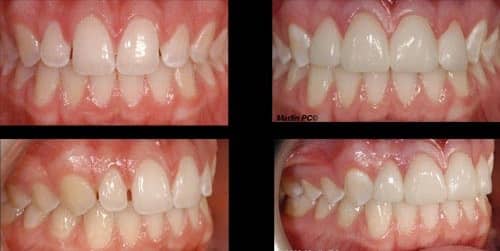
1. Short, Worn, and Chipped Teeth
Chipped corners and edges worn flat by grinding age a smile fast, and they rarely wear evenly, leaving front teeth at slightly different heights. Veneers bond securely to the front surfaces and rebuild uniform length and shape, restoring the symmetry that makes a smile read as healthy. If grinding caused the wear, addressing that habit is part of the plan, so the new veneers outlast the problem that damaged the old teeth.
2. Slightly Crooked Teeth
For teeth that are mildly rotated or overlapping, veneers offer a shortcut that orthodontics cannot match on time: the visible surfaces are reshaped so the smile reads straight, in weeks rather than years. The qualifier “slightly” is doing honest work in that sentence; genuine misalignment and bite problems still call for orthodontic treatment, and we will tell you plainly which category your teeth occupy.
3. Teeth That Look Too Short
When the proportion of gum to tooth feels off, veneers can be strategically designed to lengthen the visible teeth and rebalance the smile. The important diagnostic step: figuring out whether the teeth are truly short or the gum tissue is truly excessive. When it is the tissue, gum contouring is the right tool, sometimes alongside restorations, as we explain in how a gummy smile is fixed. Getting that diagnosis right is the difference between a proportioned result and a disappointing one.
4. Uneven Spacing and Small Gaps
Small gaps and irregular spacing respond beautifully to veneers. Each shell is designed marginally wider than the tooth it covers, absorbing the space across several teeth so no single tooth looks oversized and the gap simply disappears. For many patients this is the fastest route from a gapped smile to a balanced one.
The Quiet Fifth Improvement: Consistency
There is a fifth improvement running underneath the other four: consistency across the smile. Individual flaws, one chipped edge, one gap, one rotated tooth, each draw the eye precisely because the rest of the smile is fine. Correcting them as a designed set restores the evenness that makes a smile read as effortless, which is why observers of a well-done veneer case notice the person, not the dentistry. That whole-smile coherence, more than any single correction, is what patients mean when they say they finally like their smile.
The Craft Behind All Four
Every one of these corrections depends on fabrication quality. Veneers must match the color of your adjacent teeth, carry the translucency of natural enamel, and suit the proportions of your face, or they announce themselves as dental work. Ours are custom crafted in our in-house laboratory, where the technician works with Dr. Gerald Marlin, and with you present, until the result is right. And when a tooth’s problems exceed what a veneer can carry, we say so and explain the alternative, as in our comparison of when veneers are not as good as crowns. If you are earlier in your research, start with what veneers are and who makes a good candidate.
Schedule Your Veneer Consultation
If chips, gaps, wear, or crowding have made you self-conscious about smiling, find out what veneers can do for your specific teeth. Call 202-244-2101 or request a consultation with Dr. Marlin at Elite Prosthetic Dentistry in Friendship Heights, Washington, DC. We proudly serve patients from DC, Bethesda, Chevy Chase, Arlington, and nearby Maryland and Virginia, with easy access from the Friendship Heights Metro station, and we look forward to helping you achieve the simply radiant, simply natural smile for which we are known.
See How We Resolve These Problems
Our patient success stories show real cases and real results. Browse outcomes from a specialist prosthodontist with decades of experience and 3,900+ implants placed.
Key Takeaways
- ✓ Beyond masking discoloration, veneers correct four distinct aesthetic problems: chipped or worn edges, slight crookedness, short-looking teeth, and small gaps.
- ✓ Veneers restore symmetry to worn and chipped smiles by rebuilding uniform tooth length and shape.
- ✓ For slightly overlapping or rotated teeth, veneers deliver a straighter-looking smile without years of orthodontics.
- ✓ When teeth look short against the gumline, veneers can lengthen them visually; true excess gum tissue calls for contouring instead.
- ✓ Each correction depends on custom fabrication: veneers matched to your color, translucency, and facial proportions.
Frequently Asked Questions
What cosmetic problems can veneers fix?
Veneers address discoloration that resists whitening, chipped or worn front teeth, mild crookedness or overlap, small gaps and uneven spacing, and teeth that look short or out of proportion. The unifying requirement is a structurally sound tooth whose problem sits on its visible surface.
Can veneers fix crooked teeth without braces?
For slight crookedness, yes. Veneers reshape the visible surfaces so the smile reads straight, without years of orthodontic treatment. The honest limit: significant misalignment or bite problems still belong to orthodontics, and a good evaluation tells you which side of the line your teeth fall on.
Do veneers work for a gummy smile?
Sometimes, as part of the answer. When teeth look short because of proportion, veneers can lengthen them visually. When the real issue is excess gum tissue, gum contouring, occasionally combined with restorations, is the correct fix. The diagnosis determines the treatment, not the other way around.
How do veneers close gaps between teeth?
The veneers are designed slightly wider than the natural teeth they cover, distributing the space so the gap disappears without any single tooth looking oversized. For small gaps and uneven spacing this produces a balanced, natural result in a few visits.
Related Patient Success Stories
Explore similar patient success stories demonstrating our expertise in advanced prosthetic dentistry.
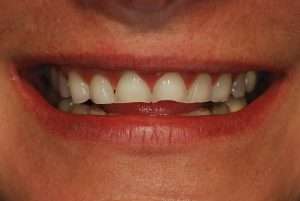 Before
 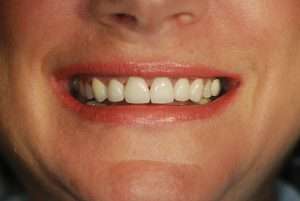 After
After Can Worn-Down Teeth Be Fixed or Do They Have to Be Replaced?
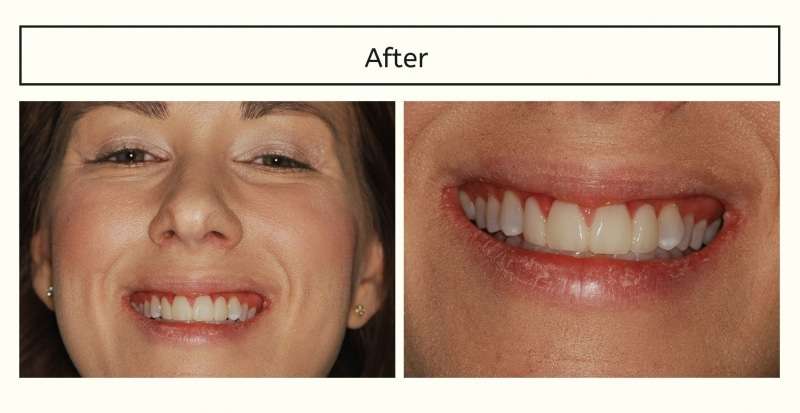
The patient presented with a severely worn dentition that was marring an otherwise great smile line.
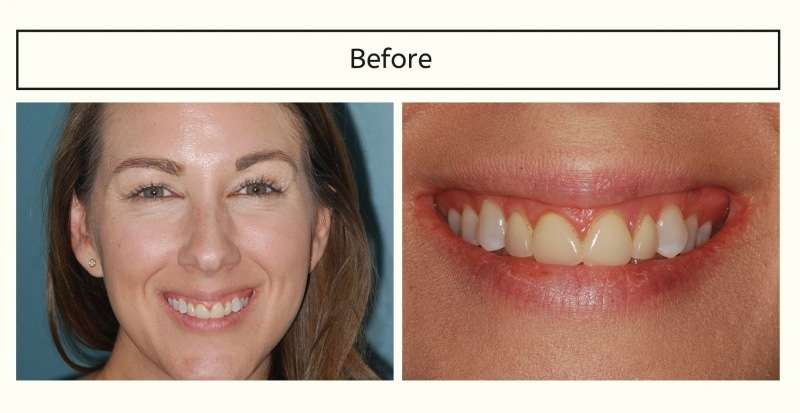 Before
  After
After The Immediate Gummy Smile Makeover
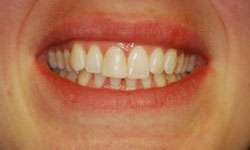
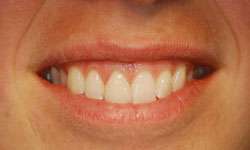
Self-conscious about her gummy smile line and wearing veneers that were not the optimal size or shape for her smile, the patient needed a natural-looking result on a tight timeline before her wedding.
 Before
  After
After The Single Anterior Crown
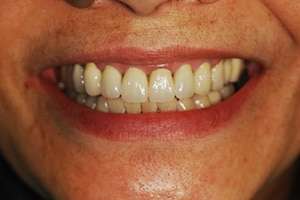
A veneer on one upper front tooth no longer matched its natural neighbor in shape, color, or translucency, and its contours were irritating the gum tissue around it.
Related Articles
Deepen your knowledge with additional insights on this topic.
 Porcelain Veneers
 Revealing the Process: An In-Depth Look at Veneer Teeth Prep
About half a millimeter of enamel, one careful appointment: a DC prosthodontist walks through veneer tooth preparation and why precision decides the result.
 Porcelain Veneers
 Why Do Some Dental Veneers Chip?
Grinding, bite problems, hard foods, and bonding errors are the usual causes of chipped veneers. A DC prosthodontist explains prevention and repair.
Porcelain Veneers The Most Common Misconceptions About Veneers
Too fake, too fragile, too damaging, too expensive? A DC prosthodontist corrects the five most common misconceptions about porcelain veneers.