
How Dr. Marlin Provides Long-Lasting TMJ Therapy
We frequently see patients who have spent years seeking relief from jaw pain without lasting success. They have often been to several capable providers and tried multiple appliances, yet the discomfort keeps returning. The problem in most of these histories is not effort; it is sequence. Symptoms were managed while the source, almost always in the bite, remained uncorrected. Dr. Marlin’s approach to TMJ therapy is built to be the opposite: find the source, fix it in the right order, and then protect the result.
Step One: Understand the Problem Before Treating It
Treatment begins with a thorough history: when the pain started, what makes it better or worse, prior treatments, and habits like clenching and grinding. Dr. Marlin then evaluates your jaw musculature and the temporomandibular joints themselves.
The pivotal diagnostic step is occlusal analysis. Using study casts of your teeth, he examines exactly how your upper and lower teeth meet, where they touch first, and where they interfere with a smooth, comfortable closure. This is the facet of TMJ care most often shortchanged, and it is precisely where prosthodontic training pays off: pain cannot be treated durably without understanding what is producing it. Not every jaw-pain story is even primarily a bite problem, which is why honest diagnosis matters; our article on TMJ and neuromuscular pain shows how differently three similar-sounding cases can resolve.
Step Two: Stabilize the Bite
When the analysis points to occlusion, treatment starts by adjusting the bite until all of your teeth contact harmoniously, without interferences that deflect the jaw or overload individual teeth.
Part of this step is asking whether existing dental work is sabotaging the bite. A single crown fabricated too wide or too high can prevent neighboring teeth from coming together completely, forcing the muscles to fight that interference with every closure. Seemingly small, this problem can be the source of severe discomfort, and correcting or replacing the defective restoration can be the turning point of the whole case. Where grinding has already worn teeth down significantly, rebuilding them properly becomes part of the solution; we cover that in how a severely worn dentition is repaired.
Step Three: Protect the Correction
Once the occlusion is stable and any defective restorations are addressed, Dr. Marlin fabricates an occlusal guard for wear during sleep. The appliance balances contact evenly across the arch, preventing nighttime clenching from overloading the muscles and undoing the correction.
The order matters. A guard made before the bite is corrected cushions a problem that continues underneath it. A guard made after correction protects a bite that finally works. Patients who also clench during the day can read our guidance on whether to wear a night guard during the day.
Step Four: Treat Remaining Muscle Pain Directly
Most jaw pain responds to the steps above. In the smaller number of cases where muscle symptoms persist, the musculature itself is treated. Persistent trigger points in the jaw muscles can produce a gnawing jaw ache, tooth pain that mimics a dying tooth, sensitivity in several teeth at once, headaches, and referred discomfort around the ears and eyes. For these patients, therapies including trigger point injections address the muscular component directly, on top of a bite that has already been stabilized.
Relief That Lasts
TMJ discomfort does not have to be endured for years, and it should not have to be re-treated every season. A cause-first sequence, occlusal analysis, bite stabilization, restorative correction, protective appliance, and targeted muscle therapy when needed, is how relief becomes durable. Dr. Gerald Marlin is a specialty-trained prosthodontist who wrote his master’s thesis on occlusal rehabilitation and has treated TMJ patients in Washington, DC for more than 40 years. Call 202-244-2101 or request an appointment at Elite Prosthetic Dentistry in Friendship Heights to have your jaw pain properly diagnosed.
See How We Resolve These Problems
Our patient success stories show real cases and real results. Browse outcomes from a specialist prosthodontist with decades of experience and 3,900+ implants placed.
Key Takeaways
- ✓ Many TMJ patients arrive after years of treatment that addressed symptoms without correcting the source. Lasting relief requires finding and fixing the cause.
- ✓ Dr. Marlin's sequence is deliberate: detailed history, occlusal analysis with study casts, bite equilibration, correction of defective restorations, then a protective night appliance.
- ✓ Something as small as one overbuilt crown can prevent the other teeth from meeting properly and drive severe muscle discomfort.
- ✓ A night guard placed on an uncorrected bite manages symptoms; a night guard placed after the bite is stabilized protects the correction.
- ✓ When muscle pain persists after the bite is corrected, targeted muscle therapies such as trigger point injections address the remaining component.
Frequently Asked Questions
Why did my previous TMJ treatments not last?
A common pattern is treating the symptoms while the cause remains. If the underlying bite problem, such as interfering contacts or a poorly contoured restoration, is never identified and corrected, muscles keep getting overworked and pain returns when appliances come out. Durable therapy starts with occlusal analysis, not with the appliance.
What does TMJ treatment with a prosthodontist involve?
Typically: a detailed history, evaluation of your jaw muscles and joints, and analysis of your occlusion using study casts. Treatment then proceeds in order: adjusting the bite until teeth contact evenly, correcting restorations that interfere, fabricating a night appliance to protect the result, and adding muscle therapy if discomfort persists.
Can a bad crown really cause jaw pain?
Yes. A crown fabricated even slightly too wide or too high can hold other teeth apart or deflect the jaw as you close. Your muscles fight that interference thousands of times a day. Correcting or replacing the offending restoration is sometimes the pivotal step in resolving what felt like an unexplainable pain problem.
Is a night guard enough to fix TMJ?
Sometimes, for mild cases driven mainly by nighttime clenching. But an appliance made without first stabilizing the bite can simply cushion a problem that continues underneath. In Dr. Marlin's sequence the night guard comes after occlusal correction, so it protects a balanced bite rather than compensating for an unbalanced one.
Related Patient Success Stories
Explore similar patient success stories demonstrating our expertise in advanced prosthetic dentistry.
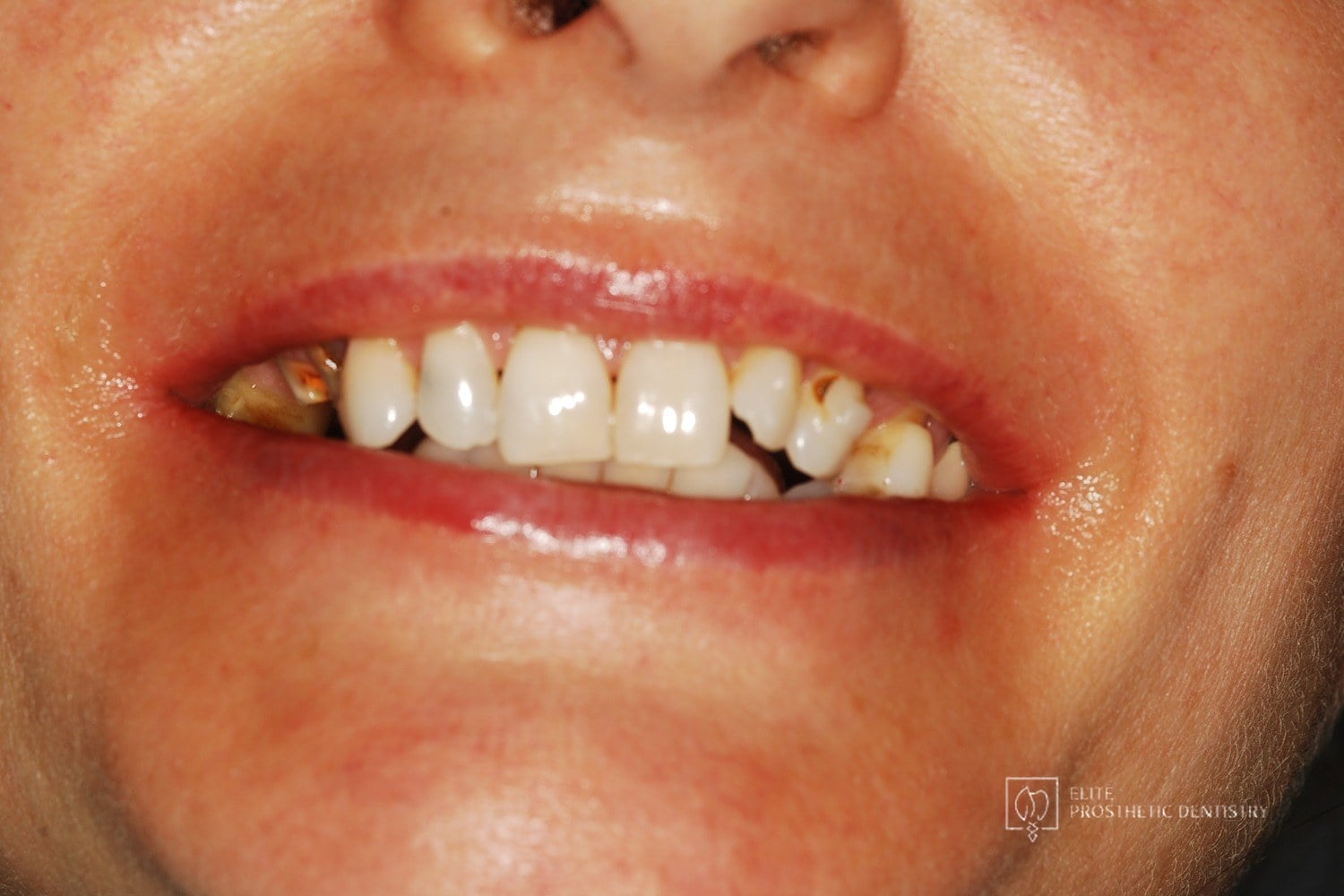 Before
 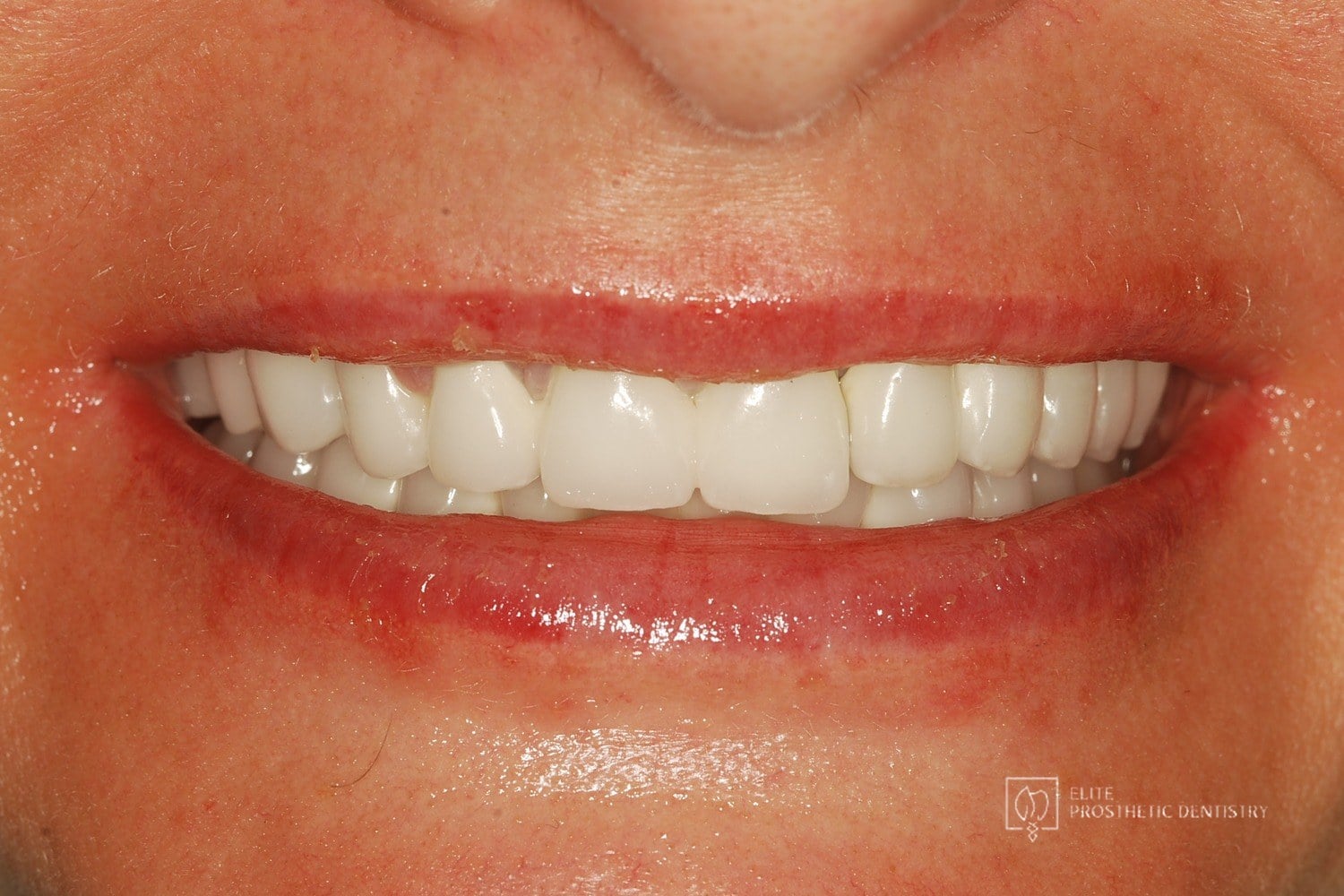 After
After How Aging, Failing Dentistry Was Replaced with a Coordinated Full-Mouth Implant and Crown Reconstruction
The patient presented with throbbing upper-molar pain, long-standing infections, multiple root canals and unfinished prior treatment, generalized sensitivity, and several hopeless teeth.
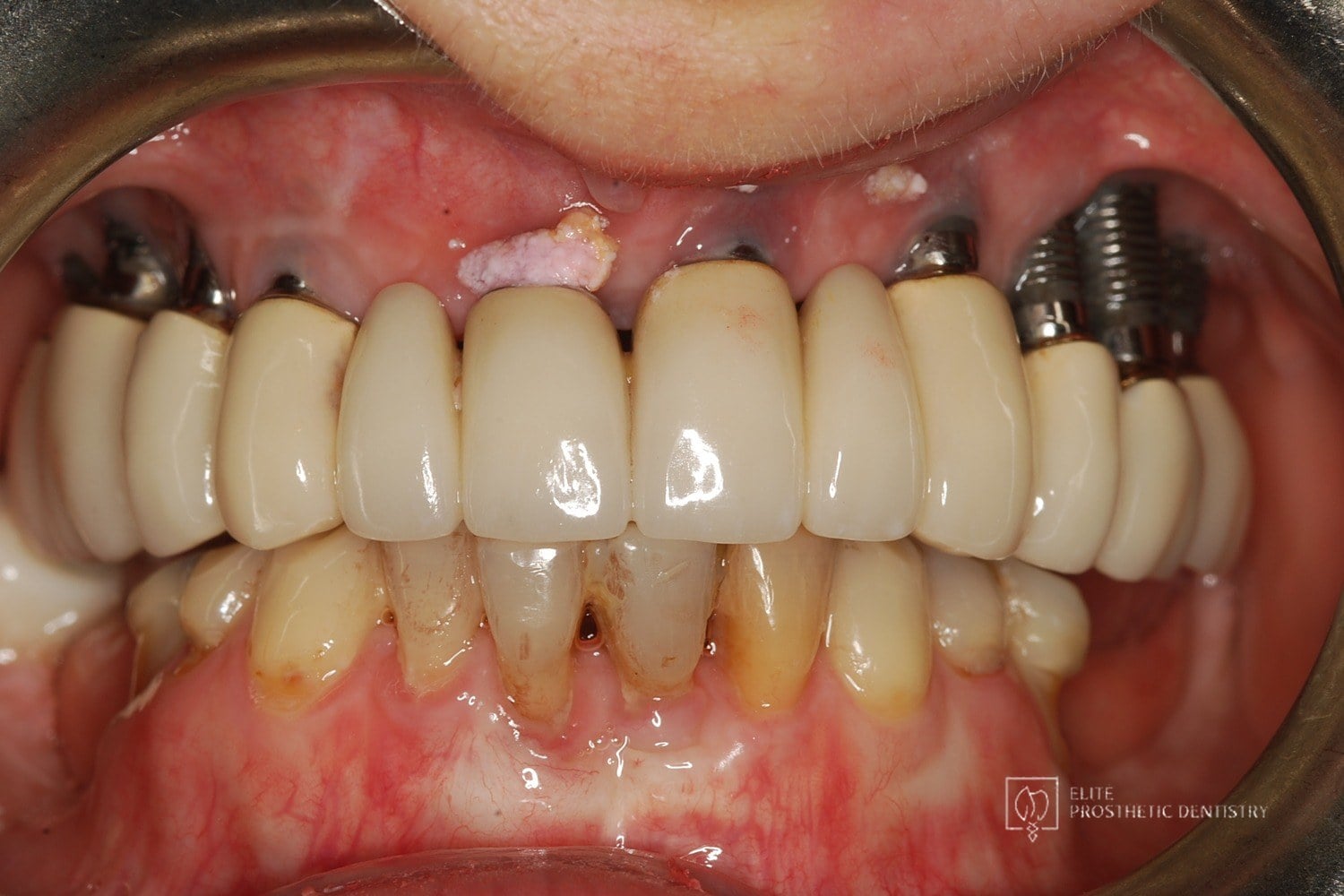 Before
 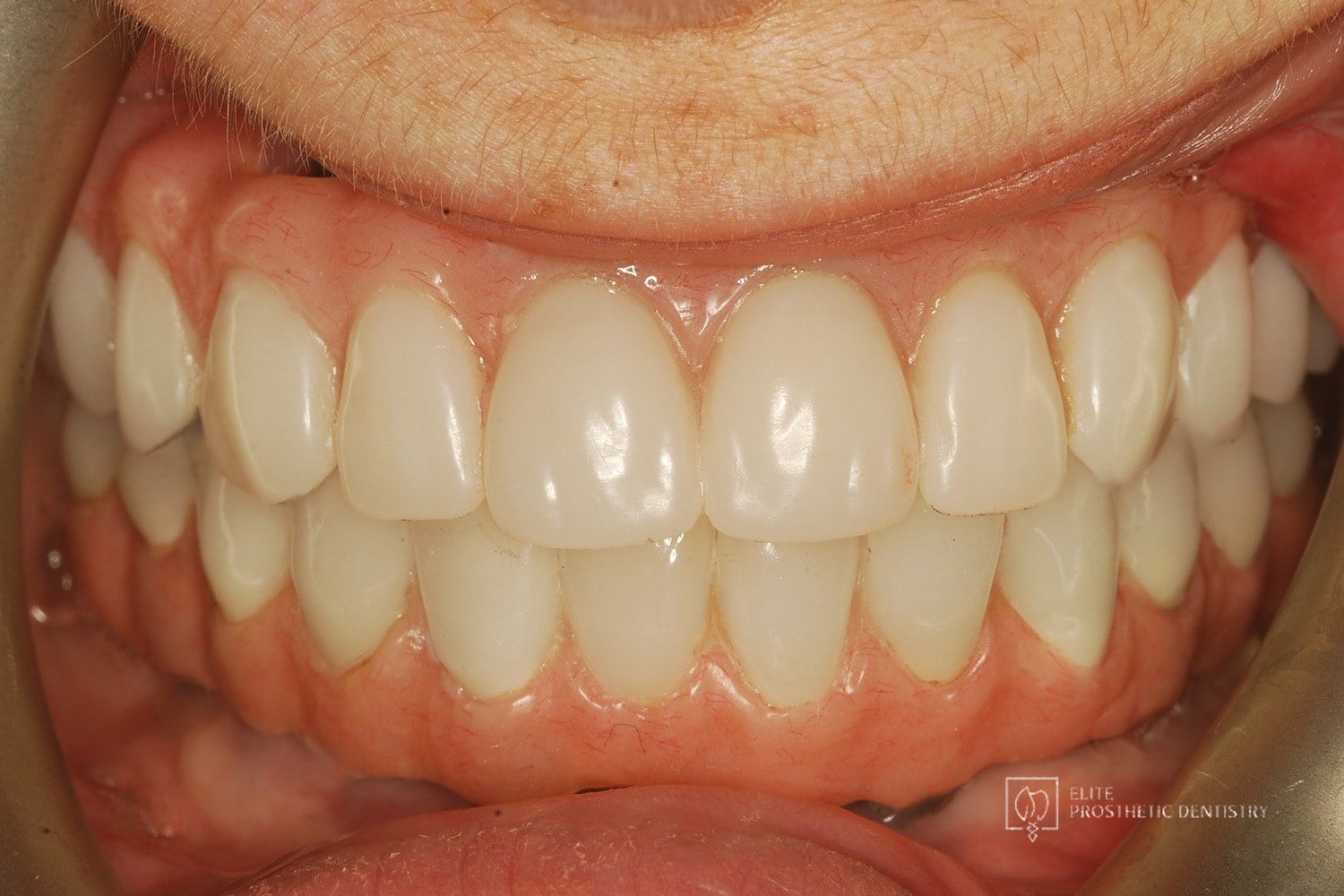 After
After How Failing Implants and Severe Bone Loss Were Rebuilt Into a Stable Full-Arch Implant Reconstruction
The patient presented with significant complications from previously placed implants, severe bone loss, failing posterior implants, and an unesthetic full-arch bridge. Both arches required full reconstruction, with the upper arch showing the most advanced bone loss and instability.
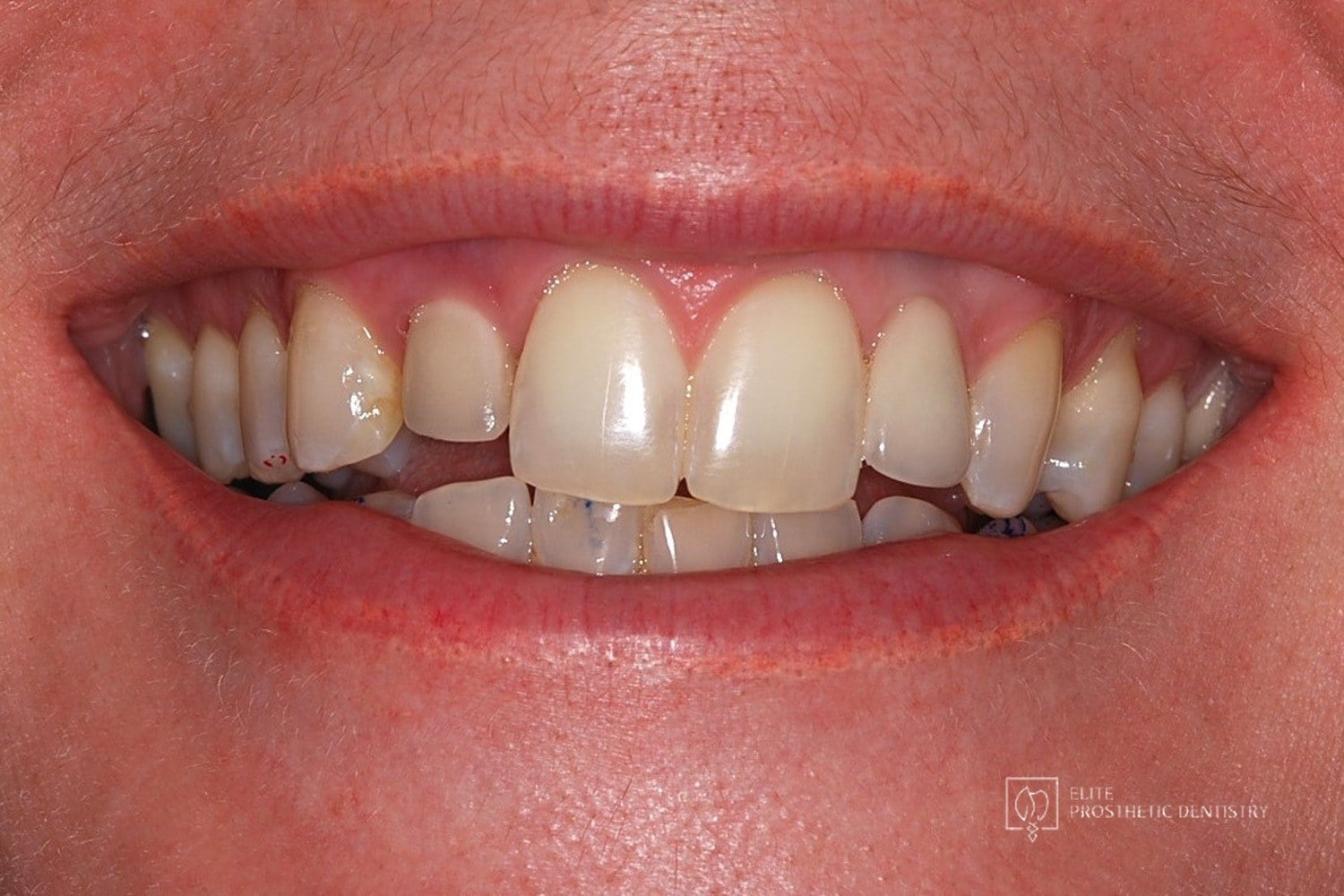 Before
 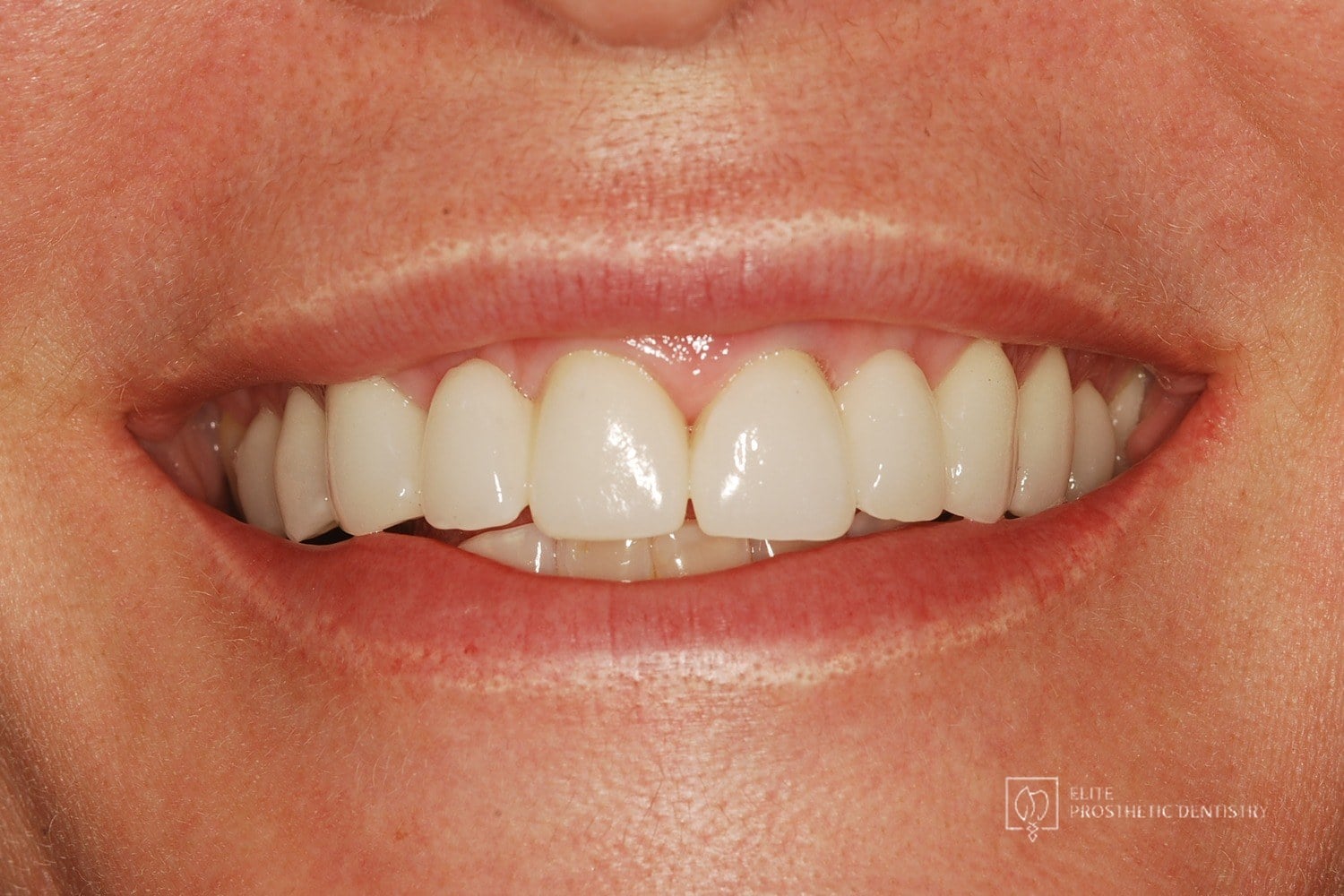 After
After How Failing Lateral Incisor Implants Were Replaced with Custom Zirconia Bridges After Severe Bone Loss Made Replacement Implants Impossible
Comprehensive examination including CBCT imaging revealed significant bone loss surrounding implants that were placed outside the buccal plate, most likely due to placement without a CBCT-generated surgical guide. The implants were determined non-salvageable, and the alveolar ridge was too narrow to support replacement implants without extensive reconstruction.
Related Articles
Deepen your knowledge with additional insights on this topic.
 Choosing a Prosthodontist
 The Patient's Guide to Implant, Cosmetic and Restorative Dentistry
How to judge quality in implant, cosmetic, and restorative dentistry: choosing a practitioner, why the lab matters, financing, and the questions to ask.
 Choosing a Prosthodontist
 What is a Prosthodontist?
A prosthodontist is a dental specialist with advanced training in crowns, implants, dentures, and complex restorations. Washington, DC specialist.
 Choosing a Prosthodontist
 4 Ways You Can Benefit from Our In-House Dental Lab
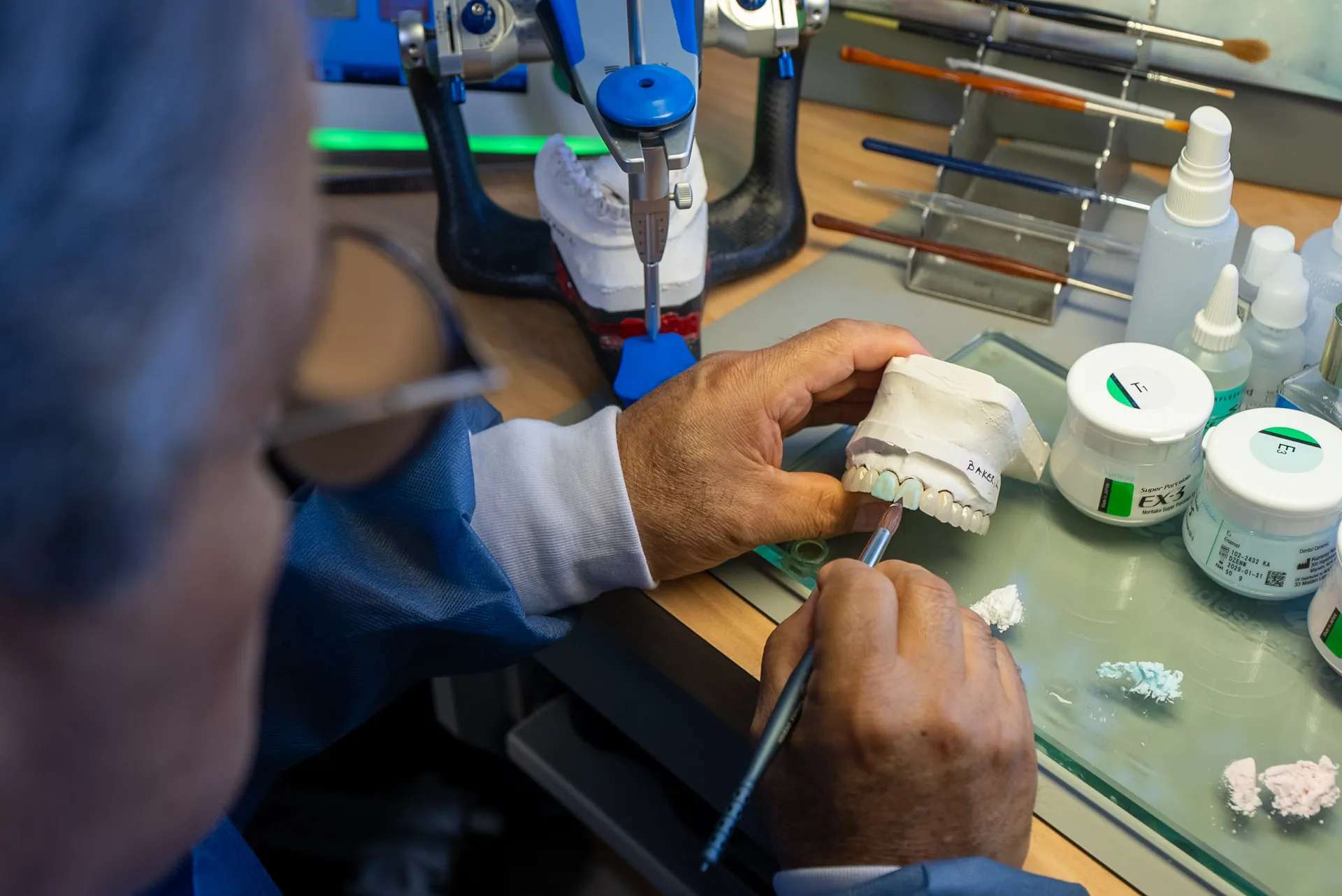
Custom aesthetics, precision fit, shorter waits, and fast repairs: four ways an in-house dental laboratory changes both your experience and your results.