
The Benefits of Early Diagnosis and Treatment of Bruxism (Teeth Grinding) in Children
Bruxism, the excessive grinding of teeth or clenching of the jaw, plays no favorites with age: it affects children as well as adults, by day and by night. Grinding is frequently a response to stress, and over time it does exactly what you would expect relentless tooth-on-tooth friction to do. The enamel layer, the hard white surface we see in a smile and the hardest substance in the body, wears away, exposing the softer dentin beneath. Once dentin is exposed, wear accelerates, sensitivity follows, and the damage compounds.
The catch is that diagnosis is not always easy. Some bruxers have headaches, jaw pain, or tooth pain that send them looking for answers. Many have no symptoms at all while the wear quietly advances. That is why professional evaluation matters: a specialist can read the wear patterns on the teeth and the state of the jaw joints and muscles even when nothing hurts yet.
Why Early Diagnosis Changes the Story for Children
Here is the encouraging part: children whose bruxism is identified early often improve on their own once simple preventive measures are in place. Protecting the developing teeth, monitoring the bite as it matures, and addressing contributing stress can be enough, and the child grows up with intact enamel and a healthy bite.
Contrast that with what we see when grinding goes unrecognized into adulthood. The damage is no longer preventable; it is established. Teeth are flattened and shortened, esthetics and function both suffer, and protection alone cannot restore what friction removed. The difference between the two outcomes is usually nothing more than when somebody looked.
What Untreated Grinding Looks Like Later
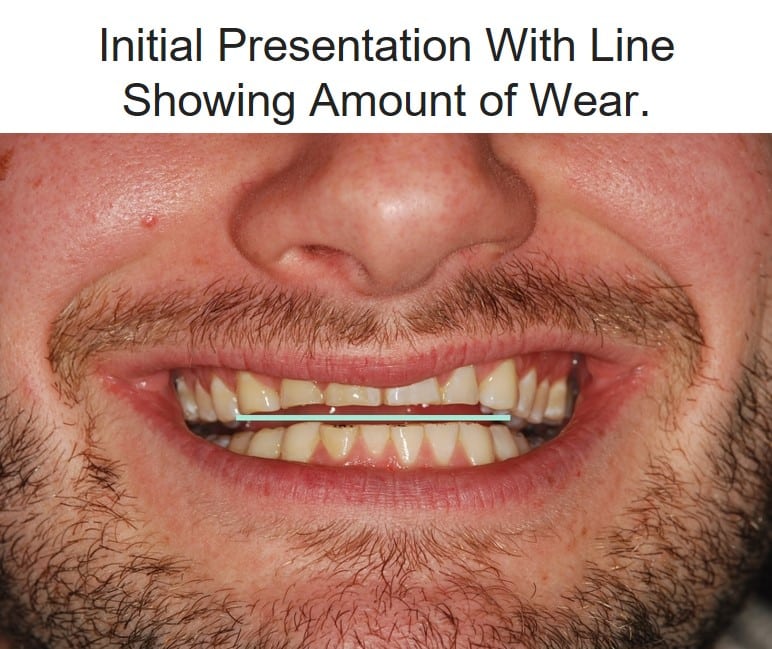
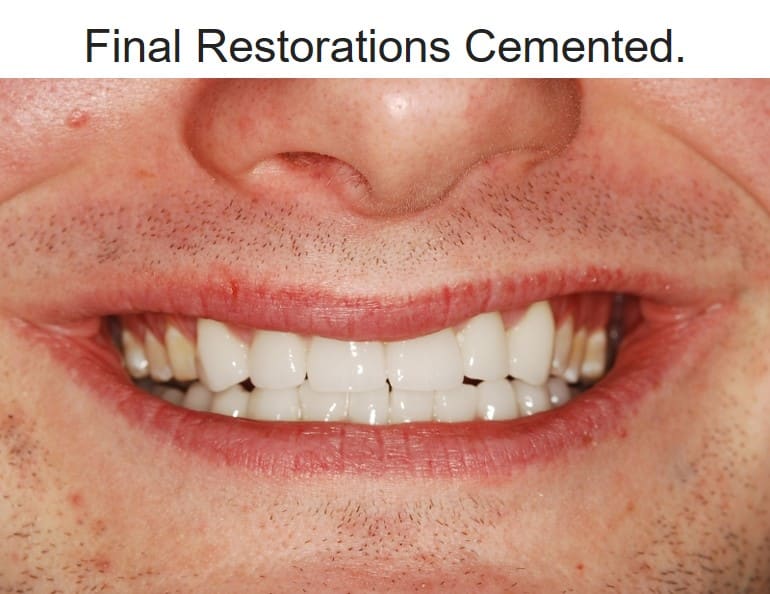
One case from our practice makes the stakes concrete. A young man of 27 came to us with evidence of severe bruxism: he had ground through the enamel of his front teeth and flattened them outright. The shortened, worn smile undermined his confidence, and the exposed dentin made sensitivity a daily problem. Left alone, the grinding would have continued until the teeth became too short to save.
Because the wear was already significant, treatment meant restoring form and function with crowns, rebuilt to proper length and protected by a custom occlusal guard against further damage. The result was excellent, but a childhood diagnosis could have made most of it unnecessary. For patients further down this road, we describe the comprehensive approach in how a severely worn dentition is repaired, and you can see a completed transformation in our case study of worn upper teeth rebuilt for a natural result.
How Occlusal Guards Do Their Job
At a minimum, significant bruxism at any age should be managed with a custom occlusal guard, worn at night and, for severe daytime clenchers, during waking hours as well; we cover that scenario in should you wear your dental night guard during the day. A well-made guard does three things at once: it shields the enamel from direct grinding contact, distributes clenching forces so no tooth takes the brunt, and eases the load on the temporomandibular joints and chewing muscles, relieving the fatigue and soreness that accompany heavy grinding.
For children, guards and preventive monitoring are usually the whole program. For adults with established wear, the guard protects both the remaining natural teeth and any restorations that rebuild them.
Protect a Smile That Has to Last a Lifetime
Whether it is your child’s grinding you have noticed or your own, early evaluation is the cheapest, most conservative treatment you will ever be offered. Dr. Gerald Marlin, a specialty-trained prosthodontist with 40+ years of experience, diagnoses and treats bruxism at every stage, from simple prevention to full restorative reconstruction. Call 202-244-2101 or request an appointment at Elite Prosthetic Dentistry in Friendship Heights, Washington, DC.
See How We Resolve These Problems
Our patient success stories show real cases and real results. Browse outcomes from a specialist prosthodontist with decades of experience and 3,900+ implants placed.
Key Takeaways
- ✓ Bruxism, the excessive grinding or clenching of teeth, affects children as well as adults and can occur by day or by night.
- ✓ Grinding wears through enamel, the body's hardest substance, exposing the softer dentin beneath and setting up sensitivity, shortened teeth, and breakdown.
- ✓ Many bruxers have no symptoms at all, which is why professional evaluation, not the absence of complaints, should drive the diagnosis.
- ✓ Children caught early often improve with simple preventive measures. Adults whose grinding went unaddressed may need crowns to rebuild what was lost.
- ✓ A custom occlusal guard protects the teeth, eases TMJ and muscle strain, and is the minimum standard of care for significant grinding.
Frequently Asked Questions
Is teeth grinding normal in children?
It is common, and in many children it lessens with time, especially when identified early and managed with simple preventive measures. Common does not mean ignorable: persistent grinding can wear developing teeth, contribute to jaw and muscle symptoms, and continue into adulthood, so it deserves evaluation rather than a wait-and-see shrug.
How do I know if my child grinds their teeth?
Audible grinding at night is the classic tip-off, but silent clenching is easy to miss. Watch for flattened or unusually short teeth, complaints of jaw soreness or morning headaches, tooth sensitivity, and chipped edges. A dental examination can spot the wear patterns of bruxism even when no one has heard a sound.
What happens if bruxism is not treated?
Grinding progressively removes enamel, exposing the softer dentin underneath, which wears even faster. Over years, teeth become short, flat, sensitive, and structurally compromised, and the bite can collapse, straining the TMJ and jaw muscles. At advanced stages, restoring the teeth requires crowns and comprehensive reconstruction rather than simple protection.
How does an occlusal guard help with teeth grinding?
A custom occlusal guard is worn at night, and in severe cases during the day. It shields the enamel from grinding contact, distributes clenching forces evenly, and reduces strain on the temporomandibular joints and chewing muscles. For established wear, the guard also protects any restorative work that rebuilds the damaged teeth.
Related Patient Success Stories
Explore similar patient success stories demonstrating our expertise in advanced prosthetic dentistry.
Related Articles
Deepen your knowledge with additional insights on this topic.
TMJ & Jaw Pain The Benefits of Early Diagnosis and Treatment of Bruxism (Teeth Grinding) in Children
Teeth grinding affects children as well as adults. Learn the signs of bruxism, why early diagnosis protects growing smiles, and how occlusal guards help.
 TMJ & Jaw Pain
 Can TMJ Be the Cause of Migraine or Severe Headaches?
Headache is one of the most common complaints in TMJ disorders. Learn how jaw dysfunction can contribute to head pain and how the connection is diagnosed.
 TMJ & Jaw Pain
 TMJ Disorders: Symptoms, Causes, and Treatment
What TMJ dysfunction is, the symptoms it causes from jaw pain to headaches and ear fullness, what drives it, and how a DC prosthodontist treats the cause.