
5 Reasons Why Your Teeth Are Changing Color
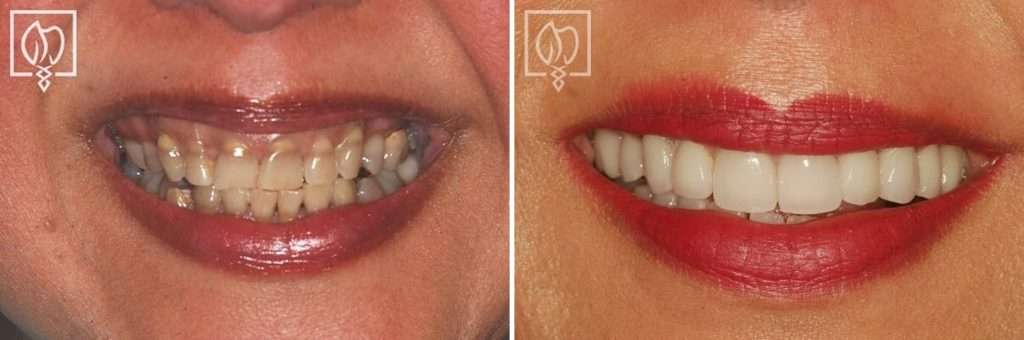
Severe discoloration transformed with crowns in our practice. See the full case
You brush, you floss, and still your smile looks a little more yellow and a little less bright than it used to. That is extremely common, and it is not necessarily a sign you are doing anything wrong. Teeth change color for several distinct reasons, and knowing which one is affecting you points toward the right fix. Here are the five most common.
1. Food and Drinks
Coffee, tea, and red wine are the usual culprits. They contain chromogens, intensely pigmented compounds that cling to enamel and build up as visible surface stain over time. Dark sodas, berries, and deeply colored sauces do the same. A practical tip: sip staining drinks through a straw so the liquid bypasses your front teeth, and rinse with water afterward. Surface stains like these are exactly what professional whitening removes best.
2. Tobacco Use
Tobacco produces some of the most stubborn stains in dentistry. Tar is dark to begin with, and nicotine, colorless on its own, turns yellow-brown as it oxidizes in contact with air. Together they drive teeth toward yellow and eventually brown. The stain is a good reason to quit, and quitting is the only way to stop it from returning.
3. Aging
This one is structural, not a stain at all. Beneath the white enamel shell lies dentin, which is naturally yellower. Enamel thins gradually over a lifetime of chewing and brushing, and as it does, more of that dentin shows through. This is why teeth tend to look darker with age even in people who never smoke or drink coffee. Whitening can help, though age-related change has an internal component that surface bleaching does not fully reach.
4. Trauma
An injured tooth can change color, and it usually does so from the inside. In response to trauma, the tooth may deposit additional dentin, which is darker, or the nerve may be affected, giving the tooth a gray, “dead” appearance. Because this discoloration is intrinsic, it often resists standard whitening. It also deserves attention for another reason: a color change after an injury can signal the tooth needs treatment, not just cosmetics.
5. Medications
A number of medications list tooth discoloration among their effects. More significantly, certain antibiotics taken while teeth are still forming, in the womb or in early childhood, can bind into the developing enamel and cause permanent intrinsic staining in the adult teeth that emerge years later. This kind of built-in discoloration typically does not respond to bleaching and is usually addressed cosmetically.
Surface Stain or Internal Change?
Notice that these five causes split into two categories, and the split matters. Food, drink, and tobacco deposit stain on the outside of the enamel, where it accumulates gradually and lifts off relatively well with professional cleaning and whitening. Aging, trauma, and medication change color from within the tooth, and internal color does not respond to surface treatments the same way. This is why one person sees a dramatic result from whitening while another sees little: they were not actually dealing with the same kind of discoloration. If you are not sure which describes your teeth, that is exactly the sort of thing an examination sorts out quickly, and it saves you from expecting a treatment to solve a problem it was never going to reach.
What You Can Do
Some of these causes are within your control, and some simply come with living. Limit staining foods and tobacco, keep up your daily hygiene, and rinse with water after coffee or wine. When you are ready to brighten things, the right approach depends on which cause is at work: surface and age-related staining respond well to professional teeth whitening, while intrinsic discoloration from trauma or medication may be better handled with cosmetic options. If you are curious what shade is actually natural for your teeth, our companion article on what determines your tooth color is a good next read.
To find out which type of discoloration you have and what will genuinely help, call 202-244-2101 or request an appointment at Elite Prosthetic Dentistry in Friendship Heights, Washington, DC.
See How We Resolve These Problems
Our patient success stories show real cases and real results. Browse outcomes from a specialist prosthodontist with decades of experience and 3,900+ implants placed.
Key Takeaways
- ✓ Tooth discoloration has five common drivers: staining foods and drinks, tobacco, aging, trauma, and certain medications.
- ✓ Surface stains from coffee, tea, and wine sit on the enamel and respond well to professional whitening.
- ✓ Aging and trauma cause deeper, internal color change that whitening alone often cannot fully correct.
- ✓ A single dark tooth after an injury is a different problem than overall yellowing and deserves an individual evaluation.
Frequently Asked Questions
Why are my teeth turning yellow even though I take care of them?
Some yellowing is normal and not a hygiene failure. As enamel naturally thins with age, the yellower dentin beneath shows through more, and staining foods and drinks add surface color over time. Good brushing and flossing slow it but cannot stop the aging process. Professional whitening addresses surface and age-related staining effectively.
Can all tooth discoloration be whitened?
No. Surface stains from food, drink, and tobacco respond well to whitening, and age-related yellowing usually improves. But intrinsic discoloration from trauma, certain medications, or developmental causes sits inside the tooth and often resists bleaching. Those cases may call for cosmetic options such as bonding or veneers, decided after an examination.
Why did one tooth turn dark after an injury?
After trauma, a tooth may lay down extra dentin or the nerve may be affected, both of which darken it from the inside. A single dark tooth is intrinsic discoloration and is handled differently from overall yellowing. It should be evaluated, since a color change can sometimes signal that the tooth needs treatment, not just cosmetic attention.
Related Patient Success Stories
Explore similar patient success stories demonstrating our expertise in advanced prosthetic dentistry.
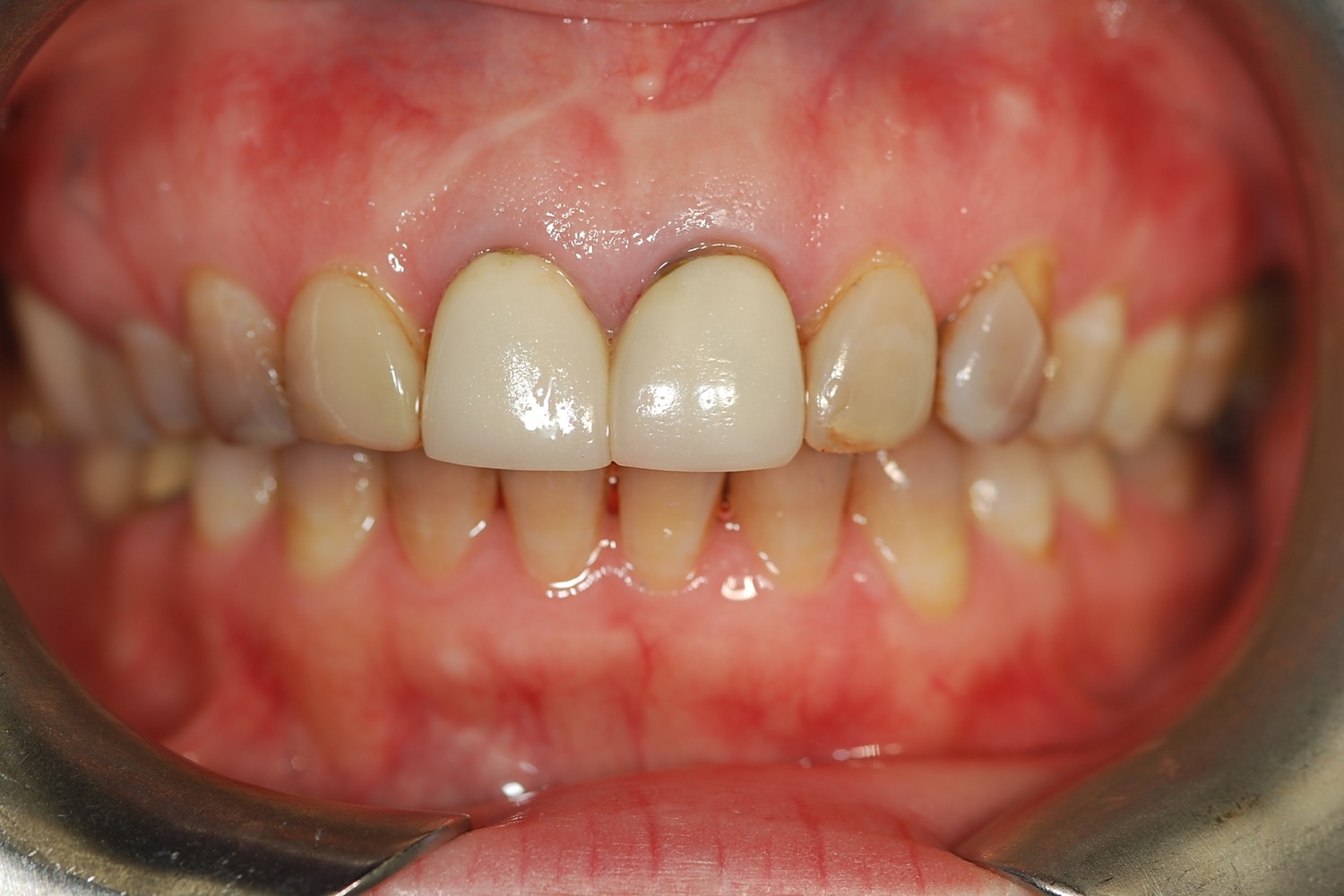 Before
 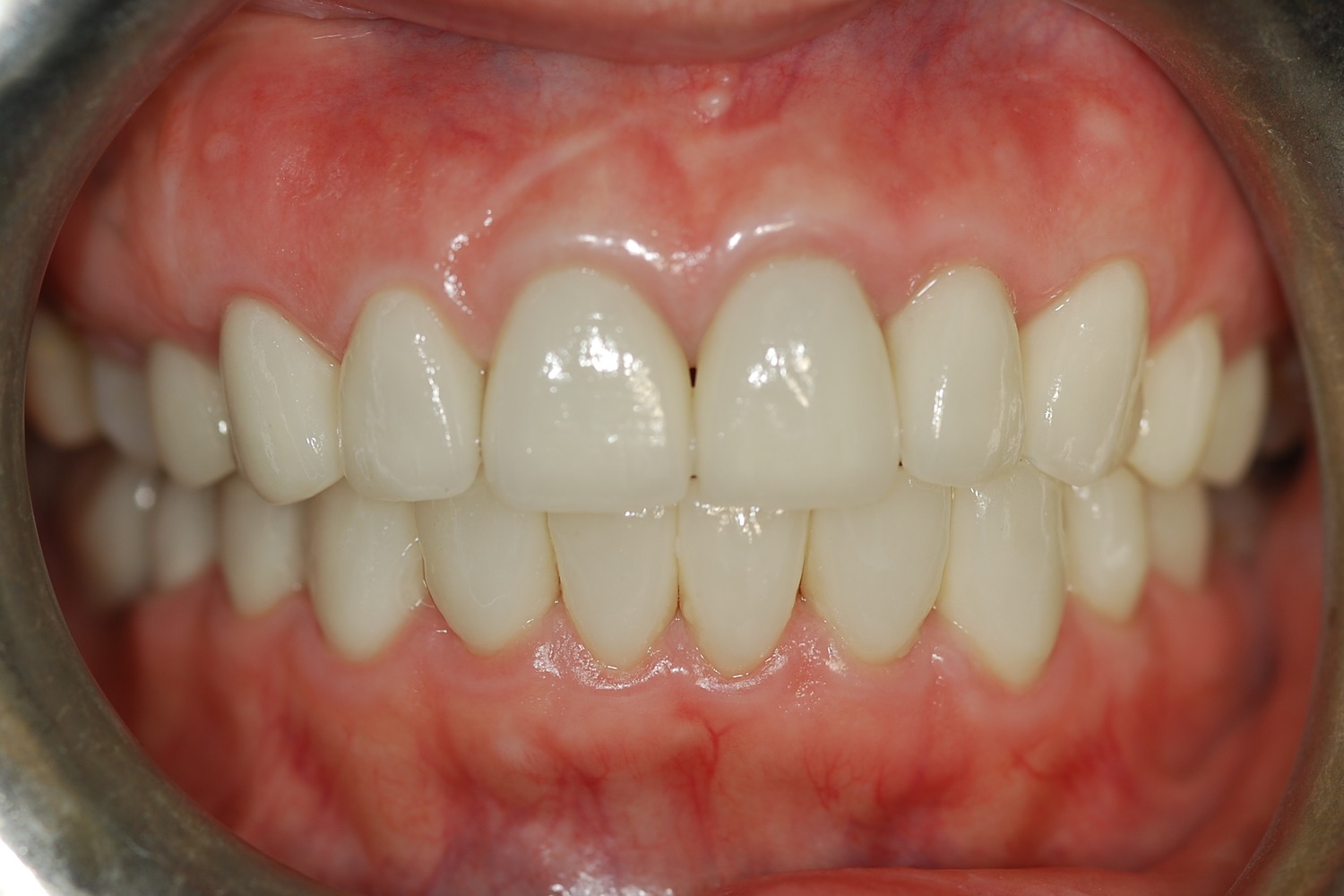 After
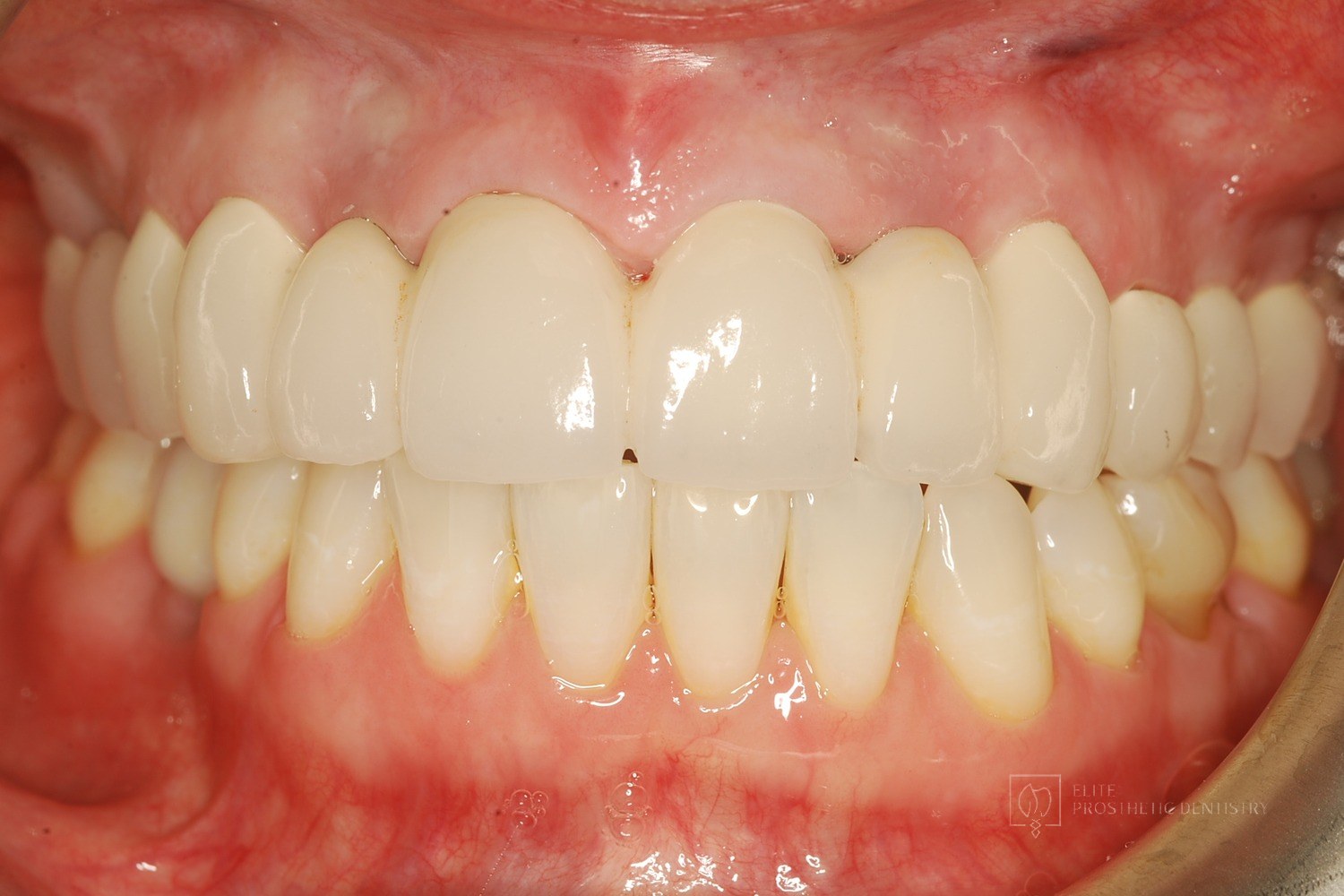
After How Aging, Opaque Restorations Were Replaced with Customized Ceramic Restorations Designed for Long-Term Natural Esthetics
The existing restorations appeared opaque, worn, and unnatural over time, affecting both confidence and overall smile harmony.
 Before
  After
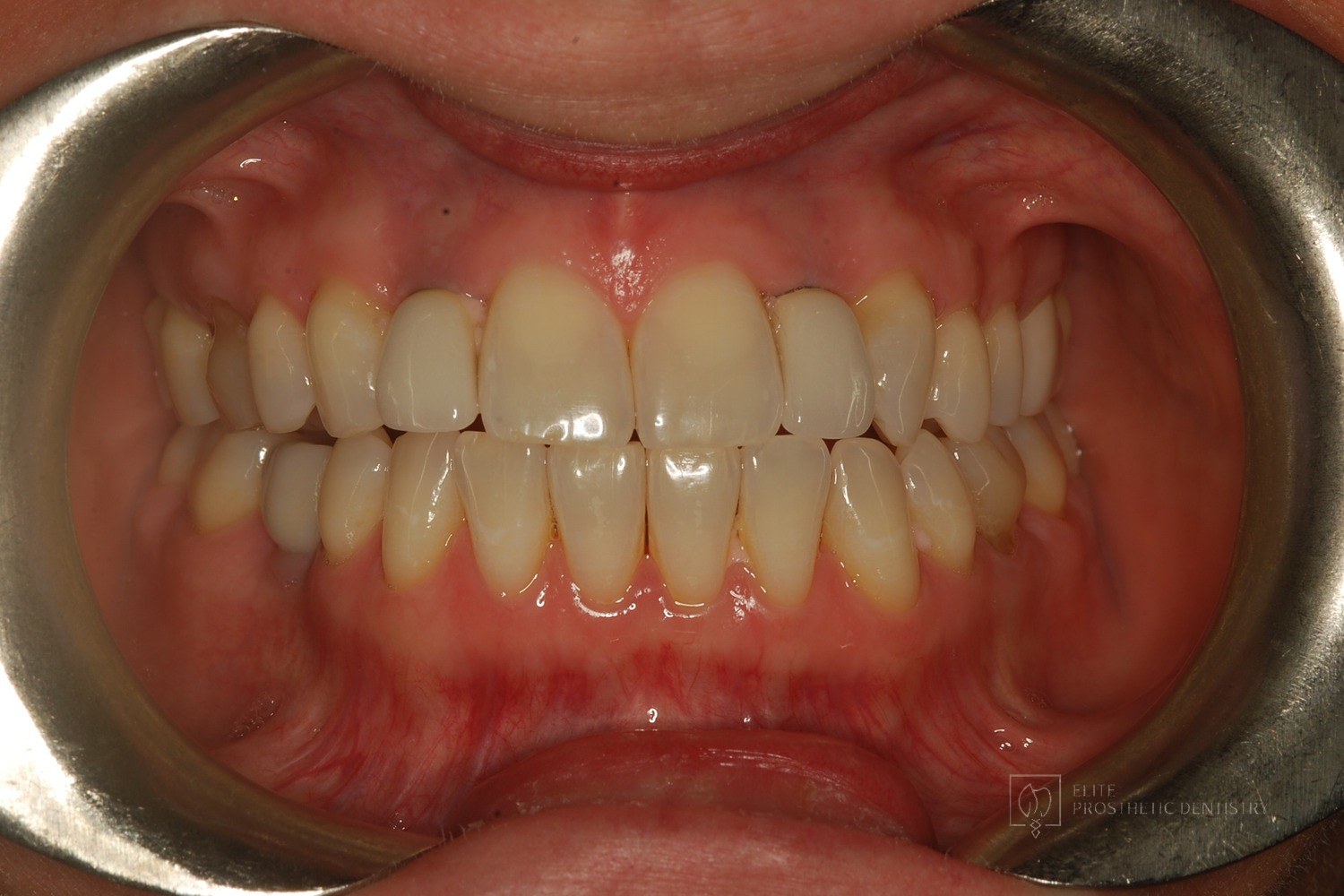
After How Older Implant Crowns Were Redesigned for a Better Bite and More Natural Appearance
The patient came in after years of living with implant-supported crowns placed more than twenty years earlier that no longer looked or functioned well. CBCT evaluation, reviewed with a radiologist colleague, showed the implants had been placed too far to the buccal in very thin bone and could not support a healthy long-term restoration.
 Before
  After
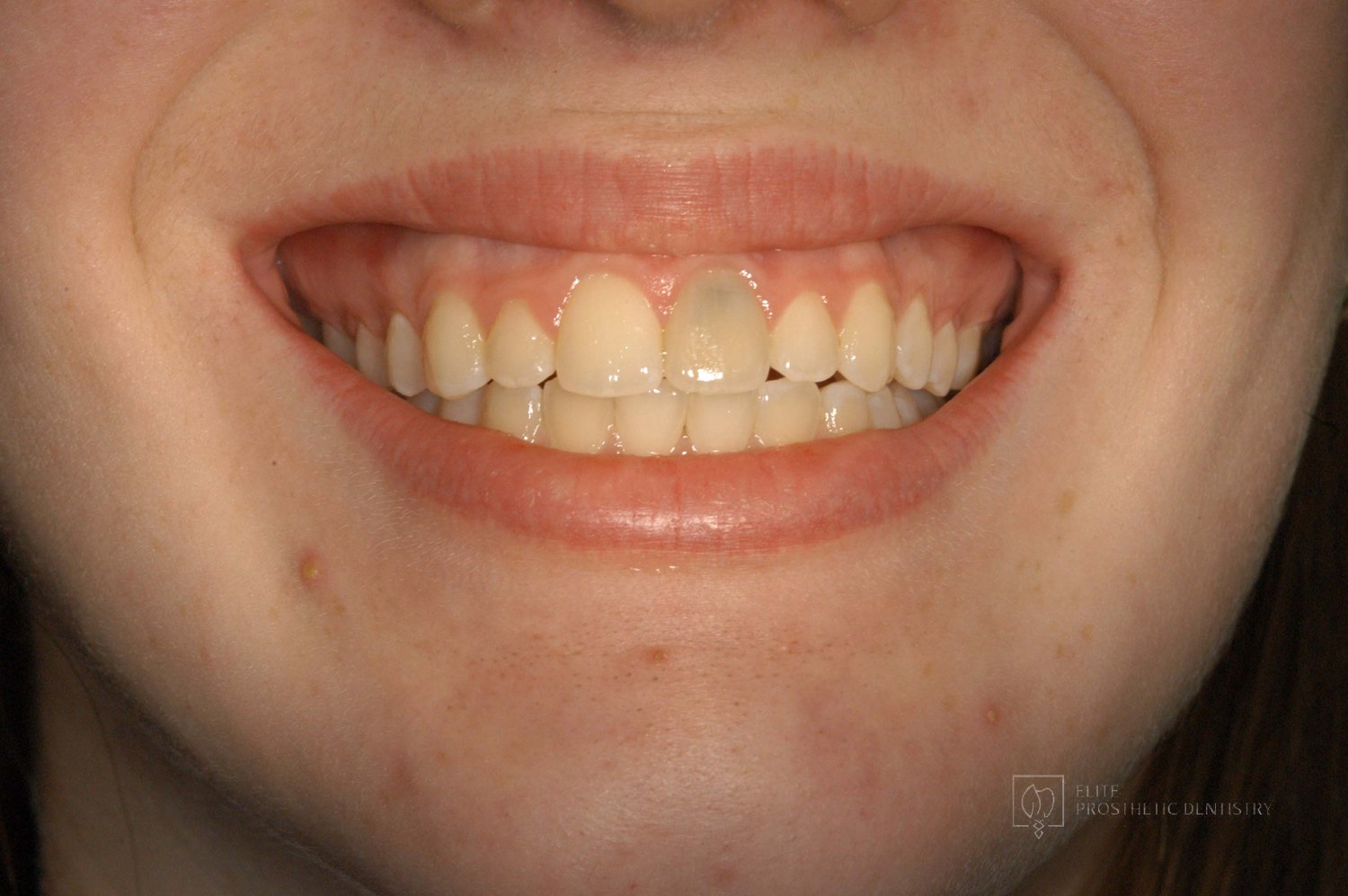
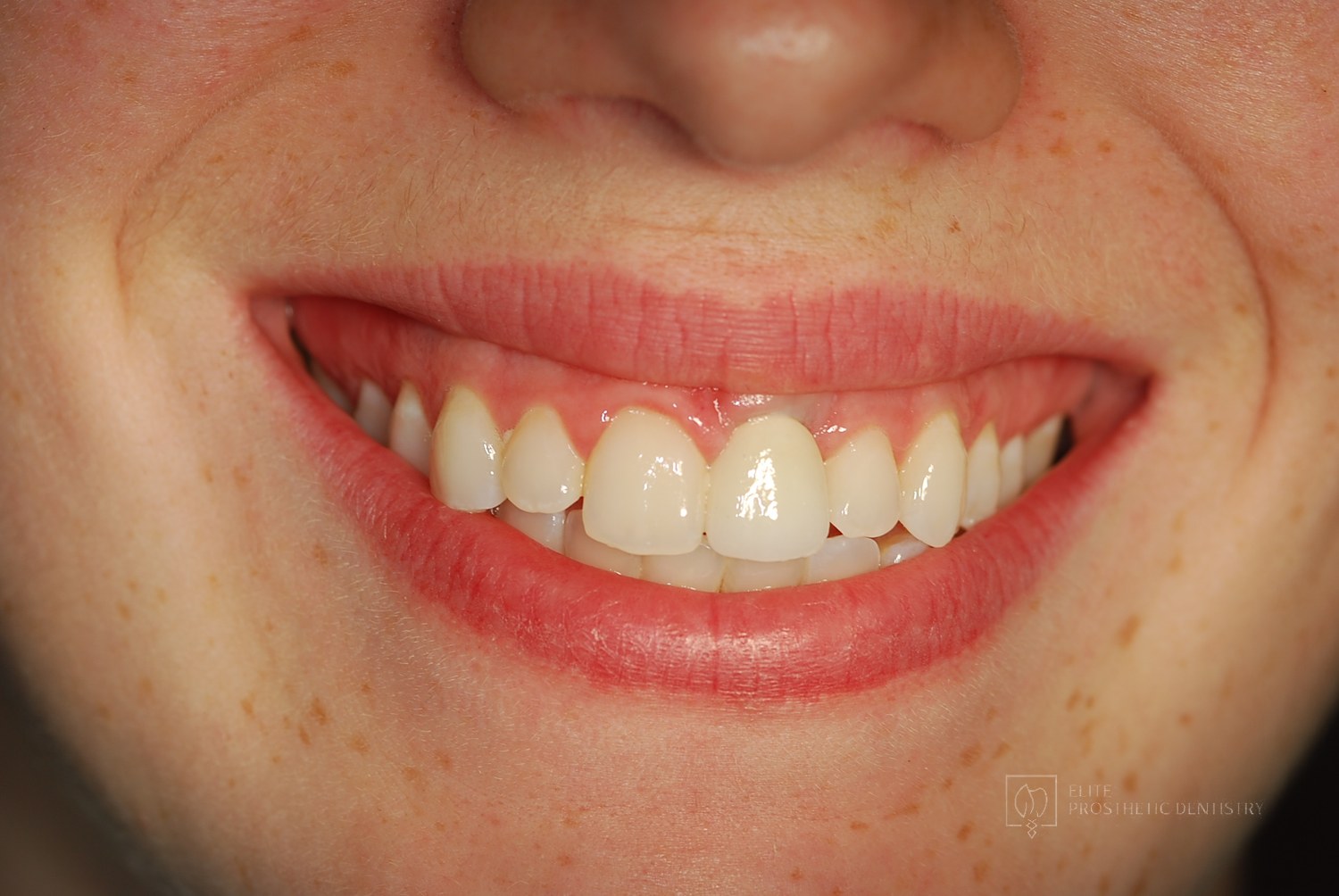
After How a Front Tooth Lost to Childhood Trauma Was Rebuilt with Bone Grafting and a Long-Lasting Implant
A teenager was referred by her father after earlier trauma left her upper left front tooth slowly failing from root resorption. She was still growing, so an immediate implant was the wrong move. The tooth had to be maintained to buy time, then replaced correctly once she reached skeletal maturity.
Related Articles
Deepen your knowledge with additional insights on this topic.
 Oral Health & Prevention
 Common Misconceptions About Gum (Periodontal) Disease: Myths vs. Facts
Bleeding gums are normal? Only older adults get gum disease? A DC prosthodontist corrects eight common myths about periodontal disease signs and treatment.
 Oral Health & Prevention
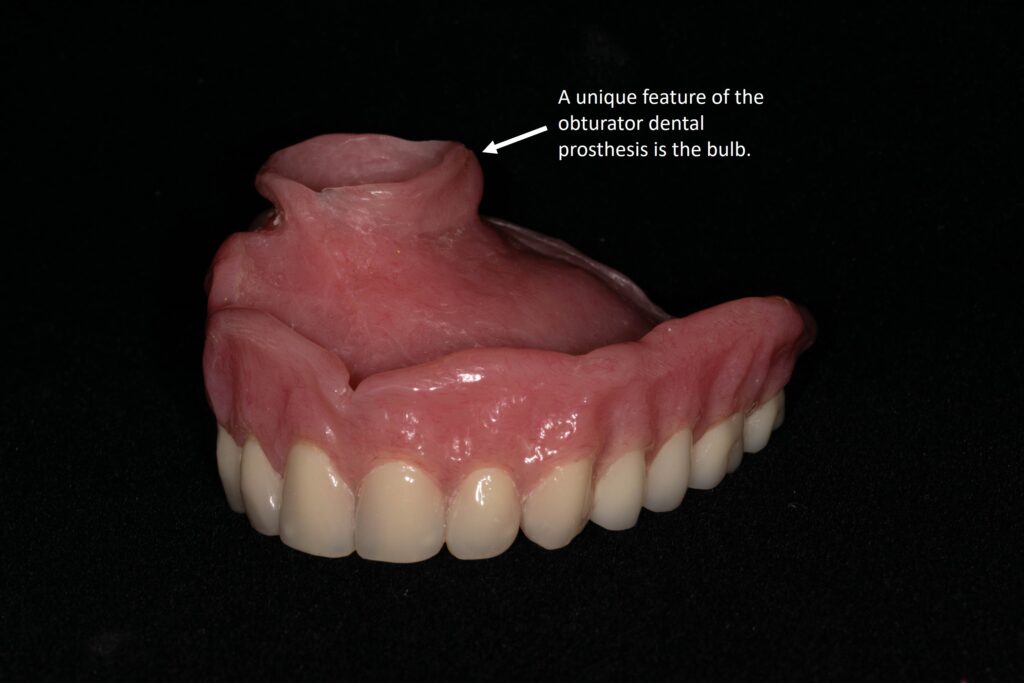
 Understanding Palatal Obturators for Openings in the Roof of the Mouth
A palatal obturator seals an opening in the roof of the mouth from cleft palate, surgery, or trauma. A DC prosthodontist explains how they work and their care.
 Oral Health & Prevention
 Dental Hygiene Care Is Not a 'One-Size-Fits-All' Process
The right hygiene routine depends on your gums, your risk factors, and your dental work. A DC prosthodontist explains why personalized hygiene care matters.