
What Professional Dental Hygiene Care Should Include
Brushing twice a day and flossing daily are the cornerstone of a healthy smile, and they are still not quite enough on their own. According to the CDC, 47.2% of adults aged 30 and older have some form of periodontal disease, rising to 70.1% of adults 65 and older. Those numbers are not a verdict on brushing; they are a reminder that home care has blind spots, and that professional hygiene care exists to cover them. For decades at Elite Prosthetic Dentistry, patients individually guided through our Oral Health and Wellness Program have rarely gone on to suffer serious gum and bone disease, and the difference is the system, not a secret.
Here is what thorough professional hygiene care actually involves.

The team at our Washington, DC practice
Why Professional Cleanings Are Necessary
No matter how meticulous you are, certain areas of the mouth are stubbornly hard to reach. Plaque left in them does two things: it inflames the adjacent gum tissue, and given time it calcifies into tartar (calculus), a hardened deposit that no brushing or flossing will remove. The surfaces where neighboring teeth touch can also decay quietly in spots a brush never contacts. Professional instruments, in trained hands, are the only way that established buildup comes off.
What Is Oral Plaque, or Biofilm?
Dental plaque is a textbook biofilm: a complex, organized microbial community living in a self-made protective matrix. In health, the biofilm and your tissues maintain a workable balance. Left undisturbed, the community matures and shifts toward pathogenic species, and that transformed biofilm is the direct cause of the two major dental diseases, decay and periodontal disease. This is why hygiene is a rhythm rather than an event: daily disruption at home, periodic professional removal of what matures anyway.
What to Expect at a Hygiene Visit
At Elite Prosthetic Dentistry, cleanings are performed by our skilled, experienced hygienist following a sequence designed so nothing is overlooked. The visit includes an evaluation of your oral hygiene with specific guidance for maintaining a healthy mouth at home, probing measurements of the gum and bone around each tooth to detect any sign of periodontal disease, and thorough removal of all calculus and plaque biofilm using specialized instruments. Your teeth are then polished, stains are removed, and a fluoride treatment is offered when appropriate.
Just as important, the visit is where your home care gets personal: which tools fit your mouth, how to clean around any crowns or implants you have, and what your gum measurements say about your risk. Restorations raise the stakes here, because plaque at crown margins and around implants is precisely what shortens their lifespan. We cover that in more depth in why hygiene care should never be one-size-fits-all.
How Often Should Teeth Be Cleaned?
It varies honestly from patient to patient. General guidelines suggest twice a year for people with good hygiene habits and no particular predisposition to decay or gum disease. A history of periodontal disease, rapid tartar formation, dry mouth, or extensive restorative work often calls for three- or four-month intervals instead. The right frequency is a clinical decision made from your measurements, not a tradition.
What Is Periodontal Disease?
Periodontal (gum) disease is an infection of the tissues that hold your teeth in place, the gums and the underlying bone. It begins with plaque biofilm accumulating at and below the gumline, and in advanced stages it brings sore and bleeding gums, painful chewing, and bone loss that ultimately costs teeth. It is largely preventable, which is the entire point of everything above; our gum disease prevention tips make a good companion read.
Let Us Take Care of Your Smile
If you have not seen a hygienist this year, that is the simplest possible next step for your oral health. Call 202-244-2101 or request an appointment with Elite Prosthetic Dentistry in Friendship Heights, Washington, DC. Dr. Gerald Marlin, a specialty-trained prosthodontist, and our hygiene team look after patients from across the DC area, Maryland, Virginia, and well beyond.
Sources:
See How We Resolve These Problems
Our patient success stories show real cases and real results. Browse outcomes from a specialist prosthodontist with decades of experience and 3,900+ implants placed.
Key Takeaways
- ✓ Even meticulous home care leaves plaque in hard-to-reach areas, and once it calcifies into tartar, only professional instruments can remove it.
- ✓ A thorough hygiene visit is diagnostic as well as cleaning: gum measurements, an oral evaluation, and personalized home-care instruction.
- ✓ Nearly half of adults over 30 have some form of periodontal disease, rising to about 70% after 65, which is why professional monitoring matters.
- ✓ Cleaning frequency should match your risk. Twice a year suits healthy, low-risk mouths; gum disease history or extensive dental work often calls for more.
Frequently Asked Questions
What happens during a professional dental cleaning?
A thorough visit includes an evaluation of your hygiene and gum health, probing measurements around each tooth to check for bone loss, complete removal of tartar and plaque biofilm with specialized instruments, polishing and stain removal, fluoride when appropriate, and specific instruction for your home routine. It is diagnostic and preventive at once, not just a polish.
Why do I need professional cleanings if I brush and floss well?
Because some areas are nearly impossible to clean fully at home, and plaque left in them calcifies into tartar that no toothbrush or floss can remove. Professional instruments clear that buildup, and the accompanying examination catches gum inflammation and early bone changes while they are still simple to address.
What is oral biofilm, and why does it matter?
Dental plaque is a biofilm, an organized bacterial community in a protective sticky matrix. In a healthy mouth it stays balanced, but left undisturbed it matures, hardens into tartar, and shifts toward disease-causing species that drive cavities and periodontal disease. Daily disruption at home plus periodic professional removal is how it is kept in check.
Related Patient Success Stories
Explore similar patient success stories demonstrating our expertise in advanced prosthetic dentistry.
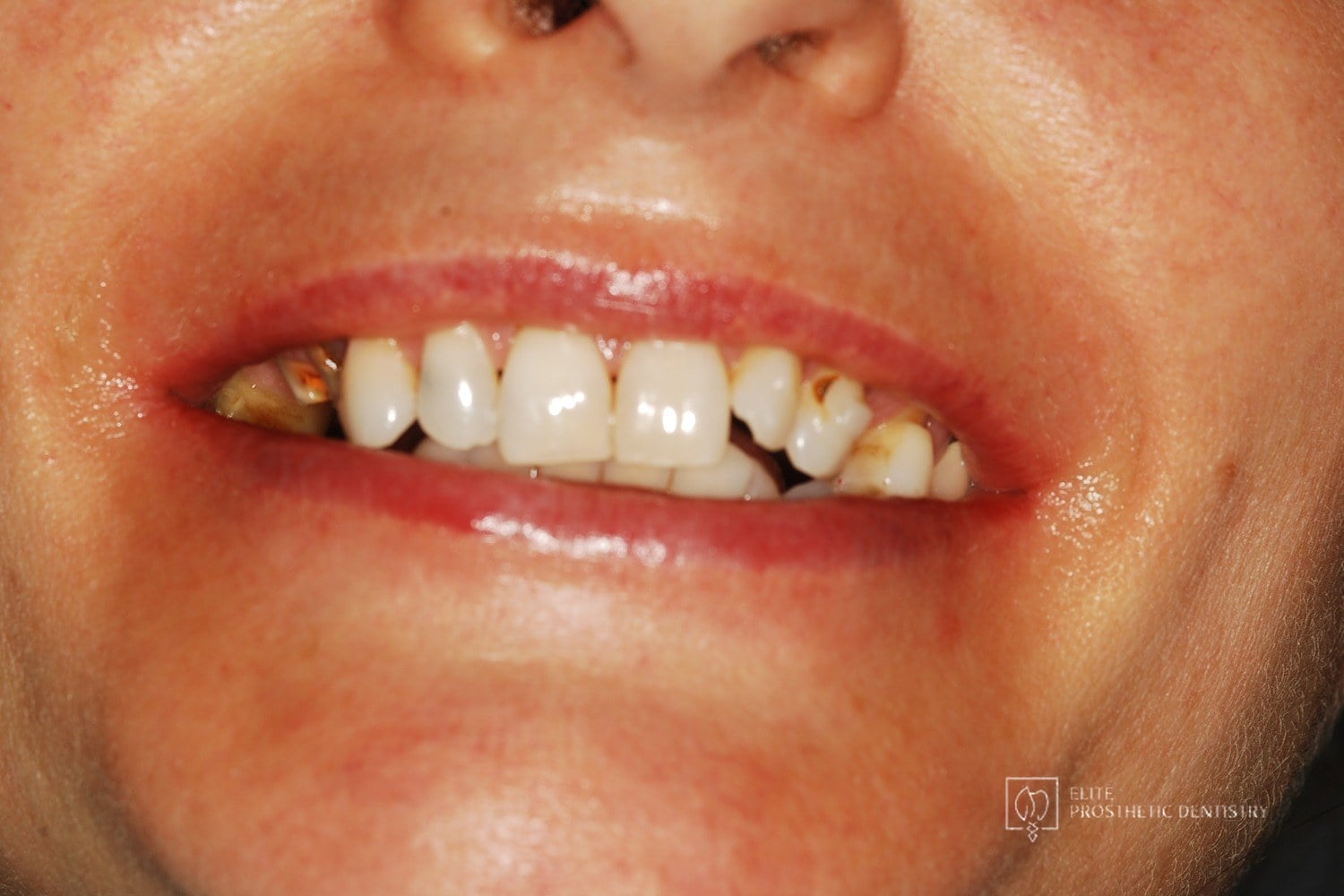 Before
 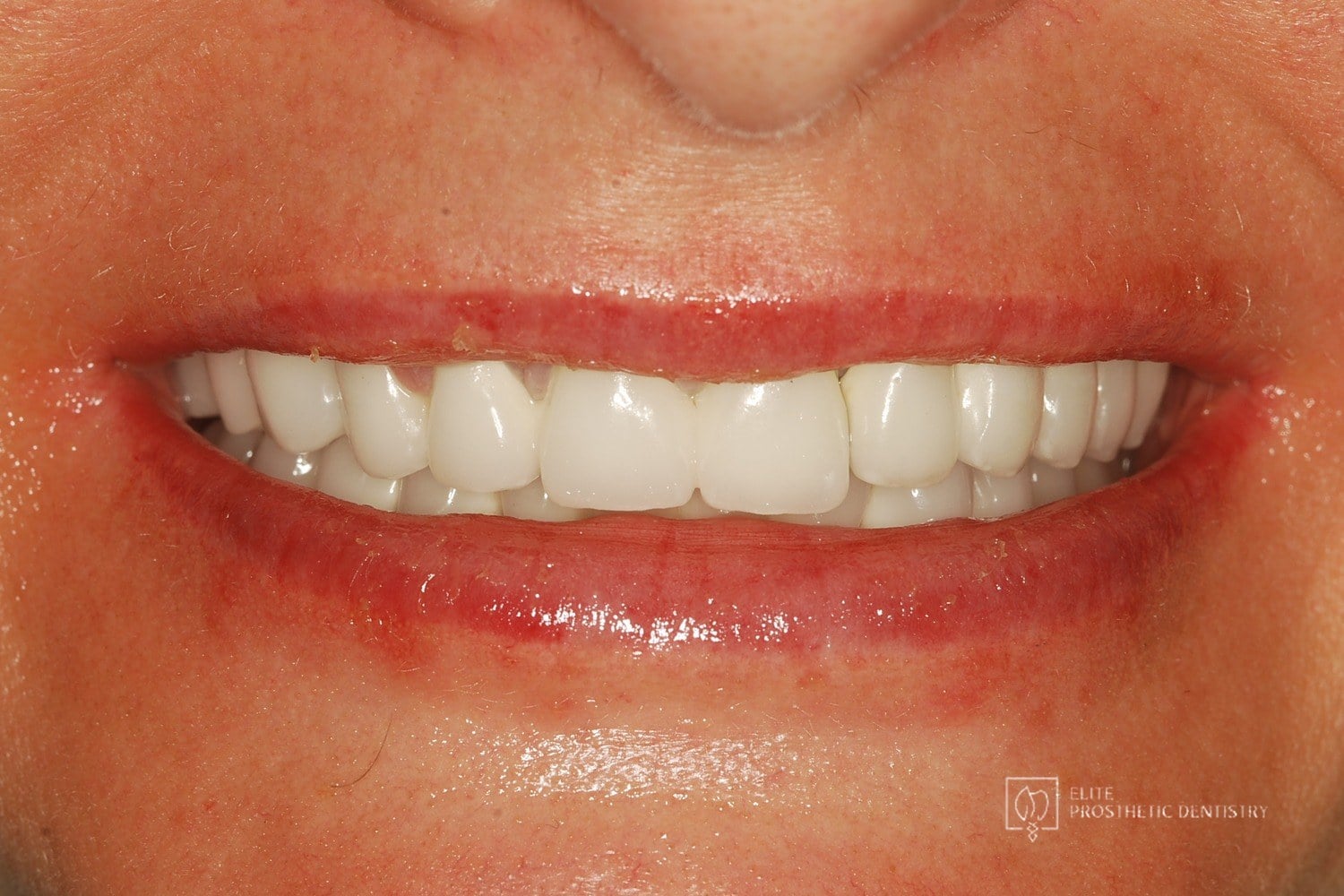 After
After How Aging, Failing Dentistry Was Replaced with a Coordinated Full-Mouth Implant and Crown Reconstruction
The patient presented with throbbing upper-molar pain, long-standing infections, multiple root canals and unfinished prior treatment, generalized sensitivity, and several hopeless teeth.
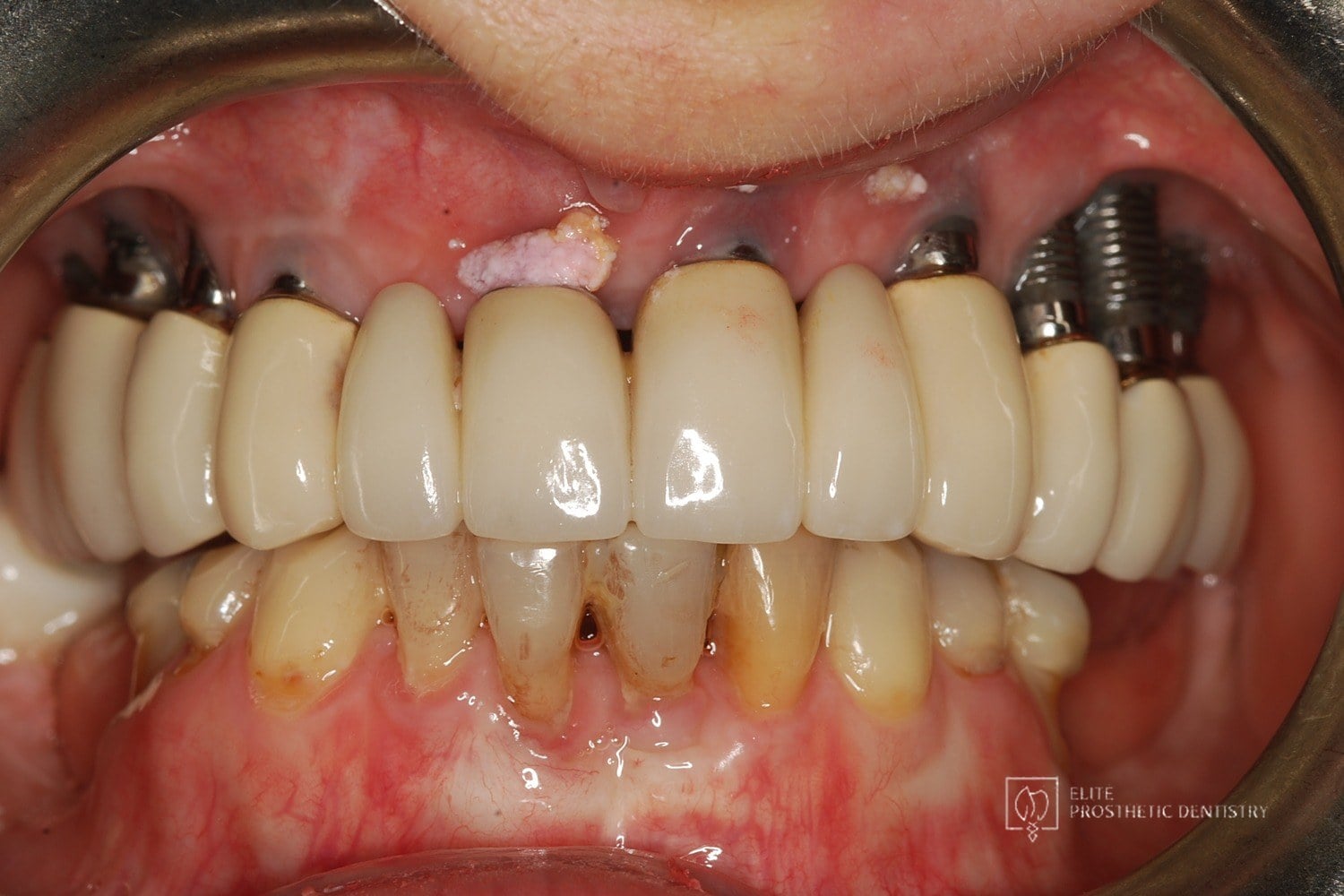 Before
 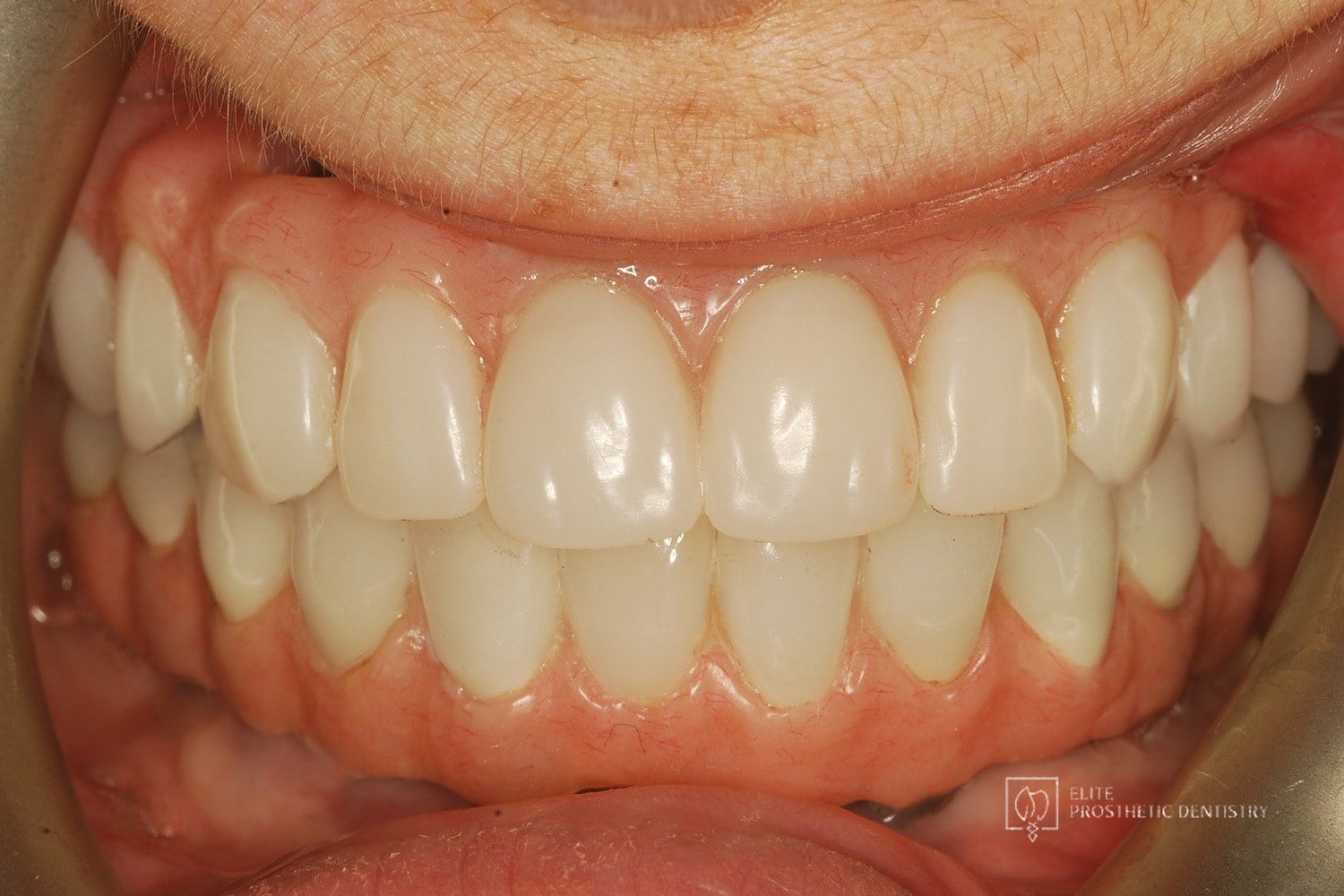 After
After How Failing Implants and Severe Bone Loss Were Rebuilt Into a Stable Full-Arch Implant Reconstruction
The patient presented with significant complications from previously placed implants, severe bone loss, failing posterior implants, and an unesthetic full-arch bridge. Both arches required full reconstruction, with the upper arch showing the most advanced bone loss and instability.
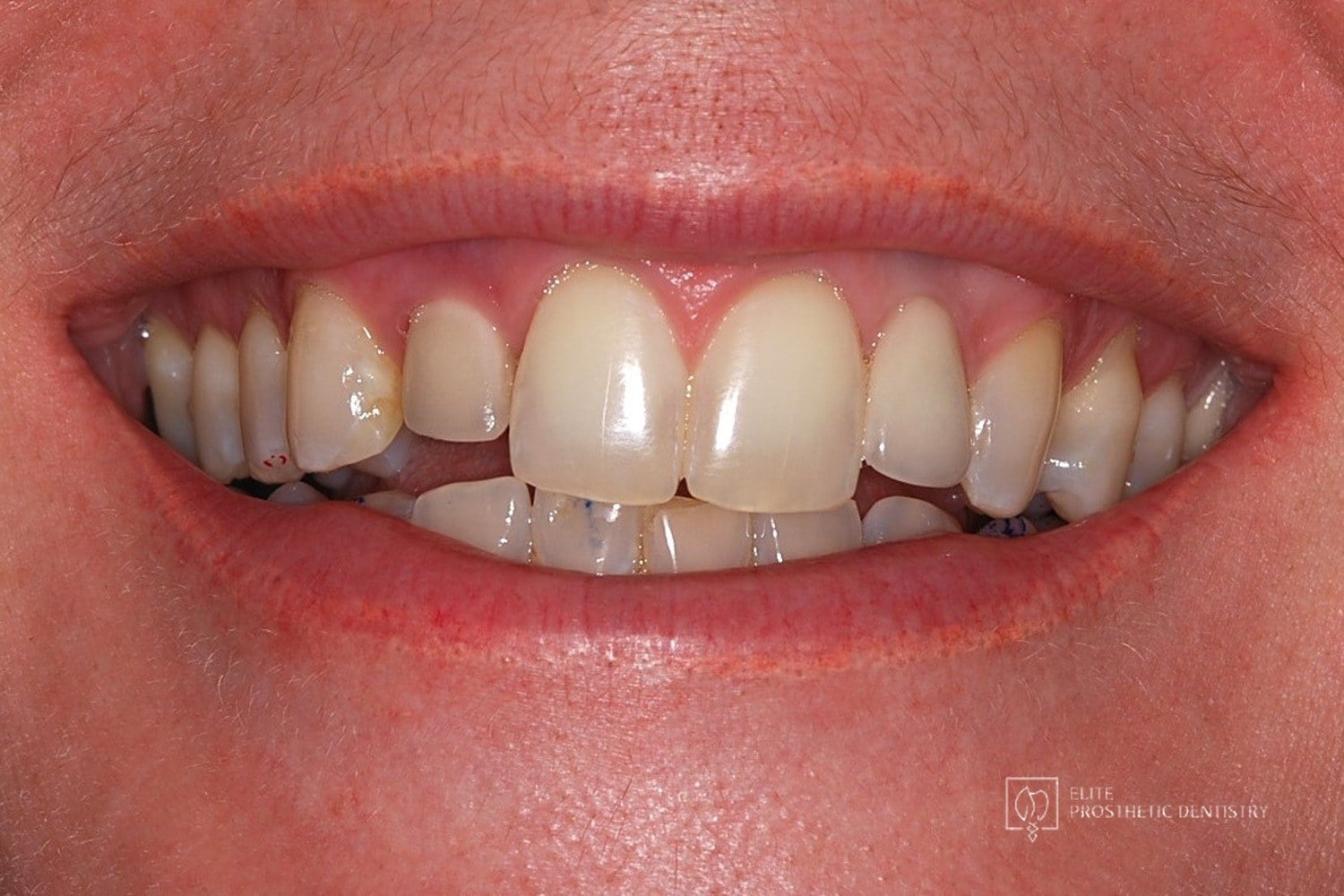 Before
 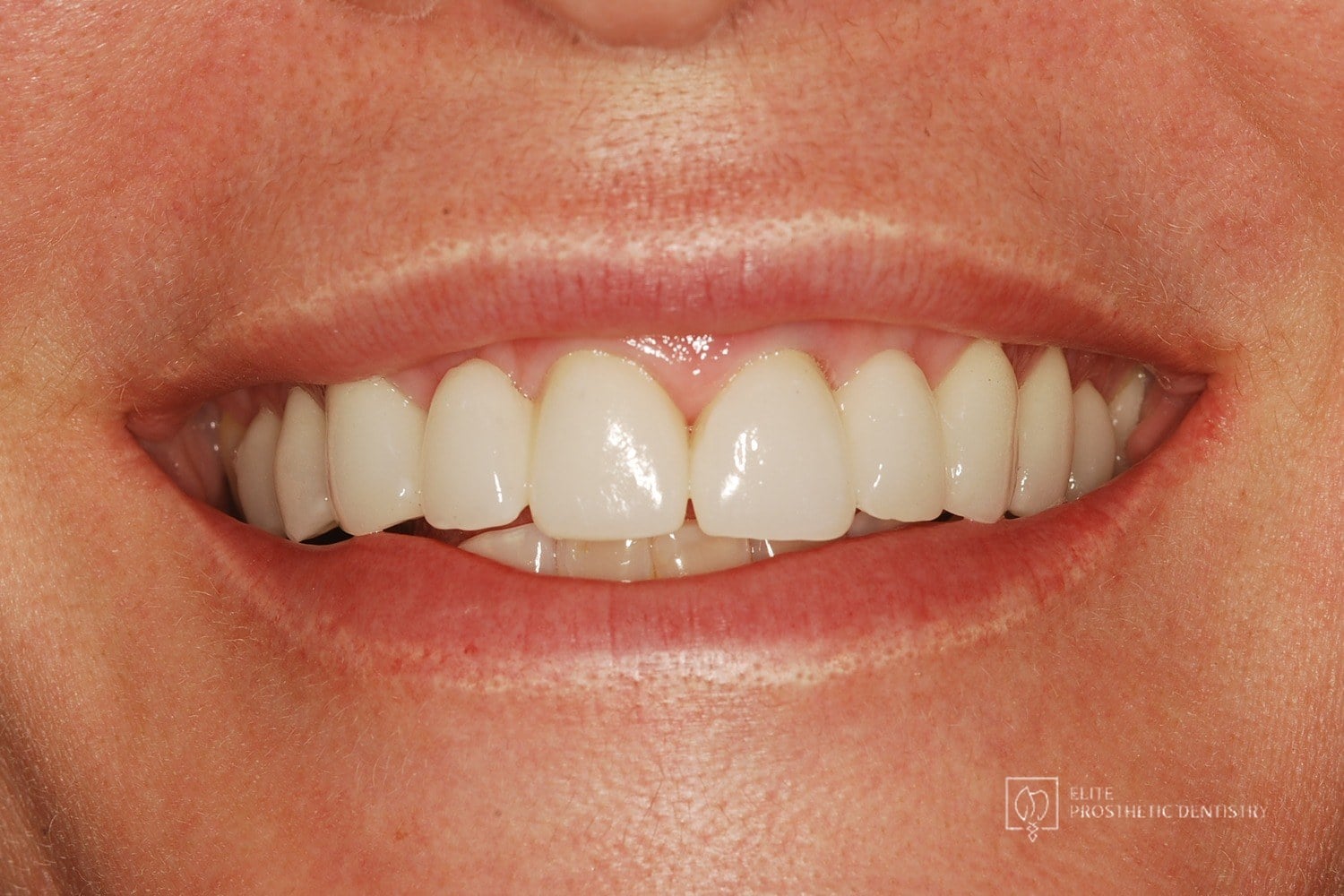 After
After How Failing Lateral Incisor Implants Were Replaced with Custom Zirconia Bridges After Severe Bone Loss Made Replacement Implants Impossible
Comprehensive examination including CBCT imaging revealed significant bone loss surrounding implants that were placed outside the buccal plate, most likely due to placement without a CBCT-generated surgical guide. The implants were determined non-salvageable, and the alveolar ridge was too narrow to support replacement implants without extensive reconstruction.
Related Articles
Deepen your knowledge with additional insights on this topic.
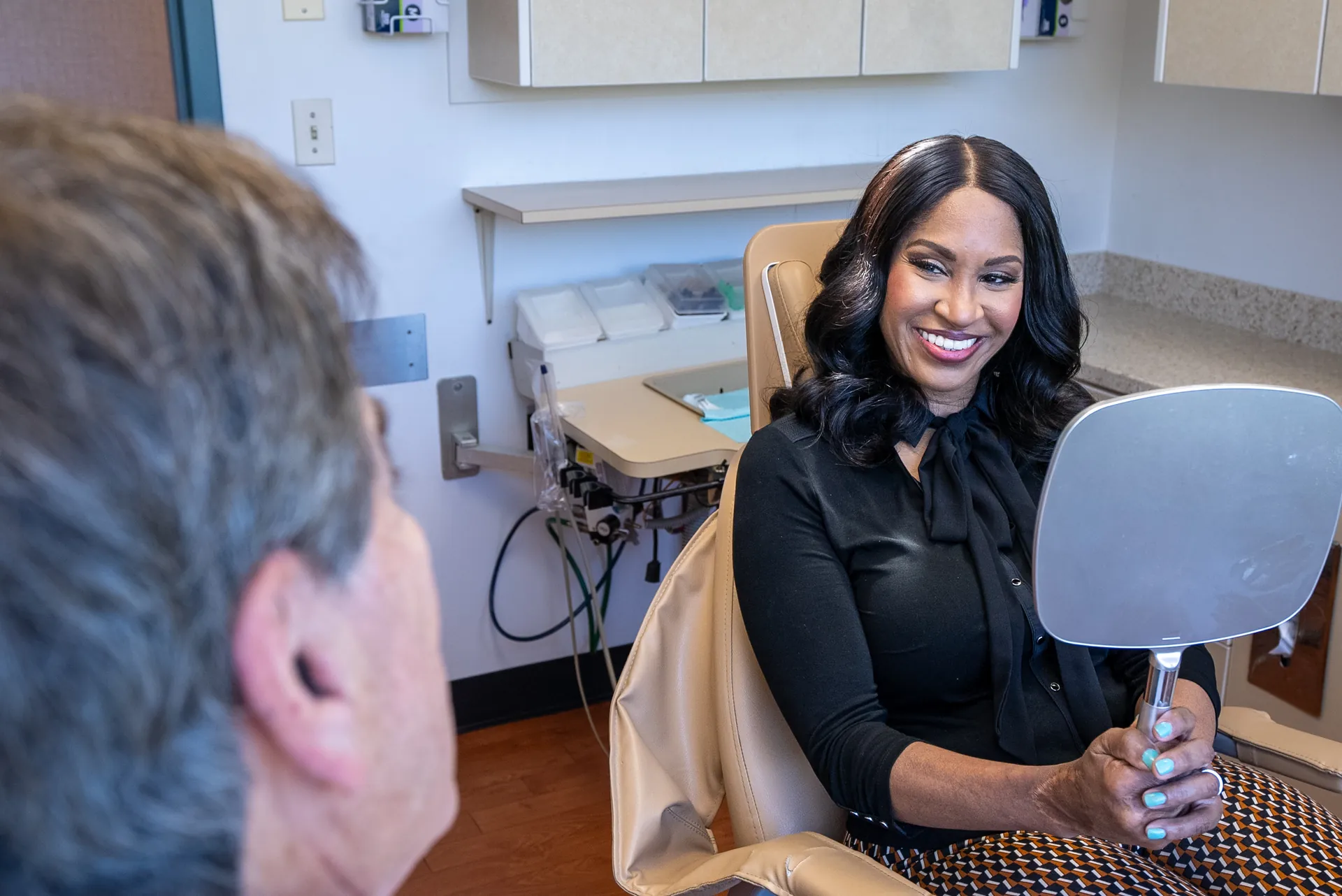 Oral Health & Prevention
 Common Misconceptions About Gum (Periodontal) Disease: Myths vs. Facts
Bleeding gums are normal? Only older adults get gum disease? A DC prosthodontist corrects eight common myths about periodontal disease signs and treatment.
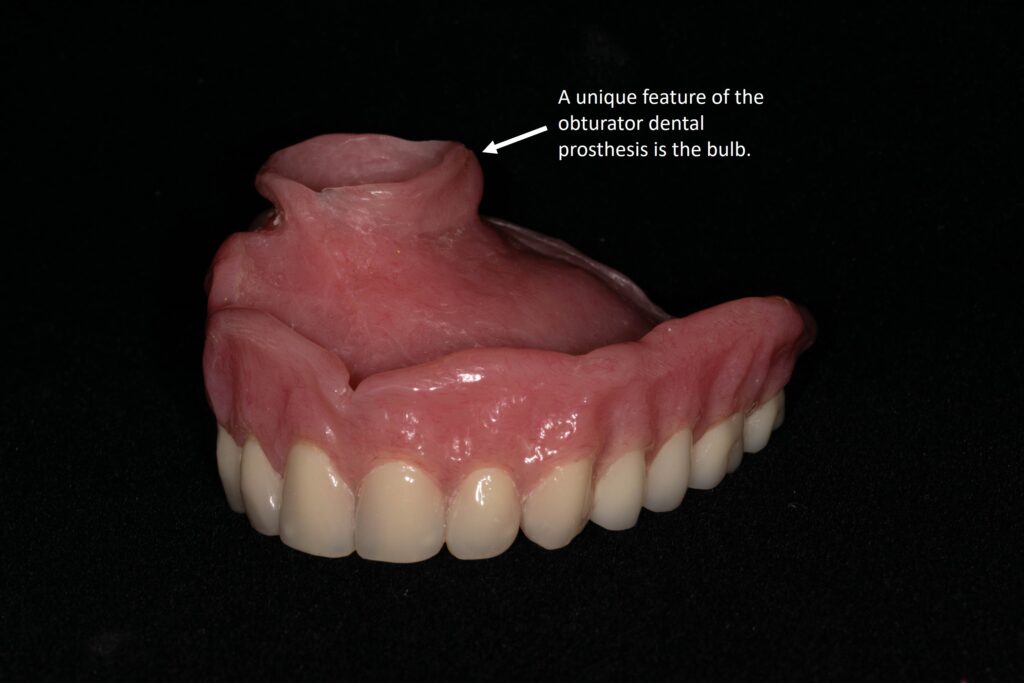 Oral Health & Prevention
 Understanding Palatal Obturators for Openings in the Roof of the Mouth
A palatal obturator seals an opening in the roof of the mouth from cleft palate, surgery, or trauma. A DC prosthodontist explains how they work and their care.
Oral Health & Prevention Dental Hygiene Care Is Not a 'One-Size-Fits-All' Process
The right hygiene routine depends on your gums, your risk factors, and your dental work. A DC prosthodontist explains why personalized hygiene care matters.