
Replacing a Discolored Front Tooth with a Precision-Placed Implant
Smile view
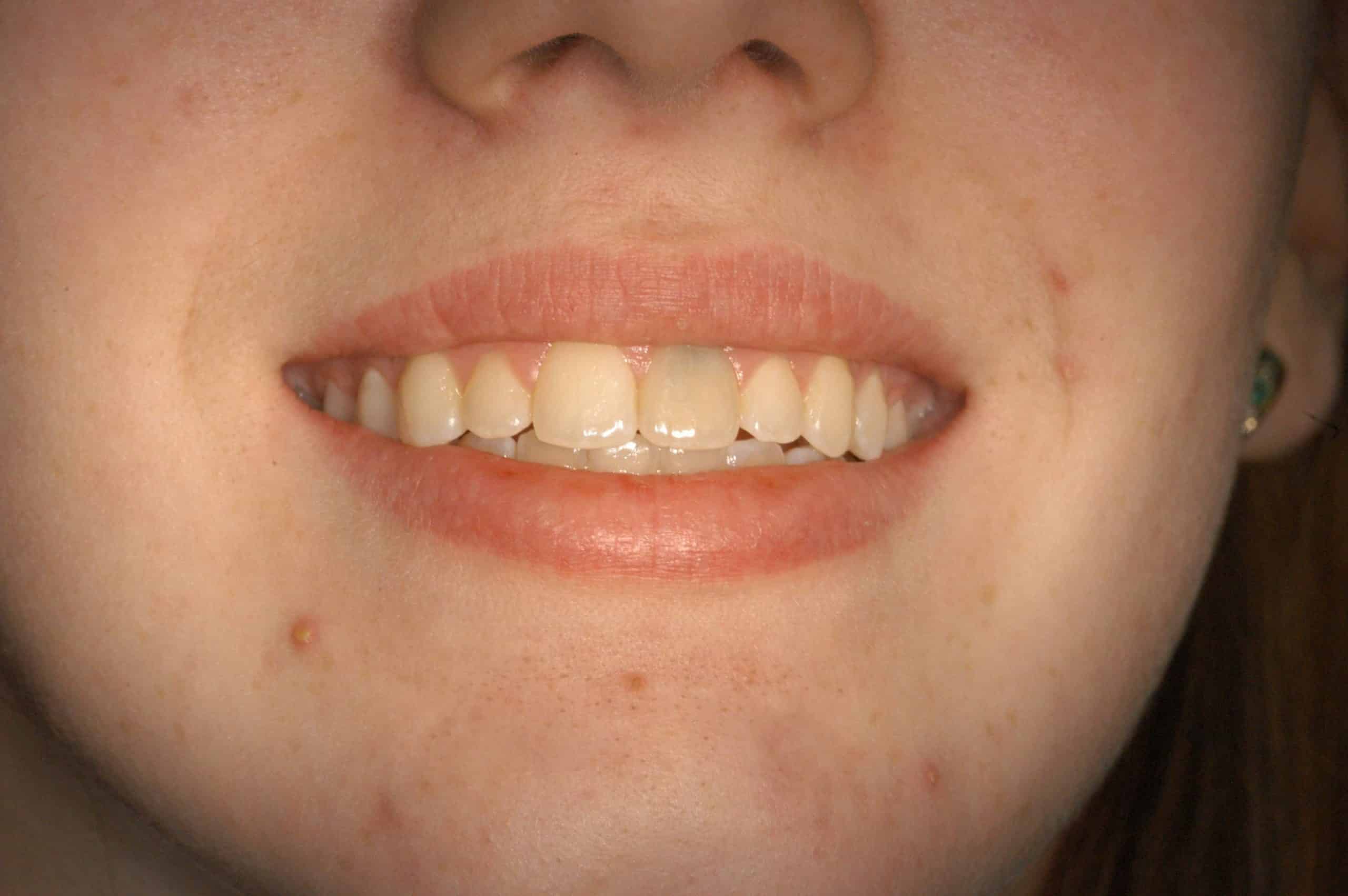 Before
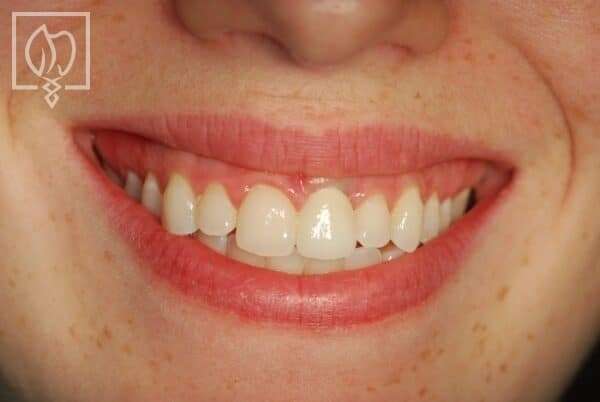 After
After
A discolored front tooth replaced with a precision-placed implant
Replacing a discolored front tooth with a dental implant in Washington, DC. This documented case at Elite Prosthetic Dentistry replaced a front tooth that could no longer be saved, using virtual planning, guided implant placement, and a custom layered porcelain crown designed to be indistinguishable from the natural teeth beside it. Treatment was planned and completed by Dr. Gerald Marlin, D.M.D., M.S.D., a prosthodontist focused on implant reconstruction and esthetic restorative care.
Case at a Glance
- Treatment
- Single front tooth replaced with a precision-placed implant and a custom porcelain crown
- Approach
- Atraumatic extraction, virtual planning on a CT scan, surgical guide, in-house laboratory crown
The presenting condition
The patient came to the practice with a severely discolored front tooth that could not be saved. The discoloration had progressed to the point where bleaching and other conservative cosmetic treatments would not provide the desired result. When a tooth reaches that stage, the honest conversation shifts from how to lighten it to how to replace it well.
Replacing a front tooth carries a burden that back teeth never face. The new tooth sits in the highest-visibility zone of the smile, directly beside natural teeth that everyone can compare it against. The patient needed a replacement that would blend seamlessly with the adjacent natural teeth, maintain proper function, and restore confidence in the smile.
Clinical Findings
- →A severely discolored front tooth that could not be saved
- →Discoloration beyond the reach of bleaching and conservative cosmetic treatment
- →A replacement needed in the most visible zone of the smile
- →The requirement to match the adjacent natural teeth in color, shape, and translucency
Why this case required prosthodontic-level planning
Some of the most challenging restorations in dentistry are anterior crowns fabricated to fit on implants. The difficulty is double. The visible crown must match a single front tooth to its neighbors in the zone where every detail of color, contour, and translucency is on display. And beneath the surface, the implant must sit in exactly the right position, because a crown can only be as natural as the foundation under it allows. An implant that emerges at the wrong angle or depth forces the crown to compensate, and compensations show.
That is why precision here is not a preference but a requirement. The implant position has to be established through accurate preplanning and carried into surgery without drift, so the finished crown can emerge from the gumline the way a natural tooth does. Getting both halves right, the surgical and the restorative, in one coordinated plan is precisely the kind of work prosthodontic training exists for.
The decision behind the result: planning the implant from the crown down
Two judgments shaped this case. The first was accepting that the tooth was not salvageable. After careful examination, extraction and dental implant placement was determined to be the optimal treatment plan, rather than continuing conservative treatments that could no longer deliver the result the patient wanted. The extraction itself was treated as part of the esthetic plan: it was performed atraumatically to maintain the integrity of the surrounding bone and gum tissue, preserving as much natural anatomy as possible so the implant could begin in a healthy, natural environment.
The second judgment was to let the final crown dictate the implant position, not the reverse. The implant was first placed virtually on a CT scan, where its angle and location could be adjusted until it sat in the ideal position, centered within the image of the overlying crown. A surgical guide was then fabricated from that virtual plan, so the position chosen on the scan was the position achieved in surgery, placed precisely and safely in relation to the nerve and surrounding bone for optimal support beneath the crown.
The treatment plan
-
1
Careful examination and treatment decision
Evaluation confirmed the discolored tooth could not be saved and that extraction with implant replacement was the optimal plan.
-
2
Atraumatic extraction
The tooth was removed carefully to maintain the integrity of the surrounding bone and gum tissue, preserving the natural anatomy the final result would depend on.
-
3
Virtual implant planning on a CT scan
The implant was positioned digitally at the ideal angle and location, centered within the image of the overlying crown, before any surgery took place.
-
4
Guided precision placement
Using the surgical guide developed from the virtual plan, the implant was placed precisely and safely in relation to the nerve and surrounding bone, in the optimal position beneath the future crown.
-
5
A custom crown from the in-house laboratory
The practice's in-house laboratory team crafted a custom crown using internal shading and multiple porcelain layers to match the natural teeth in color, shape, and translucency. Once the implant had healed completely, the final crown was placed.
The outcome
The finished result was a natural-looking anterior replacement tooth that matched the patient’s natural teeth in color, shape, and brightness. Built with internal shading and multiple porcelain layers, the crown was designed to be indistinguishable from the teeth beside it, and the direct coordination between Dr. Marlin and the in-house laboratory kept every detail of fit, contour, and shade under the practice’s own control.
Beneath the surface, the precisely positioned implant provides a stable foundation for the crown, supporting longevity and proper function. That is the quiet half of a front-tooth result: the part no one sees is what allows the visible part to look effortless.
Result Highlights
- ✓A replacement front tooth matching the natural teeth in color, shape, and brightness
- ✓Implant position planned virtually on a CT scan and delivered with a surgical guide
- ✓Atraumatic extraction that preserved the surrounding bone and gum tissue
- ✓A custom crown built with internal shading and multiple porcelain layers
- ✓A stable implant foundation supporting longevity and proper function
- ✓Final crown placed only after the implant had healed completely
Who this case may sound familiar to
This case tends to resonate with patients in a few recognizable situations:
- A front tooth has been darkening for years and whitening no longer makes a difference.
- You have been told a front tooth cannot be saved, and your biggest fear is a replacement that looks like a replacement.
- You notice front-tooth dentistry on other people and want yours to be undetectable.
- You want the implant planned around the final tooth, not the tooth compromised around the implant.
- You would rather have it done correctly once, with the esthetics taken as seriously as the surgery.
If any of those describe where you are, a consultation with Dr. Marlin can establish the diagnostic picture and the specific options for your case.
Frequently asked questions
Why is a single front tooth implant one of the hardest restorations?
Because two exacting problems must be solved at once. The crown has to match a single tooth to its immediate neighbors in the most visible part of the smile, where color, shape, and translucency are under constant scrutiny. And the implant beneath it must sit at exactly the right angle and depth, because the crown can only look natural if its foundation allows it to emerge the way a natural tooth does.
Can a discolored front tooth be whitened instead of replaced?
Sometimes. Surface staining and mild discoloration often respond to bleaching or other conservative cosmetic treatment, and those options are worth exhausting first. But when discoloration comes from deep within the tooth or the tooth itself is compromised, whitening cannot reach the problem. At that point replacement, planned well, becomes the more honest path to the result the patient actually wants.
What is guided implant placement?
The implant is first placed virtually on a CT scan, where the angle, depth, and location can be refined until the position is ideal relative to the planned crown and the surrounding anatomy. A surgical guide is then fabricated from that virtual plan and used during surgery, so the position chosen on the screen is the position achieved in the mouth.
How is an implant crown matched to the neighboring front teeth?
Natural front teeth are not one color. They have internal character, gradients, and translucency that change from the gumline to the edge. Matching them requires building the crown with internal shading and multiple porcelain layers rather than a single uniform shade. An in-house laboratory helps because the technician and the prosthodontist can evaluate and adjust the crown against the patient’s own teeth directly.
How soon after implant placement is the final crown placed?
The final crown is placed once the implant has healed and integrated with the bone, a timeline that varies from patient to patient. Rushing the permanent crown onto an implant that has not finished healing risks the foundation, so the restorative schedule follows the biology rather than the calendar.
Why see a prosthodontist for front tooth replacement?
Front teeth are the most visible part of the smile and are subject to close scrutiny. A prosthodontist plans the implant position and the crown design as one connected problem, combining surgical planning, precise placement, and custom crown fabrication so the replacement looks and functions like a natural tooth rather than an approximation of one.
More about the work behind this case
This case sits at the intersection of dental implants, precision implant placement, and custom crowns. The virtual planning discipline and in-house laboratory control behind it are part of the practice philosophy that treats esthetics and engineering as one problem.
Elite Prosthetic Dentistry treats patients from across the DMV including Bethesda, Chevy Chase, McLean, Arlington, Potomac, and Great Falls, with a record of out-of-area patients traveling to the practice for complex restorative care.
Related Services
Related Patient Success Stories
Explore similar patient success stories demonstrating our expertise in advanced prosthetic dentistry.
 Before
  After
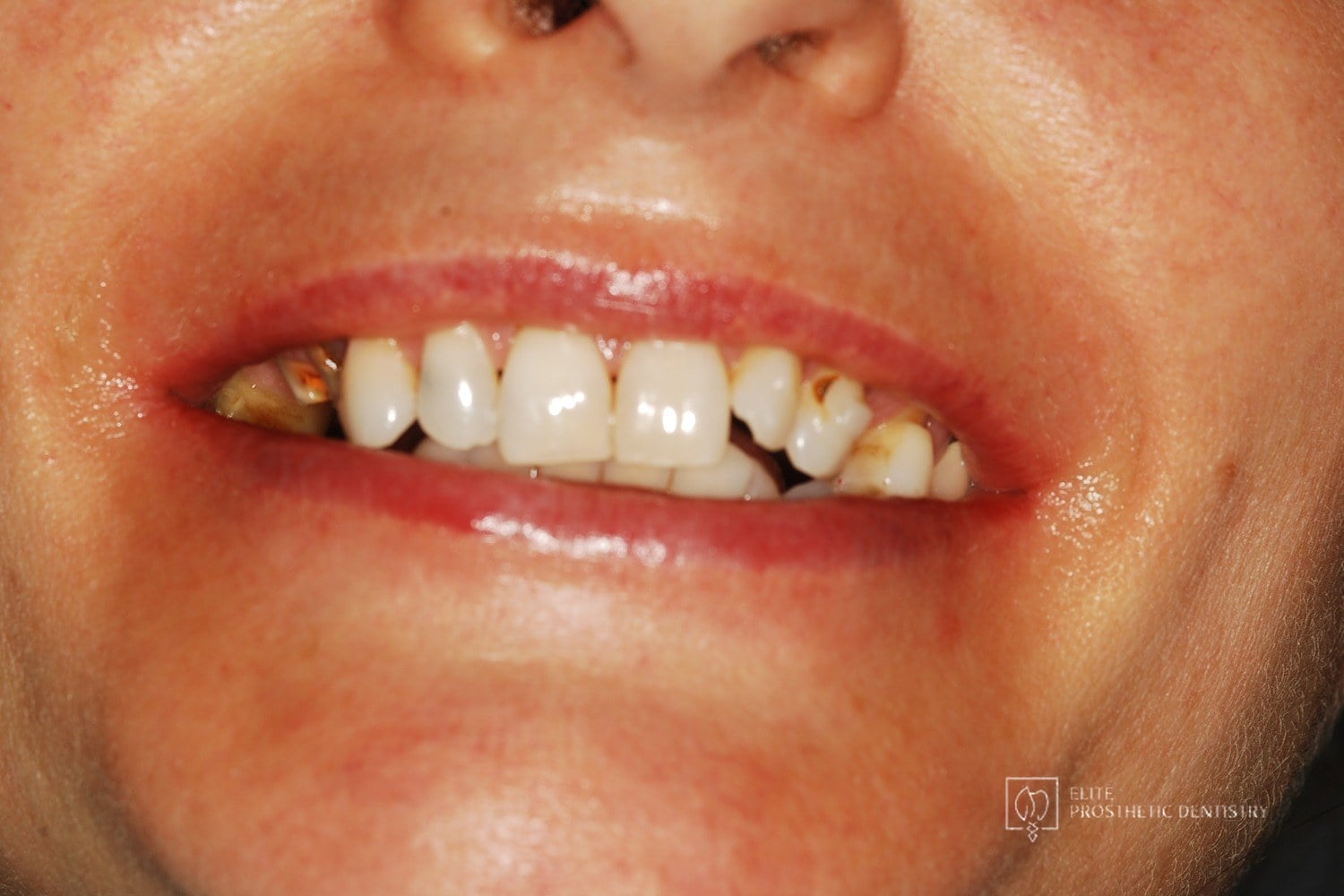
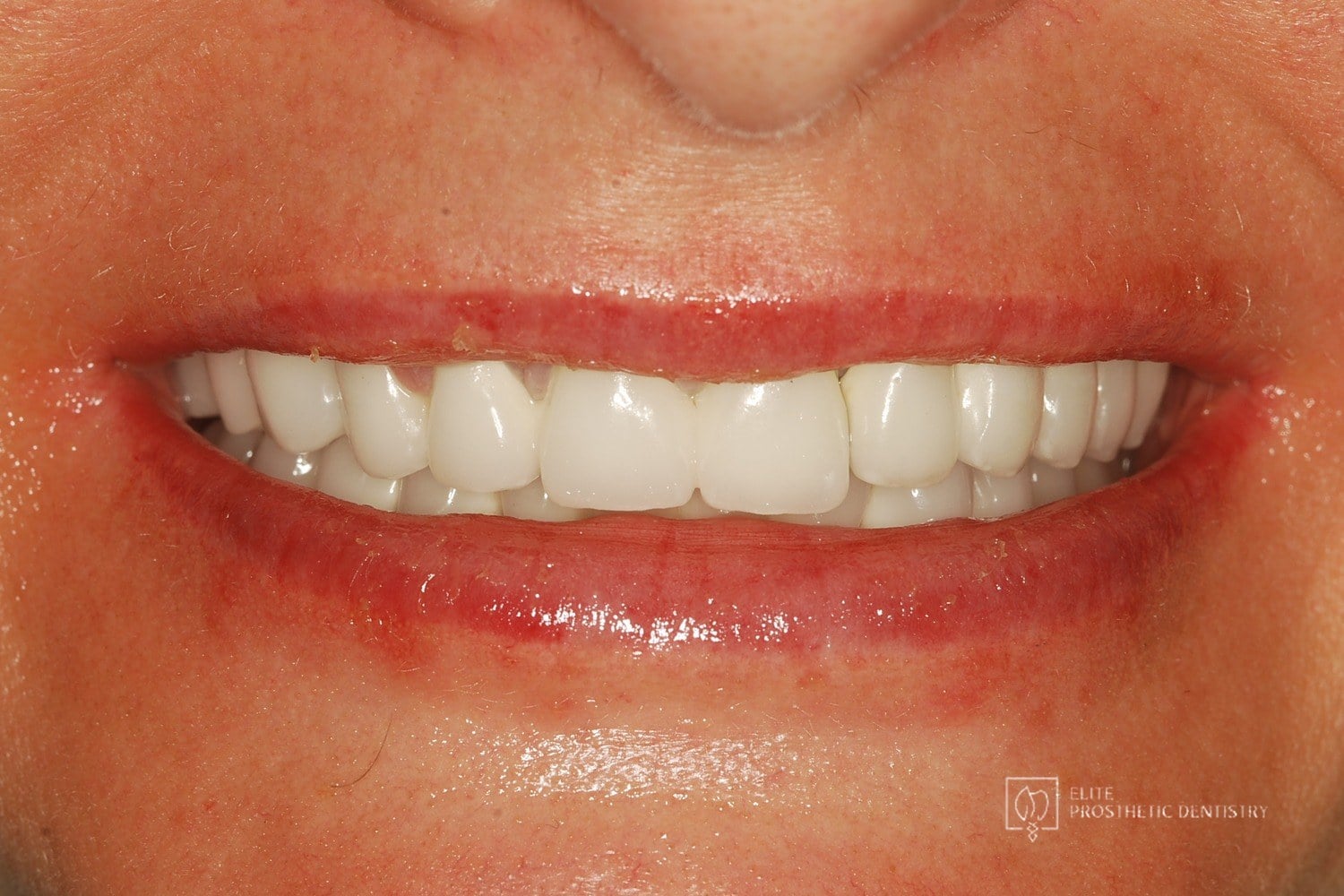
After How Aging, Failing Dentistry Was Replaced with a Coordinated Full-Mouth Implant and Crown Reconstruction
The patient presented with throbbing upper-molar pain, long-standing infections, multiple root canals and unfinished prior treatment, generalized sensitivity, and several hopeless teeth.
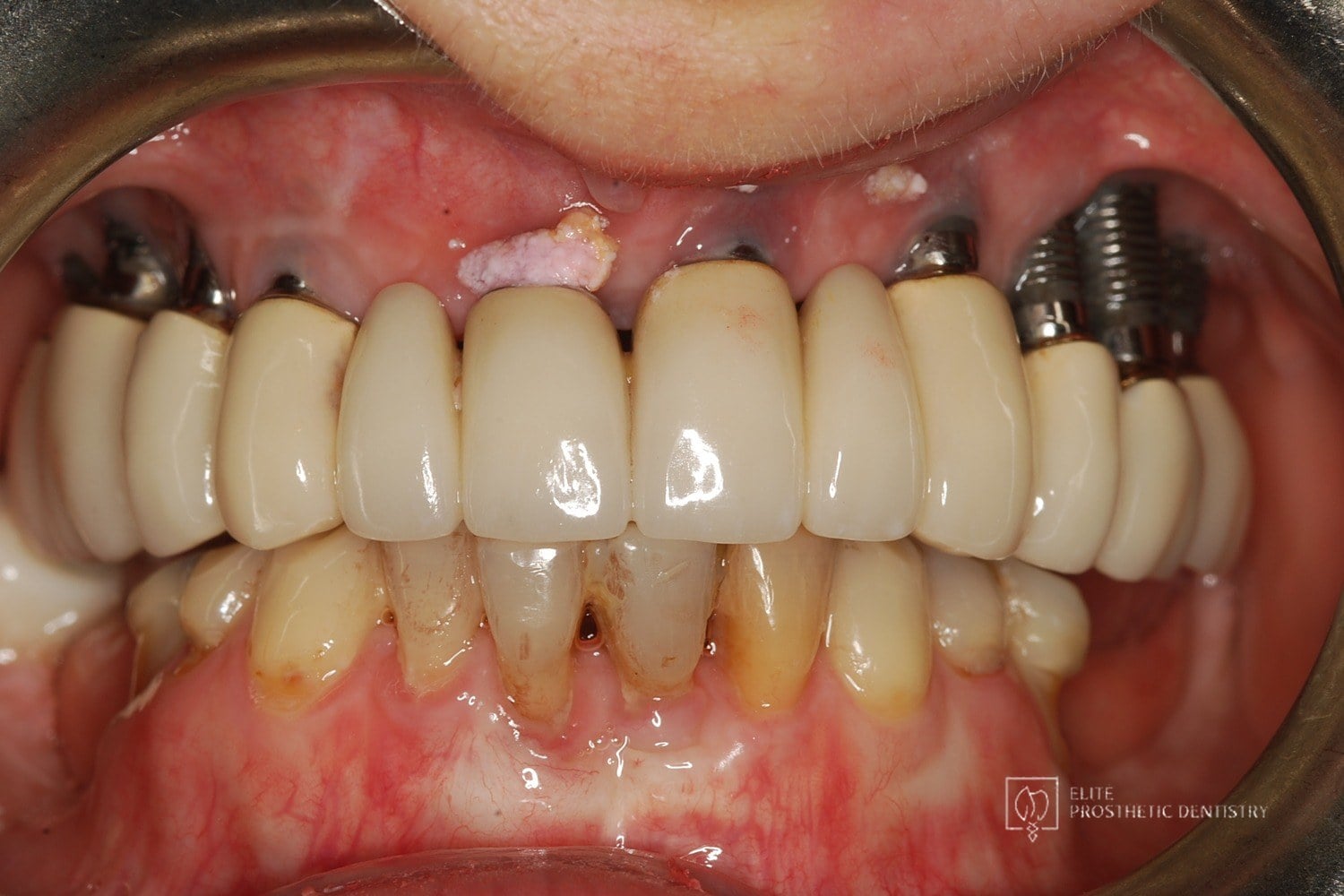 Before
 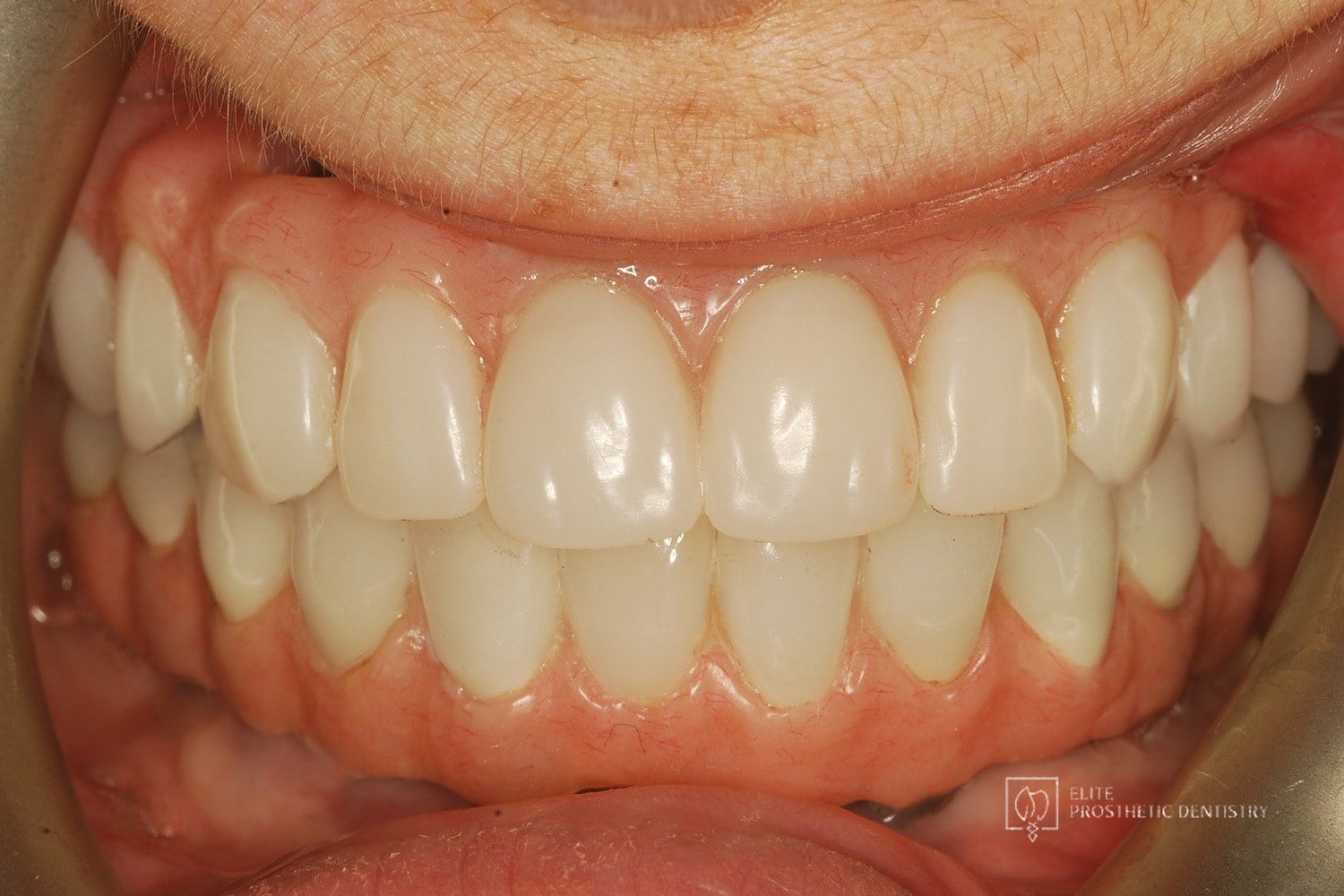 After
After How Failing Implants and Severe Bone Loss Were Rebuilt Into a Stable Full-Arch Implant Reconstruction
The patient presented with significant complications from previously placed implants, severe bone loss, failing posterior implants, and an unesthetic full-arch bridge. Both arches required full reconstruction, with the upper arch showing the most advanced bone loss and instability.
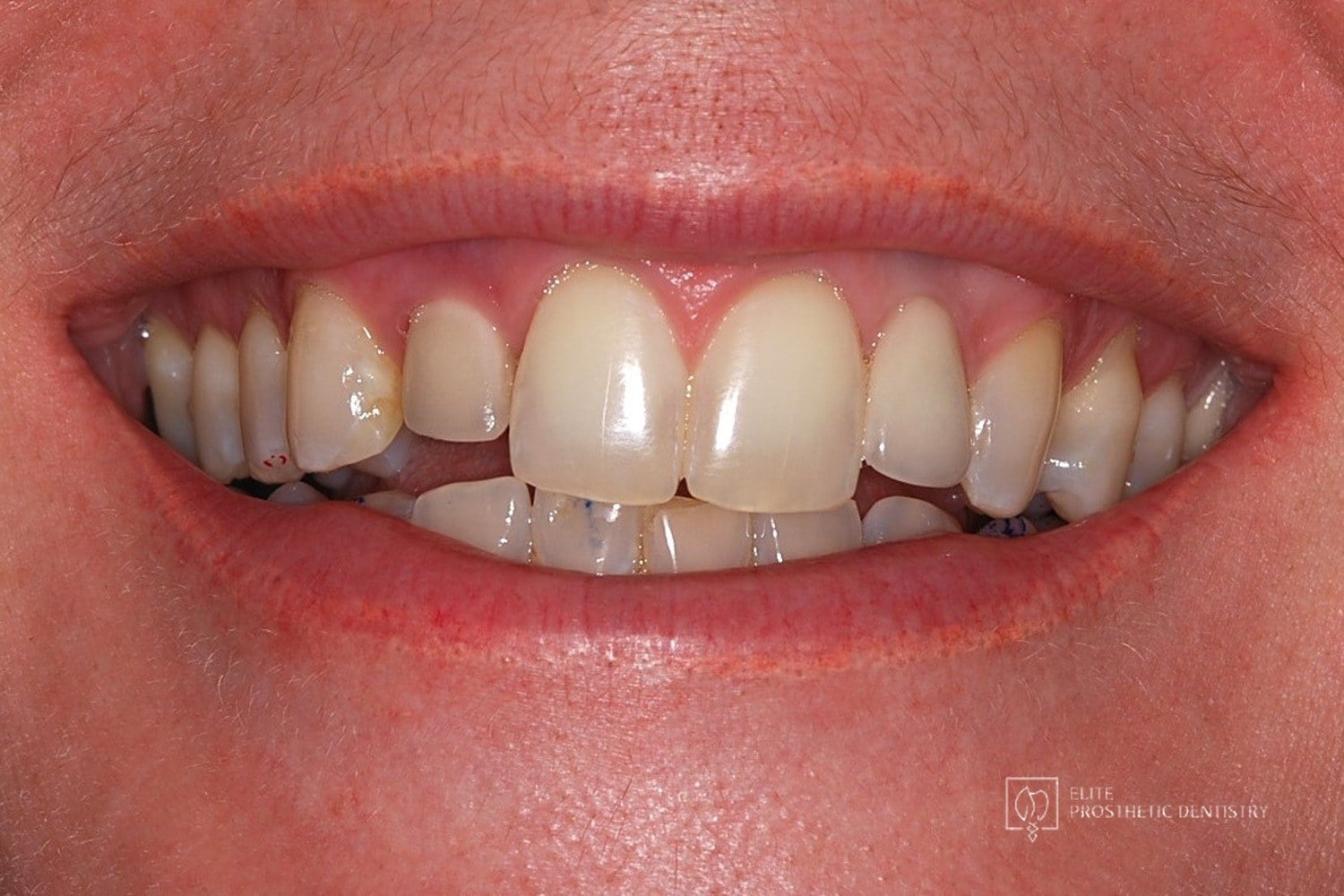 Before
 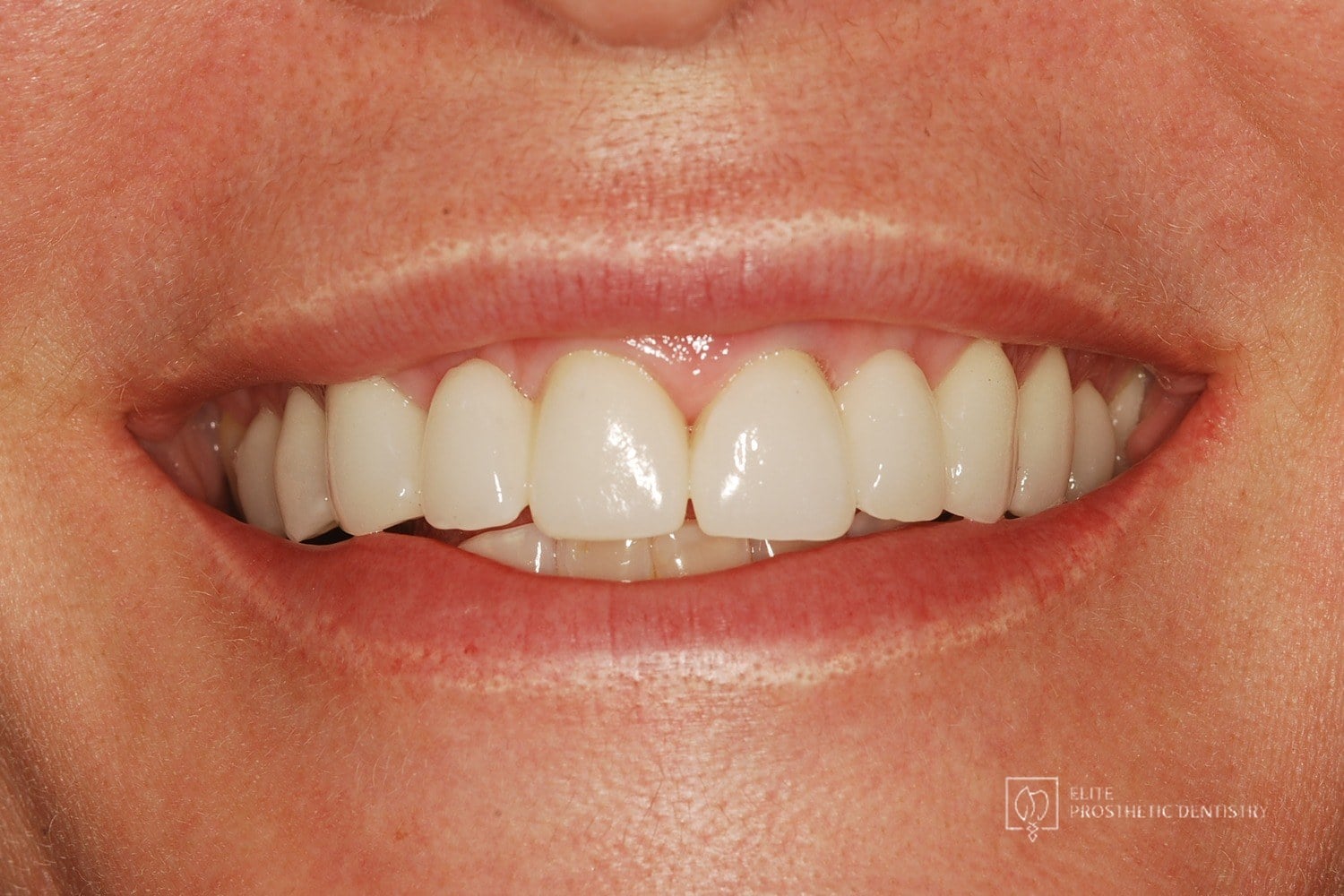 After
After How Failing Lateral Incisor Implants Were Replaced with Custom Zirconia Bridges After Severe Bone Loss Made Replacement Implants Impossible
Comprehensive examination including CBCT imaging revealed significant bone loss surrounding implants that were placed outside the buccal plate, most likely due to placement without a CBCT-generated surgical guide. The implants were determined non-salvageable, and the alveolar ridge was too narrow to support replacement implants without extensive reconstruction.