
How a Failing Upper Bridge and Lower Arch Were Rebuilt with Coordinated Specialist Care
A coordinated specialist case rebuilt for stability and function
Reconstructing a failing upper bridge and a compromised lower arch in Washington, DC. This documented case at Elite Prosthetic Dentistry rebuilt both arches through coordinated care between a prosthodontist, an oral surgeon, and an endodontist. Treatment was planned and completed by Gerald Marlin, D.M.D., M.S.D., who served as the restorative lead on the case.
Case at a Glance
- Treatment
- Coordinated upper bridge and lower implant rebuild
- Approach
- Extraction, bone grafting, endodontics, implants, custom bridge
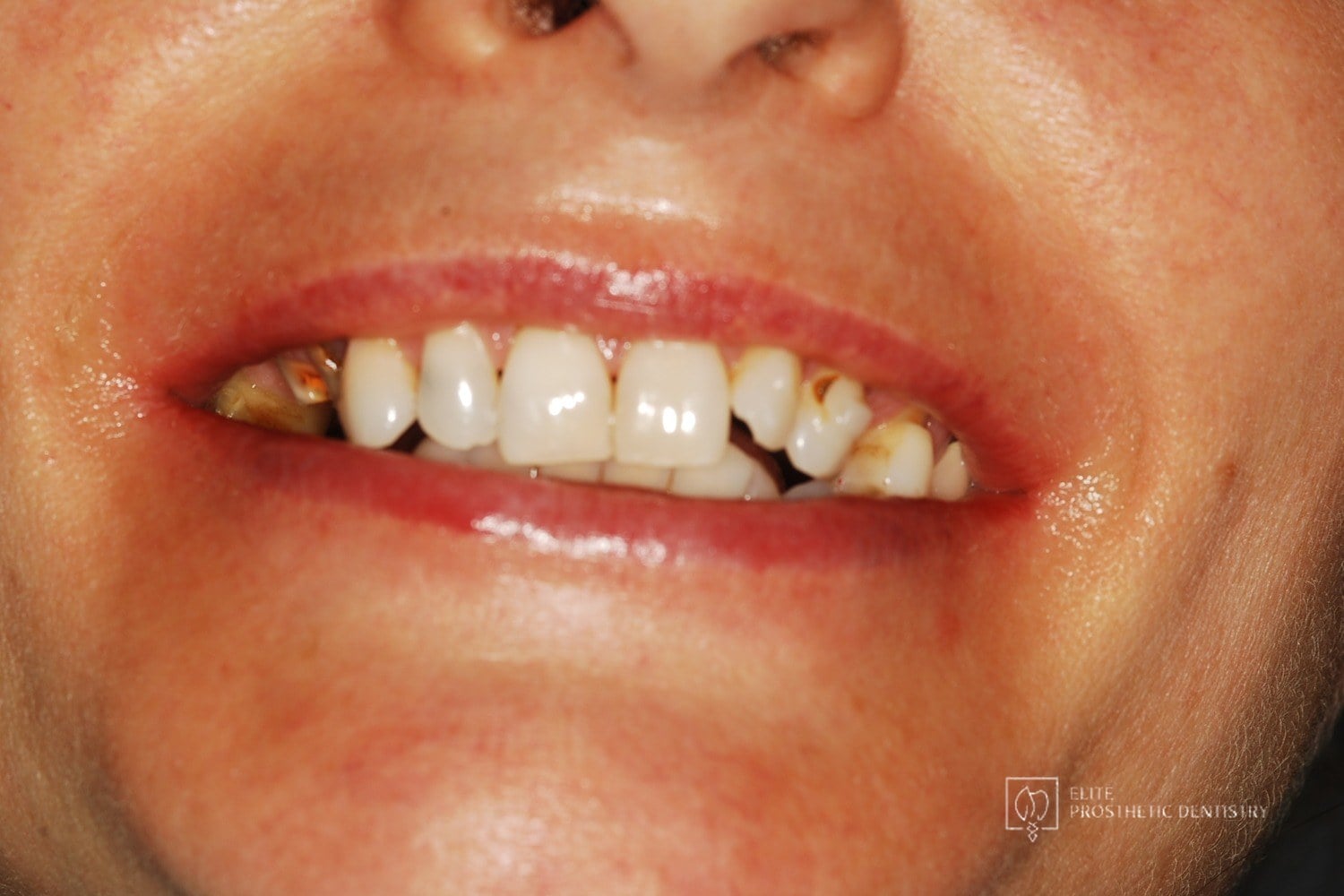
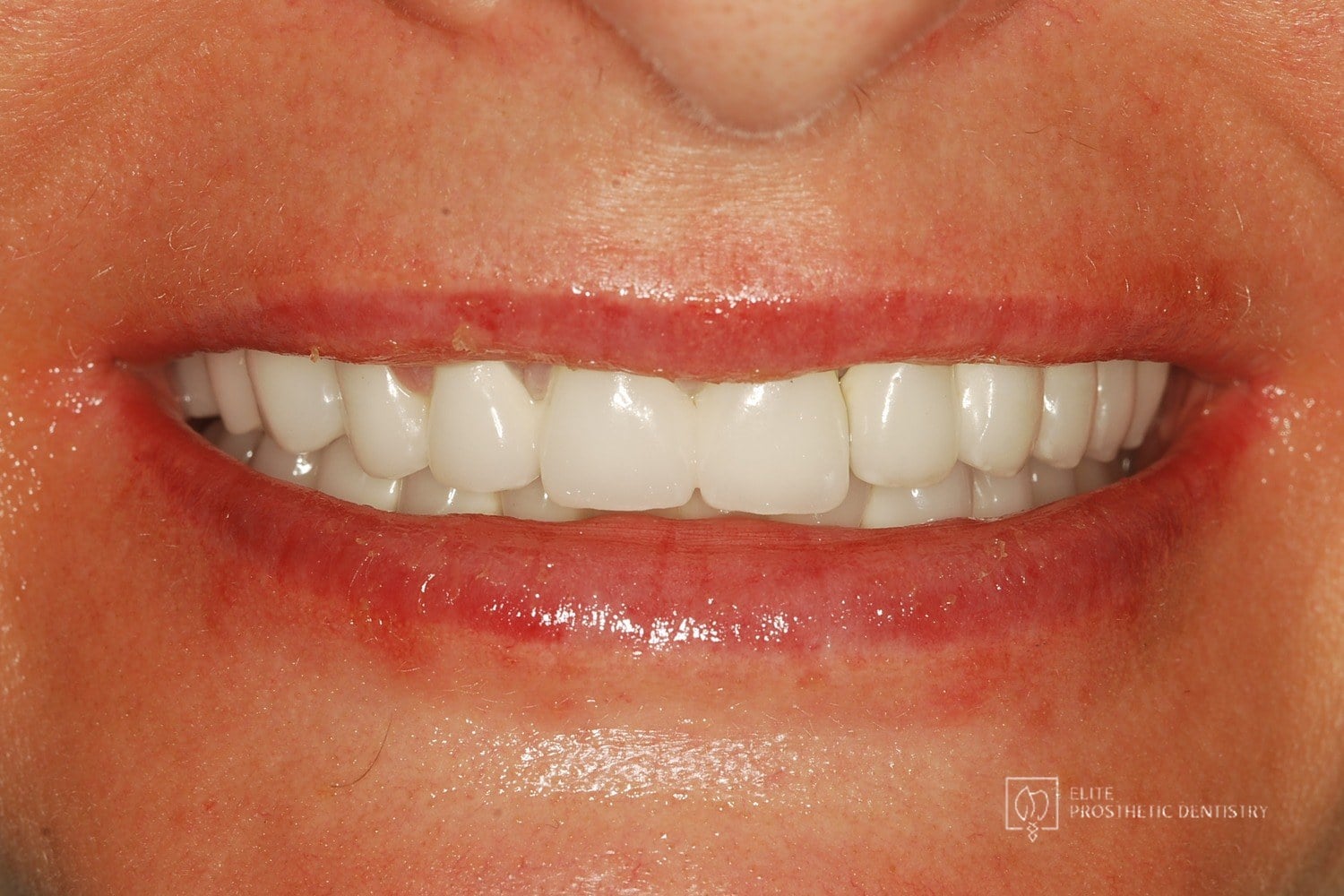
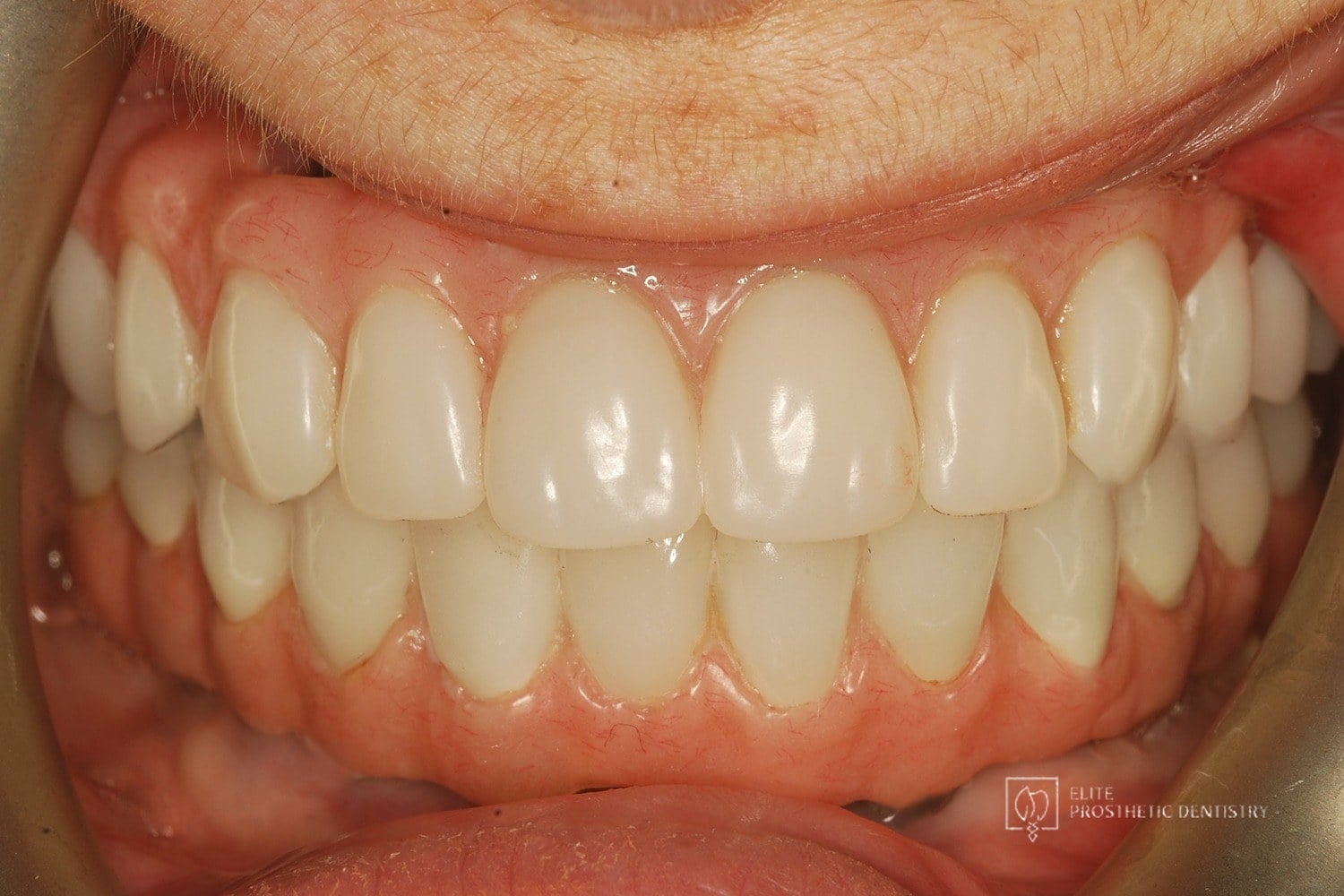
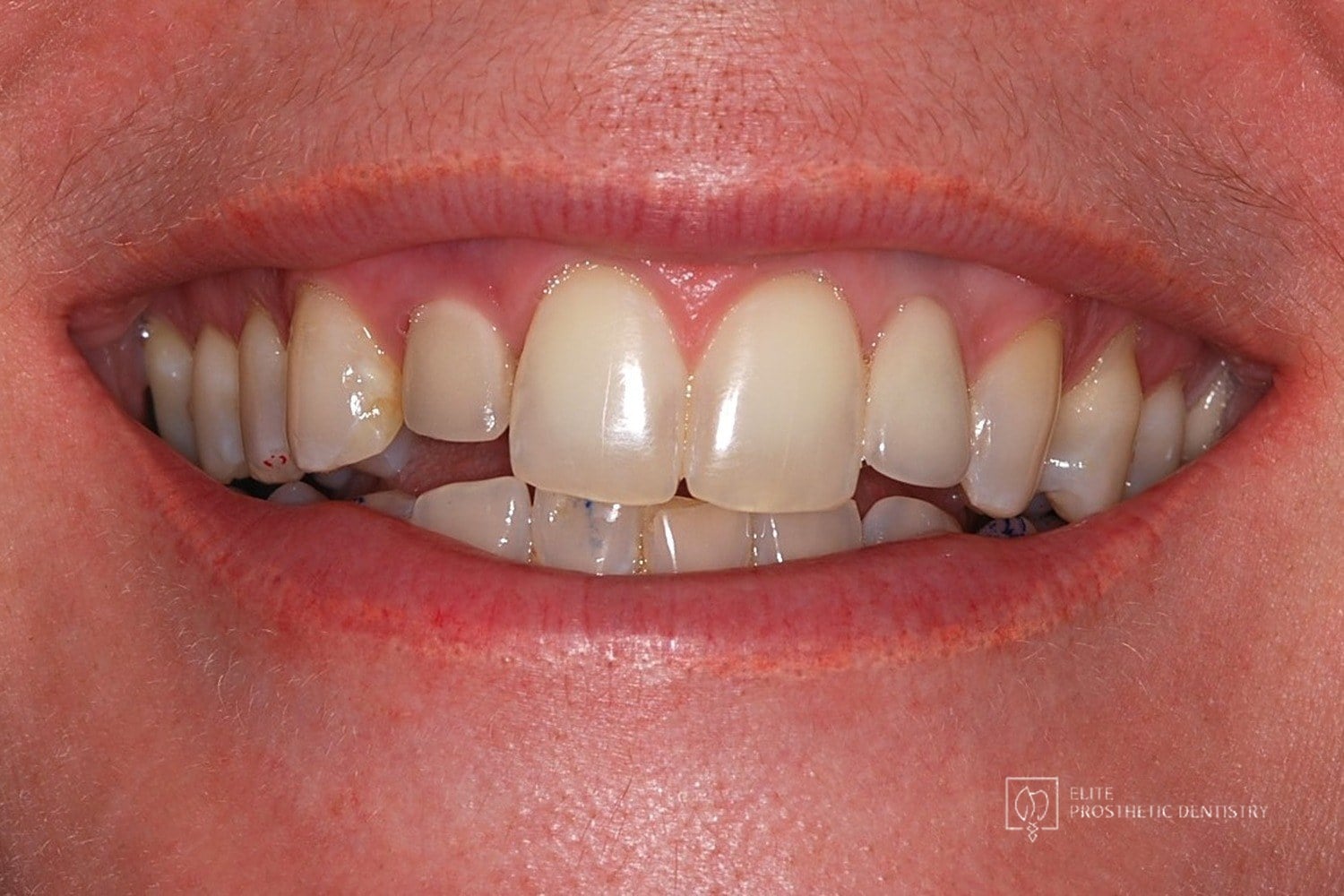
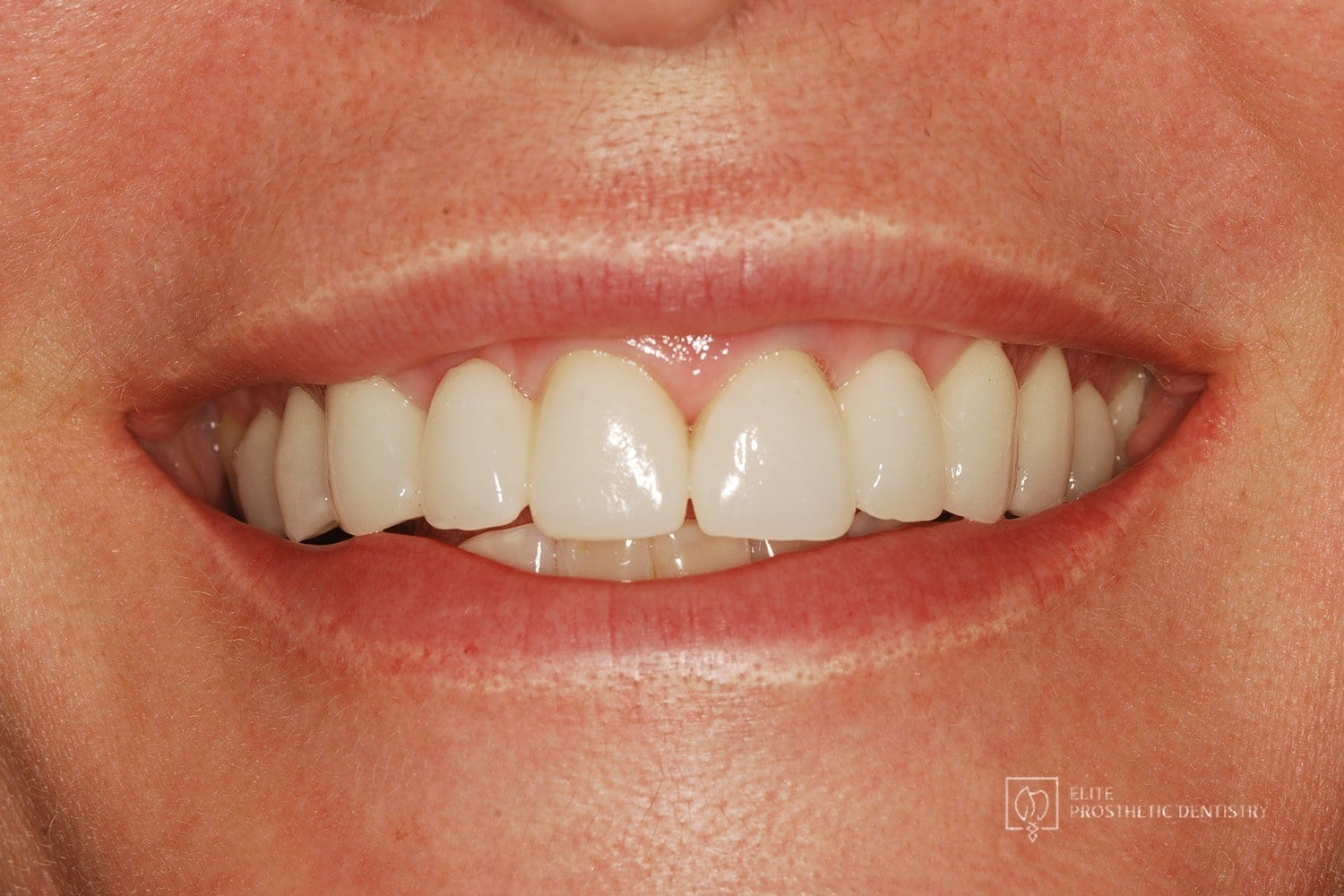
Close-up smile view
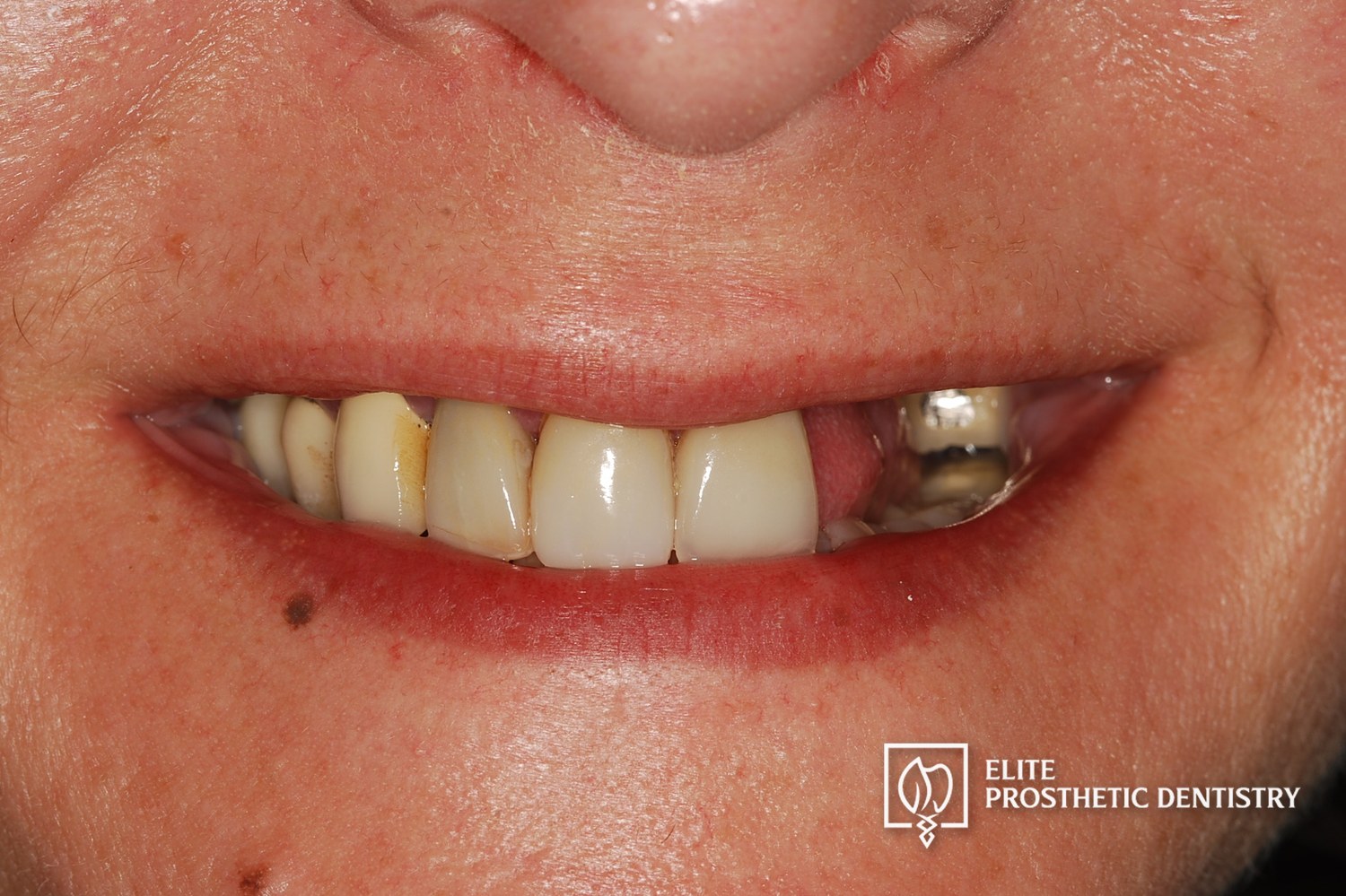 Before
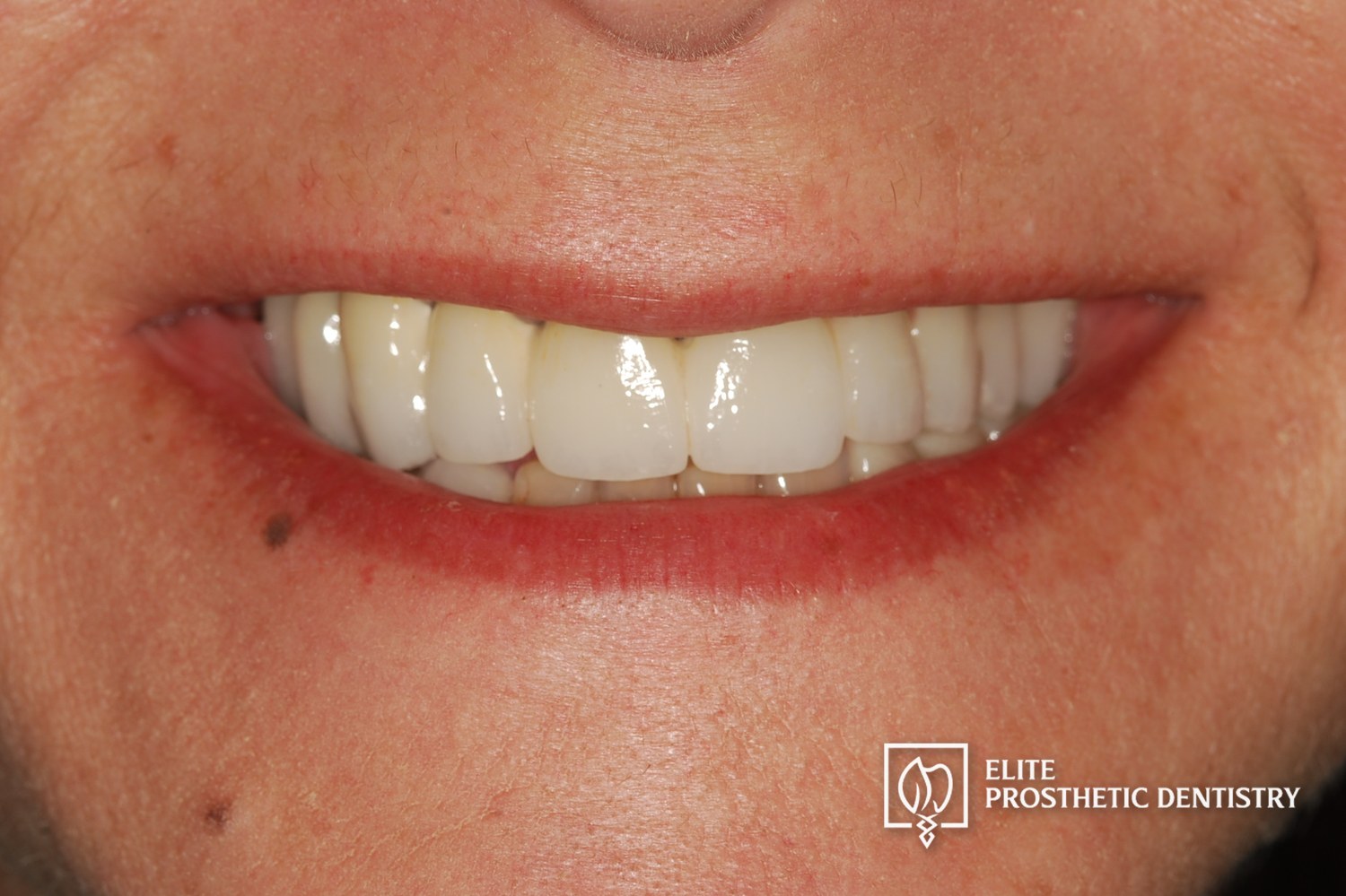 After
Final full-face view

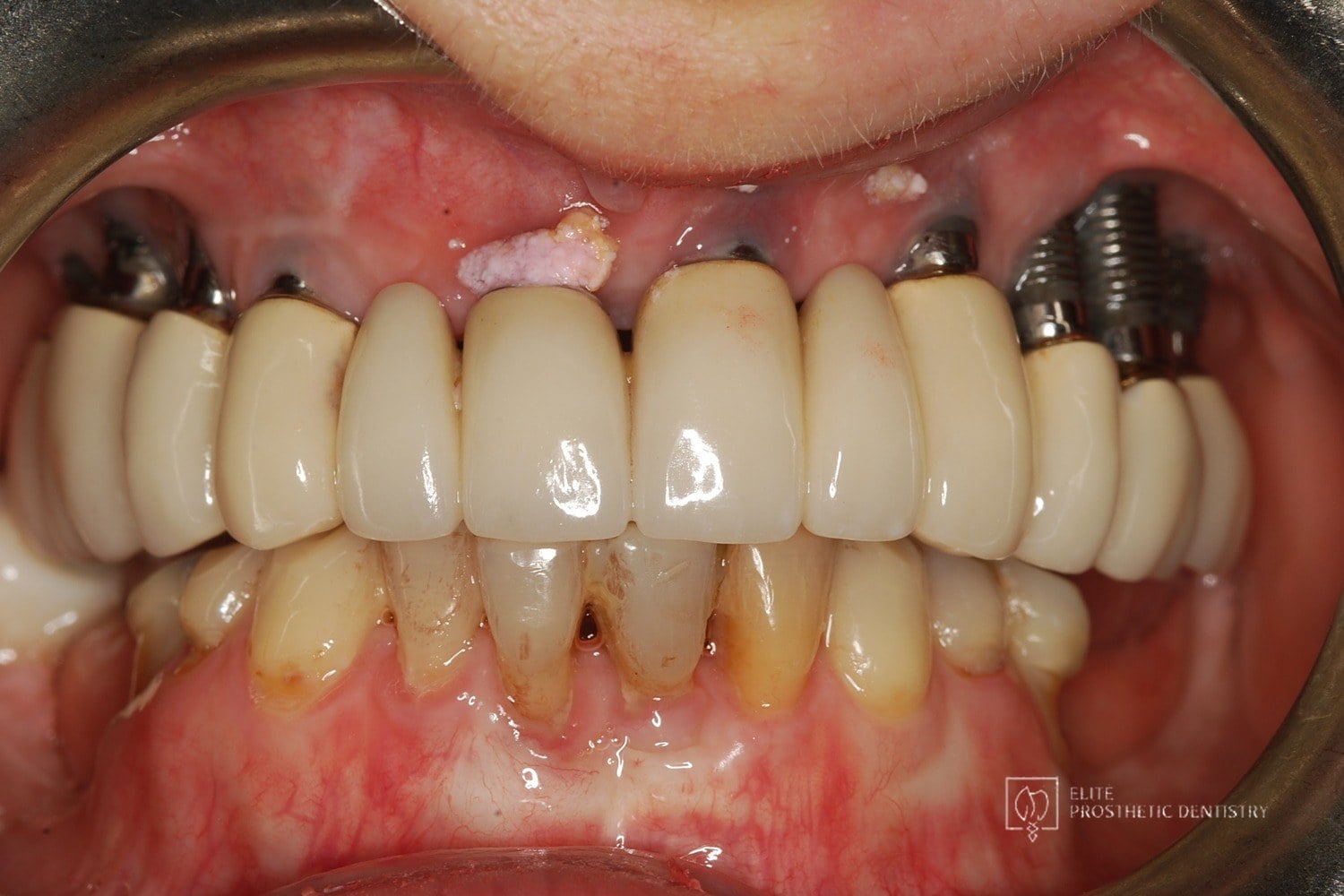
Intraoral view
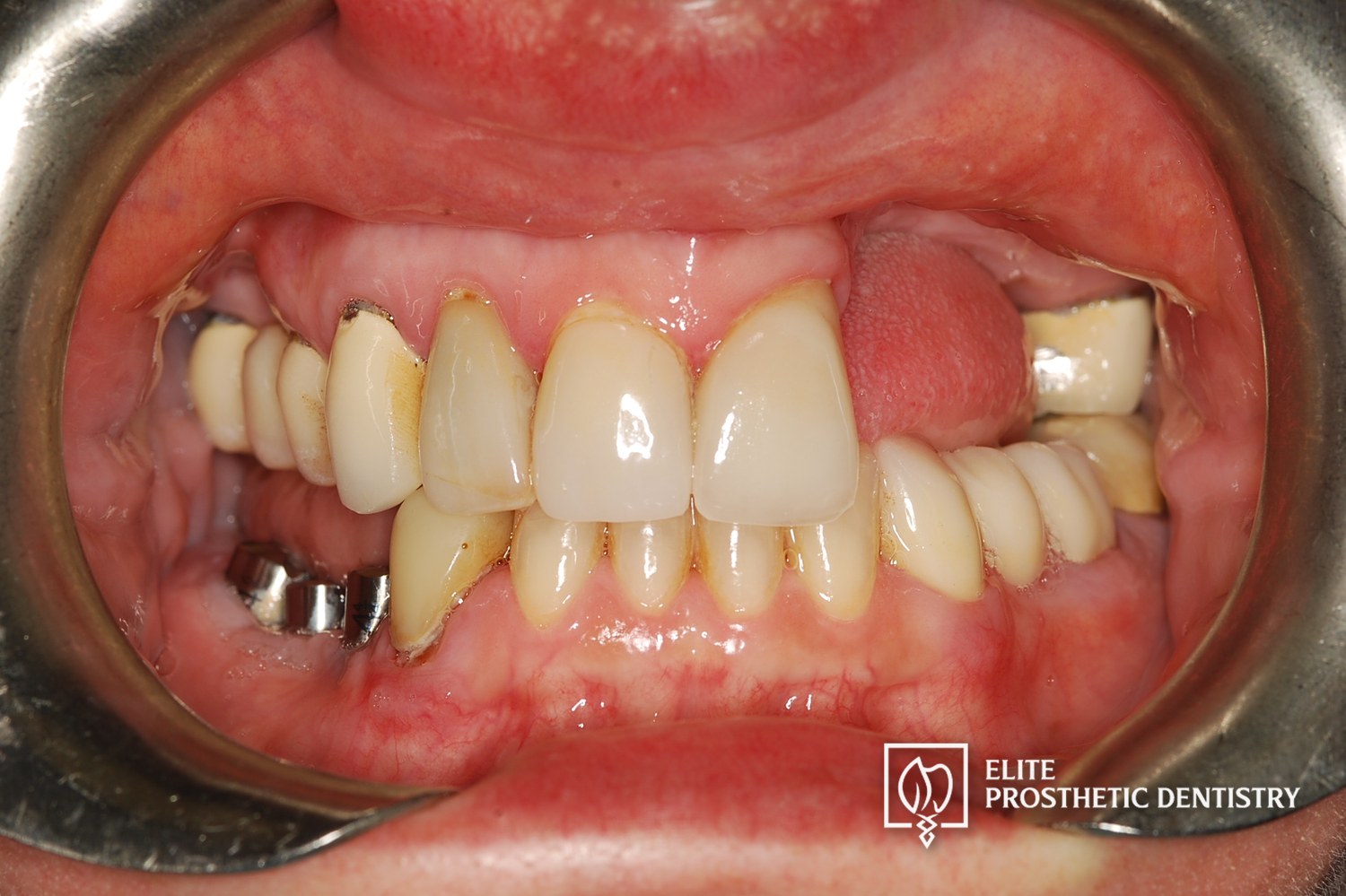 Before
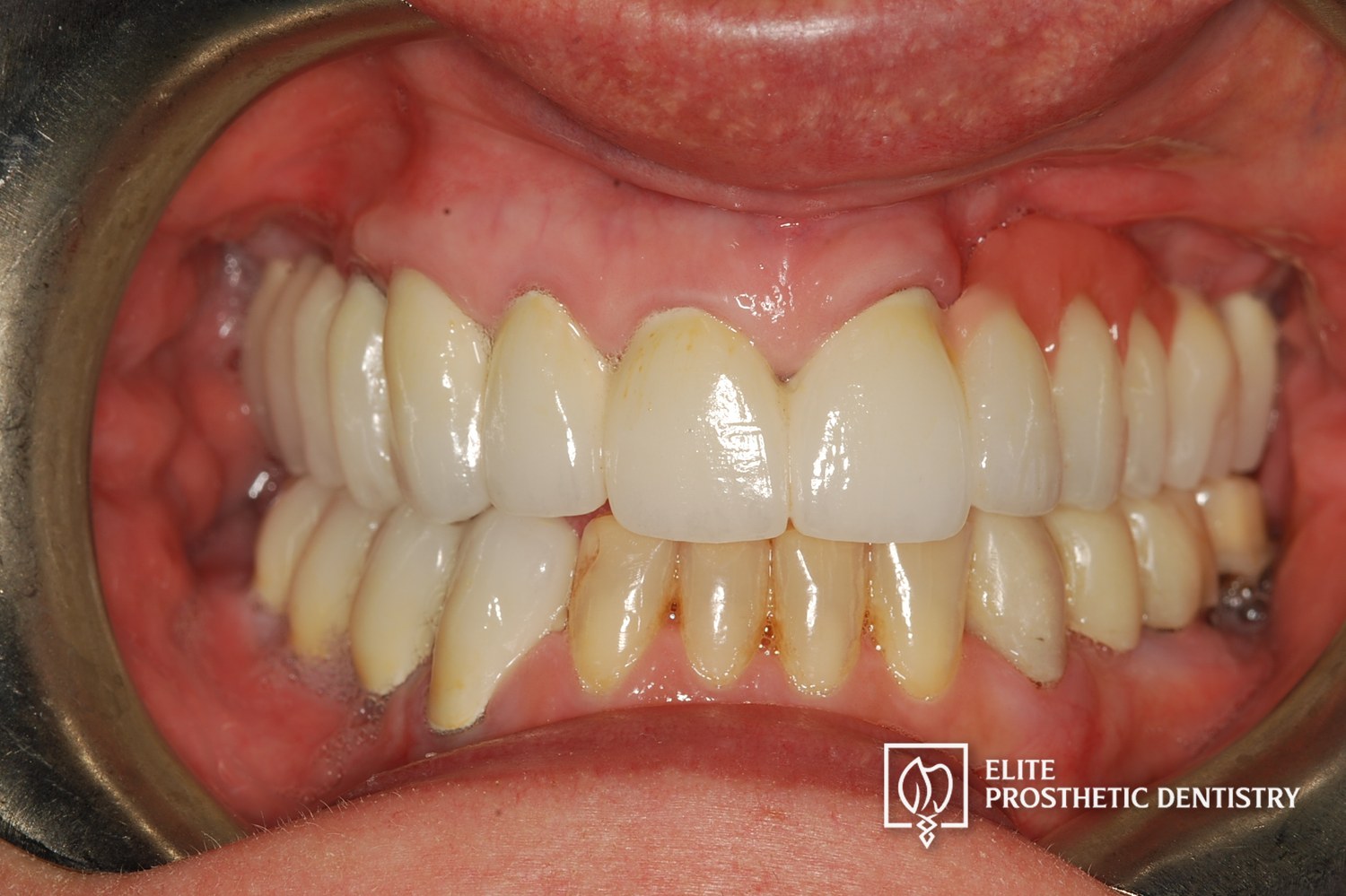 After
Post-treatment radiographic series
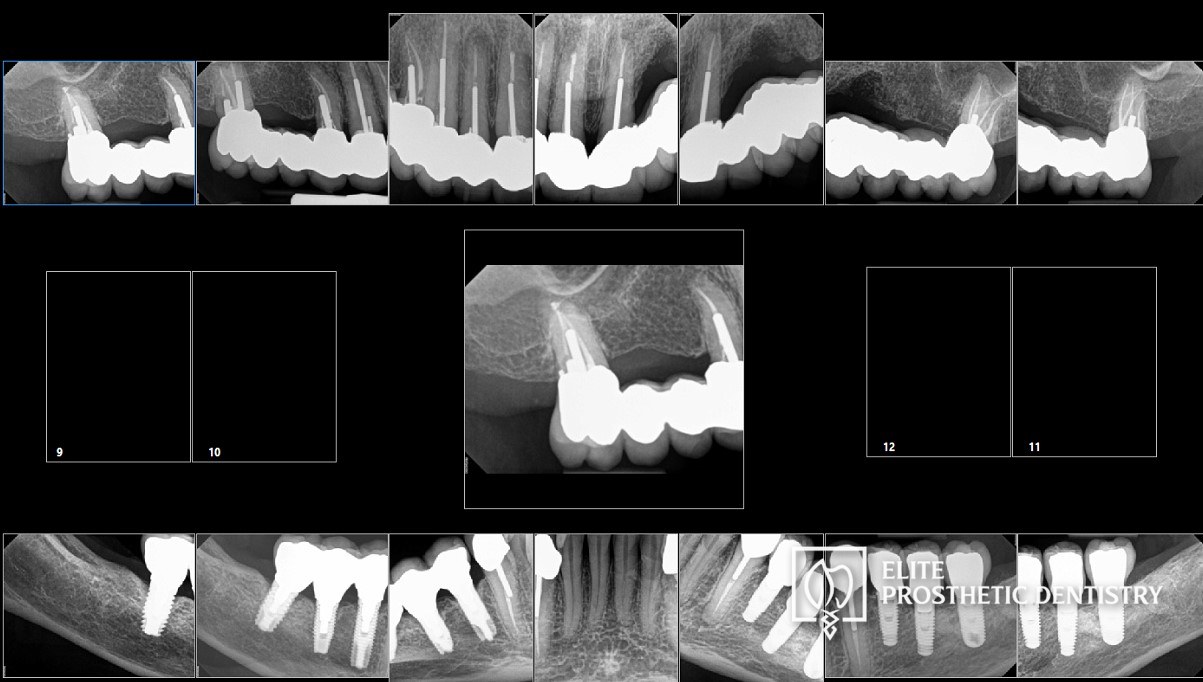
A failing upper bridge and a breaking-down lower arch present the kind of multi-disciplinary problem that calls for coordinated surgical and restorative treatment. The bone has changed in ways that require surgical management. Multiple teeth need decisions made about whether to preserve, treat, or replace them. The final restorative result has to be planned first, then the surgical and endodontic work sequenced to support it. That is the model that delivered this outcome.
What the evaluation found
The patient presented after a failing upper bridge and breaking-down lower arch had moved beyond what isolated repairs could address. The evaluation confirmed a case that required surgical, endodontic, and prosthodontic work coordinated under a single restorative plan.
Clinical Findings
- →Severe bone resorption on the upper left
- →Multiple broken-down lower teeth requiring extraction
- →Failing lower back teeth with no solid bite support
- →An upper bridge no longer providing predictable support
- →Lower arch unable to maintain stable occlusion
Why this case required a coordinated team
A case at this level requires three specialists working under one treatment plan:
A prosthodontist who can plan the final restorative result first and direct the entire sequence backward from that endpoint.
An oral surgeon who can manage extractions of unsalvageable teeth and the bone grafting needed to support implants in compromised areas.
An endodontist who can evaluate which teeth can be saved through root canal therapy and which need to be removed.
Each specialist contributes their part, but the prosthodontic plan sets the destination. That is the only way to make sure the final upper bridge and the lower implants land where they need to land for the bite to work and the restorations to last.
The treatment sequence
The case was sequenced in stages, with healing time between major phases and the prosthodontic team maintaining continuity across the surgical, endodontic, and restorative work.
-
1
Extractions of unsalvageable lower teeth
Broken-down lower teeth that could not be predictably preserved were removed to clear the way for the planned lower reconstruction.
-
2
Upper-left bone grafting
Bone grafting rebuilt the foundation needed for the planned upper restoration after years of resorption.
-
3
Endodontic treatment on preserved teeth
The endodontist managed root canal therapy on the teeth that could be safely kept, coordinated with the restorative plan from the start.
-
4
Healing and integration
Adequate healing time was built into the sequence before any final restorative work was placed, so each phase had the foundation it needed.
-
5
Upper custom long-span bridge
The upper arch was rebuilt with a custom long-span bridge designed in coordination with the in-house laboratory.
-
6
Lower implants and crowns
The lower arch was restored with dental implants and crowns placed in the positions set by the prosthodontic plan from the beginning.
The outcome
Result Highlights
- ✓Stable upper bridge supported by a rebuilt foundation
- ✓Functional lower arch restored with implants and crowns
- ✓Coordinated bite across both arches
- ✓Surgical, endodontic, and restorative work unified under one plan
- ✓Multidisciplinary case completed with continuity of care
The case moved from a failing upper bridge and a breaking-down lower arch to a coordinated, multi-disciplinary restoration designed for long-term function and stability. The upper long-span bridge restored the upper arch as a unified structure rather than a series of separate repairs. The lower implants and crowns restored the bite support that had been missing.
Who this case may sound familiar to
This story tends to resonate with patients in a few recognizable situations:
- You have been told your case is too complex for a general dentist and you need to see a specialist.
- You have a failing upper bridge or multiple failing lower teeth and the recommendations you have heard so far have not felt complete.
- You have been told you need extractions, bone grafts, and restorative work, and you want one team to plan it all together rather than send you between offices with no central plan.
- You want a single restorative endpoint defined first, with the surgical and endodontic work sequenced to support that endpoint.
- You would rather invest once in a coordinated plan than try to manage each failing tooth as it breaks down further.
If any of those describe where you are, a consultation with Dr. Marlin can map the full picture and the specific plan for your case.
If a failing bridge, aging crowns, or a compromised arch are changing how you eat or smile, a comprehensive evaluation can clarify whether a coordinated reconstruction is the right path.
Request a Comprehensive EvaluationFrequently asked questions
What is the difference between a long-span bridge and individual implants for a failing upper arch?
A long-span bridge connects multiple teeth or supporting structures into a single restoration. Individual implants restore each missing tooth separately. The right choice depends on the bone available, the condition of the remaining teeth, the bite, and the patient’s specific anatomy. Some cases require a coordinated combination of both.
When does a case require coordinating an oral surgeon and a prosthodontist together?
When a case involves both significant surgical work (such as extractions and bone grafting) and complex restorative planning, coordinated care between specialists typically delivers a better outcome. The prosthodontist plans the final restorative result first, then directs the surgical sequencing to support that result.
How is bone grafting sequenced before implant placement?
Bone grafting is usually performed after extraction of any compromised teeth and is allowed to heal for several months before implants are placed. This sequencing ensures that the implant has stable bone in which to integrate, which is essential for long-term success.
Can a single restorative plan address both upper and lower arch failure?
Yes. When both arches show structural failure, a coordinated full-mouth plan can sequence the surgical, endodontic, and restorative work across both arches together. This approach tends to produce a more stable bite and a more harmonious esthetic result than treating each arch in isolation.
More about the work behind this case
This case combines full mouth reconstruction, dental implants, bridges and fixed partial dentures, and bone grafting. The coordinated specialist model reflects the practice philosophy for complex multi-arch cases.
Elite Prosthetic Dentistry treats patients from across the DMV including Bethesda, Chevy Chase, McLean, Arlington, Potomac, and Great Falls.
Related Services
Related Patient Success Stories
Explore similar patient success stories demonstrating our expertise in advanced prosthetic dentistry.
 Before
 After
How Aging, Failing Dentistry Was Replaced with a Coordinated Full-Mouth Implant and Crown Reconstruction
The patient presented with throbbing upper-molar pain, long-standing infections, multiple root canals and unfinished prior treatment, generalized sensitivity, and several hopeless teeth.
 Before
 After
How Failing Implants and Severe Bone Loss Were Rebuilt Into a Stable Full-Arch Implant Reconstruction
The patient presented with significant complications from previously placed implants, severe bone loss, failing posterior implants, and an unesthetic full-arch bridge. Both arches required full reconstruction, with the upper arch showing the most advanced bone loss and instability.
 Before
 After
How Failing Lateral Incisor Implants Were Replaced with Custom Zirconia Bridges After Severe Bone Loss Made Replacement Implants Impossible
Comprehensive examination including CBCT imaging revealed significant bone loss surrounding implants that were placed outside the buccal plate, most likely due to placement without a CBCT-generated surgical guide. The implants were determined non-salvageable, and the alveolar ridge was too narrow to support replacement implants without extensive reconstruction.