
A Gap Between the Front Teeth and Mismatched Crowns: Hidden Decay Treated and a Customized Natural-Shade Bridge
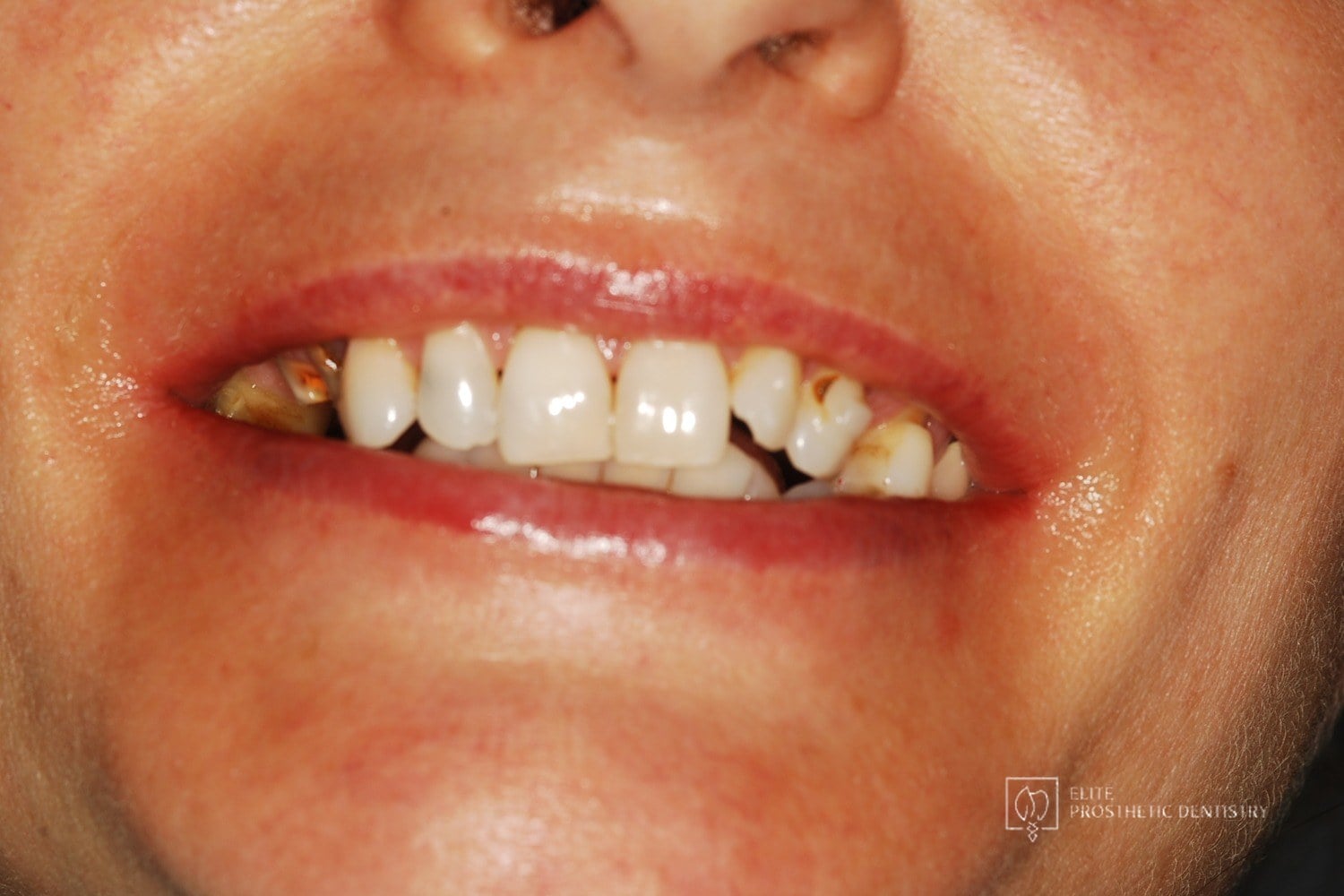
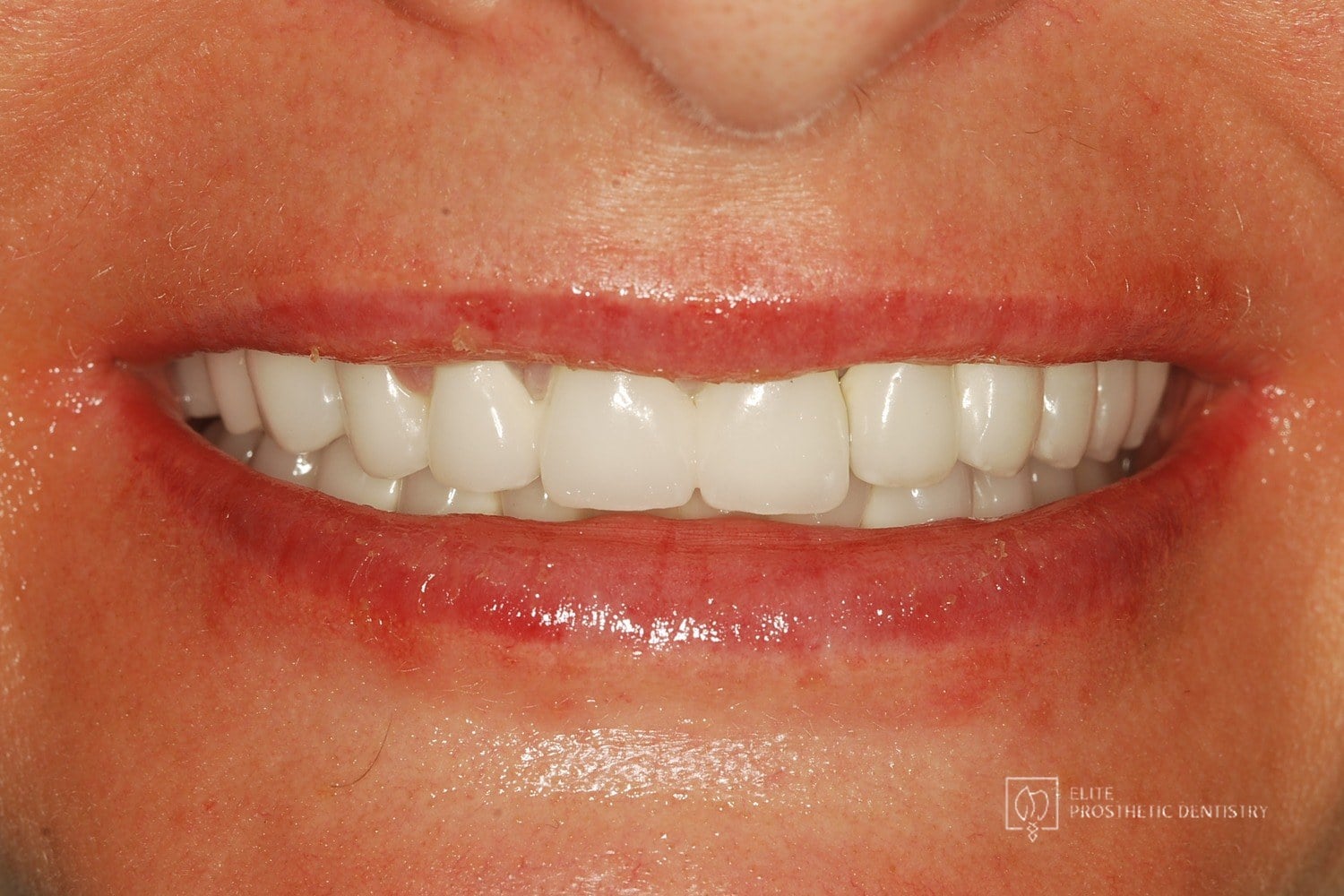
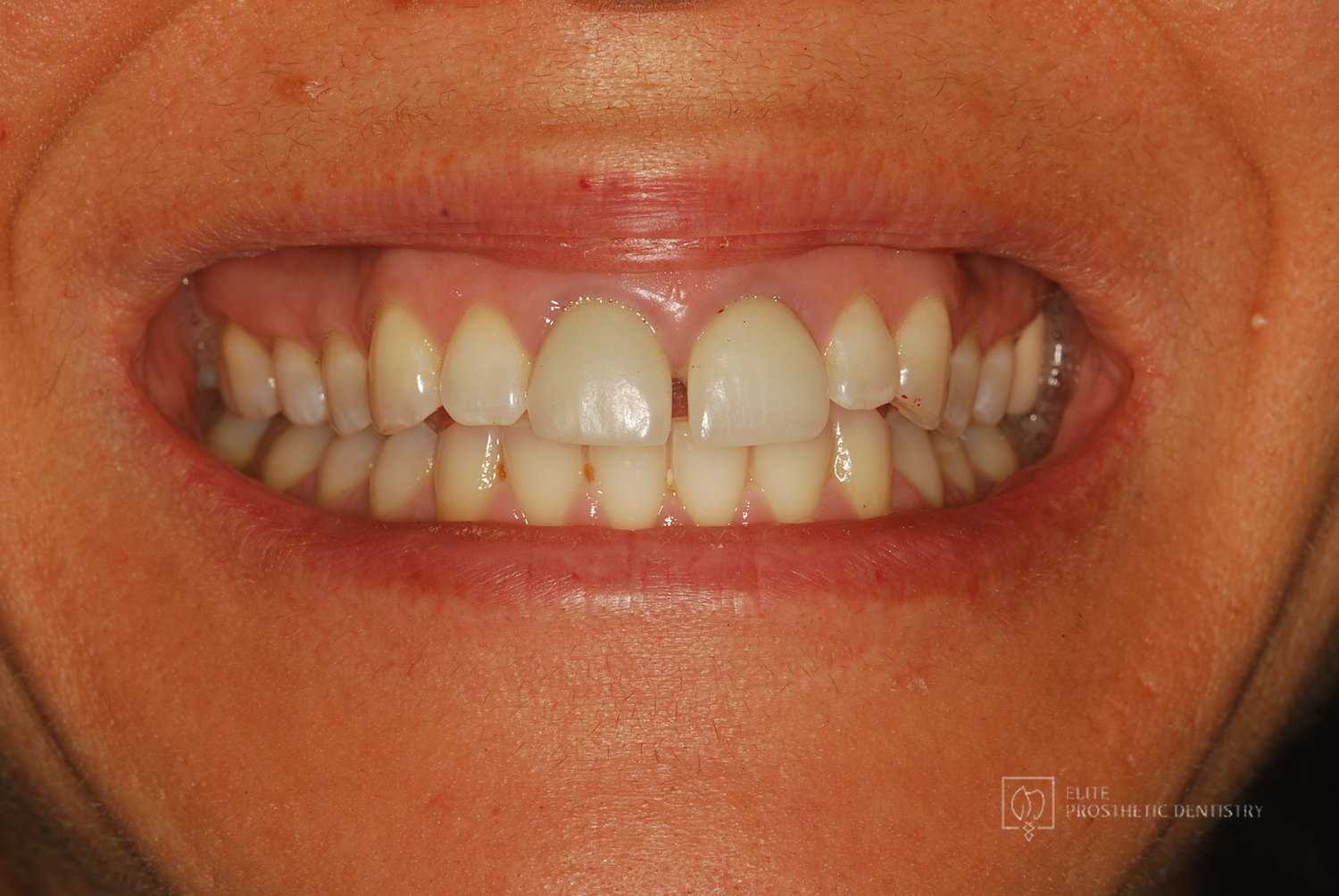
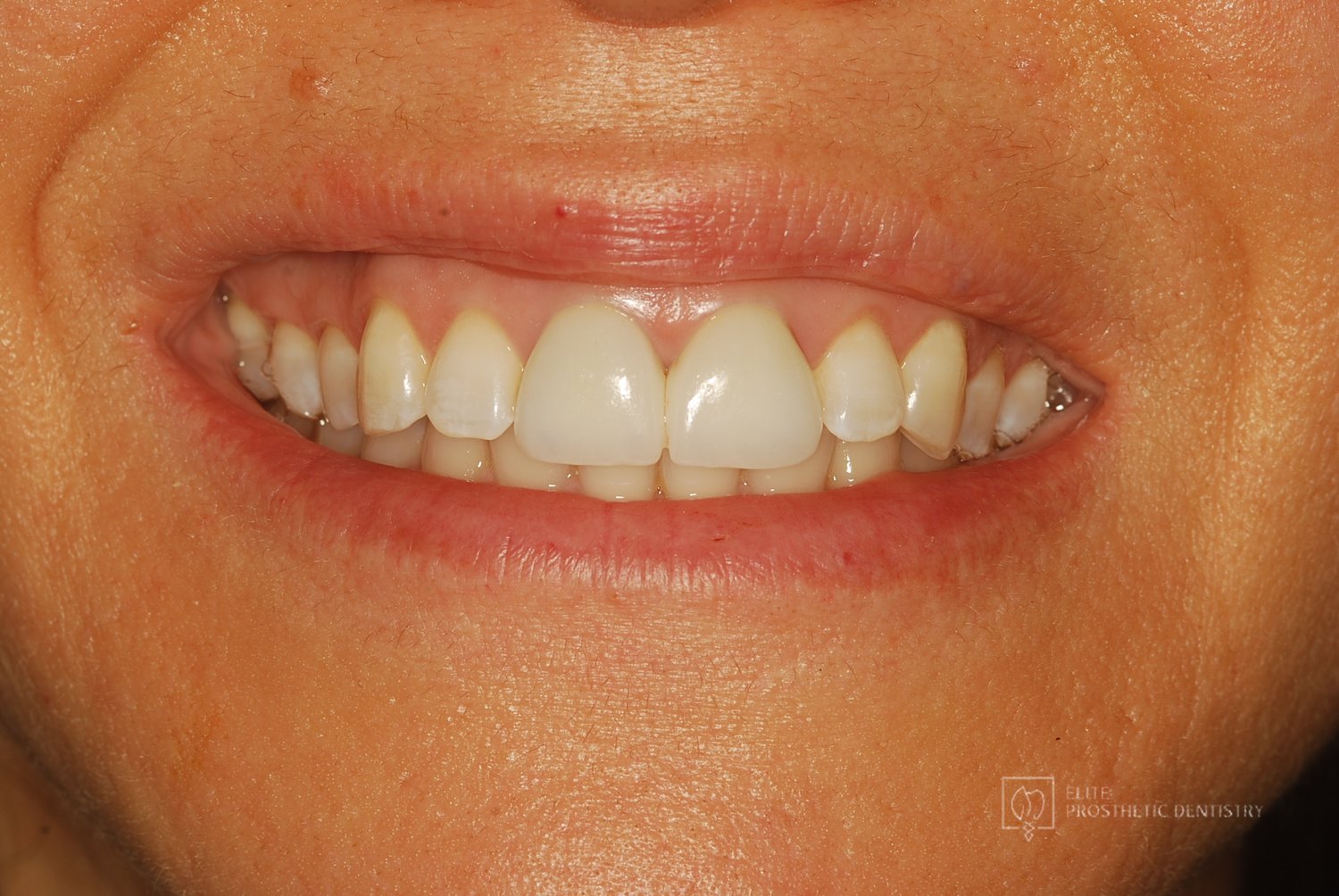
Close-up smile view
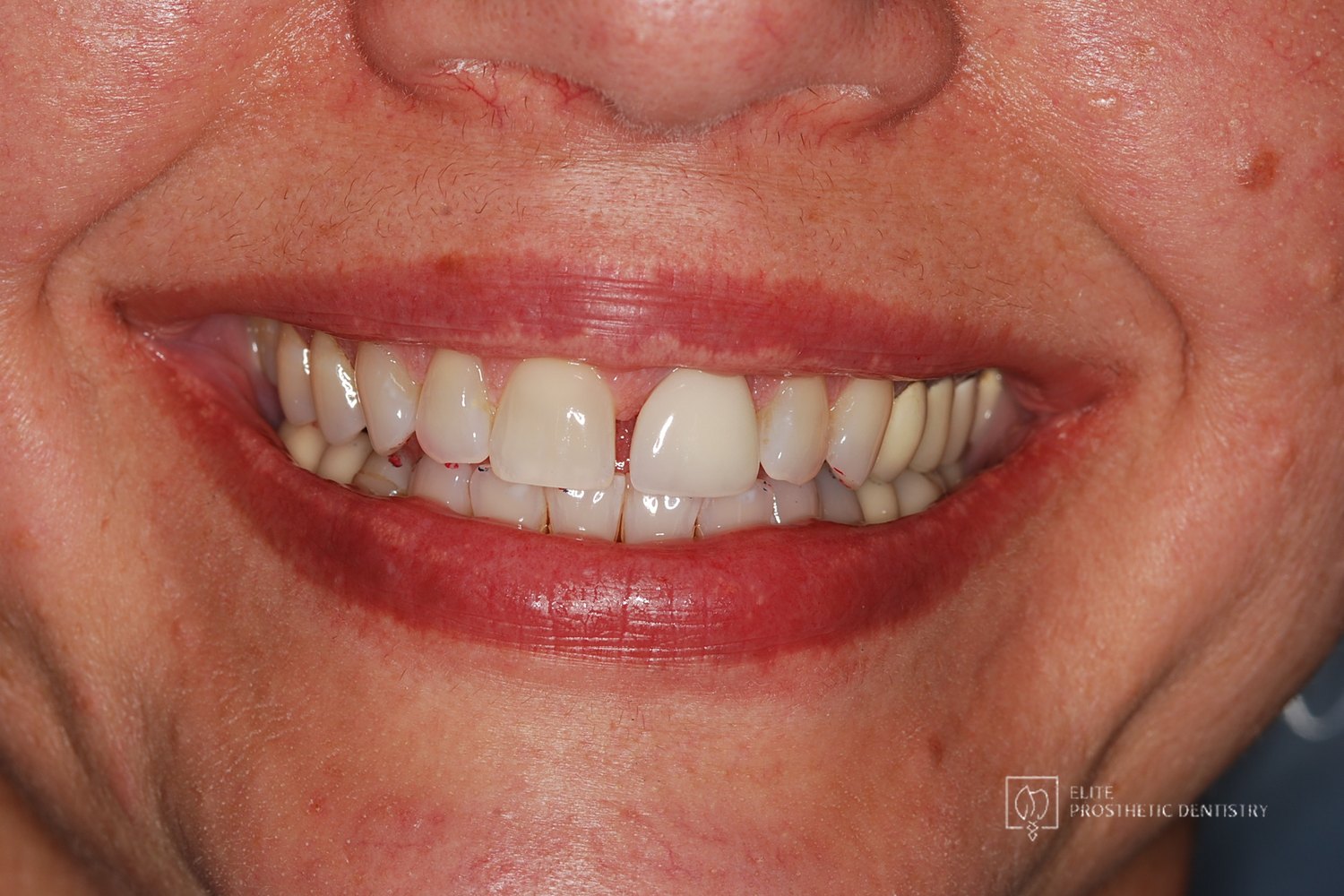 Before
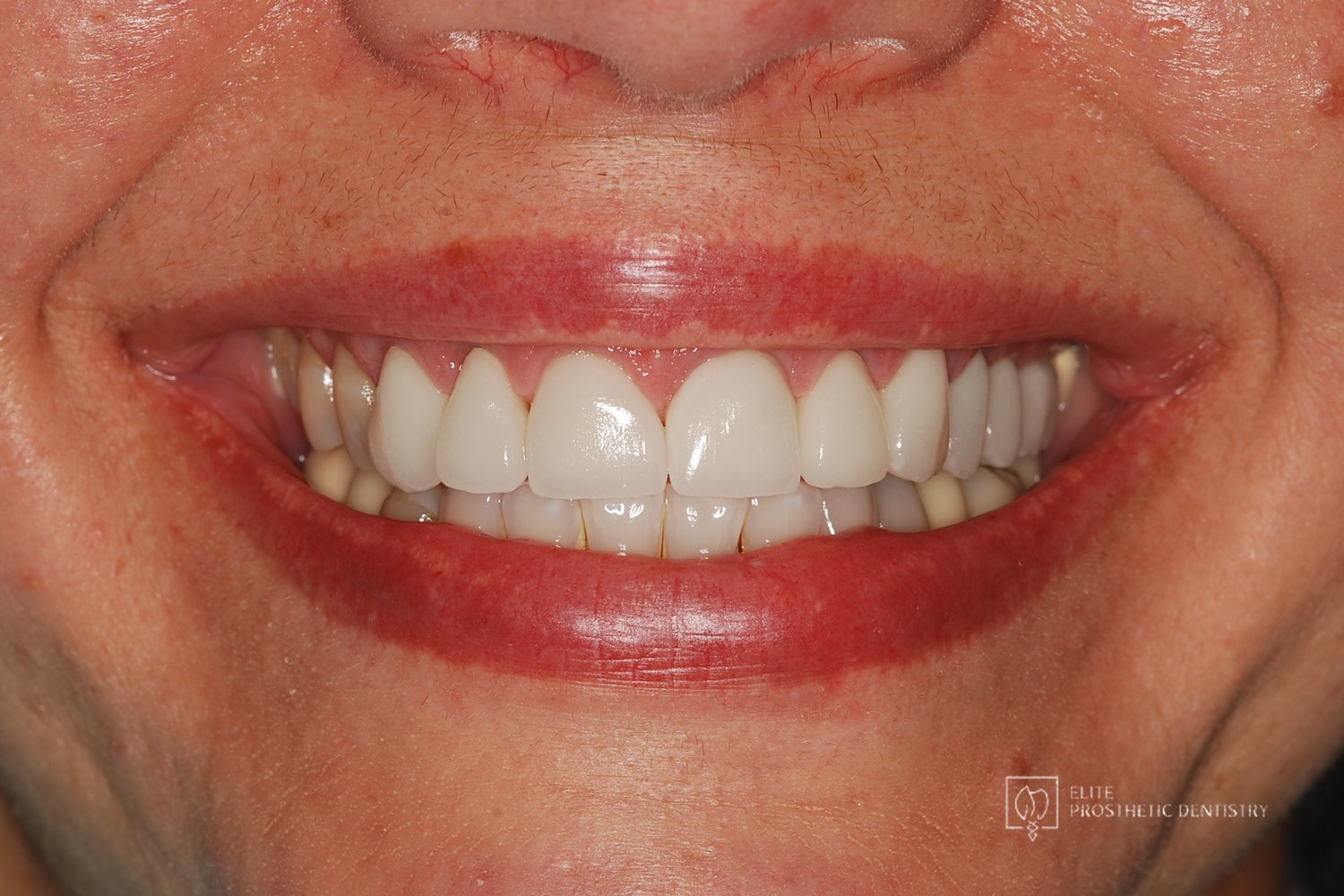 After
Intraoral view
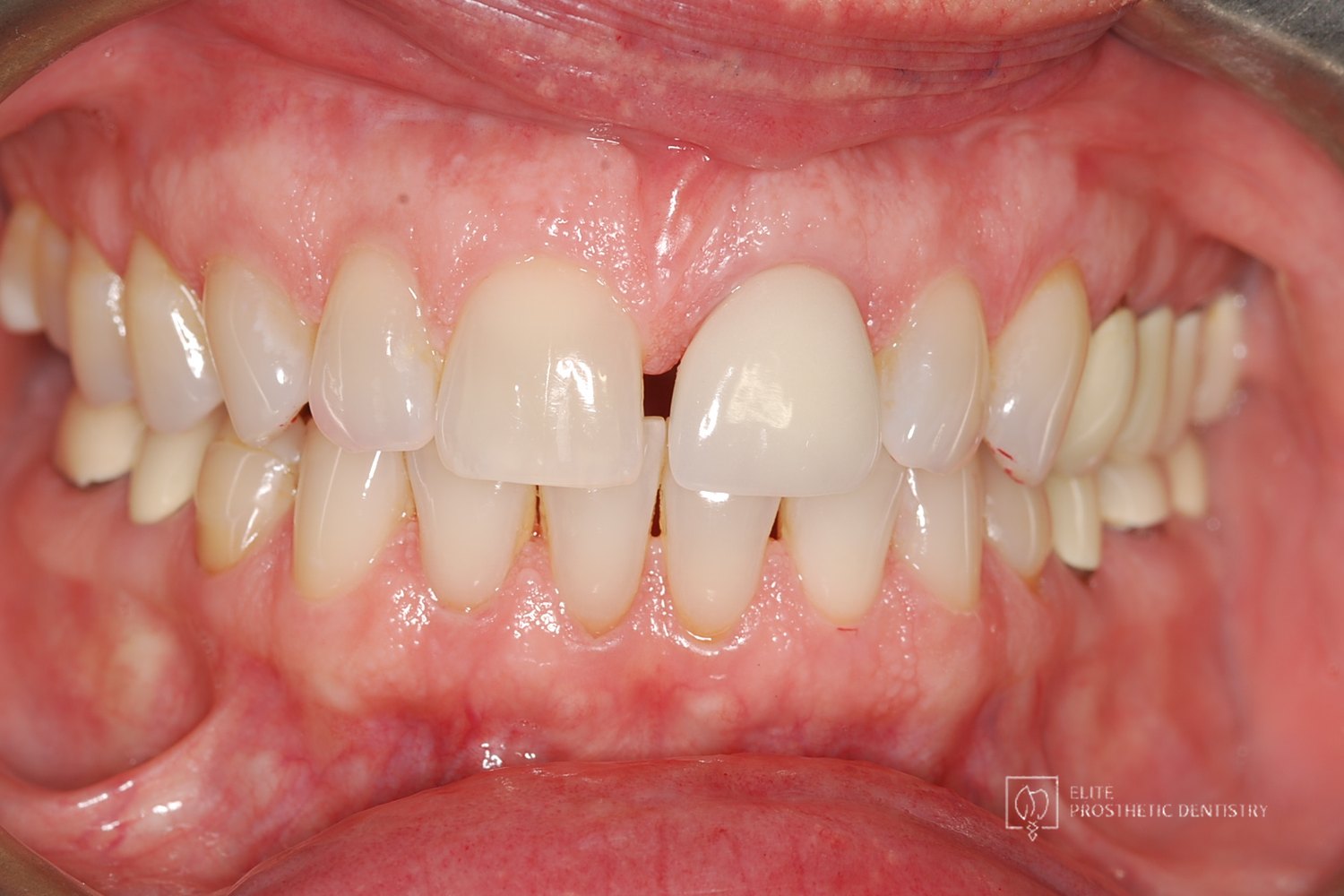 Before
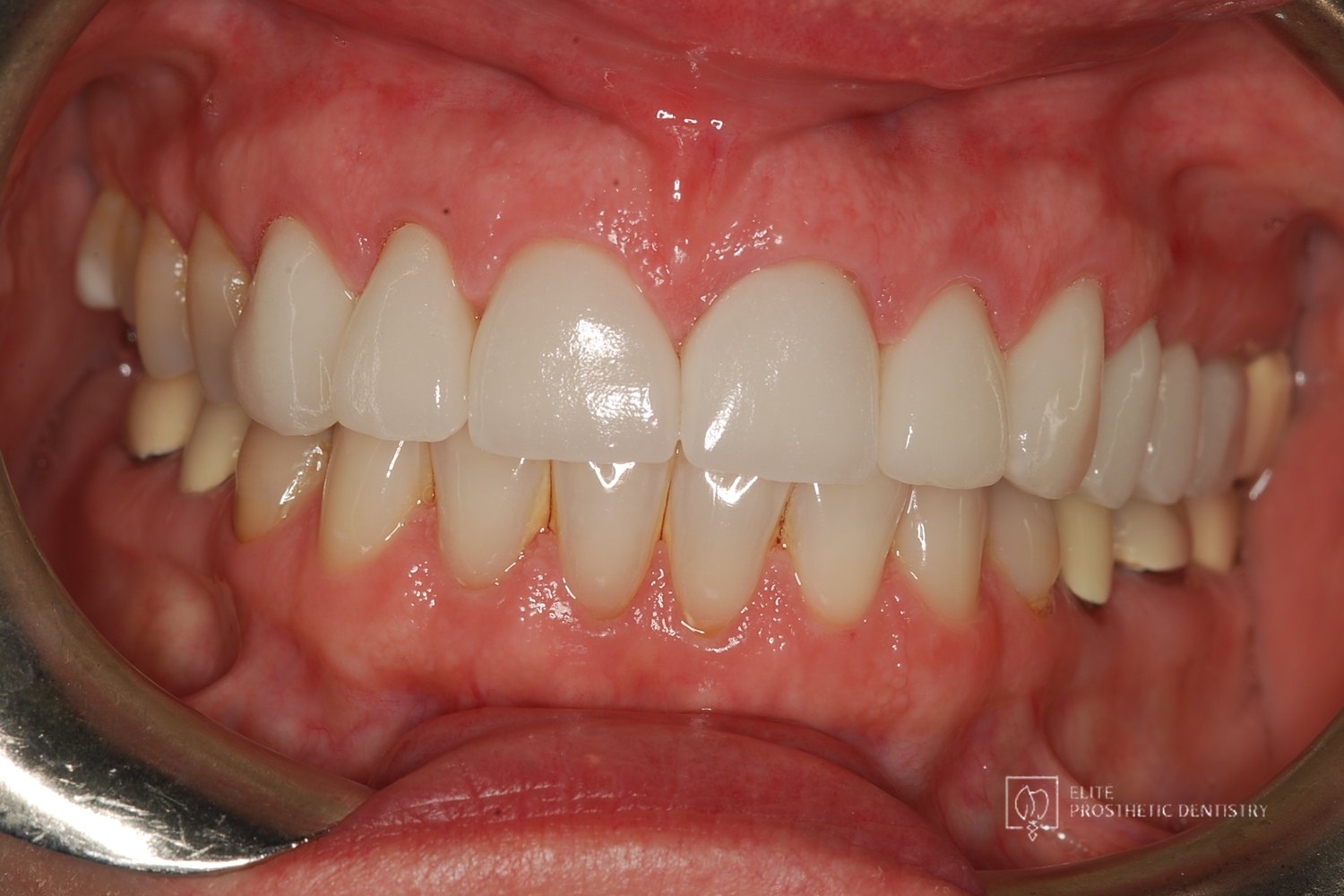 After
A diastema and mismatched crowns rebuilt with a customized bridge
Esthetic rehabilitation of the upper smile in Washington, DC for a patient with a noticeable diastema, multiple spaces, and existing crowns that varied in shade and lacked natural shape. This documented case at Elite Prosthetic Dentistry treated the recurrent decay found beneath several of those crowns with root canal treatment and buildups, then replaced them with a customized natural-shade PFM bridge from the upper right canine to the upper left first molar. Treatment was planned and completed by Gerald Marlin, D.M.D., M.S.D., a prosthodontist focused on natural-looking restorative work.
Case at a Glance
- Treatment
- Customized natural-shade PFM bridge from the upper right canine to the upper left first molar, with endodontic treatment and buildups for teeth affected by recurrent decay
- Approach
- Treatment of underlying decay, preservation of compromised teeth, replacement of mismatched crowns, closure of the diastema and spaces, and customized tooth design based on the patient's facial esthetics
- Case Type
- Esthetic rehabilitation / Replacing older crowns with a customized bridge
- Patient Concern
- A gap between the front teeth, spaces across the upper smile, and crowns that did not match each other in color or shape.
- Decision Point
- Replace the visible crowns for appearance alone, or treat the decay found beneath them first and then design a single customized restoration that closes the spaces with natural proportions.
- Outcome
- A unified, natural-looking upper smile with the diastema and spaces closed, consistent shade, and tooth shapes that fit the patient's face.
- Why It Matters
- Shows that closing gaps and matching crowns is a restorative problem as much as a cosmetic one, and that the teeth underneath must be sound before the smile is redesigned.
The presenting condition
The patient’s concerns were the spaces between her teeth and the inconsistent look of her existing crowns. The diastema between the central incisors was the most visible, but there were multiple spaces across the upper smile, and the crowns varied in shade and color, so the teeth read as separate pieces rather than a cohesive smile. They also lacked natural anatomical shape. The comprehensive evaluation found that the problem was not only on the surface. Several teeth had recurrent decay underneath their restorations, and some required root canal treatment and buildup procedures to address the disease and preserve the remaining tooth structure before any new restoration could be placed.
Clinical Findings
- →A noticeable diastema between the upper central incisors and multiple spaces across the treated segment
- →Existing crowns with inconsistent shades and colors that did not create a harmonious appearance
- →A lack of natural anatomical shape in the existing crowns
- →Recurrent decay underneath several existing restorations
- →Multiple teeth requiring endodontic treatment and buildup procedures to be preserved as foundations for the final restoration
- →The need to close the spaces while keeping tooth proportions natural rather than overly wide
Why closing the gaps started underneath the crowns
Changing the appearance of crowns is rarely the first step when the teeth beneath them are compromised. New crowns placed over recurrent decay fail from the inside, so the foundation had to be treated and confirmed before the esthetic work began. Root canal treatment and buildups allowed the affected teeth to be preserved and incorporated into the plan. The esthetic design then had its own discipline. Closing a diastema and multiple spaces is not simply a matter of making teeth wider; width, length, anatomy, contact areas, and facial proportions all determine whether the result looks natural or obviously restored. Treating the segment from the upper right canine to the upper left first molar as one customized restoration allowed each tooth to be shaped and proportioned to the patient’s face and the shade to be made consistent across the whole visible smile.
The treatment plan
The plan treated the disease first and then designed the smile as one coordinated restoration.
-
1
Comprehensive evaluation
The upper front and premolar region was evaluated for the existing crowns, the spaces, tooth proportions, remaining tooth structure, and the overall esthetic relationship, and the underlying teeth were assessed for recurrent decay and their ability to support the planned restoration.
-
2
Treatment of recurrent decay
Teeth with decay beneath their restorations were treated as needed, including root canal therapy and buildup procedures, to address the disease and preserve tooth structure for the final restoration.
-
3
Esthetic treatment planning
Tooth shape, proportions, shade, and the relationship of the teeth to the patient's facial characteristics were planned so the diastema and spaces could be closed without creating teeth that appeared too large or unnatural.
-
4
Customized natural-shade PFM bridge
A natural-shade PFM bridge extending from the upper right canine to the upper left first molar was fabricated to replace the existing restorations, with each tooth individually shaped for natural anatomy and proportion. The bridge was fabricated in direct coordination between Dr. Marlin and the practice's in-house laboratory to control fit, contour, shade, and esthetics. See dental bridges.
-
5
Closure of the diastema and spaces
The final restoration closed the visible gap and the other spaces while keeping balanced tooth proportions and a natural relationship between the teeth.
The outcome
The completed treatment transformed the visible portion of the patient’s upper smile. The previous crowns had varied in shade and lacked natural form, and the gap and spaces had further disrupted the appearance; underneath, recurrent decay had compromised several teeth. After the endodontic treatment and buildups, the teeth were incorporated into a customized natural-shade bridge in which each tooth was shaped to complement her face. The before and after views at the top of this page show the diastema and spaces closed, the shade made consistent, and the proportions corrected. The patient was extremely happy with the result and the renewed confidence it gave her.
Result Highlights
- ✓Recurrent decay beneath existing crowns treated before any esthetic work
- ✓Root canal treatment and buildups preserved compromised teeth as foundations
- ✓Mismatched crowns replaced with one customized natural-shade bridge from canine to first molar
- ✓Diastema and multiple spaces closed without overly wide teeth
- ✓Tooth shape, proportion, and shade designed around the patient's facial esthetics
Who this case may sound familiar to
This story tends to resonate with patients in a few recognizable situations:
- You have a gap between your front teeth or spaces across your smile and want them closed naturally.
- You have crowns that do not match each other in color or shape and the smile looks pieced together.
- You suspect, or have been told, that there is decay under older crowns.
- You want the teeth underneath treated properly before anything cosmetic is done.
- You want a result designed around your face rather than a standard set of wide, uniform teeth.
If any of those describe where you are, a consultation with Dr. Marlin can give you the diagnostic picture and the specific plan for your case.
Frequently asked questions
Can a diastema be closed with crowns or a bridge instead of orthodontics?
Yes, when the teeth involved already need restoration. The spaces are closed by redesigning the width and shape of the restorations. The challenge is keeping the proportions natural; the design distributes the space across several teeth so no single tooth looks too wide.
Why would decay be found under crowns that look fine?
Decay develops at the margin where the crown meets the tooth and advances underneath, where it cannot be seen. Radiographs and a careful examination detect it. Any new restoration placed without treating that decay would fail from the inside.
Why was a PFM bridge chosen for this case?
Porcelain-fused-to-metal restorations combine a strong framework with a porcelain surface that can be shaded and shaped for a natural appearance. Material selection depends on the teeth being restored, the bite, and the esthetic goals, and is decided case by case during planning.
What does designing restorations around facial esthetics involve?
Tooth width, length, incisal edge position, contact areas, and shade are chosen in relation to the lips, the smile line, and the proportions of the face rather than from a standard template. A prosthodontist plans those relationships before the restorations are fabricated so the finished smile looks like it belongs to the patient.
More about the work behind this case
This case uses a customized dental bridge to resolve crown problems and cosmetic concerns in one plan. The treat-the-foundation-first approach reflects the practice’s philosophy, and the bridge was fabricated with the in-house laboratory.
Elite Prosthetic Dentistry treats patients from across the DMV including Bethesda, Chevy Chase, McLean, Arlington, Potomac, and Great Falls, and from much further out for cases that warrant the trip.
Related Services
Related Patient Success Stories
Explore similar patient success stories demonstrating our expertise in advanced prosthetic dentistry.
 Before
 After
How Aging, Failing Dentistry Was Replaced with a Coordinated Full-Mouth Implant and Crown Reconstruction
The patient presented with throbbing upper-molar pain, long-standing infections, multiple root canals and unfinished prior treatment, generalized sensitivity, and several hopeless teeth.
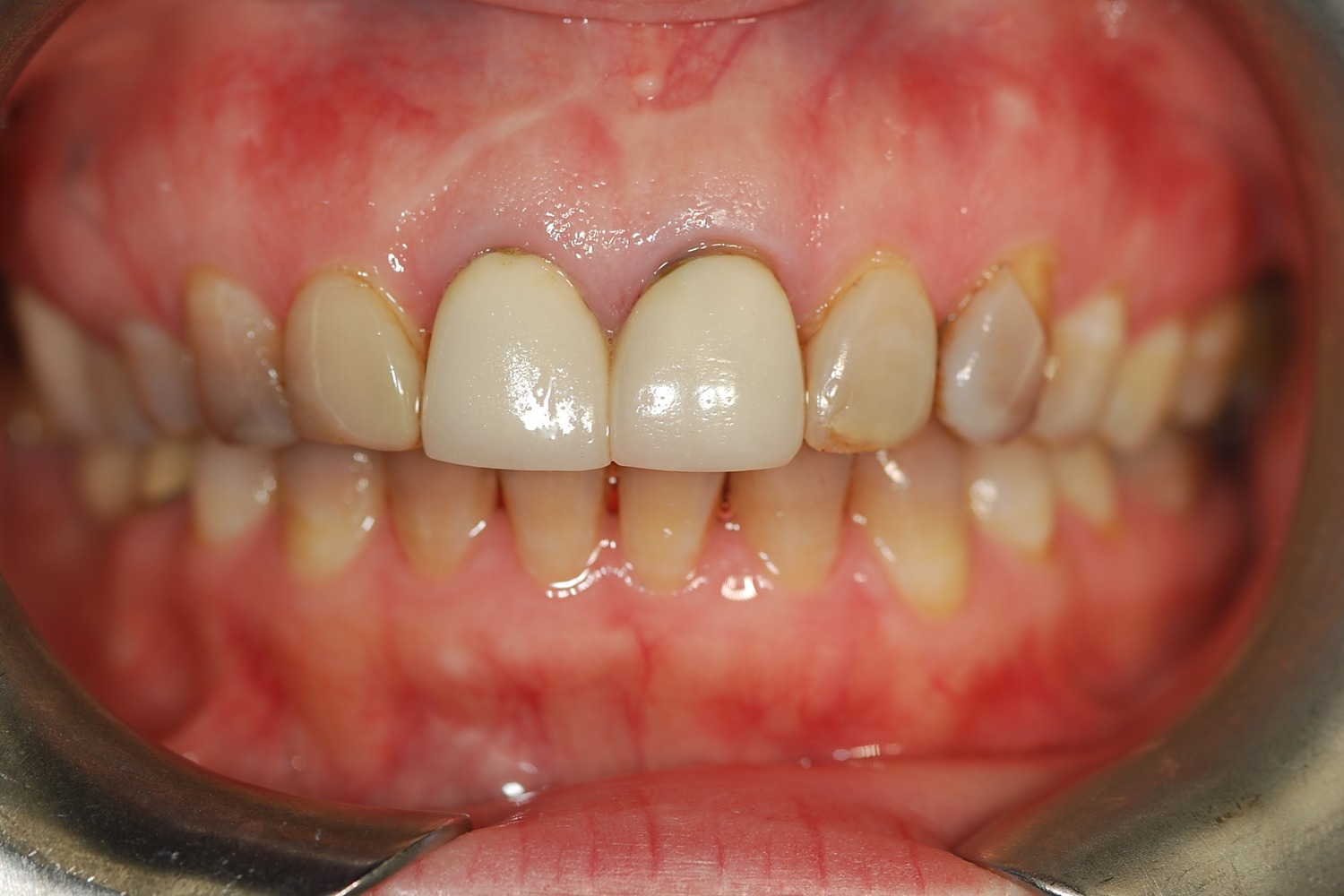 Before
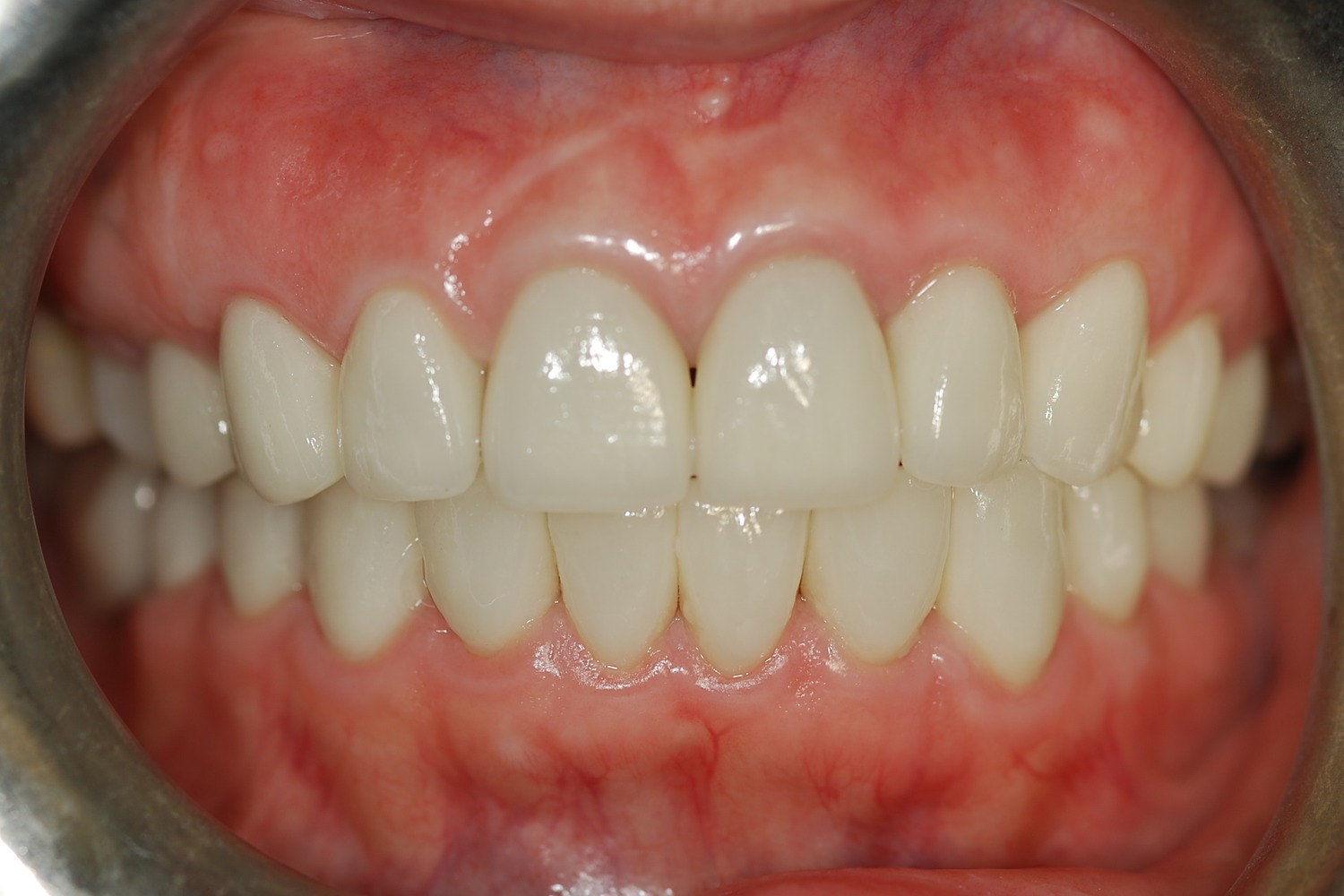 After
How Aging, Opaque Restorations Were Replaced with Customized Ceramic Restorations Designed for Long-Term Natural Esthetics
The existing restorations appeared opaque, worn, and unnatural over time, affecting both confidence and overall smile harmony.
 Before
 After
Two Front Teeth Saved From Extraction: A Second Opinion, Custom Gold Posts, and Crowns Made to Last
Two upper central incisors with failed root canal treatment and recurrent decay had been recommended for extraction and implant replacement. A CBCT evaluation showed that removing the roots from their thin facial bone housing could create a visible esthetic defect in the gum and bone contour, made worse by the patient's high lip line.