
The Art and Science of Creating Full Dentures
Patients who come to Elite Prosthetic Dentistry for full denture treatment are rarely asking for “replacement teeth” alone. They want their face back, their chewing back, and their confidence back. A complete denture is one of the most significant restorations a prosthodontist provides, and doing it exceptionally well demands two things at once: rigorous engineering and genuine artistry.
What Patients Are Really Solving
Years of missing or failing teeth accumulate consequences. Chewing narrows to soft foods, which erodes both nutrition and the pleasure of eating. The loss of vertical dimension and muscular support changes the face, creating the sunken look that ages people beyond their years. Social confidence quietly shrinks. And beneath all of it, the jawbone itself resorbs once teeth are gone, steadily changing the foundation any restoration must rest on.
A well-crafted denture addresses every layer of that problem, which is why the craft matters so much.
Why Full Dentures Are Genuinely Difficult
Unlike a crown that replaces one tooth, a complete denture replaces an entire arch in a removable appliance supported only by soft tissue. That raises engineering problems that must all be solved simultaneously.
The foundation. The denture base must extend and contour to maximize contact with the ridge: too little extension and the denture loses retention and stability; too much and it irritates the tissue.
Vertical dimension. The height at which the jaws meet must be set correctly. Too high produces jaw strain and clicking; too low collapses the lower face and impairs function.
Balanced occlusion. The teeth must be arranged so chewing forces balance across the arch. An unbalanced bite rocks the denture in function, which is uncomfortable and accelerates bone loss.
Believable aesthetics. Tooth shade, size, shape, and arrangement must suit the patient’s face and age. The best denture is the one nobody suspects.
The Chairside, In-House Approach
Our answer to this complexity is structural: we craft dentures in collaboration with the technician in our own in-house laboratory, with the patient present for the stages where judgment matters most.
Before finalization, a wax try-in lets us evaluate tooth position, shade, bite, and facial support directly in your mouth, and refine all of it while changes are still easy. At delivery, final adjustments happen chairside the same day rather than through rounds of shipping to an outside facility. And because Dr. Marlin can explain clinical and aesthetic goals to the technician directly, the finished denture reflects an actual conversation about your face, not a written prescription interpreted from afar. In select cases, this integration even allows denture treatment to be completed remarkably quickly, because planning, fabrication, and adjustment all live under one roof.
Long-Term Success: Relines and Maintenance
Here is the truth experienced denture wearers know: delivery day is the beginning, not the end. The underlying bone continues to remodel for years, gradually changing the fit of even a perfect denture. Periodic professional relines, refitting the tissue surface of the denture to the changed anatomy, restore stability and extend the appliance’s life considerably. Regular checkups let us monitor fit, bite, and tissue health so small changes never become big problems.
Patients who want more stability than tissue support can offer have implant options as well, from snap-retained overdentures to fixed full-arch solutions. Our articles on bar-attachment denture implants and 3 things to know when transitioning from dentures to dental implants are good starting points for that decision.
A Smile to Be Proud Of
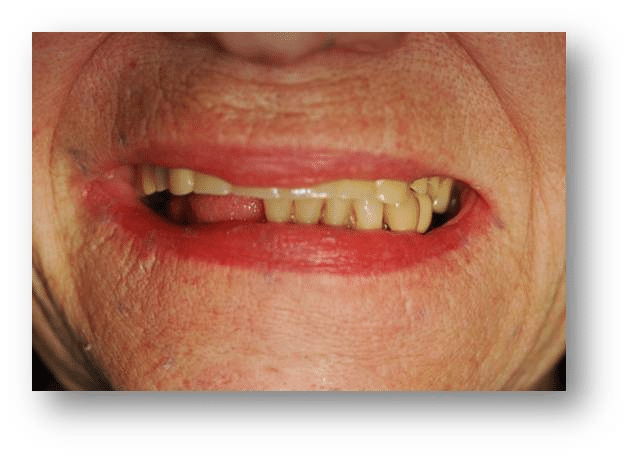
The move from failing teeth or an ill-fitting appliance to a truly well-made denture is transformative: restored chewing, restored facial support, restored ease in front of other people. Dr. Gerald Marlin, a specialty-trained prosthodontist with 40+ years of experience and an in-house laboratory operating since 1985, brings both the science and the artistry this restoration demands. Call 202-244-2101 or request an appointment at Elite Prosthetic Dentistry in Friendship Heights, Washington, DC.
See How We Resolve These Problems
Our patient success stories show real cases and real results. Browse outcomes from a specialist prosthodontist with decades of experience and 3,900+ implants placed.
Key Takeaways
- ✓ A full denture replaces an entire arch of teeth in a removable, tissue-supported appliance, which makes it one of the most demanding restorations in dentistry.
- ✓ Success is engineering plus artistry: base extension, vertical dimension, balanced occlusion, and tooth aesthetics all have to be right at once.
- ✓ Chairside collaboration with an in-house laboratory lets fit, shade, and tooth position be refined in real time, including at the wax try-in stage.
- ✓ Bone continues to resorb under dentures, so periodic professional relines are part of long-term success, not a sign of failure.
- ✓ For patients seeking more stability, implant-supported options can anchor a denture securely.
Frequently Asked Questions
What makes a good full denture different from a cheap one?
Precision and customization. A well-made denture has a base extended and contoured to maximize retention without irritating tissue, a bite set at the correct vertical dimension, teeth arranged for balanced chewing, and aesthetics matched to your face and age. Each of those steps takes clinical time and laboratory skill that budget dentures skip.
How does the denture process work?
After examination and impressions, the denture is developed in stages, including a wax try-in where you and the dentist evaluate tooth position, shade, bite, and appearance before anything is final. Adjustments at that stage are easy. With an in-house laboratory, refinements and final delivery adjustments happen chairside rather than through weeks of back-and-forth.
Why does my denture get loose over the years?
Because the jawbone beneath it slowly resorbs once teeth are gone, changing the ridge the denture was fitted to. This is normal biology, not a defect. Periodic professional relines refit the denture base to the changed anatomy, restoring stability and extending the denture's life considerably.
Can dentures be made more stable than they are?
Yes. Beyond precision fit and relines, dental implants can anchor a denture, from a small number of implants that snap-retain an overdenture to fixed full-arch solutions. Many long-time denture wearers find implant retention transforms chewing confidence. Candidacy depends on bone volume and health, which an examination determines.
Related Patient Success Stories
Explore similar patient success stories demonstrating our expertise in advanced prosthetic dentistry.

Treating a Collapsed Bite with a Complete Smile Makeover and New Dentures
The patient's bite had collapsed severely, changing his facial proportions and making him look much older than his age, while extensive underlying bone loss and dentures that no longer fit made chewing difficult and kept his teeth hidden when he smiled.
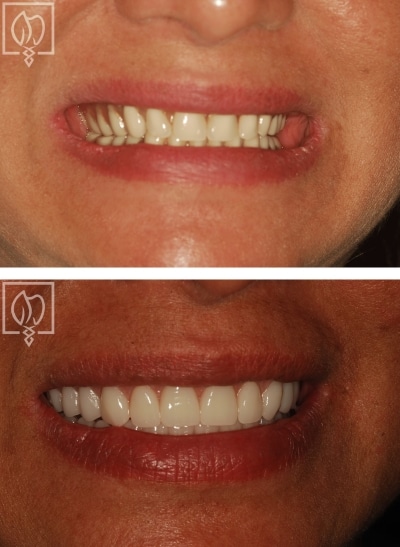
Rejuvenating Severely Worn Down Implant Overdentures
The patient's upper and lower overdentures, seated on bars over her dental implants, had worn severely and were beginning to crack, leaving her self-conscious in personal and professional settings, especially her Zoom meetings.
Related Articles
Deepen your knowledge with additional insights on this topic.