
Dental Implants in Washington, DC
Specialist prosthodontic implant evaluation, planning, surgery, and restoration in Washington, DC. The same doctor manages every phase of the case, and the final restoration is fabricated in the in-house dental laboratory operating continuously since 1985.
40+
Years in Practice
3,900+
Implants Placed
9
U.S. Patents
97%
Success at 20 Yrs

Gerald M. Marlin, DMD, MSD
Specialty-Trained Prosthodontist (DMD, MSD)
Washingtonian "Top Dentist" 2026 and Hall of Fame
Why Patients Choose a Specialist for Implants
- Specialty-trained prosthodontist with 3,900+ implants placed and a 97% success rate at 20-year follow-up
- Same doctor coordinates surgical placement and final restoration. No clinician handoffs between phases.
- In-house dental laboratory operating continuously since 1985. Master ceramist works directly with Dr. Marlin.
- CBCT 3D imaging and computer-guided surgical placement standard on every case
- 9 U.S. patents in dental implant restoration methodology
Or call now: (202) 244-2101
Implant Solutions for Every Case Type
From single missing teeth to complete arch rehabilitation, every case is planned around the patient's individual anatomy, bite, and aesthetic goals. The summary below outlines the most common case types; each links to the dedicated resource.
Single Tooth Implant
Replace one missing tooth without affecting the adjacent teeth. Custom in-house crown that blends indistinguishably with surrounding dentition. Learn more →
Multi-Tooth & Bridges
Implant-supported bridges replace several missing teeth without compromising healthy adjacent teeth. Stronger and longer-lasting than traditional bridges. Compare options →
Full-Arch (All-on-X)
Complete arch of fixed teeth supported by four, six, or more strategically placed implants. Specialist alternative to corporate full-arch chains. Explore All-on-X →
How Specialist Implant Treatment Works
Implant treatment is a multi-stage process. Setting clear expectations from the start is part of how a specialist practice approaches every case.
Consultation and CBCT 3D Imaging
Comprehensive clinical exam, three-dimensional CBCT scan of the implant site, and a discussion of goals. The CBCT reveals bone density, height, width, and the location of anatomic structures that influence implant placement.
Treatment Planning
Digital treatment plan developed from the CBCT data to determine implant position, angle, depth, and the design of the final restoration. The plan is reviewed with the patient before any surgical step begins.
Precision Implant Placement
Surgical placement under local anesthesia with sedation options available. CBCT-guided technique controls accuracy to within fractions of a millimeter. A fixed temporary prosthesis is provided during the healing phase for full-arch cases.
Final In-House Restoration
After osseointegration, the custom crown, bridge, or full-arch prosthesis is designed and fabricated in the in-house lab, with Dr. Marlin working directly with the master ceramist throughout.
What Sets a Specialist Practice Apart
Not all implant practices operate the same way. The structural differences below influence the long-term outcome of high-investment cases.
-
Same Doctor From Start to Finish
Dr. Marlin personally plans, places, and restores every case. No handoffs between clinicians, no fragmented communication, no rotating providers.
-
In-House Master Ceramist Since 1985
The dental laboratory has operated continuously on-site for 40+ years. The master ceramist works directly with Dr. Marlin on every restoration.
-
Customized, Not Templated
Every case is planned around the patient's anatomy, bite, and aesthetic goals. No standardized corporate full-arch protocol applied to every patient.
-
97% Success Rate at 20-Year Follow-Up
Documented in-practice success rate exceeds 97% across more than 3,900 implants placed. Long-term predictability is the result of accurate placement and well-designed restorations.
-
9 U.S. Patents in Implant Restoration
Dr. Marlin holds 9 U.S. patents in dental implant restoration methodology. A depth of research that is unusual in private practice.

Why Patients Seek Implant Care Here
Patients come to Elite Prosthetic Dentistry for different reasons. The most common are below. The right answer for any patient comes from a specialist evaluation, not a phone call.
Replacing Missing or Failing Teeth
Single tooth, multiple teeth, or full arch reconstruction with implant-supported restorations engineered for long-term predictability.
Correcting Prior Implant Work
An implant feels loose, food traps around it, or the result does not look or function as expected. Specialist diagnosis identifies the cause and develops a corrective plan.
Specialist Second Opinion
Comparing treatment plans from corporate full-arch chains or general dentists. A specialist evaluation clarifies what is appropriate before committing to treatment.
Replacing Older Dental Work
Older bridges, dentures, or restorations that no longer meet expectations. Implant treatment can avoid repeated dentistry on compromised structures.
How Specialist Implant Care Differs From Other Options
Patients who research dental implants in the DMV typically encounter three categories of providers: prosthodontic specialty practices, corporate full-arch chains, and general dentists who place implants as part of a broader practice. Each has a role. The table below outlines where they differ on the criteria that influence long-term outcomes for high-value cases.
This comparison is not a claim that general dentists or corporate clinics produce inferior results in every case. The right answer depends on the complexity of the patient’s situation. Many general dentists do excellent single-implant restorations and appropriately refer complex cases to a specialist; Elite Prosthetic Dentistry actively works with referring dentists across the DMV. The point of the comparison is to clarify which provider model is structured for which kind of case.
What Are Dental Implants
Dental implants consist of a titanium post, abutment, and restoration. The post functions as a natural tooth root to anchor and stabilize the restoration. Once the implant post fuses with the jawbone, it stimulates new bone growth, providing a solid foundation for replacement teeth and significantly reducing the risk of facial changes that occur when teeth are missing for long periods.
Unlike removable dentures or bridges that rest on the gum surface, dental implants integrate directly into the bone structure, mimicking the way natural tooth roots work. This integration, called osseointegration, creates a foundation that is remarkably stable and durable. The titanium implant body biointegrates seamlessly with the surrounding bone over several months, becoming a permanent part of the jaw. This biocompatibility is why titanium has been the gold standard in implant dentistry for decades, although newer ceramic options are now available for select cases. The differences are reviewed on the zirconia vs. titanium dental implants page.
Implant Candidacy and Requirements
Most patients with missing or failing teeth can be candidates for dental implants. Adequate jawbone height and width are required to support an implant. If significant bone loss has occurred, bone grafting or ridge augmentation can rebuild the foundation. Gums should be healthy and free from untreated periodontal disease. Diabetes, smoking, and certain medications may require discussion, though they do not necessarily disqualify a patient from treatment.
Many patients who initially thought they were not candidates for implants have successfully received them after bone grafting, sinus augmentation, or other preparatory procedures.
Implant Success and Long-Term Predictability
When placed and restored by an experienced specialist, dental implants have well-documented long-term success rates. Some of Dr. Marlin’s earliest implants, placed more than 20 years ago, continue to function as designed, with a documented in-practice success rate of greater than 97% at 20 years. Long-term predictability reflects how the case was diagnosed, planned, executed, and maintained, not implant placement alone.
Implants do not develop decay, but the bone and soft tissue around them still require proper hygiene, periodic evaluation, and ongoing maintenance.
For Referring Dentists
A meaningful portion of patients at Elite Prosthetic Dentistry are referred by general and family dentists across the DMV who recognize when a case warrants prosthodontic specialty input. Dr. Marlin works collaboratively with referring providers, communicates throughout the planning and treatment phases, and supports the patient’s long-term relationship with their primary dentist. For dentists who want to discuss a specific case, the practice can be reached directly at (202) 244-2101.
Serving Patients From
Maryland
Bethesda (Dental Implants) | Bethesda (Front Tooth Replacement) | Bethesda (Implant Crowns) | Cabin John | Chevy Chase | Kensington | North Bethesda | Potomac (Concerned About Implant Accuracy) | Potomac (Dental Implants) | Rockville | Silver Spring
Washington, DC
Cleveland Park | Dupont Circle | Foxhall | Georgetown | Kalorama | Palisades | Spring Valley | Tenleytown | Woodley Park
Virginia
Arlington | Fairfax | Falls Church | Great Falls | McLean | Oakton | Tysons | Vienna
Ready to Discuss Your Treatment Options With a Specialist?
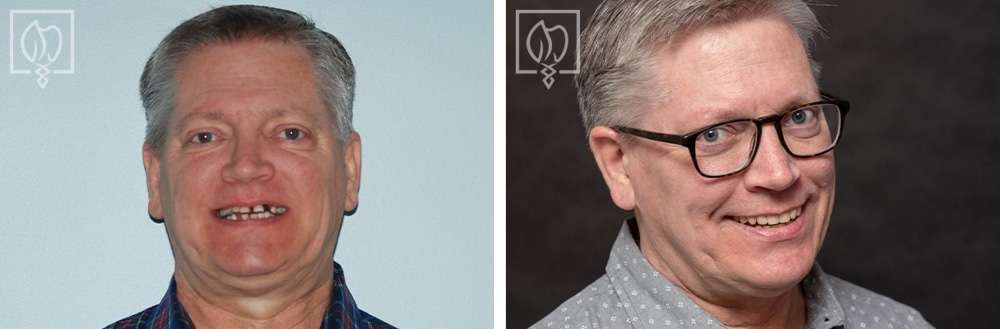
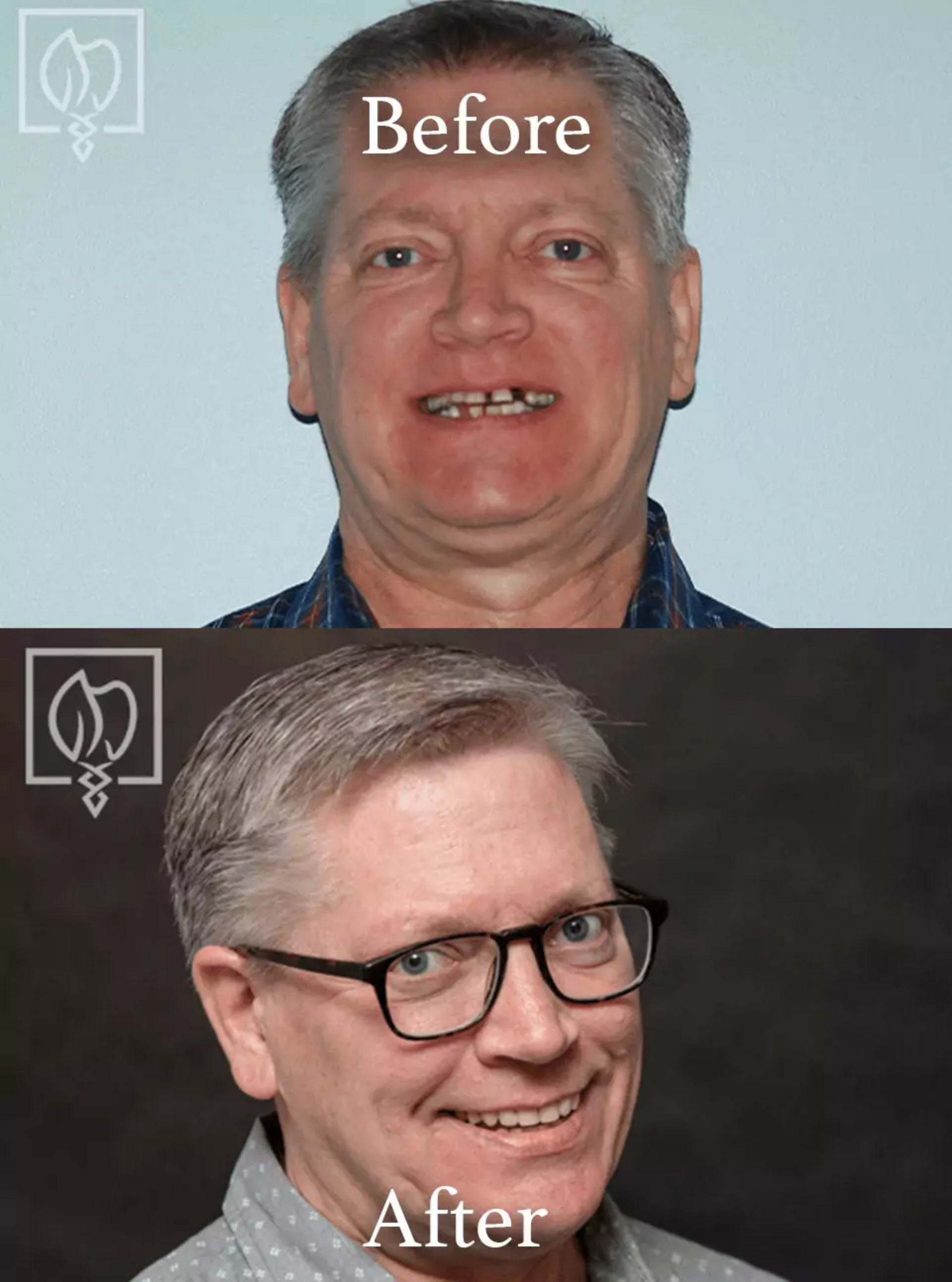
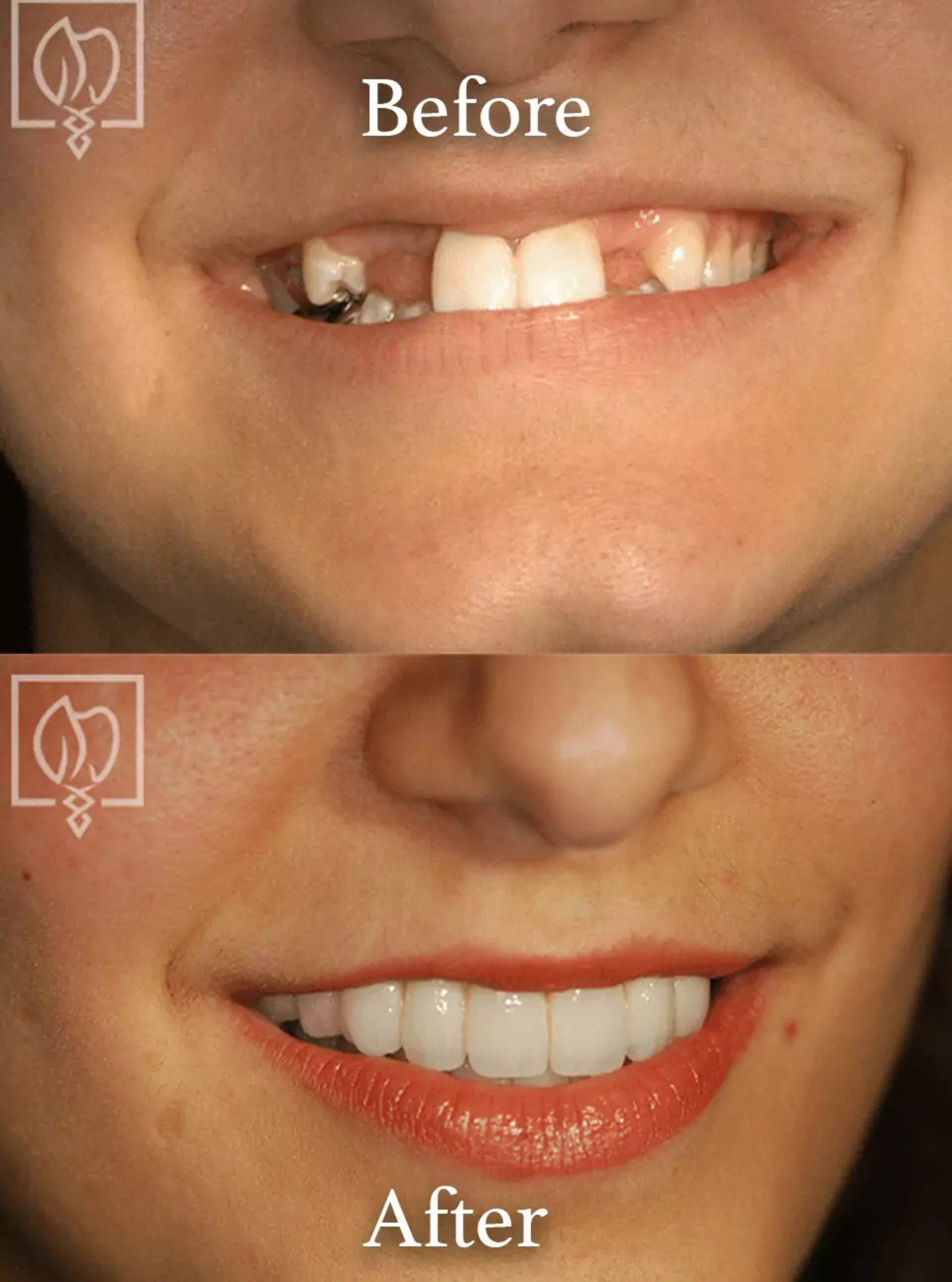
Real Patient Implant Results
Every case below was planned, surgically placed, and restored personally by Dr. Marlin at the Washington, DC practice.
Frequently Asked Questions
Frequently Asked Questions
What are dental implants and how do they work?
Dental implants are titanium posts surgically placed into the jawbone to replace missing tooth roots. Through a process called osseointegration, the implant fuses with the bone over 3 to 6 months, creating a stable foundation. A custom-crafted crown, bridge, or full-arch prosthesis is then attached to restore the appearance and function of natural teeth.
How long do dental implants last?
When properly planned, placed, and restored, dental implants are designed to last for decades. Dr. Marlin has placed more than 3,900 implants, with a documented 97% success rate at 20-year follow-up. Long-term predictability depends on accurate placement, restoration design, bite stability, and ongoing maintenance, not implant placement alone.
Why should I choose a prosthodontist for dental implants instead of a general dentist?
A prosthodontist completes three additional years of specialty training beyond dental school, focused entirely on the replacement and restoration of teeth. For complex implant cases, full-arch reconstruction, severely worn dentition, or any case where multiple disciplines need to coordinate, that depth of training is what makes a measurable difference in the long-term result. Many general dentists refer their more complex implant cases to a prosthodontist for exactly this reason.
What is the dental implant process and how long does it take?
The process begins with a comprehensive consultation including CBCT 3D imaging, followed by surgical implant placement. After three to six months of osseointegration, a custom crown is fabricated in the in-house lab and placed on the implant. Total treatment time varies based on individual needs, bone health, and whether preparatory procedures like bone grafting are required.
What is the advantage of an in-house dental lab for implant restorations?
An in-house lab allows Dr. Marlin to work directly with the master ceramist on every restoration. That direct collaboration produces faster turnaround, real-time adjustments during fabrication, and a level of bite, fit, and aesthetic control that external labs cannot match. The Elite Prosthetic Dentistry in-house lab has operated continuously since 1985.
Do you accept referrals from general dentists?
Yes. Many of our patients are referred by general and family dentists across the DMV who recognize when a case requires prosthodontic specialty input. Dr. Marlin works collaboratively with referring dentists, communicates throughout treatment, and supports the long-term relationship between the patient and their primary dentist.
What does a dental implant cost in Washington, DC?
Cost varies meaningfully based on the number of implants, the type of restoration (single crown, bridge, or full-arch), whether bone grafting or sinus augmentation is required, the prosthetic materials selected, and the complexity of the case. A specialist consultation provides a defined treatment plan with transparent itemized pricing. Financing options and insurance benefit coordination are reviewed during the consultation.
Related Patient Success Stories
Explore similar patient success stories demonstrating our expertise in advanced prosthetic dentistry.
 Before
  After
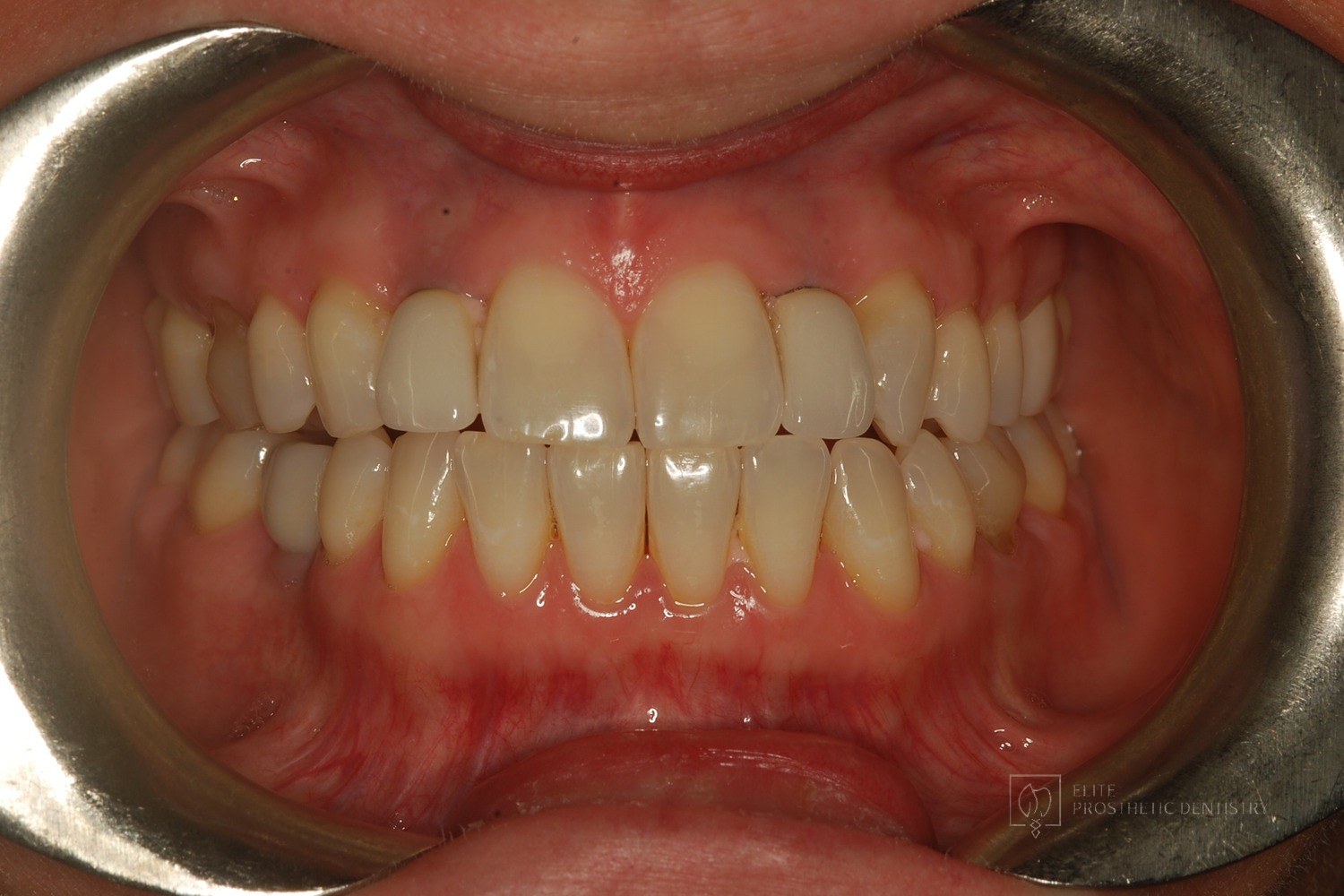
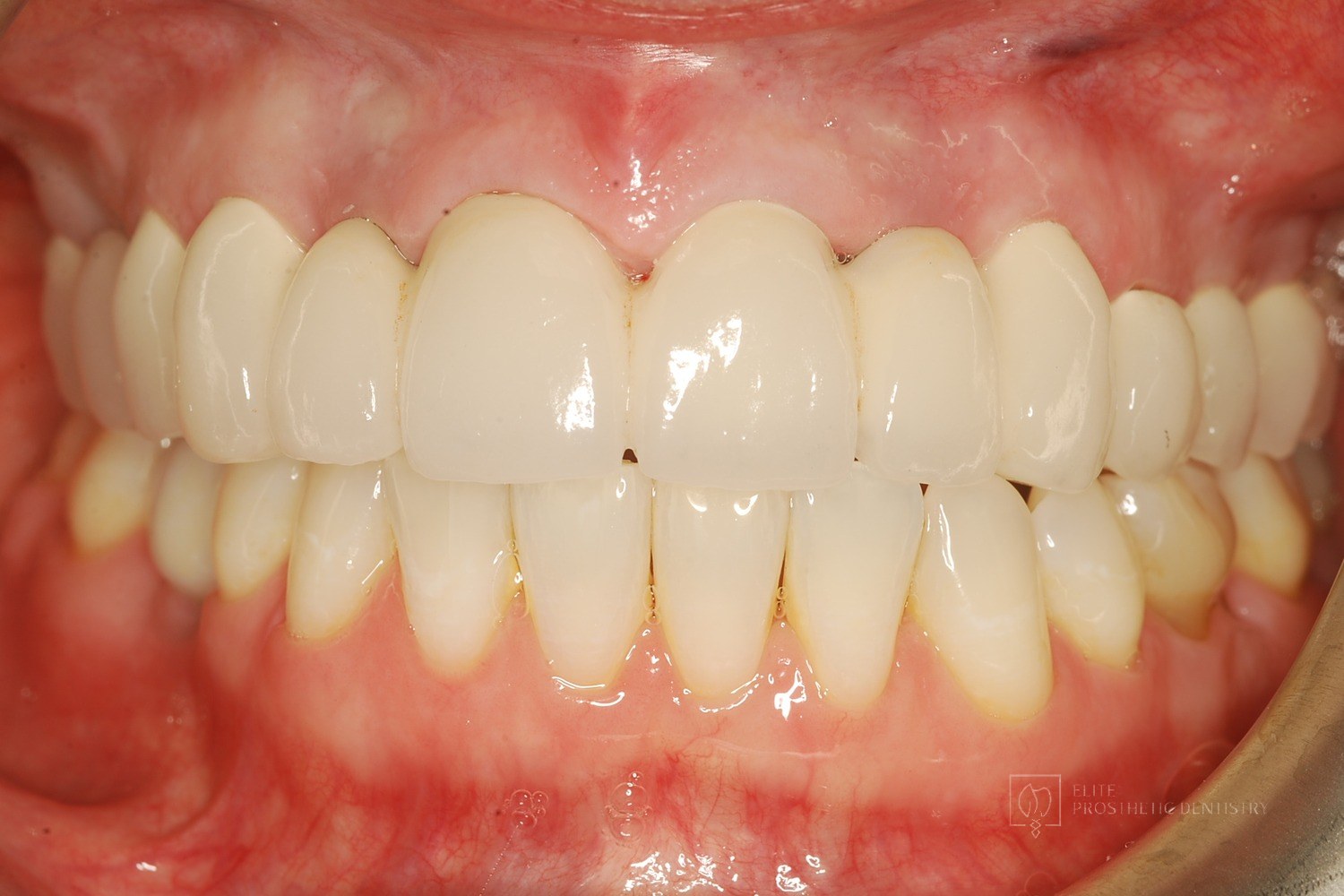
After How Older Implant Crowns Were Redesigned for a Better Bite and More Natural Appearance
The patient came in after years of living with implant-supported crowns placed more than twenty years earlier that no longer looked or functioned well. CBCT evaluation, reviewed with a radiologist colleague, showed the implants had been placed too far to the buccal in very thin bone and could not support a healthy long-term restoration.
 Before
  After
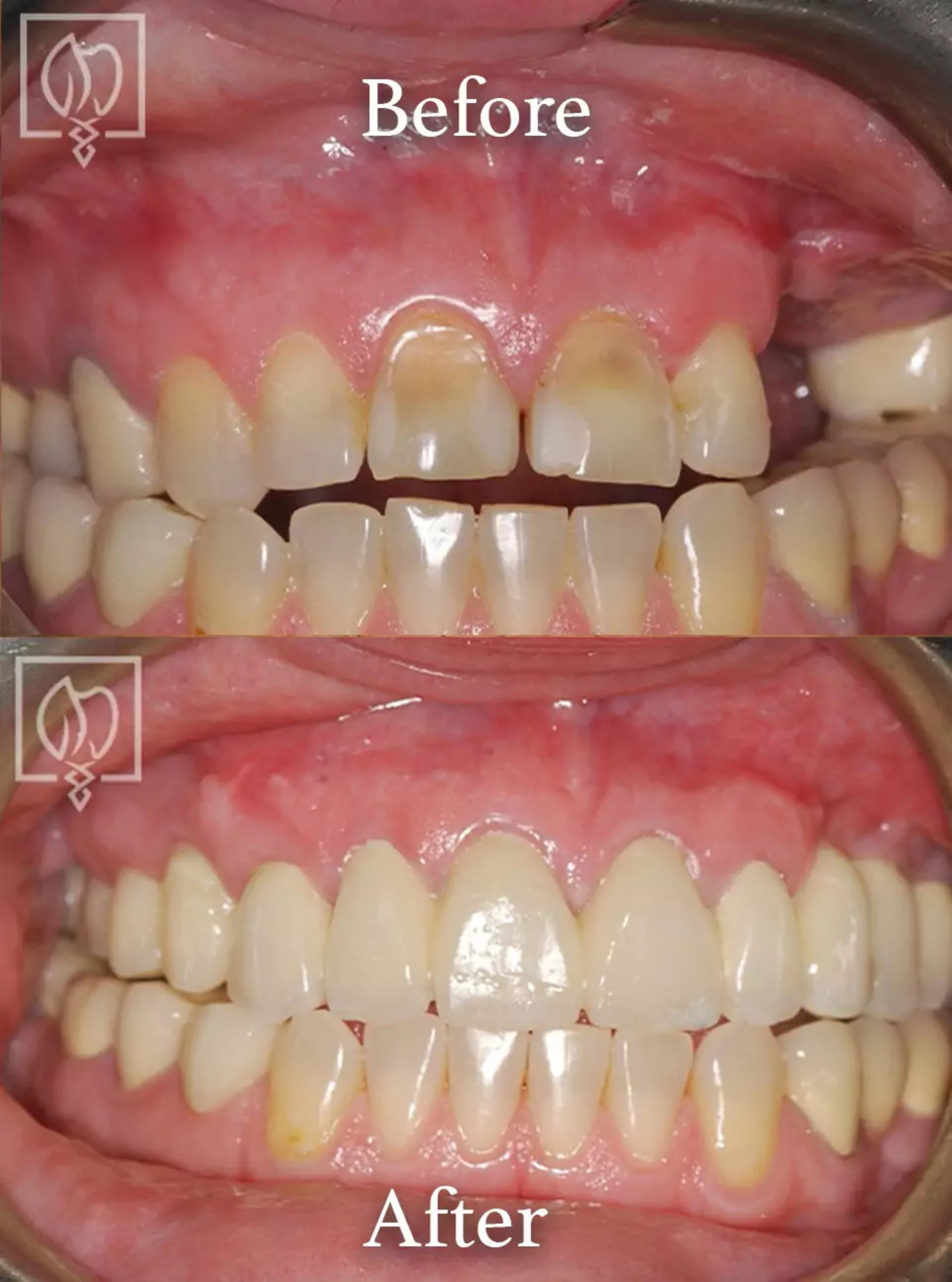
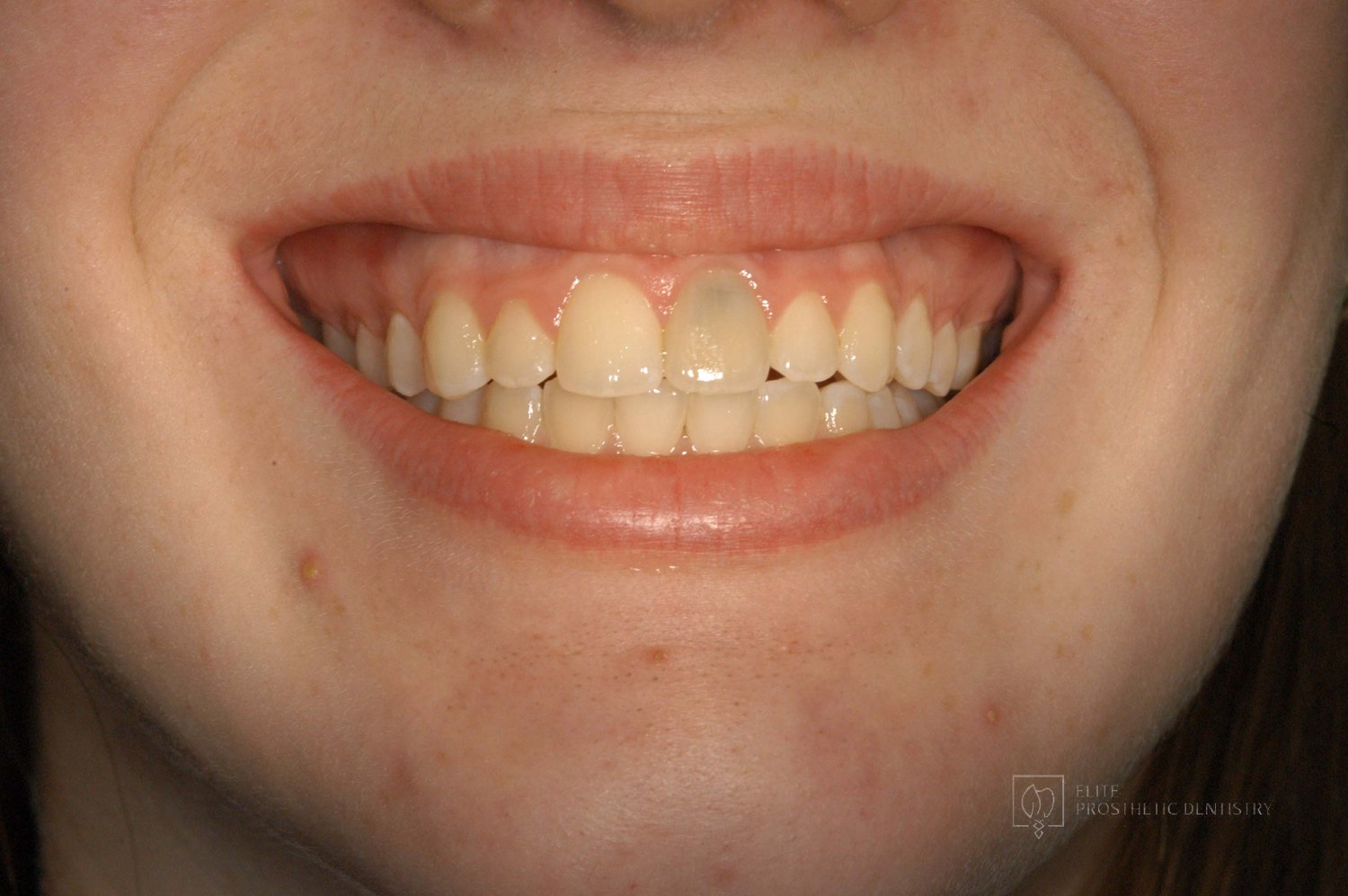
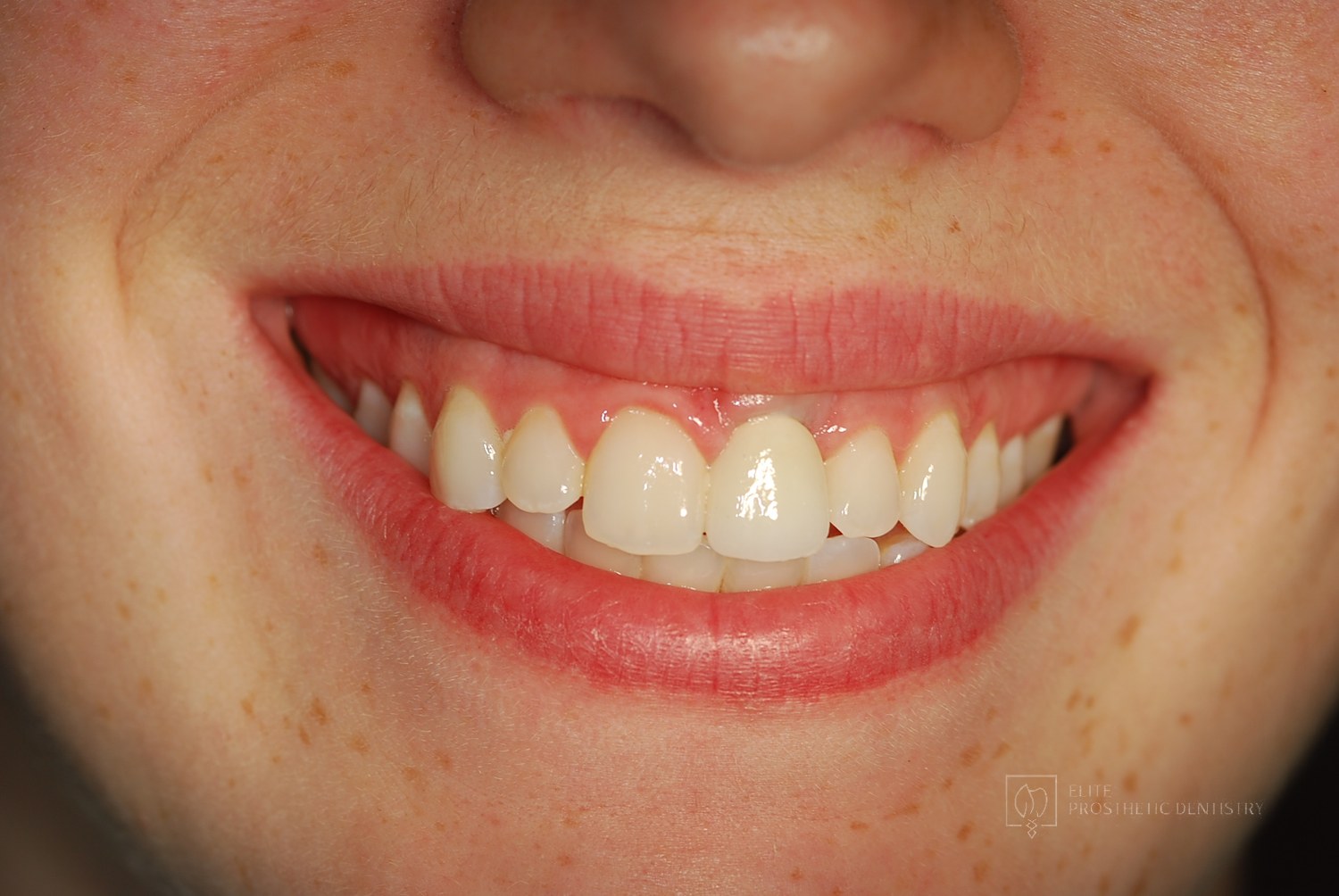
After How a Front Tooth Lost to Childhood Trauma Was Rebuilt with Bone Grafting and a Long-Lasting Implant
A teenager was referred by her father after earlier trauma left her upper left front tooth slowly failing from root resorption. She was still growing, so an immediate implant was the wrong move. The tooth had to be maintained to buy time, then replaced correctly once she reached skeletal maturity.
 Before
  After
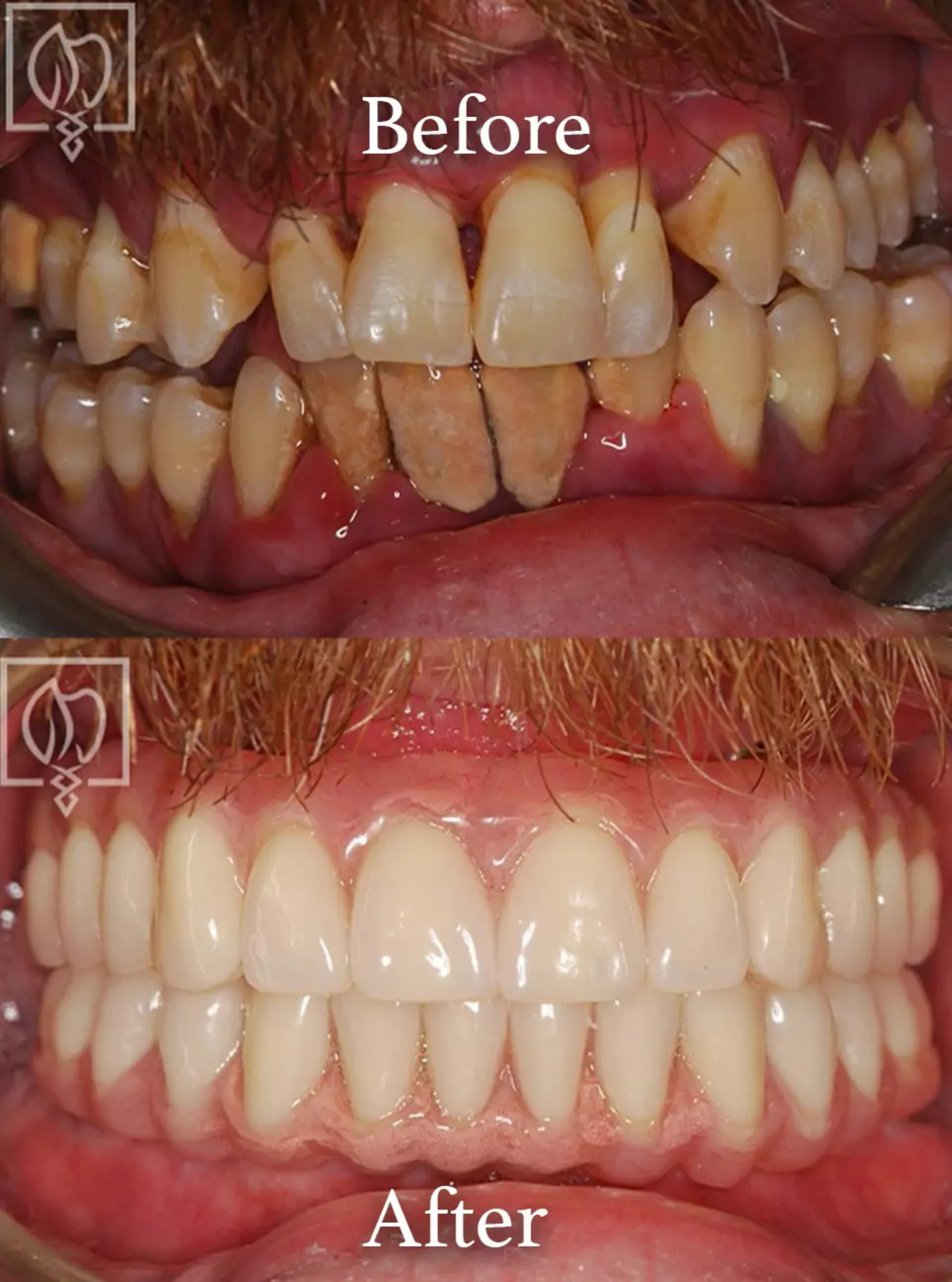
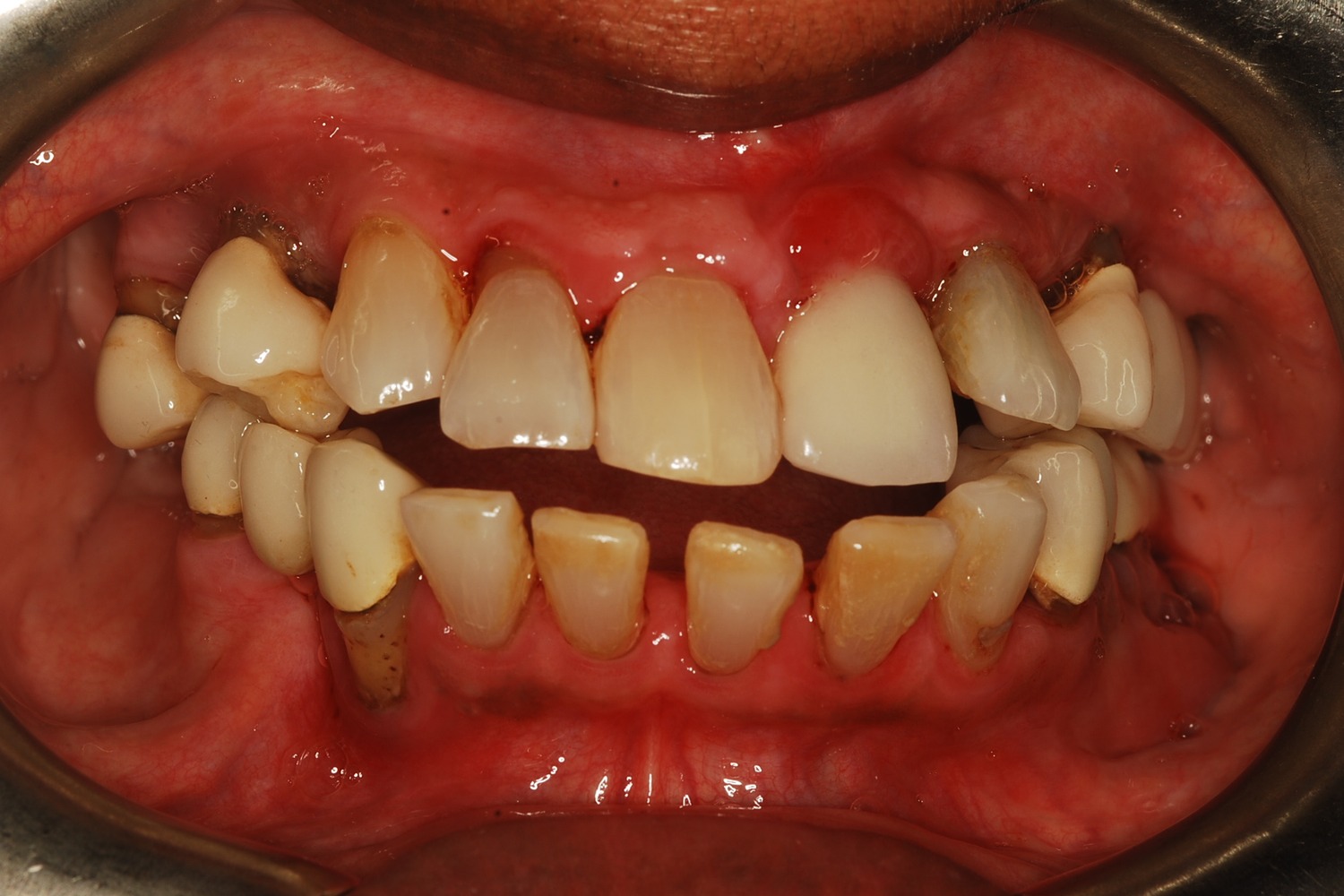
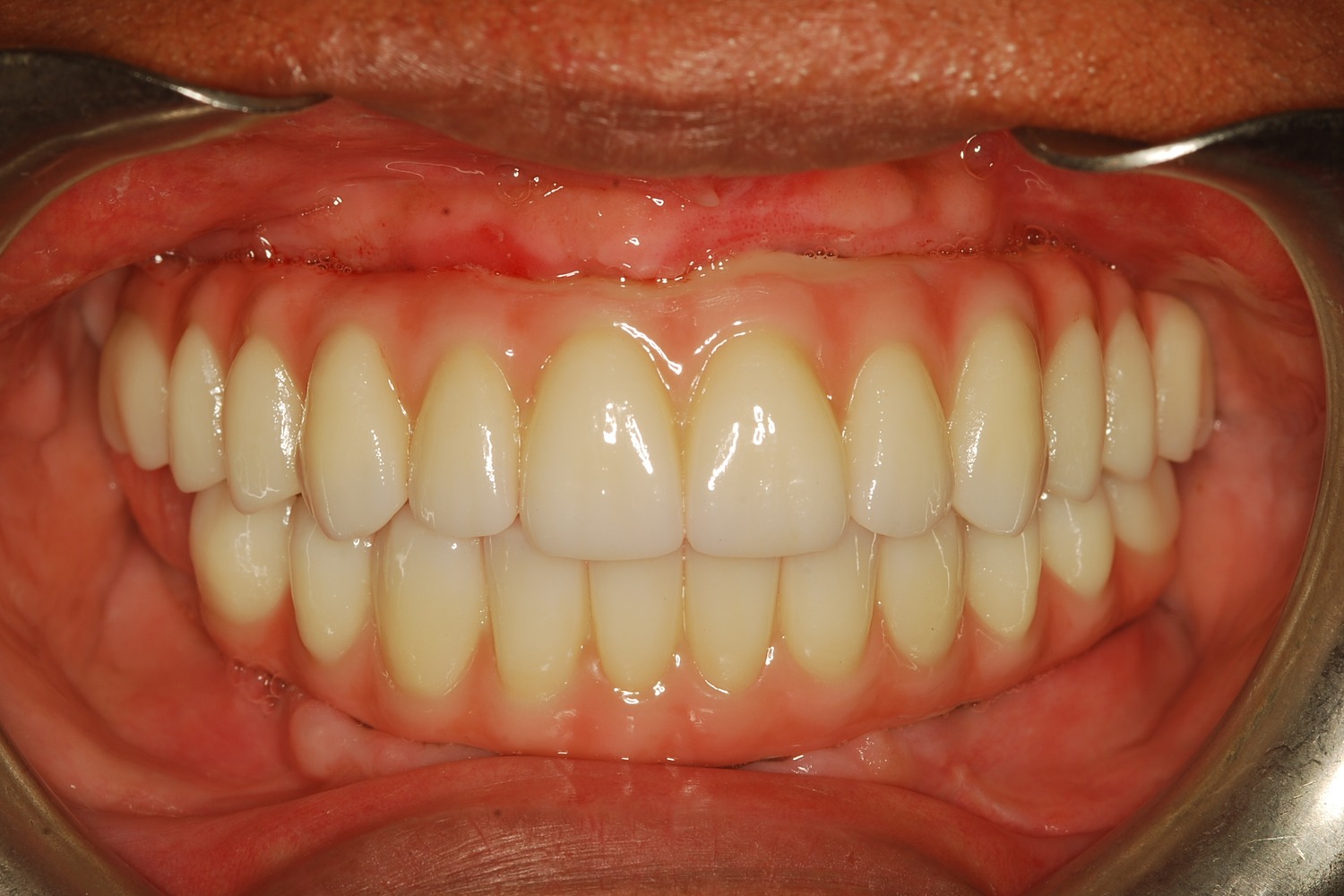
After How Severe Bone Loss and Bite Dysfunction Were Rebuilt with All-on-6 Implants and a Milled Zirconia Hybrid Prosthesis
The patient presented with severe bone loss, advanced periodontal disease, malocclusion, and a dysfunctional bite that required full-arch rebuilding.
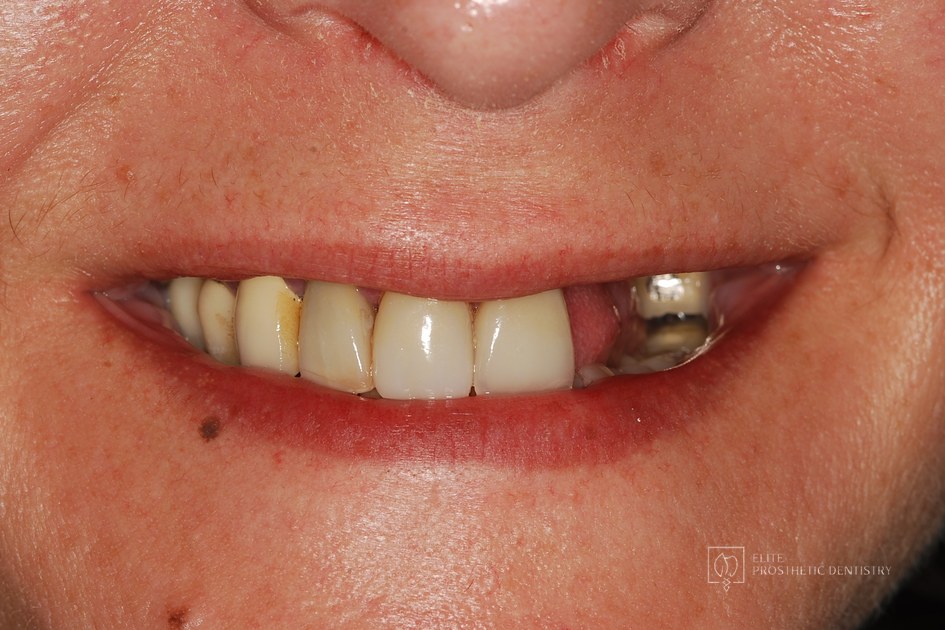 Before
 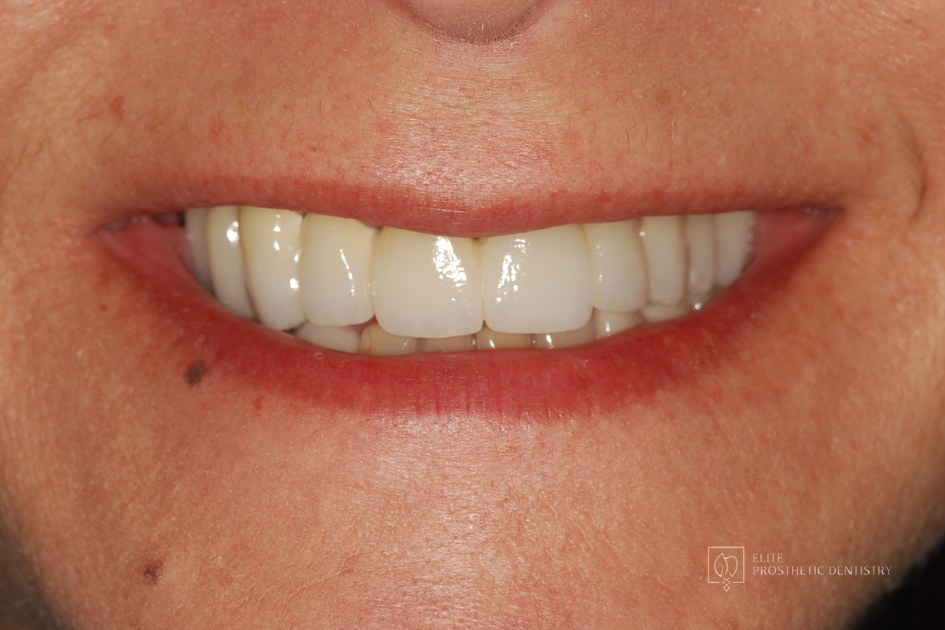 After
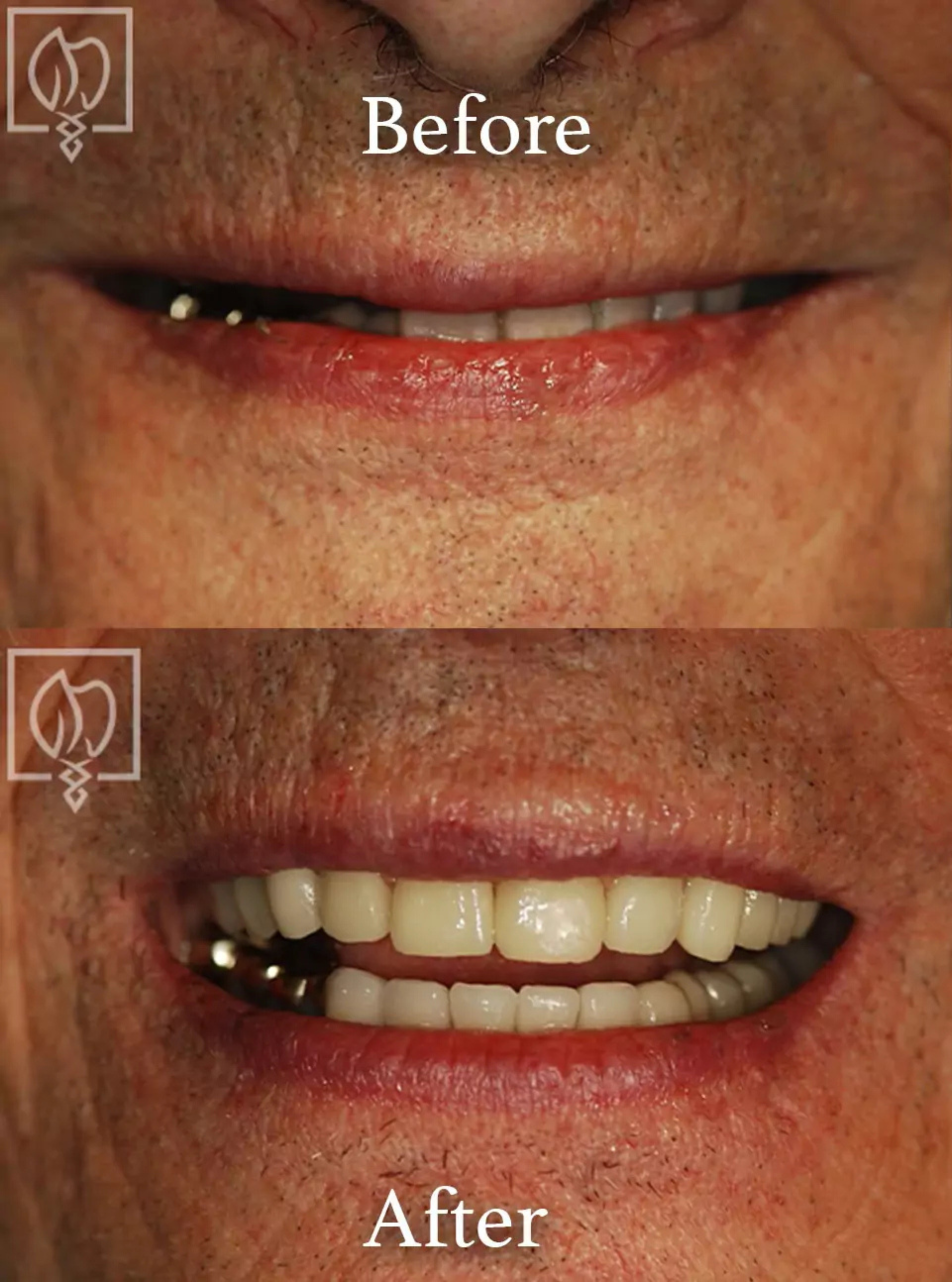
After Implant Supported Reconstruction: Failing Bridgework and Missing Back Teeth Rebuilt with Coordinated Specialist Care
Referred by another dental specialist with severe bone resorption on the upper left, multiple broken-down lower teeth requiring extraction, and failing lower back teeth that had left the bite without solid support. No single procedure, and no single provider working alone, could rebuild a situation this interconnected.
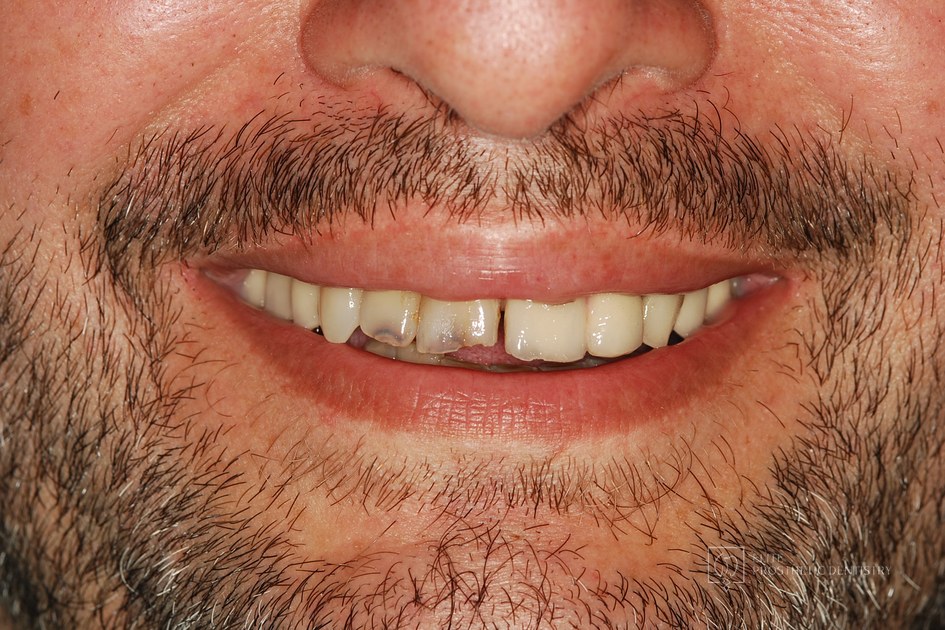 Before
 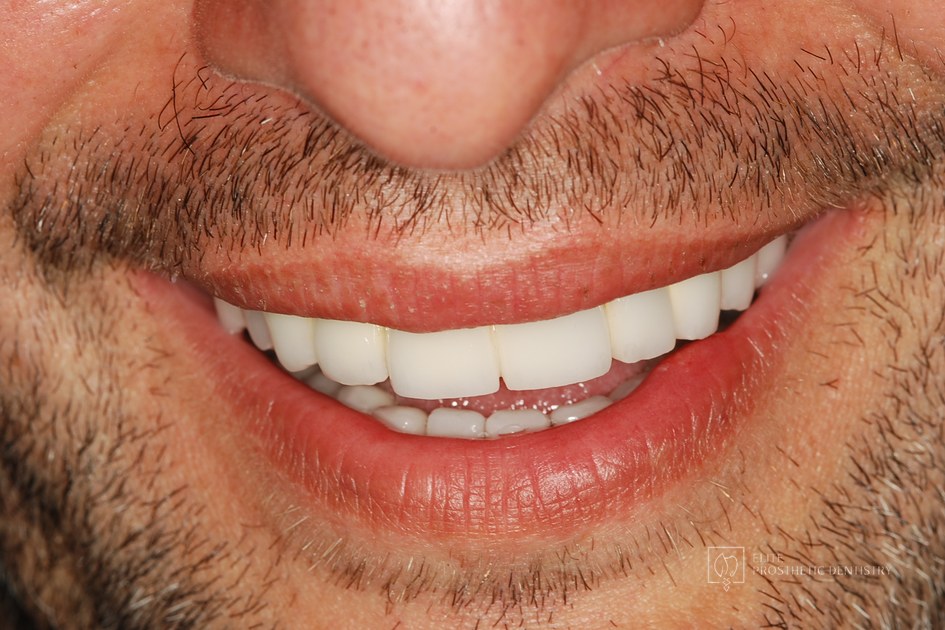 After
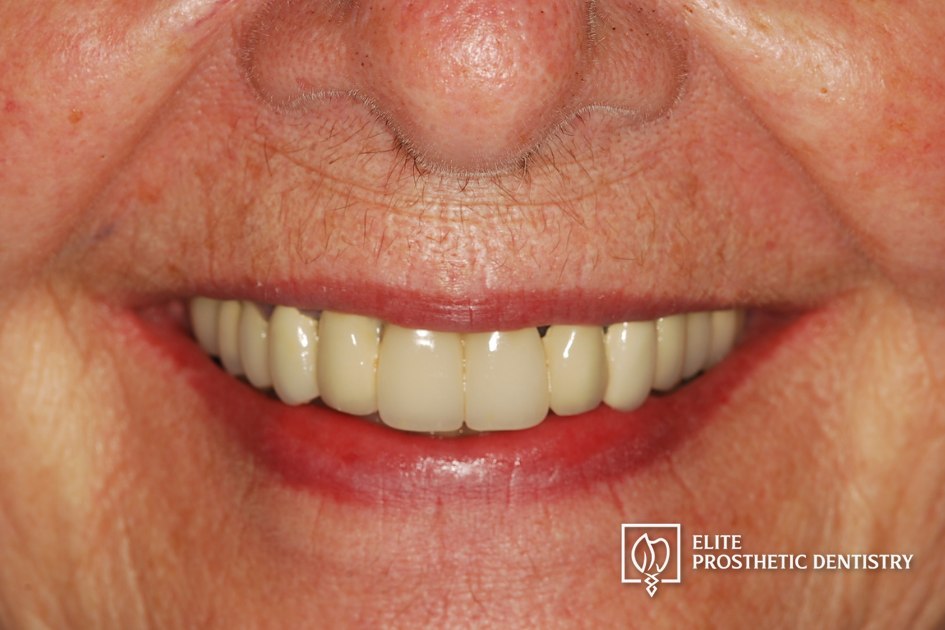
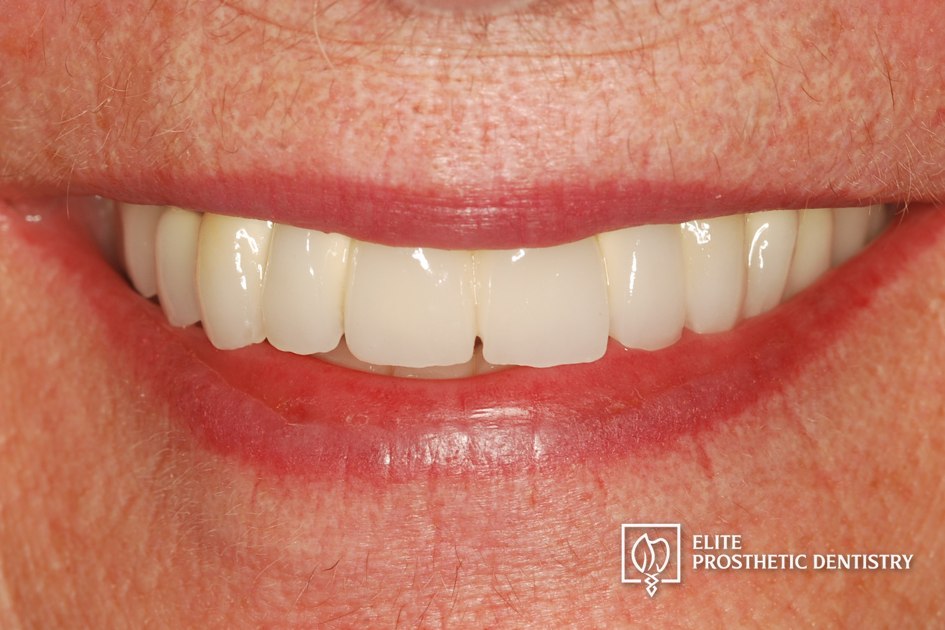
After Severe Restorative Breakdown Rebuilt with a Coordinated Full-Mouth Reconstruction
Multiple older restorations placed at different times over many years, broken-down teeth, a significant malocclusion, an asymmetrical smile, and two upper front teeth that could no longer be saved. No single repair could address a pattern this widespread.
 Before
  After
After How a Loose Upper Bridge and Aging Crowns Were Rebuilt with Staged Implant Reconstruction
A patient referred by her general dentist after years of aging dentistry no longer holding up. A loose upper bridge and crowns more than twenty years old, combined with the effects of advanced periodontal disease and severely compromised tooth abutments, required a staged surgical and restorative plan delivered with comfort planning at the same time.
Patient Success Stories
All-on-4 With Bone Preservation
Patient chose Elite Prosthetic Dentistry for its reputation in bone-preserving full-arch procedures.
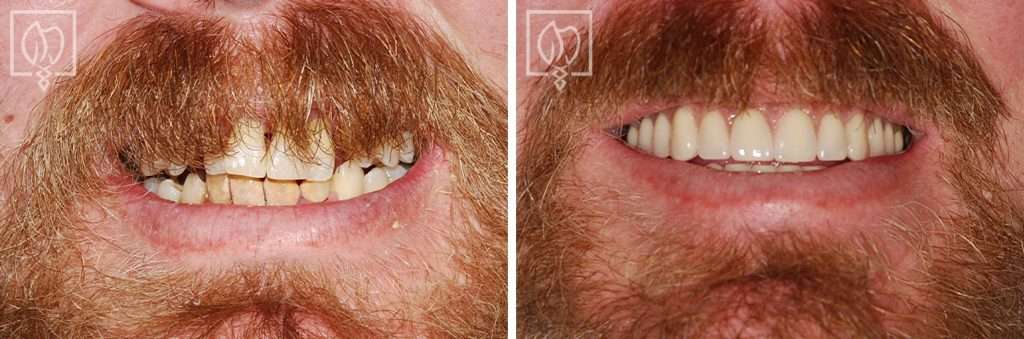
Extensive Bone Grafting Before Implants
Patient with severe bone loss receives full implant restoration with grafting.
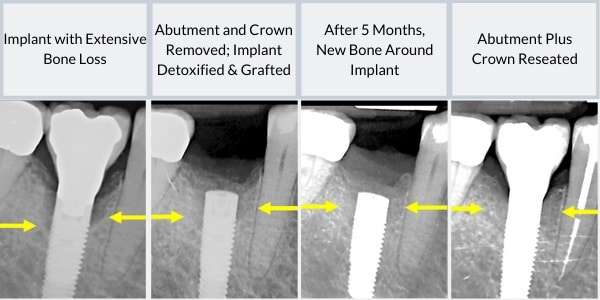
Salvaging a Failing Implant
How a compromised implant was evaluated and successfully restored.
Related Articles
Deepen your knowledge with additional insights on this topic.
 Dental Implants
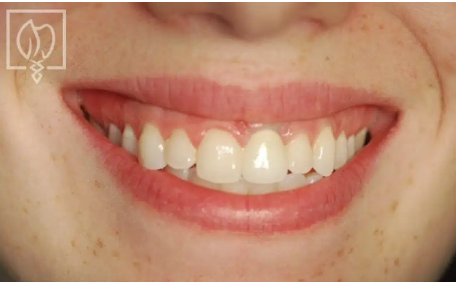
 If a Single Front Tooth Is Replaced with an Implant, Can It Look Natural?
Yes. See the four steps, with real case photos, that make a single front tooth implant indistinguishable from the natural tooth beside it. Washington, DC.
 Dental Implants
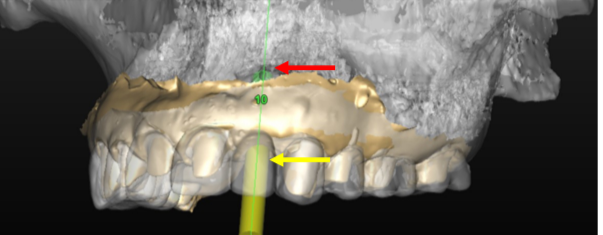
 What Is Precision Implant Placement (PIP)?
Precision Implant Placement plans each implant virtually on a CBCT scan, then delivers it with a custom surgical guide. See the three steps with real images.
 Dental Implants
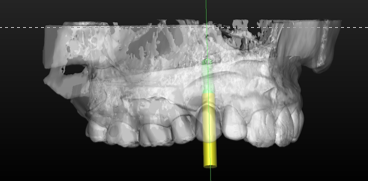
 What Is the Ideal Surgical Guide for Precision Implant Placement?
Not all surgical guides are equal. The gold standard is CBCT-based: planned virtually in 3D, 3D printed, and seated on your teeth. A DC prosthodontist explains.
 Dental Implants
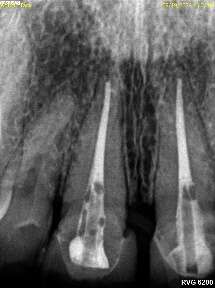
 When Should an Implant Not Be Done?
Healthy roots, thin bone, steep bony angles: a DC prosthodontist shows a real case where refusing implants was the right call, and what was done instead.
 Dental Implants
 What Is Staged Implant Therapy?
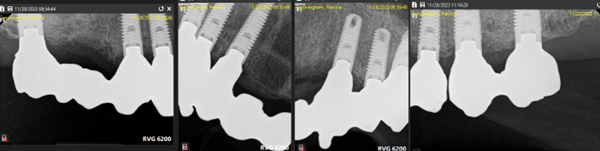
Staged implant therapy replaces failing teeth in phases while you keep fixed teeth the entire time. A DC prosthodontist walks through a real case in stages.
Dental Implants The Four Types of Dental Implants: Which One Is Right for You?
Endosteal, subperiosteal, zygomatic, and mini implants each solve a different problem. A DC prosthodontist explains the four types and who each one fits.
Implant Resources
Single Tooth Implant
Replace one missing tooth without altering adjacent teeth.
Implants vs. Bridges
Direct comparison of dental implants and traditional fixed bridges.
Recovery Timeline
Day-by-day, week-by-week recovery after implant surgery.
Zirconia vs. Titanium
Material comparison for the implant body.
Insurance & Financing
What insurance covers and financing options.
All-on-X Full-Arch
Complete arch reconstruction with four, six, or more implants.
Precision Implant Placement
CBCT-guided surgical technique for accuracy.
Repairing Failing Implants
Diagnosis and revision of implants from other practices.
Specialist Alternative to ClearChoice
For patients comparing the corporate chain model.
Dental Implants in Washington, DC Near You
Dr. Marlin provides specialty care to patients throughout the Washington, DC metropolitan area. Select your community to learn more.
4.9 out of 5 Stars
Based on 100+ verified patient reviews
Conveniently Located in Friendship Heights
Serving Washington DC, Bethesda, Chevy Chase, McLean, Great Falls, Potomac, and surrounding communities. One block from the Friendship Heights Metro on the Red Line.
Request Your Specialist Consultation
Personally reviewed by Dr. Marlin or his team.
Hours
- Monday — Thursday8:00 AM — 5:00 PM
- Friday8:00 AM — 2:00 PM
- Saturday — SundayClosed
Have a patient with complex restorative, implant, bite, or esthetic needs?
Elite Prosthetic Dentistry provides specialist prosthodontic evaluation, treatment planning, and collaborative care while preserving the patient's relationship with the referring office. How referrals work here.