
Dental Implants in McLean, VA
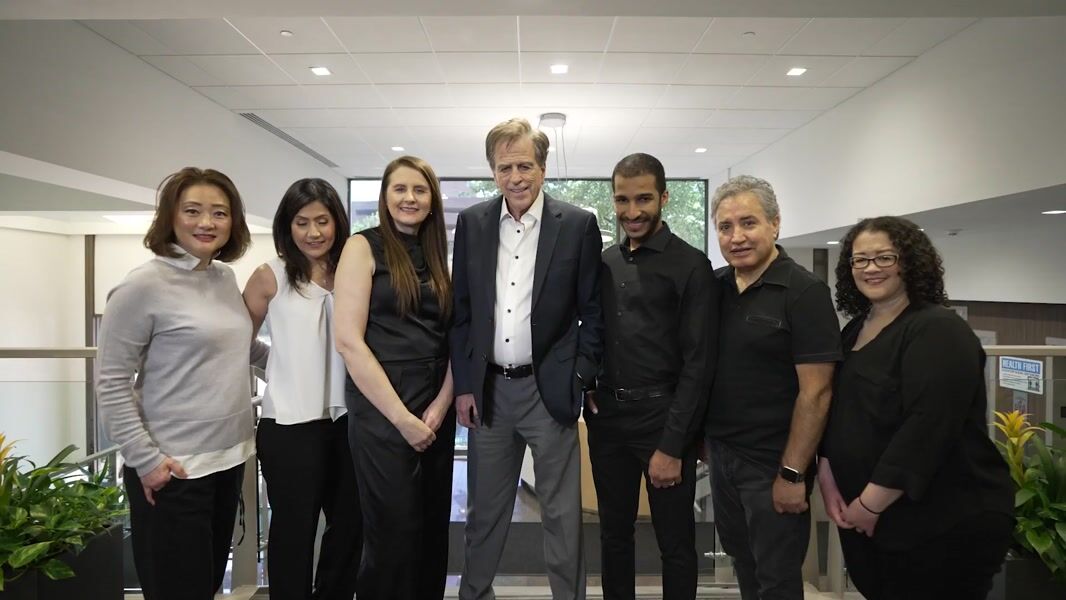
McLean, VA patients trust prosthodontist Dr. Gerald Marlin for dental implants. 3,900+ implants placed with advanced planning and precision techniques.
You need a dental implant. Maybe a tooth fractured and couldn’t be restored. Maybe you lost a tooth years ago and now regret not addressing it. Maybe several teeth are failing and you’re considering your options. Whatever brought you to this decision, understanding what actually happens at each appointment helps you prepare mentally and logistically. Here’s the reality of implant treatment from your perspective.
Your Initial Consultation: The Foundation for Everything
You arrive for your first appointment uncertain about what to expect. You’ve researched implants online, read conflicting information, and have questions you haven’t fully articulated. The initial consultation is where we answer those questions and establish a realistic foundation for treatment.
During this appointment, we review your medical and dental history comprehensively. We examine your mouth carefully, noting bone volume, adjacent tooth structure, and any existing conditions affecting implant candidacy. We take three-dimensional imaging allowing us to visualize your jawbone in exceptional detail, revealing bone width, height, and density in areas where your implant would be positioned.
Dr. Marlin explains findings in clear language. He shows you imaging, pointing out bone quality and location where your implant will be placed. He explains how implants work, how long treatment takes, and what the financial investment includes. He answers every question directly. No high-pressure sales tactics are involved. You receive honest assessment and clear recommendations.
You leave this appointment understanding whether implants are appropriate for you, what your timeline will be, and what your financial investment will include. You may decide implants are right for you. You may choose another approach. Either way, you make an informed decision based on complete information.
The Waiting Period: Logistics and Preparation
Between your consultation and implant placement surgery, you schedule the procedure with Dr. Marlin’s surgical partner. You may need bone grafting or other preparatory procedures before implant placement can occur. If bone grafting is necessary, you’ll schedule that surgery first, then wait 4-6 months for bone healing before implant placement. If your bone is adequate, implant placement can be scheduled sooner.
You receive detailed pre-operative instructions. You may need to stop certain medications or supplements before surgery. You’ll be instructed regarding eating and drinking the morning of surgery. You’ll arrange for someone to drive you home (anesthesia and sedation preclude driving). You’ll prepare your home with soft foods for post-operative recovery. These logistical details are straightforward but important.
The Implant Placement Appointment: What You’ll Experience
You arrive at Dr. Marlin’s partner’s surgical office. You’ve arranged for a driver or will use a service since you’ll receive sedation. The surgical team reviews your medical history, confirms you haven’t eaten since midnight, and positions you comfortably.
Local anesthesia numbs your jaw completely. If you’ve chosen sedation dentistry, you receive IV sedation allowing you to sleep peacefully throughout the procedure. Many patients report time passed instantly. They fell asleep and woke to find implant placement was complete.
During the surgery itself (which you’re asleep through if sedated), your surgical partner carefully accesses your jawbone, evaluates bone structure, and positions your implant fixture with precision. The titanium implant is secured in bone at the exact depth and angle Dr. Marlin specified. The surgical incision is closed with dissolvable sutures. The procedure typically requires 30-90 minutes depending on the number of implants and any bone preparation needed.
You wake from sedation and are monitored briefly before discharge. You’re instructed to rest for the remainder of the day. You go home (with your pre-arranged driver), take prescribed pain medication if needed, and begin your healing phase.
Post-Operative Recovery: The First Two Weeks
The first few days post-operatively involve managing swelling and minor discomfort. Swelling typically peaks around day two or three, then gradually resolves. You apply ice packs intermittently as instructed, reducing swelling and discomfort. You take prescribed pain medication as needed, though many patients find over-the-counter medication suffices.
You follow dietary guidelines strictly. You eat soft foods requiring minimal chewing. You avoid hot beverages and foods for the first few days. You avoid vigorous rinsing or touching the surgical area. You maintain excellent oral hygiene, carefully brushing and flossing away from the surgical site.
Most patients experience manageable discomfort, not intense pain. You’ll feel pressure and soreness, similar to a deep dental cleaning or extraction. You’ll notice some bruising. You’ll feel limited swelling. All of this is normal and expected.
By one week post-operative, most patients resume normal activities. By two weeks, you feel significantly better. Your surgical site is healing beautifully. You can tolerate more normal foods, though you’ll continue avoiding very hard items until fully healed.
The Osseointegration Phase: Months Two Through Six
After surgical healing is complete, your jawbone begins a remarkable biological process called osseointegration. Over 3-6 months, bone cells grow directly against your titanium implant, creating an extraordinarily strong biological bond. This integration is the foundation enabling decades of successful implant function.
You don’t feel osseointegration happening. The process is silent biologically. You simply maintain normal activities, attend periodic follow-up appointments, and wear a temporary restoration maintaining your appearance and limited function.
During this phase, you’re careful about what you chew on your implant side. Avoid extremely hard foods, sticky foods, or vigorous chewing at the implant location. Normal activities like work, exercise, and social engagement proceed uninterrupted. You maintain excellent oral hygiene. You attend follow-up appointments where Dr. Marlin or his partner confirms healing is progressing normally.
Most patients report this phase passes quickly. By month four or five, they’ve largely forgotten about the implant. By month six, osseointegration is typically complete, and you’re ready to move to restoration.
The Crown Placement Appointment: Your Implant Becomes a Tooth
Once osseointegration is confirmed through imaging, you schedule your crown placement appointment at Elite Prosthetic Dentistry. This is where your implant transforms from a hidden fixture into a visible, functional tooth.
The appointment involves attaching an abutment (a small connector piece) to your implant, then seating your custom crown (fabricated previously in Dr. Marlin’s on-site laboratory) onto the abutment. The crown is attached using either screw fixation (leaving a small access hole) or cement fixation (sealing the crown completely).
Dr. Marlin verifies your crown’s fit, examining how it aligns with your bite. He checks appearance under different lighting, confirming it harmonizes perfectly with your natural teeth. He may make minor occlusal adjustments if needed, ensuring your bite feels balanced.
The appointment typically requires 30-60 minutes. You experience no discomfort. Post-operative sensitivity is minimal. You leave with a complete, permanent restoration that looks, feels, and functions like a natural tooth.
Immediate Post-Restoration Care: First Weeks After Placement
After your crown is placed, you’ve got a new tooth that’s remarkably lifelike. You might feel hyperaware of it initially because you know it’s there. This awareness typically fades within days.
You may notice your bite feels slightly different or your tongue explores the new crown repeatedly. This is normal. Within a week or two, your mouth adapts and the crown feels entirely natural. You stop noticing it.
Avoid extremely hard foods for the first week post-placement, allowing the restoration to fully settle. After that, you can eat normally. Brush gently around the new crown initially, then progress to normal brushing pressure. Floss normally around your new crown. Attend a professional cleaning 4-6 weeks after placement if needed.
Long-Term Implant Function: What Comes Next
Your new crown requires only routine oral care: twice-daily brushing, daily flossing, and professional cleanings every 3-6 months. Unlike dentures, you never remove your implant restoration. Unlike bridges, you don’t need special access devices for flossing. Your implant care resembles natural tooth care.
You should avoid habits that stress implants. Don’t chew excessively hard objects. Don’t use your teeth as tools. If you grind your teeth at night, wear a protective night guard. Avoid smoking, which impairs bone healing and implant integration.
Attend your follow-up appointments as recommended. These appointments typically occur at 3 months post-restoration, then annually thereafter. Dr. Marlin verifies your implant remains stable, your crown remains secure, and your surrounding tissues remain healthy.
With proper care, your implant functions reliably for decades. Many of Dr. Marlin’s patients have implants that have been functional for 30+ years. The restoration was reliable, stable, and low-maintenance throughout that period.
Addressing Common Concerns During Your Journey
Pain management worries many patients initially. Implant placement is performed under anesthesia, so discomfort during surgery is controlled by anesthesia. Post-operative discomfort is manageable with prescribed or over-the-counter medication. Most patients report the postoperative experience is more manageable than they expected based on their anxiety beforehand.
Timeline concerns are legitimate. Initial consultation to final crown typically spans 6-10 months if bone grafting isn’t needed. If bone grafting is required, add 4-6 months. This timeline allows biological processes to proceed at their natural pace. Attempting to rush implant integration risks failure.
Cost concerns are understandable. Implants represent significant financial investment. Dr. Marlin provides detailed cost estimates. Insurance often covers a portion. Financing options spread payments over time. Many patients find that investing in correct restoration done by a specialist costs less over a lifetime than managing complications from compromised implant work elsewhere.
Why the 20-Minute Drive from McLean Matters
Northern Virginia has excellent general dentists. It lacks a concentration of prosthodontists whose practices focus on implant restoration. Most dentists offering implants have added implant services to general practices. That’s different from a specialist whose entire career has centered on tooth replacement.
The 20-minute drive from McLean to Dr. Marlin’s office means accessing a prosthodontist with more than 40 years of focused experience and more than 3,900 dental implants placed. It means your implant is positioned according to a restorative plan, not surgical convenience. It means your crown is fabricated in a facility you can visit, by technicians working under Dr. Marlin’s direct supervision.
That drive becomes worthwhile when you understand the outcome difference it creates.
Getting Here from McLean
From central McLean, take Chain Bridge Road east across the Potomac. Chain Bridge becomes Arizona Avenue NW in DC. Continue north on Arizona Avenue to Jenifer Street NW. Turn onto Jenifer Street and locate Elite Prosthetic Dentistry at 4400 Jenifer Street NW, Suite 220, Washington DC 20015. The drive takes approximately 20 minutes. On-site parking is available on Jenifer Street and in a nearby public garage.
Schedule Your Consultation
The first step in your implant journey is scheduling a consultation with Dr. Marlin. Call (202) 244-2101 or request an appointment online.
You’ll understand your options, receive honest assessment of your candidacy, and know exactly what to expect through treatment completion.
Elite Prosthetic Dentistry 4400 Jenifer Street NW, Suite 220 Washington, DC 20015 (202) 244-2101
Serving McLean, Fairfax County, and surrounding Northern Virginia communities with specialist-level prosthodontic implant care.
Frequently Asked Questions
How do McLean residents get to Elite Prosthetic Dentistry?
Most McLean patients take Chain Bridge Road east across the Potomac, which becomes Arizona Avenue NW in DC. From there, it is a short drive north to our office at 4400 Jenifer Street NW near Friendship Heights. The total drive from central McLean is approximately 20 minutes. Patients coming from the Tysons end of McLean may prefer to take the GW Parkway to Chain Bridge.
Why would a McLean resident go to DC for dental implants?
McLean has excellent general dentists, but prosthodontists are rare in Fairfax County. Dr. Marlin is one of the few prosthodontists in the greater DC area whose practice focuses primarily on implant restoration and complex reconstruction. Many McLean patients find that the 20-minute drive across Chain Bridge is a worthwhile trade for specialist-level care backed by more than 40 years of focused experience.
What is the difference between a prosthodontist and an oral surgeon for implants?
An oral surgeon's training centers on surgery; a prosthodontist's centers on the teeth the implants will carry. Some prosthodontists, Dr. Marlin among them, also place implants, so the surgical and restorative phases are planned together in one practice. When a patient's own oral surgeon places the implants, Dr. Marlin plans the positions with that surgeon. Either way, the best outcomes come from placing implants where the planned restoration needs them.
Can you fix dental implants that were done elsewhere?
Yes. Dr. Marlin regularly treats patients from McLean and across Northern Virginia whose implants placed elsewhere have developed problems. Common issues include poorly fitting crowns, implant posts placed at incorrect angles, infections around the implant site, and mechanical failures. Depending on the situation, the implant can often be salvaged with a new restoration, or it may need to be removed and replaced.
Does Elite Prosthetic Dentistry accept dental insurance?
We work with patients to maximize their insurance benefits where applicable. Many dental insurance plans cover a portion of implant treatment. Our team provides a detailed treatment estimate and assists with insurance pre-authorization so you understand your out-of-pocket costs before treatment begins. Financing options are also available.
Related Patient Success Stories
Explore similar patient success stories demonstrating our expertise in advanced prosthetic dentistry.
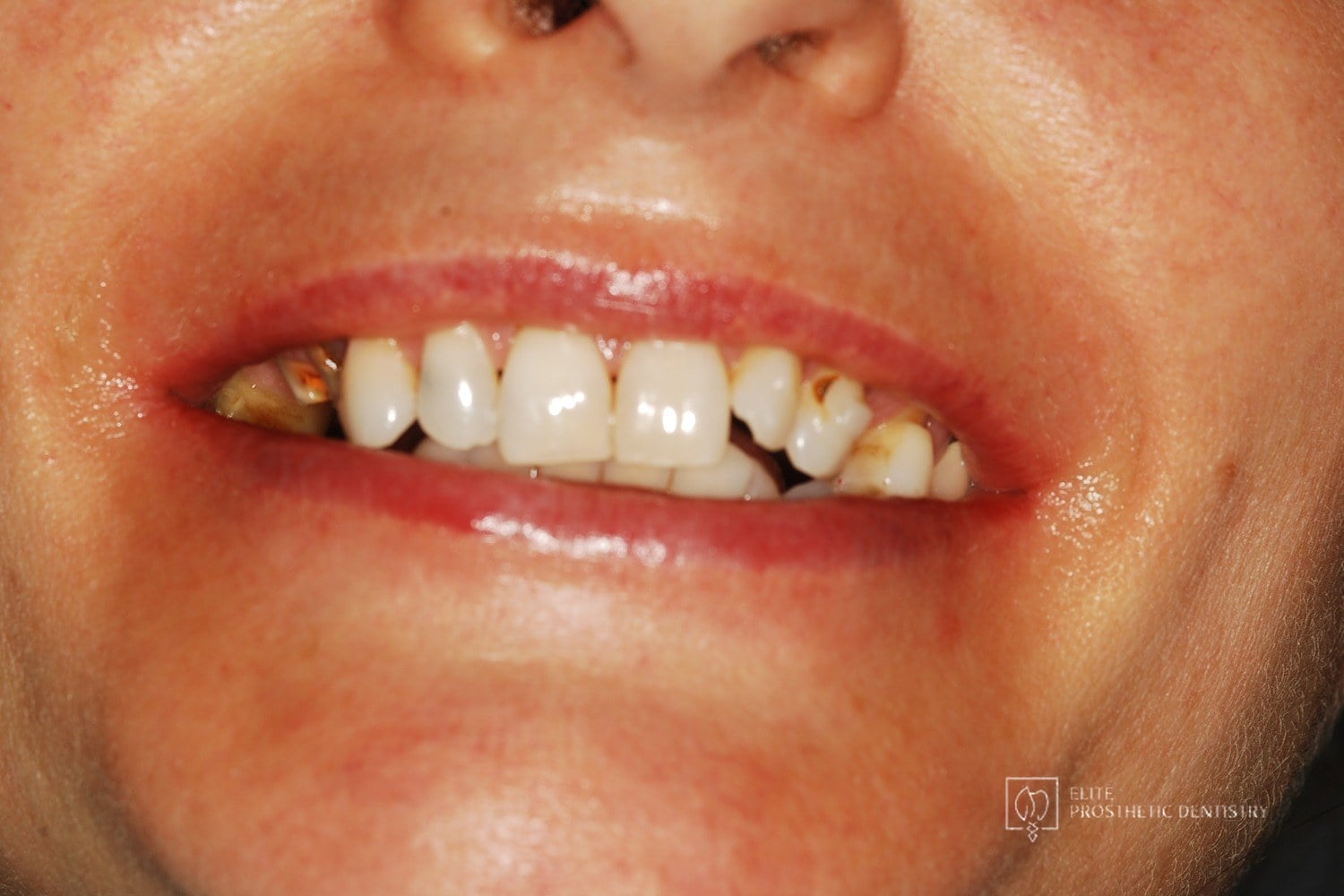 Before
 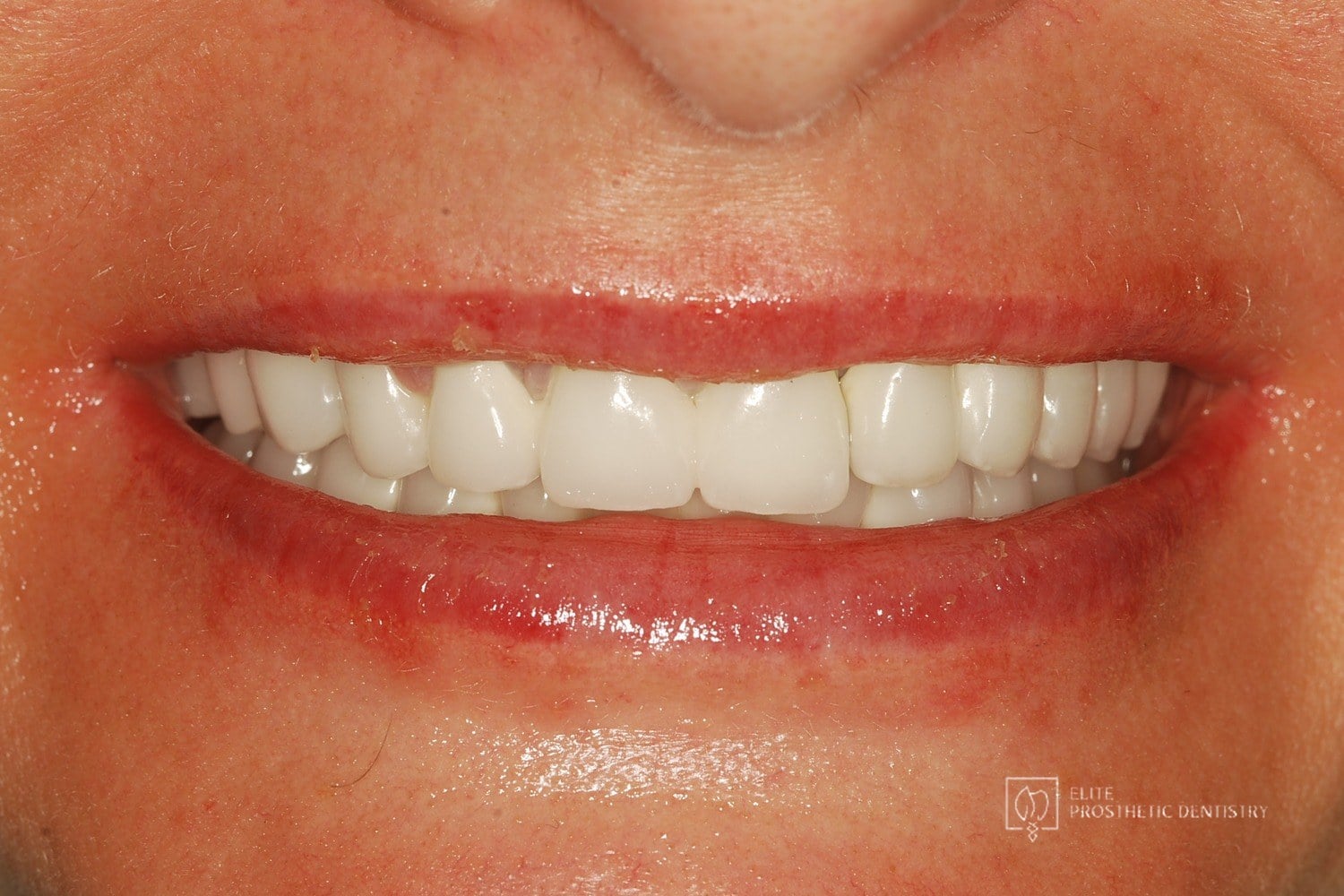 After
After How Aging, Failing Dentistry Was Replaced with a Coordinated Full-Mouth Implant and Crown Reconstruction
The patient presented with throbbing upper-molar pain, long-standing infections, multiple root canals and unfinished prior treatment, generalized sensitivity, and several hopeless teeth.
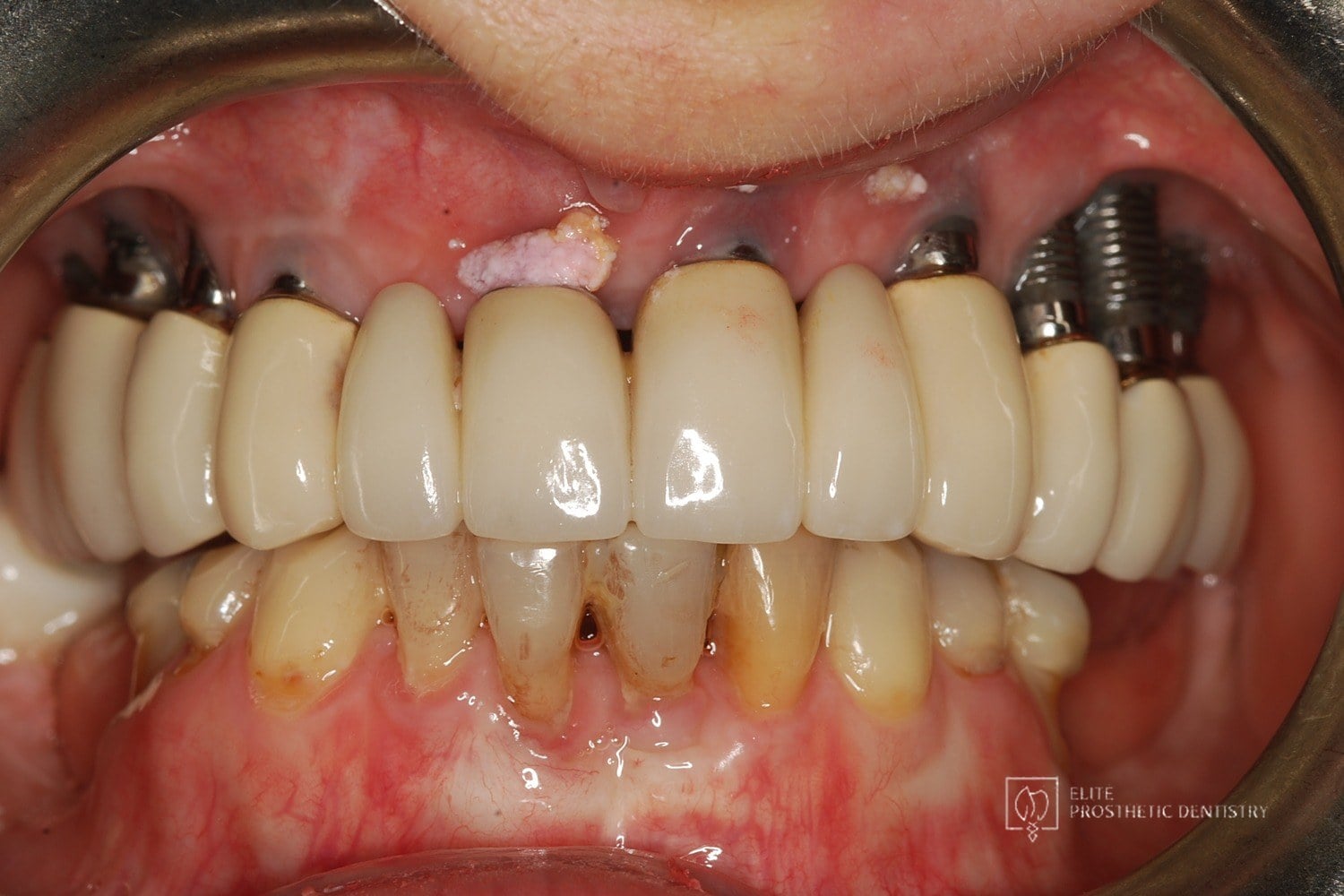 Before
 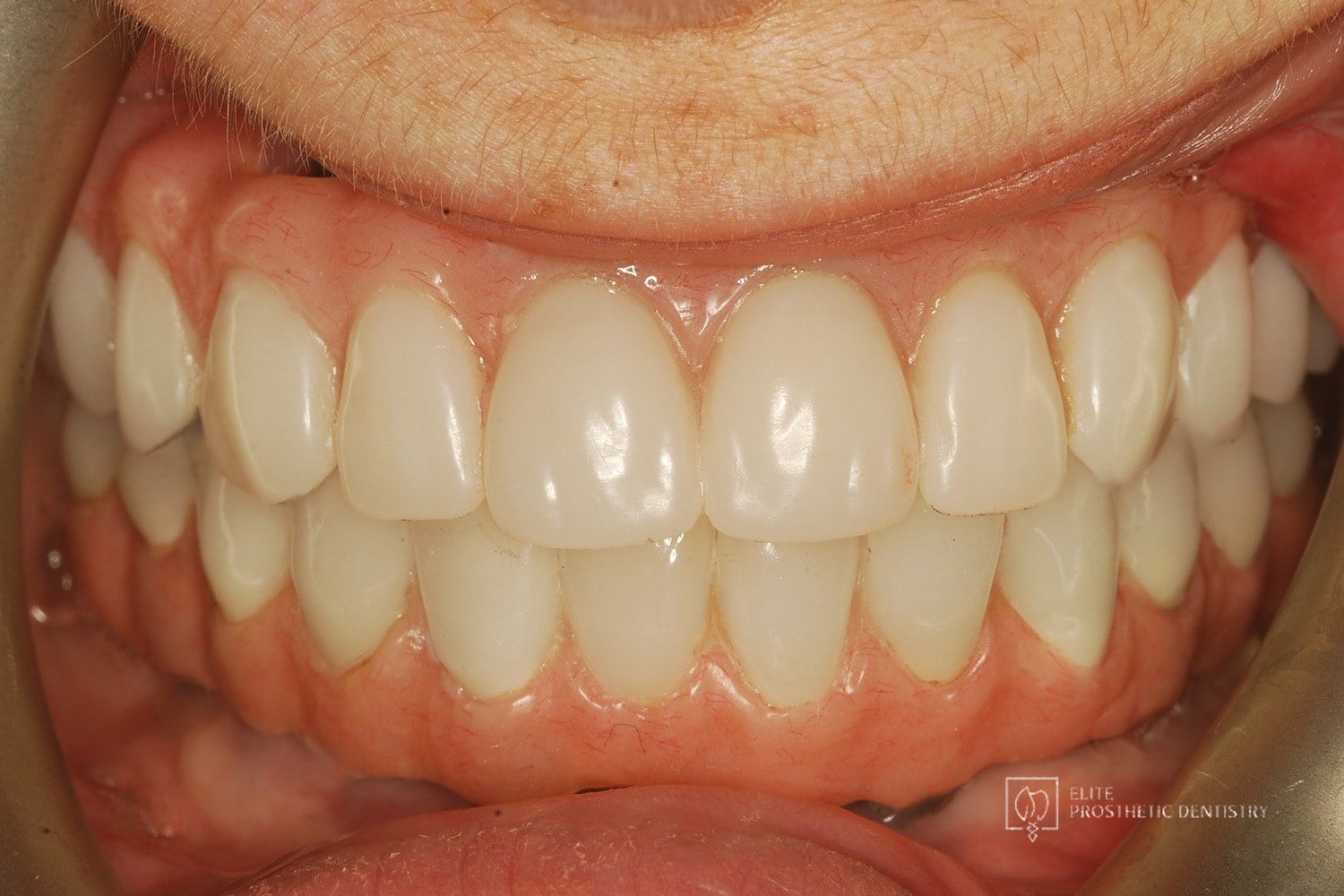 After
After How Failing Implants and Severe Bone Loss Were Rebuilt Into a Stable Full-Arch Implant Reconstruction
The patient presented with significant complications from previously placed implants, severe bone loss, failing posterior implants, and an unesthetic full-arch bridge. Both arches required full reconstruction, with the upper arch showing the most advanced bone loss and instability.
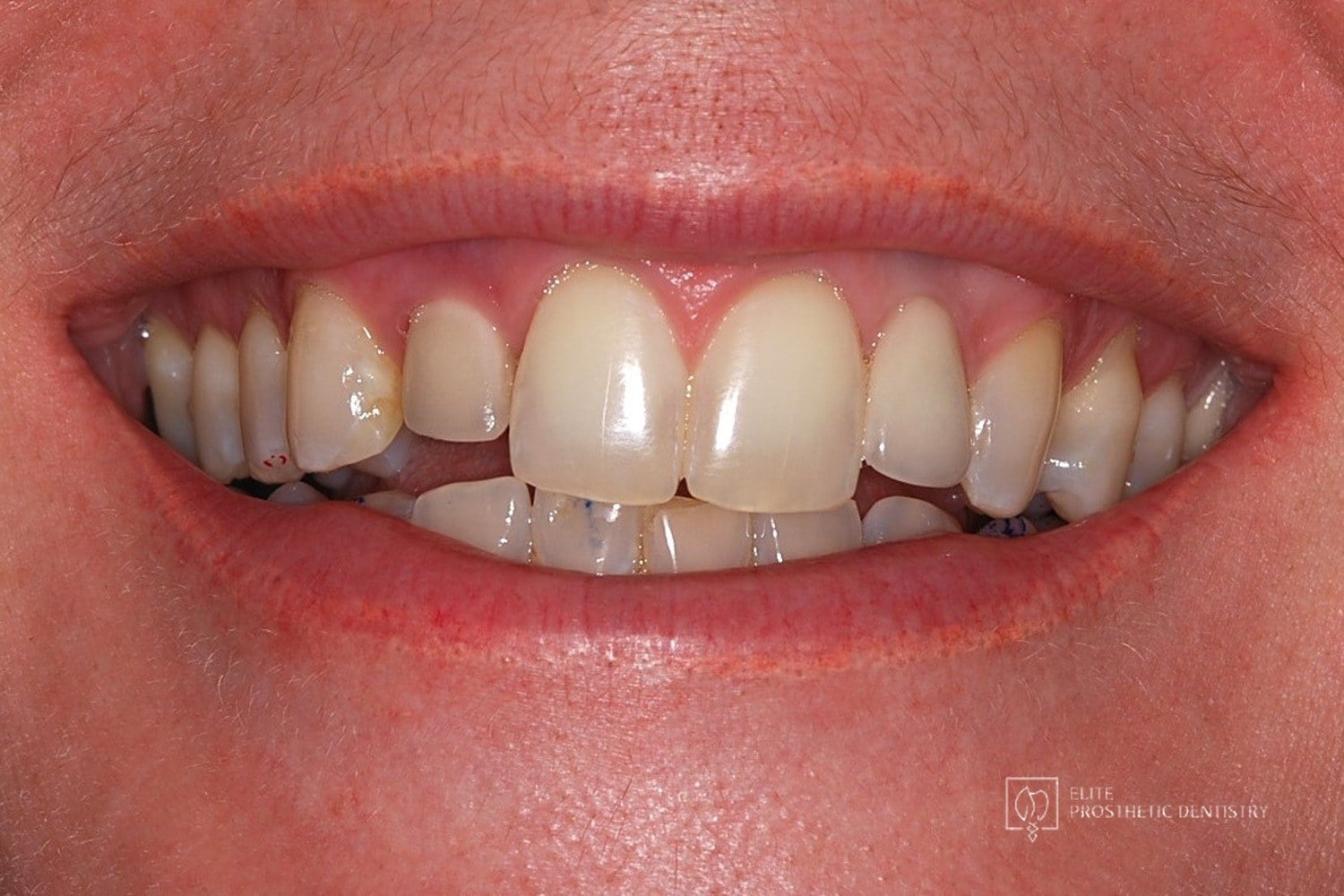 Before
 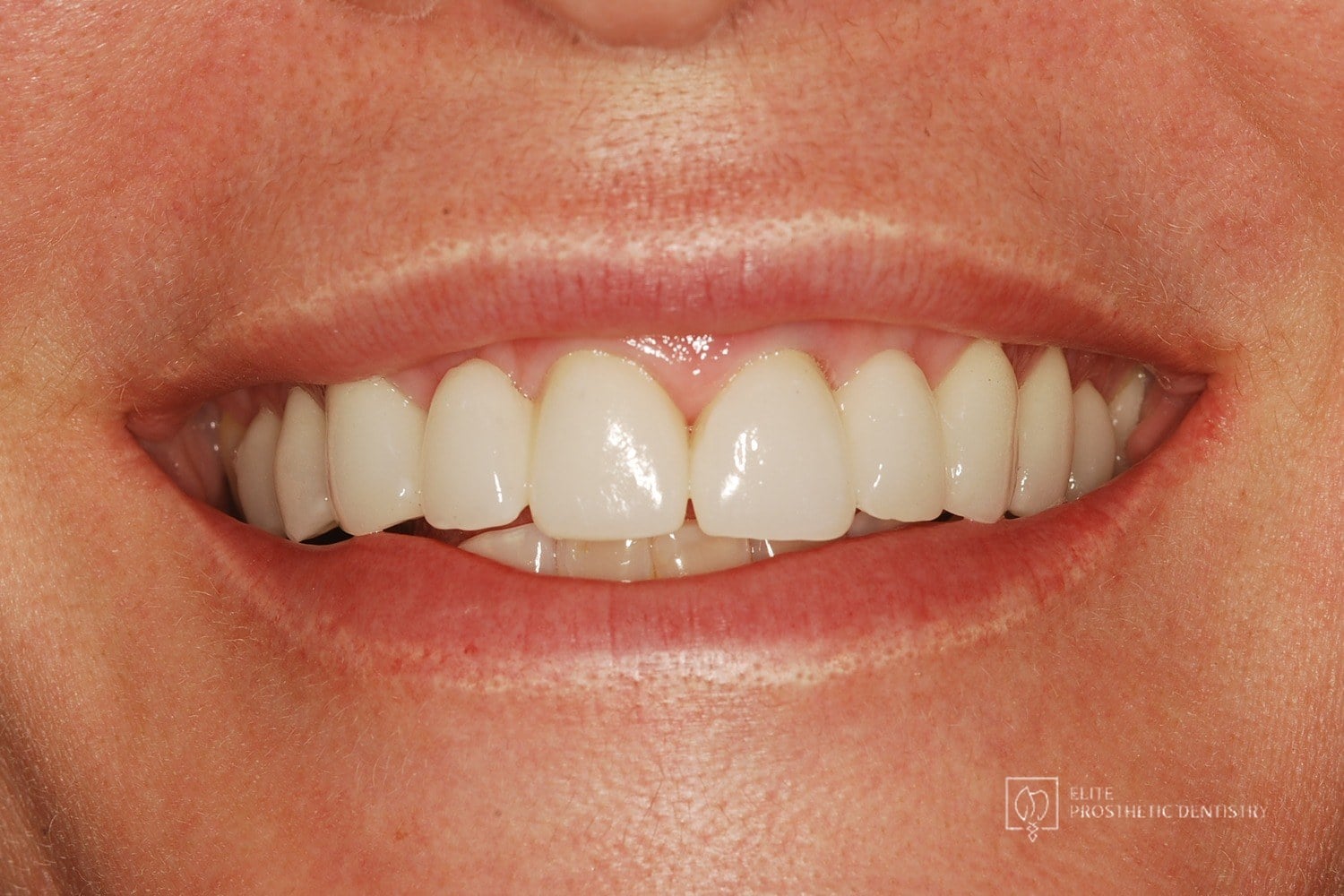 After
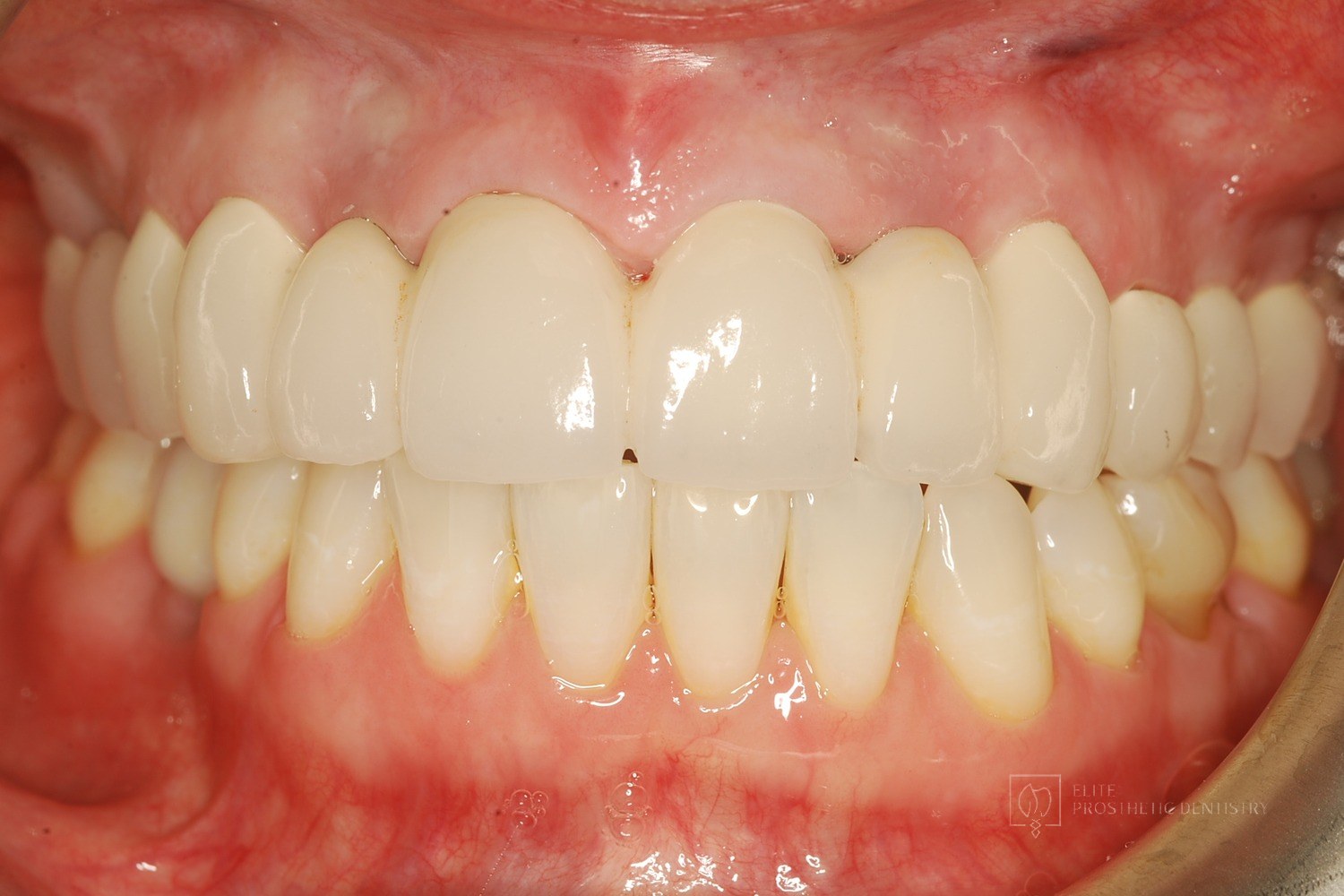
After How Failing Lateral Incisor Implants Were Replaced with Custom Zirconia Bridges After Severe Bone Loss Made Replacement Implants Impossible
Comprehensive examination including CBCT imaging revealed significant bone loss surrounding implants that were placed outside the buccal plate, most likely due to placement without a CBCT-generated surgical guide. The implants were determined non-salvageable, and the alveolar ridge was too narrow to support replacement implants without extensive reconstruction.
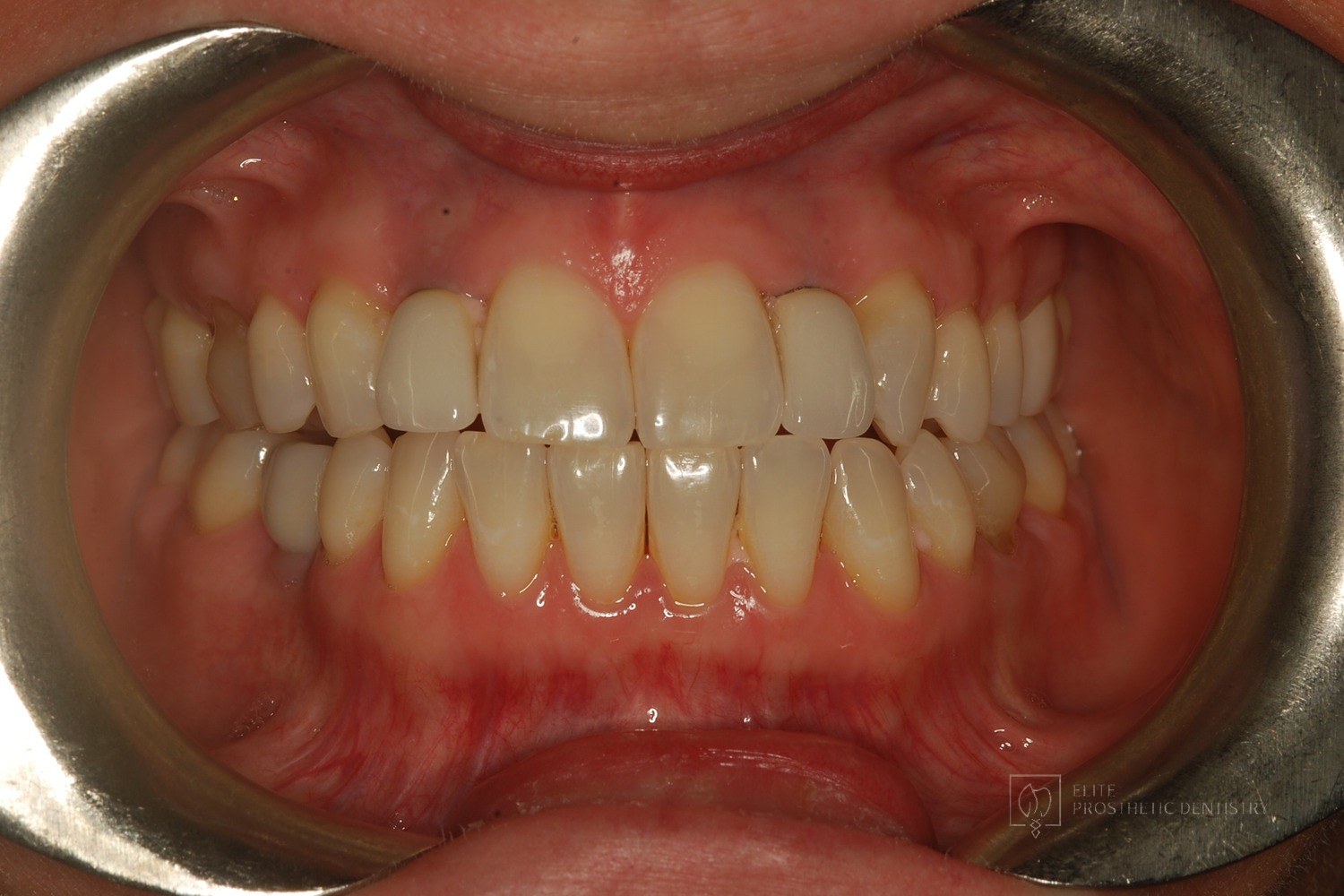 Before
  After
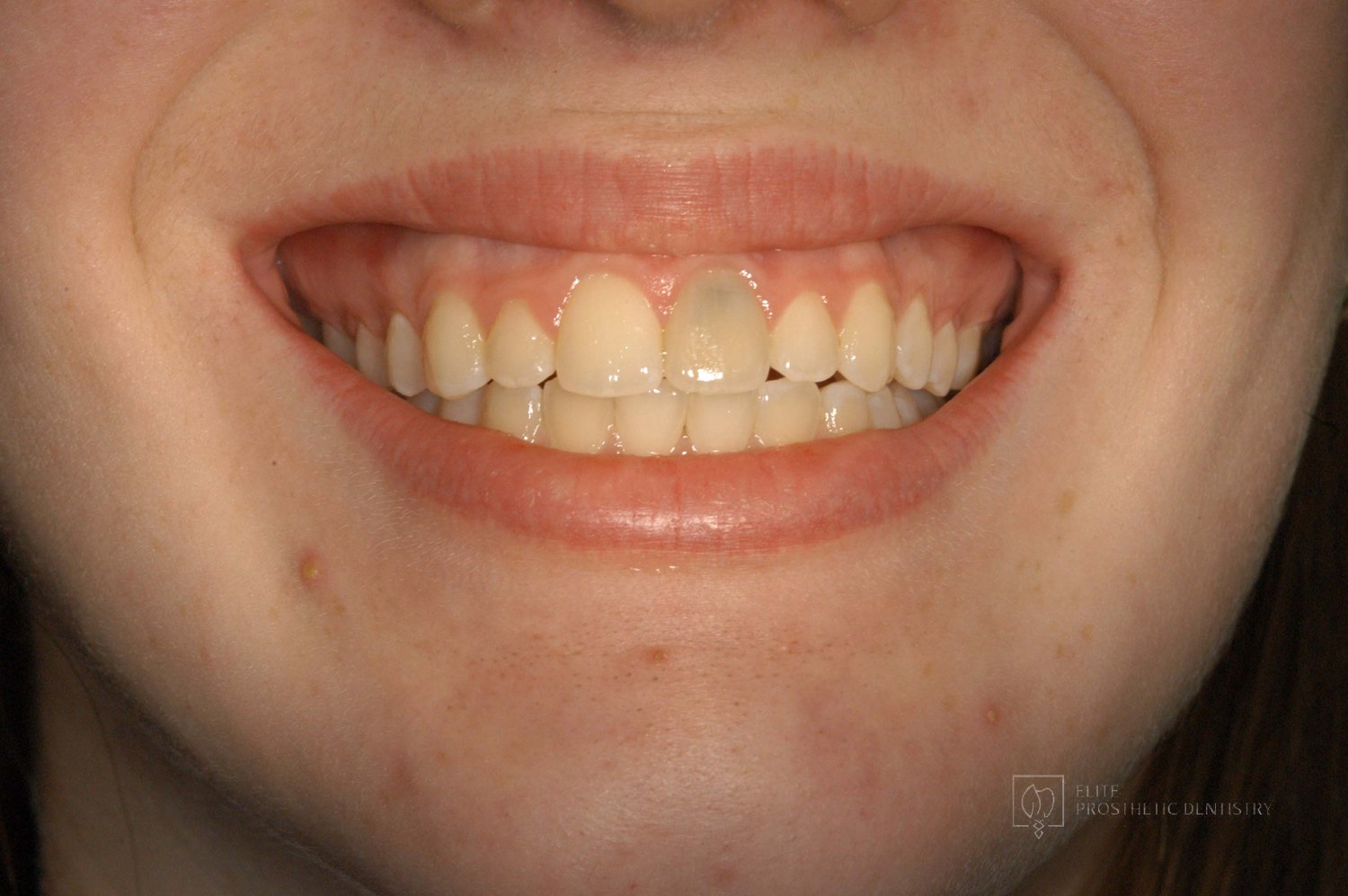
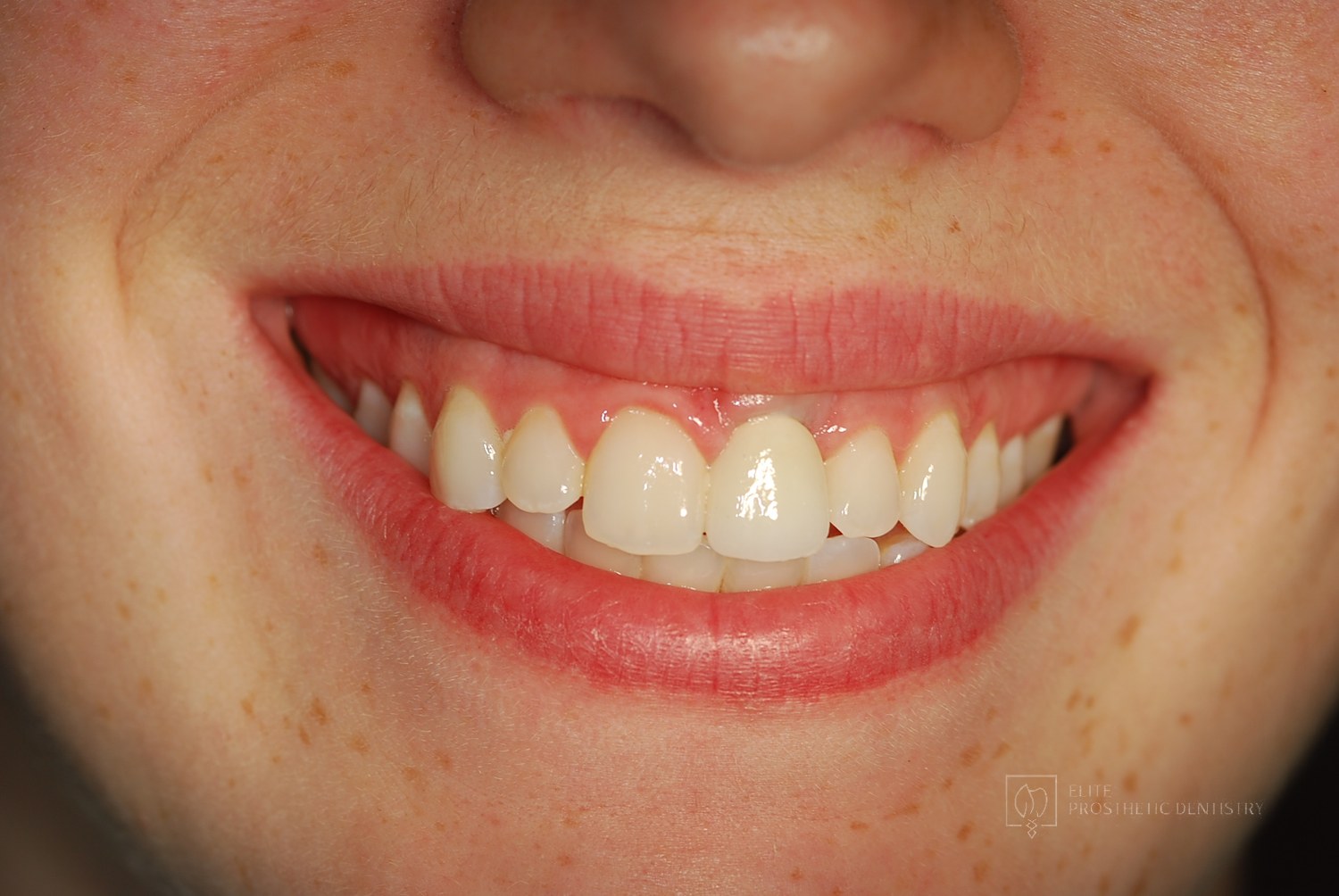
After How Older Implant Crowns Were Redesigned for a Better Bite and More Natural Appearance
The patient came in after years of living with implant-supported crowns placed more than twenty years earlier that no longer looked or functioned well. CBCT evaluation, reviewed with a radiologist colleague, showed the implants had been placed too far to the buccal in very thin bone and could not support a healthy long-term restoration.
 Before
  After
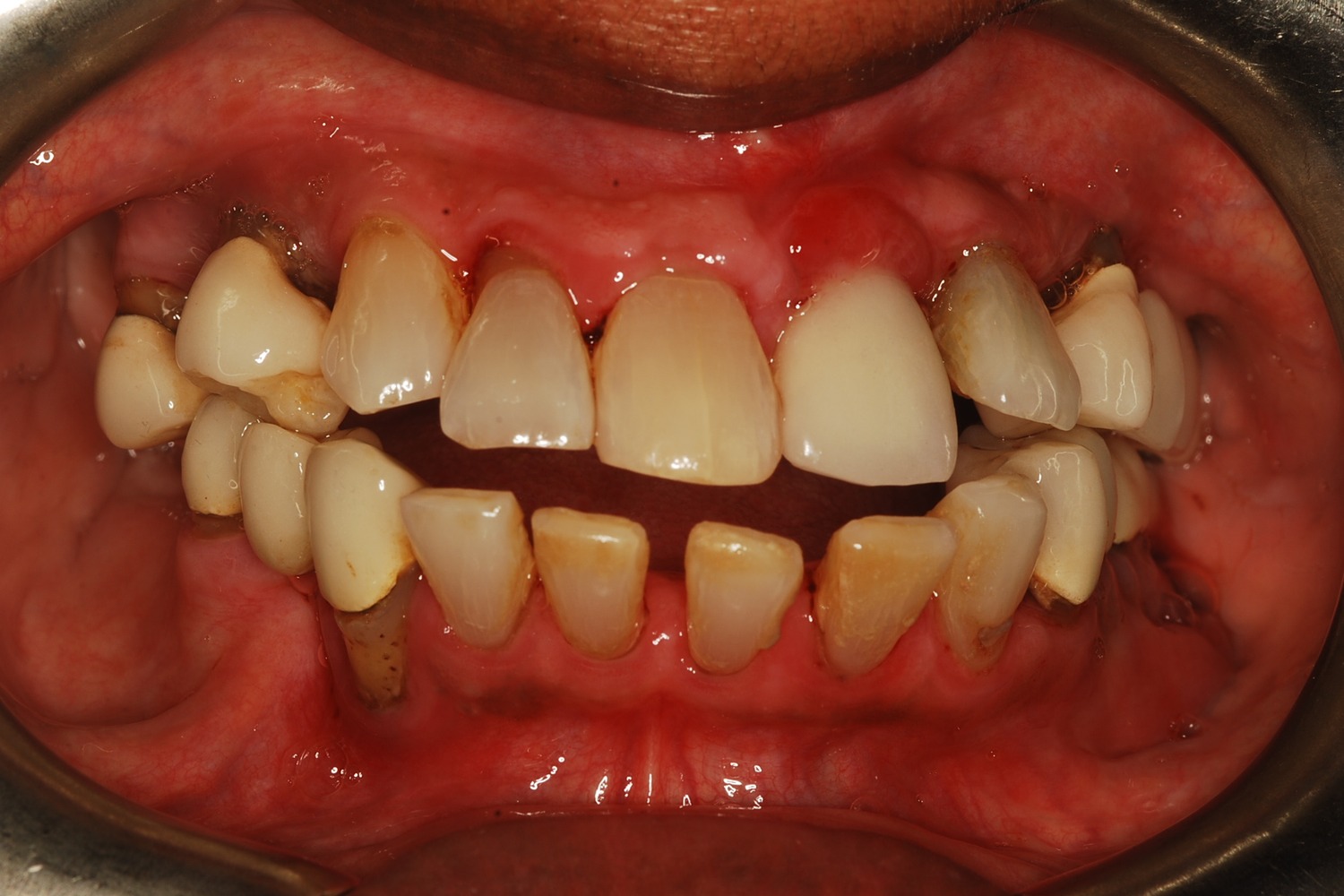
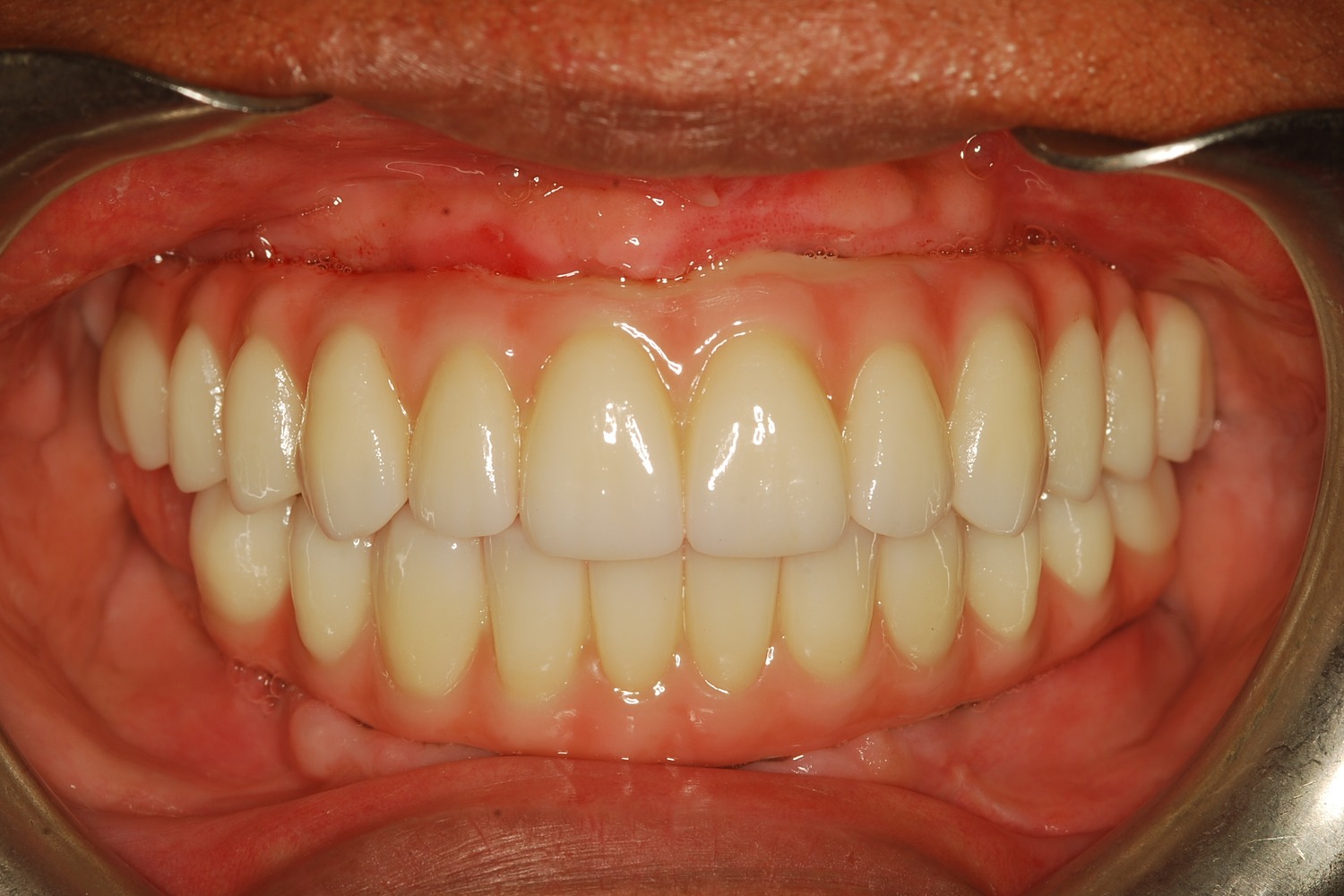
After How a Front Tooth Lost to Childhood Trauma Was Rebuilt with Bone Grafting and a Long-Lasting Implant
A teenager was referred by her father after earlier trauma left her upper left front tooth slowly failing from root resorption. She was still growing, so an immediate implant was the wrong move. The tooth had to be maintained to buy time, then replaced correctly once she reached skeletal maturity.
 Before
  After
After How Severe Bone Loss and Bite Dysfunction Were Rebuilt with All-on-6 Implants and a Milled Zirconia Hybrid Prosthesis
The patient presented with severe bone loss, advanced periodontal disease, malocclusion, and a dysfunctional bite that required full-arch rebuilding.
Related Articles
Deepen your knowledge with additional insights on this topic.
 Dental Implants
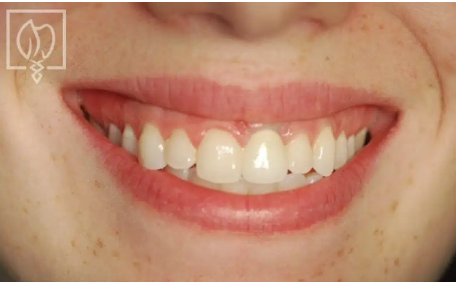
 If a Single Front Tooth Is Replaced with an Implant, Can It Look Natural?
Yes. See the four steps, with real case photos, that make a single front tooth implant indistinguishable from the natural tooth beside it. Washington, DC.
 Dental Implants
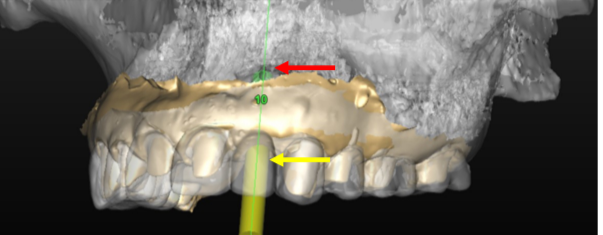
 What Is Precision Implant Placement (PIP)?
Precision Implant Placement plans each implant virtually on a CBCT scan, then delivers it with a custom surgical guide. See the three steps with real images.
 Dental Implants
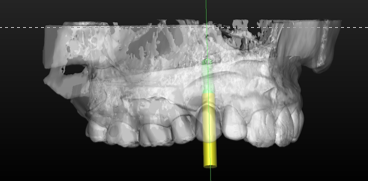
 What Is the Ideal Surgical Guide for Precision Implant Placement?
Not all surgical guides are equal. The gold standard is CBCT-based: planned virtually in 3D, 3D printed, and seated on your teeth. A DC prosthodontist explains.
 Dental Implants
 When Should an Implant Not Be Done?
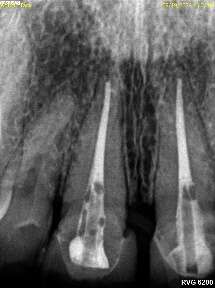
Healthy roots, thin bone, steep bony angles: a DC prosthodontist shows a real case where refusing implants was the right call, and what was done instead.
 Dental Implants
 What Is Staged Implant Therapy?
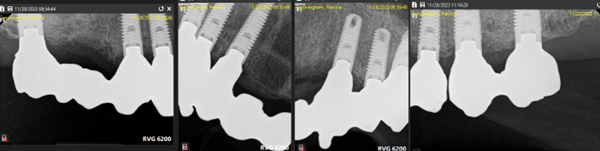
Staged implant therapy replaces failing teeth in phases while you keep fixed teeth the entire time. A DC prosthodontist walks through a real case in stages.
 Dental Implants
 The Four Types of Dental Implants: Which One Is Right for You?
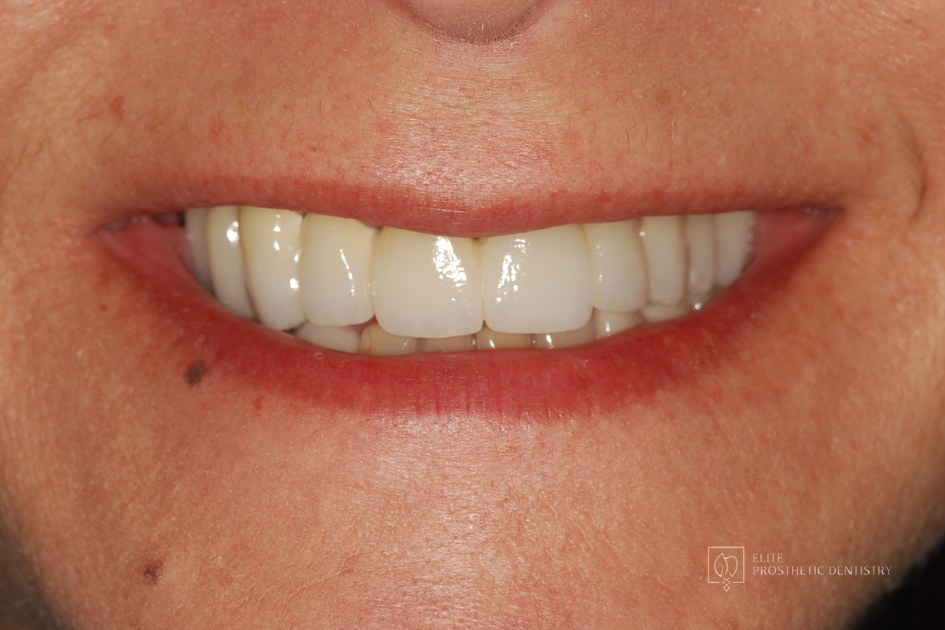
Endosteal, subperiosteal, zygomatic, and mini implants each solve a different problem. A DC prosthodontist explains the four types and who each one fits.
Deciding Who Should Treat You?
Our decision guide for McLean patients explains when implants, full mouth reconstruction, cosmetic work, or aging crowns and bridges call for a prosthodontist, and when another setting may serve you better.
Read the McLean decision guide →Our Services in McLean
Beyond Dental Implants, McLean patients rely on Dr. Marlin for a full range of advanced dental care.
More services available in McLean:
Dental Implants Near McLean
Dr. Marlin also provides dental implants services for patients in these neighboring communities.
Getting Here from McLean
Elite Prosthetic Dentistry is conveniently located near McLean, VA.
Cross Chain Bridge into DC, continue on Arizona Avenue to our Friendship Heights office. No Beltway needed for most McLean residents.
Address:
4400 Jenifer Street NW, Suite 220
Washington, DC 20015
Phone: (202) 244-2101
Request a ConsultationRequest a Specialist Consultation from McLean
McLean residents come to Dr. Marlin for specialist prosthodontic care. With 3,900+ implants placed over 40+ years, evaluation, planning, and execution are handled with the depth complex cases require.