
Extensive Bone Grafting Rebuilds the Foundation for Dental Implants
Documented before and after
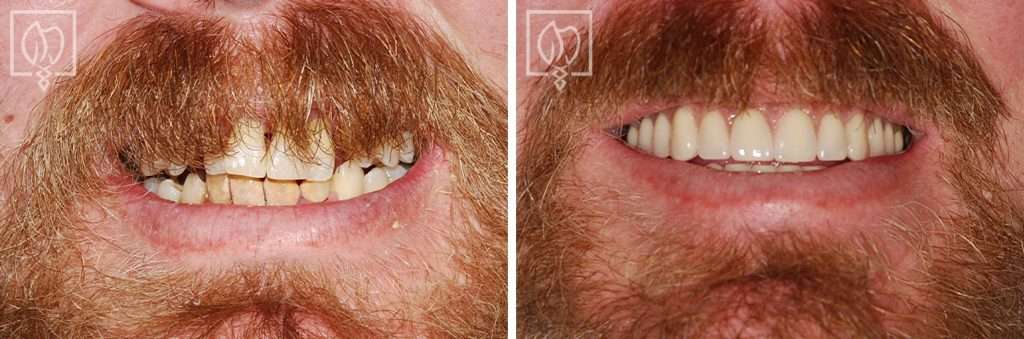
Final documented view
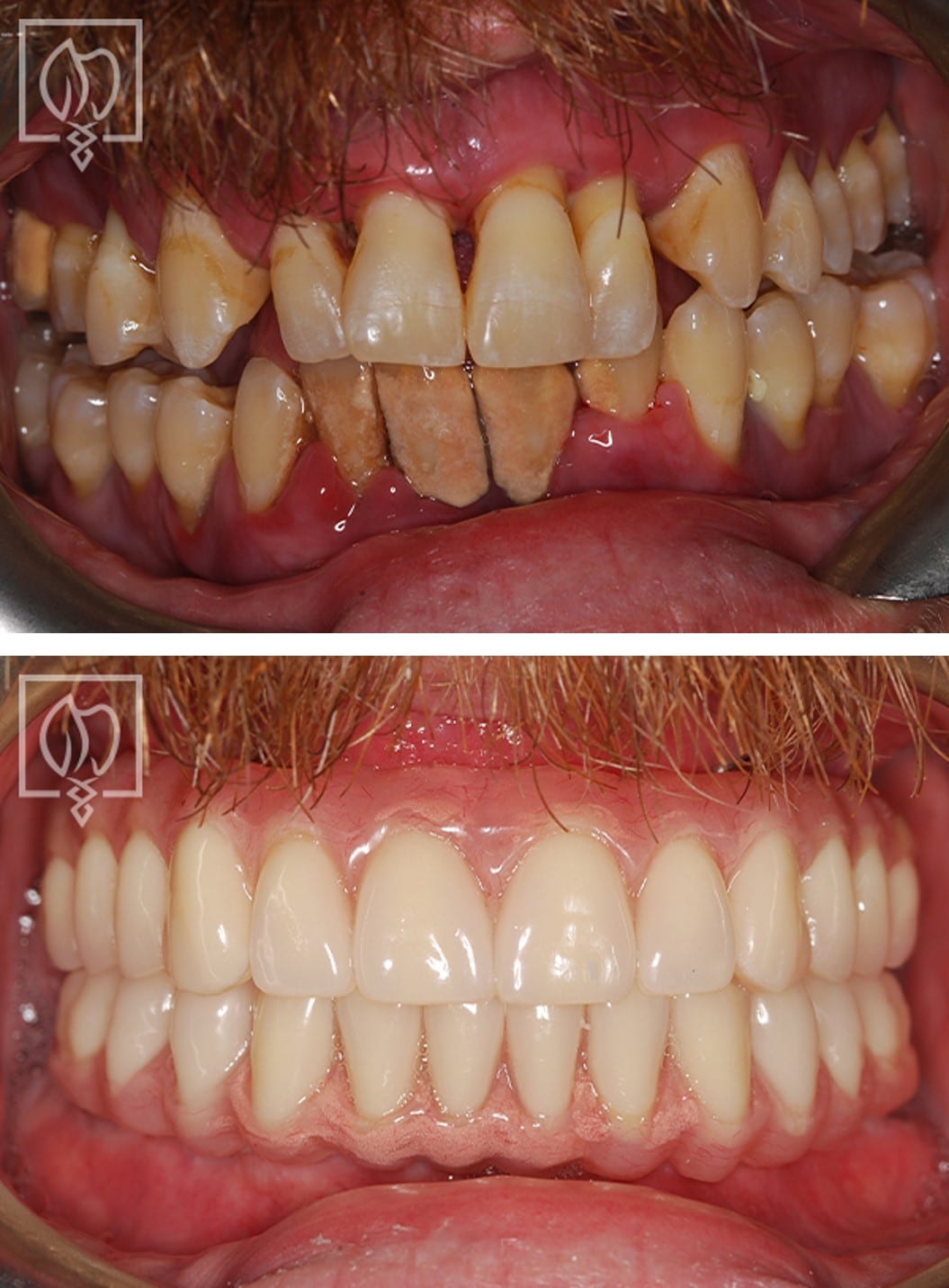
Rebuilding lost bone before dental implants: a foundation-first reconstruction
Bone grafting for dental implants in Washington, DC. This documented case at Elite Prosthetic Dentistry restored a smile affected by discoloration, spacing, and gum recession, where the decisive obstacle sat out of sight: extensive bone loss. Treatment was planned and completed by Dr. Gerald Marlin, D.M.D., M.S.D., a prosthodontist focused on implant reconstruction and complex restorative care.
Case at a Glance
- Treatment
- Extensive bone grafting followed by six dental implants and hand-crafted full-arch restorations
- Approach
- Foundation first: grafting, a six-month integration period, sequenced implant placement, in-house laboratory restorations
- Case Type
- Implant reconstruction
- Patient Concern
- The patient was concerned about tooth discoloration, gaps between the teeth, and gum recession, though evaluation found the deeper issue was bone loss affecting candidacy for dental implants.
- Decision Point
- Place implants on an accelerated timeline despite inadequate bone, or graft the bone first, allow it to fully integrate, and only then place implants built to last.
- Outcome
- The six implants, placed on rebuilt bone, supported hand-crafted full-arch restorations matched to the patient's facial features, completing a result built on a restored foundation rather than a compromise.
- Why It Matters
- This case shows that sequencing protects the outcome: restoring the bone first, then placing implants, then restoring the teeth takes longer than a hurried timeline, but each phase protects the one that follows.
The presenting condition
The patient, from Washington, DC, came to the practice after experiencing severe tooth discoloration, gaps between his teeth, and gum recession. He wanted to restore his smile and address the concerns that were affecting both his appearance and his confidence.
A thorough evaluation told a more complicated story. His teeth showed no significant decay or structural breakdown, but he had extensive bone loss. Bone loss can develop from many causes, including periodontal disease, tooth loss, aging, and previous dental trauma, and its extent mattered here for one reason above all: it directly affected his candidacy for dental implants.
Clinical Findings
- →Severe tooth discoloration and visible gaps between the teeth
- →Gum recession at presentation
- →No significant decay or structural breakdown of the teeth themselves
- →Extensive bone loss revealed on evaluation
- →Bone volume inadequate to support dental implants without grafting first
Why this case required prosthodontic-level planning
An implant is only as reliable as the bone that holds it. Any implants placed under an accelerated protocol that skipped the grafting phase would have been anchored in bone that had never been restored to adequate volume and density, and without sufficient support, implants cannot achieve the stability and integration that long-term success requires. The treatment would have looked finished. The foundation underneath it would not have been.
That is why sequencing decided this case. Restoring the bone first, then placing implants, then restoring the teeth takes longer than compressing everything into a hurried timeline, but each phase protects the one after it. Patients who receive adequate grafting and allow proper healing time see superior implant stability, more natural-looking and functional results, better preservation of bone over time, and restorations that continue to perform for decades with proper care.
The decision behind the result: restoring the foundation before placing a single implant
For a result that would look natural, function properly, and last, the patient required extensive bone grafting. This was not a step that could be shortened or skipped. The grafts were carefully planned and placed to rebuild the bone volume that the implants would later depend on.
Then came the discipline of waiting. Six months were allowed for the grafts to integrate fully with the patient’s natural bone, because a strong, stable foundation cannot be rushed into existence. During that entire period the patient wore temporary restorations, so healing never required him to compromise his appearance.
The treatment plan
-
1
Comprehensive prosthodontic evaluation
Examination of the discoloration, spacing, and gum recession traced the real problem to extensive bone loss beneath structurally sound teeth.
-
2
Extensive bone grafting
Comprehensive grafts were carefully planned and placed to restore the bone volume and density needed to support dental implants.
-
3
Six months of graft integration
The grafts were given six months to integrate fully with the natural bone, with temporary restorations worn throughout so appearance was never compromised.
-
4
Placement of six dental implants
Once the foundation was ready, six implants were placed using precise surgical planning to support the full arch of teeth.
-
5
Hand-crafted restorations from the in-house laboratory
After the implants healed and integrated, custom crowns and restorations were designed and crafted to complement the patient's facial features.
The outcome
The six implants provided exceptional support for the final restorations, an approach in the category of full-arch implant reconstruction. Once the implants had healed sufficiently, the restorative phase completed the rebuild: custom crowns and restorations designed through the practice’s in-house laboratory, where Dr. Marlin directs fit, contour, and shade without handing control to an outside facility. Each restoration was hand-crafted to match the patient’s facial features and create a natural, beautiful result.
The finished smile stands on restored bone rather than on a compromise, which is the difference between a result that looks good on delivery day and one built to function properly for decades with proper care.
Result Highlights
- ✓Bone volume and density restored before any implant was placed
- ✓Six months of graft integration secured a stable foundation
- ✓Appearance maintained with temporary restorations throughout healing
- ✓Six precisely planned implants supporting the full-arch result
- ✓Hand-crafted restorations from the in-house laboratory, matched to the patient's facial features
Who this case may sound familiar to
This story tends to resonate with patients in a few recognizable situations:
- Your gums have receded, or you suspect bone loss, and you wonder whether implants are still possible for you.
- You have been told you need bone grafting and want to understand why it cannot be skipped.
- You are weighing a fast implant option against one designed to last, and the difference is not clear from the advertising.
- Your teeth are structurally sound, but discoloration, gaps, or recession no longer reflect how you want to look.
- You would rather invest in having the work done correctly once than have it redone later.
If any of those describe where you are, a consultation with Dr. Marlin can establish the diagnostic picture and the specific options for your case.
Frequently asked questions
Why is bone grafting sometimes required before dental implants?
Implants need adequate bone volume and density to integrate and stay stable under chewing forces. When bone has been lost to periodontal disease, missing teeth, aging, or trauma, grafting rebuilds the foundation so the implants are placed into support that will last rather than into a compromise.
How long does grafted bone take to heal before implants can be placed?
Integration time varies with the site and the extent of grafting. In this documented case the grafts were given six months to integrate fully with the natural bone before the implants were placed. Rushing that period undermines the very stability the graft was meant to create.
Will I be without teeth while grafts and implants heal?
No. Temporary restorations are planned so appearance is maintained through each healing phase. In this case the patient wore temporary restorations throughout the six-month graft integration period, so his appearance was never compromised while he healed.
Can dental implants be placed without grafting when bone loss is extensive?
Placement may be physically possible, but that is not the standard that matters. Implants seated in inadequate bone cannot achieve reliable long-term stability and integration. The decision is made case by case from the diagnostics: when volume and density are sufficient, grafting is unnecessary; when they are not, restoring the bone first protects the entire result.
What role does an in-house laboratory play in a full-arch case?
It keeps the design and fabrication of the restorations under the same roof as the diagnosis and the surgery. Fit, contour, and shade are refined in direct coordination with the treating prosthodontist, which is difficult to duplicate when laboratory work is sent out.
More about the work behind this case
This case combines bone grafting, dental implants, and full mouth reconstruction principles, sequenced so each phase protects the next. That diagnostic patience, and the in-house laboratory control behind the final restorations, are part of the practice philosophy that supports work of this scope.
Elite Prosthetic Dentistry treats patients from across the DMV including Bethesda, Chevy Chase, McLean, Arlington, Potomac, and Great Falls, with a record of out-of-area patients traveling to the practice for complex restorative care.
Related Services
Related Patient Success Stories
Explore similar patient success stories demonstrating our expertise in advanced prosthetic dentistry.
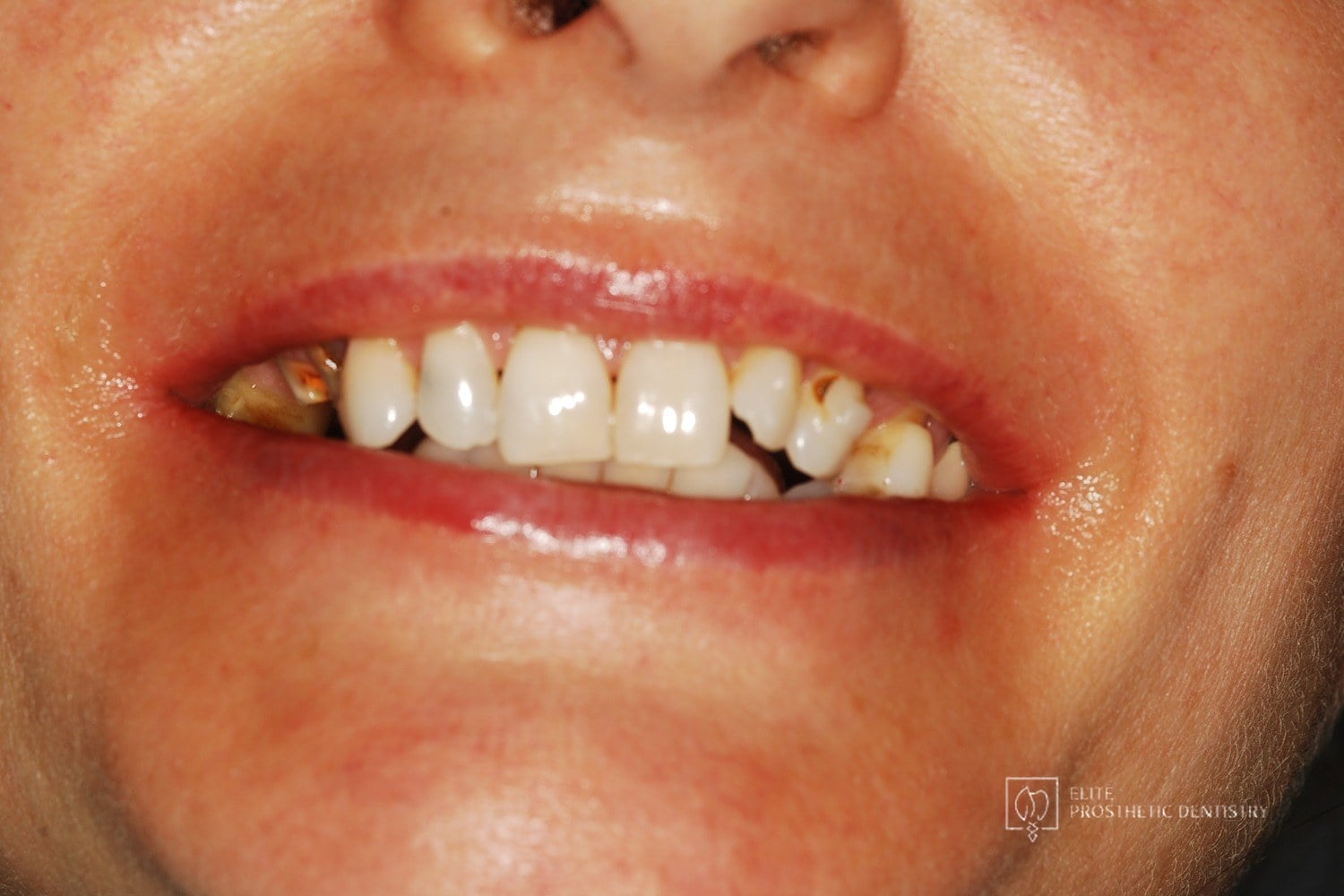 Before
 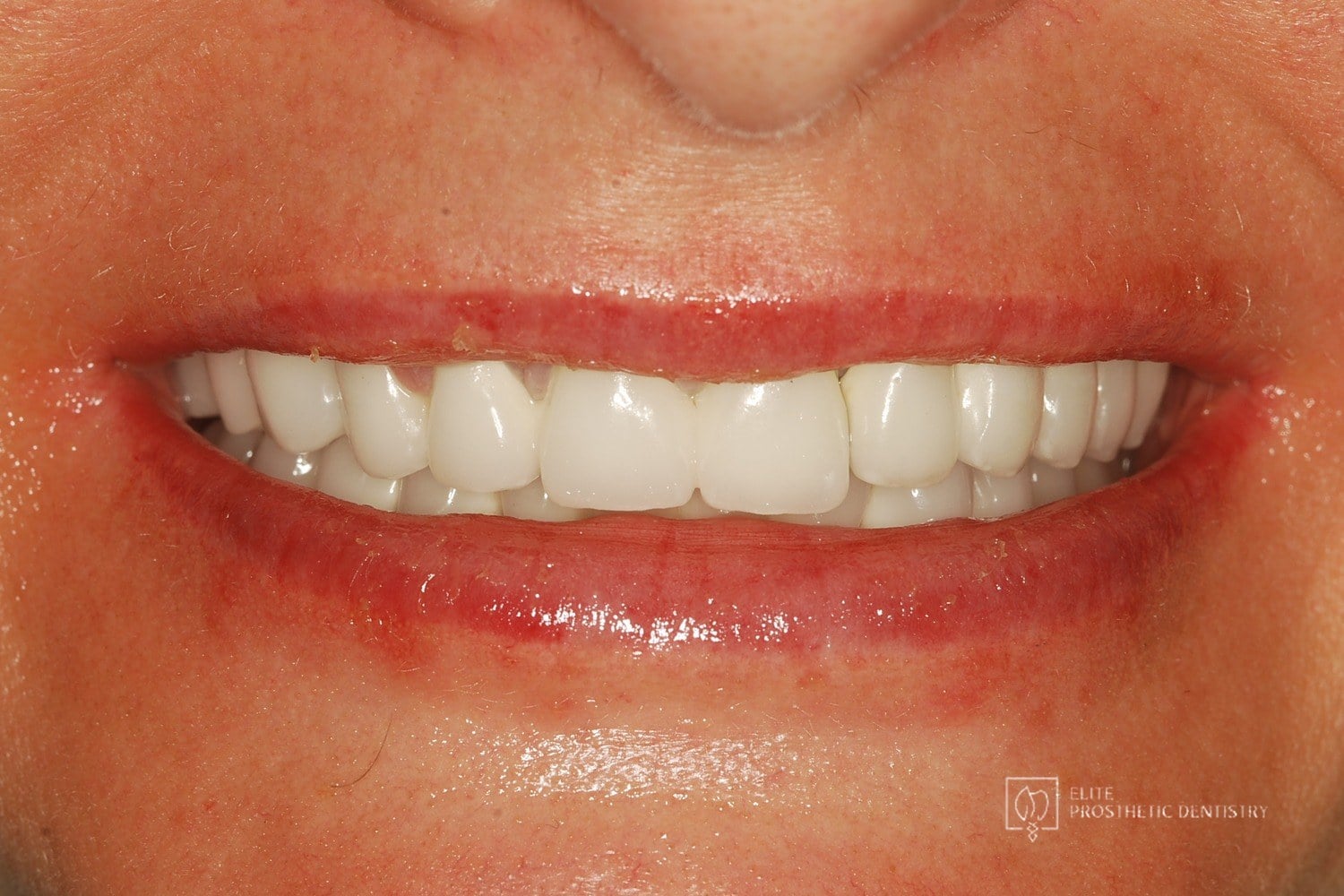 After
After How Aging, Failing Dentistry Was Replaced with a Coordinated Full-Mouth Implant and Crown Reconstruction
The patient presented with throbbing upper-molar pain, long-standing infections, multiple root canals and unfinished prior treatment, generalized sensitivity, and several hopeless teeth.
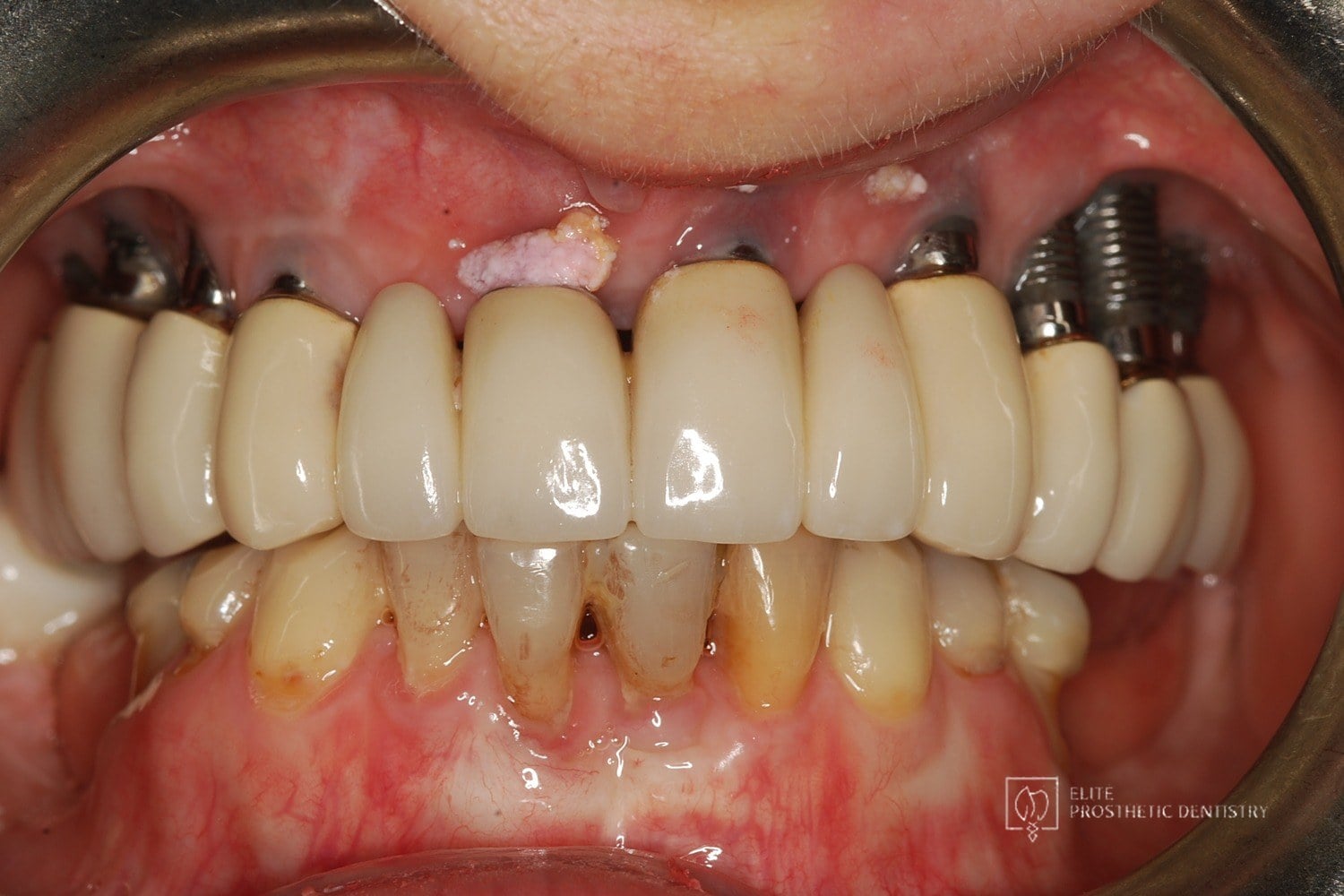 Before
 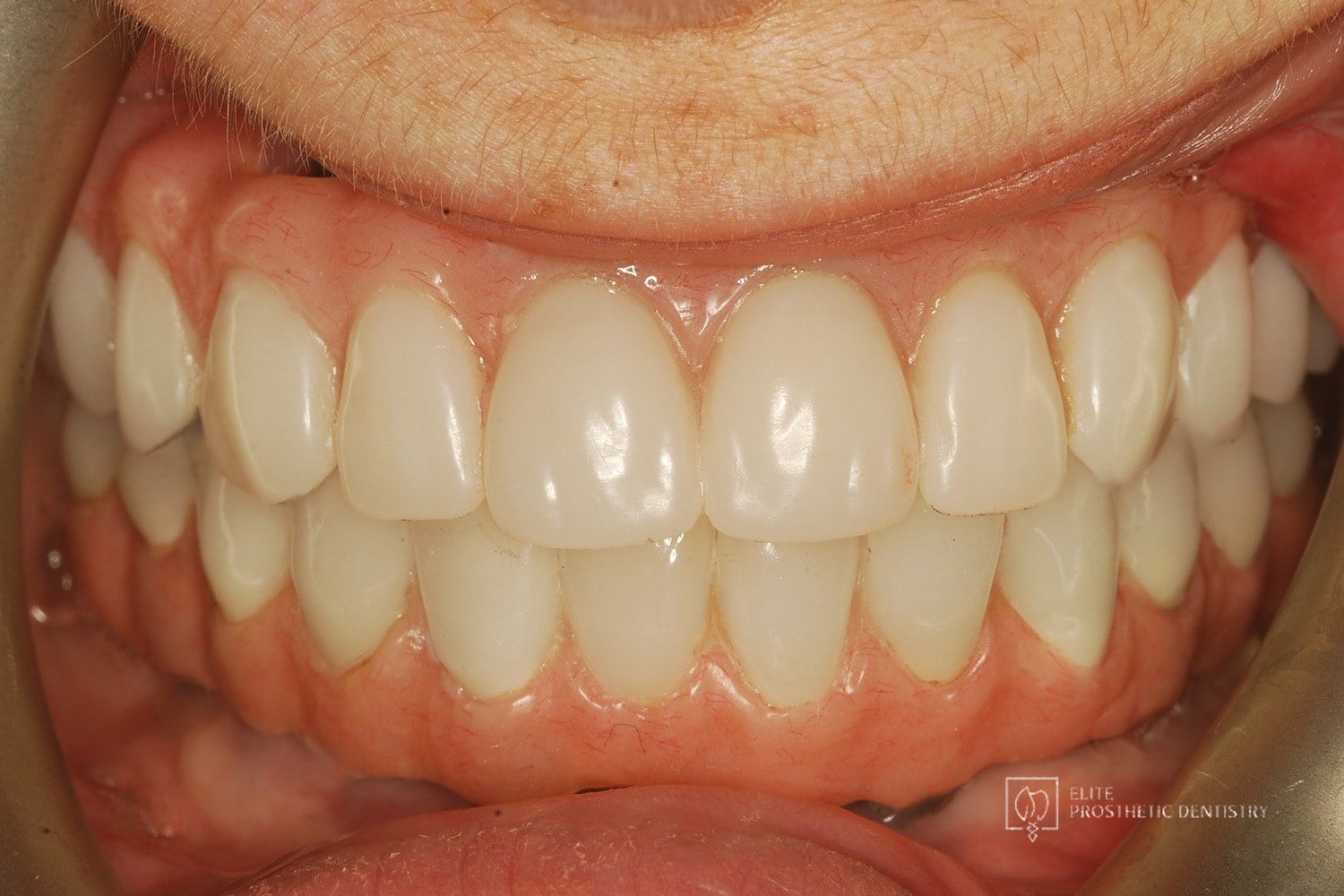 After
After How Failing Implants and Severe Bone Loss Were Rebuilt Into a Stable Full-Arch Implant Reconstruction
The patient presented with significant complications from previously placed implants, severe bone loss, failing posterior implants, and an unesthetic full-arch bridge. Both arches required full reconstruction, with the upper arch showing the most advanced bone loss and instability.
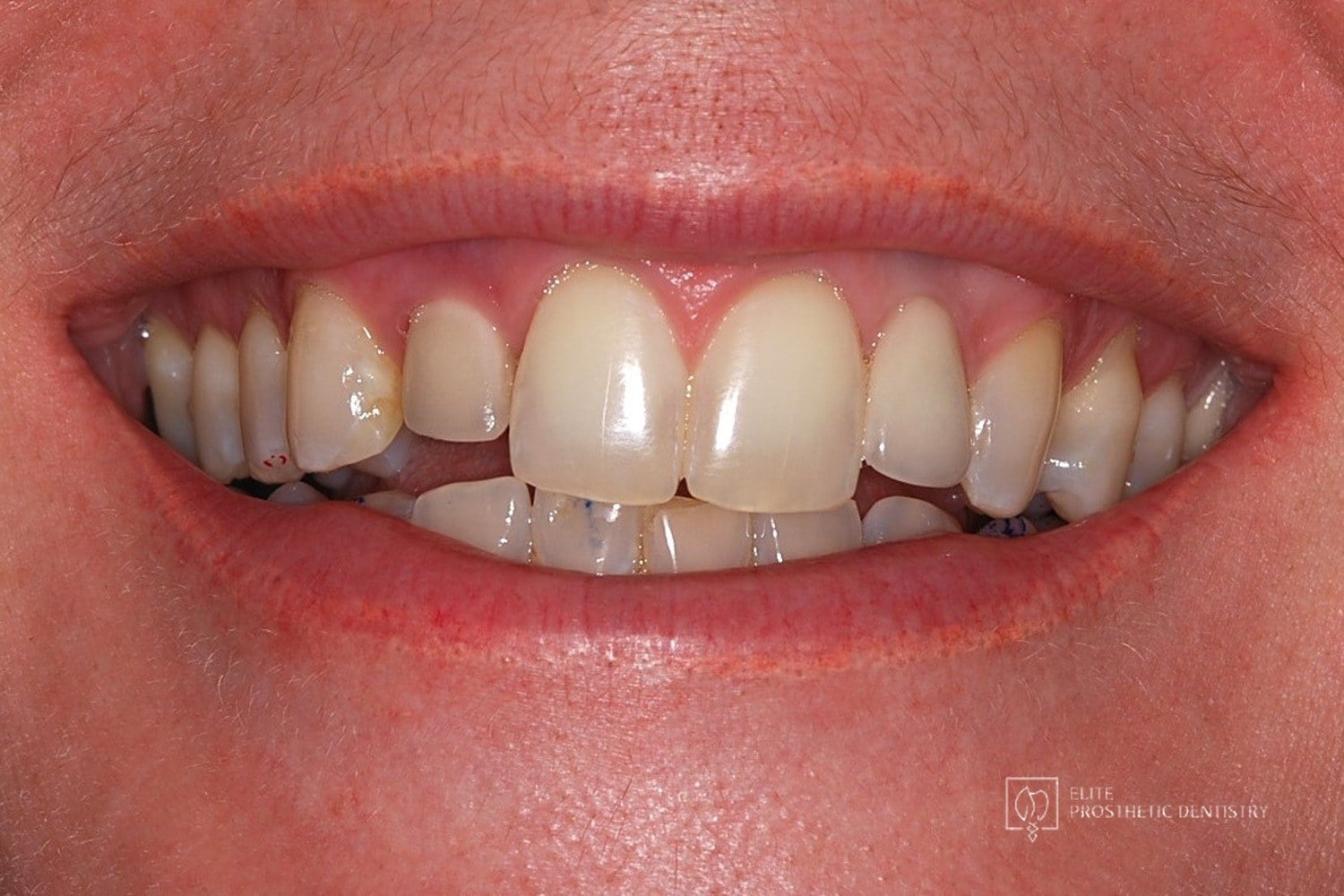 Before
 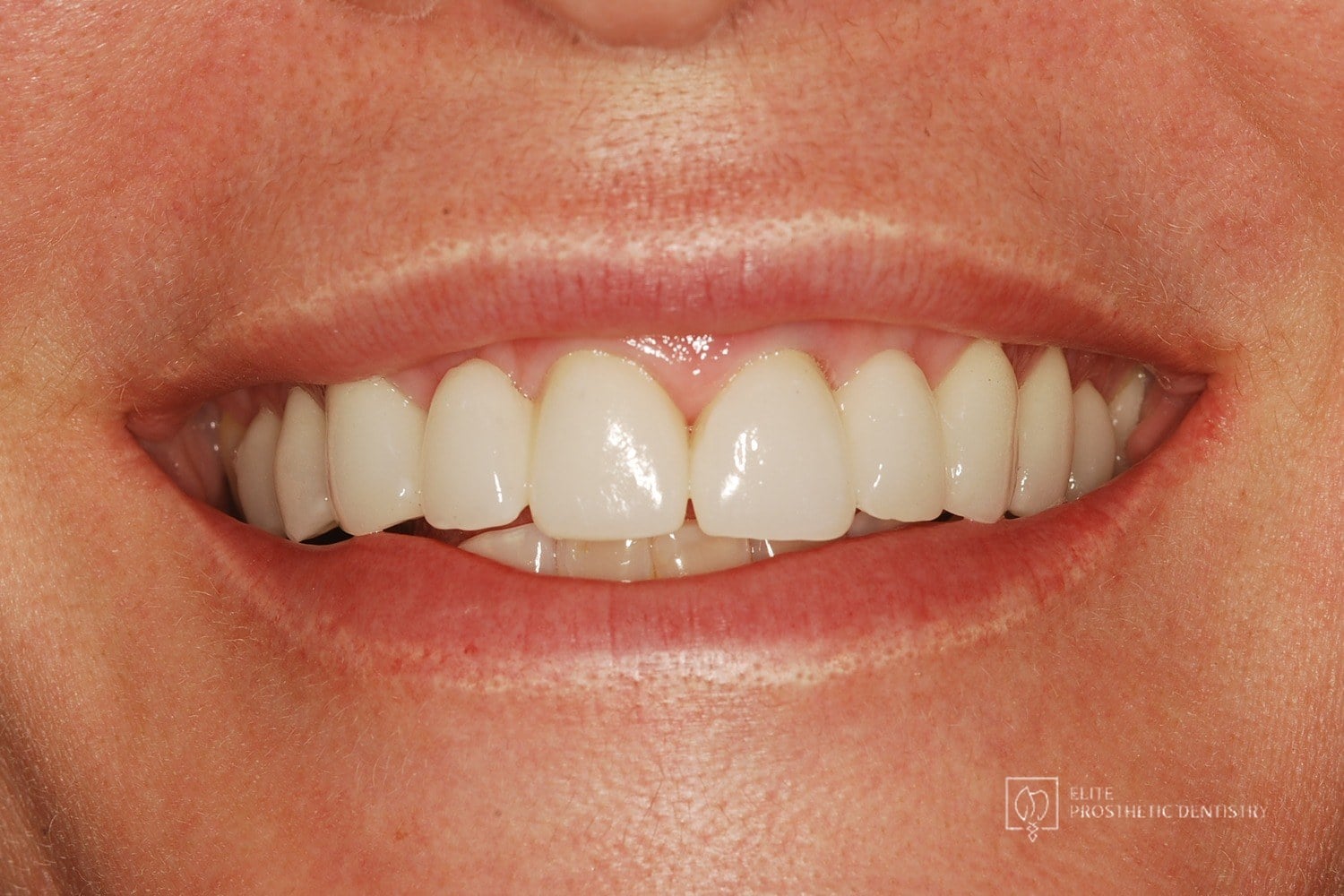 After
After How Failing Lateral Incisor Implants Were Replaced with Custom Zirconia Bridges After Severe Bone Loss Made Replacement Implants Impossible
Comprehensive examination including CBCT imaging revealed significant bone loss surrounding implants that were placed outside the buccal plate, most likely due to placement without a CBCT-generated surgical guide. The implants were determined non-salvageable, and the alveolar ridge was too narrow to support replacement implants without extensive reconstruction.