
Can a Failing Implant Be Salvaged or Replaced?
Documented case imaging
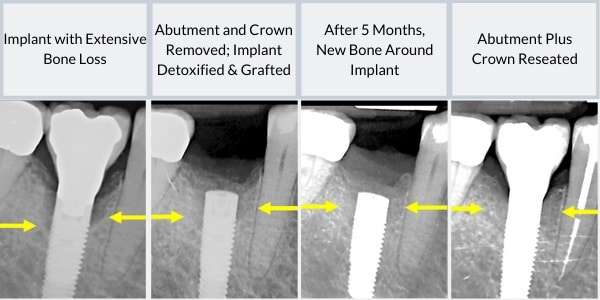
A failing implant salvaged with bone grafting instead of removal
Salvaging a failing dental implant in Washington, DC. This documented case at Elite Prosthetic Dentistry saved an implant that had developed extensive bone loss seven years after placement, using detoxification and bone grafting rather than removal and replacement. Treatment was planned and completed by Dr. Gerald Marlin, D.M.D., M.S.D., a prosthodontist focused on implant reconstruction and complex restorative care.
Case at a Glance
- Treatment
- Implant salvage through detoxification and bone grafting, with the existing abutment and crown reseated
- Approach
- Restoration removed, site grafted with a growth factor, implant protected during healing, reseated at five months
- Case Type
- Corrective implant revision
- Patient Concern
- The patient's dental implant, placed years earlier and topped with a crown, had begun losing supporting bone, raising concern it could loosen or fail.
- Decision Point
- Remove and replace the failing implant, or attempt to salvage it in place through bone grafting if enough healthy bone remained to support it.
- Outcome
- Four months after grafting, imaging showed new bone formation around the implant. At five months the abutment and crown were reseated, and the implant was preserved without removal.
- Why It Matters
- The case shows that a careful evaluation, not habit, determines whether a failing implant should be saved or replaced, since the goal is a restoration that functions reliably for the long term.
The presenting condition
Dental implants are designed to last, and most do. Occasionally, though, a patient arrives at the practice with a dental implant that is losing the bone that anchors it. In this documented case, the implant beneath an existing abutment and crown began to lose bone seven years after its placement and restoration. By the time of evaluation, the loss was extensive, extending along approximately one-third of the implant’s length, and the pattern was concerning enough to require immediate intervention.
Bone loss of that kind is more than a number on an X-ray. As support recedes, an implant becomes less stable. Toward the front of the mouth, receding support can also make parts of an implant visible, which adds an esthetic problem to the structural one. Left unaddressed, an implant in this situation may eventually loosen or fail outright.
Clinical Findings
- →Bone loss around an implant beginning seven years after its placement and restoration
- →Extensive bone loss along approximately one-third of the implant's length
- →An existing abutment and crown in function on the affected implant
- →A pattern of loss concerning enough to require immediate intervention
Why this case required prosthodontic-level planning
The conventional response to a failing implant is removal followed by replacement. That approach is sometimes correct, but it is never free. Removing an integrated implant is a surgical procedure of its own. It sacrifices whatever healthy bone-to-implant connection remains, it usually requires grafting anyway, and it commits the patient to a second placement surgery and a new restoration in a site that has already demonstrated bone loss.
Salvage asks a harder diagnostic question: can the existing implant be returned to a healthy foundation and kept in service? Answering that responsibly requires evaluating the amount and quality of the remaining bone, the location of the implant, and the patient’s overall health. It also requires disciplined sequencing. The restoration must come off so the bony housing can be treated. The site must be protected while new bone forms. And the crown should return to function only after imaging confirms the foundation has actually regenerated. Compressing or skipping any of those phases risks rebuilding on the same compromised base, which is why this is planning work rather than a quick repair.
The decision behind the result: treating the implant instead of removing it
The pivotal judgment in this case was whether the implant deserved to stay. Traditional treatment would have removed the failing implant and placed a new one. The evaluation pointed the other way: even with extensive bone loss, this implant could be saved through careful planning and advanced bone grafting techniques.
The logic of salvage rests on what removal would cost and what regeneration can achieve. When enough of the implant remains well integrated and the defect can be cleaned and contained, regrafting the bony housing rebuilds support around the implant that is already there. The patient keeps the original implant and restoration, and avoids the time and cost of implant removal and replacement. When salvage is possible, it is usually the preferred option for exactly those reasons. The evaluation, not habit, makes that call, and in this case the evaluation supported saving the implant.
The treatment plan
-
1
Evaluation of the failing implant
Careful assessment of the extent of the bone loss, the amount and quality of the remaining bone, and whether salvage was realistic before any treatment began.
-
2
Removal of the abutment and crown
The existing abutment and crown were removed from the implant to allow direct access for detoxifying and regrafting the bony housing around it.
-
3
Detoxification and grafting with a growth factor
Carefully selected bone graft material was combined with a growth factor and placed to promote new bone formation around the implant.
-
4
Protected healing beneath the gum tissue
The implant was buried under a protective filter below the gingiva, shielding the graft site during the bone healing phase.
-
5
Re-exposure and reseating of the restoration
After five months of healing, the implant was surgically exposed and the abutment and crown were carefully reseated.
The outcome
The follow-up imaging told the story. An X-ray taken four months after grafting showed dramatic new bone formation, filling in along the side of the implant and actually growing over its top. The new bone integration was strong and stable. At five months, the implant was surgically exposed and the abutment and crown were carefully reseated, returning the tooth to service without the implant ever leaving the jaw.
For the patient, the practical meaning was simple: the implant was saved. There was no removal surgery, no replacement implant, and no second reconstruction to wait through. Because the practice maintains an in-house laboratory, restorative components that come off during treatment like this can be checked and refined directly before they are reseated, keeping fit, contour, and function under one roof. Many patients are surprised to learn that a failing implant can be saved at all. This case documents what that looks like when the evaluation supports it.
Result Highlights
- ✓Dramatic new bone formation confirmed by X-ray four months after grafting
- ✓New bone filled in along the implant's side and grew over its top
- ✓Strong, stable new bone integration around the salvaged implant
- ✓Implant surgically exposed at five months and the abutment and crown reseated
- ✓The existing implant was saved without removal or replacement
- ✓Avoided the time and cost of removing and replacing the implant
Who this case may sound familiar to
This case tends to resonate with patients in a few recognizable situations:
- An implant placed years ago has started to show bone loss on X-rays.
- A crown on an implant feels less secure than it once did, or the area around it has changed.
- You have been told a failing implant should come out, and you want a careful evaluation of whether it can be kept.
- You would rather correct a problem once, on a sound foundation, than patch it repeatedly.
- You value dentistry that lasts and want to preserve sound work wherever possible.
If any of those describe where you are, a consultation with Dr. Marlin can establish the diagnostic picture and the specific options for your case.
Frequently asked questions
Can a failing dental implant be saved without removing it?
Often, yes. When enough healthy bone remains and the site can be cleaned and protected, the bone around a failing implant can be detoxified and regrafted so that new bone forms around the implant. Whether salvage is realistic depends on the amount and quality of the remaining bone, the implant’s location, and the patient’s overall health, which is why the decision starts with a thorough prosthodontic evaluation.
What does bone loss around a dental implant mean?
It means the bony housing that anchors the implant is receding. As the loss progresses, the implant becomes less stable, parts of it can become visible in esthetic areas, and it may eventually loosen or fail. Progressive bone loss around an implant deserves prompt evaluation rather than watchful waiting.
How is bone grafted around an existing implant?
The restoration is typically removed so the site can be reached. The area around the implant is detoxified, graft material is placed, sometimes combined with a growth factor to promote new bone formation, and the implant is protected beneath the gum tissue while the bone heals. Once imaging confirms new bone has formed, the implant is re-exposed and the restoration is reattached.
How long does it take for bone to regenerate around a salvaged implant?
Healing time varies with the patient and the size of the defect, and progress is verified with imaging rather than assumed. In the case documented on this page, an X-ray four months after grafting showed dramatic new bone formation, and the restoration was reseated at five months.
When is replacing a failing implant the better decision?
Replacement can be the more reliable path when too little healthy bone remains, when the implant sits in a position that cannot support a sound restoration, or when the patient’s health makes regenerative treatment unpredictable. The point is that removal should be a conclusion reached after evaluation, not a default.
Why see a prosthodontist for a failing implant?
A prosthodontist evaluates the implant, the bone, the restoration, and the bite as one connected system and plans backward from the final result. That perspective matters with a failing implant because the goal is not simply keeping the implant in the jaw. It is keeping the implant able to carry a restoration that functions for the long term.
More about the work behind this case
This case sits at the intersection of dental implants, bone grafting, and the repair of failing implants. The discipline of evaluating salvage before defaulting to removal reflects the practice philosophy that guides complex restorative decisions at the practice.
Elite Prosthetic Dentistry treats patients from across the DMV including Bethesda, Chevy Chase, McLean, Arlington, Potomac, and Great Falls, with a record of out-of-area patients traveling to the practice for complex restorative care.
Related Services
Related Patient Success Stories
Explore similar patient success stories demonstrating our expertise in advanced prosthetic dentistry.
 Before
  After
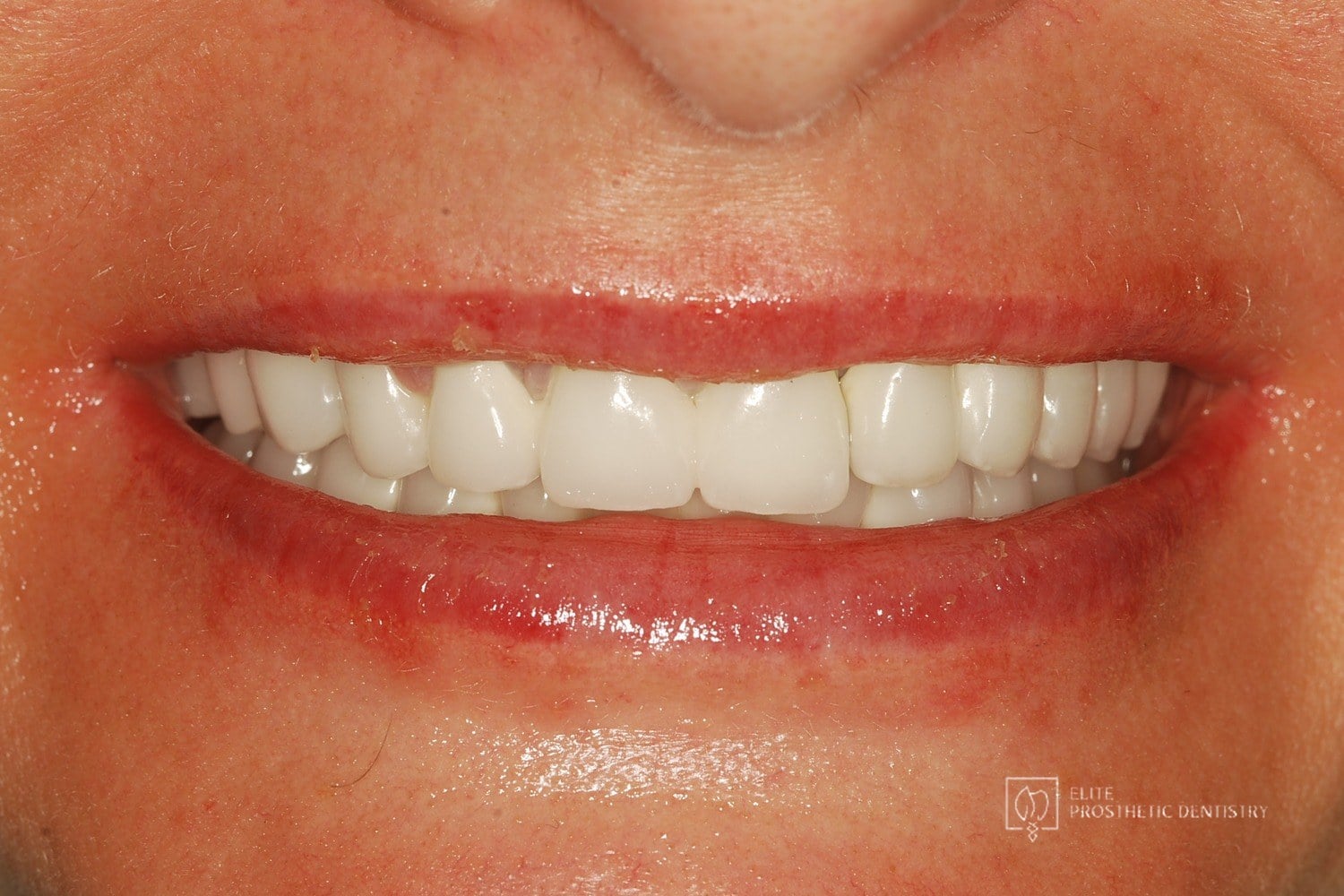
After How Aging, Failing Dentistry Was Replaced with a Coordinated Full-Mouth Implant and Crown Reconstruction
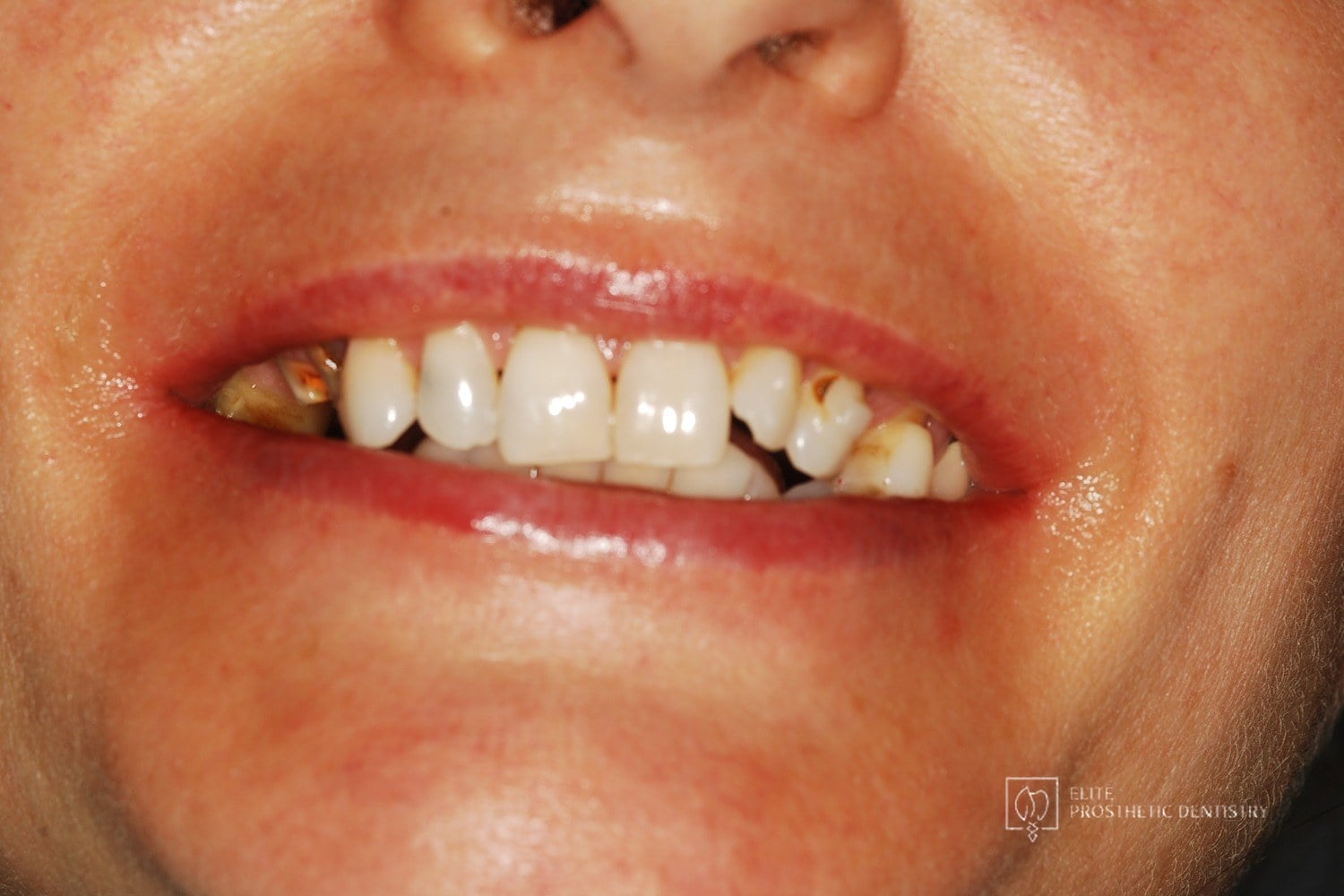
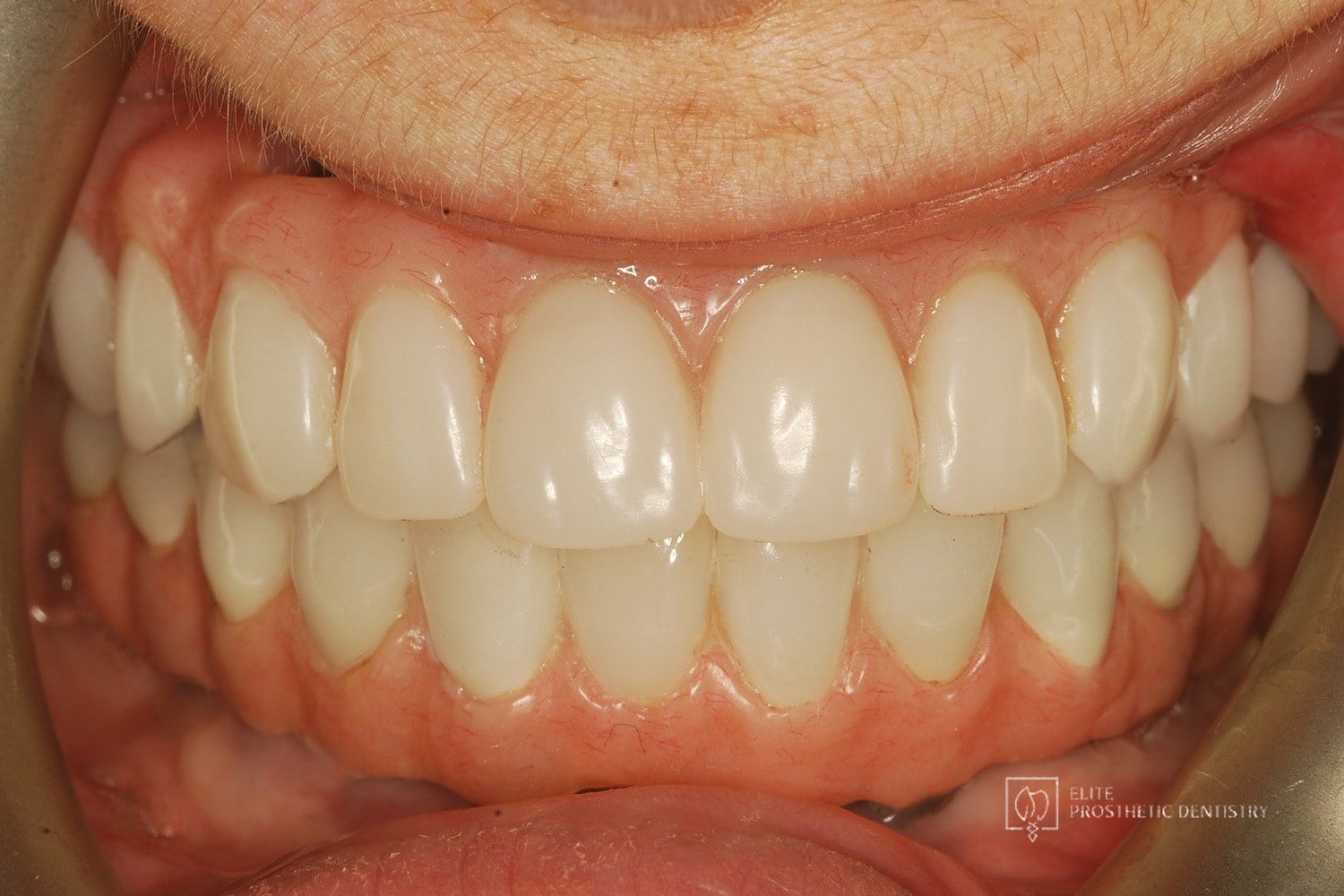
The patient presented with throbbing upper-molar pain, long-standing infections, multiple root canals and unfinished prior treatment, generalized sensitivity, and several hopeless teeth.
 Before
  After
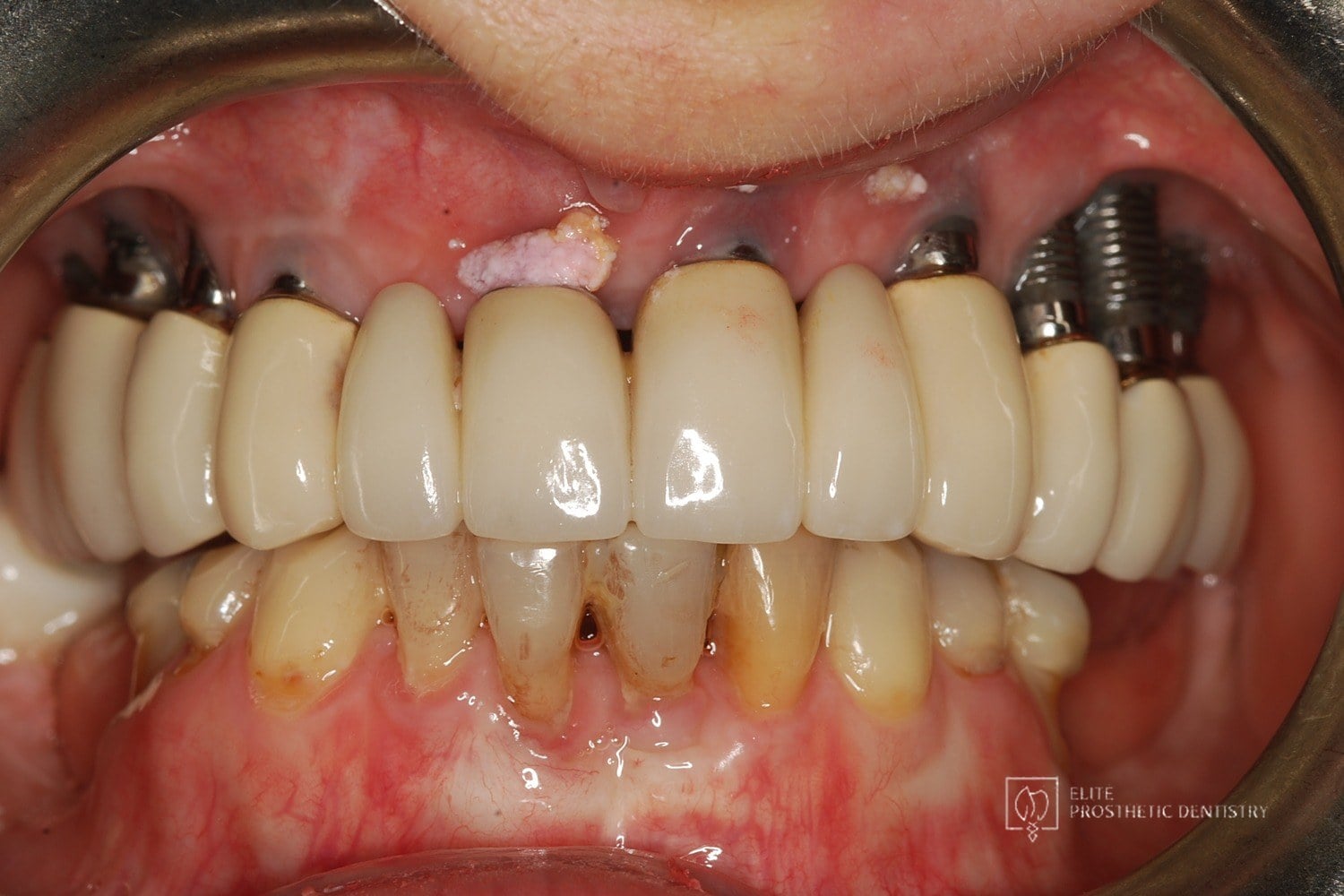
After How Failing Implants and Severe Bone Loss Were Rebuilt Into a Stable Full-Arch Implant Reconstruction
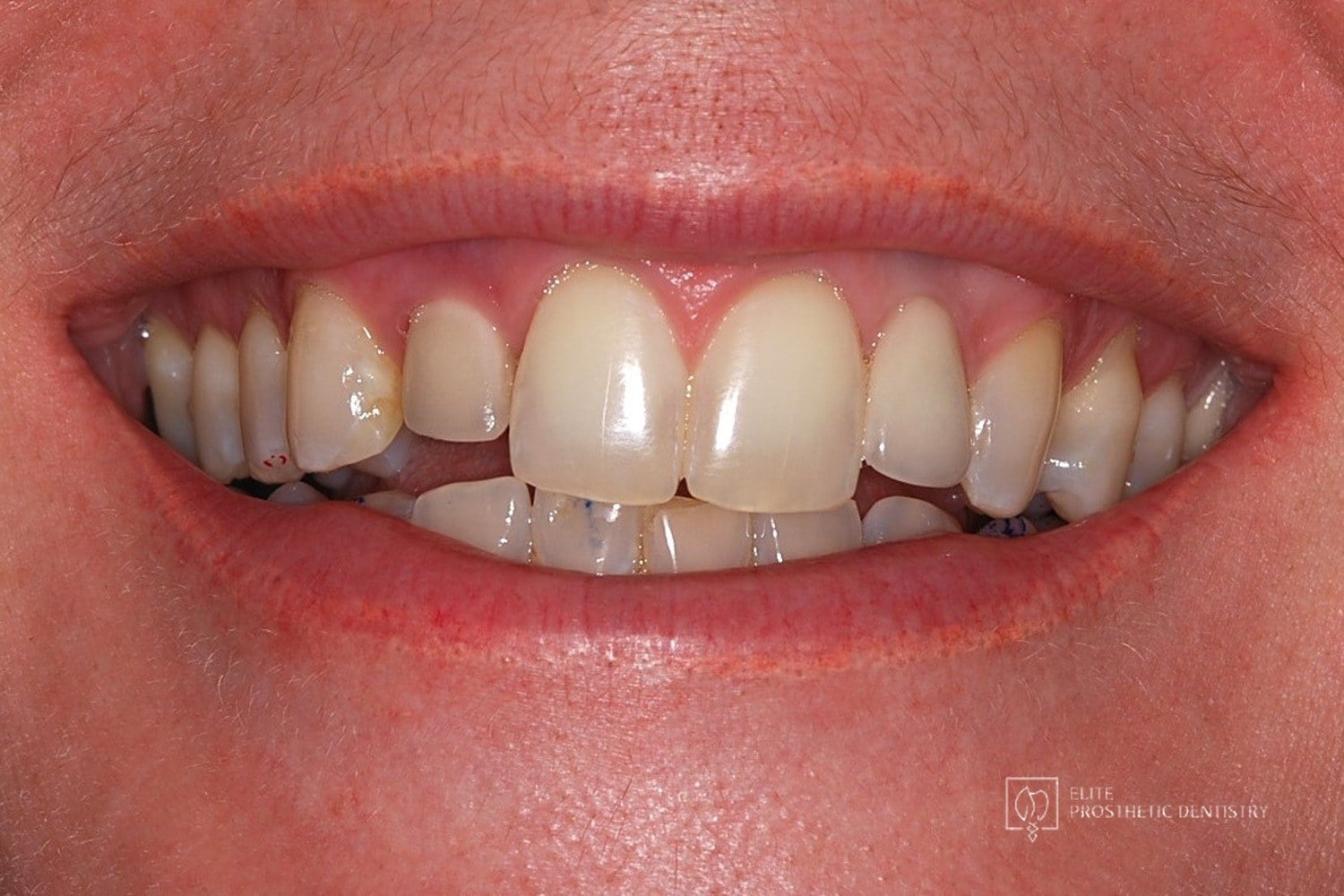
The patient presented with significant complications from previously placed implants, severe bone loss, failing posterior implants, and an unesthetic full-arch bridge. Both arches required full reconstruction, with the upper arch showing the most advanced bone loss and instability.
 Before
  After
After How Failing Lateral Incisor Implants Were Replaced with Custom Zirconia Bridges After Severe Bone Loss Made Replacement Implants Impossible
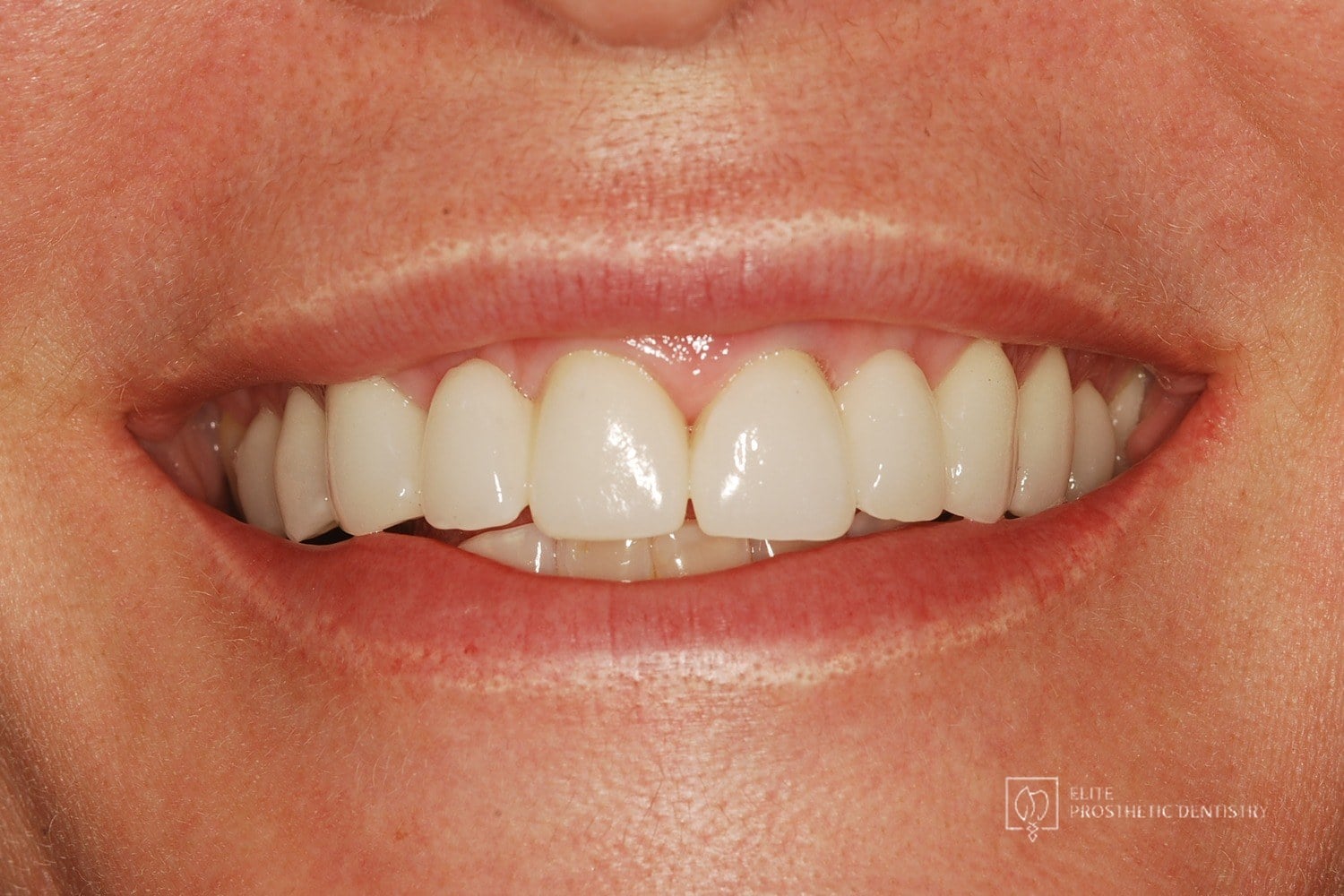
Comprehensive examination including CBCT imaging revealed significant bone loss surrounding implants that were placed outside the buccal plate, most likely due to placement without a CBCT-generated surgical guide. The implants were determined non-salvageable, and the alveolar ridge was too narrow to support replacement implants without extensive reconstruction.