
Replacing a Dental Implant That Could Not Be Properly Restored
Documented planning comparison
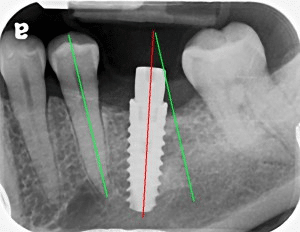
Ideally positioned implant
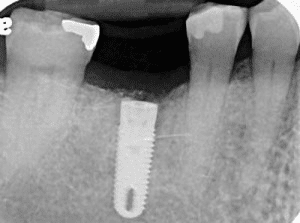
When a well-integrated implant cannot be restored
Dental implant replacement in Washington, DC. This documented case at Elite Prosthetic Dentistry involved an implant that had integrated solidly with the bone yet sat at an angle and depth that made a proper restoration impossible. Treatment was planned and completed by Dr. Gerald Marlin, D.M.D., M.S.D., a prosthodontist focused on implant reconstruction and complex restorative care.
Case at a Glance
- Treatment
- Removal of an unrestorable implant and replacement in the correct position with a new abutment and crown
- Approach
- Restorability assessment, guided repositioning, and a restoration planned from the final crown backward
- Case Type
- Corrective implant revision
- Patient Concern
- An existing implant crown kept trapping food and came loose within months, even though the implant felt solid, because it had been positioned at the wrong angle and depth.
- Decision Point
- Attempt another restoration on the implant as positioned, or remove and replace it in the correct position since no properly fitting abutment could ever be made for it.
- Outcome
- The replacement implant sits centered in the bone at the proper depth, supporting an abutment and crown that fit and function properly.
- Why It Matters
- The case shows that a well-integrated implant can still fail restoratively, and that planning the implant's position from the final restoration backward is what determines lasting function.
The presenting condition
The implant at the center of this case had one thing going for it: it had integrated well with the surrounding bone. In every other respect it could not do its job. It sat severely off angle, tilted toward the tooth behind it and toward the cheek, and it had not been placed low enough in the bone. Together, those problems made it impossible to fabricate an anatomically correct abutment, the connector that carries the final crown.
The consequences had already played out in the patient’s mouth. To make room for a crown to seat over the abutment, the tooth behind the implant had been reduced, and the finished restoration left a gap next to the tooth in front of it. Food wedged into that gap constantly, leaving the restoration uncomfortable and functionally inadequate. Within six months of being placed, the abutment and crown came out entirely. The implant could not be salvaged; it had to be removed and replaced.
Clinical Findings
- →An implant angled severely toward the adjacent tooth behind it and toward the cheek
- →Insufficient depth in the bone, further complicating abutment design
- →Solid integration with the bone: a surgical success, but a restorative failure
- →An adjacent tooth reduced to make room for the crown, leaving a food-trapping gap
- →An abutment and crown that came out within six months of restoration
Why this case required prosthodontic-level planning
An implant is not an end in itself. It exists to hold a specific tooth in a specific position, which means the restoration has to be designed first and the implant placed to serve it. That is the purpose of a surgical stent, a precision guide that carries a replica of the shape and position of the crown or bridge being restored. The stent directs the angle of the drill as the site is prepared, so the implant emerges exactly where the restoration needs it. Every dental implant should be placed with the aid of a surgical stent, because the guide ties the surgery to the restorative outcome.
This case shows what that principle protects against. The implant here sat at the kind of angle that restoration-first, guided planning exists to prevent, and no abutment geometry could compensate for it once it was there. Even the finest laboratory technician cannot build a successful restoration on an implant the restoration cannot reach. With more than 3,900 implants placed across his career, Dr. Marlin emphasizes precision implant placement and advanced surgical planning precisely because they determine what the final restoration can achieve.
The decision behind the result: replace rather than compromise again
Two paths existed. One was to attempt yet another restoration on the implant as it stood, accepting a further round of compromises in an area that had already produced a failed crown, a reduced adjacent tooth, and a chronic food trap. The other was to acknowledge that no anatomically correct abutment could ever fit this implant, and to remove it.
The implant was removed. A new dental implant was placed in the correct position, centered within the bone and at the proper depth. With the foundation finally where the restoration needed it, a new abutment and crown were fabricated to fit the properly positioned implant, produced in direct coordination with the practice’s in-house laboratory to control fit, contour, and function.
The treatment plan
-
1
Restorability evaluation
Assessment of the implant's angulation, depth, and integration established whether any anatomically correct abutment could be made to fit.
-
2
The decision to replace
Because the angle and depth made a proper abutment impossible, the implant was determined to be unsalvageable and scheduled for removal.
-
3
Removal of the unrestorable implant
The original implant was removed despite its solid integration, because position, not stability, determines restorability.
-
4
Correctly positioned replacement
A new implant was placed centered within the bone and at the proper depth, oriented for the restoration it would carry.
-
5
New abutment and crown
An anatomically correct abutment and a new crown were fabricated to fit the properly positioned implant.
The outcome
The replacement implant sits centered in the bone at the proper depth, carrying an anatomically correct abutment and a crown fabricated to fit it. Positioned correctly, the implant could finally support a restoration designed to function properly and look natural, rather than one engineered around a problem.
The case demonstrates a principle that runs through prosthodontic dentistry: proper surgical planning and placement are the essential foundation of successful implant restoration. Investing in careful planning up front positions implants correctly the first time and avoids the expense, surgery, and lost time of removals and replacements.
Result Highlights
- ✓The unrestorable implant was removed rather than compromised around again
- ✓A new implant placed centered within the bone and at the proper depth
- ✓An anatomically correct abutment finally possible, and fabricated to fit
- ✓A crown designed to seat properly and function as intended
- ✓A result anchored in restoration-first surgical planning
Who this case may sound familiar to
This story tends to resonate with patients in a few recognizable situations:
- An implant crown keeps trapping food, feels wrong, or has already loosened or come out.
- You have been told an implant is solid, yet the tooth built on it has never worked properly.
- You are facing a redo and want it planned so it does not happen a third time.
- You want to know whether an existing implant can be salvaged before anyone removes it.
- You value dentistry planned from the final result backward and done correctly once.
If any of those describe where you are, a consultation with Dr. Marlin can establish the diagnostic picture and the specific options for your case.
Frequently asked questions
Can a dental implant be solidly integrated and still fail?
Yes. Integration means the bone has accepted the implant; it says nothing about whether the implant can support a proper restoration. An implant placed at the wrong angle or depth can be a surgical success and a restorative failure at the same time, which is exactly what this documented case shows.
What is a surgical stent, and why does implant placement use one?
A surgical stent is a precision guide that carries a replica of the shape and position of the crown or bridge being restored. It directs the angle of the drill while the implant site is prepared, so the implant ends up positioned for the restoration it must support. It ties the surgical step directly to the restorative outcome.
Does a poorly positioned implant always need to be removed?
Not always. Some can still be restored with custom components, and a well-integrated implant is never removed casually. The deciding question is whether an anatomically correct abutment and crown can be made to fit. When they cannot, replacement in the correct position protects the adjacent teeth and the long-term result.
Why do some implant crowns trap food?
Contact points between teeth are designed to keep food from wedging in. When an implant’s position forces the crown into a compromised shape, or requires reshaping adjacent teeth, gaps can remain that catch food constantly. Persistent food trapping around an implant crown is worth a specialist evaluation.
What does replacing a dental implant involve?
The failed implant is removed, the site is evaluated, and a new implant is placed in the correct position, centered in the bone at the proper depth. A new abutment and crown are then fabricated to fit it. Timing between the steps depends on the condition of the site.
More about the work behind this case
This case sits where dental implants, dental crowns, and repairing failing implants meet: the discipline of positioning the foundation for the tooth it must carry. That restoration-first planning is central to the practice philosophy behind every implant case at the practice.
Elite Prosthetic Dentistry treats patients from across the DMV including Bethesda, Chevy Chase, McLean, Arlington, Potomac, and Great Falls, with a record of out-of-area patients traveling to the practice for complex restorative care.
Related Services
Related Patient Success Stories
Explore similar patient success stories demonstrating our expertise in advanced prosthetic dentistry.
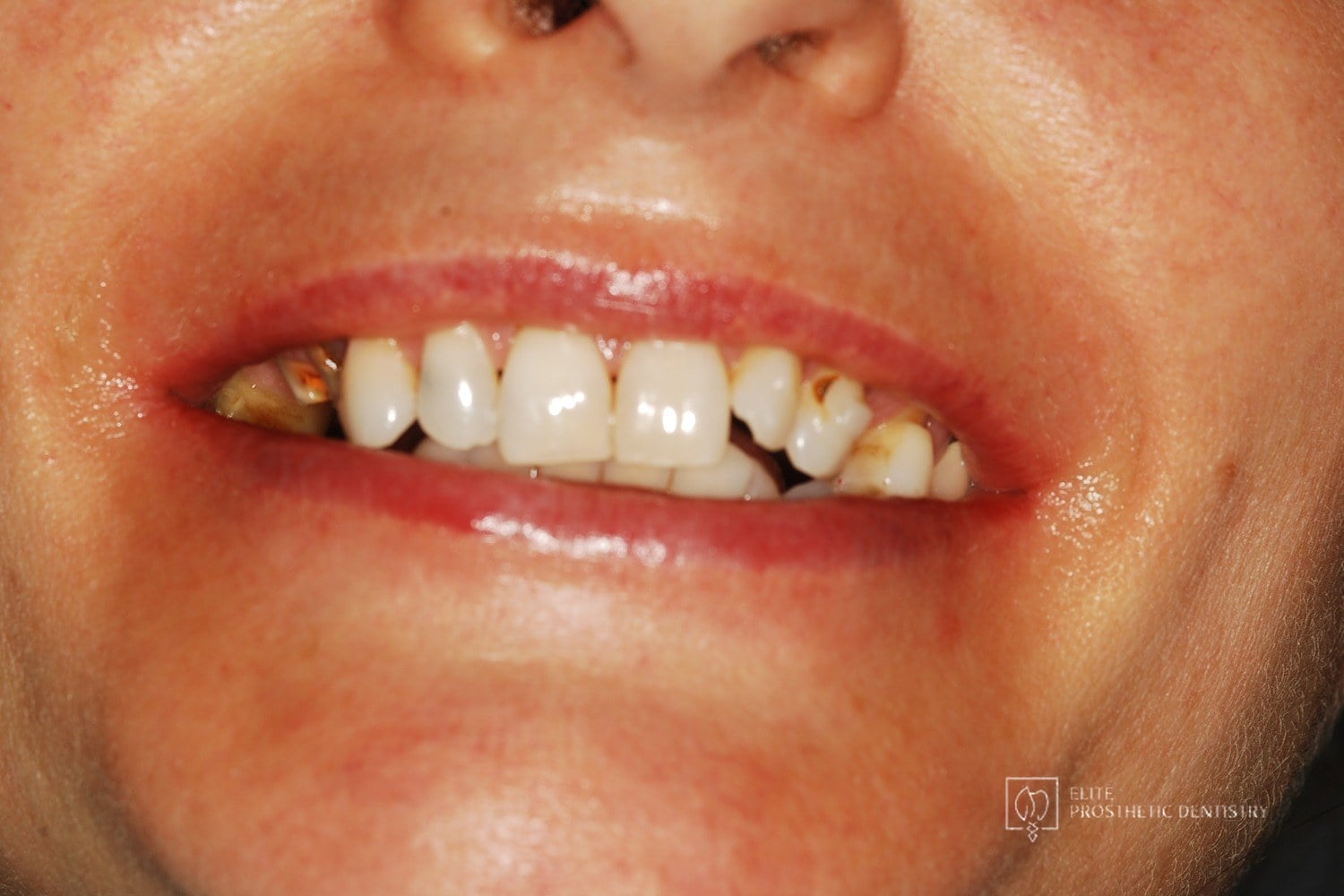 Before
 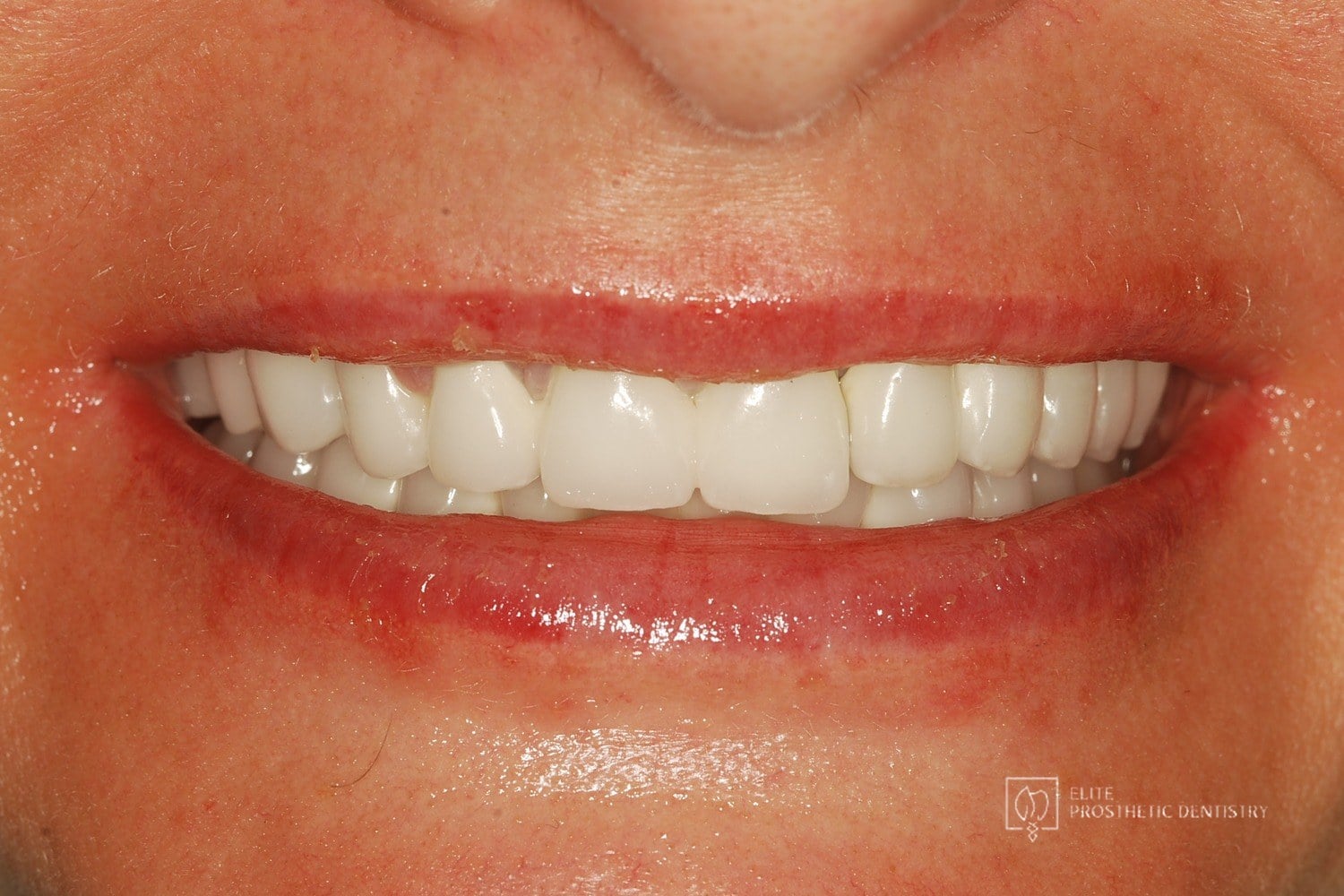 After
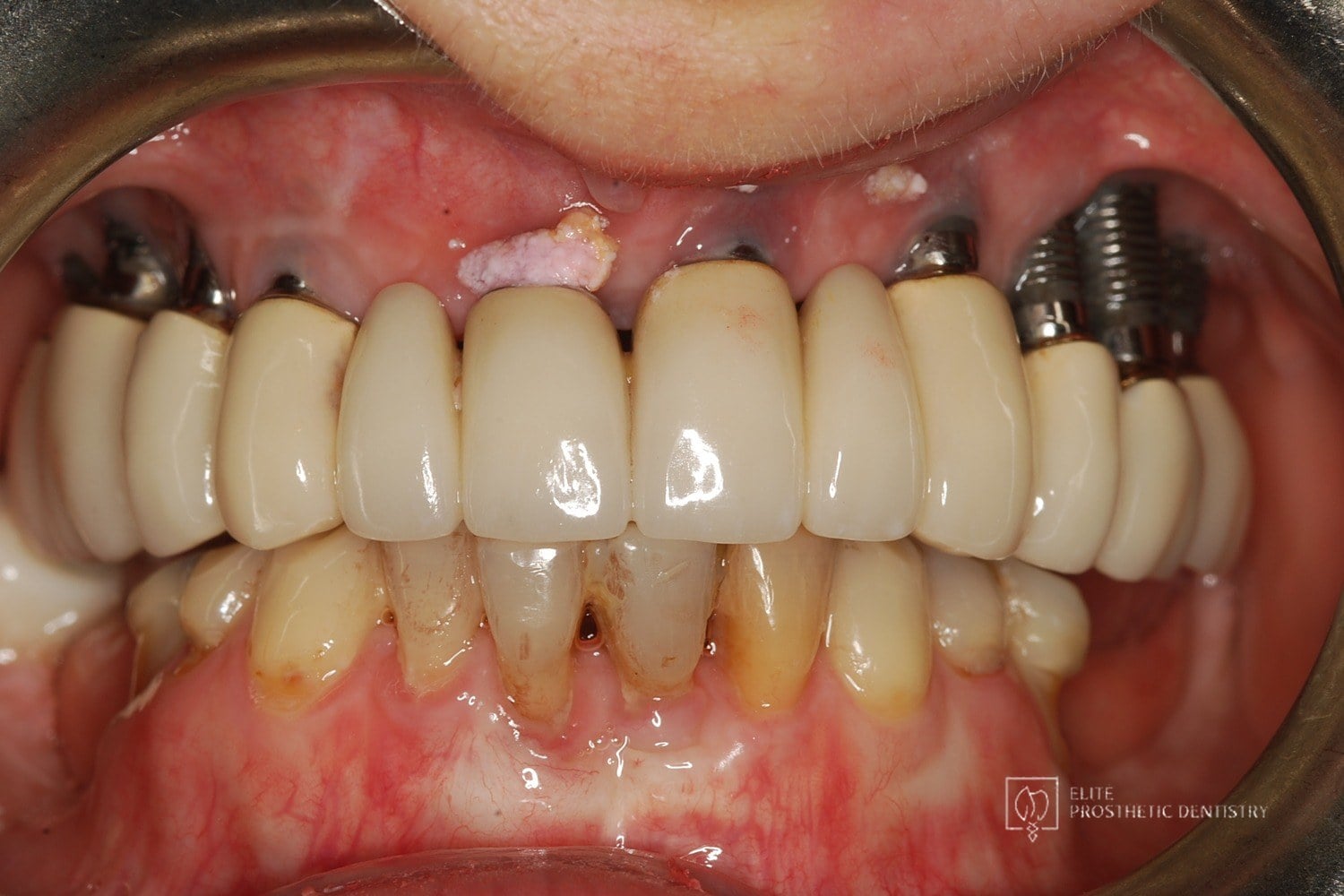
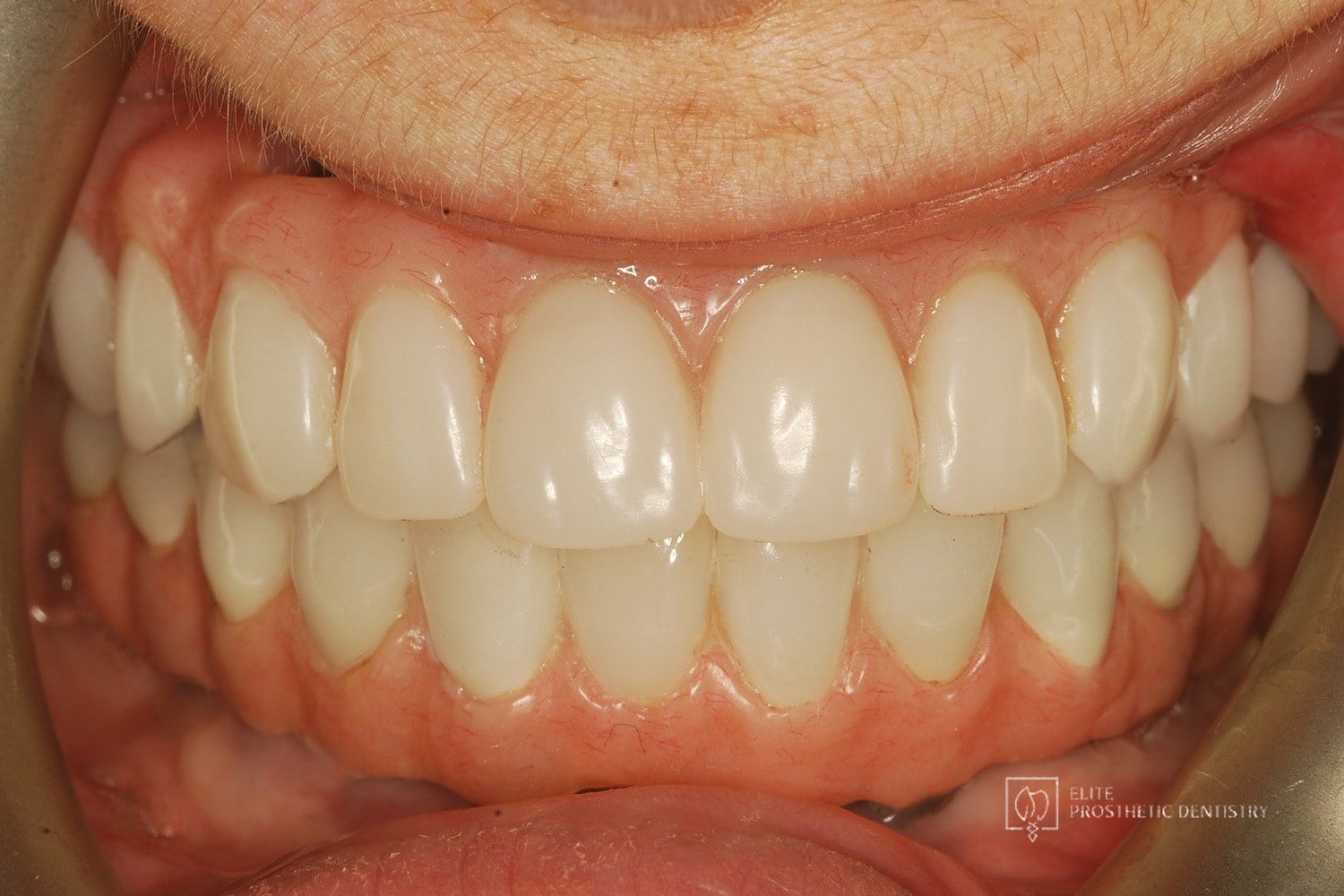
After How Aging, Failing Dentistry Was Replaced with a Coordinated Full-Mouth Implant and Crown Reconstruction
The patient presented with throbbing upper-molar pain, long-standing infections, multiple root canals and unfinished prior treatment, generalized sensitivity, and several hopeless teeth.
 Before
  After
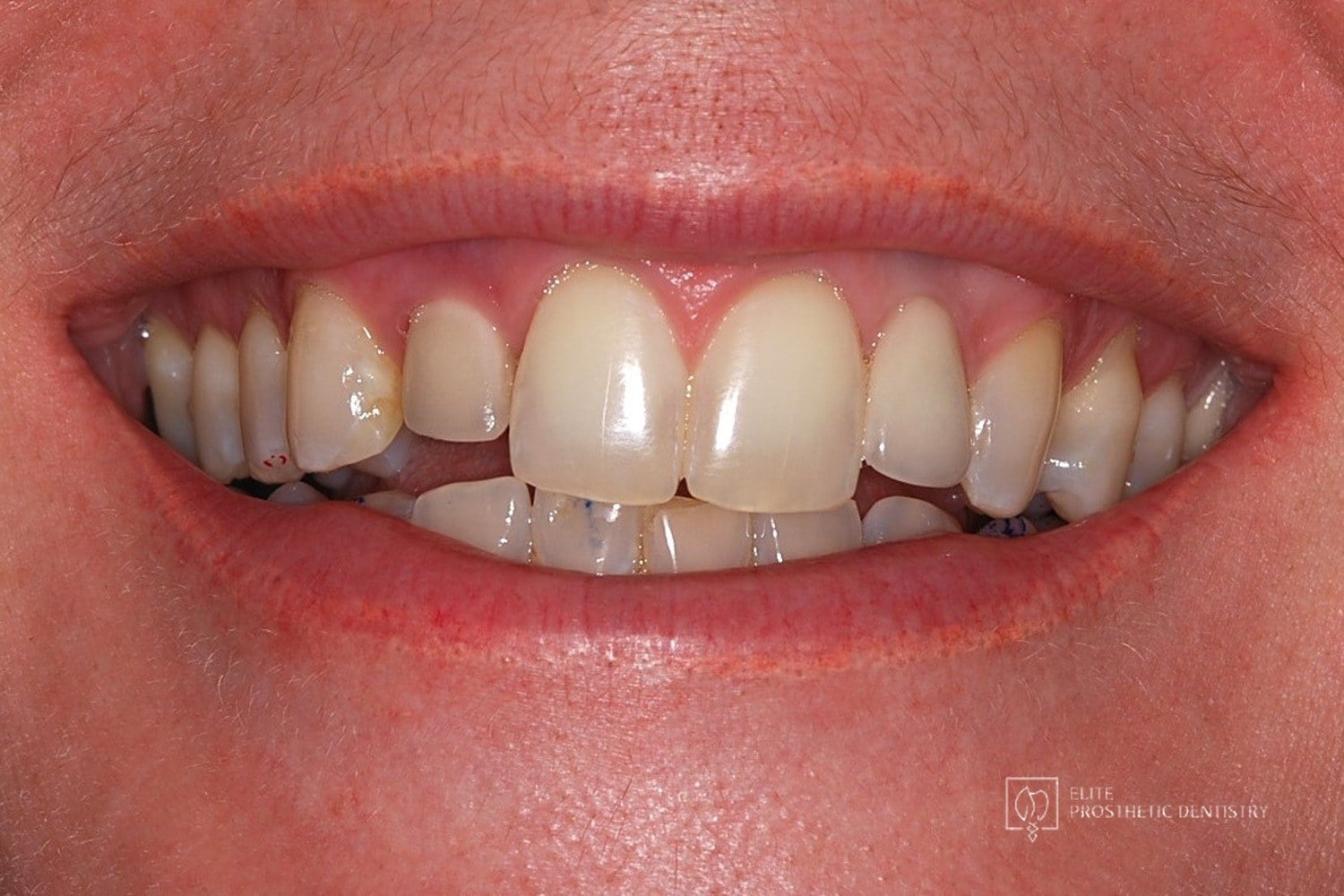
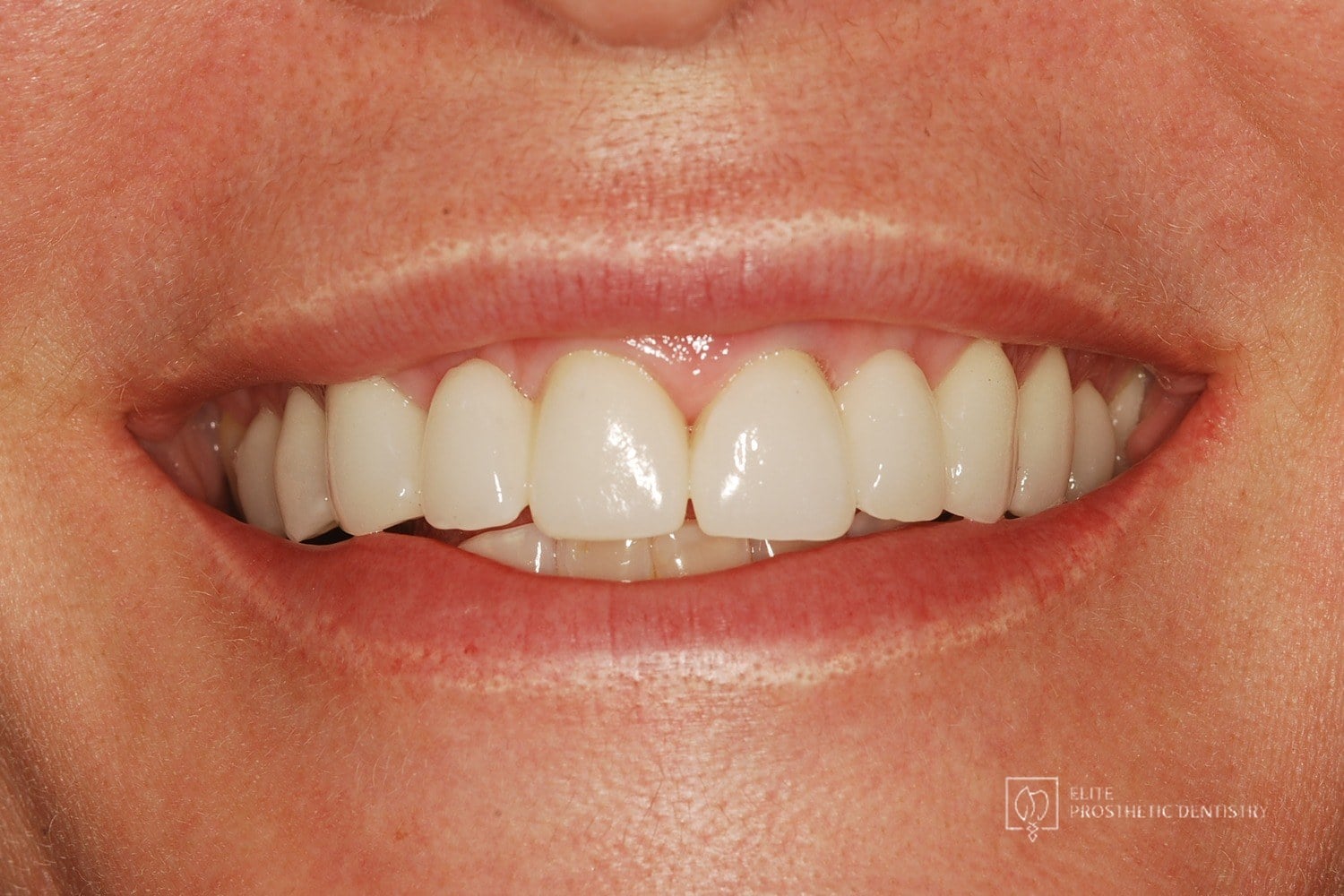
After How Failing Implants and Severe Bone Loss Were Rebuilt Into a Stable Full-Arch Implant Reconstruction
The patient presented with significant complications from previously placed implants, severe bone loss, failing posterior implants, and an unesthetic full-arch bridge. Both arches required full reconstruction, with the upper arch showing the most advanced bone loss and instability.
 Before
  After
After How Failing Lateral Incisor Implants Were Replaced with Custom Zirconia Bridges After Severe Bone Loss Made Replacement Implants Impossible
Comprehensive examination including CBCT imaging revealed significant bone loss surrounding implants that were placed outside the buccal plate, most likely due to placement without a CBCT-generated surgical guide. The implants were determined non-salvageable, and the alveolar ridge was too narrow to support replacement implants without extensive reconstruction.