
Comparing Full-Arch Implant Options for Cleveland Park
Comparing three full-arch implant options: removable overdentures, fixed hybrid prosthesis, and fixed individual crowns.
Cleveland Park residents choosing full-arch implant restoration can select among three fundamentally different approaches: removable implant-supported overdentures, fixed hybrid prosthesis, or fixed individual implant crowns. Each offers different function, esthetics, maintenance requirements, and costs. Understanding the tradeoffs enables informed decision-making.
Removable Implant-Supported Overdentures
A removable implant-supported overdenture attaches to 2 to 4 dental implants placed strategically in your jawbone. The denture clips or snaps to these implants using special attachments, remaining stable during eating and speaking.
This approach combines implant stability with removability. The implants bear the denture’s weight, anchoring it firmly in place so it doesn’t shift during conversation or eating. Yet you remove it nightly for cleaning and storage.
Removable overdentures typically require 2 to 4 implants per arch, fewer than fixed options. This reduced implant number reduces surgical complexity and cost compared to fixed restorations. The denture base incorporates gum-colored material replacing your gum tissue.
Daily eating is substantially improved compared to traditional dentures. The implant anchoring provides superior stability enabling confident eating. Most food choices are possible, with only very hard foods (nuts, hard candy, bones) requiring modification.
Maintenance involves daily cleaning of the denture and careful cleaning around implant attachments. The denture requires nightly removal for cleaning and storage. Implant attachment components occasionally require adjustment or replacement over years.
Fixed Hybrid Prosthesis
A fixed hybrid prosthesis is a single unit spanning your arch, attached to 4 to 6 implants. The restoration cannot be removed; it’s permanently fixed like natural teeth. The framework is titanium or zirconia, with individual tooth units and gum-colored material replacing your natural gum tissue.
This option provides superior stability compared to removable dentures. The fixed attachment means zero movement during eating, speaking, or laughing. Many patients report that hybrid prosthesis function remarkably like natural teeth.
Eating function is excellent. The fixed anchoring supports confident eating of virtually any food. Very hard foods (bones, hard candy) remain contraindicated for implant protection, but normal eating is unrestricted.
Daily care involves brushing and flossing like natural teeth. No removal or nightly storage is required. Home care is simpler than removable options. Professional cleanings are recommended every 6 months to maintain implant health.
Hybrid prosthesis requires 4 to 6 implants per arch, more than removable options but potentially fewer than individual crowns. The single-unit design is simpler to fabricate than multiple individual units, reducing laboratory complexity and cost compared to individual crowns.
The gum-colored material (acrylic or composite) may gradually discolor or wear over years. The restoration may require refinishing or replacement of damaged components periodically. Despite these maintenance needs, most hybrid prostheses function reliably for 10 to 20 years or longer.
Fixed Individual Implant Crowns
Fixed individual implant crowns are separate units, one crown per implant, with actual gum tissue between them. This option replicates natural dentition most closely. Each crown is individually designed to match your natural tooth shape and shade.
This approach requires 6 to 8 implants per arch for full-mouth restoration. The higher implant number creates maximum support and distributes forces optimally. The individual design allows maximum esthetic refinement.
Eating function is superior. With no gum-colored material and real gum tissue between teeth, these restorations look and function most like natural teeth. Food restrictions are minimal; you eat normally without modification.
Daily care is identical to natural teeth: brushing and flossing. No special maintenance is required. Professional cleanings every 6 months maintain implant health.
Fixed individual crowns are most complex to fabricate and most expensive to place. The higher implant number and individual crown fabrication increase surgical and laboratory costs substantially. Treatment timeline is longer due to the complexity of designing and fabricating multiple individual units.
The individual crown design allows replacement of damaged crowns without affecting adjacent teeth. If one crown fractures, that single unit is replaced. Hybrid prostheses require replacement of larger sections if damage occurs.
Comparing the Three Options: Honest Tradeoffs
Removable overdentures offer lower cost and fewer implants but require daily removal and storage. Fixed options eliminate daily maintenance but cost more and require more implants.
Hybrid prosthesis provides excellent function and reasonable cost with moderate implant requirements. Individual crowns provide maximum esthetics and function but require maximum implant number and cost.
Your bone anatomy may influence which options are feasible. Patients with severe bone loss may be limited to removable options without bone grafting. Patients with adequate bone can choose among all three approaches.
The optimal choice depends on your priorities: cost, convenience, esthetics, function, and maintenance preferences. Dr. Marlin evaluates your bone anatomy and explains what’s possible in your specific situation.
Cleveland Park Access and Implant Treatment
Cleveland Park’s proximity to our office (10 to 15 minutes north on Connecticut Avenue) makes scheduling multiple implant surgical and prosthetic appointments manageable. On-site parking and transit access simplify appointment logistics.
Schedule your comprehensive evaluation to understand your bone anatomy and appropriate full-arch implant option. Call (202) 244-2101 or visit 4400 Jenifer Street NW, Suite 220, Washington, DC 20015.
Frequently Asked Questions
Which full-arch option requires the least daily care?
Fixed individual crowns and hybrid prosthesis require only brushing and flossing like natural teeth. Removable overdentures require removal for cleaning and nightly storage. If minimal daily maintenance appeals to you, fixed options are superior.
Which option is most affordable?
Removable overdentures typically cost less than fixed options because they require fewer implants (often 2-4) while still providing stability. Fixed options require more implants (4-8) and more complex prosthetics, increasing cost. Dr. Marlin discusses costs for your bone anatomy.
Can I switch from one option to another later?
Converting removable to fixed requires additional implants and surgical procedures, extending timeline and increasing cost. The choice should be carefully considered initially rather than planned for later conversion. Some situations may allow modification of an existing removable denture to a fixed option depending on implant positioning.
How do eating capabilities compare between these options?
Removable overdentures provide near-normal eating with minor restrictions on very hard foods. Hybrid prosthesis provides excellent eating function, similar to natural teeth. Fixed individual crowns provide maximum eating freedom without food restrictions. All three options substantially improve eating compared to traditional dentures.
What's the difference between a hybrid and fixed individual crowns?
A hybrid prosthesis is a single unit attached across multiple implants, with gum-colored material replacing gum tissue between teeth. Fixed individual crowns are separate units on each implant with actual gum tissue between them. Hybrids are simpler to fabricate and clean. Individual crowns look more natural but are more complex to maintain.
Related Patient Success Stories
Explore similar patient success stories demonstrating our expertise in advanced prosthetic dentistry.
 Before
  After
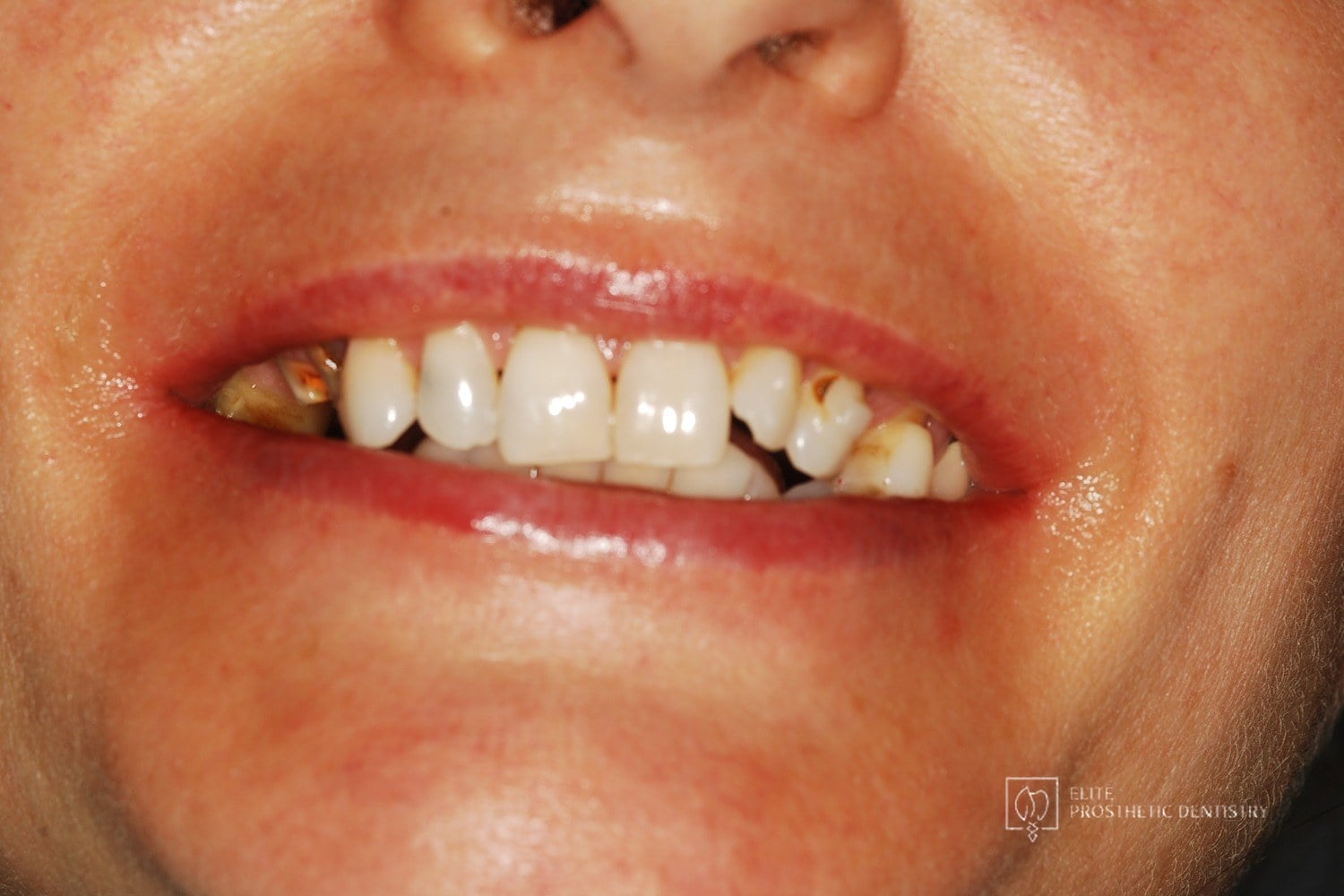
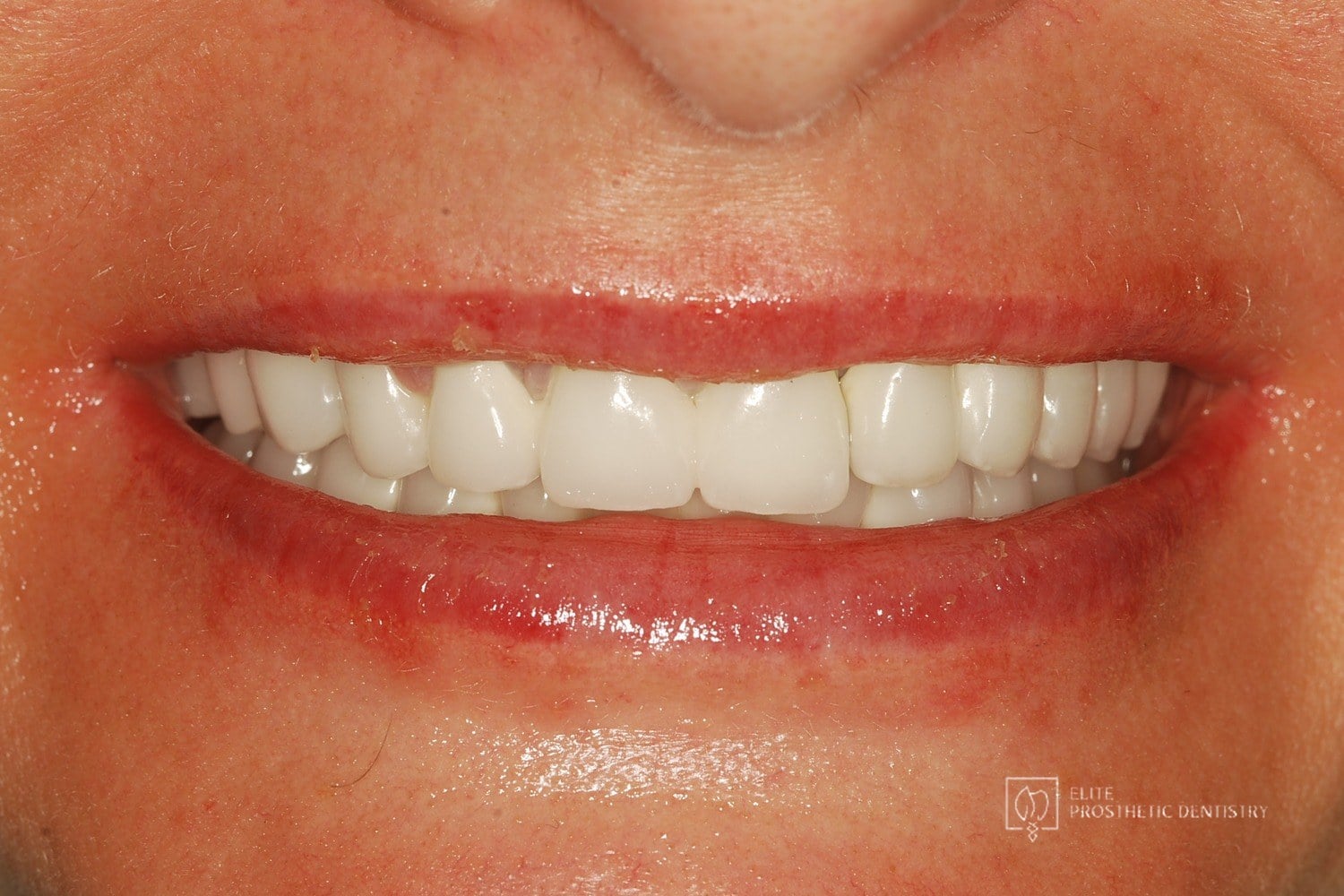
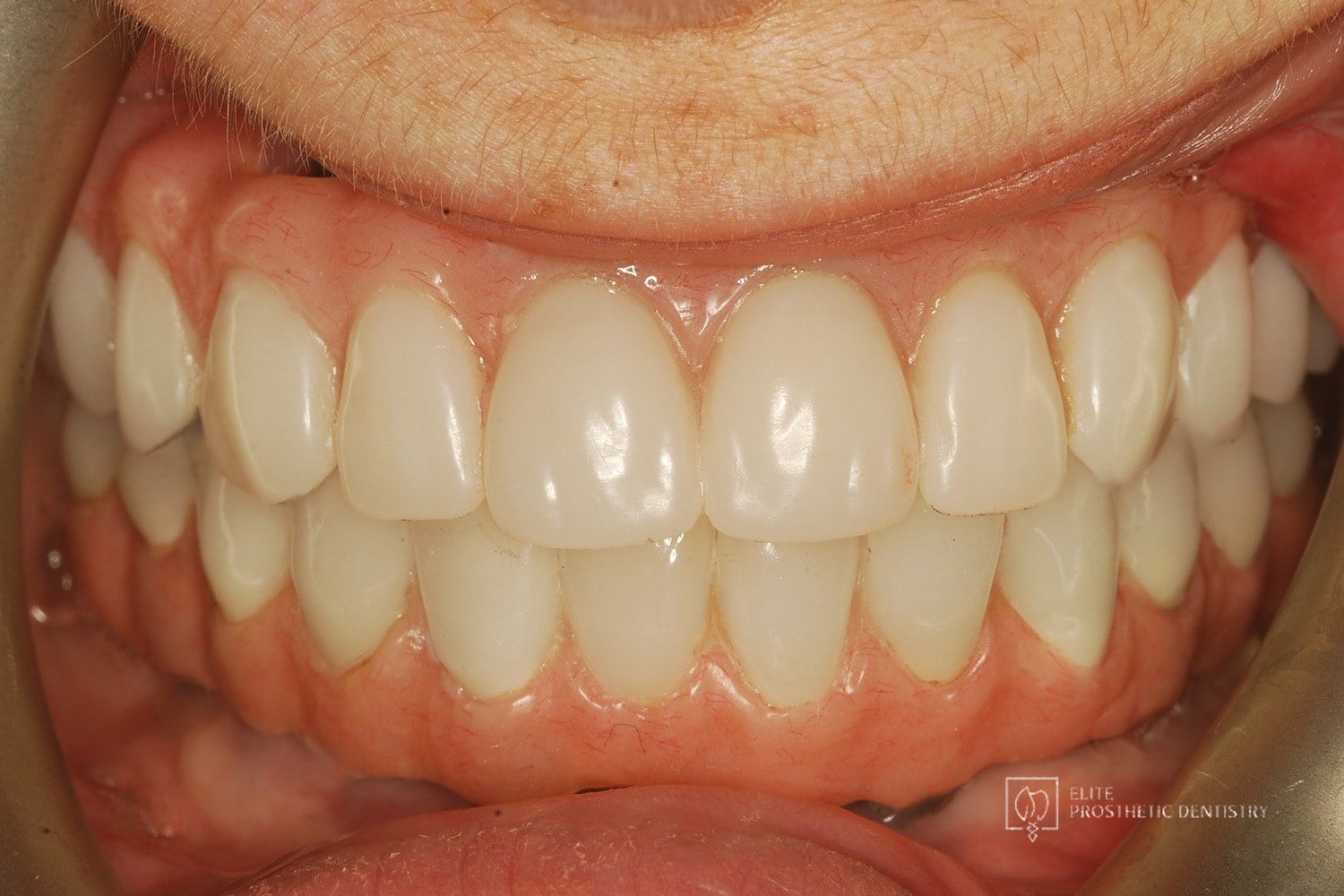
After How Aging, Failing Dentistry Was Replaced with a Coordinated Full-Mouth Implant and Crown Reconstruction
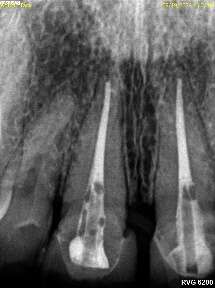
The patient presented with throbbing upper-molar pain, long-standing infections, multiple root canals and unfinished prior treatment, generalized sensitivity, and several hopeless teeth.
 Before
  After
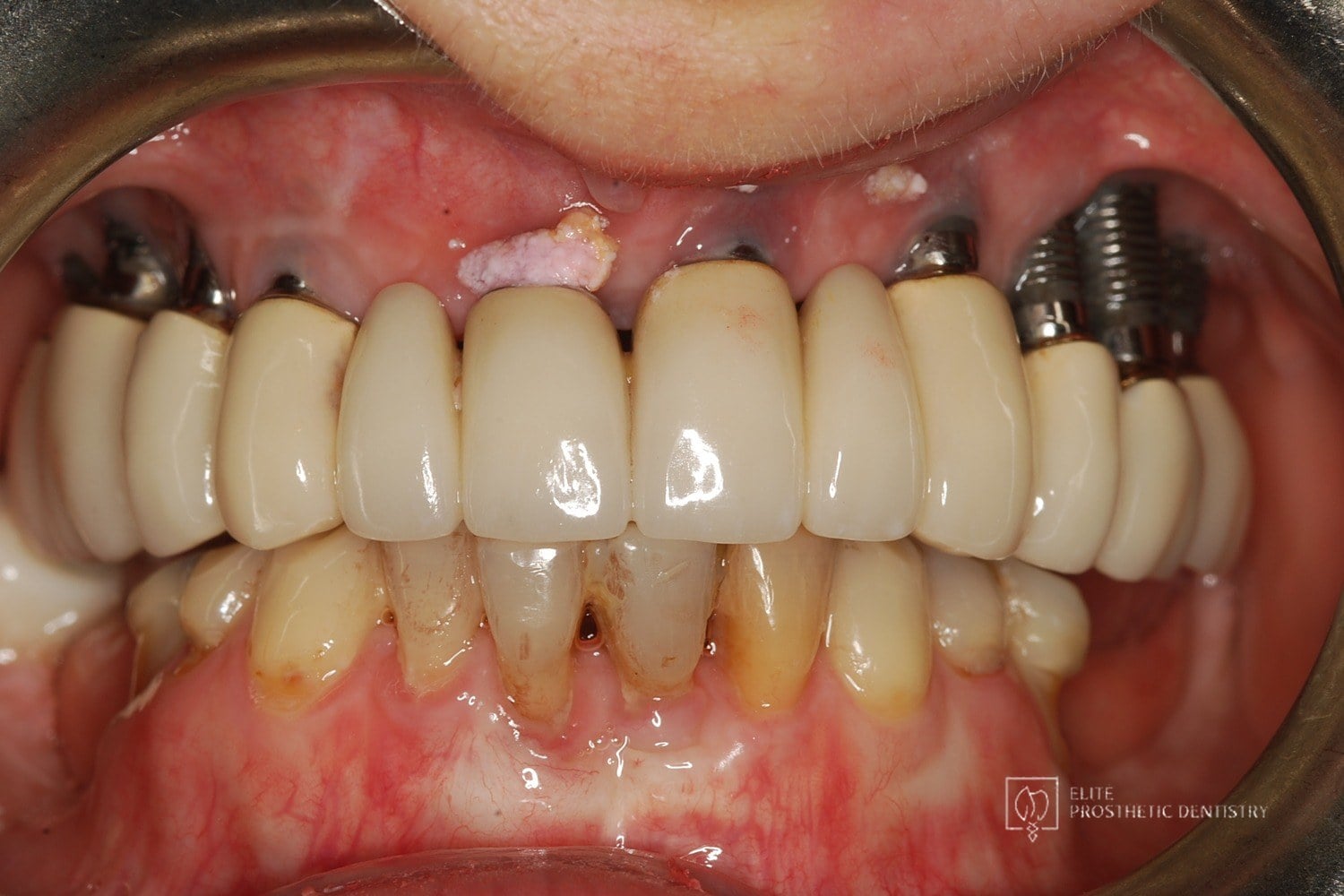
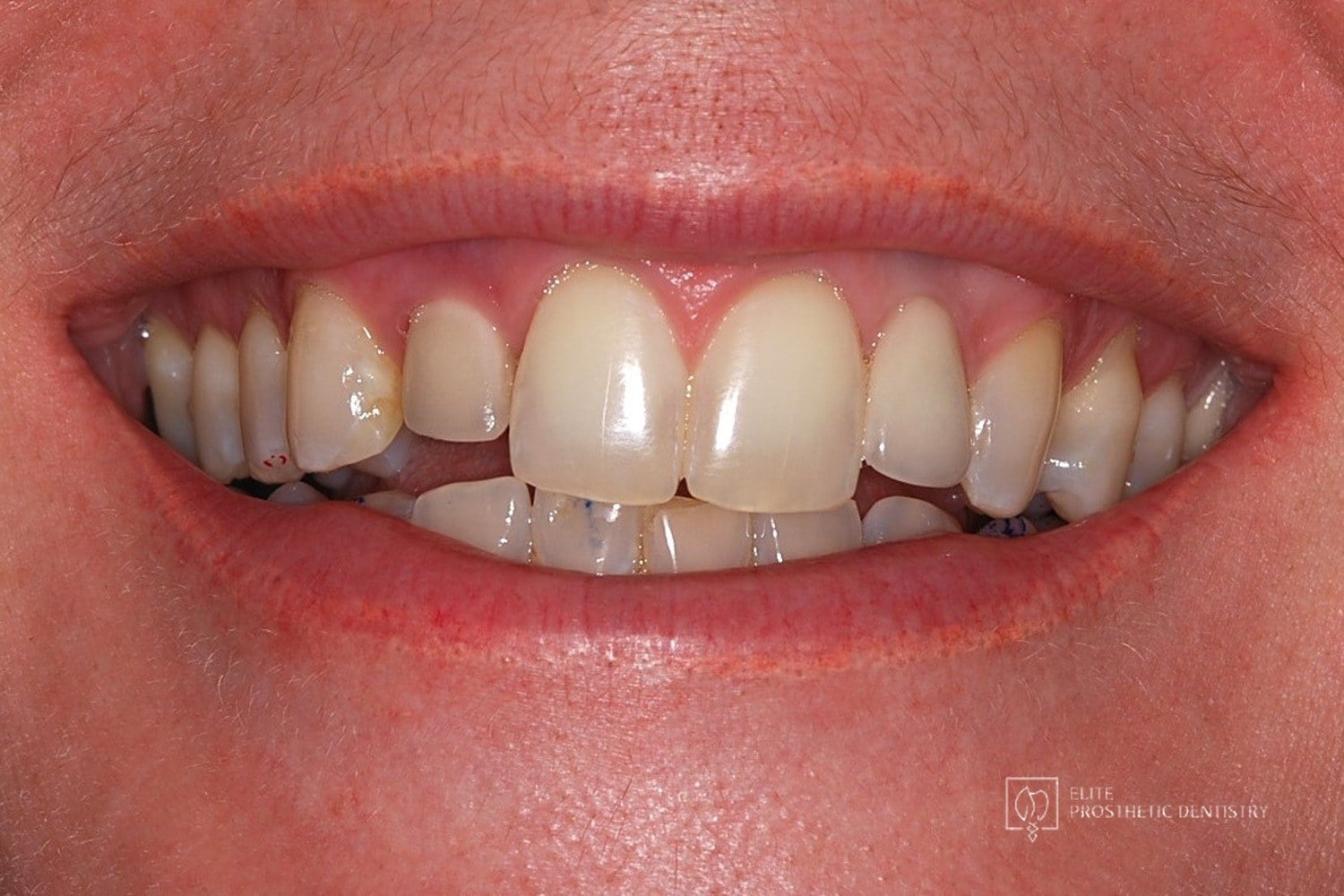
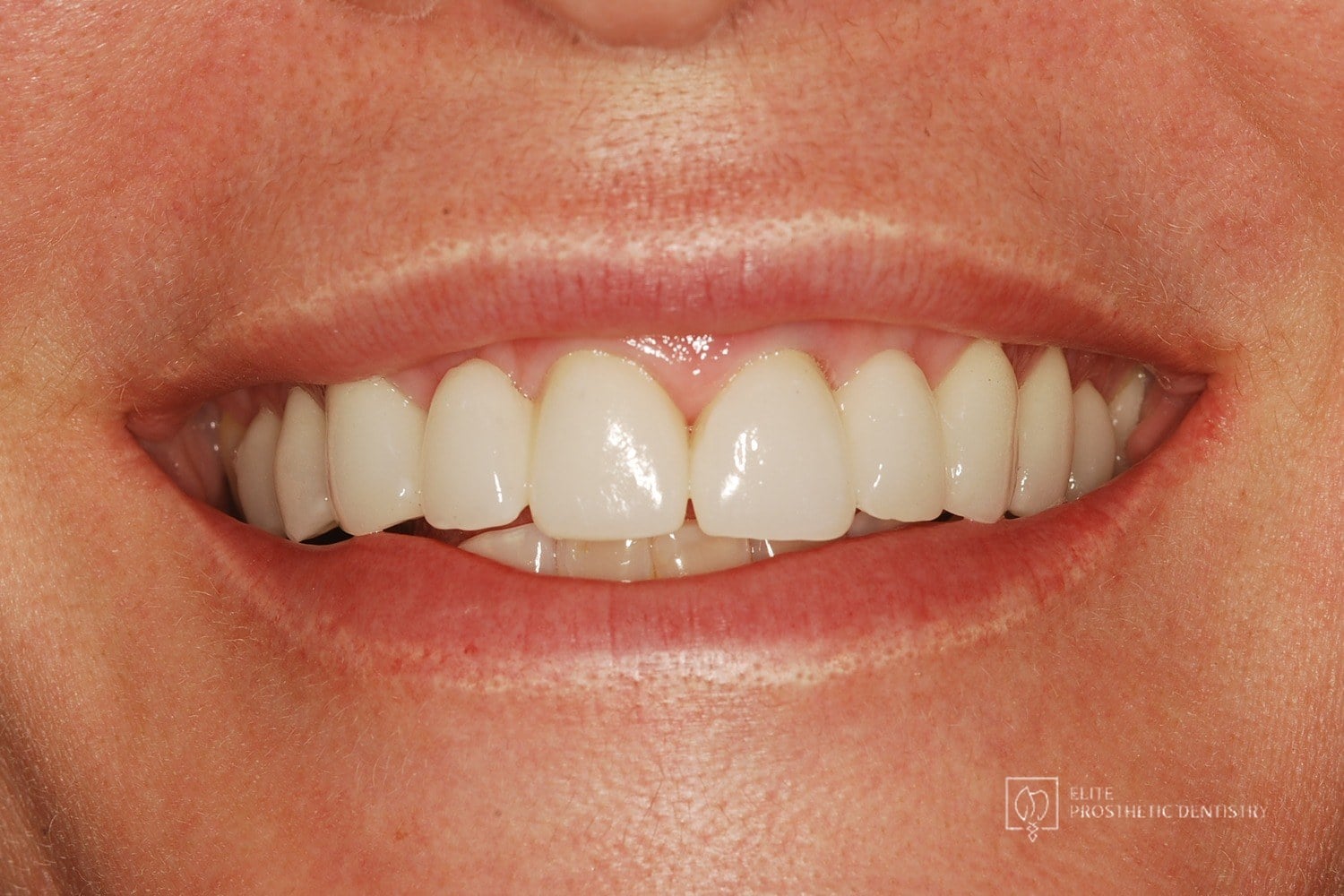
After How Failing Implants and Severe Bone Loss Were Rebuilt Into a Stable Full-Arch Implant Reconstruction
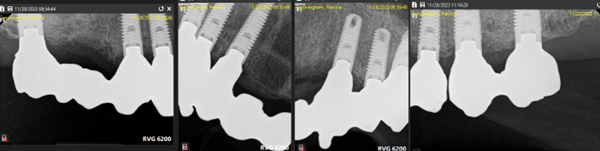
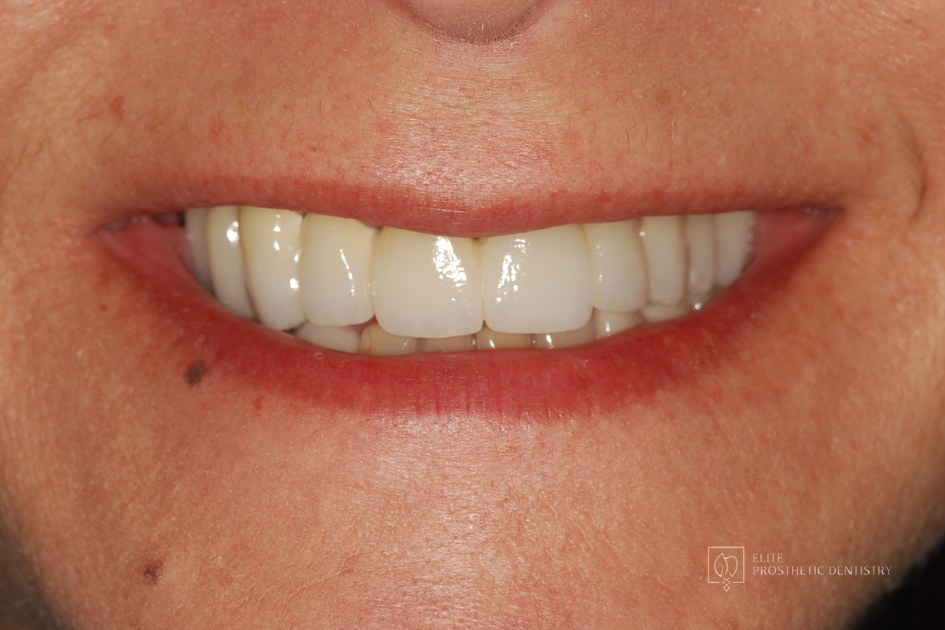
The patient presented with significant complications from previously placed implants, severe bone loss, failing posterior implants, and an unesthetic full-arch bridge. Both arches required full reconstruction, with the upper arch showing the most advanced bone loss and instability.
 Before
  After
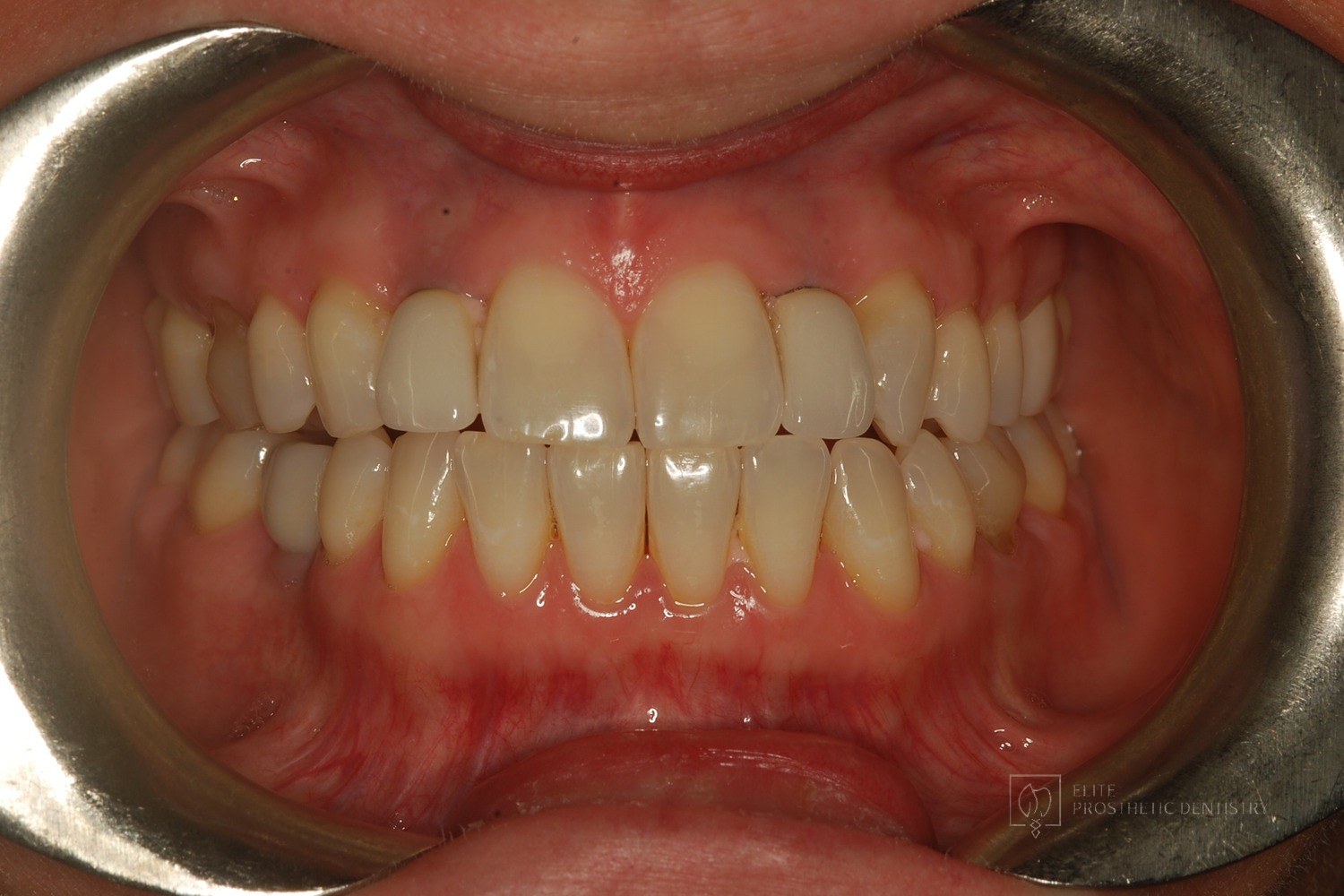
After How Failing Lateral Incisor Implants Were Replaced with Custom Zirconia Bridges After Severe Bone Loss Made Replacement Implants Impossible
Comprehensive examination including CBCT imaging revealed significant bone loss surrounding implants that were placed outside the buccal plate, most likely due to placement without a CBCT-generated surgical guide. The implants were determined non-salvageable, and the alveolar ridge was too narrow to support replacement implants without extensive reconstruction.
 Before
  After
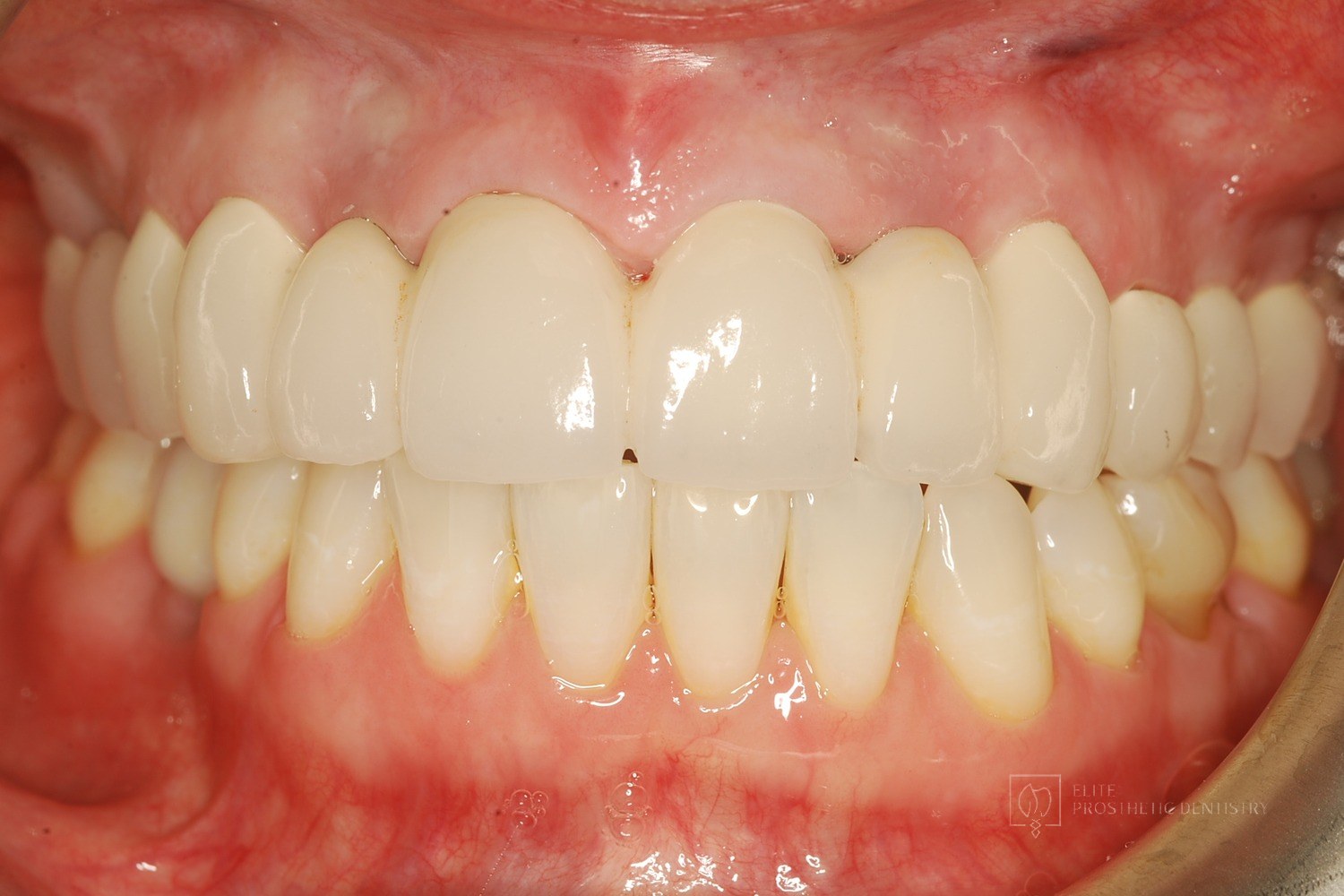
After How Older Implant Crowns Were Redesigned for a Better Bite and More Natural Appearance
The patient came in after years of living with implant-supported crowns placed more than twenty years earlier that no longer looked or functioned well. CBCT evaluation, reviewed with a radiologist colleague, showed the implants had been placed too far to the buccal in very thin bone and could not support a healthy long-term restoration.
 Before
  After
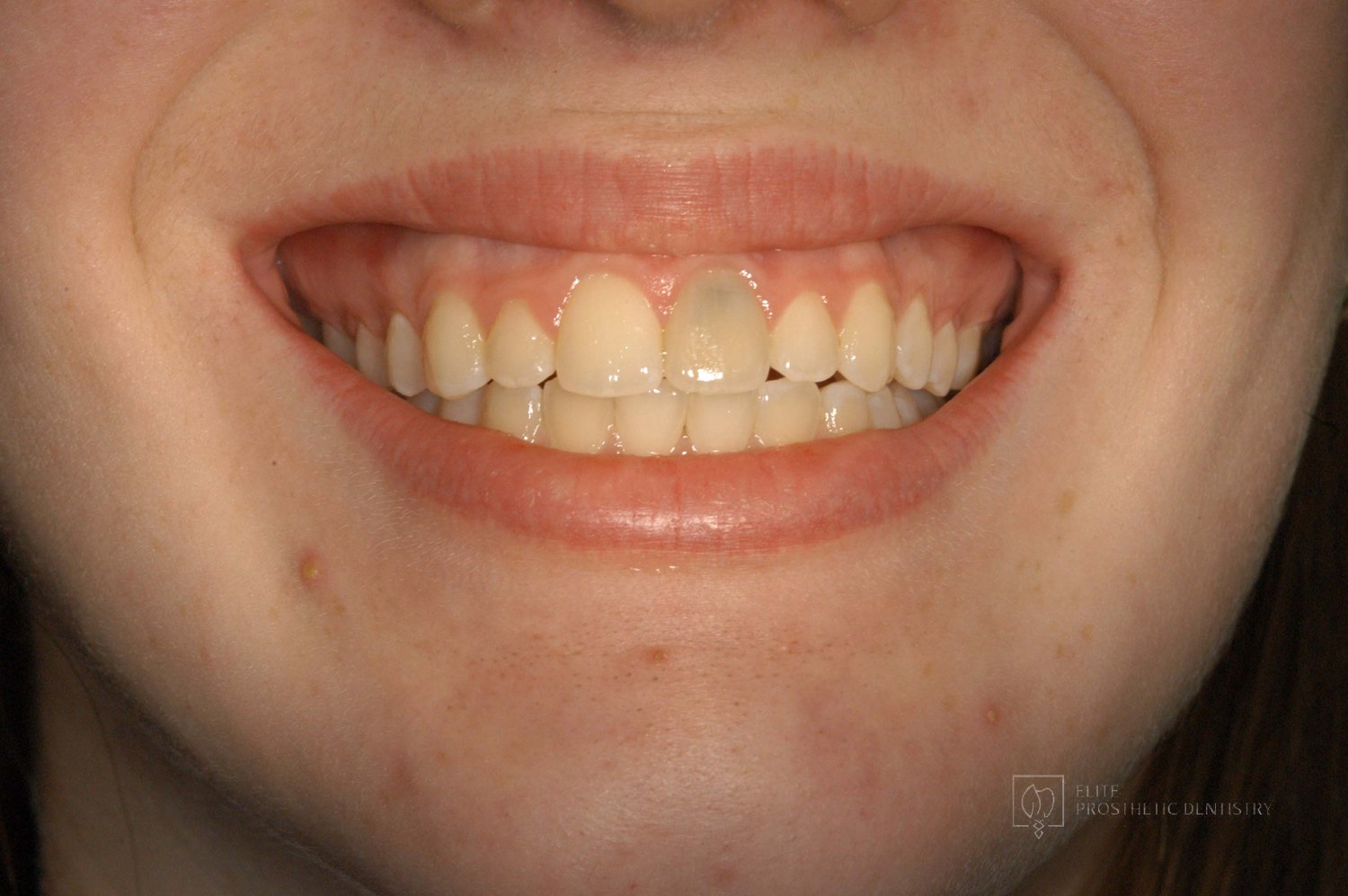
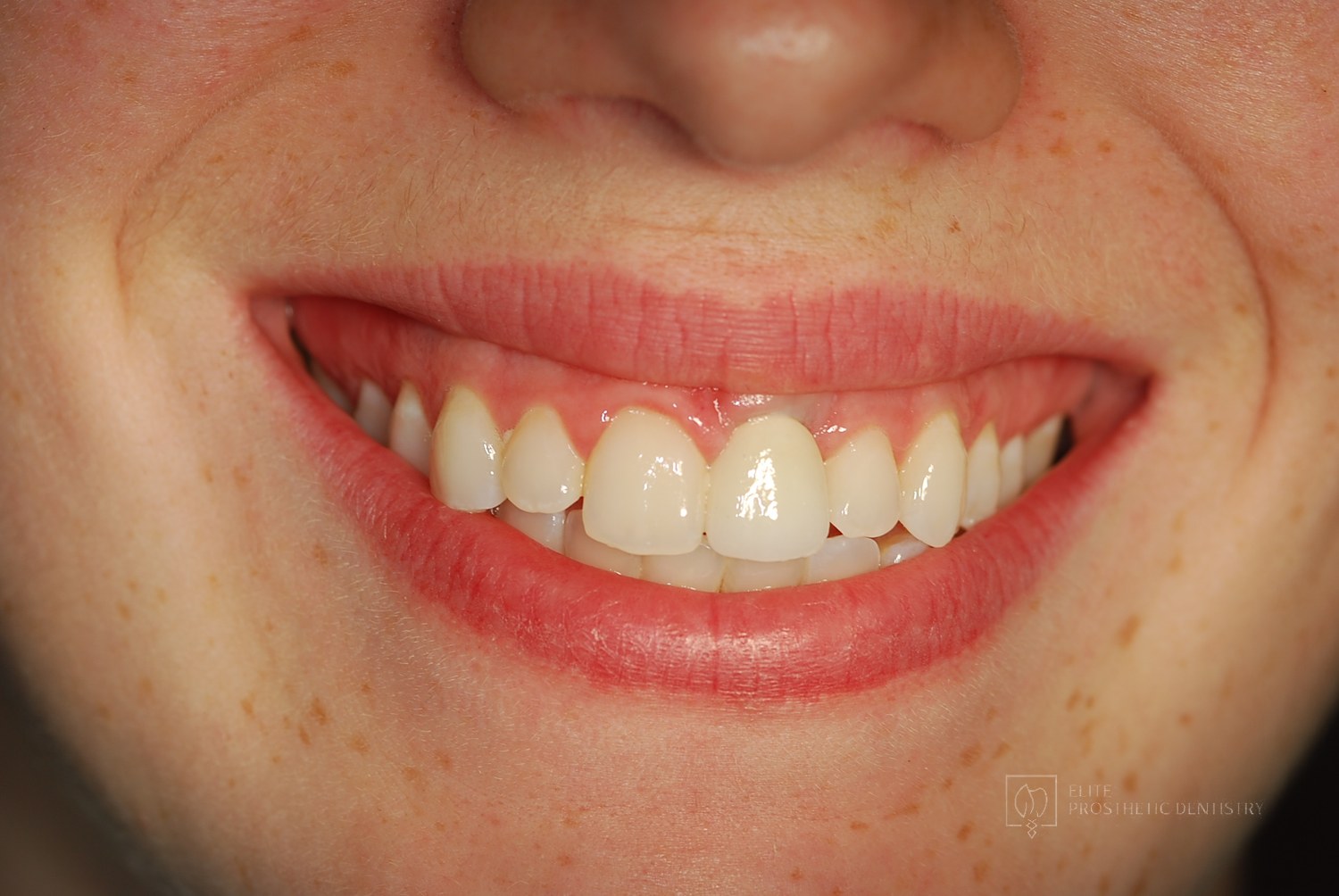
After How a Front Tooth Lost to Childhood Trauma Was Rebuilt with Bone Grafting and a Long-Lasting Implant
A teenager was referred by her father after earlier trauma left her upper left front tooth slowly failing from root resorption. She was still growing, so an immediate implant was the wrong move. The tooth had to be maintained to buy time, then replaced correctly once she reached skeletal maturity.
 Before
  After
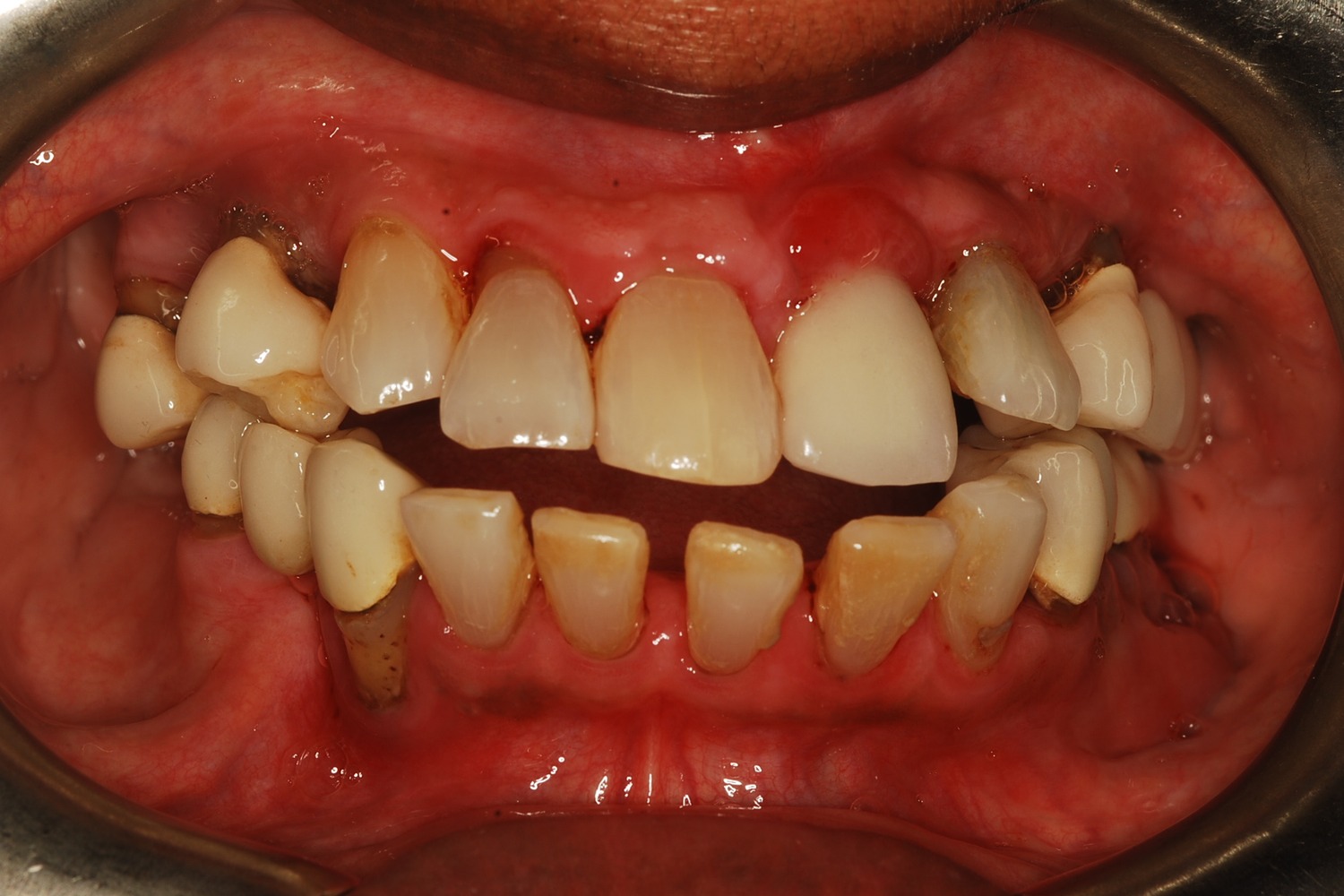
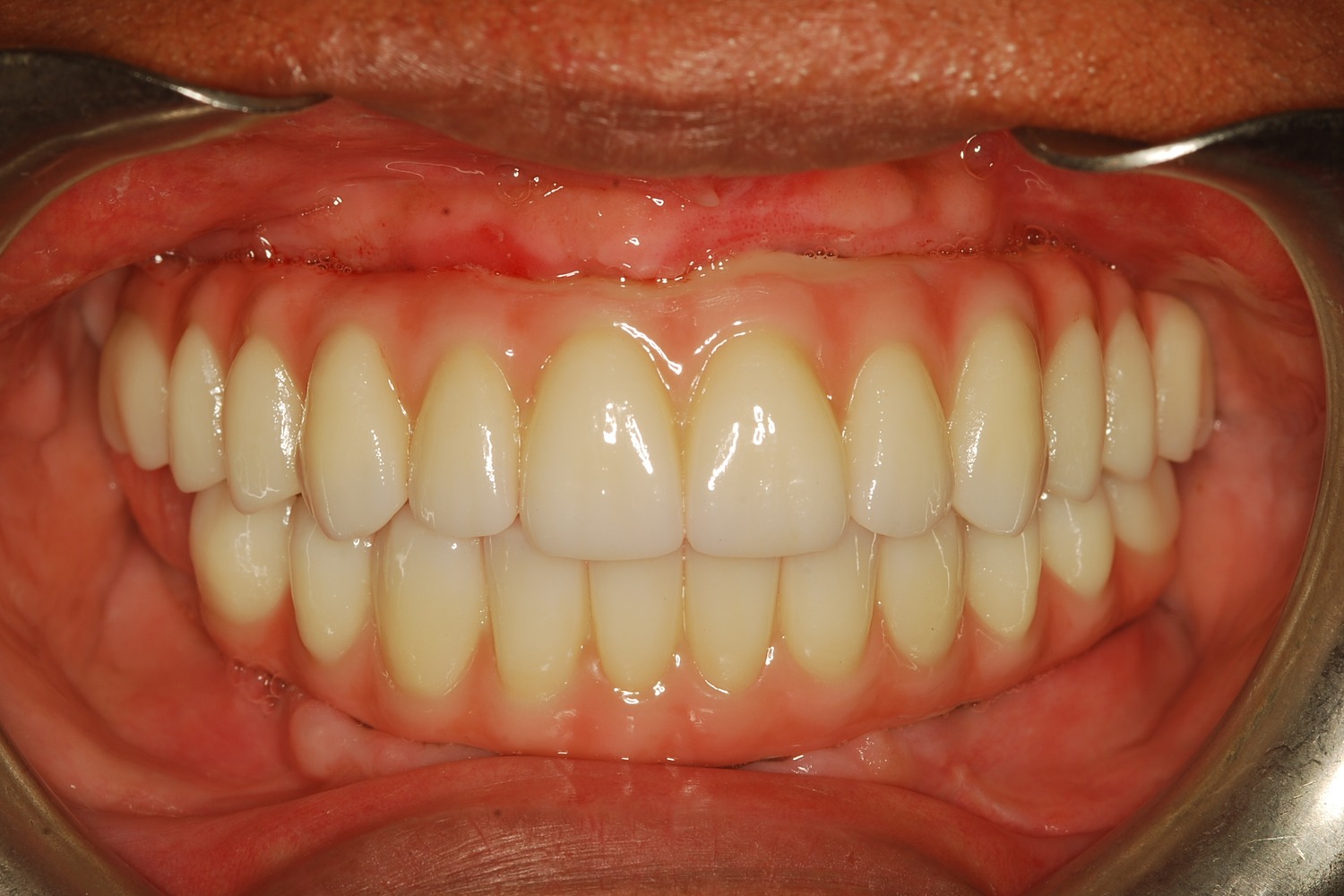
After How Severe Bone Loss and Bite Dysfunction Were Rebuilt with All-on-6 Implants and a Milled Zirconia Hybrid Prosthesis
The patient presented with severe bone loss, advanced periodontal disease, malocclusion, and a dysfunctional bite that required full-arch rebuilding.
Related Articles
Deepen your knowledge with additional insights on this topic.
 Dental Implants
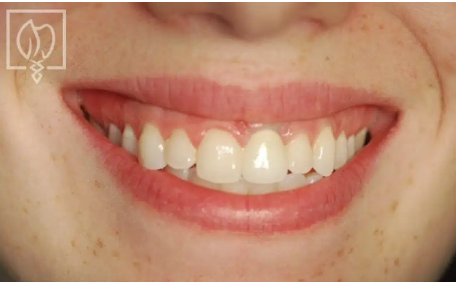
 If a Single Front Tooth Is Replaced with an Implant, Can It Look Natural?
Yes. See the four steps, with real case photos, that make a single front tooth implant indistinguishable from the natural tooth beside it. Washington, DC.
 Dental Implants
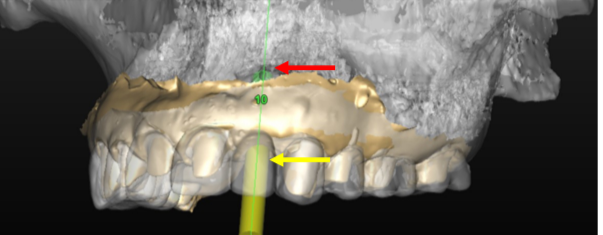
 What Is Precision Implant Placement (PIP)?
Precision Implant Placement plans each implant virtually on a CBCT scan, then delivers it with a custom surgical guide. See the three steps with real images.
 Dental Implants
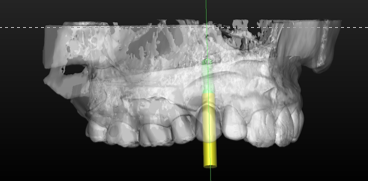
 What Is the Ideal Surgical Guide for Precision Implant Placement?
Not all surgical guides are equal. The gold standard is CBCT-based: planned virtually in 3D, 3D printed, and seated on your teeth. A DC prosthodontist explains.
 Dental Implants
 When Should an Implant Not Be Done?
Healthy roots, thin bone, steep bony angles: a DC prosthodontist shows a real case where refusing implants was the right call, and what was done instead.
 Dental Implants
 What Is Staged Implant Therapy?
Staged implant therapy replaces failing teeth in phases while you keep fixed teeth the entire time. A DC prosthodontist walks through a real case in stages.
 Dental Implants
 The Four Types of Dental Implants: Which One Is Right for You?
Endosteal, subperiosteal, zygomatic, and mini implants each solve a different problem. A DC prosthodontist explains the four types and who each one fits.
Full Mouth Implants Near Cleveland Park
Dr. Marlin also provides full mouth implants services for patients in these neighboring communities.
Getting Here from Cleveland Park
Elite Prosthetic Dentistry is conveniently located near Cleveland Park, DC.
From Cleveland Park, drive north on Connecticut Avenue NW directly toward Friendship Heights. The office is at 4400 Jenifer Street NW, Suite 220. Building parking is available. Friendship Heights Red Line Metro station is nearby.
Address:
4400 Jenifer Street NW, Suite 220
Washington, DC 20015
Phone: (202) 244-2101
Request a ConsultationRequest a Specialist Consultation from Cleveland Park
Cleveland Park residents come to Dr. Marlin for specialist prosthodontic care. With 3,900+ implants placed over 40+ years, evaluation, planning, and execution are handled with the depth complex cases require.