
What Do I Do When I'm Told a Tooth Needs to Be Extracted?
In today’s implant era, patients hear a sentence more often than they should: this tooth needs to come out and be replaced with an implant. Sometimes that is exactly right. But we are very experienced with implants in this practice: Dr. Marlin has placed more than 3,900 dental implants. Precisely because of that experience, he will always try to save a tooth rather than extract it, when the patient wishes and the tooth allows.
That ordering matters. Here is why, and what to do when you have been told a tooth is finished.
Why a Savable Tooth Beats a Replacement
Natural teeth hold advantages no implant fully reproduces. A tooth connects to the jaw through a living ligament that provides sensation and shock absorption; an implant fuses rigidly to bone. A tooth preserves the gum and bone architecture around it as designed; a replacement approximates it. Implants are the best answer ever developed for a tooth that is truly gone, and we place them routinely. They are not an upgrade over a tooth that could have stayed.
So the first question is never “can an implant go here?” It is “does this tooth actually have to leave?”
A Case in Point: The Tooth That “Had” to Go
Our patient came to us simply wanting to replace crowns she found unattractive (Fig. 1). Beneath one of them, unknown to her, was extensive decay that had left very little tooth structure to work with (Fig. 2), the kind of finding that routinely triggers an extraction recommendation and an implant plan.
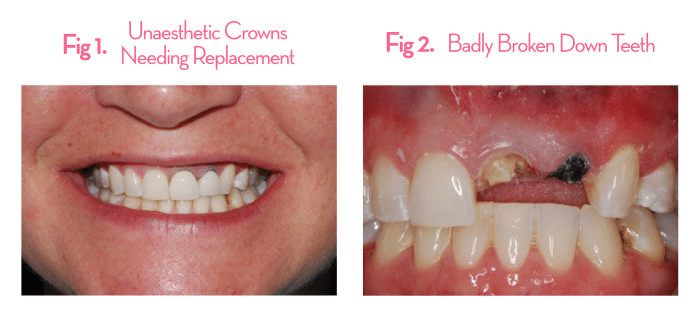
Fig. 1: Unsatisfactory Existing Crowns
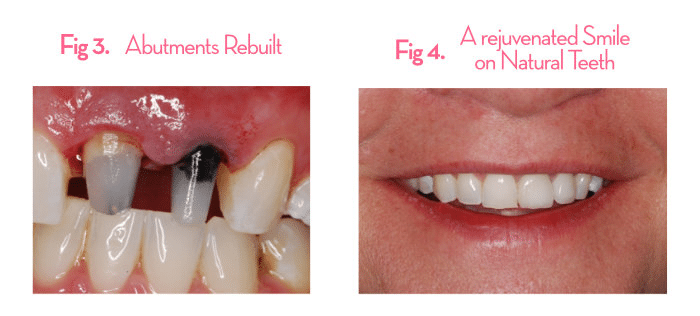
Fig. 2: Extensive Decay Beneath Crown
Instead, we reconstructed the tooth abutments and fabricated two natural-looking custom crowns in our in-house laboratory. Her natural teeth stayed, the aesthetics she originally wanted were delivered, and the result has endured. Extraction was available the whole time. It simply was not necessary.
What to Do With an Extraction Recommendation
Treat it as a diagnosis to verify, not an appointment to schedule. Ask what specifically makes the tooth unsavable, whether a root canal, post, and crown could rebuild it, and what the long-term prognosis of saving it would be versus replacing it. Then, for any non-emergency extraction, get a second opinion from someone trained on both sides of the question.
A prosthodontist occupies exactly that position: specialty training in saving compromised teeth through reconstruction and in replacing lost ones with implants. When both tools sit within the same specialty, the recommendation can follow the tooth instead of the toolbox. Dr. Marlin has written further on this in being told several teeth need extraction and implants, and the theme runs through cases like two front teeth saved with gold posts and zirconia crowns.
Extraction is sometimes necessary, and when it is, we say so plainly and plan the replacement properly. But it should be the last resort, not the first option. If you have been told a tooth needs to come out, invest one more visit before something irreversible happens. Call 202-244-2101 or schedule a consultation with Dr. Gerald Marlin at Elite Prosthetic Dentistry in Friendship Heights, Washington, DC.
See How We Resolve These Problems
Our patient success stories show real cases and real results. Browse outcomes from a specialist prosthodontist with decades of experience and 3,900+ implants placed.
Key Takeaways
- ✓ In the implant era, extraction gets recommended faster than it should. A tooth that can be predictably saved is usually worth saving.
- ✓ Natural teeth retain advantages no implant matches: nerve sensation, a natural ligament connection to the jaw, and preserved anatomy.
- ✓ Even heavily decayed teeth can often be reconstructed with posts, rebuilt abutments, and custom crowns.
- ✓ The right question is not 'can an implant replace this tooth' but 'does this tooth truly need replacing.'
- ✓ Before any extraction, a prosthodontist's second opinion costs one visit and protects an irreversible decision.
Frequently Asked Questions
Should I get a second opinion before a tooth extraction?
For any non-emergency extraction, yes. Extraction is irreversible, and clinicians differ honestly about which teeth can be saved. A prosthodontist, trained in both saving teeth through restoration and replacing them with implants, can evaluate the decision from both sides without a bias toward either.
Can a badly decayed tooth really be saved?
Often, yes. If enough sound root structure remains, the tooth can be rebuilt: decay removed, the canal treated if needed, a custom post placed, the abutment reconstructed, and a precision crown fabricated. The realistic question is whether the result will be stable long-term, which an examination and X-rays can answer.
Why keep a natural tooth instead of getting an implant?
A natural tooth has a ligament connection to the jaw that provides sensation and shock absorption, preserves the bone and gum architecture around it, and avoids surgery entirely. Implants are a superb replacement when a tooth is truly lost, but they are a replacement, not an upgrade over a savable tooth.
When is extraction genuinely the right call?
When the tooth cannot be made stable: fractures below the gumline or through the root, decay that leaves too little structure to rebuild, or bone support too damaged to hold it. In those cases, extraction with a well-planned replacement beats heroics on a doomed tooth. The point is reaching that verdict honestly.
Related Patient Success Stories
Explore similar patient success stories demonstrating our expertise in advanced prosthetic dentistry.
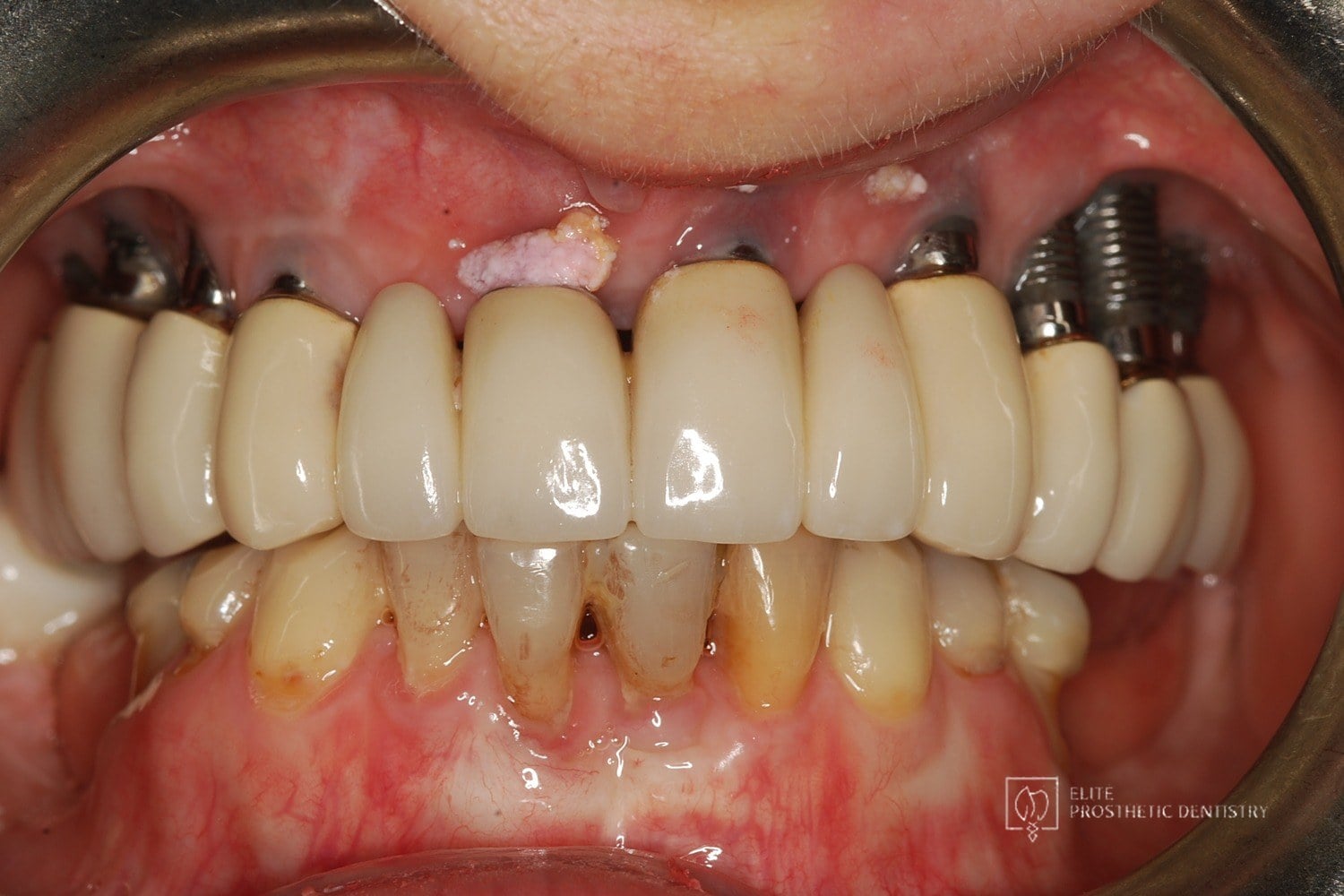
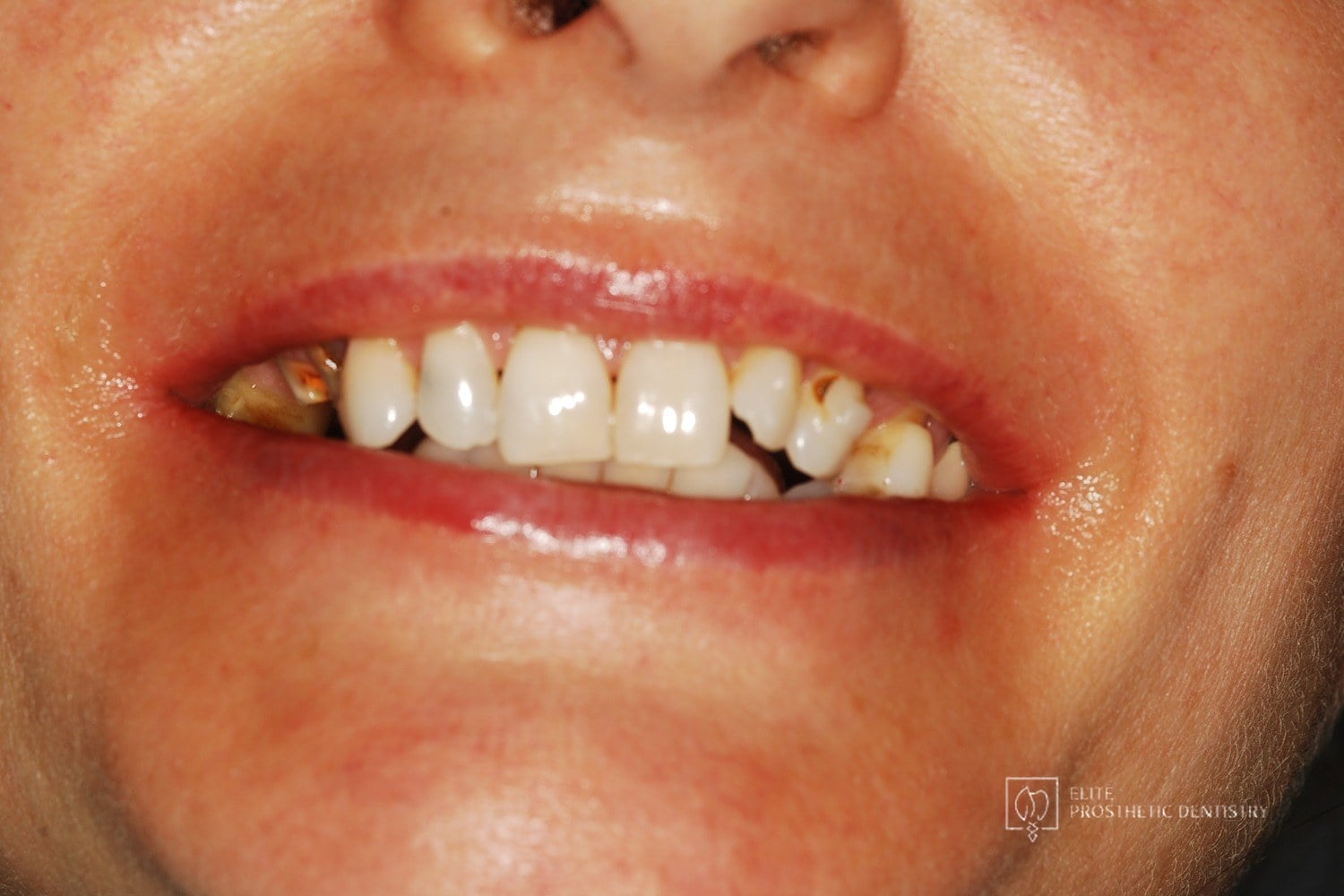 Before
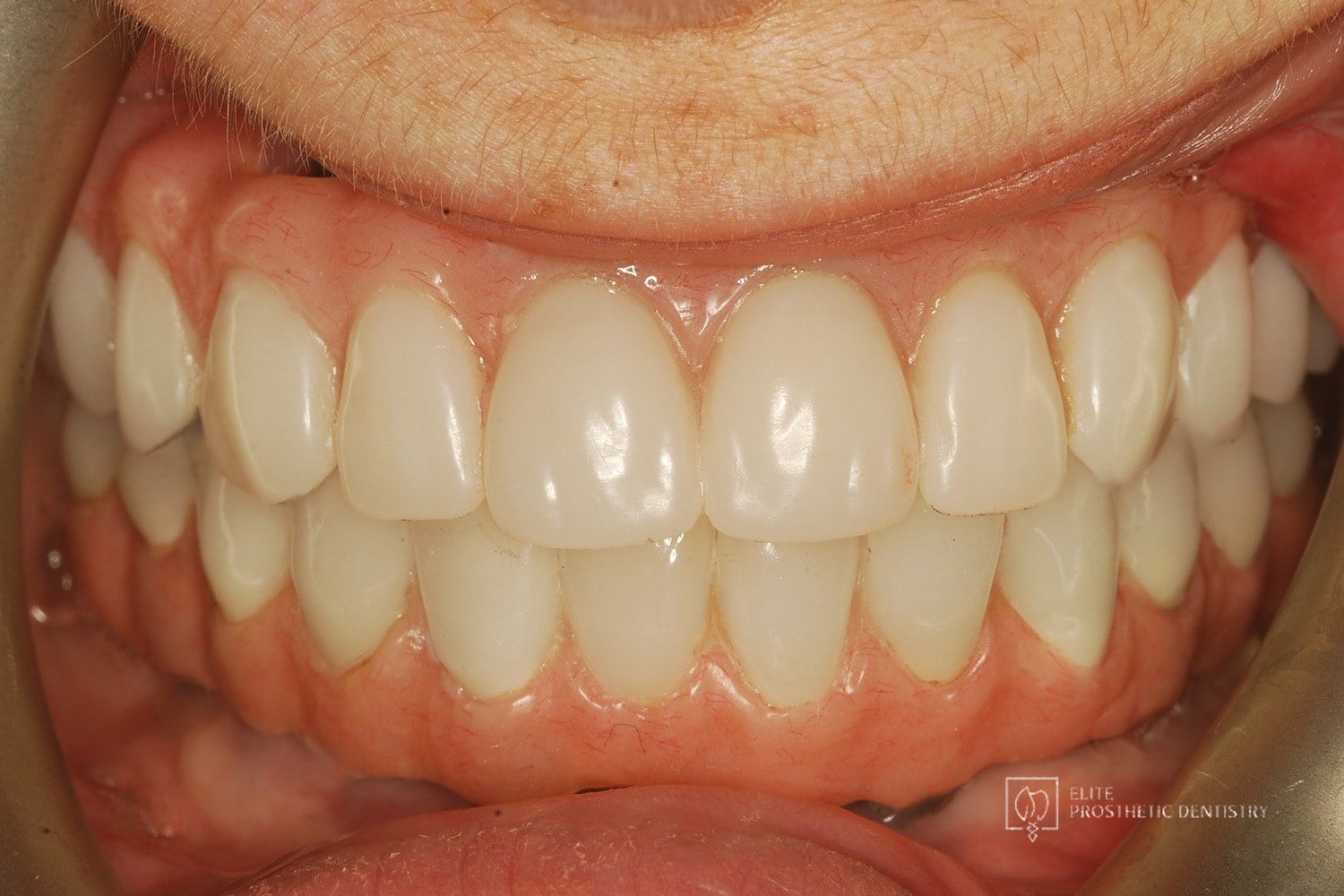
 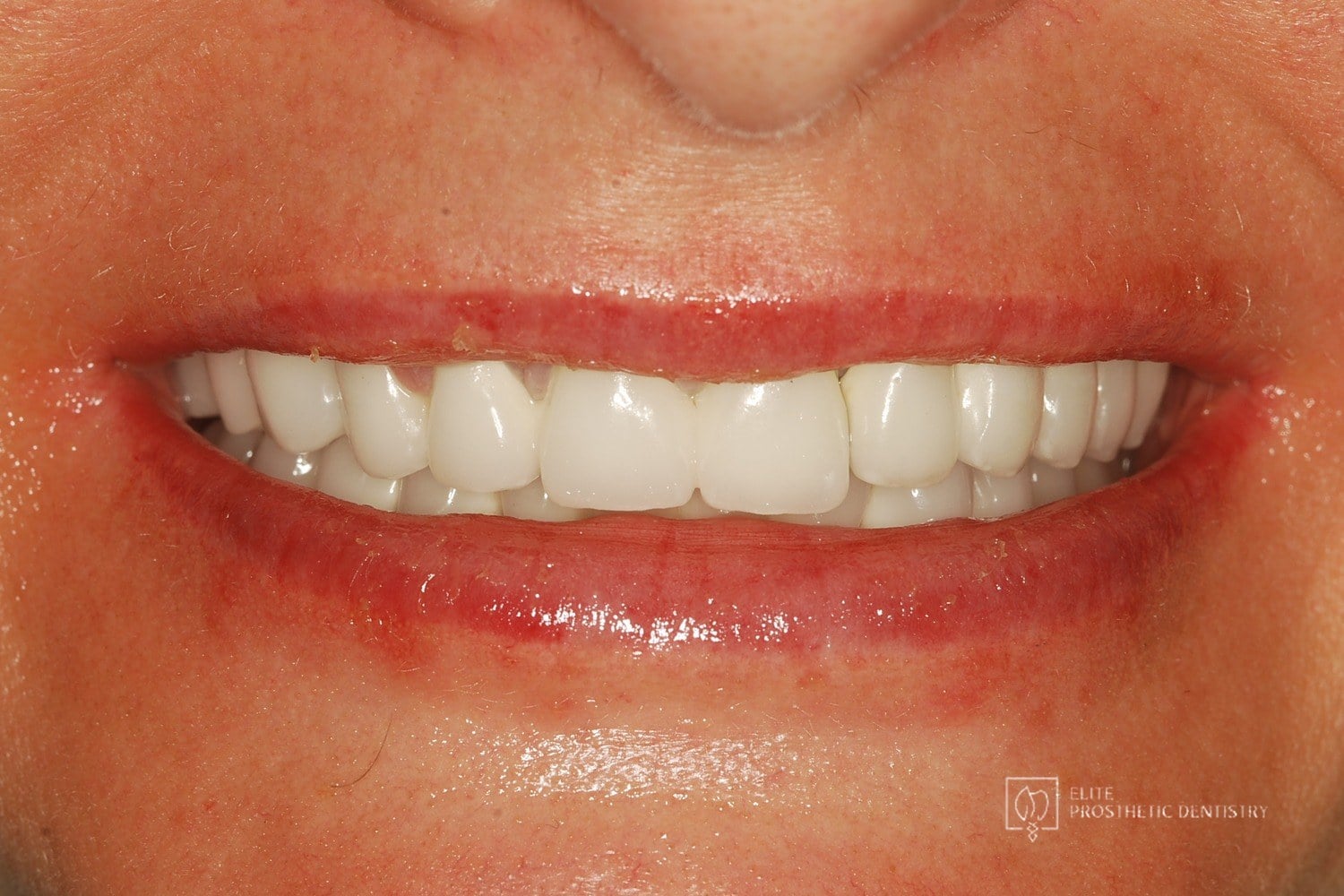 After
After How Aging, Failing Dentistry Was Replaced with a Coordinated Full-Mouth Implant and Crown Reconstruction
The patient presented with throbbing upper-molar pain, long-standing infections, multiple root canals and unfinished prior treatment, generalized sensitivity, and several hopeless teeth.
 Before
  After
After How Failing Implants and Severe Bone Loss Were Rebuilt Into a Stable Full-Arch Implant Reconstruction
The patient presented with significant complications from previously placed implants, severe bone loss, failing posterior implants, and an unesthetic full-arch bridge. Both arches required full reconstruction, with the upper arch showing the most advanced bone loss and instability.
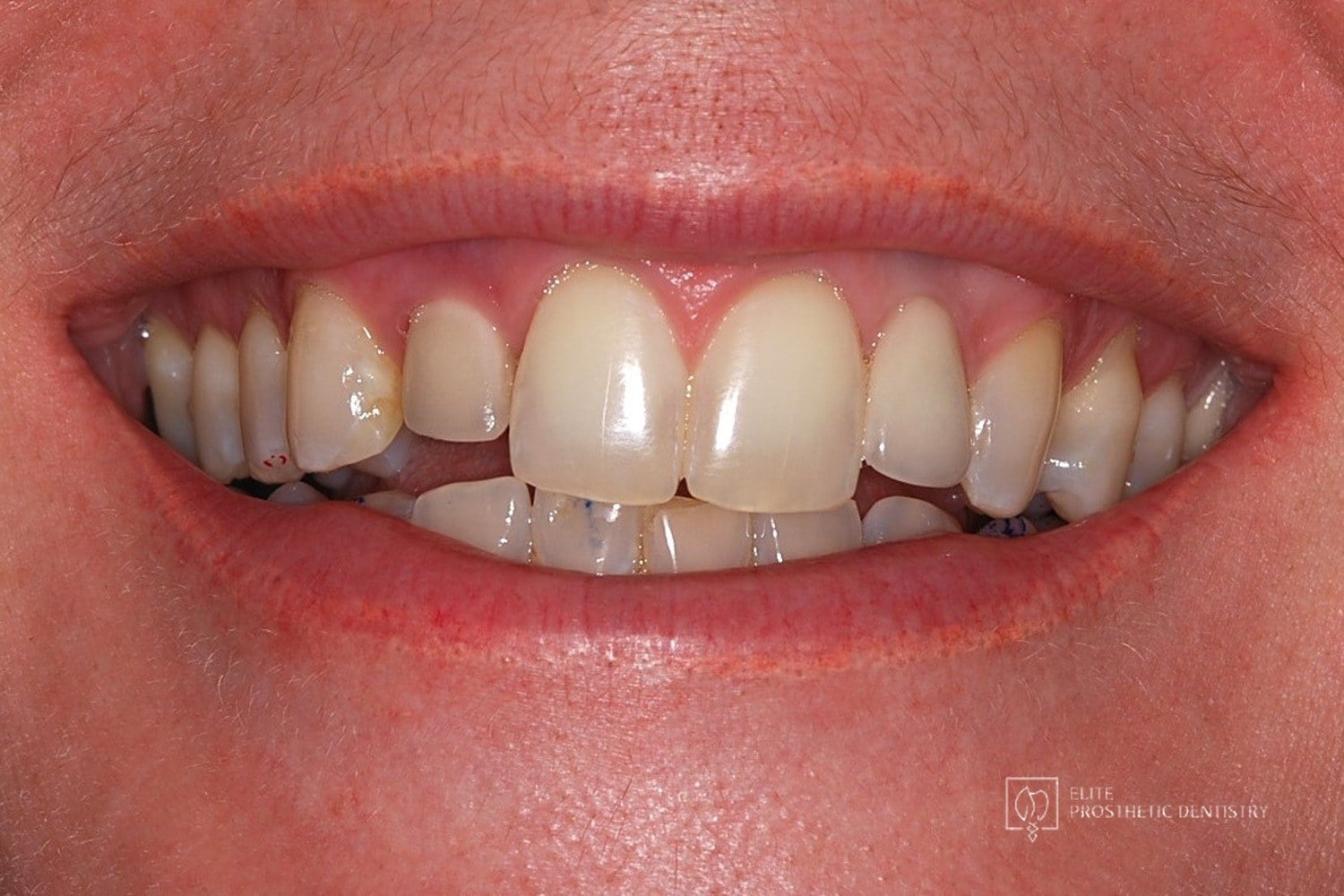 Before
 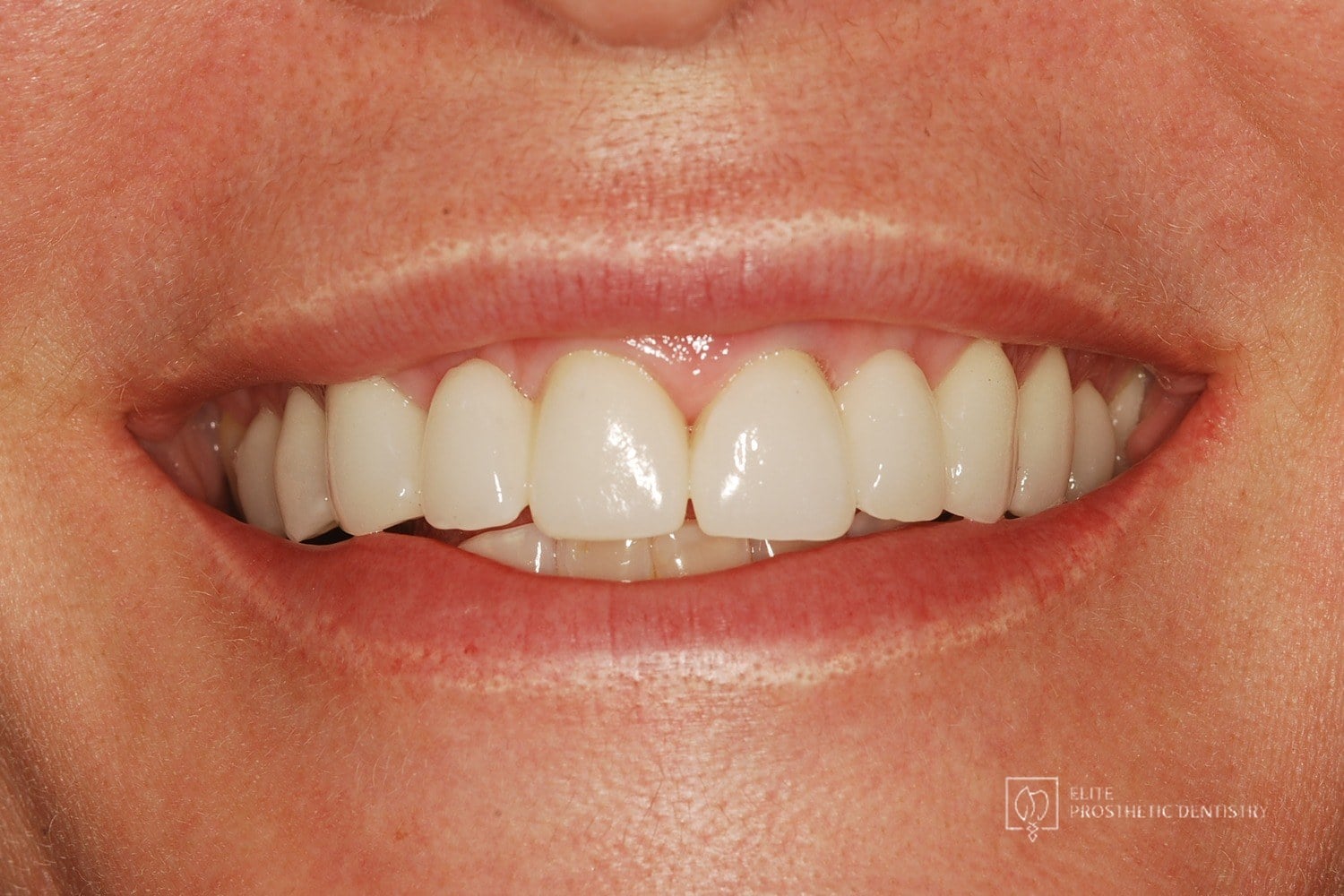 After
After How Failing Lateral Incisor Implants Were Replaced with Custom Zirconia Bridges After Severe Bone Loss Made Replacement Implants Impossible
Comprehensive examination including CBCT imaging revealed significant bone loss surrounding implants that were placed outside the buccal plate, most likely due to placement without a CBCT-generated surgical guide. The implants were determined non-salvageable, and the alveolar ridge was too narrow to support replacement implants without extensive reconstruction.
Related Articles
Deepen your knowledge with additional insights on this topic.
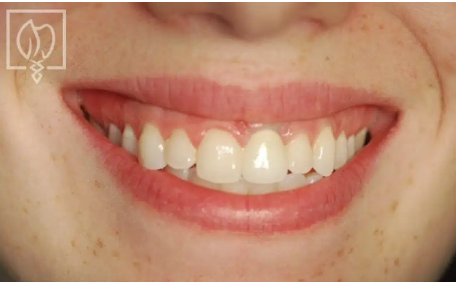 Dental Implants
 If a Single Front Tooth Is Replaced with an Implant, Can It Look Natural?
Yes. See the four steps, with real case photos, that make a single front tooth implant indistinguishable from the natural tooth beside it. Washington, DC.
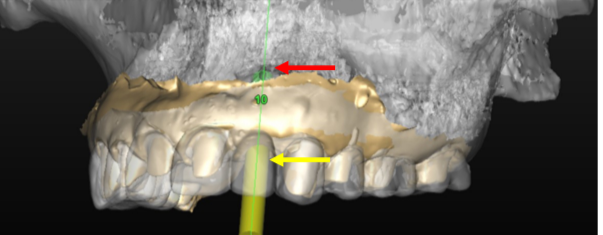 Dental Implants
 What Is Precision Implant Placement (PIP)?
Precision Implant Placement plans each implant virtually on a CBCT scan, then delivers it with a custom surgical guide. See the three steps with real images.
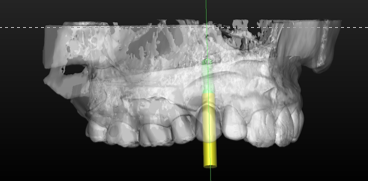 Dental Implants
 What Is the Ideal Surgical Guide for Precision Implant Placement?
Not all surgical guides are equal. The gold standard is CBCT-based: planned virtually in 3D, 3D printed, and seated on your teeth. A DC prosthodontist explains.