
Implant Dentures in Bethesda, MD
Compare implant-supported dentures vs traditional dentures vs fixed implant restorations. What changes for the wearer?
Implant-supported dentures represent a significant improvement over traditional dentures while remaining more accessible and less invasive than fixed implant restoration. Understanding what changes for you with implant-supported dentures helps you decide whether this option fits your situation and preferences better than traditional dentures or fixed restoration.
Traditional Dentures: The Baseline Experience
Traditional dentures rest entirely on gum tissue and underlying bone. They have no implant support, no mechanical anchors, and no way to prevent vertical movement. They shift and slide during eating and speaking, requiring conscious stabilization and adjustment.
Traditional dentures require daily removal, soaking in cleaning solutions, and careful storage. They require adhesive powders or creams for retention. The underlying bone continues to resorb, requiring periodic adjustments and eventually new dentures every 5 to 10 years.
Many Bethesda patients find traditional dentures frustrating. The movement creates self-consciousness. The daily care requirements are inconvenient. The progressive bone loss that dentures accelerate affects facial appearance over decades.
Implant-Supported Dentures: Significant Improvement
Implant-supported dentures anchor to 2 to 4 strategically positioned implants via clasps or attachments. These implants provide vertical support, preventing the denture from moving up and down during eating and speaking.
The improved stability transforms the denture experience. You don’t consciously stabilize your denture during eating; it remains stable against the implants. The denture doesn’t shift during speaking. You can eat more confidently without denture movement concerns.
Implant-supported dentures reduce reliance on adhesive. Some patients use minimal or no adhesive because implant anchoring provides primary retention. The denture moves less, feels more secure, and functions more like natural teeth than traditional dentures.
However, implant-supported dentures still require daily removal for cleaning. You still wear a removable prosthesis rather than fixed teeth. You still maintain the attachment areas where the denture connects to implants.
Fixed Implant Restoration: The Premium Option
Fixed implant restoration uses 4 to 8 implants supporting crowns or bridges that remain permanently fixed in your mouth. Unlike dentures, fixed restoration never requires removal. You clean it like natural teeth with brushing and flossing.
Fixed restoration provides superior function compared to both traditional dentures and implant-supported dentures. You eat normally without conscious attention to denture stability. You speak without denture movement concerns. You smile broadly without self-consciousness about removable prosthetics.
Fixed restoration costs more upfront than implant-supported dentures, but often costs comparable to traditional dentures when cumulative costs over 20+ years are considered.
Comparison: What Changes for the Wearer
With traditional dentures, you manage daily removal, special cleaning solutions, adhesive needs, and progressive bone loss that changes facial appearance.
With implant-supported dentures, you eliminate most adhesive reliance, gain significant stability, and reduce bone loss compared to traditional dentures. However, you still remove and clean your denture daily, and you still manage clasps or attachments.
With fixed restoration, you eliminate denture care entirely, achieve complete stability, prevent bone loss through mechanical stimulation, and enjoy normalcy unavailable through dentures.
Eating and Speaking Experience
Traditional dentures limit your diet. Hard, crunchy, or sticky foods are difficult or impossible to eat. Many patients unconsciously avoid certain foods. Speaking can be affected as dentures move.
Implant-supported dentures improve eating significantly. Most foods become accessible. The stability enables more confident eating. Speaking is more normal with less movement. However, very hard foods should still be avoided.
Fixed implant restoration enables unrestricted eating. You eat whatever you choose without dietary limitations. Speaking is completely normal with no denture movement. The eating and speaking experience approaches that of natural teeth.
Maintenance and Daily Care
Traditional denture care involves nightly removal, soaking, brushing, and storage in a denture cup. Adhesive application is needed daily. The routine is time-consuming and somewhat inconvenient.
Implant-supported denture care still requires daily removal and cleaning. However, because implant anchoring provides primary retention, adhesive reliance is reduced or eliminated. You maintain both the denture and the implant sites, requiring attention to oral hygiene around implant areas.
Fixed implant restoration requires only normal oral hygiene: brushing twice daily and flossing. No removal, no special solutions, no adhesive, no nightly storage. You sleep with your teeth in place. This simplicity appeals to many busy Bethesda professionals.
Bone Preservation
Traditional dentures accelerate bone loss. Without mechanical stimulation from tooth roots or implants, bone resorbs progressively. Over 10-20 years, significant facial collapse occurs.
Implant-supported dentures partially address this problem. The implants stimulate bone, slowing (but not eliminating) resorption compared to traditional dentures. Patients experience less dramatic bone loss, but some resorption still occurs.
Fixed implant restoration prevents bone loss entirely. Chewing forces transmitted through crowns into implants stimulate bone maintenance. Patients retain stable bone structure and facial appearance indefinitely.
Psychological Impact
Traditional dentures create ongoing awareness and anxiety about movement and appearance. Many patients feel self-conscious about denture wear.
Implant-supported dentures significantly improve psychological comfort. The stability eliminates much of the self-consciousness. However, you remain aware that you’re wearing a removable prosthesis, especially during intimate moments or when discussing your teeth.
Fixed restoration eliminates psychological burden entirely. You smile broadly without self-consciousness. You eat in social situations without concern. You forget your teeth are restored because function is so natural. The psychological impact is often more significant than the functional improvement.
Cost Comparison Over Time
Traditional dentures have the lowest upfront cost but require replacement every 5-10 years. Over 20 years, cumulative cost includes 2-4 denture sets plus adjustments and repairs.
Implant-supported dentures cost more upfront than traditional dentures, with the denture attachment potentially requiring replacement in 10-15 years.
Fixed implant restoration has the highest upfront cost, with the restoration crown potentially needed after 15-20 years. Cost amortized over 30 years often approaches or falls below cumulative traditional and implant-supported denture costs.
When viewed from a cost-per-year-of-function perspective, fixed restoration is often the most economical option for patients planning decades of use. Please contact our office to schedule a consultation for accurate pricing for your case.
Decision-Making: Which Option Is Right for You?
Your choice depends on several factors: your budget, your timeline, your bone anatomy, your lifestyle preferences, and your long-term expectations.
If budget is your primary concern and you can accept ongoing denture care, traditional dentures are an option. If you want improved stability without fixed teeth and can accept daily denture care, implant-supported dentures are appropriate. If you want complete normalcy and can invest in optimal long-term solution, fixed restoration is ideal.
Dr. Marlin will explain your specific options based on your bone anatomy and preferences. He can recommend the approach optimizing your situation.
Bethesda Access and Scheduling
Bethesda residents benefit from just 5 minutes drive to Dr. Marlin’s office on Wisconsin Avenue. The convenient location makes consultations and follow-up appointments manageable around busy schedules.
Making Your Decision
Bethesda residents considering denture options should schedule a consultation with Dr. Marlin or call (202) 244-2101). He will explain all three options (traditional dentures, implant-supported dentures, and fixed restoration), assess your bone anatomy, and recommend the approach delivering optimal outcomes for your situation.
For related care, see our DMV dental implants page.
Frequently Asked Questions
How are implant-supported dentures different from traditional dentures?
Traditional dentures rest on gum tissue and bone. Implant-supported dentures are anchored by 2-4 implants via clasps or attachments, preventing vertical movement. They feel more stable than traditional dentures but still require daily removal and cleaning. They provide a middle ground between traditional dentures and fixed implant restoration.
What changes for me with implant-supported dentures?
You experience dramatically improved stability compared to traditional dentures. There is minimal movement during eating or speaking. The denture doesn't require adhesive powder or cream. However, you still remove and clean it daily, and you still wear a removable prosthesis (not fixed teeth). You experience improved comfort and confidence compared to traditional dentures but different experience from fixed restorations.
Are implant-supported dentures less expensive than fixed implant restoration?
Yes. Implant-supported dentures have lower upfront cost than fixed implant restoration. However, the denture attachment may require replacement within 10-15 years. Fixed restoration cost amortized over 30 years is often comparable to cumulative implant-supported denture costs, while fixed restoration eliminates daily denture care. Please contact our office to schedule a consultation for accurate pricing.
Can I switch from implant-supported dentures to fixed restoration later?
Yes. The implants supporting your dentures can later support fixed restorations. If you transition later, additional implants may be needed (4-6 total rather than 2-4) to support fixed restoration properly. Dr. Marlin discusses the possibility of future upgrading when planning your implant-supported dentures.
How do I care for implant-supported dentures?
You remove your denture daily for cleaning, soaking in denture solution, and brushing. You clean the implant attachment areas with special attention. Unlike traditional dentures, you have implants to maintain, so you brush and floss around the implant areas where it meets your gums. This combines denture care with implant maintenance.
Related Patient Success Stories
Explore similar patient success stories demonstrating our expertise in advanced prosthetic dentistry.
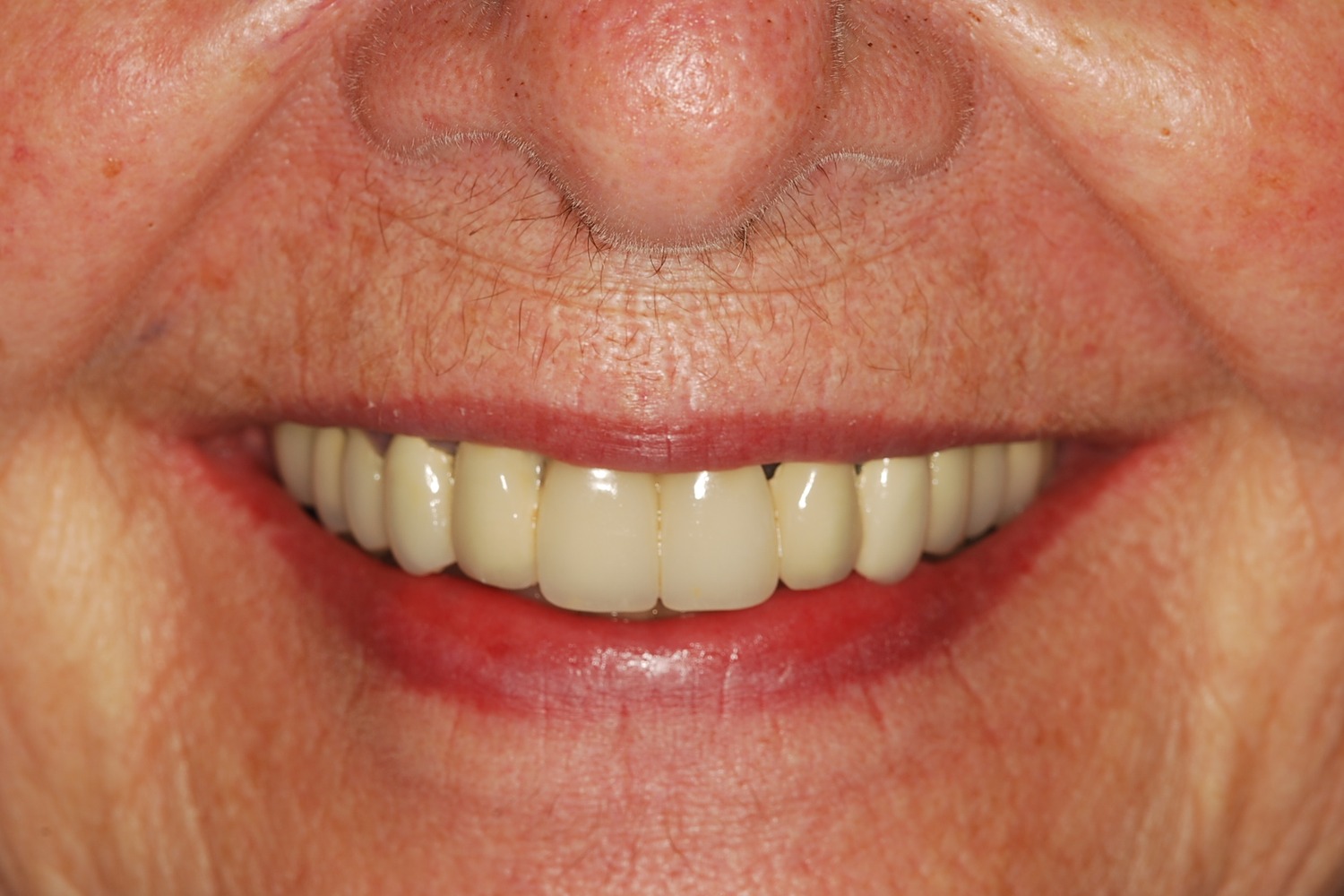 Before
 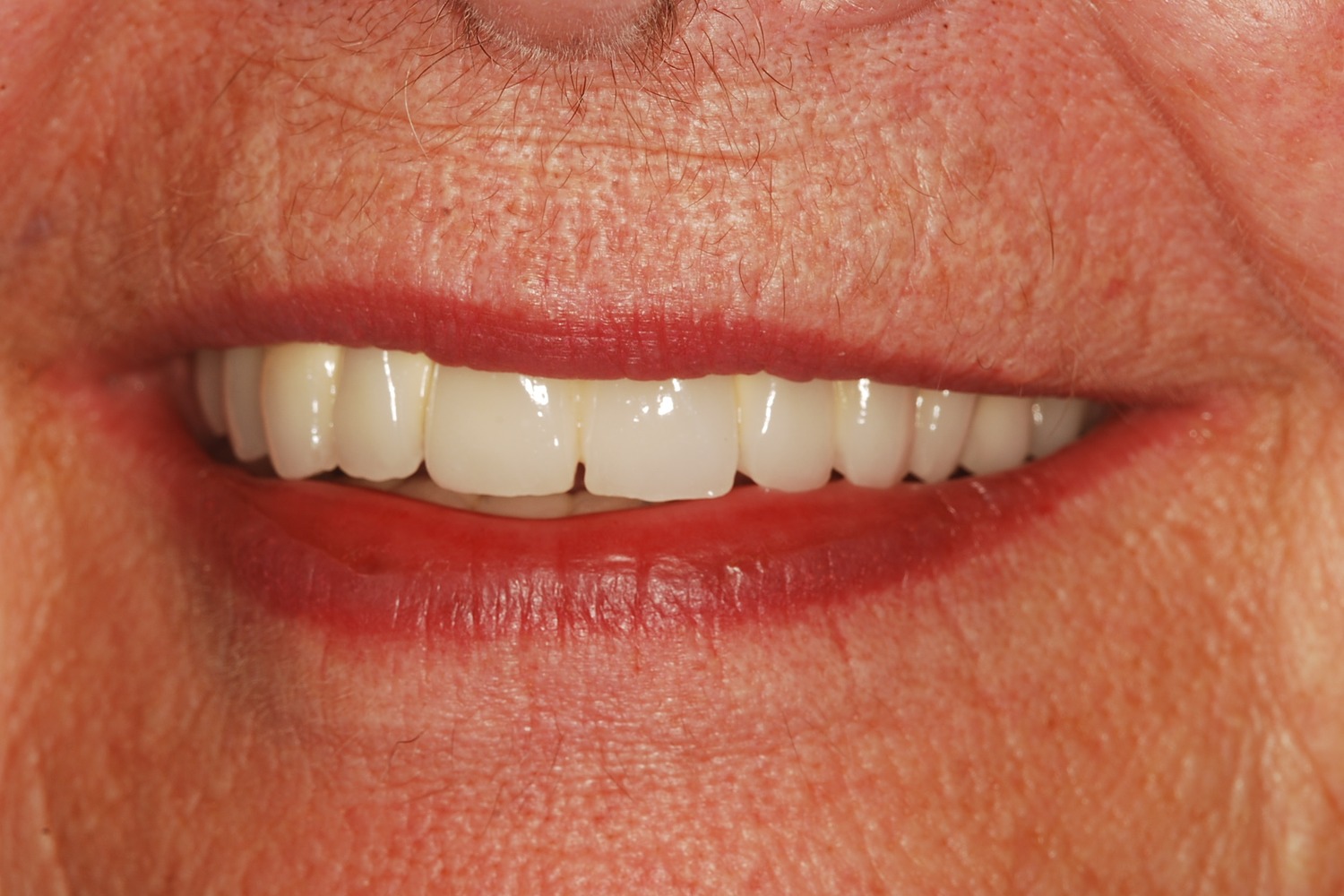 After
After How a Loose Upper Bridge and Aging Crowns Were Rebuilt with Staged Implant and Crown Reconstruction
The patient was referred by her general dentist after years of aging dentistry no longer holding up. A loose upper bridge and crowns over twenty years old combined with the effects of advanced periodo
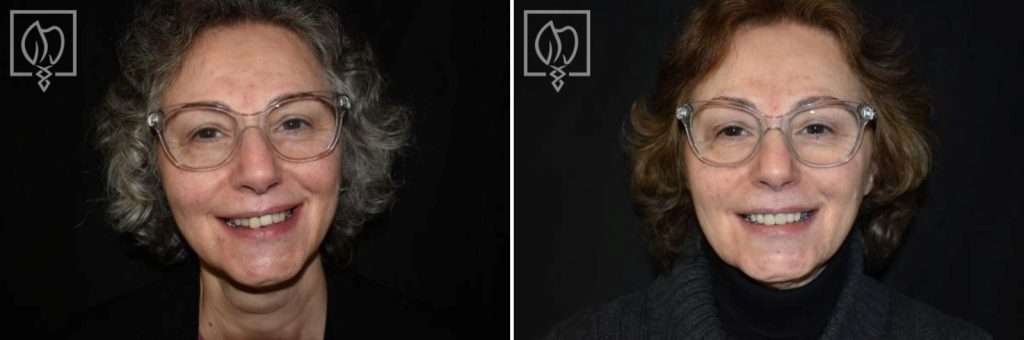
Temporary Crowns Restore Patient's Smile in Just One Day with an Immediate Smile Makeover
A patient from Potomac, Maryland, came to Elite Prosthetic Dentistry with the chief complaint of pain from a failing dental implant and its significant impact on her appearance.
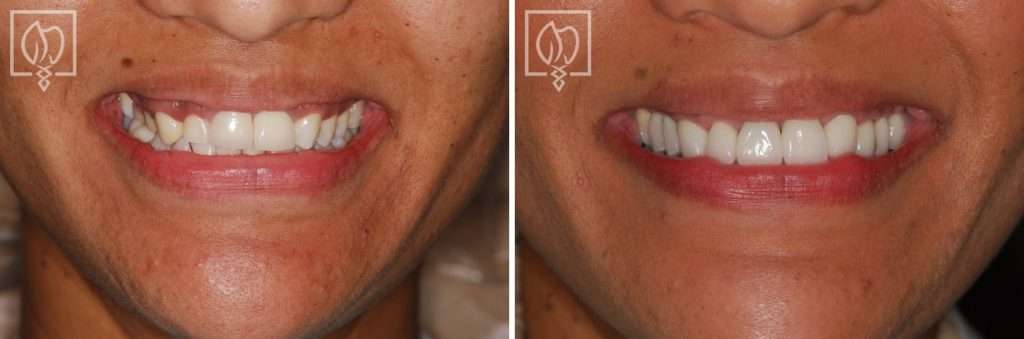
Multi-Faceted Treatment for Patient Unhappy With Her Artificial-Looking Crowns, Teeth and Gums
Many patients come to Elite Prosthetic Dentistry unhappy with the appearance of their smile. However, this particular patient presented with multiple interconnected problems that together created a smile she found deeply unsatisfying.
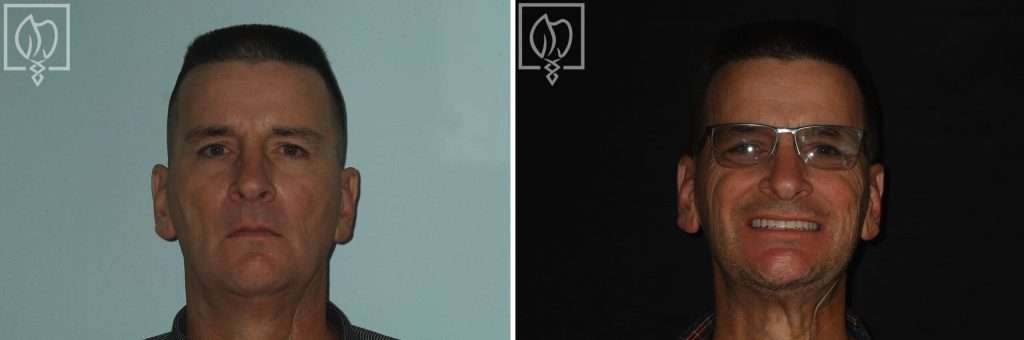
Treating Kevin's Collapsed Bite with a Complete Smile Makeover with New Dentures
Dentures are sometimes not created to the ideal aesthetic and functional scheme. When improperly fabricated, dentures can make an individual appear almost a generation older than their actual age. They can have a poor fit that feels loose and unstable when eating or speaking, and they can actually accelerate bone loss over time.
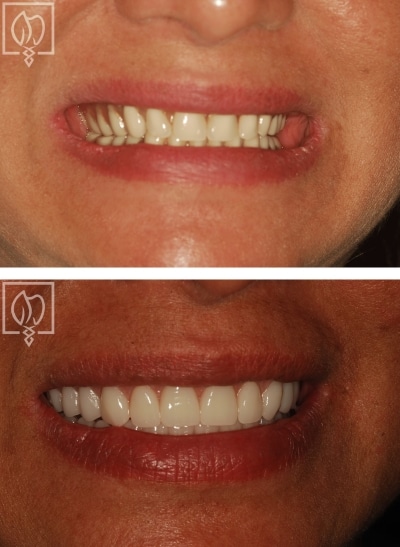
Rejuvenating Maria's Severely Worn Down Implant Overdentures
Many times, per year, patients come to us frustrated because their implant prosthesis is so severely worn down that they are very self-conscious and cover up their smile. They look and feel much older than their age as a result of the extensive wear of their appliance(s).
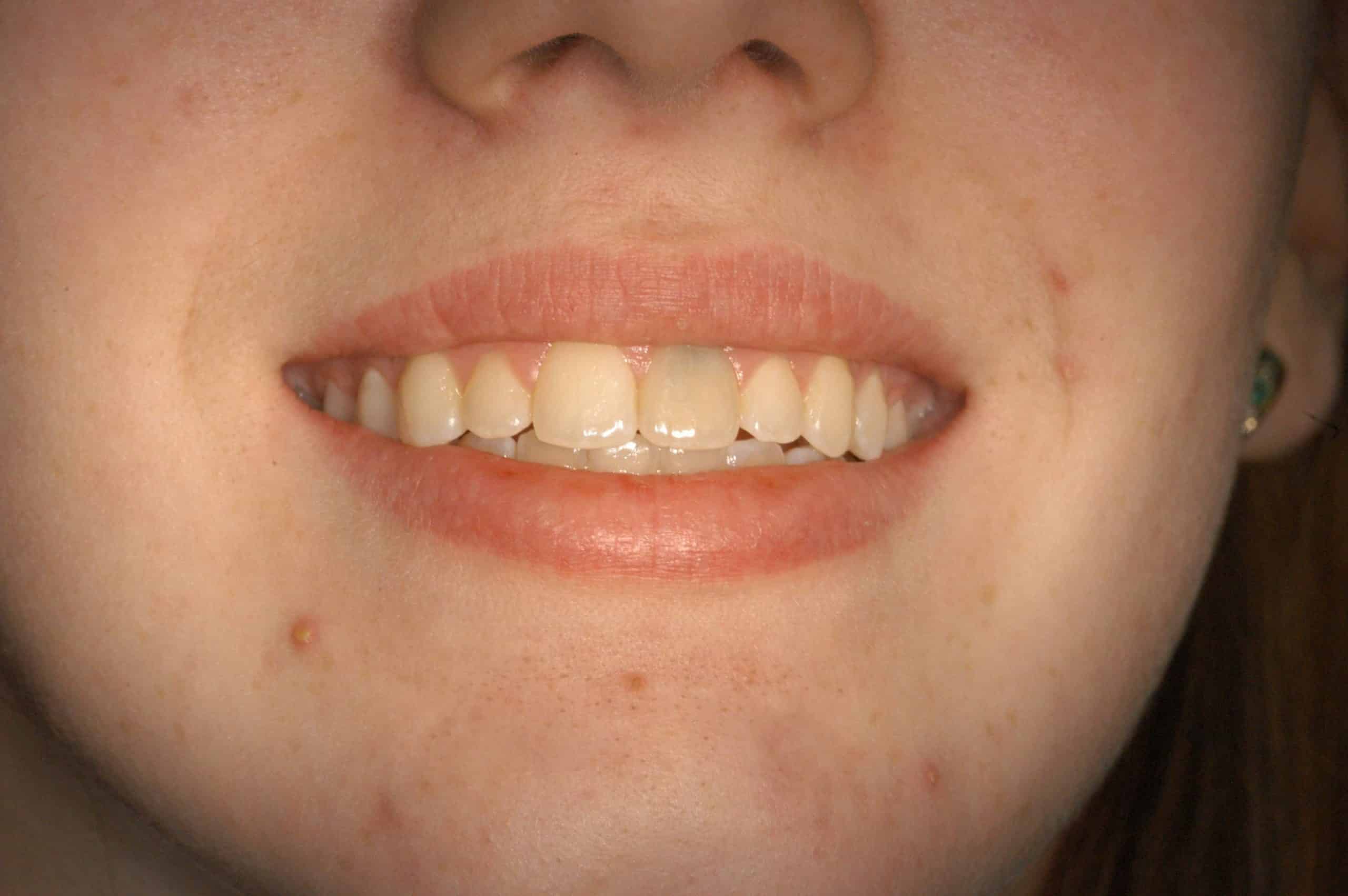
Replacing a Discolored Front Tooth with a Precision Placed Implant
Some of the most challenging restorations occur when fabricating an anterior crown to fit on an implant. Not only does one have the difficulty of matching the single front tooth to the other ones in the high visibility zone, but the dentist must also ensure the position of the underlying implant is precise through accurate preplanning and placement.
Related Articles
Deepen your knowledge with additional insights on this topic.
Our Services in Bethesda
Beyond Implant Dentures, Bethesda patients rely on Dr. Marlin for a full range of advanced dental care.
More services available in Bethesda:
Implant Dentures Near Bethesda
Dr. Marlin also provides implant dentures services for patients in these neighboring communities.
Getting Here from Bethesda
Elite Prosthetic Dentistry is conveniently located near Bethesda, MD.
Drive Wisconsin Avenue south from Bethesda toward Friendship Heights office.
Address:
4400 Jenifer Street NW, Suite 220
Washington, DC 20015
Phone: (202) 244-2101
Request a ConsultationRequest a Specialist Consultation from Bethesda
Bethesda residents come to Dr. Marlin for specialist prosthodontic care. With 3,900+ implants placed and restored over 40+ years, evaluation, planning, and execution are handled with the depth complex cases require.