
Dental Crown Procedure: From Preparation to Delivery in Dupont Circle, DC
How does Dr. Marlin place a dental crown? Understand the preparation, impression, temporary crown, and delivery steps from start to finish.
Dupont Circle residents with a compromised tooth understand that professional restoration is not optional. A tooth that’s fractured, extensively decayed, or previously treated requires treatment that restores strength and function. Understanding the crown procedure helps patients know what to expect when they come to Dr. Marlin’s Friendship Heights office.
The crown process unfolds over two appointments separated by one to two weeks. During the first visit, the tooth is prepared and impressions are captured. During the second visit, the permanent crown is seated and cemented. Between appointments, a temporary crown protects the prepared tooth.
Dr. Marlin performs each step with precision, ensuring the final crown restores the tooth completely while maintaining natural appearance. His on-site laboratory speeds the process and enables direct quality control that external laboratories cannot match.
Initial Evaluation and Diagnosis
Dr. Marlin begins by examining the tooth to determine if a crown is the appropriate treatment. He visually inspects decay extent, assesses the remaining tooth structure, and evaluates whether prior treatments have compromised tooth integrity. Diagnostic imaging reveals decay extending into root canal space, bone loss around the tooth, or prior root canal therapy that might contraindicate crown placement.
The decision to proceed with crown therapy is made after this complete assessment. Some teeth requiring crown treatment have additional complexity, such as a failed root canal needing retreatment before crown fabrication. Dr. Marlin discusses this with the patient before proceeding.
Tooth Preparation Phase
Once crown treatment is decided, Dr. Marlin administers local anesthesia, numbing the tooth completely. The patient experiences minimal discomfort during preparation, though they may feel pressure or vibration from rotary instruments.
Decay is removed first. Dr. Marlin uses high-speed rotary instruments to excavate carious dentin, stopping when clean, hard tooth structure is reached. He preserves as much healthy tooth structure as possible, removing only what is necessary.
The tooth is then shaped into a slightly tapered form suitable for crown coverage. The taper allows the crown to grasp the tooth securely while permitting the crown margin to sit precisely at the gum line. The preparation is slightly smaller in diameter at the biting surface than at the gum line, creating an undercut that aids mechanical retention.
Margins are refined at the gum line, ensuring a smooth, well-defined preparation line. The margin represents the junction between the remaining tooth and the crown, and its quality affects the final crown fit and esthetic appearance.
Impression Capture
After preparation, detailed impressions are captured. Modern digital scanning has largely replaced impression paste, though both methods are used depending on the situation and patient preference. Digital impressions are more comfortable, provide instant feedback, and offer superior information to the laboratory technician.
Detailed shade specifications are recorded. Dr. Marlin evaluates the patient’s existing teeth under various lighting conditions, documenting not just the overall color but also translucency, opacity, and any color variations that the crown technician should replicate. This detailed shade documentation is critical for achieving a crown that matches perfectly.
Temporary Crown Placement
A temporary crown is fabricated and placed the same day. The temporary is typically made of acrylic or polycarbonate and covers the prepared tooth completely. The temporary crown serves multiple functions. It protects the prepared tooth from staining, decay, and fracture. It prevents temperature sensitivity by insulating the exposed dentin. It maintains the patient’s appearance during the interim period.
The temporary crown is cemented with temporary cement that allows easy removal when the permanent crown is ready. Patients are instructed to care for the temporary crown as they would their natural teeth, brushing and flossing normally.
Laboratory Fabrication
The impressions or digital scans are sent to the laboratory. The technician builds the permanent crown layer by layer, precisely controlling shade and opacity at each layer. This layering technique creates a crown with depth and light transmission properties matching natural tooth structure. The crown is shaped to match the patient’s natural tooth contours, with margins refined to fit the gum line perfectly.
Laboratory work typically requires one to two weeks. Modern CAD-CAM technology enables same-day milling in some situations. Dr. Marlin evaluates each case to determine if milling is appropriate. Same-day crowns eliminate the temporary crown phase and avoid the need for a second appointment.
Permanent Crown Seating and Cementation
When the permanent crown is ready, the patient returns for the seating appointment. Dr. Marlin removes the temporary crown carefully and evaluates the permanent crown’s fit and appearance. The crown is evaluated visually under direct and indirect vision. The fit is assessed by visual inspection and digital imaging if needed. The margins are checked to ensure they sit precisely at the gum line without overhang or gaps.
The bite is evaluated using articulating paper. The patient is asked to bite on the paper, which marks contact points. The crown should make appropriate contact without interfering with the patient’s bite or preventing them from closing their teeth fully.
If the shade requires refinement, Dr. Marlin can adjust it using tinting materials or discuss reshaping with the laboratory. Once the patient approves the appearance and bite, the crown is cemented permanently.
Crown Cementation
Dr. Marlin uses dental cement specifically formulated for crown retention. Some cements are self-adhesive, bonding to both crown and tooth preparation. Others require a separate bonding step. The crown is positioned carefully on the prepared tooth, and the patient is guided to bite into position. Excess cement is removed carefully with a curette or ultrasonic scaler.
The patient is instructed not to eat until the cement has completely set, typically within 30-60 minutes. After that, the crown can be used normally.
Post-Cementation Care and Adjustment
After cementation, some sensitivity to temperature is normal, particularly if the crown is not yet fully adapted. This sensitivity typically resolves within days or weeks as the tooth adjusts.
Patients are instructed to care for the crowned tooth as they would their natural teeth. Brushing and flossing continue normally. Hard objects, ice, and hard candy should be avoided to prevent crown fracture. Patients who grind their teeth are advised to wear a nightguard to protect the crown from stress fractures.
Regular exams allow Dr. Marlin to monitor the crown’s integrity and ensure it remains properly cemented. Should a crown ever become loose, recementation is straightforward. Should a crown fracture, replacement is simple because the underlying tooth preparation remains sound.
Outcomes and Longevity
Well-fabricated crowns typically last 10-15 years or longer. Longevity depends on material quality, fabrication precision, cementation technique, the patient’s oral hygiene, and bite mechanics. Grinding, clenching, and chewing on hard objects all stress crowns. Excellent oral hygiene prevents decay at the crown margin, which could eventually necessitate crown replacement.
Dr. Marlin’s on-site laboratory enables direct quality control and fast turnaround. Crowns fabricated under his direct supervision tend toward the longer end of the longevity range because they meet his exacting specifications for fit, shade, and contour.
Scheduling Your Crown Appointment
Dupont Circle residents with a compromised tooth should schedule a consultation with Dr. Marlin. He’ll examine the tooth, explain the procedure, answer your questions, and outline the timeline specific to your situation. Call (202) 244-2101 or request an appointment online to begin the crown restoration process.
Dr. Marlin evaluates your tooth and recommends whether a crown is appropriate or whether alternative treatments might address your concern.
When Crowns Are Necessary
Teeth with moderate to extensive damage often require crowns. If a tooth has a large cavity requiring removal of significant tooth structure, a crown restores remaining tooth strength. If a tooth has undergone root canal therapy, the tooth becomes brittle without a crown’s protective coverage. If a tooth has a severe crack or chip compromising structural integrity, a crown prevents further damage.
Teeth weakened by trauma, decay, or previous treatment benefit from crown reinforcement. Crowns essentially rebuild damaged teeth to functional strength, enabling normal chewing and preventing further deterioration.
Crown Preparation: Comfortable and Precise
Crown treatment begins with tooth evaluation and preparation. Dr. Marlin uses local anesthesia numbing your tooth completely before preparation. The tooth is gently shaped to accept the crown, removing decayed tooth structure while preserving healthy tooth whenever possible.
If the tooth requires root canal therapy (treatment of the tooth’s nerve), this is performed before crown placement. Once root canal treatment is complete or not needed, the tooth is shaped and an impression is created.
Most patients report the preparation procedure is comfortable with numbing anesthesia. Sensitivity typically resolves within days of crown placement.
Crown Design: Matching Your Natural Teeth
Once your tooth is prepared, Dr. Marlin designs your custom crown. He evaluates your existing teeth under various lighting conditions, assessing tooth color, shape, size, and translucency. He ensures the crown matches your adjacent teeth perfectly, appearing visually natural.
This personalized design approach requires sophisticated esthetic judgment. Rather than applying crown design formula-like, Dr. Marlin considers your individual tooth characteristics and facial features, ensuring the crown complements your overall appearance.
Crown Fabrication: On-Site Laboratory Excellence
Our on-site dental laboratory creates your crown under Dr. Marlin’s direct supervision. Rather than relying on external labs without direct supervision, our laboratory technicians follow Dr. Marlin’s precise specifications using premium materials and meticulous techniques.
This direct supervision ensures quality control unavailable through external labs. Every crown is reviewed by Dr. Marlin before delivery, ensuring color perfection, shape matching, and natural appearance. For Dupont Circle patients expecting excellence, this direct quality control represents a significant advantage.
Crown Materials: Selecting the Optimal Option
Dental crowns are fabricated from several material options, each with distinct advantages. All-porcelain crowns offer superior esthetics, appearing naturally rendered and suitable for front teeth. Porcelain-fused-to-metal crowns combine strength with esthetics. All-metal crowns (typically gold) offer exceptional durability and longevity, though appearance is less natural.
Dr. Marlin recommends the optimal material for your specific tooth and situation. Front teeth typically receive all-porcelain or porcelain-fused-to-metal crowns for superior esthetics. Back teeth often receive all-metal or porcelain-fused-to-metal crowns for strength. Your specific situation determines the optimal material selection.
Temporary Crowns: Protecting Your Tooth
After tooth preparation, a temporary crown protects your tooth while your permanent crown is fabricated. The temporary crown is less refined than the permanent crown but enables comfortable function and appearance. Your permanent crown is delivered once fabrication is complete, typically in 2-3 weeks.
Temporary crowns require normal care, and sensitivity to hot and cold typically resolves once the permanent crown is delivered.
Crown Placement: Delivering Your Restored Tooth
Once your permanent crown is fabricated, Dr. Marlin removes the temporary crown and checks your permanent crown’s fit and appearance. He ensures the crown fits precisely, your bite is comfortable, and the crown appears natural-looking. Once verified, the permanent crown is cemented permanently in place.
Most patients report that after crown placement, their tooth feels and functions naturally. Within days, the restored tooth feels like a normal part of their mouth.
Crown Care and Longevity
Quality crowns last 10-15 years or longer with proper care. Elite’s crowns, created in our on-site laboratory under Dr. Marlin’s direct supervision, often last toward the longer end of this range. Crown longevity depends on materials used, how well you care for the crown, your bite forces, and whether the underlying tooth remains healthy.
Care for your crowned tooth like your natural teeth: brush twice daily, floss daily, and visit your general dentist for regular cleanings. Avoid chewing on hard objects (ice, nuts, hard candy) that could damage your crown. Some crowns eventually wear or become discolored and require replacement, but properly maintained crowns often provide decades of service.
Crowned Teeth and Future Dental Work
If your crowned tooth develops problems in the future, the crown can be removed and replaced. Crowned teeth can receive additional dental treatment if needed. Root canal therapy can be performed on crowned teeth if the tooth’s nerve becomes irritated. Your general dentist manages routine care, while Dr. Marlin addresses crown concerns or replacements when necessary.
Cost-Effectiveness of Crown Restoration
While crown treatment represents a significant investment, crowns provide long-term cost-effectiveness compared to repeated filling replacement or eventual tooth loss. A tooth protected by a crown often functions for decades, requiring minimal maintenance beyond normal care. Tooth loss, by contrast, requires much more expensive restoration through implants or dentures.
For Dupont Circle professionals planning long-term dental health, investing in crown restoration proves more valuable than seeking the least expensive option.
Getting Here from Dupont Circle: Convenient Specialty Care
From Dupont Circle, drive north on Connecticut Avenue NW through Cleveland Park and Chevy Chase toward our Friendship Heights office. Elite Prosthetic Dentistry is located at 4400 Jenifer Street NW, Suite 220, Washington DC 20015. The drive from Dupont Circle typically requires approximately 12 minutes via Connecticut Avenue NW.
The Connecticut Avenue route connects directly from Dupont Circle, making access convenient for Dupont Circle’s busy professionals.
Why Dupont Circle Residents Choose Dr. Marlin for Crown Restoration
Dr. Marlin’s decades of specialty-trained prosthodontic expertise positions him uniquely to create excellent crowns. His prosthodontic training emphasized custom crown design and fabrication for optimal esthetics and function. His on-site laboratory ensures quality control and direct supervision of crown creation.
His experience with complex smile transformation and commitment to natural appearance ensures crowns appearing beautifully natural while restoring tooth strength and function. For Dupont Circle professionals expecting excellence, Dr. Marlin’s crown expertise delivers superior results.
Your Crown Restoration Awaits
Damaged or weakened teeth don’t have to compromise your appearance or function. Dental crowns restore teeth to strength and beauty, enabling normal function and restored confidence. Dr. Marlin’s expertise ensures your crown is restored excellently.
Schedule Your Consultation or call (202) 244-2101 to learn how a dental crown can restore your tooth. Discover how quality crown restoration can return your smile to complete function and appearance matching Dupont Circle’s standard of excellence.
From Dupont Circle to Exceptional Crown Dentistry: Drive north on Connecticut Avenue NW from Dupont Circle to Elite Prosthetic Dentistry at 4400 Jenifer Street NW, Suite 220, Washington DC 20015. Dr. Gerald Marlin’s decades of specialty-trained expertise create natural, durable crowns for Dupont Circle residents.
Frequently Asked Questions
What happens during the initial crown appointment?
Dr. Marlin examines the tooth to determine if crown therapy is indicated. He takes diagnostic imaging to assess decay depth, bone levels, and prior restorations. The tooth is numbed with local anesthesia, and if decay exists, it is removed. The tooth is then shaped with precision instruments into a slightly tapered form that accepts the crown. An impression is captured, either digitally or with impression material, which guides the laboratory technician in fabricating the crown. A temporary crown is placed to protect the prepared tooth until the permanent crown is ready.
How is the tooth prepared for the crown?
Dr. Marlin uses high-speed rotary instruments to carefully remove decayed tooth structure and shape the remaining tooth. The prepared tooth tapers slightly from the gum line toward the chewing surface, creating a shape that the crown can grasp and stabilize. This taper allows the crown to seat fully without impingement on the gum tissue. The preparation preserves as much healthy tooth structure as possible while creating a shape suitable for crown coverage. The gum line margins are refined to allow the crown margin to sit precisely at the gum line or slightly subgingivally, ensuring proper esthetics and preventing future decay.
Why is a temporary crown necessary?
The prepared tooth is no longer protected by enamel. Without coverage, the tooth is vulnerable to staining, sensitivity, decay, and fracture. The temporary crown shields the prepared tooth, protects against sensitivity to temperature and air, and allows you to function normally while the permanent crown is being fabricated. The temporary crown also maintains your appearance during the interim period. Temporary crowns are typically made of acrylic or polycarbonate and are cemented loosely so they can be removed easily when the permanent crown is ready.
How long does the laboratory phase take?
Traditional laboratory fabrication requires one to two weeks. The laboratory technician receives the impressions or digital scans and detailed shade specifications. The technician builds the crown layer by layer, selecting porcelain shades that create proper color depth and translucency. The crown is shaped to match the natural tooth contours precisely, with margins refined to fit the gum line perfectly. Modern CAD-CAM milling technology enables same-day crowns in some situations. If Dr. Marlin determines milling is appropriate for the patient, the permanent crown can be designed and milled during the preparation appointment, cemented the same day without need for a temporary crown.
What happens when the permanent crown is seated?
The temporary crown is removed carefully. Dr. Marlin inserts the permanent crown and verifies its fit and appearance under direct and indirect vision. The fit is evaluated visually, checking for proper margin adaptation and absence of overhang. The bite is evaluated using articulating paper to ensure the crown does not interfere with the patient's bite. The crown shade is verified under various lighting conditions to ensure it matches adjacent teeth. If adjustments are needed, Dr. Marlin can refine the crown contour, adjust the shade with tinting materials, or modify the margin. Once the patient approves the appearance and bite, the crown is cemented permanently using dental cement formulated for crown retention.
Related Patient Success Stories
Explore similar patient success stories demonstrating our expertise in advanced prosthetic dentistry.
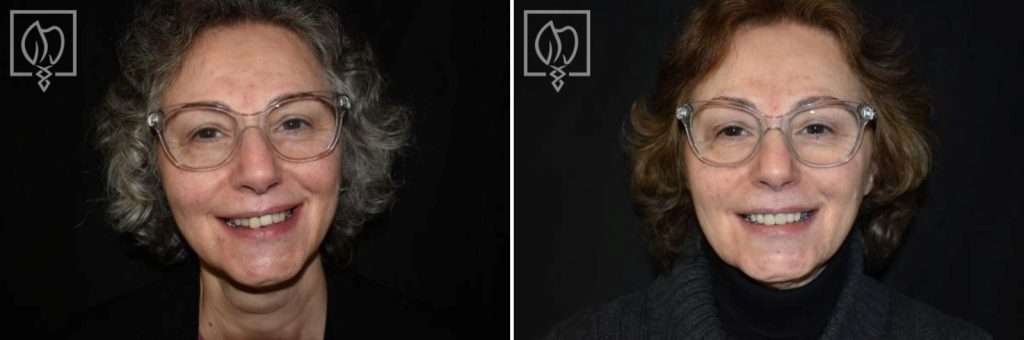
Temporary Crowns Restore Patient's Smile in Just One Day with an Immediate Smile Makeover
A patient from Potomac, Maryland, came to Elite Prosthetic Dentistry with the chief complaint of pain from a failing dental implant and its significant impact on her appearance.
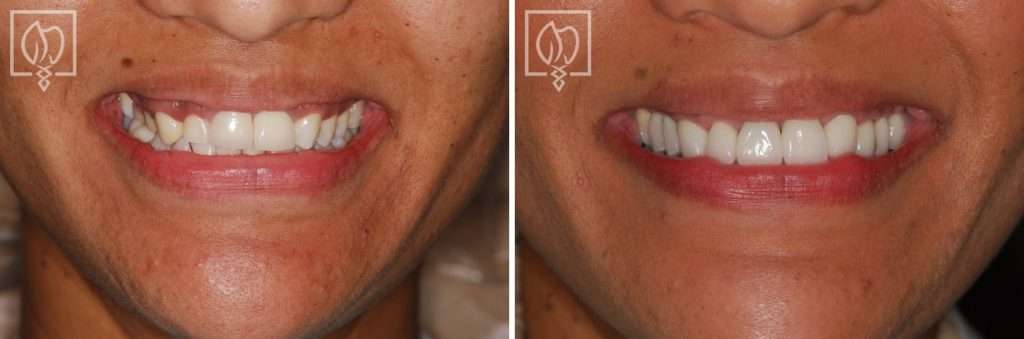
Multi-Faceted Treatment for Patient Unhappy With Her Artificial-Looking Crowns, Teeth and Gums
Many patients come to Elite Prosthetic Dentistry unhappy with the appearance of their smile. However, this particular patient presented with multiple interconnected problems that together created a smile she found deeply unsatisfying.
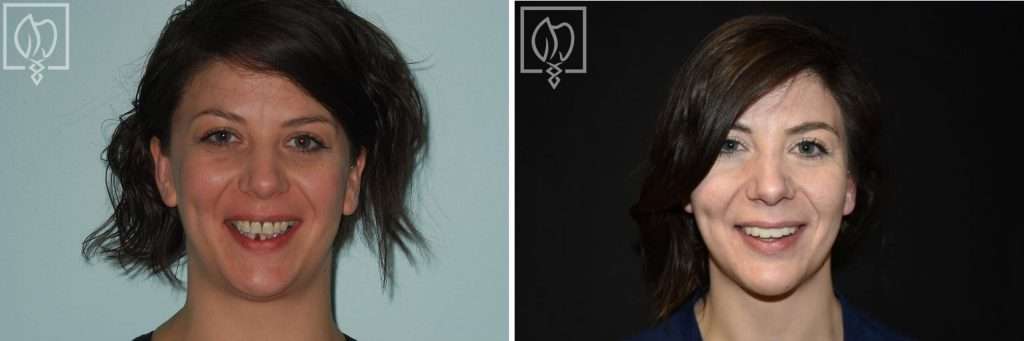
Salvaging Ms. N’s Severely Broken-Down Upper and Lower Teeth from Gum and Bone Disease
Many people in the U.S. suffer from extensive periodontal disease characterized by significant bone loss and shrinkage of the gum tissue. This condition can begin at a very young age and worsen quickly due to hereditary factors and lack of early diagnosis by their dentist.
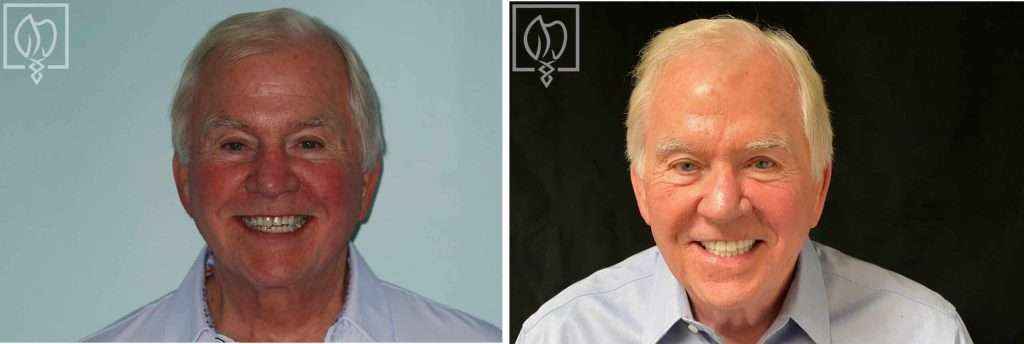
A Smile Transformation in Just Four Months: A Patient’s Dental Crown Restoration for a TV Series
A patient with dental crowns that were in poor shape was going to appear on a streaming video series on a major TV network that was scheduled to begin filming soon. Our patient, John, an author about to embark on a book tour, was anxious as his teeth were not up to his standards to appear on television.
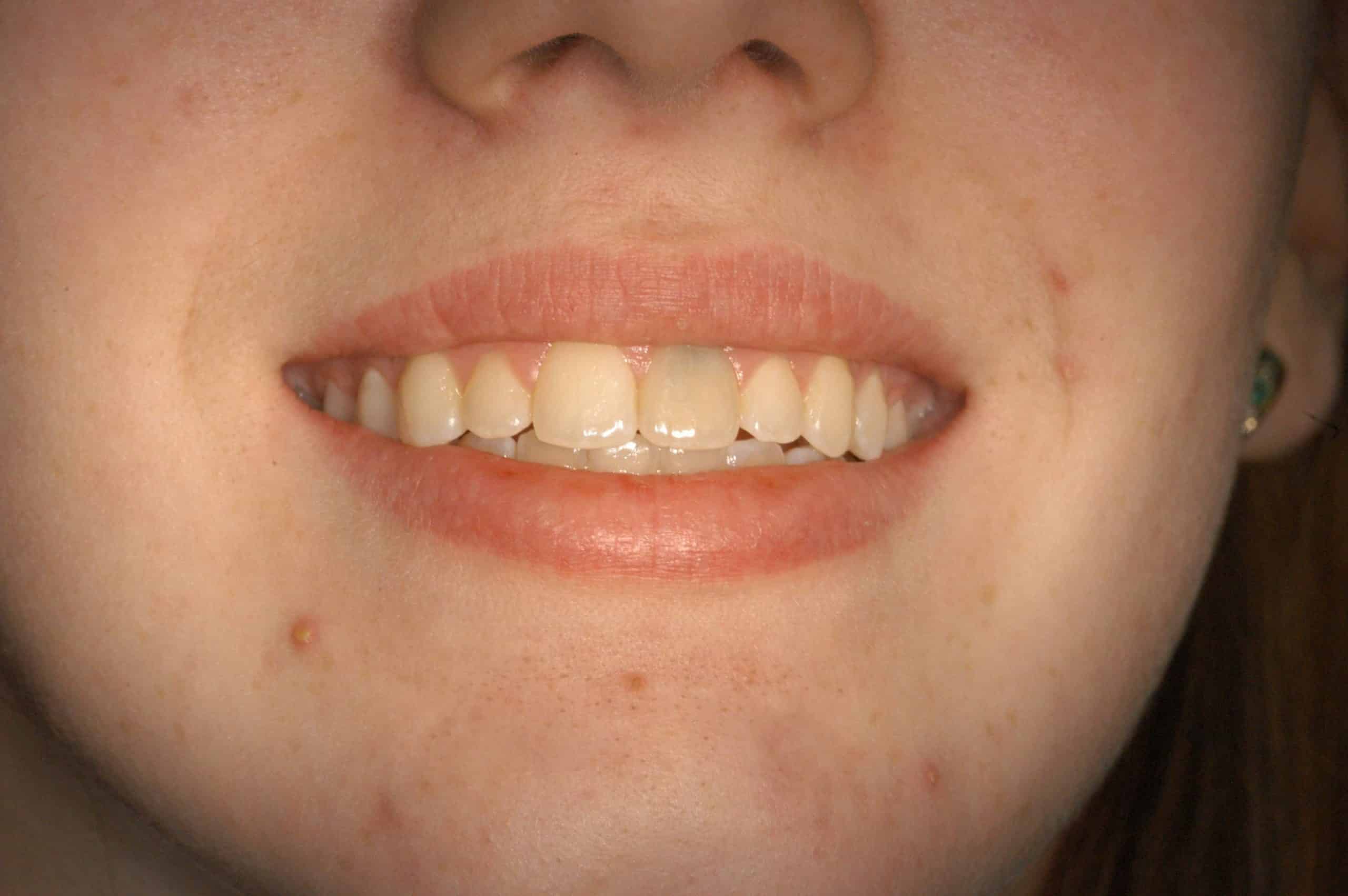
Replacing a Discolored Front Tooth with a Precision Placed Implant
Some of the most challenging restorations occur when fabricating an anterior crown to fit on an implant. Not only does one have the difficulty of matching the single front tooth to the other ones in the high visibility zone, but the dentist must also ensure the position of the underlying implant is precise through accurate preplanning and placement.
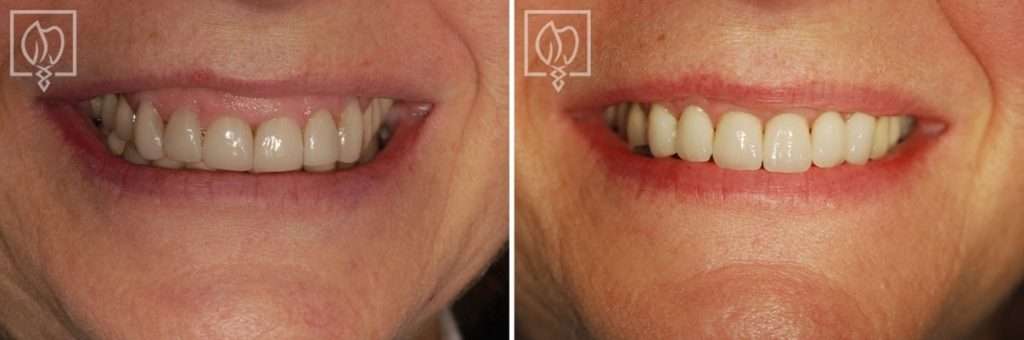
Patient Was Dissatisfied With Her 'Gummy' Smile
Excessive gingival tissue, commonly referred to as a "gummy smile," can significantly impact the appearance of a person's smile and their self-confidence. When someone smiles and a large amount of gum tissue is visible above the teeth, it can create the perception that the teeth are too small or short, even when they are actually normal size.
Our Services in Dupont Circle
Beyond Dental Crowns, Dupont Circle patients rely on Dr. Marlin for a full range of advanced dental care.
More services available in Dupont Circle:
Dental Crowns Near Dupont Circle
Dr. Marlin also provides dental crowns services for patients in these neighboring communities.
Getting Here from Dupont Circle
Elite Prosthetic Dentistry is conveniently located near Dupont Circle, DC.
Drive north on Massachusetts Avenue or Connecticut Avenue from Dupont Circle toward our Friendship Heights office. Red Line Metro stops nearby.
Address:
4400 Jenifer Street NW, Suite 220
Washington, DC 20015
Phone: (202) 244-2101
Request a ConsultationRequest a Specialist Consultation from Dupont Circle
Dupont Circle residents come to Dr. Marlin for specialist prosthodontic care. With 3,900+ implants placed and restored over 40+ years, evaluation, planning, and execution are handled with the depth complex cases require.