

Dental Crowns in Chevy Chase, MD
Dental crowns in Chevy Chase, MD. Dr. Marlin helps you decide whether a crown is appropriate versus alternatives like onlays or bonding.
When you learn you need a dental crown, questions naturally arise. Is a crown really necessary, or could a less invasive restoration work? How does a crown compare to alternatives? What factors determine whether your specific tooth should receive a crown, an onlay, or bonding?
Understanding Your Tooth’s Condition
A crown becomes appropriate when a tooth has sustained damage or decay extensive enough that conservative restorations no longer adequately restore strength or function. The key decision framework involves assessing how much tooth structure has been compromised and what restoration approach best restores strength while preserving tooth structure.
Your tooth may have experienced decay so extensive that a filling no longer provides adequate protection. The decay may have undermined the tooth so severely that remaining structure is compromised. The tooth may have undergone root canal therapy, causing it to become progressively brittle and fracture-prone. The tooth may have suffered traumatic injury, creating cracks extending deep into tooth structure. Or your tooth may have a previously placed restoration that has failed, requiring removal and a stronger replacement.
Dr. Marlin evaluates your specific situation clinically and radiographically, assessing the extent of damage and the condition of remaining tooth structure.
Evaluating Alternatives to Crown Treatment
Before recommending a crown, Dr. Marlin considers whether more conservative alternatives might adequately restore your tooth. An adhesive filling works when decay affects only surface areas or limited-depth lesions. Bonded composite restorations address moderate defects while preserving tooth structure.
An onlay covers more tooth surface than a filling but doesn’t encircle the entire tooth like a crown. An onlay works when decay or damage affects one or more cusps or a significant surface but adequate healthy tooth structure remains to maintain strength without complete coverage.
A crown completely encircles the tooth, encapsulating all surfaces under a unified restoration. Crowns work when damage is so extensive that partial restorations no longer adequately protect the tooth.
When A Crown Is Clearly Necessary
Several situations make crown treatment clearly appropriate. A tooth that has undergone endodontic therapy should receive a crown within a reasonable timeframe after treatment. Root canal-treated teeth lose their blood supply and gradually become brittle. Fracture risk increases progressively over years. A crown placed immediately after endodontic therapy prevents fracture and extends tooth life significantly. A root canal-treated tooth without a crown has a much higher fracture rate and may eventually require extraction.
Extensive decay requiring removal of large amounts of tooth structure necessitates a crown. When decay has undermined cusps or removed significant tooth structure, bonded restorations cannot provide adequate strength. A crown protects remaining tooth structure and prevents further fracture or decay.
Traumatic injury creating deep cracks that extend into the root may require endodontic treatment followed by a crown. The crown protects the remaining tooth from infection and extends its functional life.
A tooth with a large existing crown or multiple restorations that has failed requires replacement. When replacing an old crown, a new crown is typically the most appropriate restoration.
The Preservation Principle
Your natural tooth is always preferable to a replacement like an implant when the tooth can be saved. Preserving your natural tooth maintains your jawbone, which resorbs after tooth extraction. A natural tooth, even with a crown, functions better than an implant in many respects. When Dr. Marlin recommends a crown, he is recommending treatment that preserves your natural tooth rather than allowing it to be lost to extraction.
Considering Root Canal Therapy Timing
If your tooth requires both endodontic therapy and a crown, the timing of treatment matters. Ideally, root canal therapy is completed first. The tooth is then allowed to stabilize, typically for several days to a week. The crown is then placed.
However, in some situations, the tooth may be fragmented or compromised so severely that it requires protective treatment immediately. A temporary crown might be placed shortly after endodontic initiation, with the permanent crown placed after treatment is complete.
Dr. Marlin discusses the specific sequence for your tooth situation during your examination.
Assessing Your Candidacy
Your candidacy for crown treatment depends on several factors. Adequate tooth structure must remain to support a crown. If your tooth is fractured at the gum line or has lost so much structure that insufficient tooth remains, extraction may be necessary rather than crown treatment. Dr. Marlin determines whether adequate tooth structure exists during examination.
Your bite mechanics matter. If you clench or grind your teeth heavily, your crown placement must account for these forces. Dr. Marlin may recommend protective equipment like a night guard to reduce stress on the crown.
Your overall oral health is important. Active gum disease or untreated decay should be addressed before crown placement. Crowns placed on unhealthy foundations are more likely to fail.
Financial Considerations
Crown treatment represents a significant investment compared to simpler restorations. However, the longevity of crowns makes them cost-effective long-term. A crown typically lasts 15-20 years or longer, whereas fillings or bonding may require replacement every 5-7 years. Over decades, crown therapy often proves more economical than repeated replacement of simpler restorations.
Dr. Marlin provides detailed cost estimates before treatment begins and can discuss financing options for more extensive cases.
Long-Term Success Factors
Crown success depends on the quality of the crown fabrication, the skill of the placing dentist, and your long-term care. A crown fabricated by a specialty-trained prosthodontist using quality materials provides superior durability and appearance compared to crowns placed by less experienced providers.
Your care directly impacts success. Maintain excellent oral hygiene including careful flossing around the crown. Avoid extremely hard foods that stress the restoration. If you grind your teeth, wear a night guard. Attend regular professional cleanings and examinations allowing early detection of any margin problems or secondary decay.
With proper care, a crown can function reliably for decades, making it a worthwhile investment in your long-term dental health.
For related care, see our full mouth reconstruction page.
Schedule Your Consultation
The next step is the diagnostic consultation. From there, your specific case is evaluated and a treatment plan tailored to your situation is developed.
Frequently Asked Questions
How do I know whether my tooth needs a crown, onlay, or filling?
A filling works when decay or damage affects a limited area of the tooth surface. An onlay addresses larger areas but doesn't completely cover the tooth. A crown encircles the entire tooth, necessary when damage is extensive or the remaining tooth structure is compromised. Dr. Marlin evaluates your specific tooth and recommends the most conservative approach that adequately restores strength.
Will a crown work for a tooth that has had root canal therapy?
Yes. Root canal-treated teeth lose internal blood supply and become brittle over time. A crown protects them from fracture and extends their functional life significantly. A root canal-treated tooth without crown coverage has a high fracture rate. A crowned root canal-treated tooth functions reliably for decades.
Can a crown be placed if the tooth is badly decayed?
Often yes, depending on how much tooth structure remains. If sufficient healthy tooth structure remains, Dr. Marlin removes decay and builds up the tooth as needed, then places a crown. In some cases, the decay has destroyed so much tooth that extraction is necessary. He evaluates the specific situation during examination.
What is better, fixing a tooth with a crown or extracting it and getting an implant?
Keeping your natural tooth is generally preferable when possible. A crown preserves your natural tooth and maintains your jawbone. Extraction requires implant placement, additional healing time, and greater expense. However, some severely compromised teeth cannot be saved and implants are the better option. Dr. Marlin discusses both approaches.
Does a crowned tooth need special care?
A crowned tooth requires only standard dental care including twice-daily brushing, daily flossing, and regular professional cleanings. Avoid extremely hard foods that stress the crown. If you grind your teeth, wear a night guard. With proper care, crowns last 15-20 years or longer.
Related Patient Success Stories
Explore similar patient success stories demonstrating our expertise in advanced prosthetic dentistry.
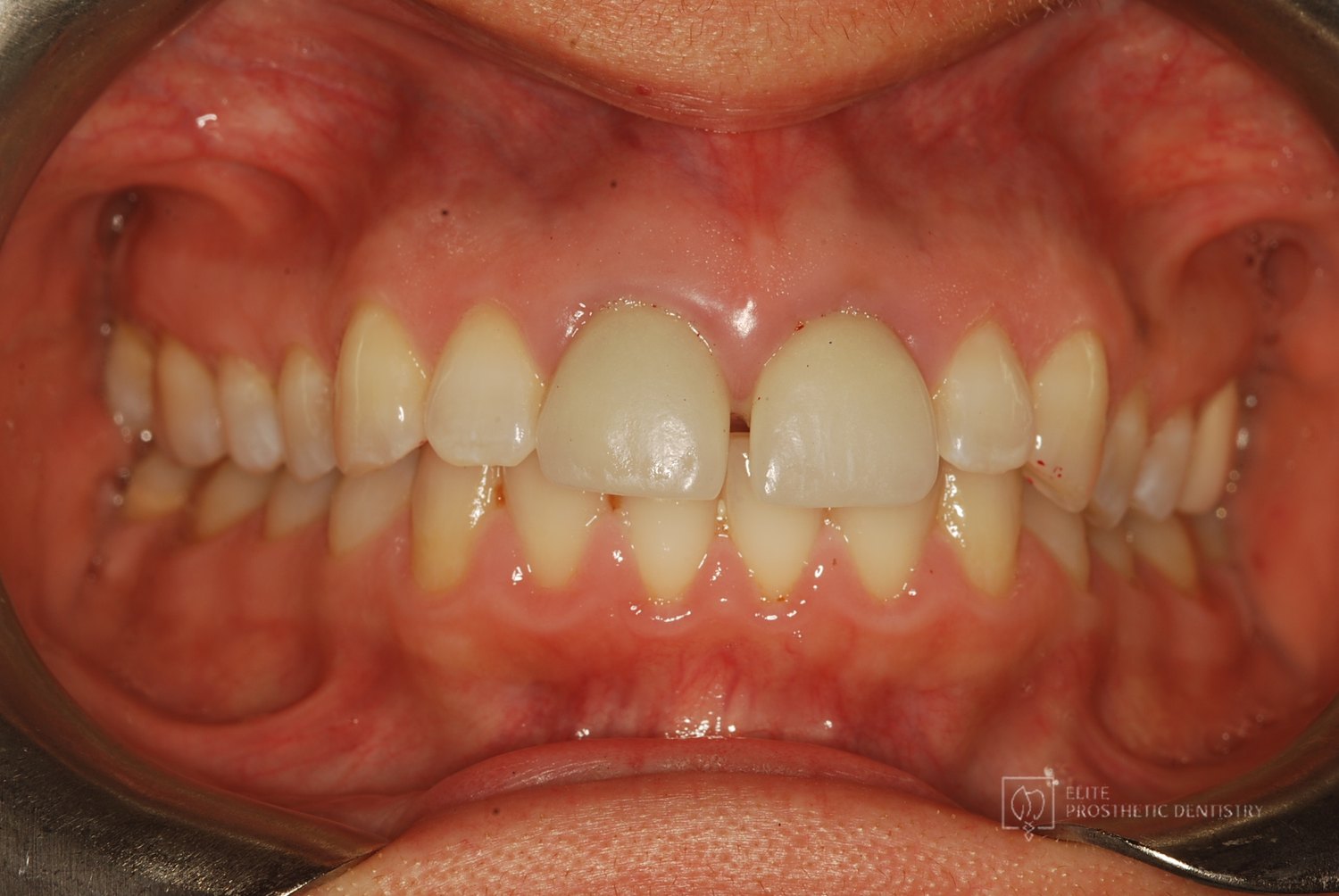 Before
 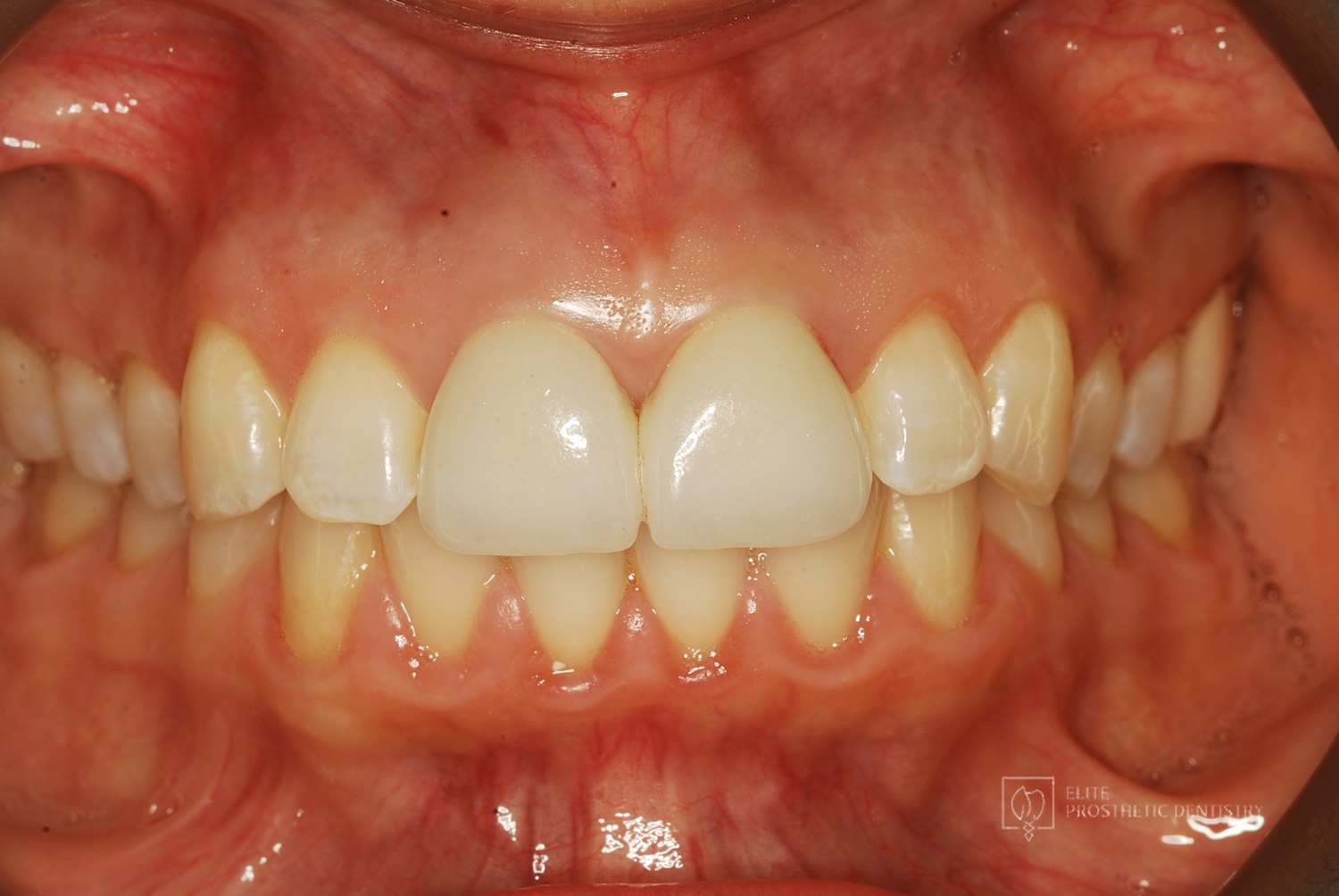 After
After Two Front Teeth Saved From Extraction: A Second Opinion, Custom Gold Posts, and Crowns Made to Last
Two upper central incisors with failed root canal treatment and recurrent decay had been recommended for extraction and implant replacement. A CBCT evaluation showed that removing the roots from their thin facial bone housing could create a visible esthetic defect in the gum and bone contour, made worse by the patient's high lip line.

Temporary Crowns Restore Patient's Smile in Just One Day with an Immediate Smile Makeover
A patient from Potomac, Maryland, came to Elite Prosthetic Dentistry with the chief complaint of pain from a failing dental implant and its significant impact on her appearance.
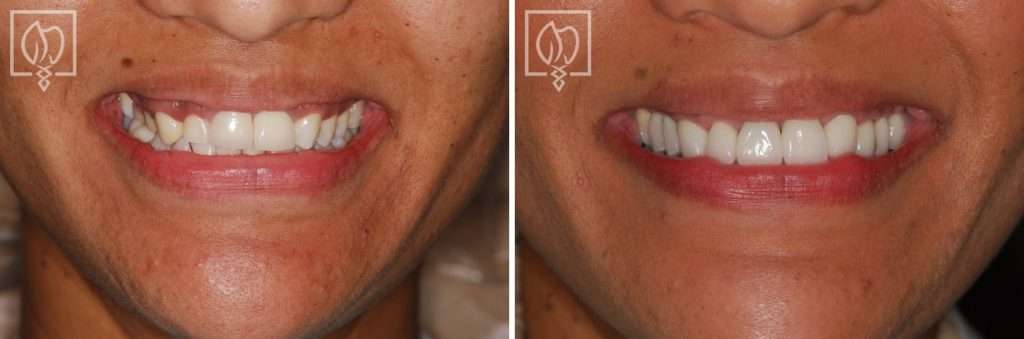
Multi-Faceted Treatment for Patient Unhappy With Her Artificial-Looking Crowns, Teeth and Gums
Many patients come to Elite Prosthetic Dentistry unhappy with the appearance of their smile. However, this particular patient presented with multiple interconnected problems that together created a smile she found deeply unsatisfying.

Salvaging Ms. N’s Severely Broken-Down Upper and Lower Teeth from Gum and Bone Disease
Many people in the U.S. suffer from extensive periodontal disease characterized by significant bone loss and shrinkage of the gum tissue. This condition can begin at a very young age and worsen quickly due to hereditary factors and lack of early diagnosis by their dentist.
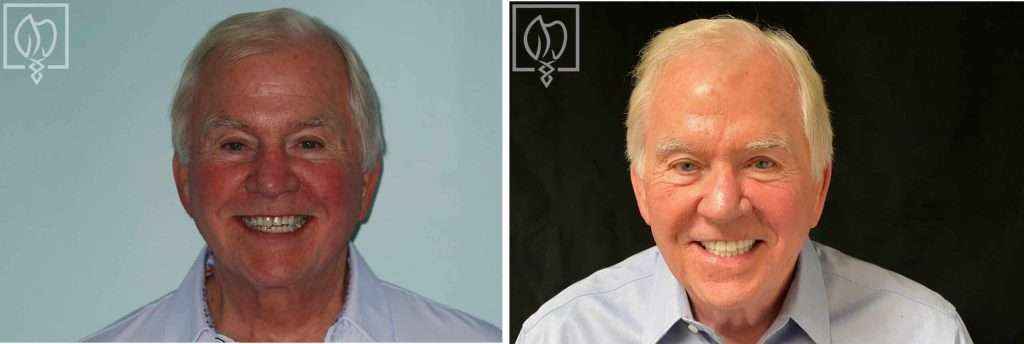
A Smile Transformation in Just Four Months: A Patient’s Dental Crown Restoration for a TV Series
A patient with dental crowns that were in poor shape was going to appear on a streaming video series on a major TV network that was scheduled to begin filming soon. Our patient, John, an author about to embark on a book tour, was anxious as his teeth were not up to his standards to appear on television.
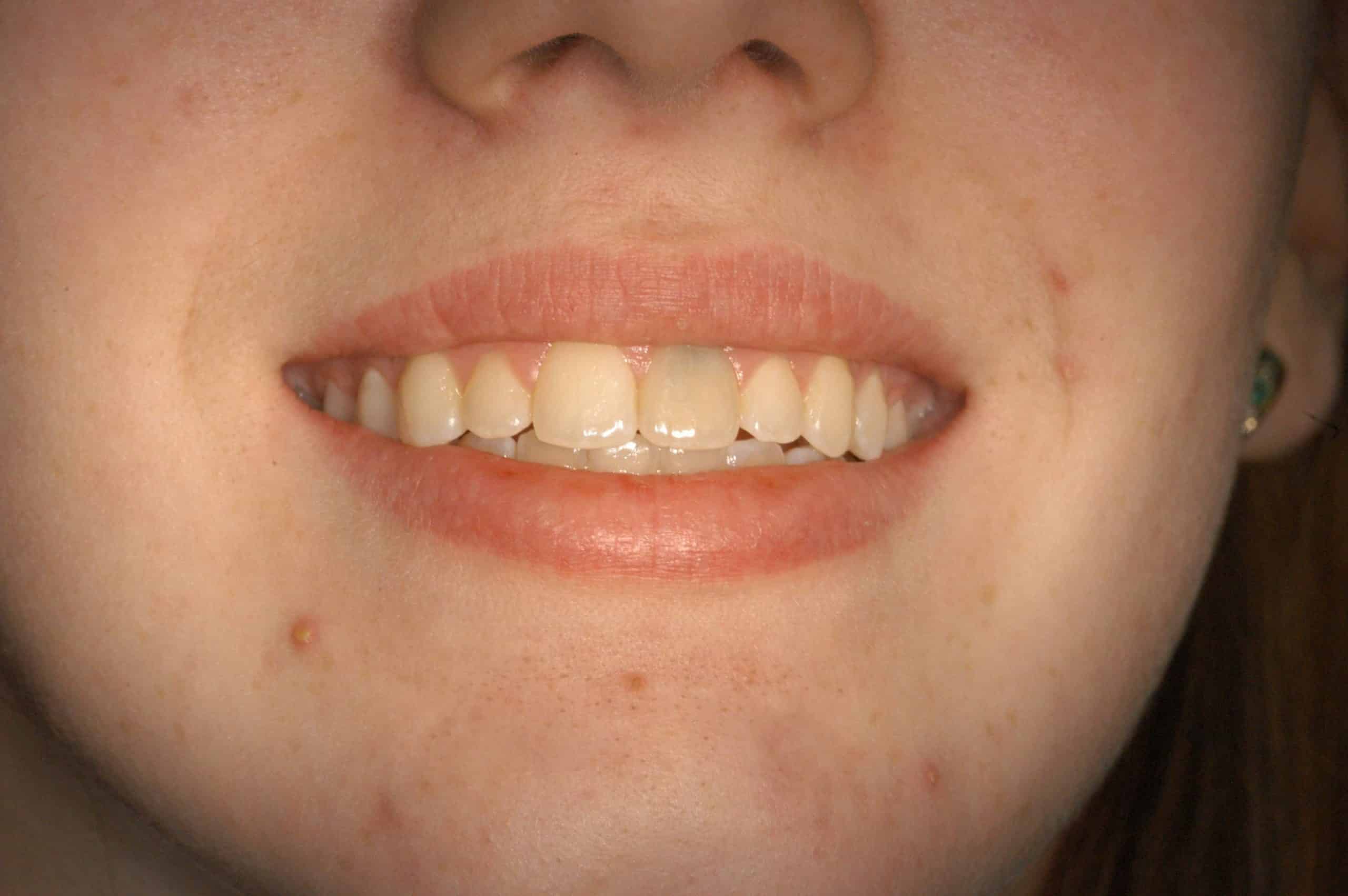
Replacing a Discolored Front Tooth with a Precision Placed Implant
Some of the most challenging restorations occur when fabricating an anterior crown to fit on an implant. Not only does one have the difficulty of matching the single front tooth to the other ones in the high visibility zone, but the dentist must also ensure the position of the underlying implant is precise through accurate preplanning and placement.
Our Services in Chevy Chase
Beyond Dental Crowns, Chevy Chase patients rely on Dr. Marlin for a full range of advanced dental care.
More services available in Chevy Chase:
Dental Crowns Near Chevy Chase
Dr. Marlin also provides dental crowns services for patients in these neighboring communities.
Getting Here from Chevy Chase
Elite Prosthetic Dentistry is conveniently located near Chevy Chase, MD.
From Chevy Chase, drive south on Connecticut Avenue NW toward Friendship Heights. Office is one Metro stop from Friendship Heights station.
Address:
4400 Jenifer Street NW, Suite 220
Washington, DC 20015
Phone: (202) 244-2101
Request a ConsultationRequest a Specialist Consultation from Chevy Chase
Chevy Chase residents come to Dr. Marlin for specialist prosthodontic care. With 3,900+ implants placed and restored over 40+ years, evaluation, planning, and execution are handled with the depth complex cases require.