

Your Dental Crown Journey: From Fracture to 10-Year Longevity in Foxhall
Follow your crown journey from the moment of tooth fracture through placement and 10-year maintenance. Dr. Marlin's timeline for Foxhall, DC.
You’ve been careful with your teeth. Regular brushing, flossing, dental checkups. Then you bite something hard or experience trauma. A tooth fractures. The crack runs deep. Your dentist or Dr. Marlin explains: a crown is necessary. The fracture is too extensive for a filling. The tooth needs protection to survive.
This moment marks the beginning of your crown journey. What follows is a predictable timeline spanning weeks initially and then years of function. Understanding what happens at each stage helps you feel prepared and informed as you move through treatment.
Week One: Diagnosis and Decision
You schedule a consultation with Dr. Marlin. He examines the fractured tooth, takes X-rays to assess how deep the fracture extends. The conversation happens: the tooth needs a crown because the remaining structure cannot support a filling. The fracture affects too much of the tooth. Damage extends below the gumline or involves the tooth’s interior.
Dr. Marlin explains your crown options. Material choices depend on your tooth’s location, your aesthetic priorities, your bite mechanics. You discuss what appears natural, what lasts longest, what costs what. You may ask about timing, cost, appearance, longevity. These questions matter. Your answers shape material selection.
You understand that your fractured tooth cannot function unprotected indefinitely. The fracture will propagate. The tooth may become infected or lose its nerve. Pain may develop. Treatment now prevents worse problems later.
Week One to Two: Preparation Appointment
Your preparation appointment arrives. Dr. Marlin administers local anesthesia. The dentist’s drill noise you’ve heard before returns. But Dr. Marlin is preparing, not removing. He shapes the fractured tooth, removing the fractured portions and creating a form that will receive the crown. The experience feels longer than it is—perhaps 60 to 90 minutes total—because your mouth remains open and your jaw tires.
Throughout preparation, you feel pressure and vibration but minimal discomfort. The anesthesia prevents that. Your mouth smells like burned tooth structure. Your ears hear whirring, water spray, suction. These sensations are unpleasant but tolerable.
Once preparation finishes, Dr. Marlin takes an impression. He inserts soft material into your mouth to capture the prepared tooth’s exact dimensions and shape. The material hardens. He removes it. This impression guides your crown’s fabrication.
Dr. Marlin places a temporary crown—usually made from pre-formed acrylic material. This temporary crown protects your prepared tooth from temperature, pressure, and bacteria while your permanent crown is being made. The temporary crown is bulkier than your eventual crown. It might feel slightly rough or oversized. This is temporary. It will be removed when your permanent crown is ready.
You receive instructions: the temporary crown might feel loose initially. Your bite might feel off. These sensations typically normalize within days. Avoid chewing sticky foods or hard objects that might dislodge the temporary crown.
Weeks Two to Three: Fabrication
During this period, you’re not at the office, but your crown is being created. Dr. Marlin works with ceramists in the on-site laboratory. The prepared tooth impression is scanned and digitally modeled. Your crown’s internal form is designed—precise margins, perfect fit, exact dimensions matching the prepared tooth.
The ceramist begins layering the crown material. Whether your crown is all-ceramic, zirconia, lithium disilicate, or another material, the fabrication process is meticulous. Shade is matched to your natural teeth under controlled lighting. The crown is shaped to match your tooth’s natural contours. Morphological details are added—the subtle grooves and textures that make teeth look natural rather than artificial.
This process takes 1 to 3 weeks depending on the specific material and complexity of your case. Dr. Marlin reviews the crown before it’s completed, often making refinements to ensure it meets his high standards.
Week Three to Four: Delivery Appointment
You return to Dr. Marlin’s office. The temporary crown is removed. Your prepared tooth is cleaned. Dr. Marlin seats your permanent crown, checking fit, bite, appearance.
The experience is anticlimactic. You sit in the chair. The temporary crown is removed. Your prepared tooth looks dark and feels exposed for just moments. Dr. Marlin applies the crown—it’s fitted onto your prepared tooth like a glove onto a hand. It seats precisely. The fit is perfect.
Dr. Marlin checks your bite. He checks it multiple times. You bite on different materials to guide where he makes micro-adjustments. Your bite feels off initially because the crown’s surface is slightly different from the surrounding teeth. Minor adjustments are made.
Dr. Marlin verifies the crown appearance matches your natural teeth. The shade, shape, size all blend with your adjacent teeth. You look in the mirror. Your tooth looks normal. The crown is invisible.
Once everything is perfect, Dr. Marlin cements the crown permanently to your prepared tooth. The cement hardens chemically. Your crown is now fixed in place—not removable, not temporary. It will function like your natural tooth.
The appointment lasts 30 to 45 minutes. You leave with your completed crown.
Days One to Seven: Adjustment Period
Your mouth has been through a procedure. The prepared tooth feels slightly sore. Your gum around the crown may be slightly inflamed. The bite might feel slightly different. These sensations are temporary.
Over the next few days, your mouth adapts. The soreness fades. Your gum adjusts to the crown’s margin. Your bite feels completely normal. By day seven, most patients feel as if the crown has always been there.
Some sensitivity to temperature is normal in the first week. The prepared tooth loses its protective outer structure. The remaining dentin is more sensitive to hot and cold. This sensitivity fades as minerals from your saliva re-mineralize the exposed surfaces. Over-the-counter sensitivity toothpaste can help.
Months Two to Twelve: Integration
By two months, the crown feels completely integrated into your bite. You’ve stopped thinking about it. You eat, chew, smile, speak without noticing the crown. It functions like your natural tooth.
You maintain it like any tooth. Brush gently—aggressive brushing won’t damage the crown, but gentle brushing is better habit anyway. Floss normally. The floss slides between your crown and adjacent teeth just as it does between natural teeth. Avoid extremely hard foods that stress all your teeth equally.
Some patients experience minor bite adjustment needs at their regular checkup. If something feels slightly off—a high spot in your bite—Dr. Marlin adjusts it. This takes minutes.
Year Two and Beyond: The New Normal
By year two, your crown has settled completely. Your bite is stable. Your gum has finished adapting. The crown functions identically to your natural tooth. You eat anything you ate before the fracture. You chew normally. The crown is invisible in your daily life.
Your regular dental checkups include crown evaluation. Dr. Marlin examines the crown’s margins, checks for any decay beginning around the edge, and verifies your bite remains stable. If issues develop—decay at the margin, crown fracture, cosmetic concerns—they’re identified early.
Years Five to Ten: Longevity Reality
Most crowns fabricated by Dr. Marlin remain functional and appear natural for 15 to 20+ years or longer. Five to ten years into your crown’s life, it continues functioning perfectly. You may never think about it. No maintenance beyond normal oral hygiene is required.
The tooth structure underneath the crown remains solid. The cement bond remains intact. The crown material—whether ceramic, zirconia, or other—resists degradation. Your crown simply works, year after year.
Some patients keep their original crown for 25+ years. Others may eventually elect replacement for cosmetic reasons or due to new issues developing. But the crown’s basic function—protecting your fractured tooth and restoring its appearance and use—continues reliably.
The Sensations Along the Way
Your crown journey involves sensations you should expect. The preparation appointment brings pressure and vibration but minimal discomfort. The temporary crown feels bulky. The permanent crown delivery feels slightly foreign initially but normalizes within days. The crown functions like your natural tooth from that point forward.
You might notice:
- Slight soreness for a few days after placement—normal, resolves quickly
- Bite feeling slightly different initially—normalizes within a week
- Temperature sensitivity for a few days—fades as dentin remineralizes
- Gum slightly inflamed around the crown initially—settles within two weeks
- The crown functionally indistinguishable from your natural tooth within a month
Long-Term Care for Your Crown
Your crown requires the same care as any tooth. Brush twice daily. Floss daily. Visit your dentist for regular checkups—typically every six months. Avoid extremely hard foods that stress all your teeth. If you grind your teeth, wear a nightguard to protect your crown and other teeth.
The cement bonding your crown to your prepared tooth is durable when you care for your crown normally. Your gum remains healthy when you maintain good oral hygiene. Your crown’s appearance remains unchanged if you avoid staining foods and drinks excessively.
Getting Here from Foxhall
From Foxhall, drive north on Foxhall Road NW toward Massachusetts Avenue. Continue on Massachusetts Avenue toward our Friendship Heights location. The drive takes approximately 10 to 15 minutes. Elite Prosthetic Dentistry is located at 4400 Jenifer Street NW, Suite 220, Washington DC 20015. Free parking is available in our building.
Schedule Your Crown Consultation
If you have a fractured tooth that needs a crown, schedule your consultation with Dr. Marlin. He’ll examine your tooth, explain the procedure, and guide you through the timeline from preparation through placement and beyond.
For related care, see our pages on full mouth reconstruction and Dental Crowns in Georgetown.
Frequently Asked Questions
What does a crown feel like when it's first placed?
Your crown will feel slightly different initially—you may notice the texture or bite feels foreign for a few days. This is normal. The temporary crown felt bulky; the permanent crown is refined and precise. Within a week, your mouth adjusts and the crown becomes part of your natural bite.
Will I feel discomfort during the crown procedure?
You'll feel pressure and vibration during tooth preparation, but anesthesia prevents pain. After anesthesia wears off, mild sensitivity for a few days is normal. Over-the-counter pain relief manages this easily. Dr. Marlin's gentle preparation technique minimizes post-operative discomfort.
How long does crown treatment really take?
From your initial appointment to final placement, crown treatment typically spans 2-4 weeks. Your preparation appointment takes 60-90 minutes. You'll wear a temporary crown for 1-3 weeks while your permanent crown is fabricated. Your delivery appointment takes 30-45 minutes. Total time investment is manageable for most patients.
What happens in year two after crown placement?
By year two, your crown functions as if it's a natural tooth. You might forget you have a crown. The gum around your crown has stabilized. At your regular checkups, Dr. Marlin monitors the crown's margins and your bite. No special maintenance is required beyond normal brushing and flossing.
At what point do most crowns need replacement?
Most crowns fabricated by Dr. Marlin last 15-20+ years. You might have your crown for a decade with no issues whatsoever. If replacement becomes necessary, it's typically due to new decay under the crown, changes in your bite, or cosmetic concerns rather than the crown material failing. Some patients keep their original crown for 25+ years.
Related Patient Success Stories
Explore similar patient success stories demonstrating our expertise in advanced prosthetic dentistry.

Temporary Crowns Restore Patient's Smile in Just One Day with an Immediate Smile Makeover
A patient from Potomac, Maryland, came to Elite Prosthetic Dentistry with the chief complaint of pain from a failing dental implant and its significant impact on her appearance.
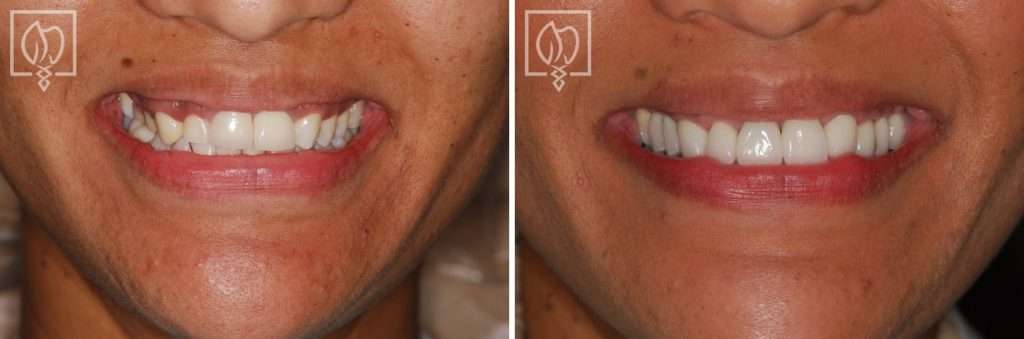
Multi-Faceted Treatment for Patient Unhappy With Her Artificial-Looking Crowns, Teeth and Gums
Many patients come to Elite Prosthetic Dentistry unhappy with the appearance of their smile. However, this particular patient presented with multiple interconnected problems that together created a smile she found deeply unsatisfying.

Salvaging Ms. N’s Severely Broken-Down Upper and Lower Teeth from Gum and Bone Disease
Many people in the U.S. suffer from extensive periodontal disease characterized by significant bone loss and shrinkage of the gum tissue. This condition can begin at a very young age and worsen quickly due to hereditary factors and lack of early diagnosis by their dentist.
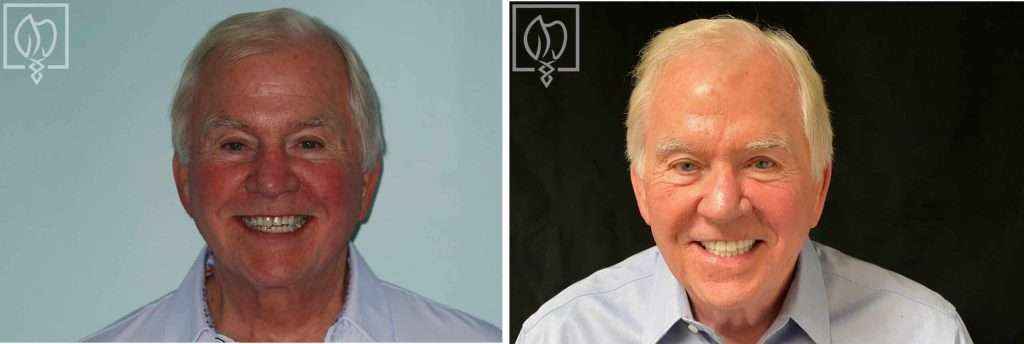
A Smile Transformation in Just Four Months: A Patient’s Dental Crown Restoration for a TV Series
A patient with dental crowns that were in poor shape was going to appear on a streaming video series on a major TV network that was scheduled to begin filming soon. Our patient, John, an author about to embark on a book tour, was anxious as his teeth were not up to his standards to appear on television.
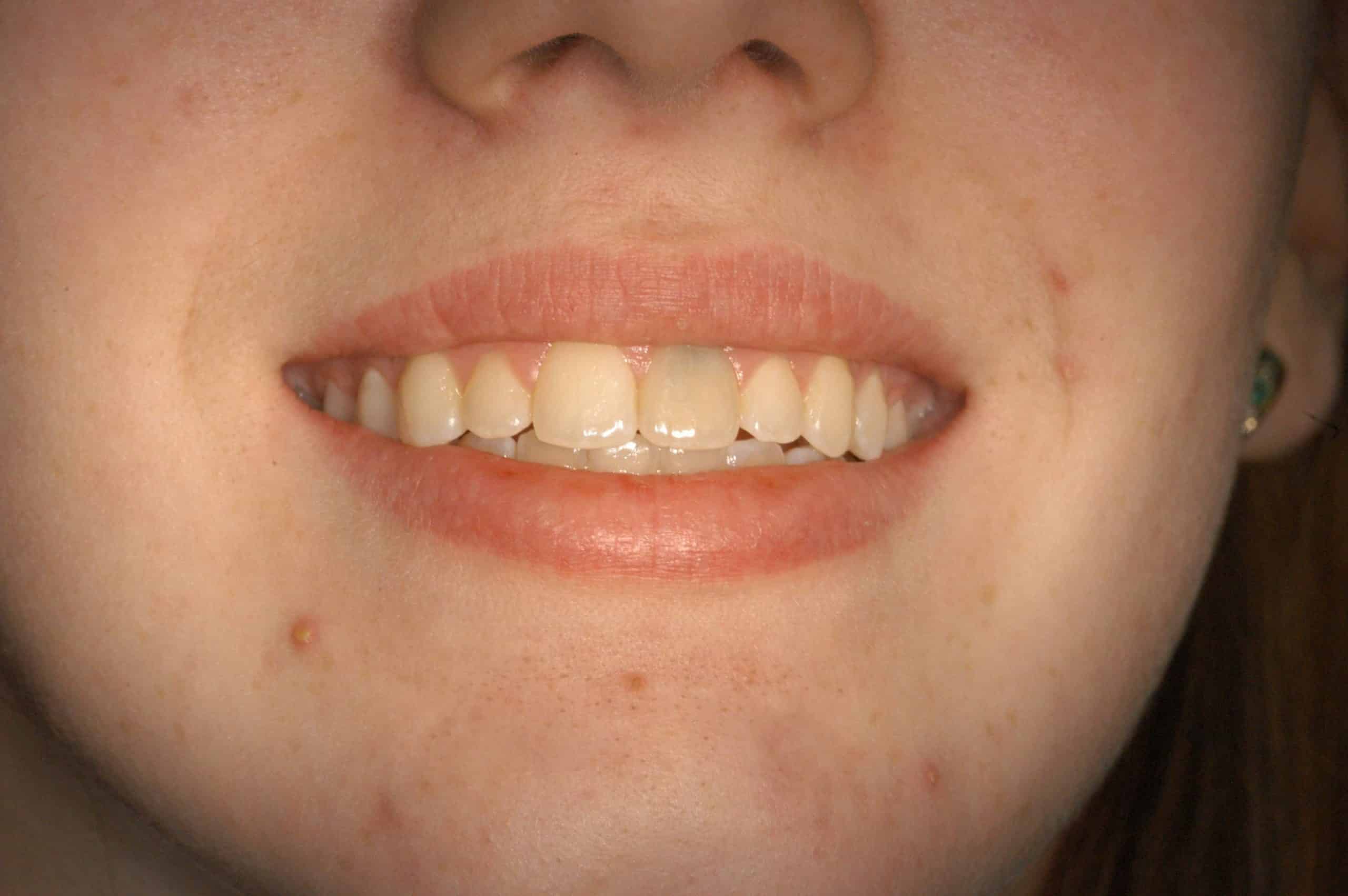
Replacing a Discolored Front Tooth with a Precision Placed Implant
Some of the most challenging restorations occur when fabricating an anterior crown to fit on an implant. Not only does one have the difficulty of matching the single front tooth to the other ones in the high visibility zone, but the dentist must also ensure the position of the underlying implant is precise through accurate preplanning and placement.
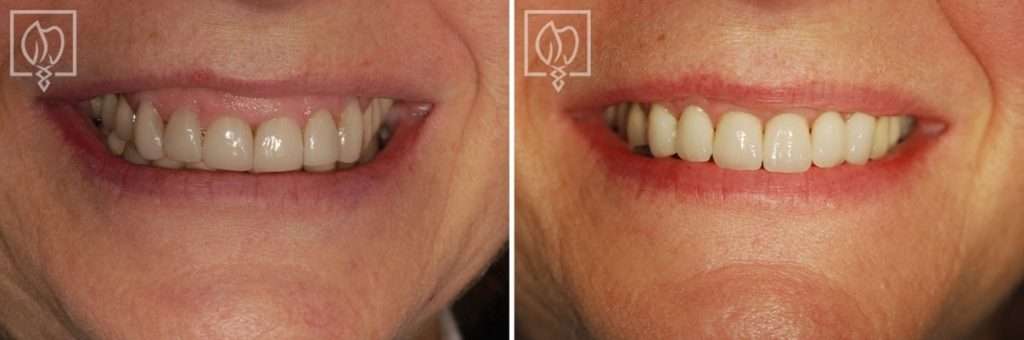
Patient Was Dissatisfied With Her 'Gummy' Smile
Excessive gingival tissue, commonly referred to as a "gummy smile," can significantly impact the appearance of a person's smile and their self-confidence. When someone smiles and a large amount of gum tissue is visible above the teeth, it can create the perception that the teeth are too small or short, even when they are actually normal size.
Our Services in Foxhall
Beyond Dental Crowns, Foxhall patients rely on Dr. Marlin for a full range of advanced dental care.
More services available in Foxhall:
Dental Crowns Near Foxhall
Dr. Marlin also provides dental crowns services for patients in these neighboring communities.
Getting Here from Foxhall
Elite Prosthetic Dentistry is conveniently located near Foxhall, DC.
Drive north on Foxhall Road NW to Massachusetts Avenue, continuing to our Friendship Heights office at 4400 Jenifer Street NW, Suite 220.
Address:
4400 Jenifer Street NW, Suite 220
Washington, DC 20015
Phone: (202) 244-2101
Request a ConsultationRequest a Specialist Consultation from Foxhall
Foxhall residents come to Dr. Marlin for specialist prosthodontic care. With 3,900+ implants placed and restored over 40+ years, evaluation, planning, and execution are handled with the depth complex cases require.