

Dental Crowns in Georgetown, DC
Dental crowns in Georgetown, DC. 12 questions answered about crown longevity, sensitivity, fit, and replacement by Dr. Marlin.
Georgetown residents have many questions about dental crowns. Our team at Elite Prosthetic Dentistry addresses the most common concerns about longevity, function, and long-term care.
How Long Do Crowns Actually Last?
High-quality crowns fabricated by a specialty-trained prosthodontist using premium materials typically function for 15 to 20+ years. Many patients report crowns remaining in excellent condition for 25 or 30 years or longer with proper care.
Longevity depends on several factors. The quality of the crown fabrication matters significantly. Crowns fabricated by skilled ceramists with meticulous attention to margins, shade matching, and contour design last longer and function better than crowns fabricated by less experienced technicians. Our on-site laboratory enables direct collaboration with our ceramist, ensuring exceptional fabrication quality.
The skill of the dentist placing the crown influences success. Dr. Marlin’s decades of specialty-trained experience in crown placement, bite equilibration, and margin finishing ensures optimal placement producing reliable function over years. Optimal cementation techniques create a secure bond that holds over decades.
Your care directly impacts longevity. Maintain excellent oral hygiene including twice-daily brushing and daily flossing. Avoid extremely hard or sticky foods that stress the crown. If you grind your teeth, wear a protective night guard. Attend regular professional cleanings and periodic examinations. These habits extend crown lifespan significantly.
Can My Crowned Tooth Become Sensitive?
Some patients experience tooth sensitivity to cold for a few days to two weeks after crown delivery. This sensitivity results from the tooth adjusting to the new restoration and typically resolves without treatment.
Desensitizing toothpaste helps manage sensitivity. Apply the paste directly to the crown margin and sensitive area at night or use a toothpaste containing potassium nitrate, which blocks sensation over time.
If sensitivity persists beyond two weeks, contact Dr. Marlin. Sensitivity after two weeks suggests a potential problem like secondary decay, an incomplete seal, or bite trauma requiring evaluation. Early treatment prevents more serious issues.
What if My Crown Doesn’t Fit Properly?
A properly fitting crown should feel comfortable with contact points that match your natural bite mechanics. You should not feel the crown’s edges with your tongue or experience food trapping under the crown.
If the crown feels uncomfortable, detect gaps between the crown and tooth, or notice food trapping under the crown, contact Dr. Marlin. Minor adjustments to the crown’s contours or bite can usually correct these issues easily at an adjustment appointment. Do not wait if the crown is uncomfortable, as prolonged irritation can cause gum inflammation.
How Should I Care for My Crown?
Maintain your crowned tooth with the same care you provide your natural teeth. Brush twice daily with a soft-bristled toothbrush, paying special attention to the crown margins where your tooth meets the crown. Daily floss carefully around the crown, using unwaxed floss that won’t fray around the crown margins.
Avoid extremely hard foods that stress the crown. Do not bite ice, chew hard candy, or use your crowned tooth as a tool. Be cautious with hard foods like nuts or dried fruit.
If you grind or clench your teeth, wear a protective night guard. Grinding places tremendous force on crowns and can cause chipping or loosening. A guard protects both the crown and the underlying tooth.
Will Food Get Under My Crown?
A properly cemented crown should seal completely at the margins, preventing food from entering the space between the crown and tooth. However, if the crown margins are not perfectly sealed, if decay develops under the crown, or if the underlying tooth fractures, food and bacteria can penetrate underneath.
If you notice persistent food trapping under your crown, contact Dr. Marlin. This symptom may indicate a marginal seal problem or secondary decay requiring evaluation and treatment.
Can My Crowned Tooth Develop Decay?
The tooth under the crown can develop decay if the crown margins are not properly sealed or if decay develops at the margin where the crown meets the tooth. This secondary decay is the most common reason crowns eventually require replacement.
Proper fabrication, ideal margin placement, and meticulous margin finishing minimize secondary decay risk. However, decay at crown margins can still develop over years, particularly if oral hygiene is suboptimal or gum disease develops.
This is why regular professional cleanings and periodic examinations are essential. Dr. Marlin evaluates crown margins during these visits. Early detection of decay at crown margins allows treatment before the decay progresses.
What Happens if My Crown Becomes Loose or Falls Off?
Properly cemented crowns are extremely secure and rarely loosen or come off. However, if decay or fracture develops under the crown, it may eventually loosen. If your crown becomes loose or falls off, contact Dr. Marlin immediately.
If the crown comes off, save it. Dr. Marlin can usually recementation it if there is no underlying damage. However, if decay or fracture caused the crown to loosen, the underlying tooth may require treatment before the crown can be replaced.
When Does a Crown Need Replacement?
Crowns eventually require replacement because of secondary decay at crown margins, fracture of the underlying tooth, or wear and tear from years of function. Some crowns remain in perfect condition for 30+ years, while others require replacement after 15-20 years.
When replacement becomes necessary, Dr. Marlin removes the old crown and evaluates the underlying tooth. If adequate healthy tooth structure remains, he fabricates a new crown. Sometimes, replacing a crown provides an opportunity to update the appearance or adjust the bite if problems have developed.
How Are Crowns Replaced?
The replacement process is similar to initial crown placement. The old crown is carefully removed without damaging the underlying tooth. The tooth is cleaned and evaluated. If adequate structure remains, Dr. Marlin prepares the tooth as needed and takes impressions. A temporary crown is placed while the permanent crown is fabricated. The permanent crown is delivered at a second appointment.
Sometimes, the underlying tooth structure has been compromised by decay or fracture. In these situations, Dr. Marlin discusses whether the tooth can still be salvaged with a crown or whether extraction and implant placement would be more appropriate.
What if Multiple Teeth Need Crowns?
If multiple teeth require crowns, we typically plan treatment strategically. For extensive cases, we may phase treatment over several appointments, allowing each tooth to stabilize before placing additional crowns. We assess your bite carefully, ensuring all crowns function harmoniously with your existing bite mechanics.
Comprehensive planning ensures all crowns integrate well together and with your remaining natural teeth, producing a harmonious restoration.
How Often Should I Get My Crown Checked?
Attend regular professional cleanings and examinations every six months. During these visits, Dr. Marlin examines the crown margins, checks for secondary decay, evaluates the underlying tooth, and verifies the crown’s continuing fit and function.
Early detection during regular examinations allows preventive treatment before problems advance to the point where crowns require replacement.
Can My Crowned Tooth Require Endodontic Therapy Later?
Although less common, a crowned tooth can occasionally develop problems requiring endodontic therapy. Decay can develop under the crown or impact the pulp. A deep crack can extend into the pulp. Trauma can cause pulp damage.
If your crowned tooth develops a problem requiring root canal therapy, Dr. Marlin treats the tooth and ensures the crown remains adequately protective afterward.
What is the Cost to Replace a Crown?
The cost to replace a crown is typically similar to the cost of the original crown, depending on the material selected and any additional tooth preparation required. However, if decay has developed under the crown or the underlying tooth requires additional treatment, costs may be higher.
Dr. Marlin provides detailed cost estimates during your examination and can discuss treatment options if costs are a concern.
Schedule Your Consultation
The next step is the diagnostic consultation. From there, your specific case is evaluated and a treatment plan tailored to your situation is developed.
Frequently Asked Questions
How long do crowns actually last?
High-quality crowns fabricated by a specialty-trained prosthodontist typically function for 15 to 20+ years. Many patients report crowns functioning for 25 or 30 years or longer. Longevity depends on the quality of fabrication, the care you provide, and the stresses placed on the crown. Our crowns consistently achieve these timelines because of meticulous fabrication and direct collaboration with our on-site laboratory.
Will my crowned tooth be sensitive to temperature?
Some patients experience brief cold sensitivity after crown placement, typically resolving within two weeks as the tooth adjusts. Desensitizing toothpaste helps manage this sensitivity. Once adaptation occurs, crowned teeth typically experience no sensitivity to temperature. If sensitivity persists beyond two weeks, contact Dr. Marlin for evaluation.
Can a crown fall off or come loose?
Properly cemented crowns are extremely secure and rarely loosen or come off. However, if decay develops under a crown or the underlying tooth fractures, the crown may eventually require replacement. This is why regular professional cleanings and periodic examinations are important. Early detection allows treatment before major problems develop.
How can I tell if my crown fits properly?
A properly fitting crown should feel comfortable when you bite, with contact points that match your natural bite mechanics. You should not feel the crown edges with your tongue. Food should not trap under the crown. If you experience discomfort, detect gaps, or notice food getting under the crown, contact Dr. Marlin for evaluation.
What if my crown edges don't feel smooth?
If crown edges feel rough or sharp, contact Dr. Marlin. Occasionally, margins need polishing or refinement. This is easily corrected at an adjustment appointment. Do not wait if the crown is uncomfortable. Early adjustment prevents gum irritation.
Related Patient Success Stories
Explore similar patient success stories demonstrating our expertise in advanced prosthetic dentistry.
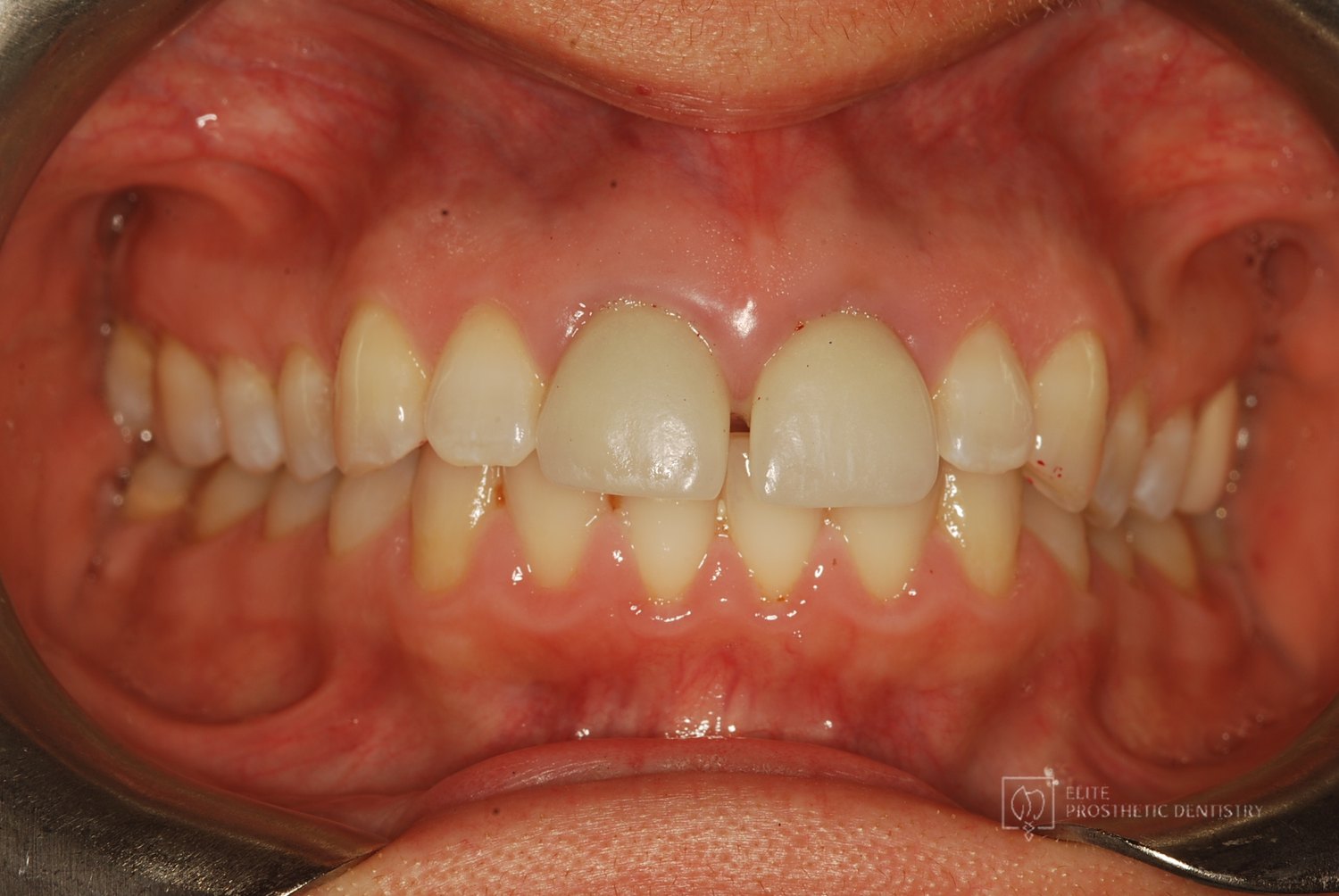 Before
 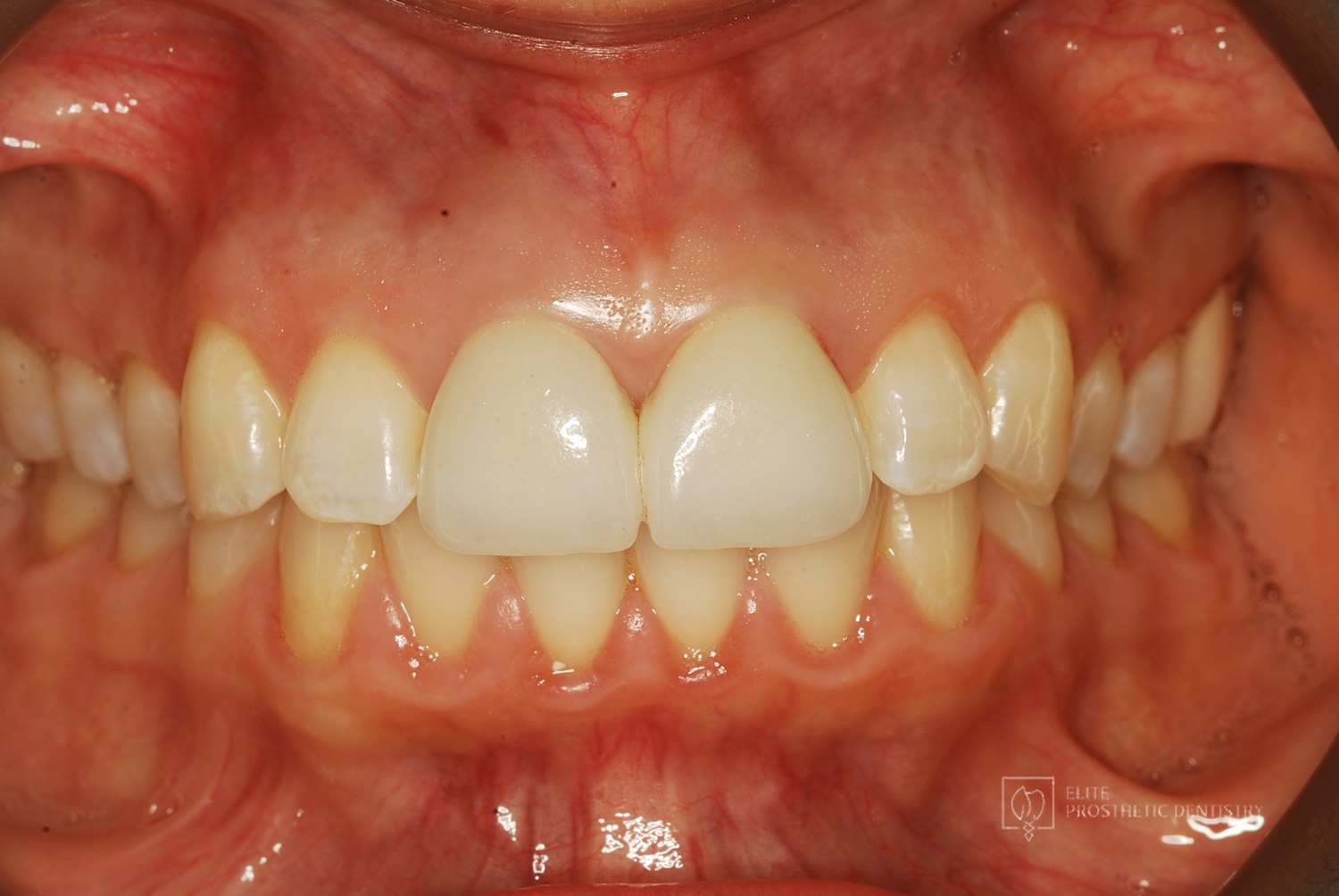 After
After Two Front Teeth Saved From Extraction: A Second Opinion, Custom Gold Posts, and Crowns Made to Last
Two upper central incisors with failed root canal treatment and recurrent decay had been recommended for extraction and implant replacement. A CBCT evaluation showed that removing the roots from their thin facial bone housing could create a visible esthetic defect in the gum and bone contour, made worse by the patient's high lip line.

Temporary Crowns Restore Patient's Smile in Just One Day with an Immediate Smile Makeover
A patient from Potomac, Maryland, came to Elite Prosthetic Dentistry with the chief complaint of pain from a failing dental implant and its significant impact on her appearance.
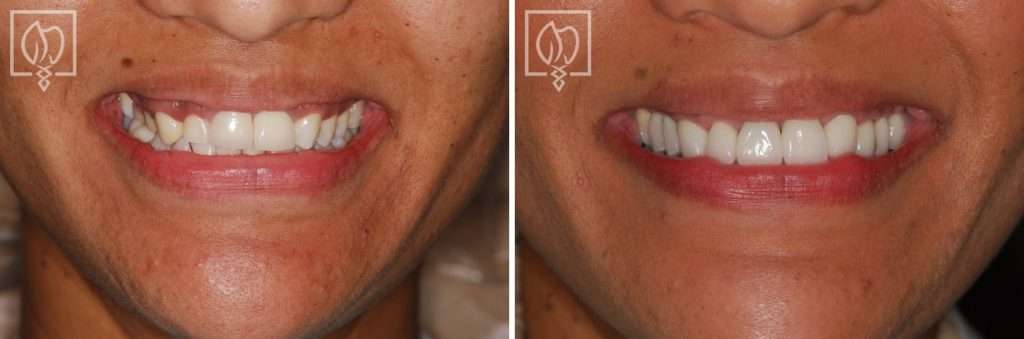
Multi-Faceted Treatment for Patient Unhappy With Her Artificial-Looking Crowns, Teeth and Gums
Many patients come to Elite Prosthetic Dentistry unhappy with the appearance of their smile. However, this particular patient presented with multiple interconnected problems that together created a smile she found deeply unsatisfying.

Salvaging Ms. N’s Severely Broken-Down Upper and Lower Teeth from Gum and Bone Disease
Many people in the U.S. suffer from extensive periodontal disease characterized by significant bone loss and shrinkage of the gum tissue. This condition can begin at a very young age and worsen quickly due to hereditary factors and lack of early diagnosis by their dentist.
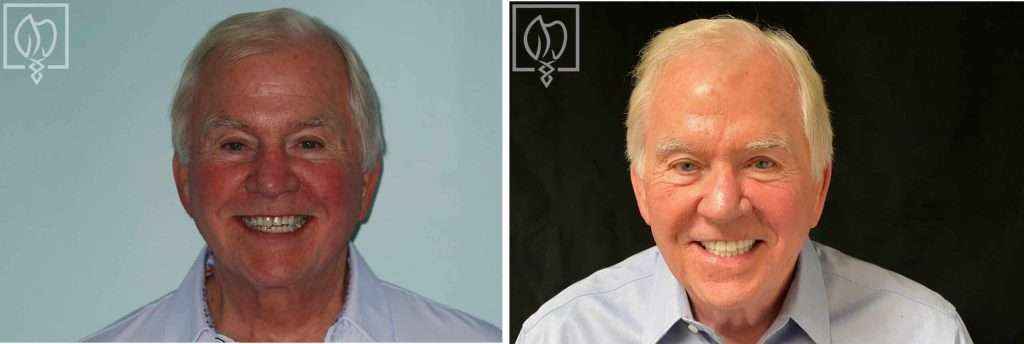
A Smile Transformation in Just Four Months: A Patient’s Dental Crown Restoration for a TV Series
A patient with dental crowns that were in poor shape was going to appear on a streaming video series on a major TV network that was scheduled to begin filming soon. Our patient, John, an author about to embark on a book tour, was anxious as his teeth were not up to his standards to appear on television.
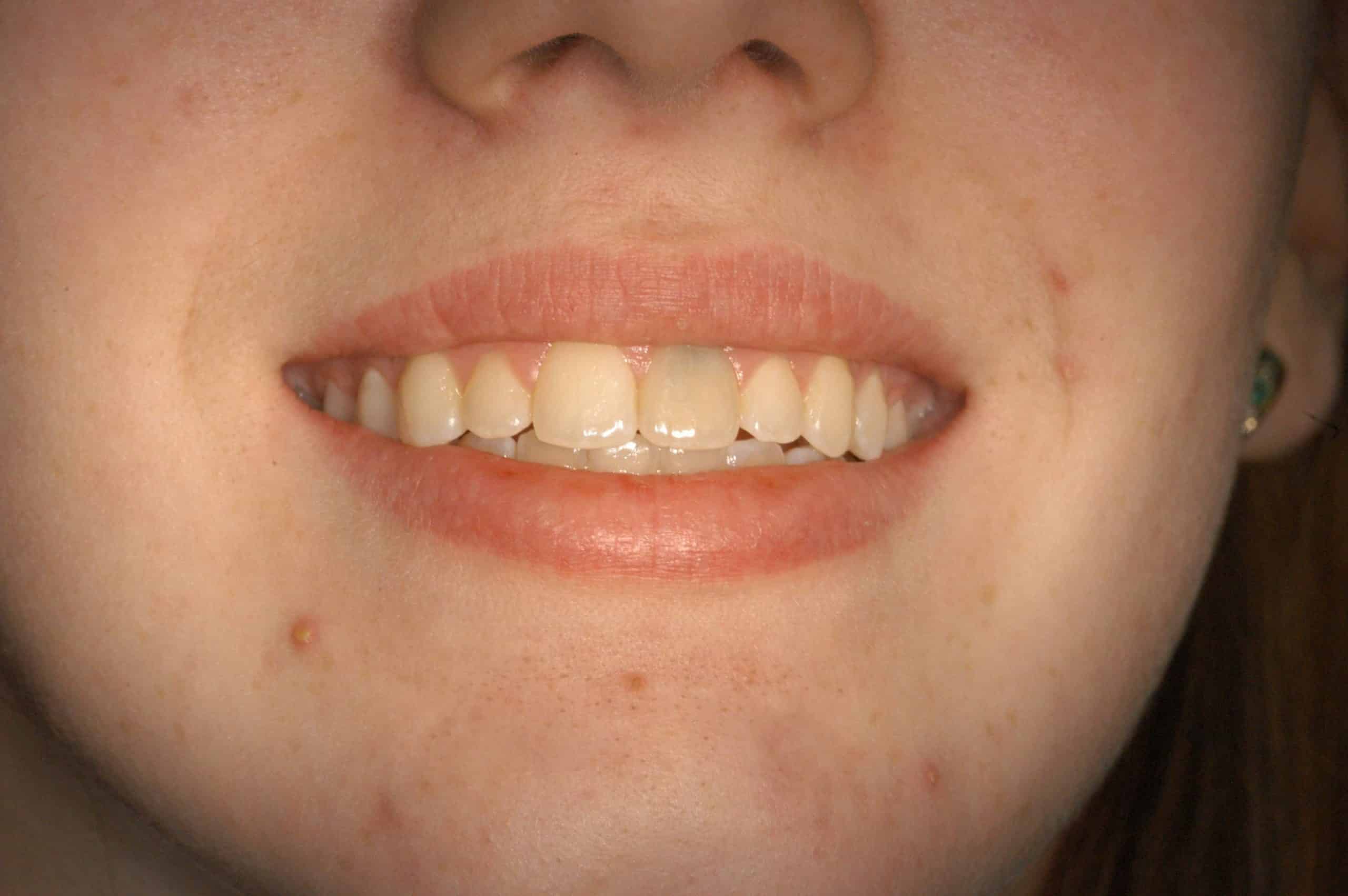
Replacing a Discolored Front Tooth with a Precision Placed Implant
Some of the most challenging restorations occur when fabricating an anterior crown to fit on an implant. Not only does one have the difficulty of matching the single front tooth to the other ones in the high visibility zone, but the dentist must also ensure the position of the underlying implant is precise through accurate preplanning and placement.
Our Services in Georgetown
Beyond Dental Crowns, Georgetown patients rely on Dr. Marlin for a full range of advanced dental care.
More services available in Georgetown:
Getting Here from Georgetown
Elite Prosthetic Dentistry is conveniently located near Georgetown, DC.
From Georgetown, drive east on M Street or Wisconsin Avenue toward Friendship Heights office at 4400 Jenifer Street NW, Suite 220.
Address:
4400 Jenifer Street NW, Suite 220
Washington, DC 20015
Phone: (202) 244-2101
Request a ConsultationRequest a Specialist Consultation from Georgetown
Georgetown residents come to Dr. Marlin for specialist prosthodontic care. With 3,900+ implants placed and restored over 40+ years, evaluation, planning, and execution are handled with the depth complex cases require.