

Dental Crowns in Cleveland Park, DC: Crown vs Onlay vs Filling Decision
When does a crown make sense in Cleveland Park, DC? Compare crowns to onlays and fillings. Dr. Marlin explains restoration decision criteria.
Your Cleveland Park tooth needs restoration, but should you choose a filling, onlay, or crown? Each approach has merit. Understanding when each is appropriate prevents regret and expensive retreatment years later.
A tooth doesn’t declare which restoration it needs. Damage extent, tooth structure already lost, depth of decay, location of decay under existing restorations, all these factors drive the decision. Dr. Marlin applies a decision framework that balances preserving tooth structure with choosing the solution most likely to last.
When Filling Is the Right Call
A filling suits small or moderate cavities confined to one surface. Your dentist removes decay and fills the space with composite material that bonds directly to the remaining tooth. The process is quick, relatively inexpensive, and preserves maximum tooth structure.
Fillings work when damage involves less than 20-30% of the tooth’s surface area and doesn’t extend into areas critical to structural strength. A small cavity on the smooth outer surface of a molar is a perfect filling candidate. Fillings between teeth work when the cavity is small enough that healthy tooth walls remain on both sides.
Fillings have clear limits. They cannot replace cusps, the sharp ridges on chewing surfaces that bear heavy force. When a cavity extends into the cusp area or when multiple cusps are affected, the remaining tooth structure is too weak to handle the forces of chewing. A filling cannot provide the same protection that a crown provides.
For Cleveland Park patients whose decay is caught early, a filling is often the ideal choice. Regular exams and preventive care make this possible.
The Onlay Option
An onlay covers more surface than a filling but less than a crown. It typically covers the chewing surface and extends part way down one side of the tooth. Onlays restore isolated damage while preserving healthy tooth sides.
On molars with cuspal decay, onlays work particularly well. If the upper surface of a molar has decayed and one cusp needs replacement, an onlay rebuilds that area while leaving the tooth’s sides untouched. This conservative approach appeals to patients wanting minimal intervention.
Yet onlay success depends on remaining tooth structure quality. The tooth must be strong enough to support the onlay without fracturing at its margins. Onlay margins sit on brushable tooth surfaces, making them vulnerable to secondary decay and plaque accumulation. Over 7-10 years, decay frequently develops at onlay margins, requiring crown replacement.
Teeth with multiple existing fillings rarely are good onlay candidates. When a molar already has three or four fillings, the remaining healthy walls are too thin to support an onlay reliably. The margins have nowhere strong to grasp.
Crown Coverage for Durability
A crown covers the entire tooth above the gum line. It protects what remains and prevents fracture that fillings and onlays cannot prevent.
Crowns address teeth compromised by prior work. A molar with two or three large fillings has less healthy structure than you might think. Those fillings occupy space that once held tooth structure. The thin walls between them are prone to fracture. A crown consolidates all that prior work into a single, integrated restoration.
Crowns protect root canal treated teeth. Root canal therapy removes the living pulp from inside the tooth, making the tooth brittle and prone to fracture. A crown stabilizes the tooth and prevents catastrophic breakage that could necessitate extraction.
Crowns restore fractured teeth reliably. A crack extending below the gum line, a chip affecting multiple surfaces, or damage from trauma all call for crown coverage. Crowns prevent fracture progression that can threaten tooth survival.
Decision Criteria Dr. Marlin Applies
First, damage extent. Does decay affect one surface only, or multiple surfaces? Does prior restoration leave thin walls between restorations? Does damage involve tooth cusps or structural areas critical to strength?
Second, tooth history. Has this tooth had multiple treatments? Do prior restorations have a history of failure? A pattern of problems suggests the tooth benefits from comprehensive crown protection.
Third, tooth position. Front teeth can be restored conservatively if damage is limited. Back teeth withstand heavy chewing forces and need durable solutions. Molars with heavy biting patterns benefit from crown strength.
Fourth, your bite mechanics. If you grind or clench heavily, restorations experience stress. Fillings and onlays may not withstand grinding stress that crowns handle predictably.
Fifth, long-term cost. A filling costs less initially but fails within 5-10 years, requiring retreatment. A crown costs more upfront but lasts 15-20+ years. Long-term cost comparison often favors crowns for compromised teeth.
Material Selection Within Each Category
Composite fillings bond directly but are less durable than porcelain onlays. Ceramic onlays are stronger and more aesthetic than fillings but cost more.
Crown materials vary significantly. Lithium disilicate and all-ceramic crowns offer superior aesthetics for front teeth. Zirconia crowns are extremely strong for molars and grinding patients. Porcelain-fused-to-metal crowns are durable but less cosmetic.
Dr. Marlin recommends material based on tooth location, your cosmetic preferences, and the forces your tooth experiences.
Next Steps for Your Cleveland Park Situation
If you’re uncertain whether your tooth needs a filling, onlay, or crown, schedule a consultation with Dr. Marlin. He’ll examine the tooth, take imaging if needed, and explain what he observes. He’ll discuss your options, explain the advantages and limitations of each approach, and recommend the solution most likely to succeed in your specific situation.
This framework is designed to guide your thinking. Your individual tooth, damage pattern, dental history, and preferences matter. Dr. Marlin brings decades of experience to this decision, helping you choose the treatment that balances your immediate needs with long-term dental health.
Call (202) 244-2101 or request an appointment online to discuss your tooth restoration options and find the right solution for your Cleveland Park smile.
For related care, see our pages on full mouth reconstruction and Dental Crowns in Woodley Park.
Frequently Asked Questions
How do I know if I need a crown instead of a filling?
Fillings work when decay affects less than 20-30% of the tooth surface. Your dentist removes decay and fills the space. Larger cavities, cavities under existing restorations, or decay involving tooth cusps and structural areas require crowns. When a tooth already has large fillings, the walls between them thin out. Additional restoration places stress on these thin walls, making them prone to fracture. A crown protects the entire tooth, preventing failures that fillings cannot prevent. Dr. Marlin recommends the least invasive restoration appropriate for your damage extent.
What's the real difference between a crown and an onlay?
Onlays are partial restorations covering only the damaged area and one or two surfaces. Crowns cover the entire tooth. An onlay works when damage is limited to the chewing surface and part of one side. Onlays preserve more healthy tooth structure, which sounds better, but they're not always stronger. Onlay margins sit on tooth surfaces you brush, exposing them to decay. Crown margins sit at the gum line, better protected from your toothbrush. Teeth with prior large fillings or multiple restorations usually benefit from crowns because the remaining healthy structure is already minimal. Onlays work best for molars with isolated cuspal damage.
Why does Dr. Marlin recommend a crown over an onlay in some cases?
Crowns become the logical choice when tooth structure is already compromised. A tooth with two or three large fillings has less healthy structure than you might think. The gaps between those fillings represent missing tooth structure. Adding an onlay to such a tooth doesn't make structural sense because margins have nowhere strong to sit. Crowns work when damage involves multiple surfaces or extends across cusps. Crowns protect root canal treated teeth, which are brittle. If your tooth has a history of problems, crowns reduce the risk of needing treatment again.
What are the risks of choosing an onlay when a crown might be better?
Onlay margins, sitting on brushable tooth surfaces, absorb stain and accumulate plaque. Secondary decay at onlay margins is common. If decay develops under an onlay, you end up needing a crown anyway, paying twice. Onlay margins create stress concentration points where fracture occurs. If your onlay fails in 7-8 years and the tooth fractures, retreatment becomes complicated. Crowns, though more invasive initially, typically last 15-20+ years without problems. Long-term cost is often lower with a crown because of predictable longevity.
How do zirconia, lithium disilicate, and PFM materials differ?
Lithium disilicate and premium all-ceramic materials transmit light like natural enamel, ideal for front teeth where appearance matters most. Zirconia is much stronger but less translucent, making it visible in thin areas. Zirconia excels on back molars and for grinding patients because it resists stress fracture. Porcelain-fused-to-metal crowns have durability but show metal at the gum if gums recede. Modern all-porcelain is strong enough for any tooth. Dr. Marlin recommends material based on your tooth location, cosmetic demands, and chewing forces.
Related Patient Success Stories
Explore similar patient success stories demonstrating our expertise in advanced prosthetic dentistry.

Temporary Crowns Restore Patient's Smile in Just One Day with an Immediate Smile Makeover
A patient from Potomac, Maryland, came to Elite Prosthetic Dentistry with the chief complaint of pain from a failing dental implant and its significant impact on her appearance.
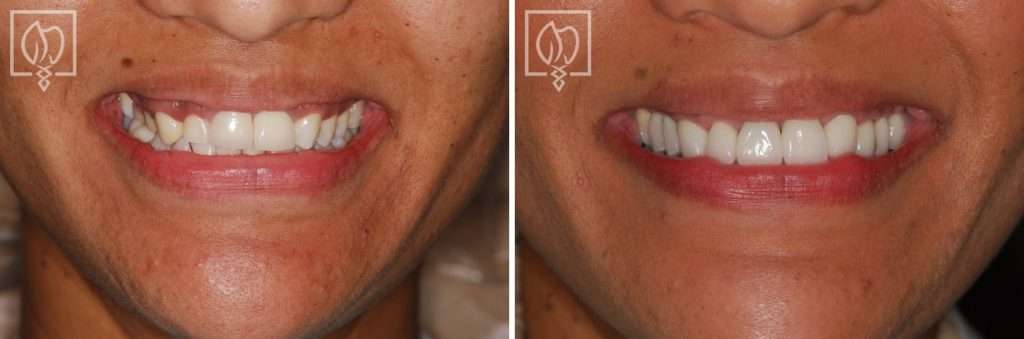
Multi-Faceted Treatment for Patient Unhappy With Her Artificial-Looking Crowns, Teeth and Gums
Many patients come to Elite Prosthetic Dentistry unhappy with the appearance of their smile. However, this particular patient presented with multiple interconnected problems that together created a smile she found deeply unsatisfying.
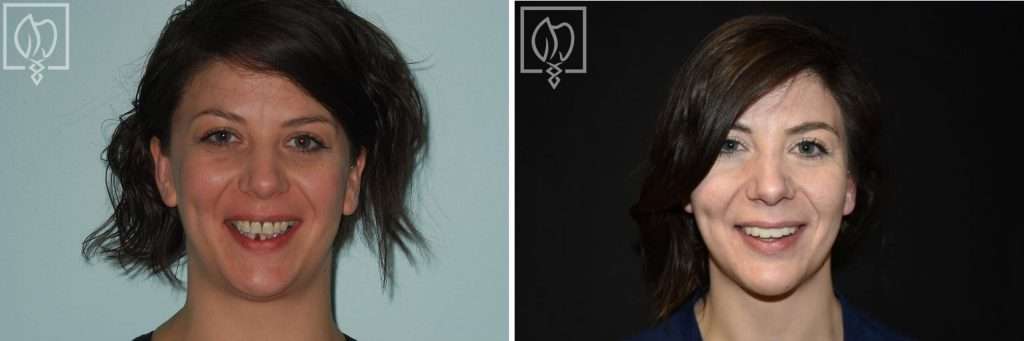
Salvaging Ms. N’s Severely Broken-Down Upper and Lower Teeth from Gum and Bone Disease
Many people in the U.S. suffer from extensive periodontal disease characterized by significant bone loss and shrinkage of the gum tissue. This condition can begin at a very young age and worsen quickly due to hereditary factors and lack of early diagnosis by their dentist.
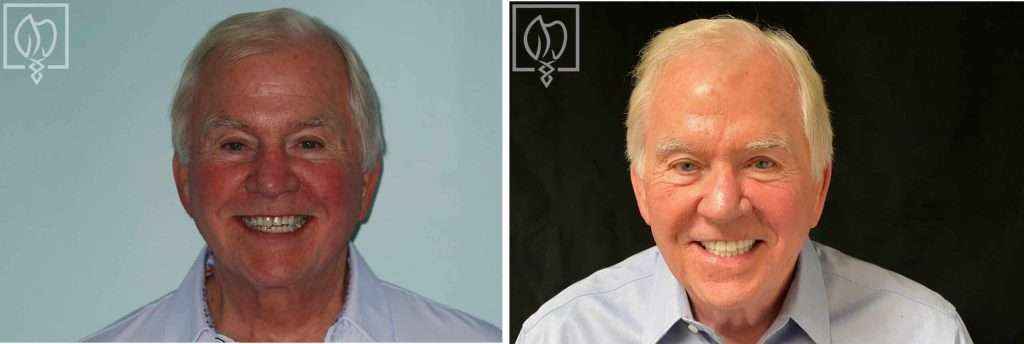
A Smile Transformation in Just Four Months: A Patient’s Dental Crown Restoration for a TV Series
A patient with dental crowns that were in poor shape was going to appear on a streaming video series on a major TV network that was scheduled to begin filming soon. Our patient, John, an author about to embark on a book tour, was anxious as his teeth were not up to his standards to appear on television.
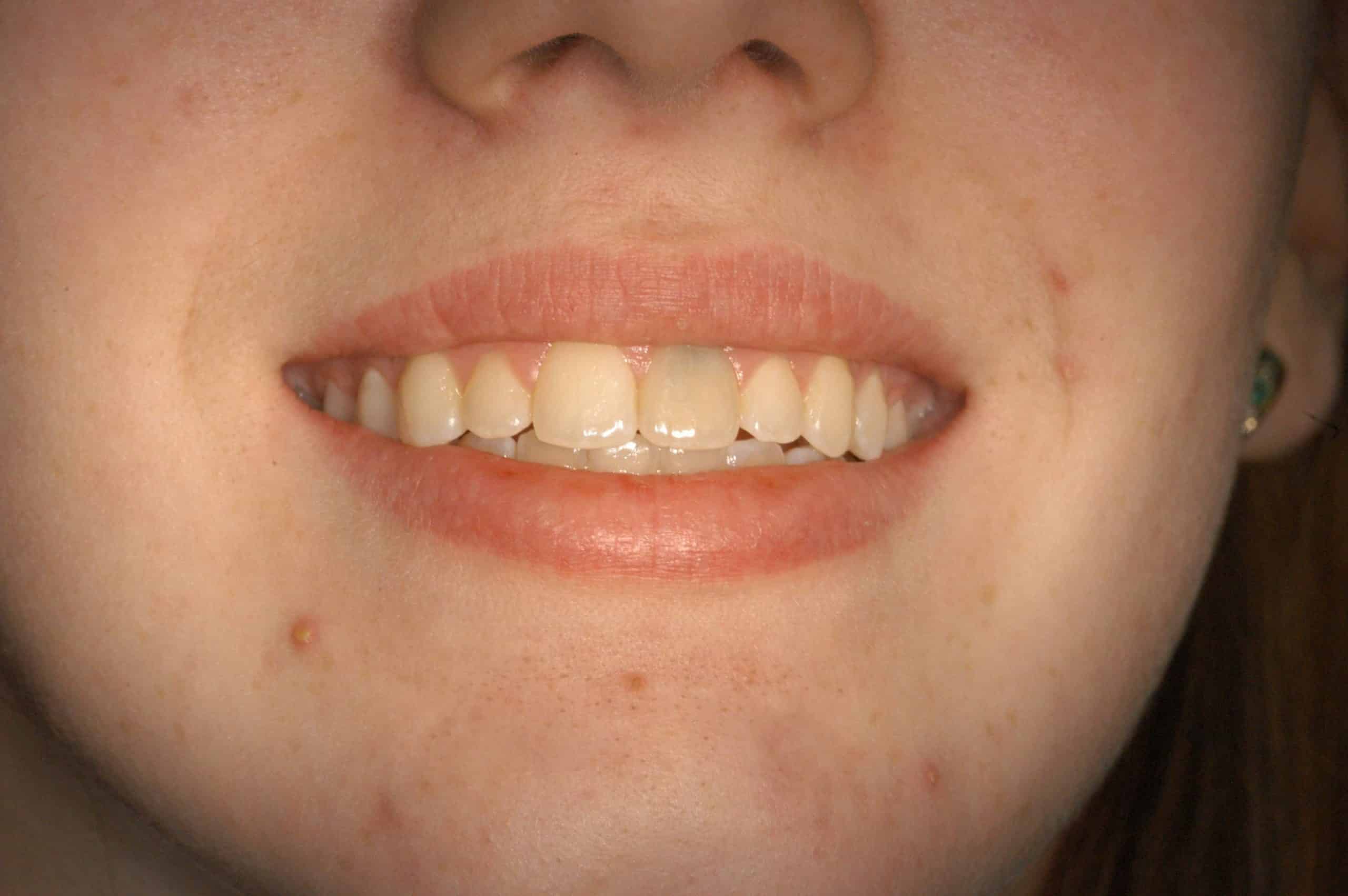
Replacing a Discolored Front Tooth with a Precision Placed Implant
Some of the most challenging restorations occur when fabricating an anterior crown to fit on an implant. Not only does one have the difficulty of matching the single front tooth to the other ones in the high visibility zone, but the dentist must also ensure the position of the underlying implant is precise through accurate preplanning and placement.
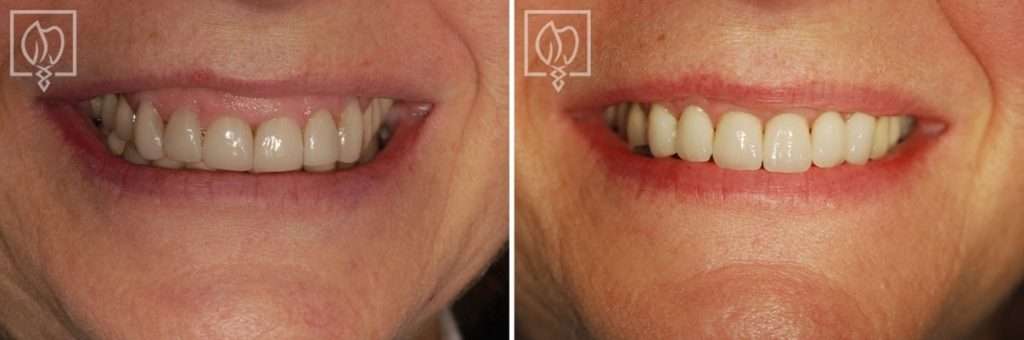
Patient Was Dissatisfied With Her 'Gummy' Smile
Excessive gingival tissue, commonly referred to as a "gummy smile," can significantly impact the appearance of a person's smile and their self-confidence. When someone smiles and a large amount of gum tissue is visible above the teeth, it can create the perception that the teeth are too small or short, even when they are actually normal size.
Our Services in Cleveland Park
Beyond Dental Crowns, Cleveland Park patients rely on Dr. Marlin for a full range of advanced dental care.
More services available in Cleveland Park:
Dental Crowns Near Cleveland Park
Dr. Marlin also provides dental crowns services for patients in these neighboring communities.
Getting Here from Cleveland Park
Elite Prosthetic Dentistry is conveniently located near Cleveland Park, DC.
Drive south on Connecticut Avenue toward our Friendship Heights office. Free parking available in our building.
Address:
4400 Jenifer Street NW, Suite 220
Washington, DC 20015
Phone: (202) 244-2101
Request a ConsultationRequest a Specialist Consultation from Cleveland Park
Cleveland Park residents come to Dr. Marlin for specialist prosthodontic care. With 3,900+ implants placed and restored over 40+ years, evaluation, planning, and execution are handled with the depth complex cases require.