
When Is a Sinus Lift Necessary for Dental Implant Treatment?
A sinus lift becomes necessary in one situation: when you want a dental implant in your upper back jaw and the bone between your ridge and your sinus floor is too short to hold that implant safely. The sinus lift, also called sinus augmentation, repositions the sinus membrane and adds bone beneath it, giving the implant the foundation it needs.
Plenty of implant patients never need one. Whether you do comes down to anatomy, and a 3D CT scan answers it precisely. Here are the three situations that most often call for a sinus lift.
You Are Missing Bone in the Back of Your Upper Jaw
If a molar or premolar in your upper jaw needs replacing, the bone at that site may already have shrunk. Bone loss in this area commonly follows gum disease, other medical conditions, congenital factors, or, very frequently, a tooth extraction performed without a bone graft placed in the socket at the time.
As bone is lost over time, the sinus floor effectively drops closer to the ridge, leaving less and less vertical room for an implant. When that happens, a sinus lift restores the missing height, and published research supports a high success rate with a low risk of complications [1].
Your Sinuses Sit Too Close to Your Jaw
In some patients, lost bone is not the problem at all. Their sinuses simply sit naturally low, close to the roots of the upper teeth, and there was never generous bone height in that region. For these patients, proper implant placement is impossible without first creating room.
It is also common to have both conditions at once: naturally low sinuses plus bone loss from aging and missing teeth, a combination that makes augmentation before implant placement all the more important [2].
In either case the solution is the same. The sinus membrane is gently lifted to create space, bone graft material is added beneath it, and once the graft integrates with your natural jawbone, the site is ready for an implant.
You Need Both New Bone and a New Sinus Floor Position
Implant success depends on the quality and quantity of the bone that supports the implant. Some patients need added bone volume, some need the sinus floor repositioned, and many need both at once. A smaller group needs the lift alone, without significant grafting, purely because of their anatomy [3].
This is why the diagnosis matters more than the label. The question is never simply “do I need a sinus lift,” but rather what combination of membrane elevation and grafting your specific site requires. If you want the fuller picture of how the procedure works, start with our overview of what a sinus lift is and how it enables implants.
How We Determine Which Procedure You Need
There are two versions of the procedure, and your anatomy picks between them. The internal lift is the conservative option: the membrane is elevated through the implant site itself, with the implant usually placed at the same visit. We describe it in detail in what a partial (internal) sinus lift is. When little or no bone remains, the answer is the external technique, performed as its own procedure months before implant placement, covered in what a full (external) sinus lift involves.
Which method applies to you is determined during presurgical planning with a CT scan and virtual placement of your implant, so the decision is made on measurements rather than guesswork. Healing after a sinus lift is generally uneventful, and the procedure does not alter the normal function of your sinuses or your breathing [4].
Told You Do Not Qualify for Implants? Get the Measurement First
Being told you lack bone for implants is not a verdict; it is a finding that usually has a solution. At Elite Prosthetic Dentistry, led by Dr. Gerald Marlin, a specialty-trained prosthodontist with more than 3,900 dental implants placed, every grafted case is planned on 3D imaging and the restorations are built in our in-house laboratory, so the implant and the tooth it carries are designed as one. Call 202-244-2101 or request a consultation at Elite Prosthetic Dentistry in Friendship Heights, Washington, DC.
Sources:
See How We Resolve These Problems
Our patient success stories show real cases and real results. Browse outcomes from a specialist prosthodontist with decades of experience and 3,900+ implants placed.
Key Takeaways
- ✓ A sinus lift becomes necessary when the bone between your upper back jaw and the sinus floor is too short to hold an implant safely.
- ✓ The usual causes are bone loss after extractions, gum disease, and, in some patients, sinus anatomy that sits naturally low.
- ✓ Some patients need added bone, some need the sinus floor repositioned, and many need both. A 3D CT scan settles the question precisely.
- ✓ The finding determines the technique: a conservative internal lift done with implant placement, or an external lift performed months beforehand.
- ✓ Needing a sinus lift does not disqualify you from implants. It is a routine, well-documented step on the way to them.
Frequently Asked Questions
How do I know if I need a sinus lift for my implant?
You cannot tell from the outside, and neither can your dentist without imaging. A 3D CT scan measures the exact height of bone between your ridge and the sinus floor. If that height is too short to anchor an implant safely, a sinus lift is indicated. If adequate bone remains, no lift is needed.
Why did I lose bone under my sinus in the first place?
The most common reasons are tooth extractions done without a bone graft in the socket, gum disease, and simple disuse after a tooth is lost. In some patients the sinuses also sit naturally low, so even modest bone loss leaves too little height for an implant.
Can I get an upper implant without a sinus lift?
Often, yes. Many upper back sites retain enough bone, and front-of-the-mouth implants rarely involve the sinus at all. When bone is borderline, a conservative internal lift done at the same visit as implant placement may add the few millimeters needed. The scan tells us which category you fall into.
Does a sinus lift delay getting my implant?
It depends on the technique. An internal lift usually adds no time, because the implant is placed at the same appointment. An external lift comes first as its own procedure, with the graft maturing for several months before implants are placed. Either way, the schedule is set by biology, and respecting it is what makes the result last.
Will a sinus lift change my breathing or cause sinus problems?
No. The graft is placed beneath the intact sinus membrane, outside the airspace where breathing happens. Published clinical literature and decades of use support sinus augmentation as a safe, predictable procedure that does not alter normal sinus function.
Related Patient Success Stories
Explore similar patient success stories demonstrating our expertise in advanced prosthetic dentistry.
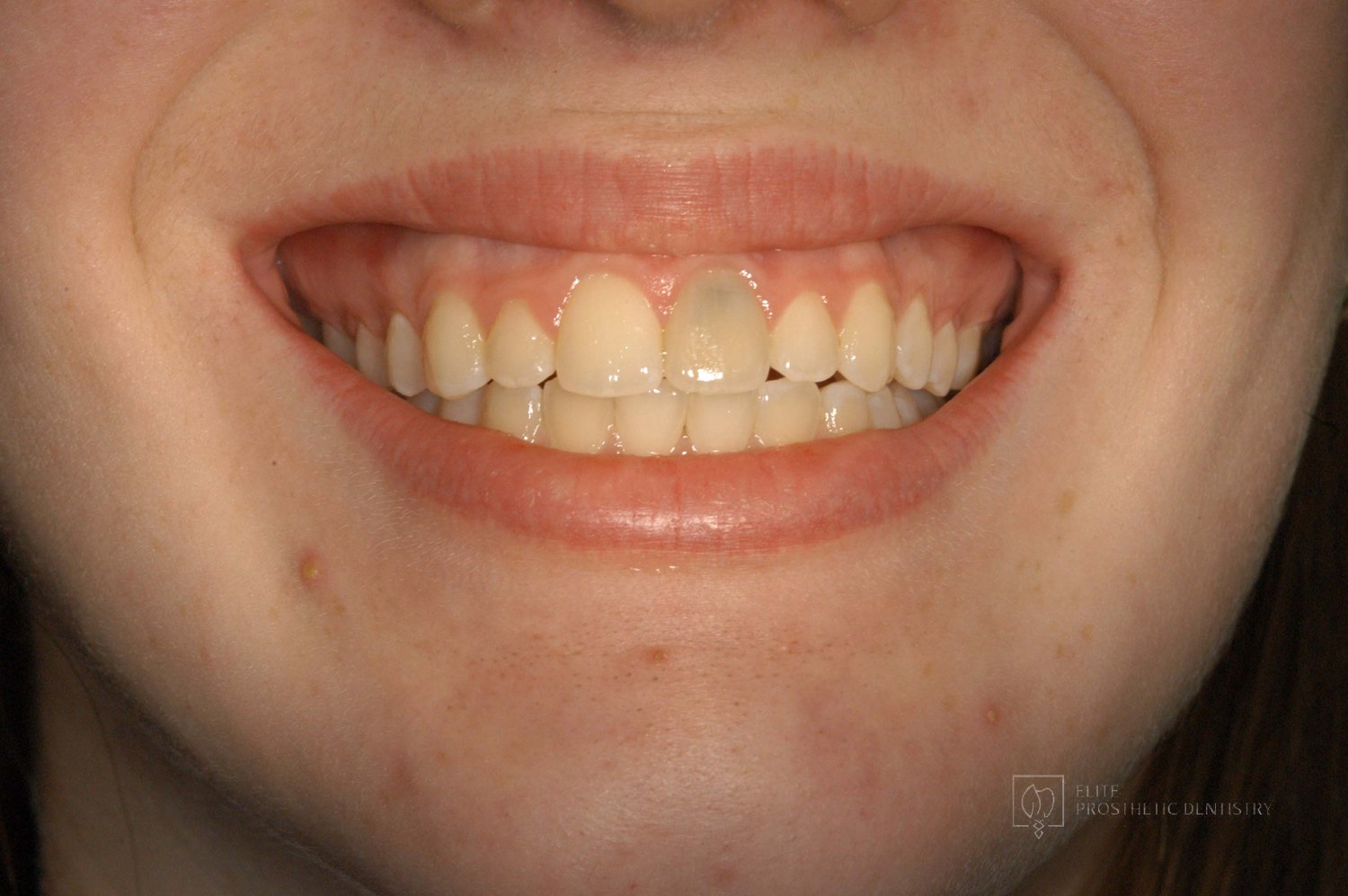 Before
 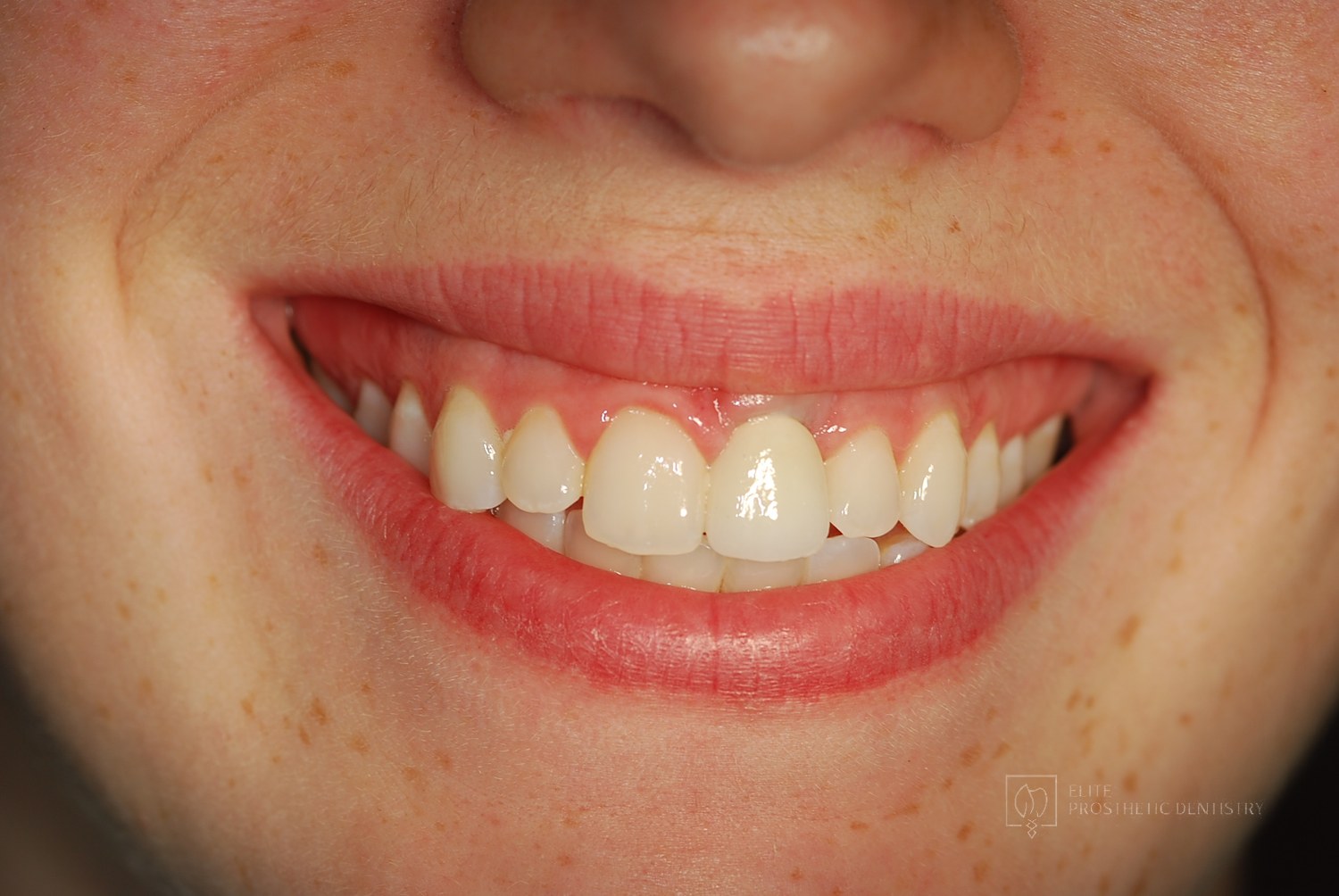 After
After How a Front Tooth Lost to Childhood Trauma Was Rebuilt with Bone Grafting and a Long-Lasting Implant
A teenager was referred by her father after earlier trauma left her upper left front tooth slowly failing from root resorption. She was still growing, so an immediate implant was the wrong move. The tooth had to be maintained to buy time, then replaced correctly once she reached skeletal maturity.
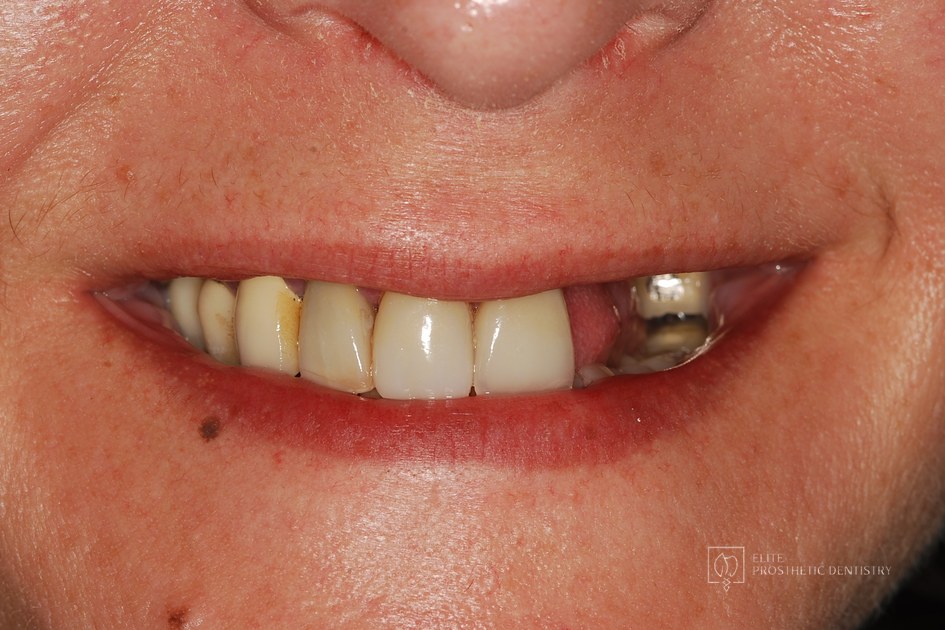 Before
 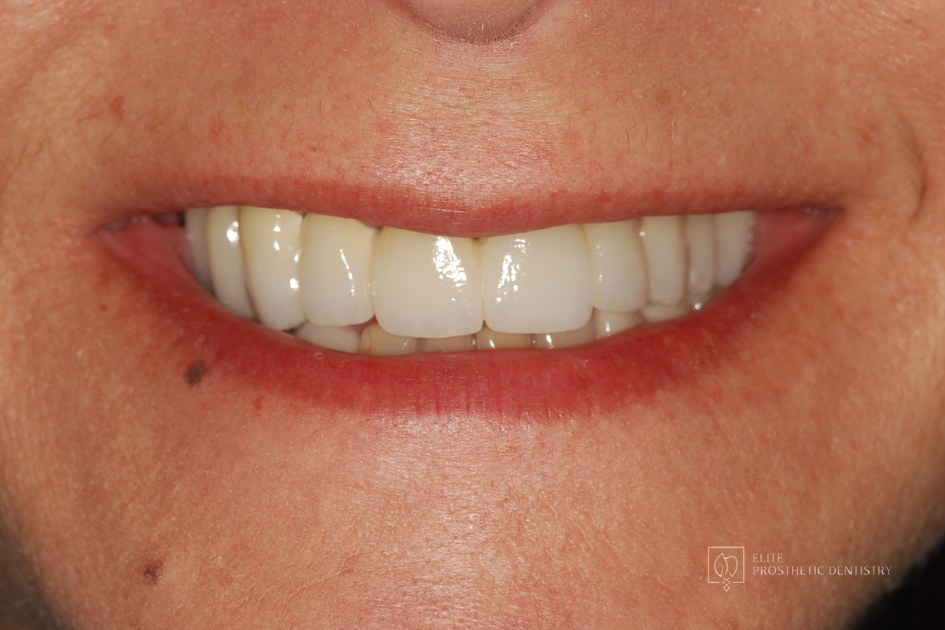 After
After Implant Supported Reconstruction: Failing Bridgework and Missing Back Teeth Rebuilt with Coordinated Specialist Care
Referred by another dental specialist with severe bone resorption on the upper left, multiple broken-down lower teeth requiring extraction, and failing lower back teeth that had left the bite without solid support. No single procedure, and no provider working in isolation, could rebuild a situation this interconnected.
 Before
  After
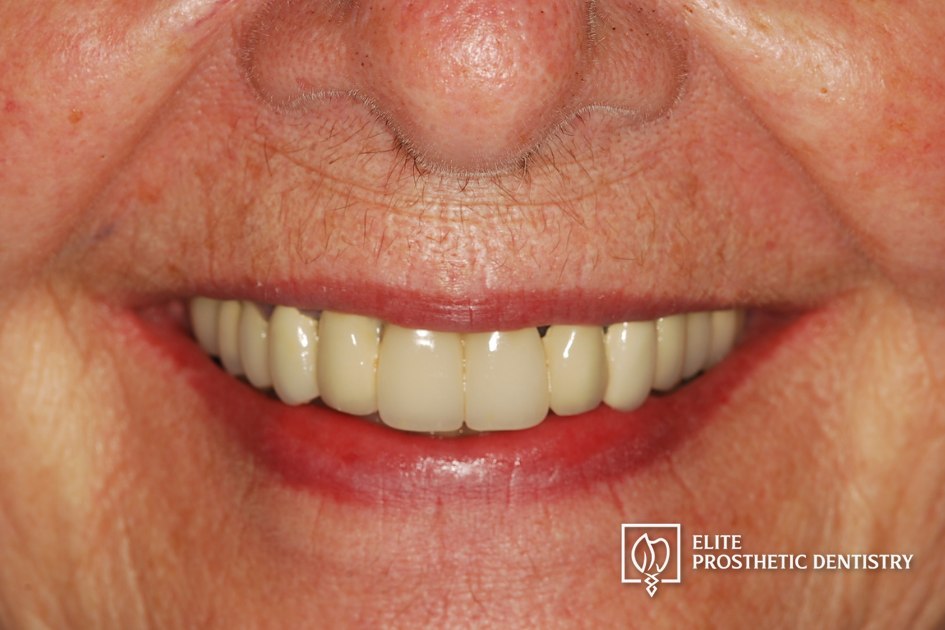
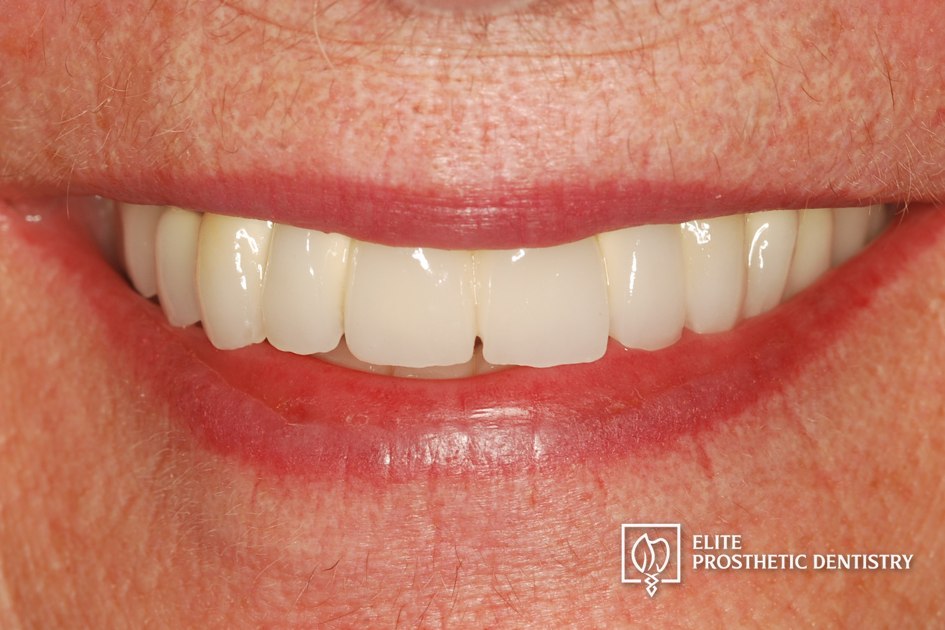
After How a Loose Upper Bridge and Aging Crowns Were Rebuilt with Staged Implant Reconstruction
A patient referred by her general dentist after years of aging dentistry no longer holding up. A loose upper bridge and crowns more than twenty years old, combined with the effects of advanced periodontal disease and severely compromised tooth abutments, required a staged surgical and restorative plan delivered with comfort planning at the same time.
Related Articles
Deepen your knowledge with additional insights on this topic.
 Bone Grafting & Surgical
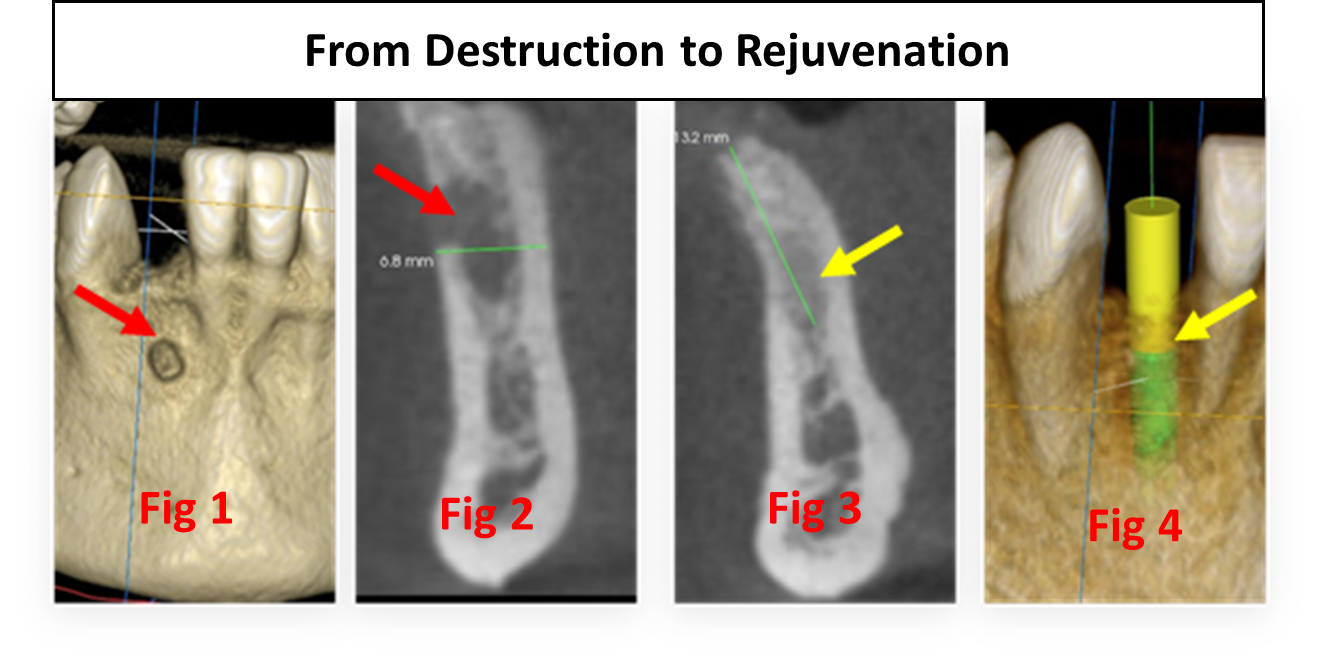
 Rebuilding a Ruined Implant Site with Severely Damaged Bone: The Three-Stage Protocol
Debridement, growth-factor grafting, CBCT-guided planning: the step-by-step protocol that turns a severely damaged implant site into a healthy ridge.
 Bone Grafting & Surgical
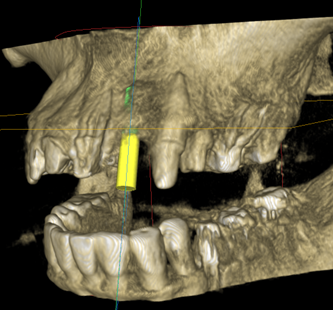
 What Is Ridge Augmentation Bone Grafting?
Ridge augmentation rebuilds a jaw ridge too narrow or angled for an implant. See real measurements from planning to precise placement. Washington DC.
 Bone Grafting & Surgical
 What Is a Partial (Internal) Sinus Lift?
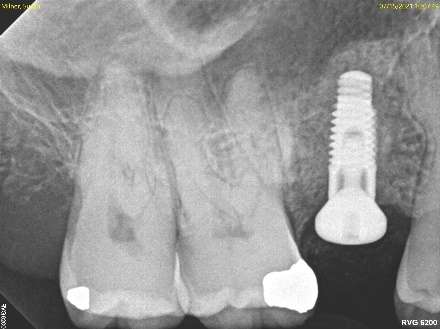
A partial (internal) sinus lift adds bone at a single implant site through the implant preparation itself, often with the implant placed the same visit.